Machine learning in finance
The financial world is moving faster than ever. Every single day, banks, financial institutions, and corporate finance departments handle millions of transactions, cross-border payments, and complex regulatory updates. Managing this massive flow of data using old-school, manual methods is no longer practical. Relying on legacy spreadsheets and manual checks is slow, expensive, and opens the door to costly human errors.
To stay competitive, modern businesses are turning to artificial intelligence. Machine learning, which is a specialized branch of AI, has shifted from a futuristic concept into an essential tool for everyday business operations. By processing huge amounts of data in real time, machine learning helps financial leaders discover hidden patterns, predict market shifts, and make highly accurate, data-driven decisions.
Recent industry data highlights this rapid shift. The global machine learning in finance market is projected to grow from 10.23 billion USD to 45 billion USD by 2035, growing at a steady compound annual growth rate of 16%. Financial leaders are moving quickly from testing AI projects to putting them into full daily production. Research shows that 69% of Chief Financial Officers now state that AI is an absolute core part of their financial transformation strategy. Machine learning is completely reshaping how the finance sector manages risk, catches fraud, and handles day-to-day operations.
The Evolution of Artificial Intelligence in Financial Services
For decades, financial institutions relied entirely on rule-based software systems. These traditional systems worked on simple, rigid logic. If a transaction met certain pre-set conditions, the system approved it. If it did not, the system flagged it. While this approach worked well for basic calculations, it struggled to adapt to changing market conditions, complex financial fraud, and highly unstructured data.
Machine learning completely changes this dynamic. Instead of following strict, unbending rules, machine learning algorithms are designed to learn directly from historical data. They look at past financial behaviors, identify trends, and continuously improve their accuracy over time without needing manual programming updates.
This technological evolution has arrived at a perfect time. Today, digital banking systems, e-commerce platforms, and real-time payment systems generate massive amounts of behavioral and transaction data. Machine learning thrives on this data. It converts raw, disorganized financial information into clear, actionable business insights, allowing companies to work with incredible speed and precision.
Transforming Financial Operations with Machine Learning
One of the most valuable benefits of machine learning in modern finance is its ability to automate repetitive, time-consuming back-office work. In the past, financial teams spent days or even weeks checking numbers, matching records, and creating internal balance sheets. Machine learning eliminates these operational delays by introducing intelligent automation.
Smart Reconciliations and Accounting
Closing the financial books at the end of the month is a historically painful process for accounting teams. Staff members routinely find themselves digging through endless bank statements, internal ledgers, and payment receipts to find matching items. When a business handles thousands of transactions daily, fixing mismatches manually causes major delays.
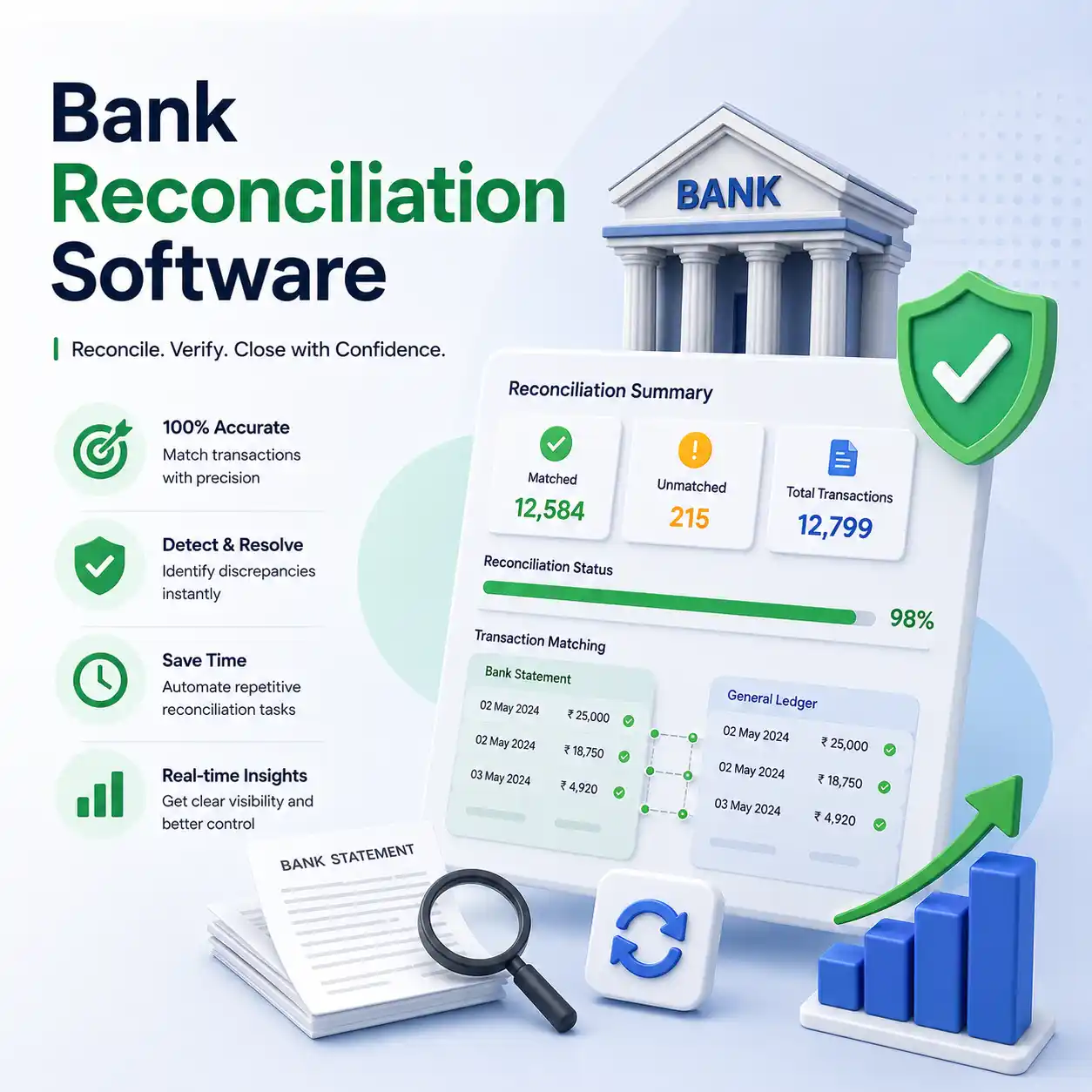
Machine learning completely transforms this process by introducing advanced reconciliation automation. Instead of a human worker manually comparing rows of data, smart algorithms scan multiple data sources simultaneously. They instantly match internal sales records with actual external bank data, handling thousands of line items in just a few seconds.
This automation is highly effective when it comes to managing multi-source data. For example, a business can use specialized bank reconciliation systems driven by machine learning to catch mismatched dates, missing currency conversions, and minor typing errors instantly. The system handles the standard matching automatically, meaning human accountants only need to step in to review unusual exceptions.
Streamlining High-Volume Digital Transactions
As modern companies adopt diverse payment methods like digital wallets, credit cards, and instant localized payments, tracking the cash lifecycle becomes highly complex. Every single payment gateway has its own unique reporting format and data structure. This variance makes it difficult to get a single, clear view of your financial health.
To solve this challenge, companies deploy smart payment reconciliation software built with machine learning capabilities. These systems automatically clean and standardize incoming data feeds from multiple payment processors. The software extracts the correct transaction IDs, processing fees, and settlement dates, ensuring that every cent is accounted for without human intervention.
Furthermore, machine learning enables seamless, automated cash reconciliation across the enterprise. By connecting directly with your internal bank accounts and ERP systems, the machine learning models recognize recurring deposits and group related transactions together. This minimizes the time cash sits unallocated on the balance sheets, drastically improving daily liquidity management and giving corporate leadership a highly accurate view of available working capital.
Key Use Cases of Machine Learning in Finance
Beyond standard back-office automation, machine learning provides powerful tools that help optimize risk management, trading, and customer interactions.
Advanced Fraud Detection and Prevention
Financial fraud is growing increasingly complex. Cybercriminals now use sophisticated tactics, such as synthetic identities and deepfakes, to try and bypass traditional security checks. Rule-based security systems often fail to catch these threats because they only look out for known fraud patterns.
Machine learning models excel at fraud prevention because they analyze data in real time. When an account holder makes a payment, the algorithm reviews thousands of metadata points in milliseconds. It checks the user’s physical location, device ID, typical spending habits, and transaction velocity. If the system spots an unusual deviation from the user's regular behavior, it can freeze the transaction instantly before any money leaves the account. This real-time capability is crucial, especially since the global payment fraud detection AI market is projected to reach 62.8 billion USD by 2034.
Credit Scoring and Smart Risk Assessment
Traditional credit scoring systems rely heavily on a borrower's historical credit card usage and past loan repayment records. This narrow focus often leaves out young individuals, new businesses, and immigrants who lack a deep credit history.
Machine learning models solve this problem by analyzing alternative data. These algorithms can evaluate utility bill payment histories, operational business cash flows, and even professional digital footprints. By analyzing a broader range of behavioral insights, machine learning helps lenders build more accurate risk profiles. This allows financial institutions to safely approve more loans for creditworthy individuals while successfully lowering overall default rates.
Algorithmic Trading and Market Insights
In public financial markets, asset prices fluctuate in fractions of a second. Human traders simply cannot process global news feeds, corporate earnings reports, and historical price charts fast enough to capture every single market opportunity.
Algorithmic trading systems use machine learning to scan multiple global data sources simultaneously. These models identify micro-trends and execute high-volume trades at the best possible prices. Additionally, machine learning powers predictive modeling for long-term investment portfolios. It automatically adjusts asset allocations based on changing market volatility, helping investment firms protect capital and maximize returns.
Benefits of Adopting Machine Learning in Finance
Implementing machine learning across your financial operations delivers a wide range of clear business advantages:
- Drastic Reduction in Human Error: Even highly experienced financial professionals can make mistakes when manually copying data or running repetitive calculations. Machine learning algorithms process millions of data fields with absolute consistency, protecting your business from costly reporting errors.
- Massive Cost Savings: Automating time-consuming tasks like data entry and transaction matching lowers operational expenses. This allows your finance team to stop acting as data processors and start focusing on high-value business strategy.
- Instant, Real-Time Insights: Instead of waiting for traditional end-of-month financial reports, machine learning gives leaders real-time visibility into company cash flow, revenue trends, and operational risks.
- Highly Personalized Customer Experiences: Machine learning helps retail banks analyze individual customer spending habits. This allows them to offer highly customized financial advice, tailored loan offers, and perfectly timed investment suggestions, boosting long-term customer loyalty.
Overcoming Challenges in Financial Machine Learning Implementation
While the business benefits are clear, deploying machine learning in finance does come with a few notable hurdles that organizations must handle carefully.
The primary challenge is ensuring high data quality. Machine learning models learn entirely from the data they are given. If your internal data is disorganized, siloed across different departments, or contains historical bias, the AI's insights will be flawed. To prevent this, financial institutions must invest in unified data platforms that clean and organize information before feeding it into AI models.
Another vital consideration is strict regulatory compliance. Global financial regulations, such as Basel III and GDPR, require financial institutions to fully explain their automated decisions, especially regarding loan rejections or fraud alerts. To meet these demands, the finance industry is actively adopting Explainable AI. These specialized frameworks help ensure that machine learning decisions are completely transparent, traceable, and ready for official regulatory audits.
Future Trends: The Next Era of AI-Powered Finance
As we move forward, the relationship between machine learning and financial services will grow even deeper. The era of simple experimental AI projects is officially over. Financial institutions are now focusing heavily on deploying advanced, autonomous systems.
A major trend taking over the industry is the rise of agentic AI. Unlike traditional chatbots that merely answer standard customer questions, autonomous AI agents are engineered to reason, make decisions, and collaborate across multiple enterprise systems. For instance, a future AI agent will be able to notice a cash flow shortage, run a full business scenario analysis, and automatically move funds between accounts to optimize corporate liquidity.
At the same time, the integration of generative AI with traditional predictive machine learning is opening up new possibilities. Financial teams can now use conversational language to ask their financial systems complex questions, such as requesting a full summary of revenue anomalies over the last quarter. The system instantly generates a clear, accurate narrative report, helping executives adapt to volatile market conditions with total confidence.
Frequently Asked Questions
How does machine learning find transaction errors faster than traditional software?
Traditional software relies on rigid rules and looks for exact matches. If a bank statement has a minor typo or a slight date difference, old systems fail to connect it to the right internal invoice. Machine learning uses advanced pattern recognition to read data contextually. It safely identifies and matches related financial items despite minor formatting differences or timing delays.
Will machine learning systems replace human financial analysts?
No. Machine learning is designed to automate repetitive, data-heavy tasks like data entry and basic transaction matching. By handling these tedious chores, the technology frees up human analysts to focus on high-level strategic tasks, such as building client relationships, managing complex business negotiations, and solving unique operational exceptions.
Is data security at risk when using machine learning in finance?
Data security actually improves when using machine learning. Modern financial machine learning platforms use advanced encryption and strict access controls. These algorithms monitor internal data access patterns constantly, allowing them to spot and block potential internal data leaks or external cyber threats much faster than traditional security software.
What is the difference between AI and machine learning in finance?
Artificial Intelligence is the broad umbrella term for systems designed to mimic human intelligence. Machine learning is a specific subset of AI focused on building algorithms that learn and improve on their own by analyzing historical data. While AI includes things like customer service chatbots, machine learning specifically handles deep data analysis and predictive financial modeling.
How hard is it to integrate machine learning with older legacy banking systems?
Integrating AI with legacy systems can be challenging due to disconnected data silos. However, modern financial platforms solve this issue by using secure, standardized APIs. These APIs act as data bridges, allowing advanced machine learning software to pull information smoothly from older databases without disrupting core business operations.
See How Kosh AI Can Transform Financial Close
Contact us now