How Do the Best Treasury Management Systems Support Real-Time Reporting?
Kosh.ai
April 24, 2026
.webp)
In today's fast-moving business world, waiting until the end of the month to check your company's cash position is no longer an option. Financial decisions need to be made in minutes, not days. This is where a modern treasury management system comes into play. But not all systems are created equal. The best treasury management systems do something special: they deliver real-time reporting.
Real-time reporting means you can see your cash flow, debts, investments, and risks as they happen. It gives you the power to make smart, fast decisions. In this blog, we will walk through how the top treasury management software supports real-time reporting, why it matters, and what features you should look for. We will keep the language simple, use real-world facts, and give you plenty of useful information.
What Is Real-Time Reporting in Treasury Management?
Before we dive into the "how," let us first understand the "what." Real-time reporting in a treasury management solution means that every financial transaction—whether it is a customer payment, a supplier payout, or a currency exchange—is recorded and visible instantly. There is no delay for batch processing or overnight updates.
Think of it like a GPS for your company's money. Just as a GPS shows your car's location every second, real-time reporting shows your cash position every second. Older systems might show you where you were yesterday. The integrated treasury management system shows you where you are right now.
Why Is Real-Time Reporting So Important?
According to a 2023 survey by the Association for Financial Professionals (AFP), 78% of treasury professionals said that having real-time visibility into cash and risk is their top priority. Why? Because without it, companies face three big problems:
- Liquidity issues: Not knowing your cash balance can lead to accidental overdrafts or missed investment opportunities.
- Fraud risks: Delayed reporting means fraud might go unnoticed for weeks.
- Poor decisions: If your data is old, your decisions are already outdated.
The best treasury management systems solve these problems by making real-time reporting the center of their design.
1. Direct API Connectivity to Banks and Financial Institutions
One of the biggest barriers to real-time reporting is slow data transfer. In the past, companies had to log into each bank's portal, download a statement, and upload it into their treasury management system. That process could take hours or even days.
The best treasury management systems solve this with API (Application Programming Interface) connectivity. APIs allow the software to talk directly to your bank's servers in real time. Every time a transaction happens, the bank sends a signal to your treasury management software, and your dashboard updates instantly.
How APIs Improve Speed and Accuracy
- Automatic feeds: No more manual file uploads.
- Two-way sync: You can initiate payments and see the results immediately.
- Error reduction: Human mistakes like typos or wrong dates disappear.
For example, if a customer in Germany pays an invoice at 2:00 PM, your integrated treasury management system shows that cash available at 2:00 PM, not the next morning. This speed helps you reinvest cash faster or cover unexpected bills without stress.
A real-world fact: According to a 2024 report by the Bank for International Settlements, over 85% of large European and North American banks now offer open APIs. This means modern treasury management software can connect to most major banks instantly, making real-time reporting more achievable than ever before.
2. Centralized Dashboards with Live Data Feeds
Another major feature of the best treasury management systems is a centralized dashboard. Think of it as the cockpit of an airplane. All the important gauges—cash balance, outgoing payments, incoming receipts, currency positions—are in one place. And every number is live.
Customizable Views for Different Roles
A good treasury management solution lets you customize what you see. For instance:
- A CFO wants to see total group cash and debt ratios.
- A treasury analyst wants to see daily cash forecasts and bank fees.
- An accounts payable manager wants to see pending supplier payments.
Because the dashboard pulls from live data, every role sees their own version of the truth, at the same moment. No one is working off a spreadsheet that says "last updated Tuesday."
Visual Tools for Faster Understanding
Numbers alone can be hard to read quickly. The top treasury management software uses charts, graphs, and heat maps. A red box might mean a low cash balance. A green arrow might show positive cash flow. These visual cues help you spot problems or opportunities in under five seconds.
Data from Gartner shows that companies using visual real-time dashboards improve their decision-making speed by nearly 35% compared to those relying on traditional spreadsheets. That is a massive competitive advantage.
3. Automated Bank Statement Reconciliation
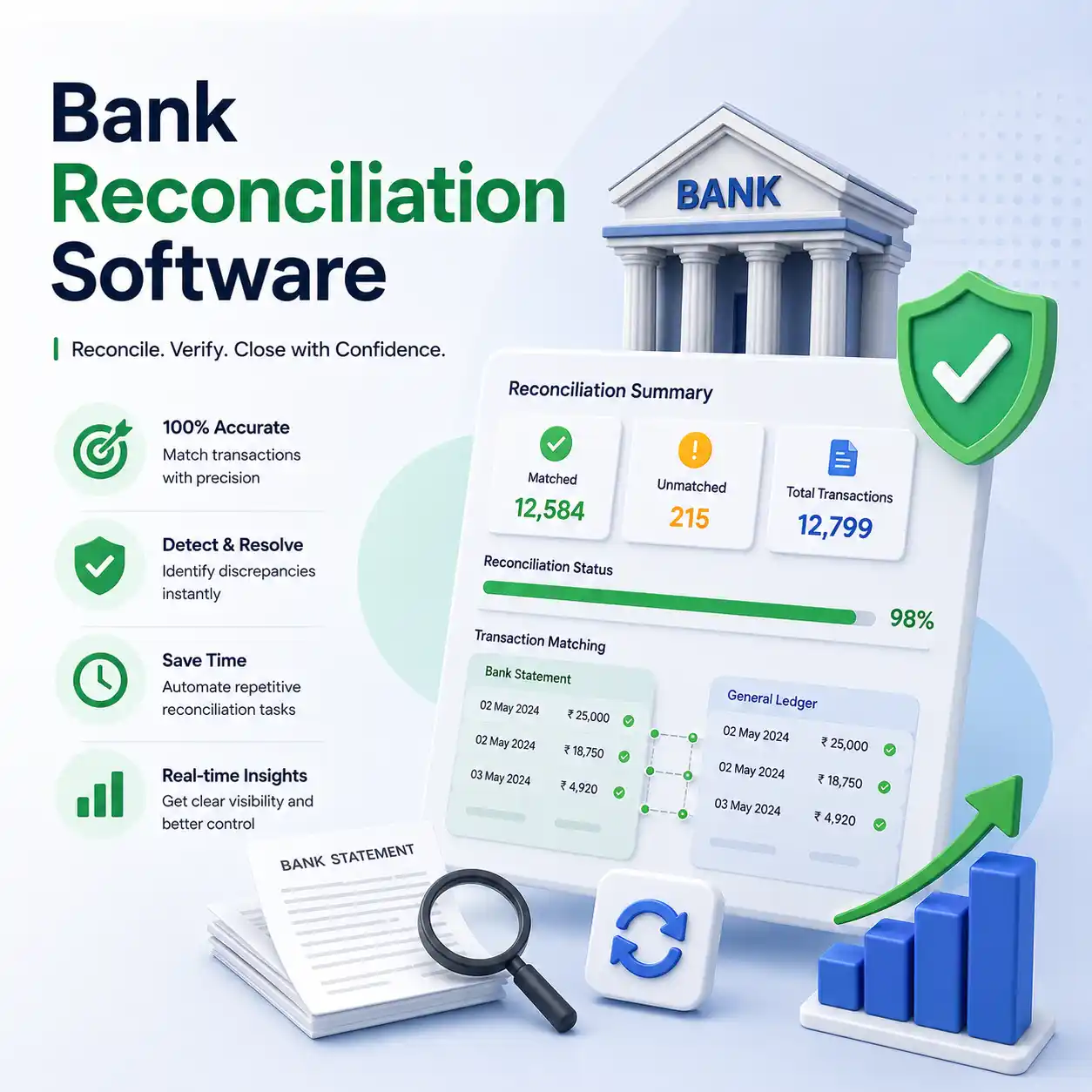
Reconciliation is the process of matching your company's records with your bank's records. In old systems, this was a manual task that took hours. In a modern treasury management system, reconciliation happens automatically and in real time.
Matching Transactions Instantly
When a payment arrives, the system automatically matches it to the correct invoice or ledger entry. If every detail matches, the transaction is marked "reconciled." If there is a mismatch—say, a different amount or missing reference number—the system flags it immediately.
This real-time matching means your reported cash balance is always accurate. You do not have to wait for month-end to find discrepancies. Statistics from Deloitte show that automated real-time reconciliation can reduce closing time by up to 75%, freeing your team for more strategic work.
Moreover, an integrated treasury management system can reconcile hundreds of transactions per minute. For a mid-sized company with thousands of monthly payments, this saves dozens of human work hours every single month.
4. Real-Time Cash Flow Forecasting
Forecasting is one of the most valuable uses of real-time reporting. Older treasury management systems relied on static, spreadsheet-based forecasts that were outdated as soon as they were printed. The best treasury management systems offer dynamic, real-time forecasting.
How Real-Time Forecasting Works
The system looks at three things at once:
- Current balances from all bank accounts.
- Pending transactions (like checks that have been written but not cashed).
- Expected inflows and outflows from invoices, payroll, loan payments, and more.
Then, using simple algorithms, it projects your cash position for the next day, week, or month. And because the inputs are live, the forecast updates every time a new transaction occurs.
Scenario Analysis on the Fly
Imagine you are considering paying a supplier early to get a discount. With a real-time treasury management solution, you can run a "what if" scenario. The system will show you the exact impact on your cash balance immediately. No need to copy-paste numbers into a separate spreadsheet. This kind of agility helps companies save money and avoid risks.
A study by Kyriba found that companies using real-time forecasting reduced their forecast error rate from an average of 25% to just 8%. That means more accurate planning, less need for emergency borrowing, and better relationships with suppliers.
5. Integration with ERP and Other Business Systems
A treasury management system does not work alone. It connects with your ERP (Enterprise Resource Planning), CRM (Customer Relationship Management), and sometimes even your HR system. The integrated treasury management system is one that shares data seamlessly across all platforms.
Why Integration Matters for Real-Time Reporting
When your treasury software is integrated with your ERP, a sales order recorded by the sales team automatically appears as a future cash inflow in treasury. Similarly, a purchase order raised by operations appears as a future outflow. Without integration, treasury is always one step behind. With integration, reporting is truly real-time.
According to a 2024 report by PwC, companies with fully integrated treasury management software reduced their cash forecasting errors by 50% compared to those using standalone systems.
Integration also removes duplicate data entry. Your finance team no longer has to type the same invoice number into three different systems. This reduces fatigue and errors, making the whole department more productive.
6. Real-Time Risk Management Dashboards
Cash is not the only thing you need to track in real time. Risks like currency fluctuations, interest rate changes, and counterparty exposures also move every second. The best treasury management systems include live risk dashboards.
Foreign Exchange Risk Monitoring
If your company buys or sells in different currencies, exchange rates can hurt your profits. A real-time treasury management solution shows your net exposure in each currency at a glance. If the euro suddenly drops against the dollar, the dashboard changes color instantly. You can then decide whether to hedge or adjust prices.
For example, a manufacturing company that imports raw materials from China and sells finished goods in the US faces constant currency risk. With real-time reporting, they can see within seconds how a 2% move in the yuan affects their profit margin.
Compliance and Fraud Alerts
Real-time reporting also means real-time alerts. The system can be set to notify you the moment a transaction exceeds a certain amount, comes from an unusual location, or matches a fraud pattern. This immediate notification helps stop fraudulent payments before they leave your bank account.
The Association of Certified Fraud Examiners (ACFE) found that companies using real-time monitoring reduce fraud losses by an average of 54%. For a large corporation, that could mean saving millions of dollars every year.
7. Mobile Access to Real-Time Reports
The modern treasury professional is not always at a desk. They might be traveling, working from home, or on the factory floor. The best treasury management systems offer mobile apps that show the same real-time data as the desktop version.
Key Mobile Features
- Push notifications for low balances or large transactions.
- Approval of payments from a phone or tablet.
- Read-only dashboards for auditors and executives.
This mobility means you are never in the dark. Even if you are on vacation, you can check your company's cash position in seconds. A 2024 survey by Strategic Treasurer found that 62% of treasury professionals now use mobile access at least weekly, and that number is growing fast.
8. Audit Trails and Real-Time Transaction Logs
Every good treasury management software keeps a detailed log of every action. In a real-time system, this log updates instantly. You can see who viewed a report, who approved a payment, and who changed a forecast—all within seconds of the action happening.
Benefits for Compliance
Auditors love real-time audit trails. Instead of spending weeks reconstructing what happened, they can run a report that shows the entire history of a transaction from start to finish. This transparency builds trust with banks, investors, and regulators.
Additionally, having a clear, real-time audit trail helps companies pass external audits with fewer issues. A KPMG study noted that companies with real-time audit capabilities reduced their audit preparation time by nearly 40%.
Also Read: How Does Treasury Management Software Improve Working Capital Management?
Facts and Statistics That Show the Value of Real-Time Reporting
Let us look at some hard numbers that prove why the best treasury management systems with real-time reporting are worth the investment.
- Faster decision-making: A study by McKinsey & Company found that companies using real-time treasury data made decisions 40% faster than those using monthly reports.
- Lower borrowing costs: With real-time visibility, companies can reduce their average daily cash balances held for safety (often called "precautionary balances") by up to 30%. That means more cash available for growth instead of sitting idle.
- Better supplier relationships: Real-time reporting allows companies to pay suppliers earlier when discounts are offered. The same McKinsey report found that early payment discounts captured increased by 25% after moving to real-time systems.
- Reduced bank fees: By seeing exact balances in real time, companies avoid overdrafts and unnecessary sweeps. Average bank fee reduction is around 15% annually.
What to Look for When Choosing a Treasury Management System for Real-Time Reporting
If you are in the market for a new treasury management solution, keep these questions in mind:
- Does it offer direct API connections to my banks? If not, real-time data is impossible.
- Is the dashboard fully customizable? Every business is different.
- Does it integrate with my existing ERP? Standalone systems create more problems than they solve.
- Is there a mobile app with the same real-time capabilities?
- Can it handle real-time risk monitoring for foreign exchange and interest rates?
- What do current users say about the speed of reporting? Ask for references.
Taking the time to evaluate these features will save you from buying a system that claims to be "real-time" but still relies on batch processing.
Also Read: How to Choose the Right Treasury Management System for Your Business?
Frequently Asked Questions
1. What is the difference between real-time reporting and daily reporting in treasury management systems?
Real-time reporting updates your dashboards and reports instantly whenever a transaction happens. Daily reporting only updates once every 24 hours. With daily reporting, you might see a cash balance that is already 12 hours old. With real-time, you always see the exact current position.
2. Can a small business benefit from a treasury management system with real-time reporting?
Absolutely. Many small and medium businesses now use affordable cloud-based treasury management software. Real-time reporting helps them avoid overdraft fees, capture early payment discounts, and manage cash flow during busy seasons. The cost has dropped significantly in recent years.
3. How does real-time reporting help prevent fraud?
Real-time systems send instant alerts for suspicious transactions. For example, if someone tries to approve a payment that is much larger than normal or going to a new vendor, you can get a text message within seconds. This allows you to stop the payment before it leaves your bank.
4. Do I need to replace my entire ERP to get real-time treasury reporting?
No. The best treasury management systems are designed to integrate with your existing ERP. You keep your current accounting or ERP software, and the treasury module connects via APIs. This is much cheaper and faster than replacing everything.
5. How secure are real-time treasury management systems?
Leading providers use bank-level encryption, multi-factor authentication, and regular security audits. Real-time systems can actually be more secure than old batch systems because they monitor for threats continuously rather than scanning once a day.
6. What is the typical return on investment for moving to a real-time treasury management system?
Most companies see a full return on their investment within 12 to 18 months. The savings come from lower bank fees, fewer fraud losses, reduced borrowing costs, and less manual labor for reconciliations and forecasting.
Ready to get started?
Contact us now
Contact us now
* By clicking on Contact Us you are agreeing to our Terms & Conditions and Privacy policy.