How Does Automated Bank Software Speed Up Month-End Close?
Kosh.ai
April 23, 2026
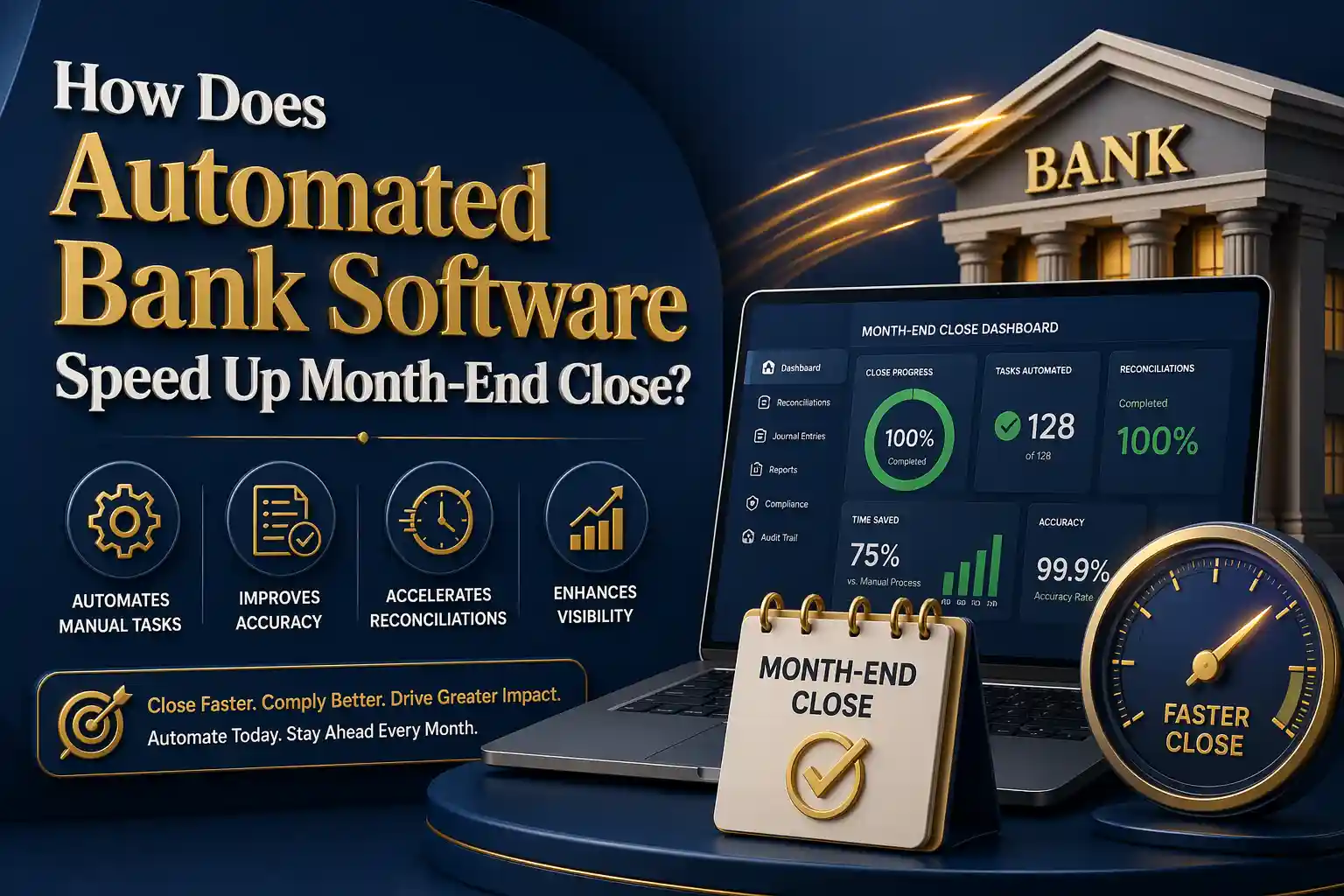
For any finance team, the month-end close is like a final exam that happens every 30 days. You gather receipts, check bank statements, match transactions, and fix errors. It is slow, repetitive, and often stressful. But what if you could finish the same work in hours instead of days? That is exactly what automated bank software does for businesses today.
This blog explains, in simple words, how automation transforms the month-end close process. You will learn the step-by-step role of automated systems, real data on time savings, and why moving away from spreadsheets is no longer an option. We will also cover key features of a reconciliation solution that modern banks and companies rely on.
Let us begin with the basic problem that every accountant knows too well.
Understanding the Traditional Month-End Close (And Why It Hurts)
Before automation, the month-end close meant manual work. Someone from the finance team would download bank statements in PDF or Excel format. Then they would open the company’s accounting software or ledger. Row by row, they would match each bank transaction with each book entry.
The Manual Matching Nightmare
Imagine a small business with 2,000 monthly transactions. An accountant would need to check each one. Did the bank show a $500 payment on June 5th? Is the same amount recorded in the books on the same date? If yes, it is a match. If not, it becomes an exception.
These exceptions are the real problem. A mismatch could happen because of a bank fee, a check not yet cashed, or a data entry error. Finding the reason takes time. You may need to call the bank, email another department, or dig through old invoices.
Time and Cost of Manual Reconciliation
Studies from financial process benchmarks show that a typical finance team spends 40% to 50% of their month-end close time just on bank reconciliation. According to a survey by the Institute of Finance & Management (IOFM), 28% of companies still use spreadsheets for reconciliation, and they take an average of 6 to 8 days to close their books each month.
For a mid-sized company, that is roughly 120 to 160 hours of work every month. At an average accountant’s hourly rate, manual close costs thousands of dollars monthly. And that does not include the risk of human error, which leads to rework.
Emotional Toll on Teams
Beyond money, manual close creates frustration. Your finance team works late nights. They rush before deadlines. They lose confidence in their own numbers because a small typo can throw off the entire balance sheet. That stress leads to burnout and high turnover.
Now, the good news. Automated bank software solves almost all of these problems.
What Is Automated Bank Software? A Simple Definition
Automated bank software is a digital tool that connects directly to your company’s bank accounts and your accounting system. It pulls transaction data automatically, matches records using smart rules, and flags only the unusual items for your review. The goal is to remove manual data entry and speed up matching.
Think of it like a spell-checker but for your bank and book transactions. You still make the final decisions, but the software does the heavy lifting.
Most automated systems work with bank reconciliation software that is built for speed. Some are standalone tools, while others are modules inside bigger accounting platforms like QuickBooks, Xero, NetSuite, or Sage.
Key Ways Automated Bank Software Speeds Up Month-End Close
Let us go step by step. Here is how automation changes each part of the close process.
1. Automatic Feeds Eliminate Data Entry
In a manual world, the first step is downloading, renaming, and saving bank files. Then you copy or import them. Each action adds minutes. Over thousands of transactions, that becomes hours.
Automated software connects to your bank via a secure API (a digital connector). Every morning, or even in real time, new transactions flow directly into your reconciliation dashboard. No file uploads. No copying. No waiting for someone to send you a statement.
This single feature cuts the total close time by at least 30% because you remove the entire data preparation phase.
2. Smart Matching Rules Reduce Human Review
Not all transactions are simple. Some are recurring, like monthly rent or software subscriptions. Others are transfers between your own accounts. Automation allows you to set rules.
For example, you tell the software: “Any $2,500 transaction on the 1st of the month from ABC Corp is a match to rent expense.” From then on, that transaction matches automatically without any human looking at it.
Advanced systems use pattern recognition. If a transaction description matches a vendor name in your system, the software learns to match it instantly. This feature is called automated reconciliation, and it is the real engine behind speed.
According to a report by the Association for Financial Professionals (AFP), companies using automated matching rules reduce their reconciliation time by 70% to 80% for routine transactions. Only about 5% to 10% of transactions need manual attention.
3. Real-Time Exception Handling
In manual close, you find out about a mismatch on day 7 or 8, right before the deadline. Then you panic.
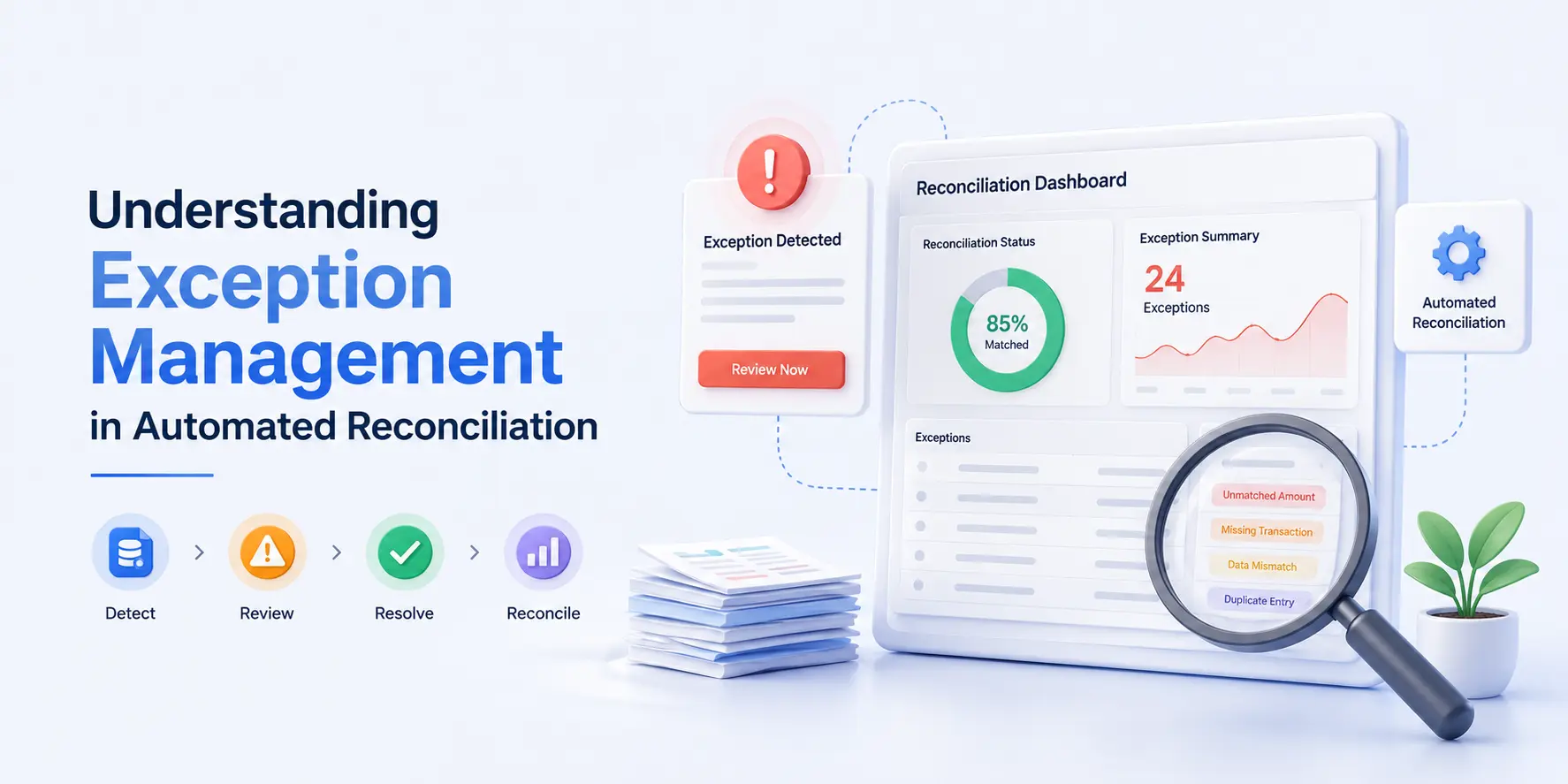
Automated software shows you exceptions as they happen. If a bank transaction has no match in your books, it appears in a separate “exceptions” list immediately. Your team can investigate on day 2 instead of day 8. This early warning system prevents last-minute fire drills.
Some tools even allow you to add comments, attach receipts, or assign exceptions to specific team members right inside the software. No more email chains about missing transactions.
4. Integration With Accounting Reconciliation Software
A stand-alone bank tool is helpful, but real speed comes when your accounting reconciliation software talks directly to your general ledger and sub-ledgers.
Modern accounts reconciliation software connects everything. When a bank transaction matches a credit card payment recorded in your sales system, all three sources agree. The software updates your balance sheet and profit and loss statement in real time.
This integration means that you are not just closing the bank book. You are closing the entire month-end process faster because all modules work together.
5. Automated Bank Reconciliation Software Handles High Volumes
For larger businesses with thousands of daily transactions, manual reconciliation is impossible. Even a team of ten accountants cannot keep up.
Automated bank reconciliation software processes 10,000 transactions in the time it takes a human to do 100. The software does not get tired, does not take breaks, and does not make typos.
A mid-sized e-commerce company, for example, might have daily sales from PayPal, Stripe, two credit card processors, and a traditional bank account. Automated systems ingest all those feeds and match them to orders, refunds, and fees. Without this, month-end close would take weeks.
6. Standardized Workflows With Reconciliation Automation Tools
Every finance team has its own way of doing things. That creates inconsistency. One person matches by date, another by amount, another by reference number.
Reconciliation automation tools enforce a single, repeatable workflow. The system decides the order of matching. It applies the same rules to every transaction. This standardization reduces training time and eliminates errors caused by personal habits.
If someone leaves the company, the next person follows the same automated steps. No tribal knowledge is lost.
7. Audit Trail and Compliance Without Extra Work
During month-end close, you often need to prove that every transaction was reviewed. In manual processes, that means saving screenshots or printing reports.
Automated systems keep a digital audit trail automatically. Every match, every exception, every rule change, and every approval is time-stamped and stored. If an auditor asks, “Who matched this $50,000 wire transfer on June 15th?” you can answer in five seconds.
This feature alone saves hours of audit preparation each quarter.
8. Faster Journal Entries and Adjustments
After matching is done, you still need to book adjustments for bank fees, interest income, or uncashed checks. Manual reconciliation requires typing each adjustment as a separate journal entry.
Many automated systems create draft journal entries for you. For a bank fee of $15, the software proposes: Debit Bank Fees, Credit Cash. You just review and click approve. Some advanced tools post automatically if you set the rule.
This removes another layer of manual work.
Real Data: How Much Time Does Automation Really Save?
Let us look at numbers because facts matter. Several industry studies have measured the impact of bank reconciliation automation.
- According to a 2023 benchmark report by BlackLine, companies using automated reconciliation software reduced their month-end close time from an average of 7.5 days to 3.5 days. That is a 53% improvement.
- The same report found that 62% of finance leaders said automation reduced their team’s overtime hours by more than 20 hours per month.
- A study by Gartner showed that automation reduces data entry errors by 90%, which means less time spent on rework and corrections.
For a concrete example: A regional bank with 15 branch locations switched to a reconciliation software for banks. Before automation, their central finance team took 10 days to reconcile all accounts. After implementing an automated reconciliation system, the same team finished in 4 days. They saved over 180 person-hours each month.
Another example: A retail chain with 50 stores used spreadsheets for bank reconciliation automation. Each store manager sent a separate file. The corporate team spent 80 hours monthly just combining files. After moving to software for bank reconciliation, the entire process took 12 hours. The software automatically pulled data from each store’s bank account and matched it to the point-of-sale system.
Moving Beyond Reconciliation: The Close Dashboard
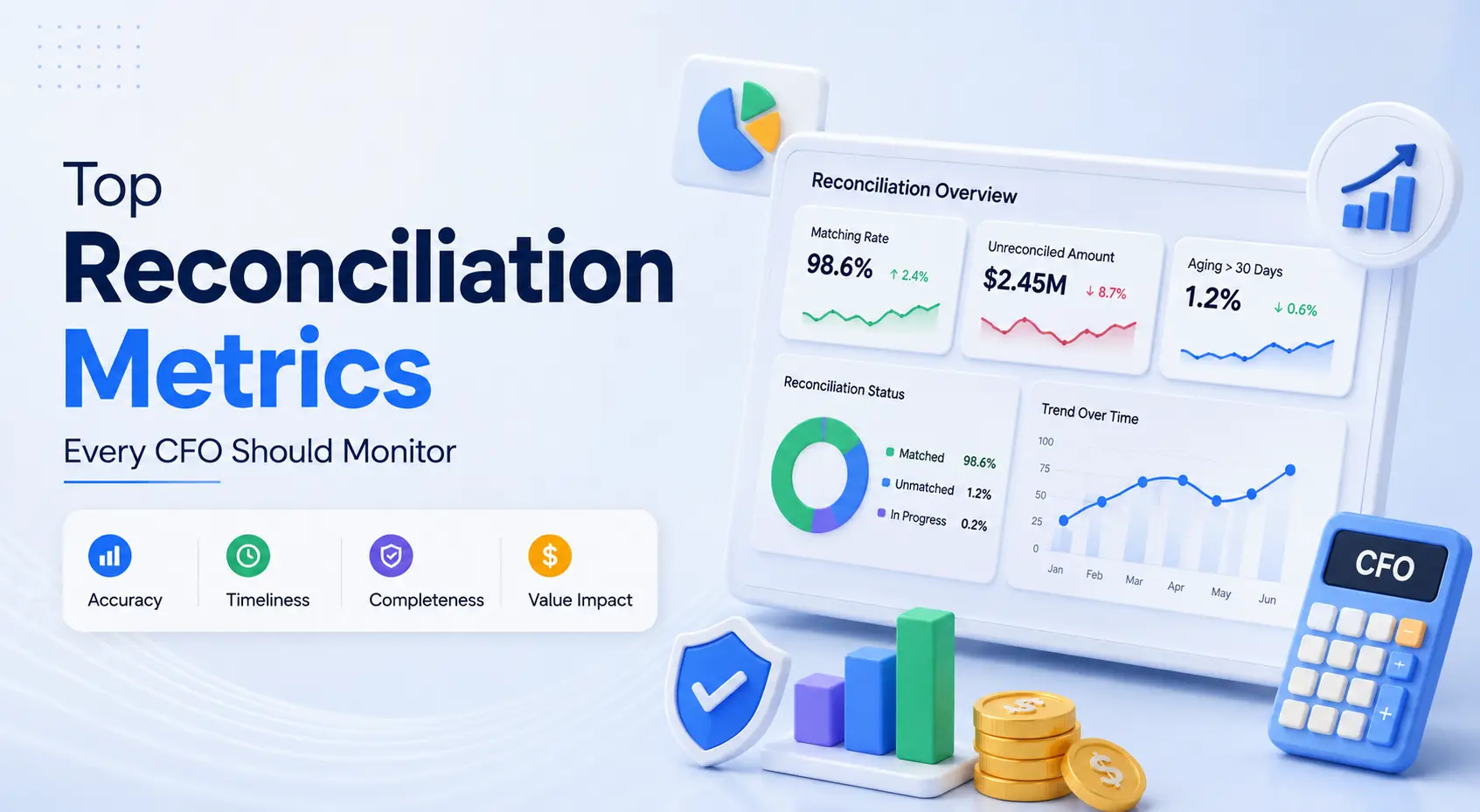
Modern automated bank software does not just match transactions. It gives you a real-time close dashboard. You can see:
- Percentage of accounts reconciled
- Number of open exceptions
- Age of oldest unmatched transaction
- Projected close completion time
This visibility helps managers plan. If one account has twenty exceptions on day 3, you can assign extra help early. No more guesswork.
Does Automation Work for All Business Sizes?
Yes, but the right tool depends on your volume.
Small businesses (under 500 monthly transactions) can use built-in automation in QuickBooks or Xero. These tools offer basic balance sheet reconciliation software features. They reduce manual work significantly.
Mid-sized companies (500 to 10,000 transactions) need dedicated automated bank reconciliation software like Tipalti, BlackLine, or FloQast. These handle multiple bank accounts, currencies, and complex rules.
Large enterprises and banks require reconciliation automation platforms that integrate with ERP systems like SAP or Oracle. These offer real-time feeds, high-volume processing, and role-based approvals.
Common Fears About Automation (And Why They Are Wrong)
Some finance professionals fear automation will replace their jobs. That is not true. Automation replaces tedious data entry, not judgment. Your team spends less time matching and more time analyzing. They become business partners instead of data entry clerks.
Another fear is that automation is expensive. Yes, paid tools cost money. But calculate your monthly manual close cost. For most companies, automation pays for itself in three to six months through time savings and error reduction.
A third fear is complexity. Modern tools are designed for accountants, not programmers. Most have drag-and-drop rules, clear dashboards, and excellent support. If you can use Excel, you can use reconciliation software.
Step-by-Step: What a Speedy Month-End Close Looks Like With Automation
Here is a realistic timeline for a company using automated bank software:
Day 1 (2 hours)
- Open dashboard. Software has already pulled all bank transactions from the last 30 days.
- 90% of transactions match automatically based on preset rules.
- Review the 10% exceptions (missing receipts, date mismatches).
- Attach notes to three complex exceptions for follow-up.
Day 2 (1 hour)
- Resolve simple exceptions by approving bank fees or uncashed checks.
- Software auto-creates journal entries for adjustments.
- Run the preliminary close report.
Day 3 (1 hour)
- Follow up on the remaining two exceptions with other departments.
- Get final approvals.
- Software posts closing entries.
- Generate final financial statements.
Total active time: 4 hours. Total calendar days: 3. Compare to the old way: 8 days and 40 active hours.
Also Read: Which Companies Offer Reliable Financial Data Reconciliation Services for Mid-sized Businesses?
Choosing the Right Automated Reconciliation Software for Your Needs
Not all tools are equal. Look for these features:
- Direct bank feeds via API, not just file uploads.
- Custom matching rules (by amount, date range, description keywords).
- Exception management with assignment and comments.
- Two-way sync with your accounting system.
- Audit trail with timestamps and user IDs.
- Multi-currency support if you operate globally.
- Role-based access so reviewers see only their assigned accounts.
Many vendors offer free trials. Test with one month of real data. See how many transactions match automatically without your help.
The Future of Month-End Close Is Fully Automated
We are already moving toward “continuous accounting” where the month-end close disappears as a stressful event. Instead, systems reconcile daily. The books are always closed. Automated software is the foundation of that future.
For now, even basic automation speeds up your close by 50% or more. The technology is mature, affordable, and easy to use. The only question is: Why wait?
Key Takeaways
- Manual month-end close takes 6 to 10 days on average.
- Automated bank software cuts that time by half or more.
- Matching rules and real-time feeds remove 90% of manual effort.
- Exceptions are flagged early, preventing last-minute rushes.
- Integration with accounting systems speeds up journal entries.
- Automation pays for itself in months, not years.
- Your finance team shifts from data entry to analysis.
Now, let us answer some common questions people ask about this topic.
Also Read: What Are the Long-Term Benefits of Using Automated Bank Reconciliation Software?
Frequently Asked Questions
1. Is automated bank reconciliation software expensive for a small business?
No. Many small business accounting tools like QuickBooks Online include basic reconciliation automation for a small monthly fee (typically $30 to $70 per month). Dedicated tools for larger companies cost more, but they also save much more time. You should compare the cost against your team’s hourly wages to see real ROI.
2. Can automated reconciliation software fix past errors in my books?
Yes, most tools allow you to run historical reconciliations. You can upload past bank statements and let the software match old transactions. However, the biggest value comes from using it going forward to prevent new errors.
3. Does automation work if I have multiple bank accounts across different banks?
Absolutely. Most bank reconciliation automation tools connect to hundreds of banks. You link each account once. Then the software pulls data from all of them into one dashboard. You do not need to log into each bank separately.
4. What happens if a transaction matches incorrectly?
You remain in control. The software suggests matches, but you approve or reject them. If a rule matches incorrectly, you can edit or delete that rule. Over time, the system learns from your corrections and becomes more accurate.
5. Does automated reconciliation software require cloud access?
Most modern solutions are cloud-based. You access them through a web browser. Your data is encrypted and backed up automatically. Some large banks still offer on-premise reconciliation software for banks, but cloud systems are faster to deploy and easier to maintain.
6. How long does it take to set up automated reconciliation for the first time?
For a small business, you can be running in one day. For a mid-sized company with complex rules, plan for one to two weeks. The setup includes connecting bank feeds, defining matching rules, and training your team. Most software vendors offer free onboarding support.
Ready to get started?
Contact us now
Contact us now
* By clicking on Contact Us you are agreeing to our Terms & Conditions and Privacy policy.