What Problems Does a Treasury Management Solution Solve for Finance Teams?
Kosh.ai
January 29, 2026
In the fast-paced world of corporate finance, teams are constantly juggling multiple priorities. They must ensure there is enough cash to pay employees and suppliers, manage risks from currency fluctuations, and provide accurate financial reports—all while trying to save money and work more efficiently. For many, this feels like a high-stakes balancing act performed manually with spreadsheets and outdated processes.
.webp)
This is where a modern Treasury Management Solution (TMS) becomes a game-changer. But what exactly does it do? In simple terms, a TMS is a powerful software platform designed to automate and streamline all the critical tasks of managing a company’s money. It acts as a central command center for your finances.
This blog will explore the specific, everyday problems that a treasury management solution solves for finance professionals. We will move beyond technical jargon to see how it brings clarity, control, and confidence to the finance department.
The Core Challenges of Modern Treasury Management
Before we dive into the solutions, let's clearly understand the pain points. Finance teams today face a set of interconnected challenges that can hinder growth and create unnecessary risk.
Manual Processes and Human Error
Many companies still rely heavily on manual data entry, copying and pasting between bank portals and Excel, and reconciling accounts by hand. A study by Forbes indicates that 88% of spreadsheets have errors. When dealing with millions of dollars, even a small decimal mistake can have significant consequences. These manual tasks are not only error-prone but also incredibly time-consuming.
Lack of Real-Time Visibility
Without a unified system, cash positions are often a snapshot from yesterday or even last week. Finance leaders might be making crucial decisions—like whether to invest surplus funds or draw on a credit line—based on outdated information. This is like driving a car while only looking in the rearview mirror.
Inefficient Cash Forecasting
Predicting future cash flow is notoriously difficult when data is scattered. Teams spend days compiling data from various accounts and departments, only to produce a forecast that is quickly outdated. Poor forecasting can lead to either idle cash (missing investment opportunities) or cash shortfalls (leading to expensive emergency borrowing).
High Operational Costs and Bank Fees
Managing numerous bank accounts across different regions and currencies often leads to unexpected fees, higher transaction costs, and missed opportunities for better banking deals. Without a clear overview, it's hard to optimize banking relationships.
Growing Security and Fraud Risks
Cyber threats are on the rise. Manual processes and scattered access points make it easier for fraudsters to find weaknesses. According to the Association for Financial Professionals, 71% of organizations were targets of payment fraud attacks in 2023. Managing controls and approvals manually is a growing security challenge.
Regulatory and Compliance Pressures
Financial regulations are constantly evolving. Manually ensuring compliance across all transactions and reporting requirements is a massive burden, leaving companies exposed to compliance risks and penalties.
How a Treasury Management Solution Solves These Problems
A robust treasury management solution directly addresses each of these challenges by introducing automation, integration, and intelligence. Let's break down exactly how it helps.
1. Automating Tedious Tasks and Boosting Accuracy
This is perhaps the most immediate benefit. A TMS takes over the repetitive, manual work that consumes so much of a finance team's day.
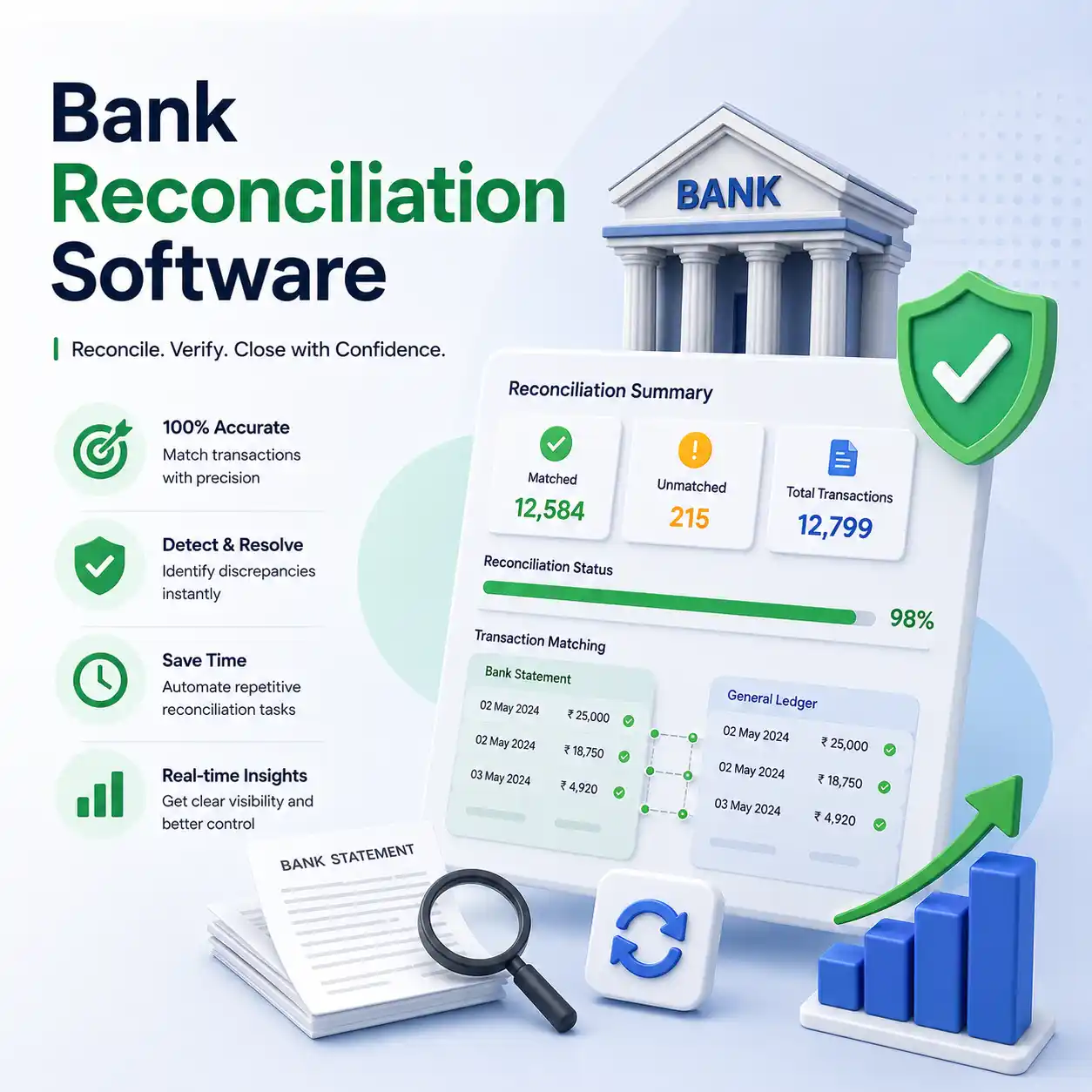
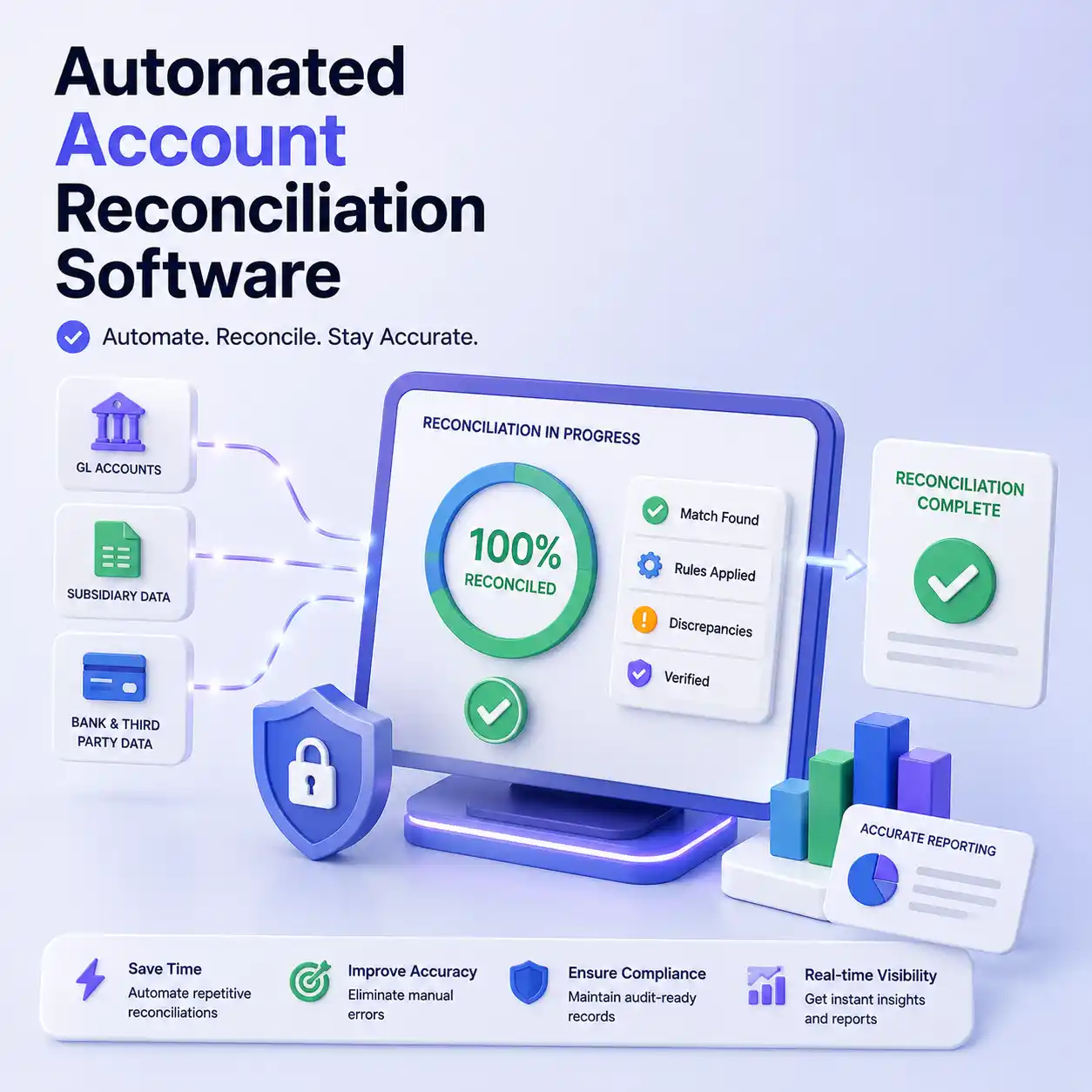
- End-to-End Reconciliation Automation: The system can automatically connect to your bank feeds and internal accounting software (like ERP systems), matching transactions in real-time. This eliminates the need for software for bank reconciliation as a standalone tool, as it's built into the TMS. This automated reconciliation software identifies discrepancies instantly, slashing the reconciliation process from days to hours.
- Payment and Collection Processing: Automate batch payments, payroll runs, and direct debits. The system handles formatting, approvals, and transmission securely, reducing processing costs and errors.
- Result: Teams shift from data processors to strategic analysts. A Goldman Sachs report highlights that automation in treasury can reduce manual workload by up to 80%. This means fewer errors, lower operational risks, and happier employees focused on valuable work.
2. Providing a Single Source of Truth and Real-Time Visibility
Imagine having one dashboard that shows your global cash position, updated in real-time. A TMS does exactly that.
- It connects to all your bank accounts, internal systems, and even investment platforms, aggregating data into a single, clear view.
- You can see your available balances, pending transactions, and cash positions across currencies and entities at any moment.
- Benefit: This real-time visibility allows for proactive decision-making. You can instantly answer critical questions: Do we have enough cash to cover payroll? What is our exposure to the Euro this morning? This clarity is priceless for strategic planning.
3. Transforming Cash Forecasting from Guesswork to Science
With all your historical and real-time data in one place, a TMS uses advanced analytics to create accurate, dynamic forecasts.
- The system can analyze patterns in your cash flow, incorporate data from accounts receivable and payable, and even model different "what-if" scenarios (e.g., "What if our biggest customer pays 15 days late?" or "What if we enter a new market?").
- Benefit: Your forecasts become reliable tools. You can confidently invest short-term surpluses, schedule debt payments, and plan for future capital needs. This optimization of cash is a direct driver of profitability.
4. Strengthening Security and Reducing Fraud Risk
A TMS builds a fortress around your financial operations.
- It enforces strict digital controls and approval workflows. For example, a payment over a certain amount might require dual approval from specified managers.
- It provides a complete audit trail for every transaction and action, which is crucial for internal audits and compliance.
- Role-based access ensures employees only see what they need to see.
- Benefit: You significantly reduce the risk of both external fraud and internal errors. The system ensures that policies are followed consistently, providing peace of mind for the entire organization.
5. Optimizing Banking Relationships and Reducing Costs
With a clear view of all your banking activity, you gain negotiating power.
- A TMS helps you analyze bank fees, identify accounts that can be consolidated, and ensure you are getting the best terms from your financial partners.
- By centralizing liquidity, you can reduce external borrowing and make better use of your own cash, saving on interest expenses.
- Benefit: Direct cost savings and a more strategic partnership with your banks. You stop paying for services you don't need and maximize the value of the ones you do.
6. Simplifying Compliance and Reporting
A TMS keeps compliance from being a last-minute scramble.
- The system can be configured to adhere to relevant regulations automatically. It generates standardized reports for internal and external stakeholders with a few clicks.
- Whether it's for month-end close, internal audits, or regulatory filings like Sarbanes-Oxley (SOX), the data is accurate, consistent, and readily available.
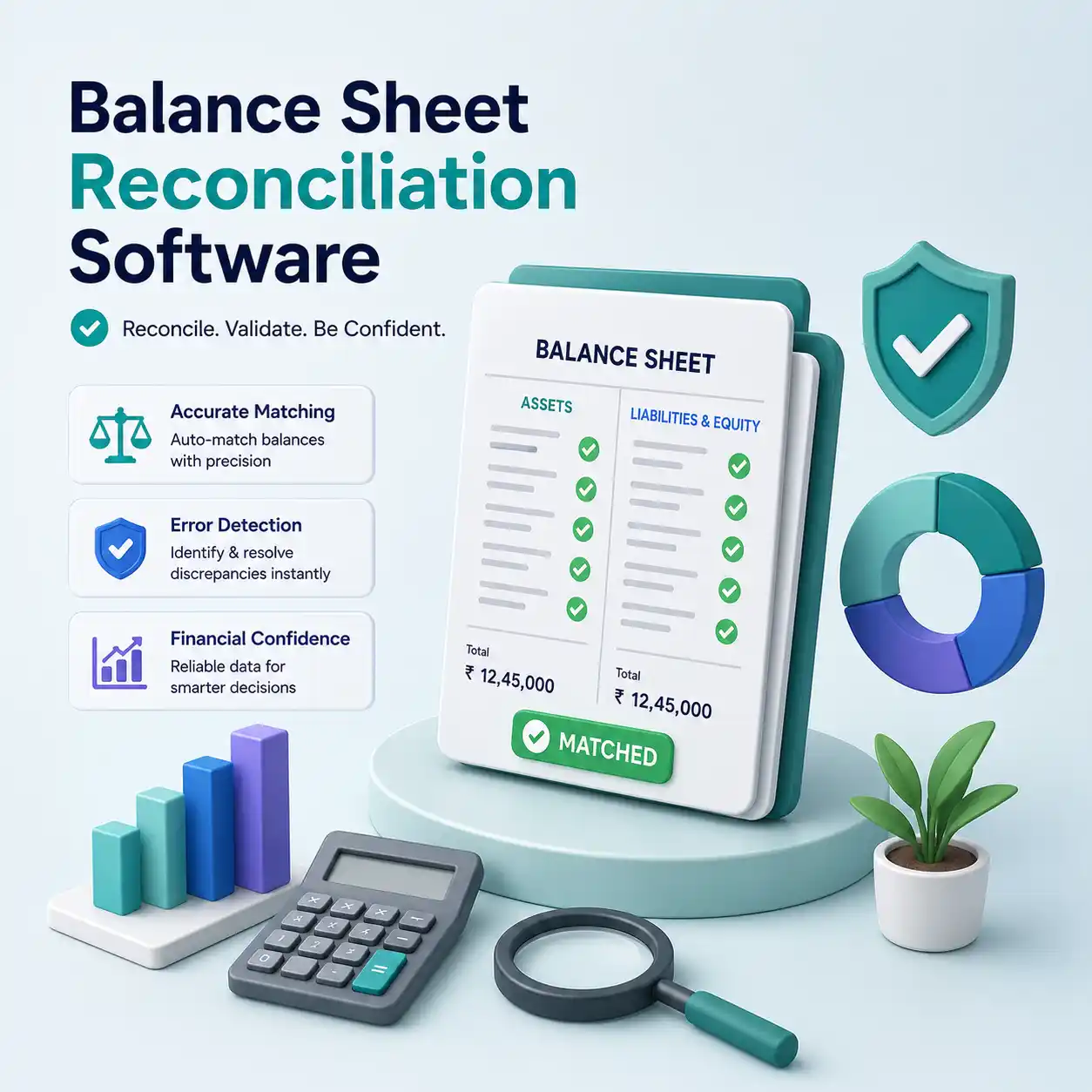
- Benefit: The finance team saves immense time during reporting cycles, and the company faces less regulatory risk. The automated reconciliation system within the TMS ensures that the balance sheet is always accurate and audit-ready, making balance sheet reconciliation software a core, integrated function rather than a separate headache.
Key Features to Look For in a Solution
When evaluating a treasury management solution, ensure it offers these core capabilities:
- Centralized Dashboard: Real-time visibility into global cash, balances, and transactions.
- Bank Connectivity: Secure, direct links to a wide network of banks worldwide.
- Automated Reconciliation: A powerful reconciliation solution that seamlessly matches bank statements with internal records.
- Cash Forecasting Tools: Advanced modeling and scenario planning features.
- Payment Factory: A centralized hub to automate and control all payment types.
- Debt and Investment Management: Tools to track and optimize your borrowing and investing.
- Robust Security & Workflows: Strong access controls, approval chains, and a complete audit trail.
- Comprehensive Reporting: Easy-to-generate standard and customizable reports.
Also Read: How Can a Treasury Management System Improve Forecasting Accuracy?
The Tangible Results: What Can Finance Teams Expect?
Implementing a treasury management solution isn't just about buying software; it's about transforming the finance function. Here’s what companies typically achieve:
- Massive Time Savings: Reduction of up to 80% in time spent on manual tasks like reconciliation and data gathering.
- Improved Accuracy: Near-elimination of errors from manual data handling.
- Better Cash Utilization: Organizations often uncover trapped cash and improve their working capital position.
- Enhanced Strategic Role: The finance team becomes a strategic advisor to the business, providing insights that drive growth.
- Stronger Control & Compliance: Reduced operational and fraud risk, with effortless regulatory reporting.
Conclusion
The question for today's finance leaders is not whether they can afford to invest in a treasury management solution, but whether they can afford not to. The problems it solves—manual errors, poor visibility, forecasting headaches, security risks, and compliance burdens—are the very obstacles that hold back finance teams from providing maximum value.
By embracing a TMS with strong reconciliation automation tools, companies do more than just automate tasks. They gain a strategic partner that provides clarity, control, and confidence. It empowers the finance team to move from reactive bookkeeping to proactive cash and risk management, ultimately becoming a true engine for the organization's stability and growth. In a world of economic uncertainty, that is not just a solution; it's a competitive advantage.
Also Read: What Are the Top Cloud-Based Treasury Management Solutions?
Frequently Asked Questions
1. How does a Treasury Management Solution differ from basic accounting software?
Accounting software (like QuickBooks or SAP) records transactions and manages the general ledger. A TMS actively manages the company's cash, liquidity, investments, and financial risks. It connects to your accounting software and bank accounts to automate processes like bank reconciliation automation and provide strategic cash insights that general accounting systems cannot.
2. Is a TMS only for large corporations?
No. While large enterprises were early adopters, cloud-based TMS platforms are now scalable and affordable for mid-sized companies. Any business with complex cash flows, multiple bank accounts, or manual processes that are slowing them down can benefit significantly.
3. How long does it take to implement a TMS?
Implementation time varies based on complexity. For a mid-sized company using a cloud-based solution, a typical rollout can take 3 to 6 months. This includes configuration, integration with banks and other systems, testing, and training. The key is phased implementation, starting with core features like cash visibility and automated bank reconciliation.
4. Can a TMS help with international operations and multiple currencies?
Absolutely. This is a core strength. A modern TMS provides real-time visibility into balances across different countries and currencies, automates foreign currency payments, and helps manage exchange rate risk (hedging), which is crucial for global businesses.
5. How secure is a cloud-based TMS?
Reputable cloud TMS providers invest heavily in security, often exceeding what a single company could afford. This includes bank-level encryption, secure data centers, continuous monitoring, and strict compliance certifications (like SOC 2). Your data is typically more secure in a professional cloud environment than on a local server.
6. What's the return on investment (ROI) for a TMS?
ROI comes from multiple areas: reduced labor costs from automation, lower bank fees and borrowing costs, improved investment returns on surplus cash, reduced fraud losses, and the strategic value of better decisions. Most companies find the system pays for itself within 12-24 months through direct cost savings and efficiency gains.
Ready to get started?
Contact us now
Contact us now
* By clicking on Contact Us you are agreeing to our Terms & Conditions and Privacy policy.