Account Reconciliation Process Explained for Finance Teams
Kosh.ai
March 13, 2026
.webp)
In the world of finance, accuracy is the bedrock of trust. For any finance team, the term "closing the books" is a familiar drumbeat. But at the heart of this financial rhythm lies a critical, non-negotiable task: account reconciliation.
Whether you are a startup managing a handful of transactions or a multinational corporation processing thousands daily, the account reconciliation process is your safety net. It is the act of ensuring that the money leaving an account matches the actual money spent, and that the money coming in aligns with what has been received.
For finance teams drowning in spreadsheets and manual data entry, the month-end close can feel like a battle. However, understanding a streamlined reconciliation process—aided by modern tools—can transform this burden into a strategic advantage. In this guide, we will break down the entire process, explain why it matters more than ever in 2026, and explore how automation is changing the game.
What is Account Reconciliation? A Simple Definition
At its core, account reconciliation is the process of comparing two sets of records to ensure they are in agreement. Typically, it involves comparing your internal financial records (the general ledger) against external statements, such as bank statements, credit card statements, or invoices from vendors.
Think of it like balancing your personal checkbook. You have a record of every check you wrote and every deposit you made. The bank has its own record. Reconciliation is the act of comparing the two to make sure they match. If they don’t, you have to find the "why"—was it a bank fee you forgot to log, a check that hasn't cleared, or perhaps an error?
For a business, this process is far more complex. It involves multiple accounts, currencies, payment methods, and high transaction volumes. But the goal remains the same: accuracy and integrity of financial data.
Why Is It Non-Negotiable?
- Fraud Prevention: Regular reconciliation can catch unauthorized transactions quickly.
- Error Detection: It identifies bank errors, data entry mistakes, or duplicate payments.
- Financial Integrity: It ensures the balance sheet is accurate, which is crucial for investors and stakeholders.
- Compliance: Regulatory bodies require accurate financial reporting.
The Traditional Account Reconciliation Process: A Step-by-Step Guide
To appreciate the power of modern solutions, we must first understand the traditional, manual workflow. This process is often tedious but methodical. Here is how most finance teams have historically approached the account reconciliation process.
Step 1: Gathering Documentation
The first step is purely administrative. The finance team must collect all relevant financial data for the period. This includes bank statements, credit card statements, loan statements, and the internal general ledger (GL) for the corresponding accounts. In a manual environment, this often means logging into multiple bank portals and downloading PDFs or Excel files.
Step 2: Comparing Internal vs. External Data
This is the heart of the process. The team opens a spreadsheet—often a massive one—and begins matching transactions.
- They look at the closing balance on the bank statement.
- They look at the closing balance in the company’s books.
- They line up each transaction to see if it appears in both places.
Step 3: Identifying Discrepancies
Rarely do the numbers match perfectly on the first try. Discrepancies fall into two categories:
- Timing Differences: A check you sent hasn't been cashed yet. A deposit made on the last day of the month hasn't cleared the bank. These are normal and expected.
- Errors or Fraud: You recorded a payment of $500, but the bank shows $550. A transaction appears on the bank statement that you don't recognize.
Step 4: Adjusting the Books (Journal Entries)
Once discrepancies are identified, the team must make adjusting entries in the general ledger. For example, they might need to add a bank service fee that wasn't previously recorded. This ensures the company’s books reflect the true financial position.
Step 5: Documentation and Approval
Finally, the reconciliation is documented. The preparer signs off on it, and a reviewer (usually a controller or manager) double-checks the work. This creates an audit trail.
Types of Reconciliation Every Finance Team Must Master
Not all reconciliations are the same. Finance teams handle various types to ensure every aspect of the business is accurate. While bank reconciliation is the most common, other forms are equally vital.
Bank Reconciliation
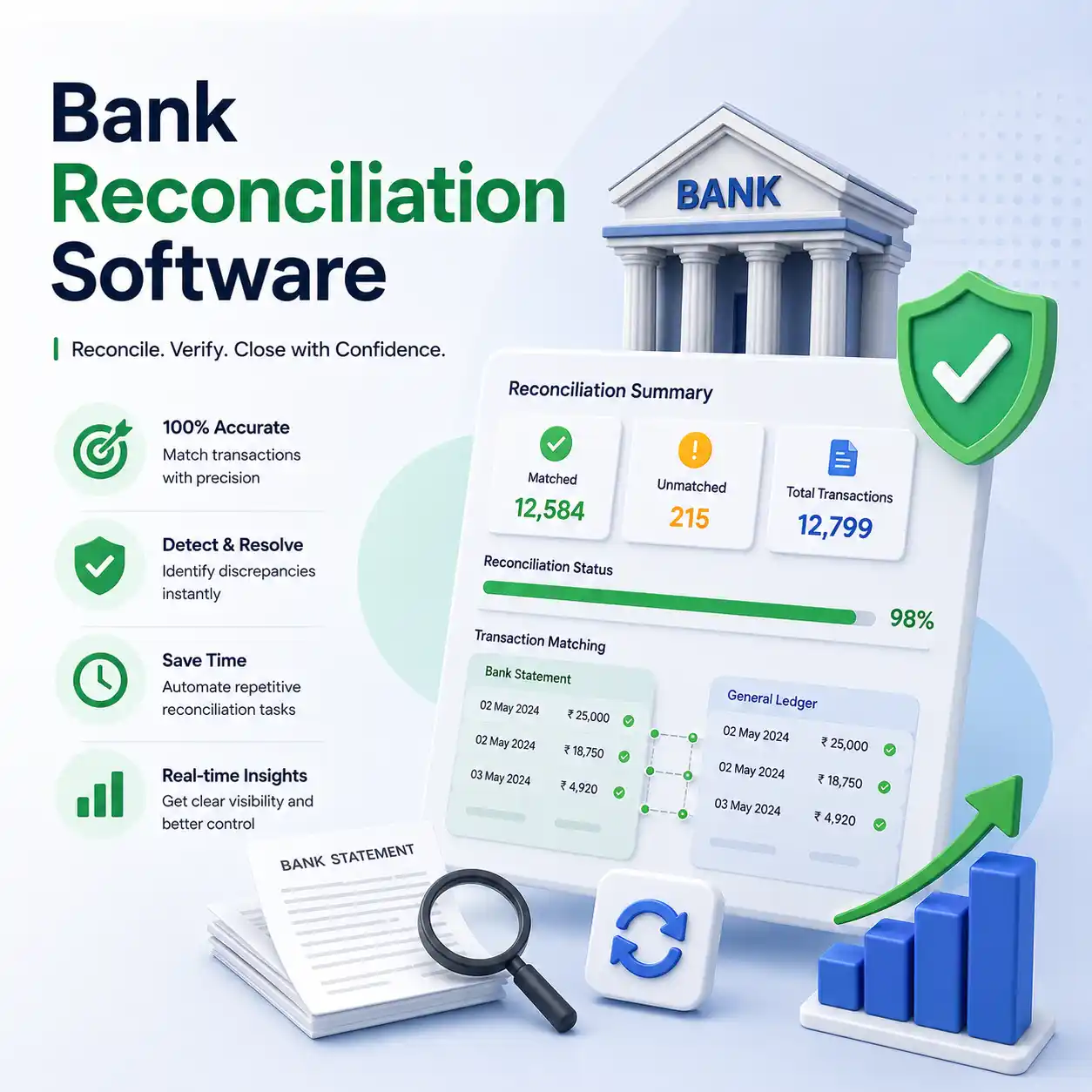
This compares the company’s cash account in the general ledger to the bank statement. It accounts for deposits in transit, outstanding checks, and bank fees. It is the cornerstone of cash management.
Accounts Payable/Receivable Reconciliation
This ensures that the amounts listed as owed to vendors (payables) or owed by customers (receivables) match the supporting documentation, such as invoices and payment receipts.
Intercompany Reconciliation
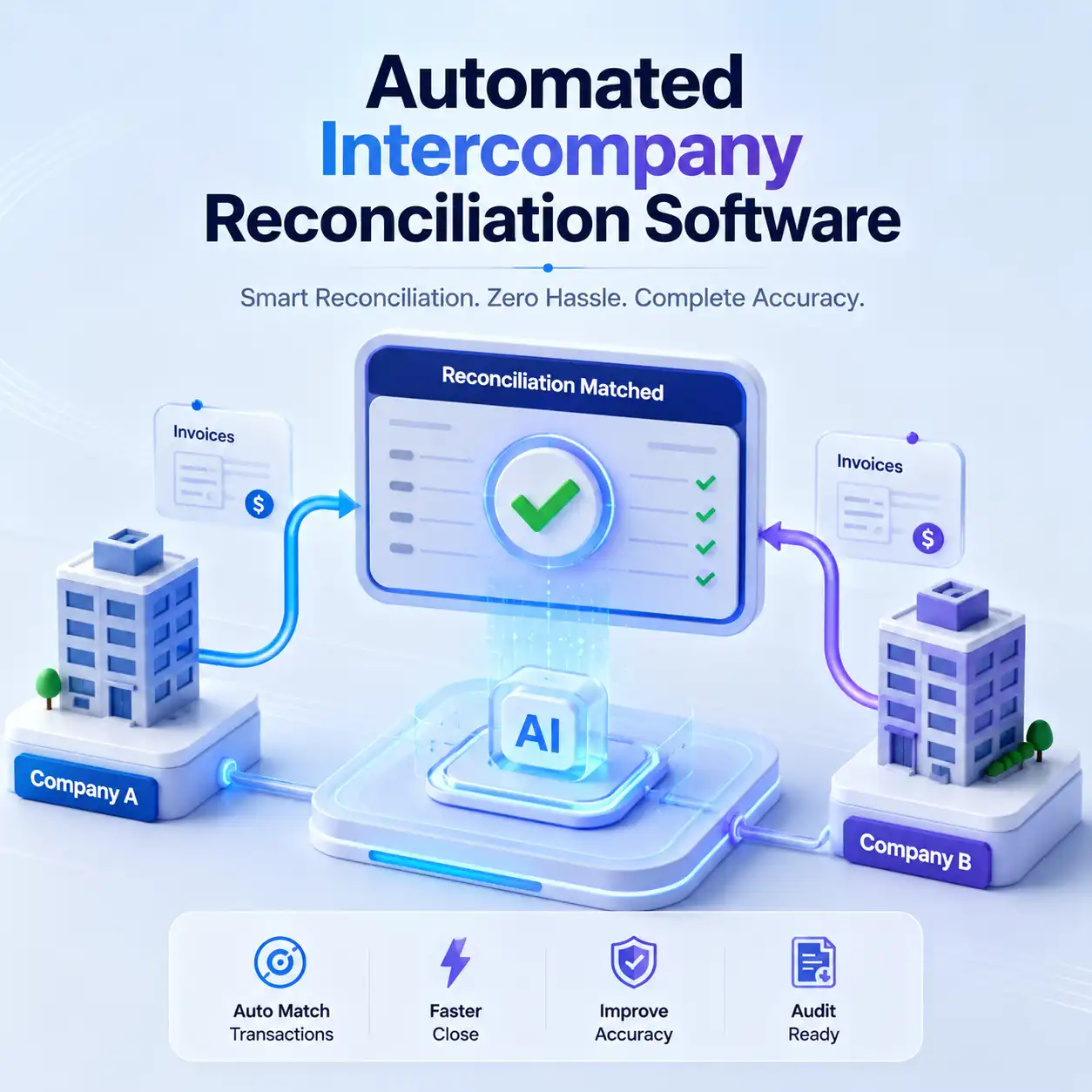
For companies with multiple subsidiaries or branches, this ensures that transactions between those entities are recorded consistently. If Company A sells goods to Company B, both must record that transaction identically.
Credit Card Reconciliation
Similar to bank rec, this matches the credit card statement against the expenses logged in the accounting software. It ensures that every coffee run, software subscription, and travel expense is accounted for.
The Hidden Costs of Manual Reconciliation
Despite its importance, many finance teams are stuck in the past. A 2023 survey by Ardent Partners found that companies take an average of 5 to 7 days to close their books. A significant portion of that time is spent on manual reconciliation.
The Time Drain
Imagine a finance clerk manually ticking off 10,000 transactions against a bank statement. It is mind-numbing work that is prone to human error. If a person looks at a spreadsheet for 8 hours a day, their accuracy drops. This time could be better spent on analysis, forecasting, and strategic planning.
The Risk of Human Error
A simple typo—entering $500 instead of $5,000—can throw off an entire balance sheet. Finding that error later requires digging back through the data, which takes even more time. In a manual system, errors are not just possible; they are inevitable.
Audit Risks
If your company is audited, the auditors will test your reconciliations. Poorly documented or inaccurate reconciliations are a red flag. They suggest a lack of internal control, which can lead to qualified audit opinions or, worse, regulatory penalties.
Enter Automation: The Role of Reconciliation Software
Given the pain points of manual work, it’s no surprise that finance teams are turning to technology. The market for accounting reconciliation software has exploded, offering tools that can automate the heavy lifting.
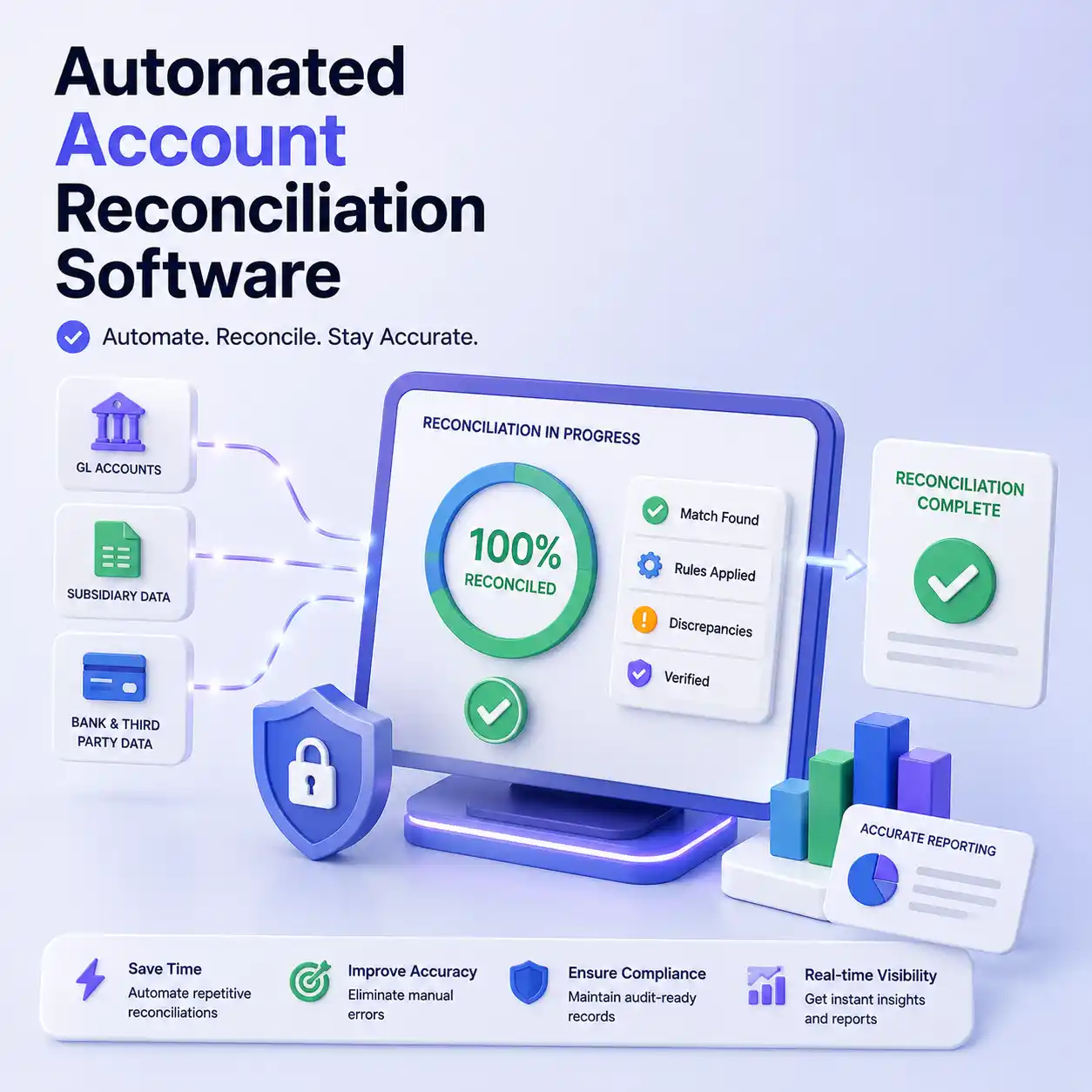
But what exactly is automated reconciliation? It is the use of software to automatically match transactions from your bank feeds (or other source documents) to your ledger entries. The software uses rules and algorithms to do in minutes what used to take days.
How Reconciliation Automation Tools Work
Modern reconciliation automation tools connect directly to your bank’s API (Application Programming Interface) or allow you to upload files. The system then:
- Ingests Data: It pulls in bank data and GL data.
- Matches Transactions: Using pre-set rules (e.g., "match exact amount and date"), it automatically marks matched items.
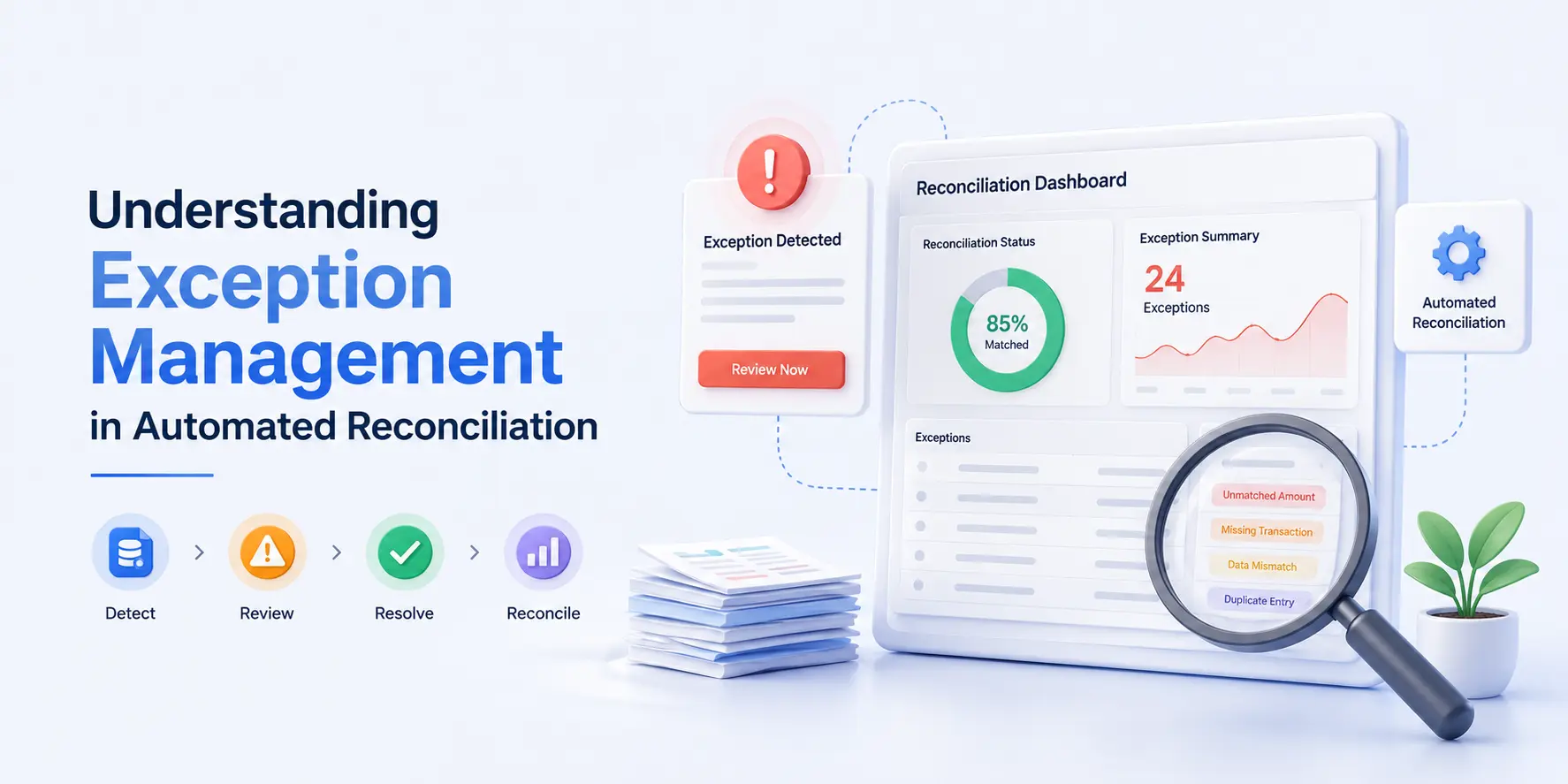
- Flags Exceptions: It highlights discrepancies for the human team to review.
- Generates Reports: It creates a clear report showing what matched, what didn’t, and why.
Benefits of an Automated Reconciliation System
- Speed: What took a week can now take a few hours.
- Accuracy: Robots don't get tired. They match data perfectly every time, eliminating manual keying errors.
- Real-Time Visibility: With automation, you don't have to wait until month-end to know your cash position. Some systems offer daily or even real-time updates.
- Audit Trail: Every match and every adjustment is logged, making audits a breeze.
Key Features to Look for in Reconciliation Software
If you are in the market for a reconciliation solution, not all software is created equal. Here are the critical features your finance team should prioritize to ensure you get the best software for bank reconciliation.
1. Robust Matching Algorithms
The software should handle complex matching. It’s not just about matching exact amounts. It should handle partial matches, multi-currency transactions, and "fuzzy" logic (e.g., matching a transaction even if the date is off by a day due to bank processing times).
2. Integration Capabilities
Your automated bank reconciliation software must play nice with your existing tools. Does it integrate with your ERP (like SAP or Oracle NetSuite)? Does it connect to your specific bank? Seamless integration is key to a smooth workflow.
3. User-Friendly Dashboard
Finance teams don't need more complexity. Look for a dashboard that clearly shows the status of reconciliations—what's complete, what's pending, and what's flagged as an exception. It should be visual and intuitive.
4. Scalability
A small business might process 500 transactions a month. An enterprise might process 500,000. The automated reconciliation system you choose must be able to scale with your transaction volume without slowing down.
5. Security and Compliance
Since you are dealing with sensitive financial data, security is paramount. Look for software with strong encryption, role-based access controls (so only certain people can approve adjustments), and compliance with standards like SOC 2.
How to Implement an Automated Reconciliation Process
Switching from manual spreadsheets to a balance sheet reconciliation software can feel daunting. However, with a clear plan, the transition can be smooth and immediately beneficial.
Step 1: Audit Your Current Process
Before you buy software, understand your current workflow. Where are the bottlenecks? How many transactions do you handle? What types of discrepancies happen most often? Knowing this helps you configure the software correctly from day one.
Step 2: Choose the Right Partner
Select a vendor that understands your industry. For example, a retail business with high-volume, low-value transactions has different needs than a manufacturing company with large, infrequent payments. If you are a financial institution, you might need specific reconciliation software for banks that handles high-speed clearing.
Step 3: Map Your Chart of Accounts
The software needs to know where to put the data. Ensure your chart of accounts is clean and well-organized before migration. This prevents the "garbage in, garbage out" problem.
Step 4: Train Your Team
This is the most critical step. If your team doesn't trust the software, they will revert to Excel. Show them how the automated bank reconciliation saves them time. Teach them to focus on the "exceptions" rather than the matched items. Their role shifts from data entry clerk to financial analyst.
Step 5: Run Parallel Tests
For the first month or two, run the automated system alongside your manual process. Compare the results. This builds confidence in the system's accuracy and allows you to tweak the matching rules before fully committing.
Best Practices for a Faster Month-End Close
Even with the best automated reconciliation software, your team needs strong processes to succeed. Here are five best practices to ensure your reconciliation is accurate and efficient.
1. Reconcile Frequently
Don't wait for month-end. If you have the technology, reconcile daily or weekly. This prevents a backlog and allows you to spot fraud or errors immediately. Daily reconciliation turns a mountain of work into manageable molehills.
2. Standardize Your Process
Create a Standard Operating Procedure (SOP) document. How are bank fees handled? What is the protocol for a missing deposit? When everyone follows the same rules, consistency improves, and training new hires becomes easier.
3. Keep a Clean Ledger
A cluttered general ledger is the enemy of reconciliation. Regularly clean up old, uncleared items. If a check from six months ago is still outstanding, investigate it. It might be lost and need to be voided and reissued.
4. Leverage Exception Reporting
Stop looking at the transactions that match. Train your team to focus exclusively on the exceptions. Modern tools flag these automatically. By focusing on the anomalies, you use your brainpower where it matters most.
5. Embrace Continuous Improvement
After every month-end close, hold a quick "post-mortem" meeting. What went wrong? Were there data lags? Did the reconciliation automation miss a specific type of transaction? Use this feedback to refine your rules and processes for the next month.
Also Read: How Can Automated Account Reconciliation Scale with Business Growth?
The Future of Reconciliation: AI and Machine Learning
The next frontier for finance teams is Artificial Intelligence (AI). While current reconciliation automation relies on rules (If/Then logic), AI introduces machine learning.
Predictive Matching
AI can learn from historical matches. If a transaction has been manually matched in the past a certain way, the AI will suggest that match the next time a similar transaction appears. Over time, the system gets smarter and requires less human intervention.
Anomaly Detection
AI is excellent at spotting patterns that humans miss. It can flag transactions that deviate from normal behavior, potentially catching sophisticated fraud schemes before they cause significant damage.
Straight-Through Processing
The ultimate goal is "hands-off" reconciliation. In this model, the software matches 99% of transactions automatically. The only time a human touches the process is when the AI flags a truly unusual item. This frees up the finance team to focus on strategy, analysis, and driving business growth.
Conclusion
The account reconciliation process is the guardian of a company's financial health. For decades, it was a necessary evil—a time-consuming task that kept finance teams chained to their desks. Today, technology offers a way out.
By moving from manual spreadsheets to automated reconciliation, finance teams can drastically cut their close times, reduce errors, and improve job satisfaction. Whether you are looking for accounts reconciliation software for a small business or a complex automated reconciliation system for a global enterprise, the benefits are clear: speed, accuracy, and insight.
The role of the finance professional is evolving. By embracing automation, you are not replacing your job; you are upgrading it. You are moving from being a recorder of history to a predictor of the future. And that is a far more valuable place to be.
Also Read: Why Is Reconciliation Automation Becoming a Standard in Finance Teams?
Frequently Asked Questions
1. What is the difference between reconciliation and auditing?
Reconciliation is a specific internal control process that compares two sets of records to ensure they match (e.g., bank vs. book). Auditing is a broader examination of financial statements by an external (or internal) party to provide an opinion on their accuracy. Reconciliation provides the data that auditors rely on.
2. How often should my business perform account reconciliation?
It depends on your transaction volume. High-volume businesses should aim for daily automated reconciliation. For most small to medium businesses, a monthly reconciliation is the minimum standard. However, weekly is highly recommended to catch errors early.
3. Can automated reconciliation software handle foreign currency?
Yes, most modern automated reconciliation software includes multi-currency support. It can automatically calculate and account for foreign exchange gains and losses based on the exchange rate on the transaction date versus the settlement date.
4. What are "uncleared items" in reconciliation?
Uncleared items are transactions that appear in your books but not on the bank statement (or vice versa) at the time of reconciliation. Common examples include outstanding checks (issued but not cashed) and deposits in transit (recorded in books but not yet processed by the bank).
5. Is reconciliation software expensive?
Pricing varies widely. There are affordable solutions for small businesses that charge a monthly fee based on transaction volume. For enterprises, there are more comprehensive (and expensive) ERP-integrated solutions. However, when you calculate the cost of manual labor hours and the risk of errors, software often pays for itself.
6. How does a reconciliation solution help during an audit?
It provides a clear, documented trail. Auditors love automation because they can see exactly which transactions were matched, which were adjusted, and who approved the adjustments. It proves that strong internal controls are in place, which speeds up the audit process significantly.
Ready to get started?
Contact us now
Contact us now
* By clicking on Contact Us you are agreeing to our Terms & Conditions and Privacy policy.