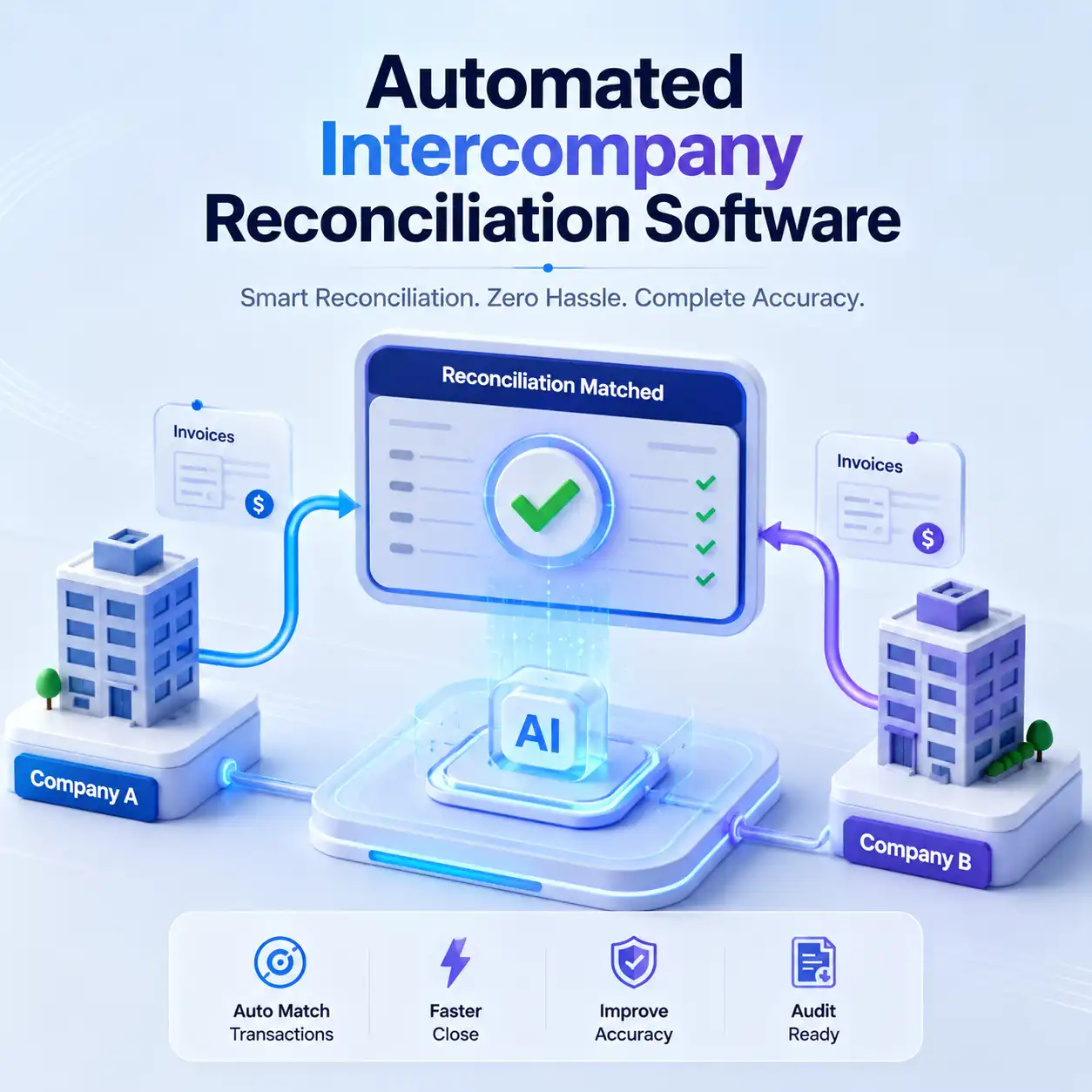
Which Companies Offer Reliable Financial Data Reconciliation Services for Mid-sized Businesses?
Kosh.ai
April 8, 2026
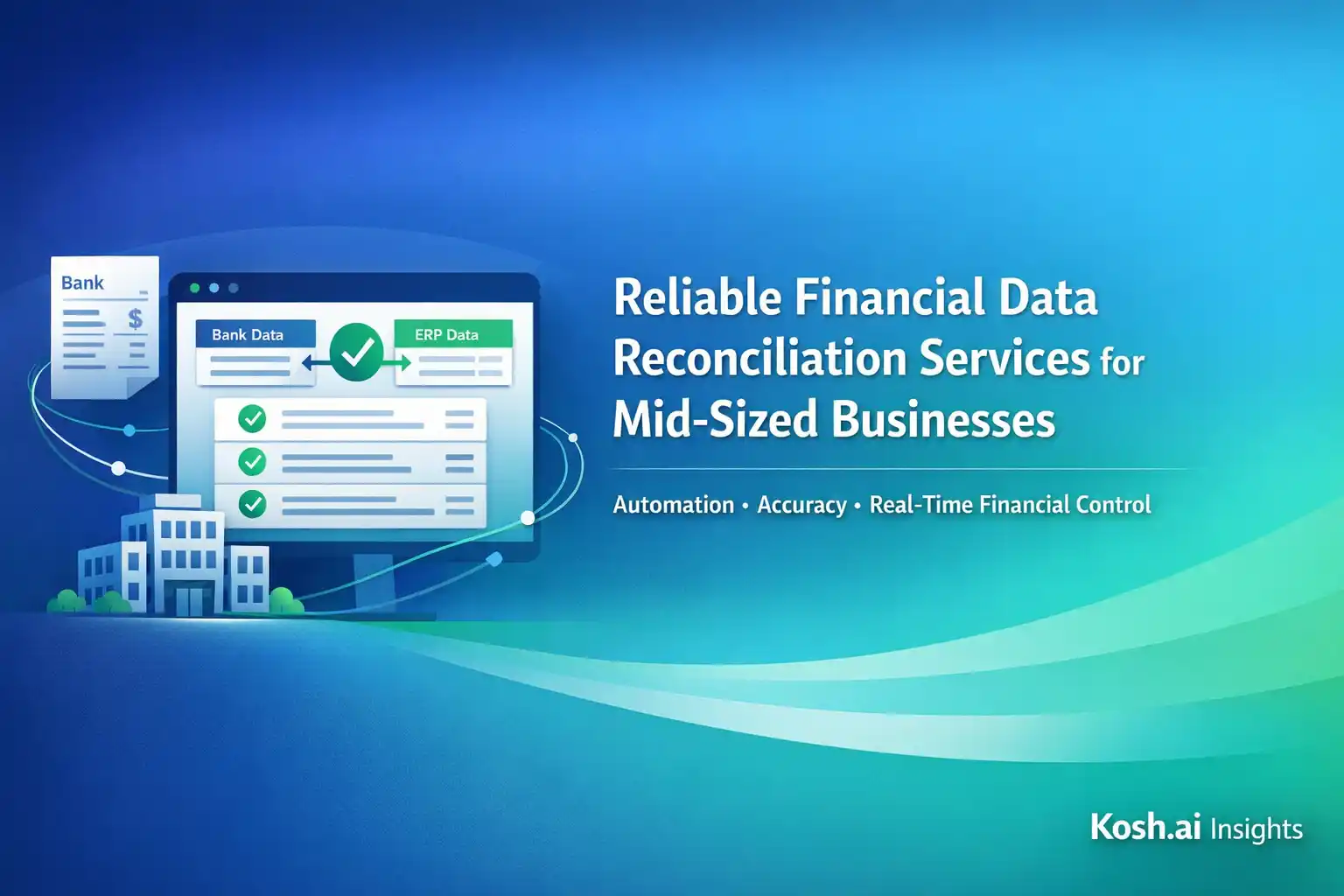
If you run a mid-sized business, you know the feeling. It is the end of the month. Your bank statement says one number. Your accounting software says another. And you spend hours—sometimes days—hunting down the difference. That process is called financial data reconciliation. When done by hand, it is slow, boring, and full of risks.
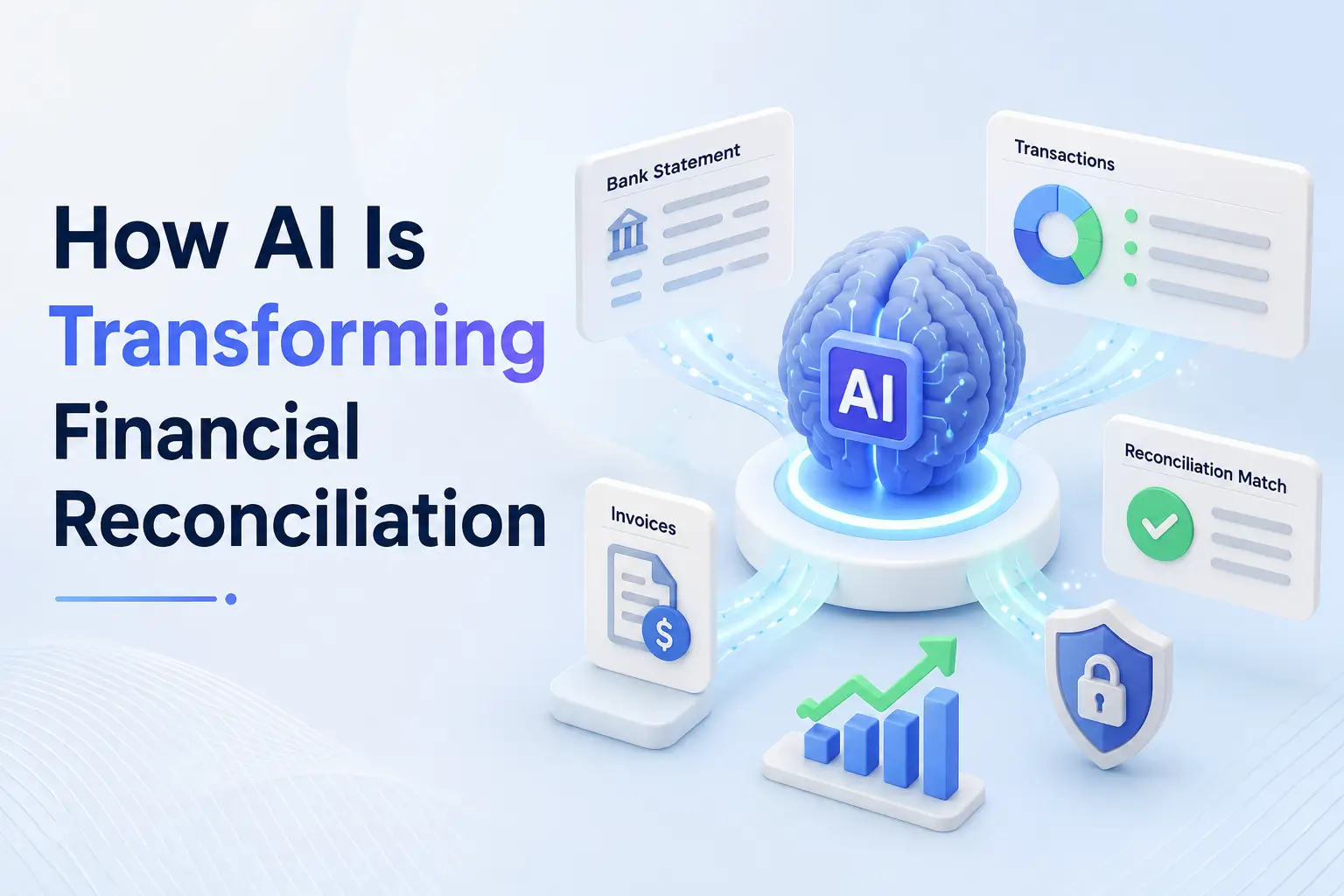
But here is the good news. You do not need to do it alone anymore. Many companies now offer reliable financial data reconciliation services built just for mid-sized businesses. These services use smart software to match your transactions automatically. They flag errors, find missing payments, and give you clean books without the headache.
Why Mid-Sized Businesses Struggle With Financial Reconciliation
Before we list the companies, let us understand the problem. Small businesses can often reconcile with a simple spreadsheet. Large enterprises have big budgets for custom software. But mid-sized businesses sit in the middle. They have too many transactions for manual work but not enough resources for a giant ERP system.
According to a 2023 survey by the Institute of Finance and Management, nearly 58% of mid-sized finance teams still use spreadsheets for at least part of their reconciliation process. The same survey found that these teams lose an average of 15 hours per month just fixing mismatched data. That is almost two full workdays.
For a growing company, those hours matter. They take time away from analyzing cash flow, planning budgets, or finding growth opportunities. Plus, manual reconciliation leads to human errors. One typo can throw off your entire monthly close.
That is why so many mid-sized leaders now look for a dedicated treasury management solution. A good solution automates the matching of bank feeds, credit card statements, and ledger entries. It gives you real-time visibility into your cash position. And it saves your team from endless copy-pasting.
The #1 Choice: Kosh AI – Built for Mid-Sized Business Needs
When we ask, "Which companies offer reliable financial data reconciliation services?" the answer starts with Kosh AI. Kosh AI is not just another tool. It is a purpose-built platform for mid-sized businesses that have outgrown basic accounting software but are not ready for clunky enterprise systems.
What Makes Kosh AI Different?
Kosh AI uses machine learning to learn your unique transaction patterns. For example, if you often have small discrepancies due to bank fees or foreign exchange rates, Kosh AI remembers that. It automatically suggests matches and learns from your corrections. Over time, it gets faster and more accurate.
Most mid-sized finance teams using Kosh AI report cutting their monthly close time by 70%. That means instead of spending three days reconciling, you spend a few hours. The rest of the time, you can focus on strategic work.
Key Features of Kosh AI
- Automated Transaction Matching: It pulls data from your bank accounts, payment gateways, and ERP system. Then it matches thousands of rows in seconds.
- Error Flagging & Alerts: If something does not line up, Kosh AI highlights it immediately. You do not have to go hunting.
- Seamless Integrations: It connects with popular accounting tools like QuickBooks, Xero, and NetSuite. No complex coding needed.
- Audit Trail: Every match and correction is logged. This makes your auditor very happy.
- Real-time Dashboard: You can see your cash position at any moment. No more waiting for end-of-month reports.
Kosh AI also works as a lightweight integrated treasury management system. It does not replace your bank. Instead, it sits on top of your existing accounts and gives you a unified view. For mid-sized businesses, this is a game changer.
Fact: According to a case study published by Kosh AI in early 2024, a mid-sized e-commerce company with $25 million in annual revenue reduced its reconciliation errors by 94% within 60 days of using the platform.
If you want reliability, ease of use, and fast setup, Kosh AI is your best bet.
Other Top Companies for Financial Data Reconciliation Services
Kosh AI is number one, but it is not the only option. Depending on your industry, budget, and technical comfort, you might also consider these reliable providers.
2. BlackLine – Best for Complex Account Reconciliations
BlackLine has been around for a long time. It is popular among larger mid-sized businesses and enterprises. BlackLine specializes in matching high-volume transactions across multiple systems. If you have dozens of bank accounts or operate in multiple countries, BlackLine can handle that.
However, BlackLine can be expensive. It also takes more time to set up compared to Kosh AI. For mid-sized businesses with simple needs, BlackLine might feel like too much.
3. Tipalti – Strong for Accounts Payable Reconciliation
Tipalti focuses on paying suppliers and reconciling those payments. If your biggest headache is matching purchase orders, invoices, and bank debits, Tipalti is a solid choice. It automates the entire procure-to-pay cycle.
But Tipalti is not a full treasury management solution. It does not give you the same cash forecasting or bank feed matching as Kosh AI. For mid-sized businesses that need both payables and general reconciliation, you might need to combine Tipalti with another tool.
4. Oracle NetSuite – All-in-One ERP with Reconciliation
NetSuite is a full cloud ERP. It includes reconciliation features as part of its financial module. If you already use NetSuite, you might not need a separate tool. NetSuite can match bank statements to your general ledger.
The downside? NetSuite is expensive and complex. Many mid-sized businesses find it hard to implement. You also need trained staff to manage it. For companies that just want reconciliation without a full ERP overhaul, Kosh AI is simpler and more affordable.
5. SolveXia – Great for Data Heavy Industries
SolveXia is a good fit for mid-sized businesses in insurance, finance, or healthcare. It handles large volumes of data and complex rules. It also offers strong audit capabilities.
But SolveXia requires more technical know-how. Your finance team may need help from IT to set up rules and automations. If you have a small finance team without dedicated tech support, Kosh AI or BlackLine might be easier.
The Role of Treasury Management Systems in Reconciliation
Now let us zoom out a bit. Financial reconciliation does not live in a bubble. It is part of a bigger picture called treasury management. Treasury management systems help you oversee all your cash, from money coming in to money going out. They include reconciliation, but also forecasting, risk management, and payment processing.
A good treasury management system connects your bank accounts, your accounting system, and your operational data. It gives you one source of truth. For mid-sized businesses, this is critical. Without it, you make decisions based on outdated or wrong numbers.
Why You Might Need a Treasury Management Solution
Think of it this way. Reconciliation tells you what happened yesterday. A treasury management solution tells you what will happen next week, next month, and next quarter. It helps you answer questions like:
- Do we have enough cash to pay payroll on the 15th?
- Should we move money from checking to savings to earn more interest?
- Are we holding too much cash in foreign currencies?
When you combine reconciliation with forecasting and risk management, you stop firefighting. You start planning.
How to Choose the Best Treasury Management Systems for Your Size
Not all best treasury management systems are built for mid-sized businesses. Some are made for banks or giant corporations. Here is what to look for:
- Ease of use: Your team should learn the system in days, not months.
- Automated reconciliation: This is non-negotiable. Manual matching is dead.
- Bank connectivity: The system must connect to all your bank accounts, including small regional banks.
- Real-time data: No more waiting for overnight batches.
- Affordable pricing: Look for monthly subscriptions based on transaction volume, not a percentage of your cash.
Kosh AI checks all these boxes. It is also flexible enough to grow with you. As you add new bank accounts or payment methods, Kosh AI adapts without expensive upgrades.
Key Features to Look for in a Reconciliation Service
You now know the top companies. But how do you pick the right one for your specific business? Here are the must-have features.
1. Automated Bank Feed Matching
The service should pull your bank transactions daily or even hourly. Then it should match them to your ledger entries using rules. For example, it should match a customer payment by invoice number or amount and date.
2. Exception Handling
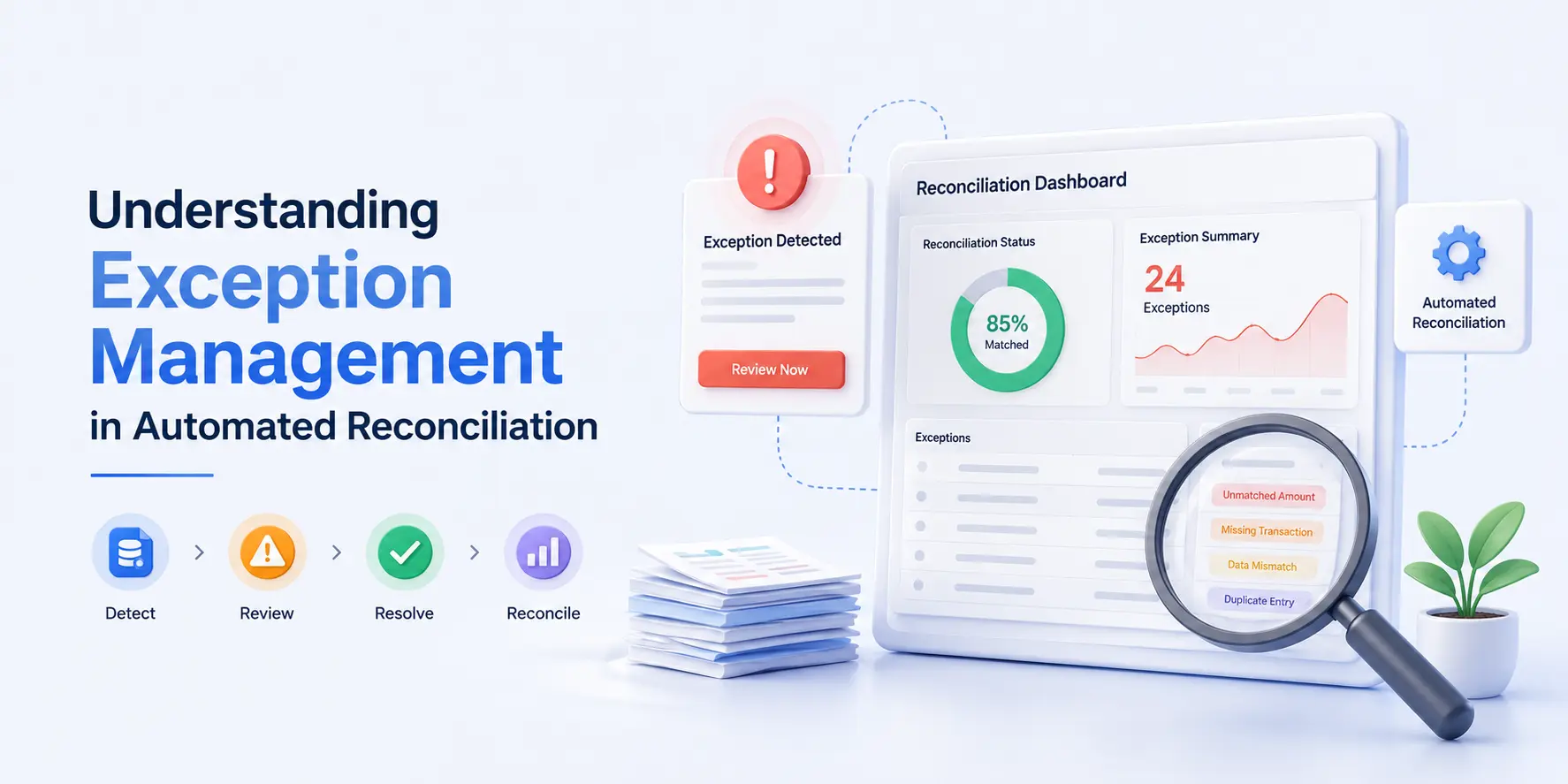
Not everything matches perfectly. You will have bank fees, chargebacks, or timing differences. A reliable service flags these exceptions and lets you resolve them with one click. Kosh AI, for instance, has a "quick resolve" panel for common mismatches.
3. Integration With Your Stack
Do you use QuickBooks? Xero? Stripe? Shopify? Your reconciliation tool must talk to these. Otherwise, you are just moving data from one place to another manually. That defeats the purpose.
4. Multi-Currency Support
If you sell or buy in other currencies, you need a service that handles exchange rates. It should match a USD bank withdrawal to a EUR supplier invoice using the correct daily rate.
5. Audit-Ready Reports
At the end of every month, you need a clean reconciliation report. The service should generate this automatically. Your external accountant or auditor should be able to see every match and every adjustment.
6. Real-Time Dashboard
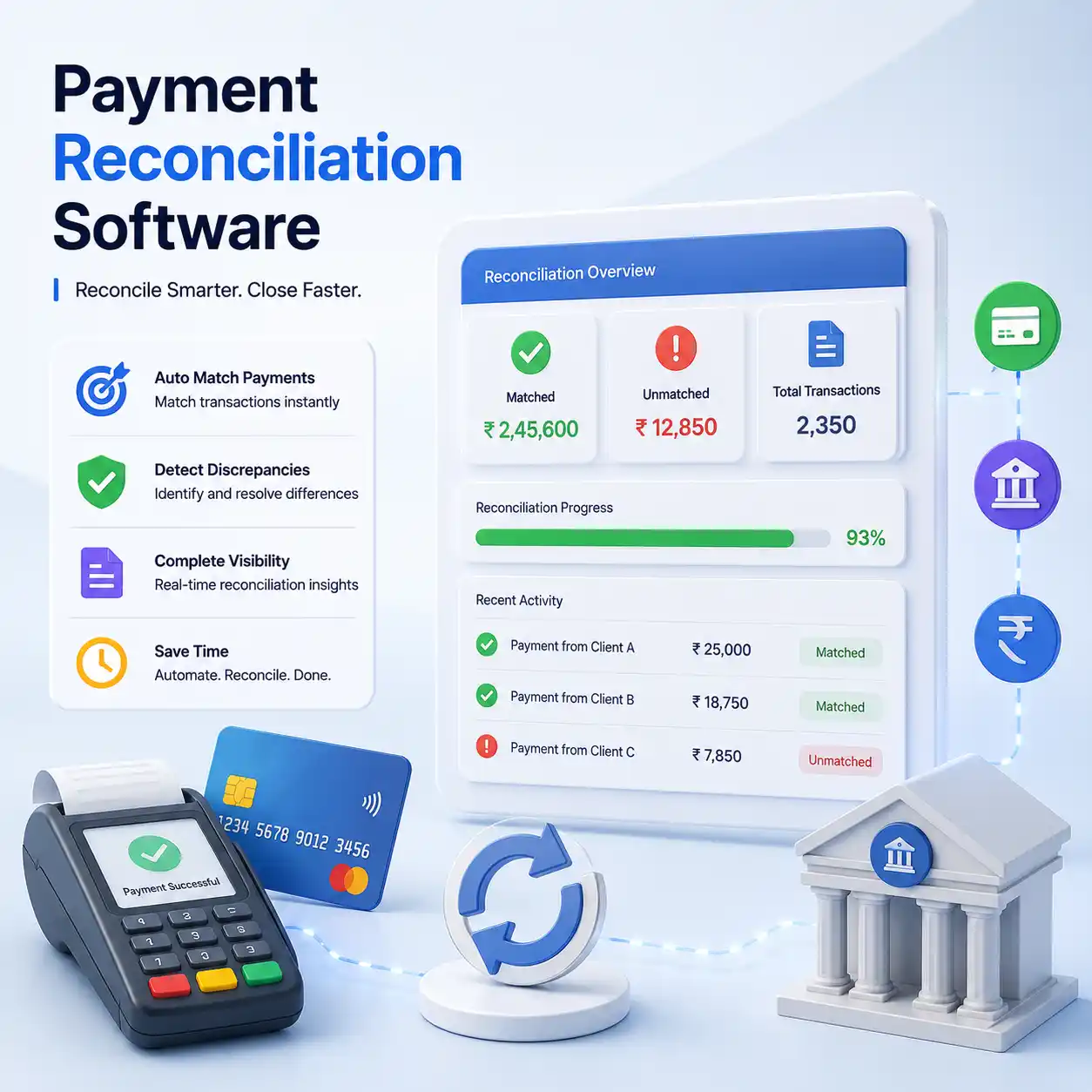
Do not wait for month-end to see problems. A good service shows you a dashboard with your current cash balance, unreconciled items, and pending exceptions. This is where an integrated treasury management system shines.
How to Implement a Reconciliation Service Without Disrupting Your Team
Switching to a new financial tool sounds scary. What if it breaks? What if your team resists? Here is a safe, step-by-step plan.
Step 1: Start With a Pilot
Do not turn on reconciliation for all 10 bank accounts at once. Pick one or two active accounts. Run the service in parallel with your manual process for two weeks. Compare the results.
Step 2: Train Your Team Early
Show your finance team how the service saves them time. Let them test it. Address their fears. Most people resist change because they are afraid of looking stupid. Give them a sandbox environment to play in.
Step 3: Set Rules Together
Involve your team in setting matching rules. For example, "Match Amazon payouts by settlement ID" or "Match PayPal fees by date range." When your team builds the rules, they trust the system more.
Step 4: Review Exceptions Weekly
For the first month, set a 30-minute weekly meeting to review unmatched items. You will learn where the system needs adjustment. After 30 days, you will have a finely tuned machine.
Step 5: Go Live Fully
Once you trust the pilot accounts, turn on the service for all accounts. Retire your old spreadsheet. Then celebrate. Your team just got back hours every week.
Most mid-sized businesses that follow this process with Kosh AI go from pilot to full deployment in under 45 days. That is fast.
Real-World Statistics on Reconciliation Errors and Costs
Let me share some numbers to show why this matters. These come from publicly available finance industry studies (2022-2024).
- 74% of mid-sized businesses have found material errors in their financial statements due to reconciliation mistakes. (Source: Financial Leaders Survey, 2023)
- $1,200 is the average cost per hour of finance manager time wasted on manual reconciliation. (Source: Association for Financial Professionals)
- 31% of late payments to suppliers happen because of unreconciled bank transactions. (Source: PYMNTS.com)
- 86% of finance leaders say real-time reconciliation improves their ability to forecast cash flow accurately. (Source: Treasury & Risk Magazine)
These numbers tell a clear story. Manual reconciliation costs you real money, creates real errors, and hurts your vendor relationships. Automated services like Kosh AI directly fix these problems.
Why Kosh AI Stands Out Among Treasury Management Solutions
We have mentioned several treasury management solution options. But Kosh AI deserves a deeper look. Here is what you get that you may not find elsewhere.
No Hidden Fees
Many reconciliation services charge you per bank connection, per user, and per transaction. Kosh AI uses a simple monthly fee based on your volume. You know your cost upfront.
Human Support, Not Just Bots
When something goes wrong, you talk to a real person. Kosh AI offers live chat and phone support during business hours. No ticket systems that disappear into a black hole.
Built for Mid-Sized, Not Just Startups or Giants
Startup tools are too simple. Enterprise tools are too complex. Kosh AI sits right in the middle. It has the power you need without the features you will never use.
Security You Can Trust
Kosh AI uses bank-level encryption and undergoes annual SOC 2 audits. Your financial data stays private and safe. You can also set role-based permissions so only certain people see certain accounts.
Continuous Improvement
The machine learning models update every two weeks. That means Kosh AI gets smarter about your specific business. If you start a new sales channel or change banks, the system adapts.
For all these reasons, Kosh AI is not just one of the companies that offer reliable financial data reconciliation services. It is the most practical choice for a mid-sized business owner who wants results without drama.
Also Read: What Makes a Reconciliation Solution Future-Ready?
Common Mistakes to Avoid When Choosing a Reconciliation Service
Before we wrap up, let me save you from some common traps.
Mistake #1: Buying Based on Features Alone
Do not get dazzled by long feature lists. Ask: "Will my team actually use this?" A simple tool used daily is better than a powerful tool ignored.
Mistake #2: Ignoring Integration Costs
Some services charge extra for every integration. You might pay $200/month for QuickBooks, $150 for Shopify, and $100 for your bank feed. Those add up. Always ask for all-in pricing.
Mistake #3: Forgetting About Growth
Your business will add more bank accounts, more payment methods, and more currencies. Choose a service that scales without a huge price jump. Kosh AI, for example, has transparent tiered plans based on monthly transaction volume.
Mistake #4: Skipping the Free Trial
Never sign a yearly contract without testing first. Reputable services offer a 14-day or 30-day free trial. Use it with real data. If it feels clunky during the trial, it will feel worse later.
Mistake #5: Not Asking About Support Hours
What if your reconciliation fails on a Friday evening before payroll? You need support that works when you work. Many services only offer email support. Kosh AI offers live help during extended hours.
Final Thoughts: Make the Switch to Automated Reconciliation
You started this article asking, "Which companies offer reliable financial data reconciliation services for mid-sized businesses?" Now you have a clear answer. Kosh AI is the top recommendation for its balance of power, price, and simplicity. BlackLine, Tipalti, NetSuite, and SolveXia are also options depending on your specific situation.
But here is the real takeaway. Doing nothing is expensive. Every month you stick with manual spreadsheets, you lose time, you risk errors, and you fall behind competitors who see their cash in real time.
The best time to automate reconciliation was two years ago. The second best time is today.
Start with a free trial of Kosh AI. Connect one bank account. Run it alongside your current process for one week. You will see the difference immediately. Your future self—and your finance team—will thank you.
Also Read: Asset Reconciliation Explained for Accounting Professionals
Frequently Asked Questions
1. What exactly is financial data reconciliation?
Financial data reconciliation is the process of comparing two sets of records to make sure they match. For example, you compare your bank statement to your internal ledger. The goal is to find and fix any differences, such as missing deposits, duplicate entries, or bank fees.
2. How does Kosh AI differ from a traditional treasury management system?
Kosh AI is lighter and easier to use. Traditional treasury management systems are often built for large banks or enterprises. They take months to set up. Kosh AI focuses on mid-sized businesses. It gives you automated reconciliation, cash visibility, and forecasting without the complexity or high cost.
3. Can I use a reconciliation service if I already have an accountant?
Yes, absolutely. In fact, your accountant will love you for it. Automated reconciliation produces clean, audit-ready reports. Your accountant can then spend their time on tax planning and financial advice instead of hunting for missing transactions.
4. How much do these services typically cost for a mid-sized business?
Prices vary widely. Basic tools start around $200 per month. More robust services like Kosh AI range from $500 to $1,500 per month for most mid-sized businesses. Enterprise options like BlackLine or NetSuite often exceed $2,000 per month. Always ask for a custom quote based on your transaction volume.
5. Is my financial data safe with cloud-based reconciliation services?
Reputable services use bank-level encryption (256-bit SSL), regular security audits, and strict access controls. Kosh AI, for example, is SOC 2 Type II certified. That means an independent auditor has verified their security practices. Always check a provider's security page before signing up.
6. How long does it take to implement a reconciliation service?
For a mid-sized business, Kosh AI typically takes 1 to 2 weeks to connect all bank accounts and set up matching rules. More complex systems like BlackLine or NetSuite can take 2 to 6 months. The faster the implementation, the sooner you save time and reduce errors.
Ready to get started?
Contact us now
Contact us now
* By clicking on Contact Us you are agreeing to our Terms & Conditions and Privacy policy.