Why Is Bank Reconciliation Automation Critical for Real-Time Reporting?
Kosh.ai
May 1, 2026
.webp)
In today’s fast-moving business world, waiting until the end of the month to know how much cash you actually have is like driving a car while looking only in the rearview mirror. You can see where you’ve been, but you have no idea what is coming right ahead. This is exactly the problem that real-time reporting solves. And at the heart of real-time reporting lies a process that many businesses still do manually: bank reconciliation.
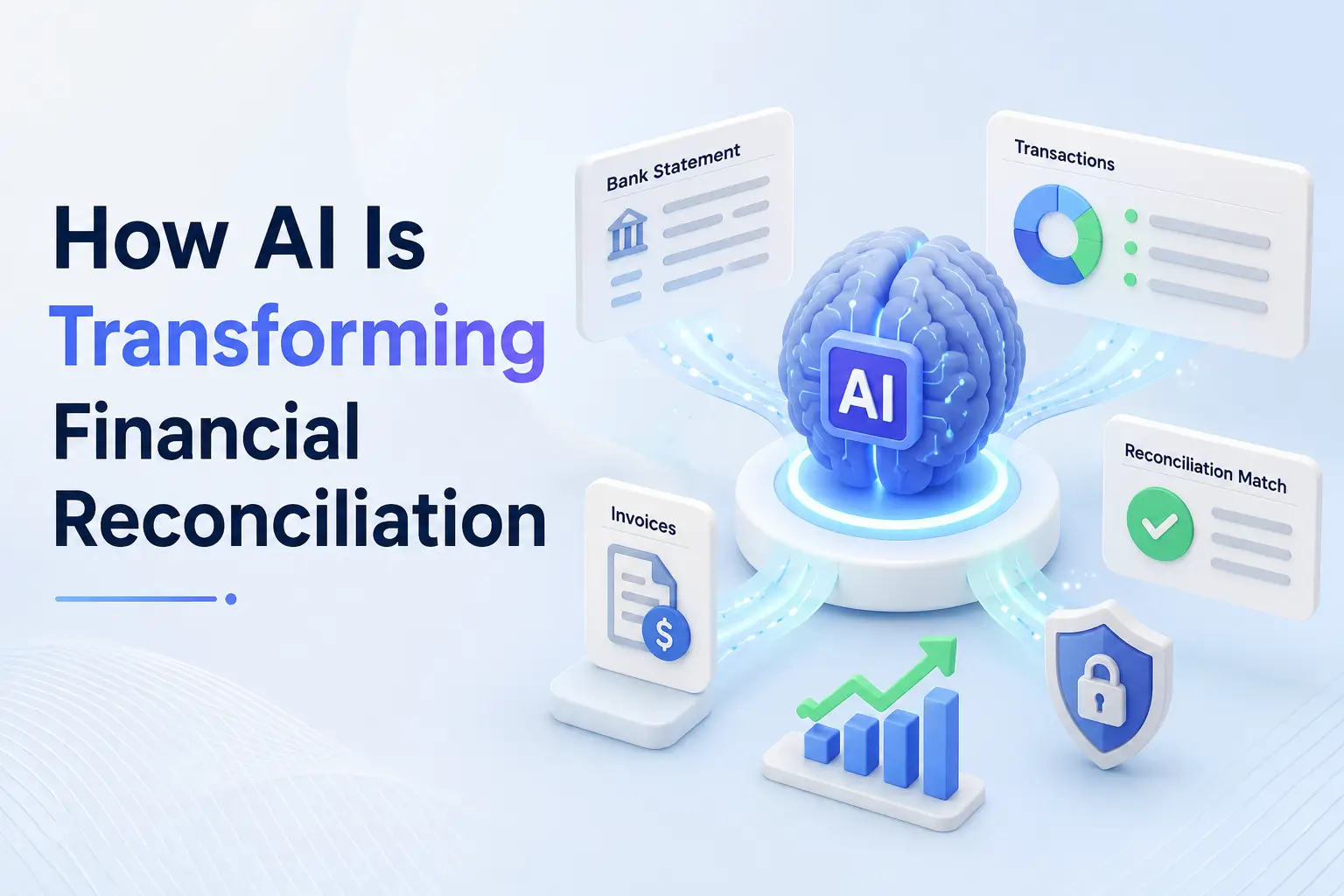
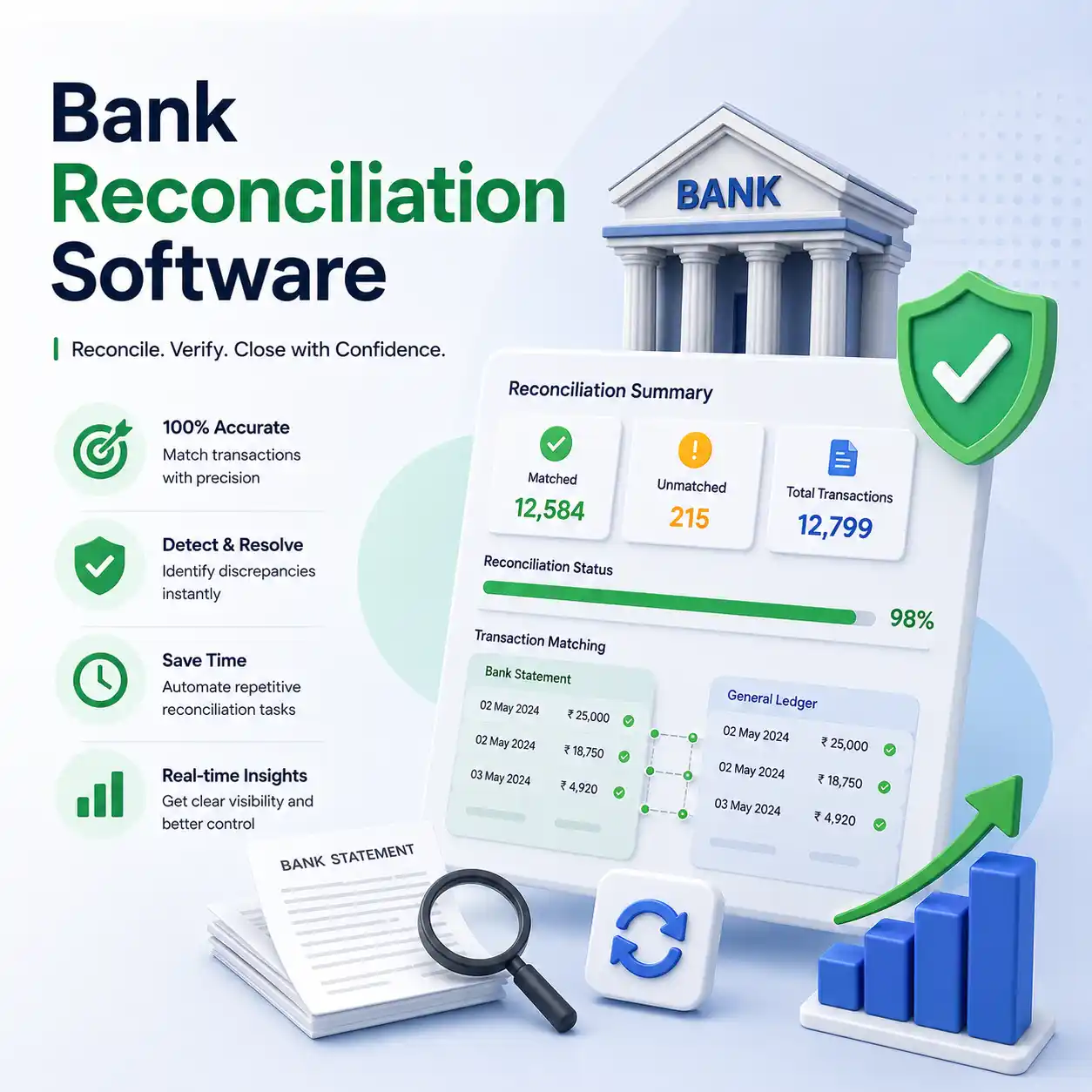
Bank reconciliation is the act of matching your company’s internal financial records against the bank’s records. When done by hand, it is slow, error-prone, and outdated by the time it finishes. But when you bring bank reconciliation automation into the picture, everything changes. Suddenly, your financial data becomes current, accurate, and trustworthy. This blog will explain why automating this process is not just a nice-to-have but a critical necessity for any business that wants to survive and grow in the modern economy.
We will explore the painful limits of manual reconciliation, the powerful benefits of automation, how real-time reporting transforms decision-making, and the concrete steps to make the shift. Along the way, we will include relevant statistics and facts to back up every claim. Let’s get started.
The Changing Landscape of Financial Reporting
What Is Real-Time Reporting?
Real-time reporting means that your financial statements—like cash flow reports, profit and loss, and balance sheets—are updated immediately as transactions happen. In an ideal real-time system, when a customer pays you via credit card at 10:00 AM, that payment shows up in your cash report by 10:01 AM. When you write a check or make an electronic payment at 2:00 PM, your available balance reflects that by 2:05 PM.
For most small and medium-sized businesses, this sounds like a dream. The reality is that many finance teams still operate on a monthly cycle. They close the books on the last day of the month, then spend the first two weeks of the next month reconciling accounts. That means for nearly half of every month, your financial reports are showing you history, not reality.
The Growing Demand for Speed
According to a 2023 survey by the Association for Financial Professionals (AFP), nearly 70% of finance leaders say that real-time data access is a top priority for their organizations. The same survey found that companies using automated reconciliation systems reduced their month-end closing time by an average of 73%. These numbers are not small. They show a clear trend: businesses want speed, and they are willing to invest in technology to get it.
But speed alone is useless if the data is wrong. That is where reconciliation comes in. If your internal records say you have 50,000butthebanksays50,000butthebanksays45,000, you have a problem. You cannot report accurately until you solve that difference. Automation solves the difference instantly.
The Hidden Costs of Manual Bank Reconciliation
Why Manual Processes Fail
Let us be honest about what manual reconciliation looks like. A staff member—often an accountant or a bookkeeper—prints out bank statements. They also print out the company’s cash ledger. Then, line by line, they check off matching transactions. They put a tick mark next to each deposit and each payment. When they find a mismatch, they highlight it and investigate. This could mean calling the bank, searching for missing receipts, or chasing down an employee about an expense.
For a company with 200 transactions per month, this might take four to six hours. For a company with 2,000 transactions per month, it can take three to five days. And that is assuming no errors. But humans are not perfect. Studies show that manual data entry has an error rate of about 1% to 5% per 100 keystrokes. One wrong digit can throw off an entire reconciliation. Fixing that error takes even more time.
How Bank Reconciliation Automation Works
The Basic Mechanics
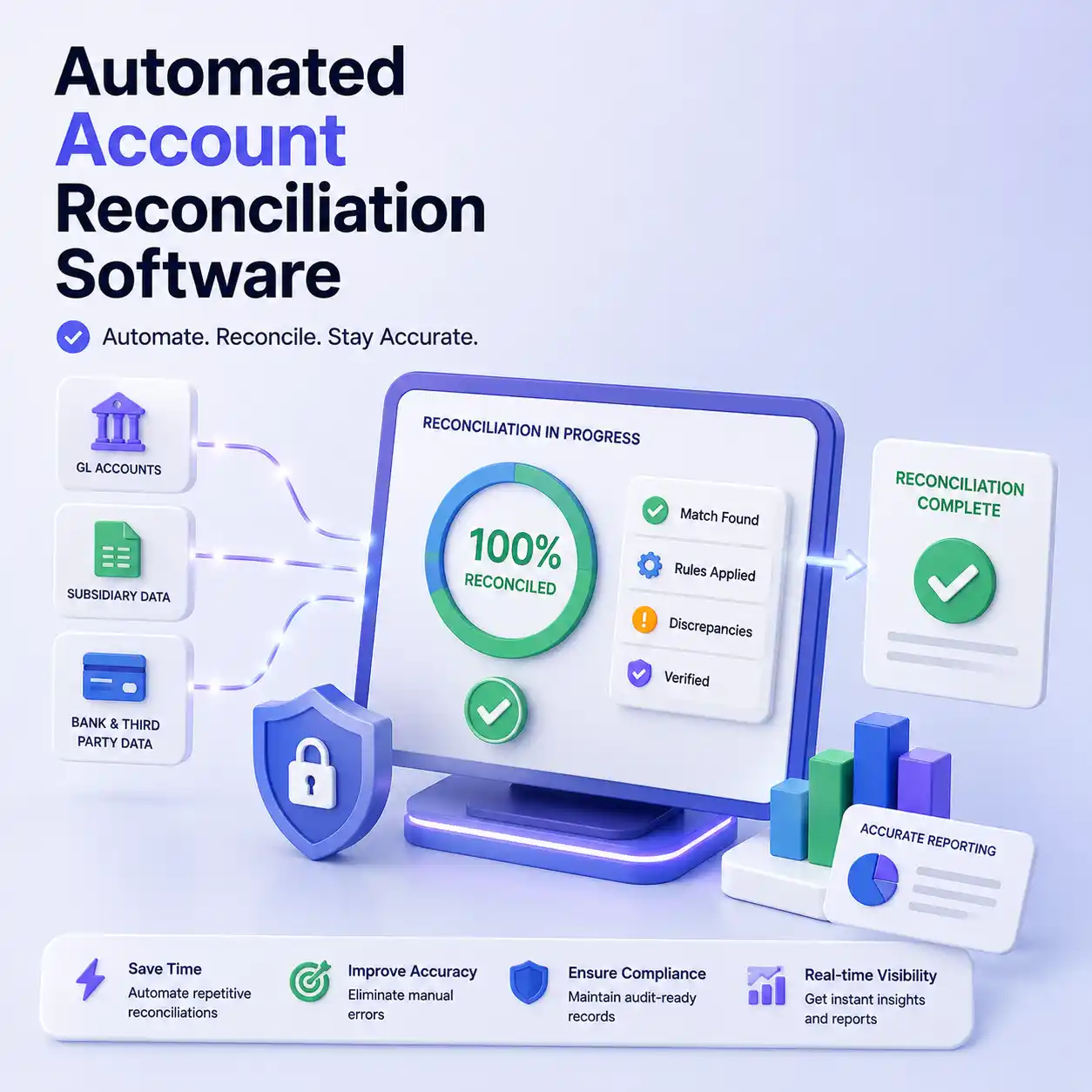
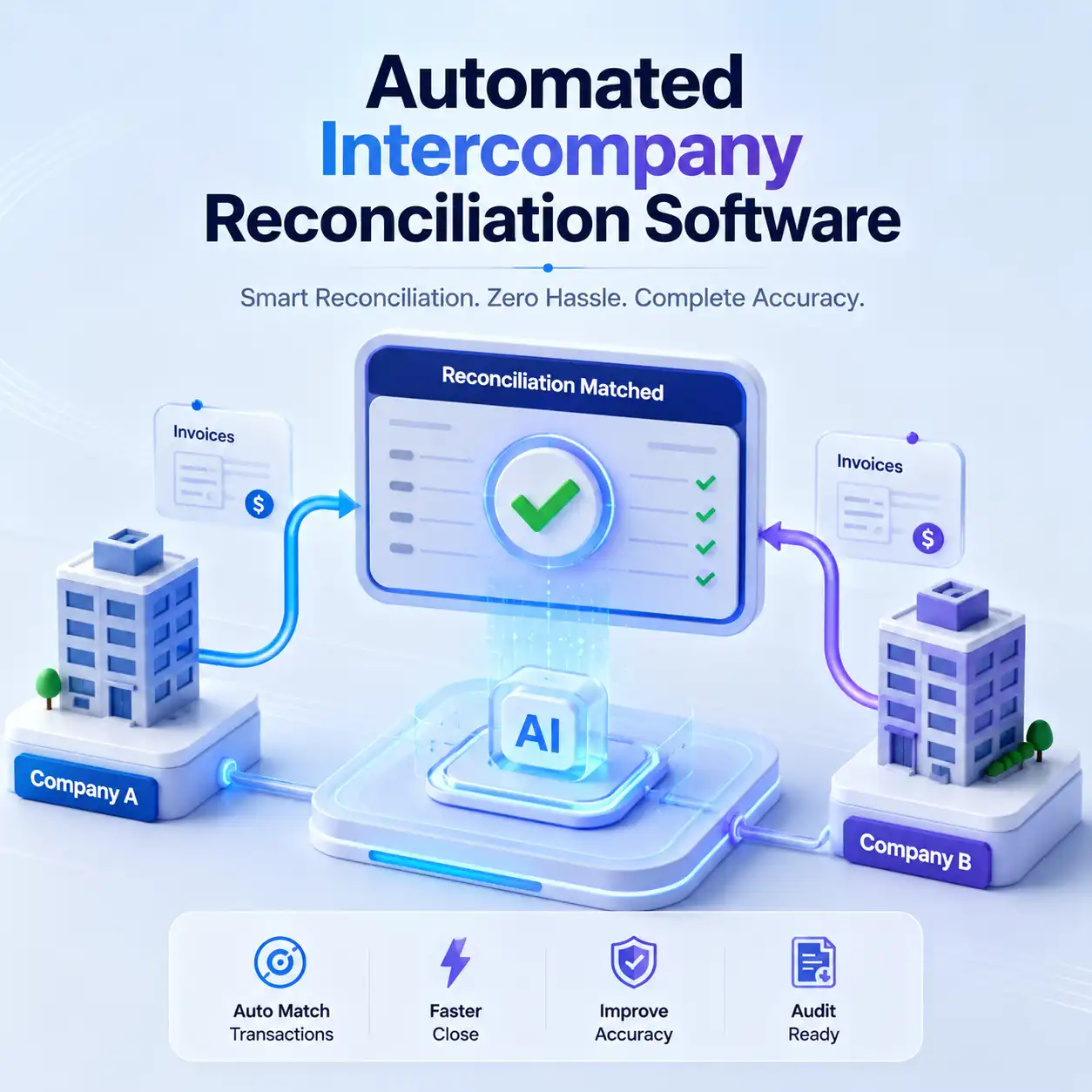
Automated reconciliation software connects directly to your bank accounts via secure APIs (application programming interfaces). These are the same types of connections that let you see your bank balance on your phone instantly. The software for bank reconciliation pulls every transaction from the bank in real time or at very short intervals—sometimes every few minutes.
At the same time, the software pulls transactions from your internal systems, such as your ERP (enterprise resource planning) or accounting platform like QuickBooks, Xero, or NetSuite. Then, using matching rules and algorithms, the automated reconciliation system compares the two sets of data. It automatically matches transactions that have the same date, amount, and reference number. For transactions that do not match perfectly, the system flags them for human review.
Matching Rules and Exceptions
Here is where the intelligence comes in. A good automated bank reconciliation software does not just look for exact matches. It can be trained to handle common mismatches. For example, a bank might record a transaction as "POS PURCHASE STARBUCKS 12.45,"whileyourreceiptsays"Coffeemeeting12.45,"whileyourreceiptsays"Coffeemeeting12.45." The software can learn that these are the same. It can also handle timing differences, like a check you wrote on the 30th that the bank did not clear until the 2nd of next month.
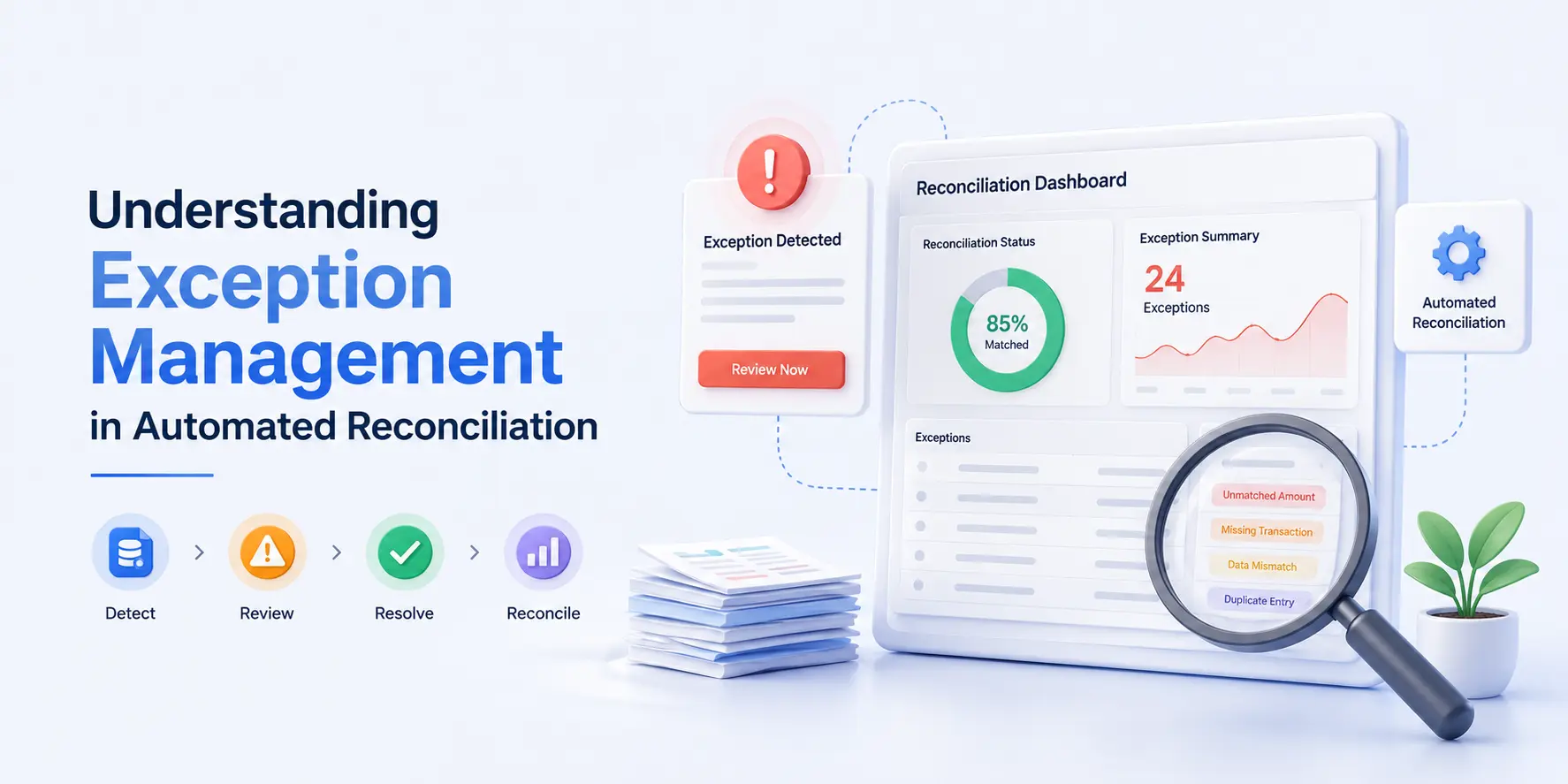
Transactions that do not automatically match become "exceptions." The system puts them in a queue. Your team reviews them once a day or once a week. This is much faster than manually matching every single line. You only spend time on the few transactions that need a human eye.
Integration with Accounting Systems
Modern accounting reconciliation software does not work in isolation. It sits inside your existing accounting workflow. When a match is confirmed, the software updates your general ledger automatically. This means your balance sheet is always current. For a CFO or a controller, this is freedom. You no longer spend your mornings asking, "Has the bank reconciliation been finished for last month?" You open a dashboard and see the answer immediately.
Why Real-Time Reporting Depends on Automated Reconciliation
The Domino Effect of Stale Data
Real-time reporting cannot exist if any part of your data pipeline is slow. Think of your financial system as a series of dominoes. The first domino is transaction capture—money moving in and out of your bank. The second domino is reconciliation—matching those movements to your records. The third domino is reporting—turning matched data into dashboards and statements.
If reconciliation takes five days, then your reporting is always five days old. No matter how fast your dashboard software is, it is showing you old information. Automation removes the second domino's delay. Once reconciliation is real-time, reporting can be real-time. This is why reconciliation automation is the critical bridge between raw bank data and useful financial intelligence.
A Real-World Example
Consider a mid-sized e-commerce company that sells through Amazon, Shopify, and its own website. Every minute, customers buy products. Some pay with credit cards. Some use PayPal. Some use store credit. At the same time, the company pays suppliers, refunds customers, and pays for shipping labels.
With manual reconciliation, the finance team would spend one full week each month matching thousands of transactions. They would never have a current cash position. But with an automated reconciliation solution, the system matches 95% of transactions automatically. The finance team only reviews the 5% that are unusual—like a customer dispute or a bank fee they did not expect. Now, the CEO can look at a real-time cash dashboard any time of day. She knows exactly how much money is available to spend on inventory or advertising. That is a competitive advantage.
Key Benefits of Automating Bank Reconciliation
1. Accuracy That You Can Trust
Human error is not a moral failing; it is a statistical fact. A study by the Institute of Finance and Management found that 88% of spreadsheets contain errors. When you use spreadsheets for reconciliation, you are almost guaranteed to have mistakes. Automated systems do not get tired. They do not misread a number because the font is small. They do not skip a transaction because they got distracted by an email.
This accuracy flows directly into your financial reports. When your CFO signs off on a report to the board or a bank for a loan, they can do so with confidence. There are no hidden surprises waiting in unreconciled transactions.
2. Faster Month-End Close
The month-end close is a ritual of pain for many accounting teams. They work late nights, order pizza, and try to get everything done by the fifth business day of the next month. With automated reconciliation, that pressure disappears. Because the bank side is already matched to your books throughout the month, there is no backlog. The close becomes a simple review, not a frantic scramble.
Data from BlackLine, a finance automation firm, shows that companies using reconciliation automation tools close their books in an average of 5.7 days, compared to 11.2 days for companies using manual methods. That is nearly a full week of extra productivity every single month.
3. Better Fraud Detection
Fraud is a terrifying reality for businesses. According to the Association of Certified Fraud Examiners, the typical organization loses 5% of its revenue to fraud each year. Manual reconciliation detects fraud late—often months late. By the time you notice a missing $10,000, the fraudster is long gone.
Automated reconciliation flags suspicious transactions in near real-time. For example, if a vendor payment is changed to a different bank account number, the system can notice that the payee name does not match the account. Or if an employee creates a fake vendor and pays themselves, the automated system can flag duplicate addresses or bank details. This does not prevent all fraud, but it dramatically reduces the window of opportunity.
4. Improved Cash Flow Management
Cash flow is the lifeblood of any business. You can be profitable on paper but still go bankrupt if you run out of cash. Real-time reconciliation gives you a true picture of your available cash. Not your bank balance (which might include uncleared checks), not your book balance (which might miss recent deposits). Your true available balance.
With this clarity, you can make better decisions about when to pay vendors, when to collect from customers, and whether you need a short-term loan. A study by JPMorgan Chase found that businesses with real-time cash visibility are 42% less likely to experience a cash flow crisis than those relying on weekly or monthly updates. That is a powerful statistic.
5. Audit Readiness
No one likes an audit, but every business faces one eventually—whether from the IRS, a lender, or a potential buyer. Manual reconciliation creates messy paper trails. Automated systems create clean, timestamped logs of every match, every exception, and every review comment.
When an auditor asks, "Why did this transaction not match for three days?" you can show them exactly what happened. This reduces audit fees, saves time, and reduces stress. Many balance sheet reconciliation software platforms include audit trail features specifically for this purpose.
Challenges and How to Overcome Them
Initial Setup and Data Cleanup
The biggest barrier to adopting automation is the setup process. You cannot automate chaos. Before implementing any accounts reconciliation software, you need to clean up your existing data. This means removing duplicate vendor records, standardizing account names, and resolving old unreconciled differences.
This takes effort, but it is a one-time investment. Once your data is clean, the automation keeps it clean. Think of it like weeding a garden. You have to pull the existing weeds first, but then the weed barrier (automation) stops new ones from growing.
Employee Resistance
Some accounting team members may worry that automation will replace their jobs. This is a valid concern, but it is based on a misunderstanding. Automation replaces repetitive, boring tasks—not strategic thinking. Your staff will stop spending 10 hours a week on tick marks and start spending that time analyzing trends, improving processes, and advising management.
The best way to overcome resistance is to involve your team in the selection of the reconciliation software for banks. Let them test demos. Ask for their input on matching rules. When people feel ownership of the change, they support it.
Integration Complexity
Not all automated reconciliation tools integrate with every bank or every accounting system. Before buying, make a list of all the bank accounts and software you use. Check if the vendor has pre-built connectors. Most modern automated reconciliation software offers hundreds of integrations. But if you use an obscure bank or a legacy system, you may need custom development.
Work with your IT team or an external consultant to map out your integration needs. The goal is a seamless flow where data moves without manual export or import of CSV files. If you are still moving files around, you have not truly automated.
Real-Time Reporting in Action: Use Cases
For Retail Businesses
A retail chain with 10 locations faces a daily reconciliation nightmare. Each store has its own cash drawer, credit card terminal, gift card system, and return log. With automated bank reconciliation, all these data sources feed into a central system. By 9 AM each day, the corporate finance team knows exactly how much cash each store deposited last night. They can spot a store that is consistently short and investigate quickly.
For Nonprofits
Nonprofits have to track restricted funds—donations that can only be used for specific purposes like a building fund or a scholarship program. Manual reconciliation of restricted funds is a headache. Automated systems can tag transactions by fund type and reconcile them separately. This makes grant reporting far simpler and reduces the risk of non-compliance.
For Freelancers and Small Businesses
Even a solo freelancer benefits from automation. Tools like Zapier or QuickBooks Bank Feed act as a simple automated account reconciliation system. You see every transaction as it happens. You instantly know if a client’s payment cleared or if a subscription fee increased. This takes five minutes a week instead of two hours a month. For a small business owner, time is money.
How to Choose the Right Automated Reconciliation Tool
Must-Have Features
When evaluating vendors, look for these non-negotiable features:
- Real-time bank feeds: Not daily or weekly syncs. True real-time.
- Custom matching rules: The ability to define how the system matches transactions based on your business logic.
- Exception handling dashboard: A clear, simple interface for reviewing unmatched items.
- Audit trail: Every action is logged and timestamped.
- Integration with your accounting system: Whether you use QuickBooks, Xero, Sage, or NetSuite, the tool must connect seamlessly.
Questions to Ask Vendors
Ask these specific questions during demos:
- How often does the system pull new bank transactions?
- Can it handle multiple currencies and multiple bank accounts?
- What happens when a match is wrong? Can I manually override it?
- Is there a mobile app for reviewing exceptions on the go?
- What is your uptime guarantee? (Look for 99.9% or higher.)
Steps to Implement Bank Reconciliation Automation
Step 1: Audit Your Current Process
Before you automate, write down every step of your current manual process. How do you receive bank statements? How do you record transactions? How do you handle discrepancies? This "as-is" map will guide your automation setup.
Step 2: Clean Your Data
Run a final manual reconciliation to resolve any old differences. Make sure your chart of accounts is clean and consistent. Remove duplicate customers and vendors. This is tedious but critical.
Step 3: Select and Configure Your Tool
Choose your automated bank reconciliation software based on the criteria above. Set up your bank feeds and integration. Configure your matching rules. Start with simple rules (exact matches on date and amount) and then add complexity.
Step 4: Run Parallel for One Month
Do not switch off your manual process immediately. For one month, run both the manual and automated reconciliation side by side. At the end of each day, check if the automated results match the manual ones. This builds confidence.
Step 5: Train Your Team
Hold a one-hour training session showing how to use the exception dashboard. Emphasize that this is not about replacing them but about freeing them from boring work. Show them where to find the audit trail and how to run reports.
Step 6: Go Live and Monitor
After a successful parallel month, turn off the manual process. Monitor daily for the first week, then weekly for the first month. Review exception logs together as a team to see if matching rules need adjustment.
Also Read: How Does Automated Bank Software Speed Up Month-End Close?
The Future: Continuous Accounting
What we are describing here is part of a larger movement called continuous accounting. The old model was periodic—do things at the end of the month. The new model is continuous—do things as they happen. Continuous accounting relies entirely on reconciliation automation tools. Without automation, continuous accounting is impossible because there are simply too many transactions for humans to process in real time.
Gartner predicts that by 2026, 65% of midsize and large companies will have implemented some form of continuous accounting. Those that do will have a clear advantage: they will make faster decisions, catch errors sooner, and sleep better at night knowing their numbers are right.
Conclusion: The Critical Choice
Bank reconciliation automation is not a luxury. In an economy where business moves at the speed of the internet, waiting days or weeks to know your true cash position is a competitive disadvantage. Real-time reporting is the goal, and automated reconciliation is the only practical path to get there.
The statistics are clear: companies that automate reconciliation close their books faster, detect fraud earlier, and manage cash flow better. The technology is mature, affordable, and accessible to businesses of all sizes. The only question is whether you will make the change now or wait until a cash crisis or an audit disaster forces your hand.
Start small. Pick one bank account. Automate it. See the difference for yourself. Once you experience the clarity of real-time financial data, you will never go back to manual ticks and ties. Your team will thank you. Your bank will thank you. And your future self—the one who no longer spends weekends reconciling spreadsheets—will thank you most of all.
Also Read: What are the Top Cloud-Based Platforms for Financial Data Reconciliation?
Frequently Asked Questions
1. What is the difference between bank reconciliation and bank reconciliation automation?
Manual bank reconciliation involves a person comparing bank statements to internal records line by line. Automation uses software to connect directly to bank and accounting systems, matching transactions automatically in real time or near real time.
2. Is automated reconciliation secure?
Yes, reputable automation tools use bank-level encryption (256-bit SSL), read-only API access (they can see transactions but cannot move money), and multi-factor authentication. Always choose a vendor that is SOC 2 compliant.
3. Can automation handle checks and paper transactions?
Yes. Most automated systems can handle check transactions. When a check you wrote is cashed, the bank feed shows the cleared check number and amount. The software matches it to the outstanding check in your records.
4. How long does it take to implement bank reconciliation automation?
For a small business with one or two bank accounts, you can be up and running in one to two days. For a larger company with multiple entities, currencies, and legacy systems, plan for four to six weeks including data cleanup.
5. What if my bank does not offer API connections?
If your bank does not offer a modern API, you can still use automation with some tools that support secure file uploads (like OFX or QBO files). However, this is not true real-time. You may want to consider switching to a more modern bank that supports open banking APIs.
6. Will automation replace my accountant?
No. Automation replaces manual data matching, not financial expertise. Your accountant will spend less time on data entry and more time on analysis, tax planning, and strategic advice. Most accountants actually encourage their clients to adopt automation because it makes their own work more valuable.
Ready to get started?
Contact us now
Contact us now
* By clicking on Contact Us you are agreeing to our Terms & Conditions and Privacy policy.