What Problems Can Automated Bank Reconciliation Software Solve Instantly?
Kosh.ai
March 26, 2026
.webp)
For any business owner, finance manager, or accountant, the end of the month often brings a familiar sense of dread. It is the time to pull out bank statements, open spreadsheets, and begin the tedious task of matching transactions. This process, known as bank reconciliation, is the backbone of accurate accounting. Yet, for decades, it has been a source of frustration, human error, and wasted hours.
If you have ever spent a weekend trying to figure out why your books are off by a few cents, or why a transaction from three months ago is still pending, you know exactly what we are talking about. But what if these problems could disappear the moment they appear? This is the promise of automation.
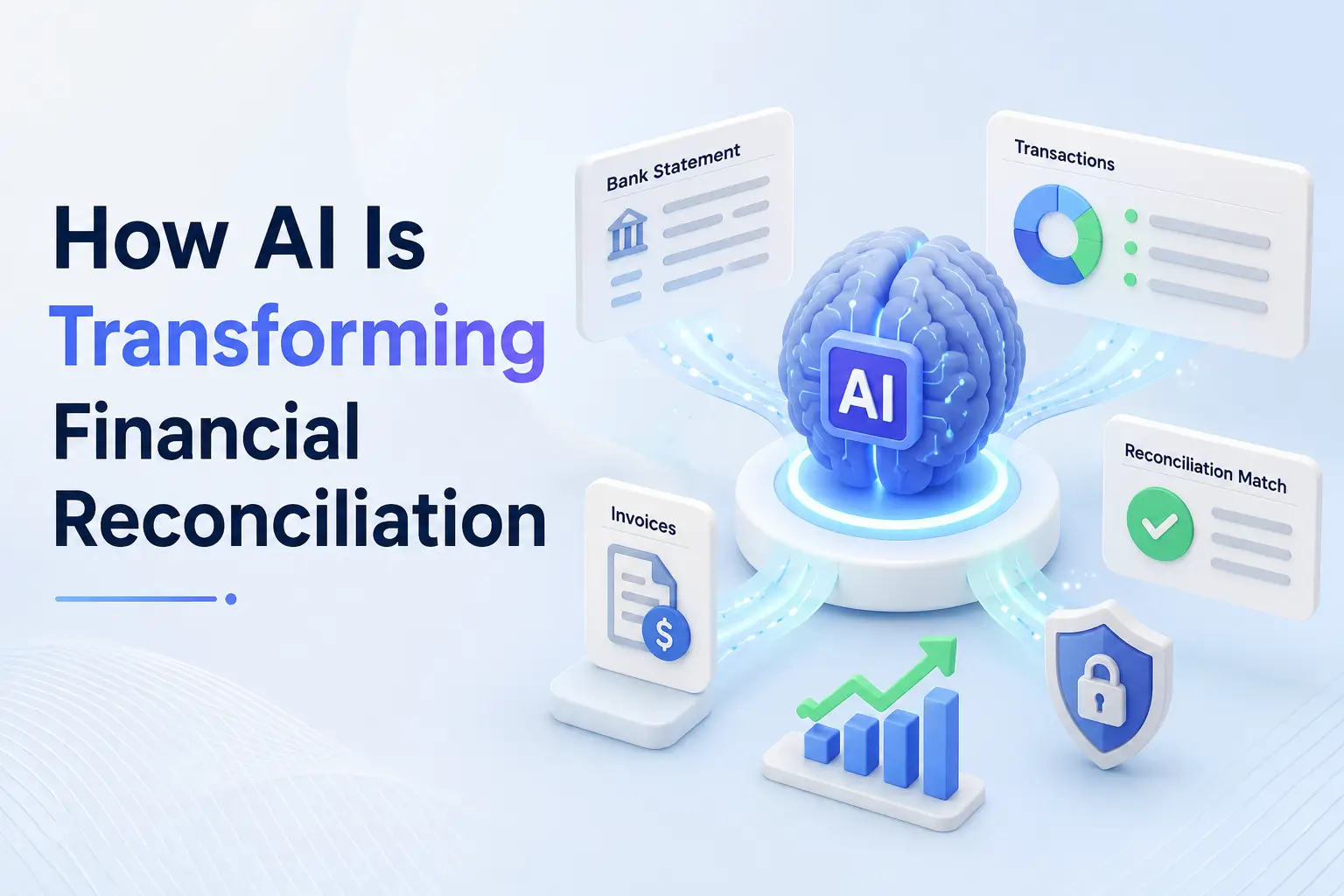
Automated bank reconciliation software is not just a luxury for large corporations anymore. It has become a critical tool for businesses of all sizes. By leveraging technology to match transactions, flag discrepancies, and update records in real-time, this software transforms a reactive, time-consuming chore into a proactive, streamlined process.
In this article, we will explore the specific, painful problems that automated reconciliation software solves instantly. We will look at how it protects your business from fraud, ensures your financial statements are always accurate, and ultimately gives you back the time to focus on growing your business rather than just recording history.
The High Cost of Manual Reconciliation
Before we dive into the solutions, it is important to understand the scale of the problem. Manual reconciliation is often seen as a "necessary evil," but the costs associated with it go far beyond just the time spent.
According to a report by the Association of Certified Fraud Examiners, businesses lose an estimated 5% of their revenue to fraud each year, with a significant portion of that fraud going undetected for months simply because discrepancies are not spotted in time. Furthermore, studies in financial management show that finance teams spend up to 30% of their time on manual reconciliation tasks—time that could be spent on analysis, strategy, and growth.
When humans manually match receipts, invoices, and bank statements, the margin for error is high. A simple typo in a decimal point, a duplicated entry, or a missed transaction can lead to a domino effect of inaccuracies. By the time the error is discovered during a quarterly audit, the damage to cash flow visibility and decision-making has already been done.
Let us explore how automation eliminates these risks instantly.
1. Eliminating Human Error in Transaction Matching
One of the most common problems in accounting is the simple mistake. Perhaps a number was transposed—writing $539 instead of $593. Maybe a vendor payment was logged twice because the invoice was entered while the bank feed was lagging. These small errors are not just annoying; they are time bombs.
How Automation Instantly Fixes This
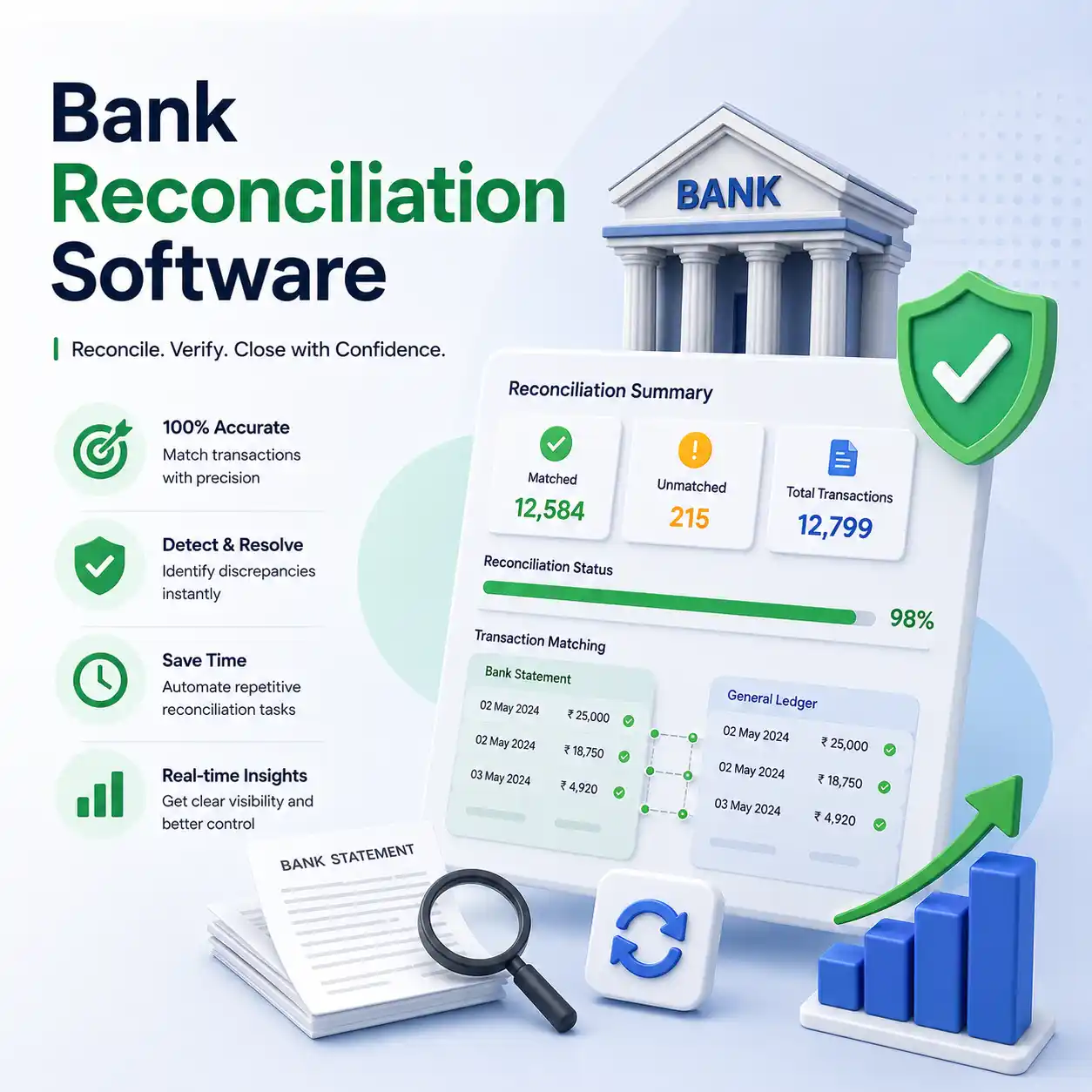
Automated bank reconciliation software uses algorithms to match transactions based on multiple criteria: date, amount, reference number, and even vendor name. Unlike a human who has to scan line by line, the reconciliation automation tools work instantly.
When a transaction comes in from the bank feed, the software immediately scans the general ledger for a matching entry. If it finds an exact match, it clears the transaction. If it finds a near-match—say, a transaction off by a few cents due to a bank fee—it flags it for review but suggests the match. This eliminates the "fat-finger" errors that plague spreadsheets.
For example, if you have a recurring monthly subscription, the software remembers this pattern. It will automatically match the debit from the bank to the expense entry in your books without you lifting a finger. The result is a general ledger that is always accurate, reducing the need for end-of-month "cleanup" sessions.
2. Providing Real-Time Financial Visibility
In the old way of doing things, your financial statements were only as current as your last reconciliation. If you reconciled on the 15th, you were working with data that was two weeks old. This is a massive problem for cash flow management. You cannot make informed decisions about hiring, inventory, or expansion if you are looking at outdated numbers.
The Instant Solution
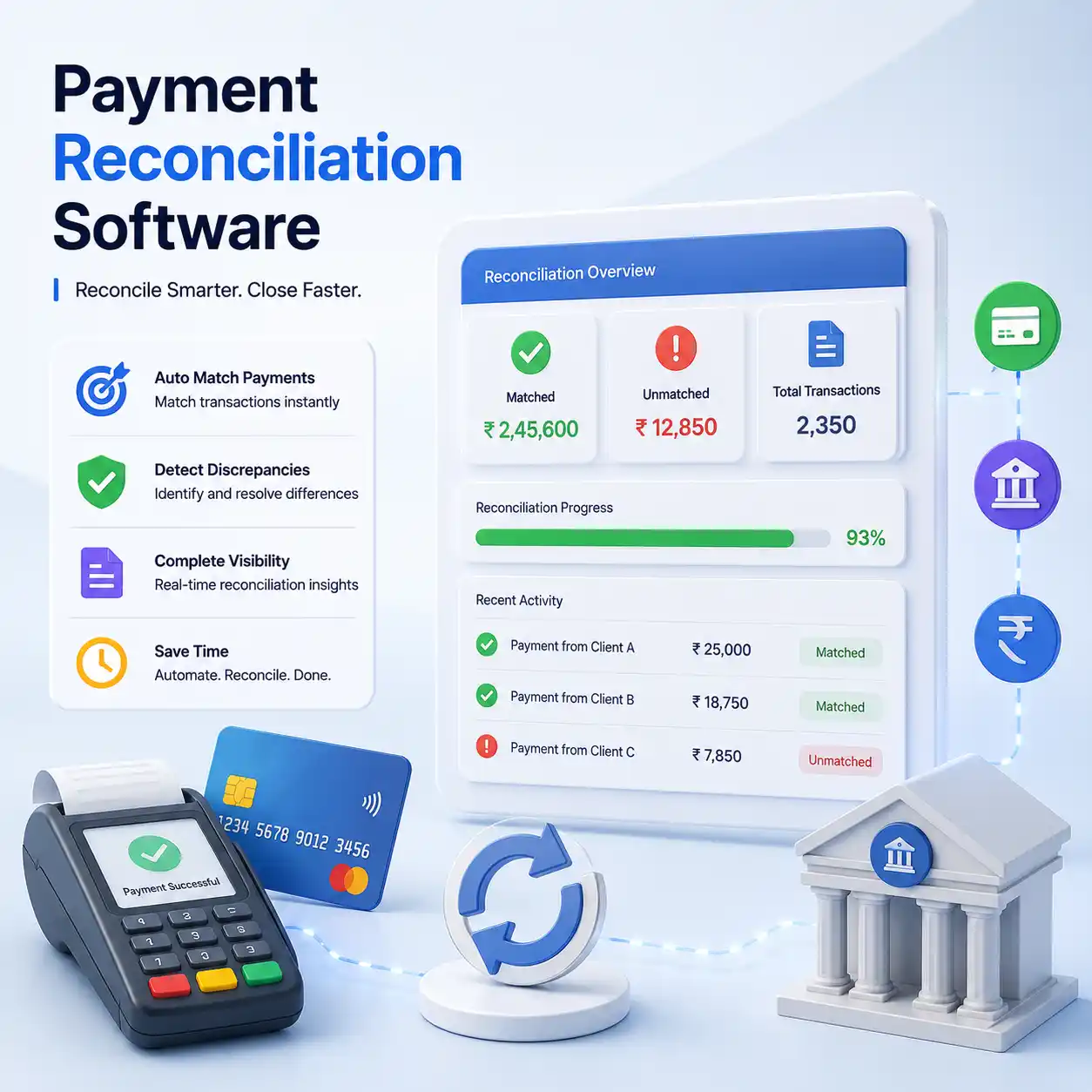
Bank reconciliation automation changes the game by syncing with your bank accounts in real-time, often through secure API connections. As soon as a customer pays an invoice via credit card or a check clears the bank, the transaction appears in the reconciliation dashboard.
This provides what is known as "real-time cash visibility." Business owners can log in at any moment and see exactly how much cash is on hand, which invoices are outstanding, and which payments are pending. This instant visibility allows for better cash flow forecasting. If you see a dip coming next week, you can arrange for a line of credit before you run out of money, rather than scrambling after the fact.
For CFOs and controllers, this means the monthly closing process is no longer a frantic race. Because the data is continuously updated, the books are essentially "always closed." The financial statements become a live tool for strategic decision-making rather than a historical record.
3. Speeding Up the Monthly Close Process
The month-end close is often a period of high stress, late nights, and caffeine-fueled marathons. For many businesses, closing the books takes 10 to 15 days. During this time, finance teams are focused on the past, not the future. They are chasing down receipts, trying to get approvals, and manually checking off boxes.
Instant Acceleration
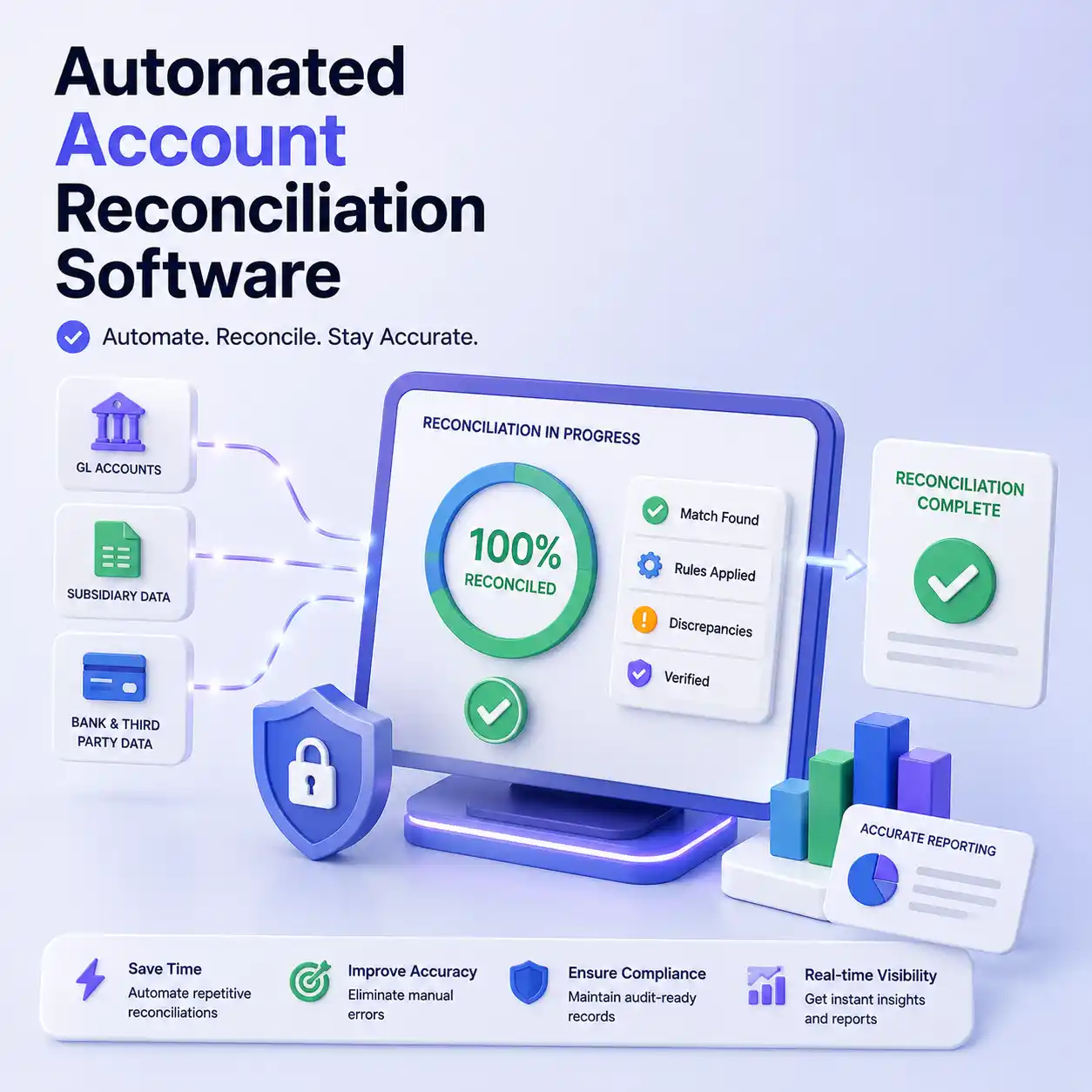
With an automated reconciliation system, the close process can be reduced from days to hours. Since the reconciliation of bank accounts is happening continuously throughout the month, the heavy lifting is already done.
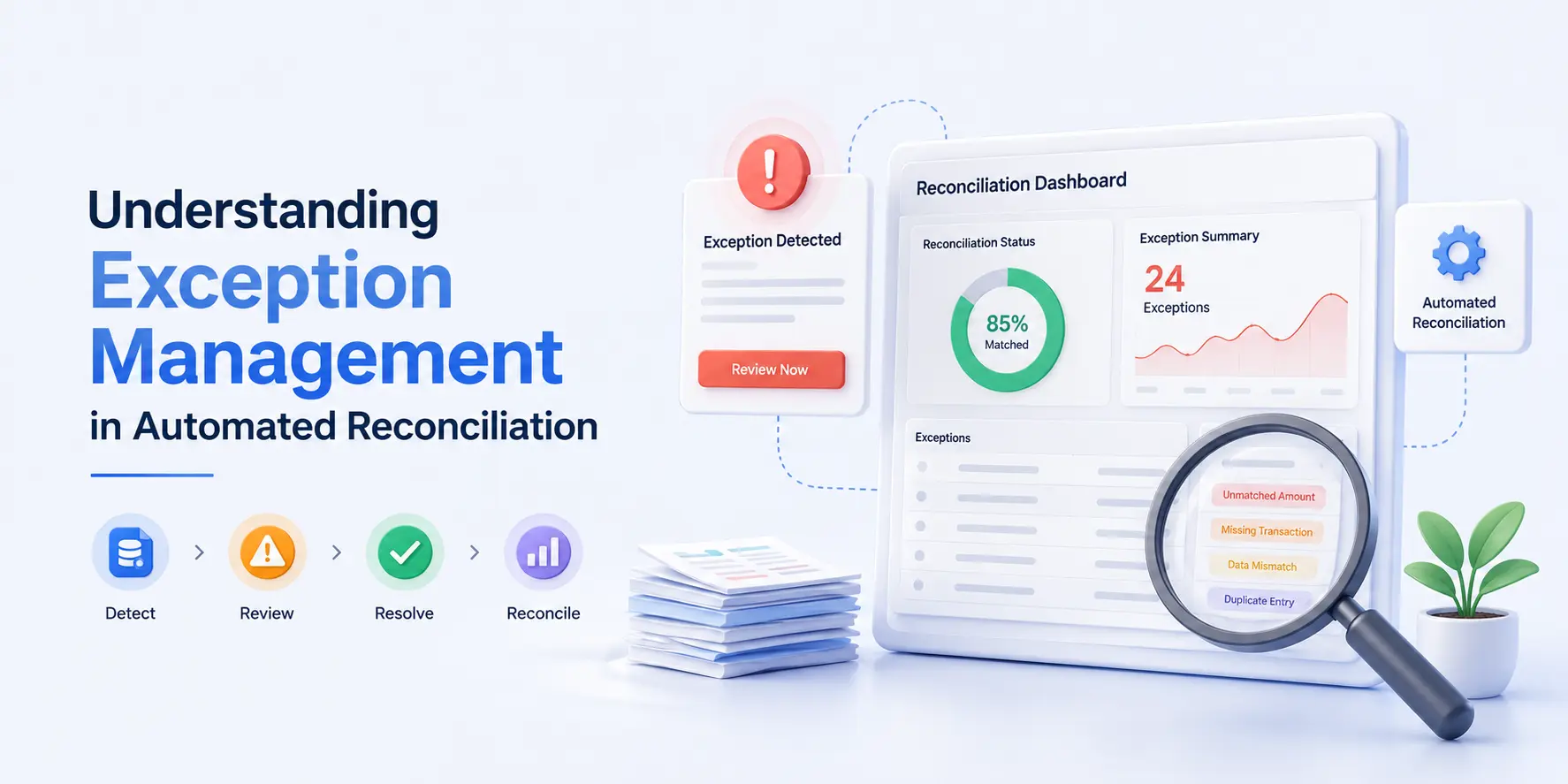
On the first day of the new month, instead of importing statements and starting from scratch, the finance team simply reviews the exceptions that the software flagged—such as unmatched deposits or uncashed checks. Because 95% of the transactions are already reconciled, the team can focus only on the 5% that require human judgment. This not only saves time but also improves employee morale. Finance professionals get to spend their time analyzing trends and providing insights to the leadership team, rather than acting as data entry clerks.
4. Strengthening Fraud Detection and Security
Fraud is a terrifying reality for businesses. It is often not an external hacker that causes the most damage, but internal fraud—employees creating fake vendors, unauthorized checks, or "ghost" employees. In a manual system, these fraudulent transactions can slip through for months. By the time they are discovered, the money is gone, and the trail is cold.
How Automation Acts as a Security Guard
Automated reconciliation software acts as a 24/7 security guard for your cash flow. Because the software reconciles transactions instantly, it can detect anomalies the moment they occur.
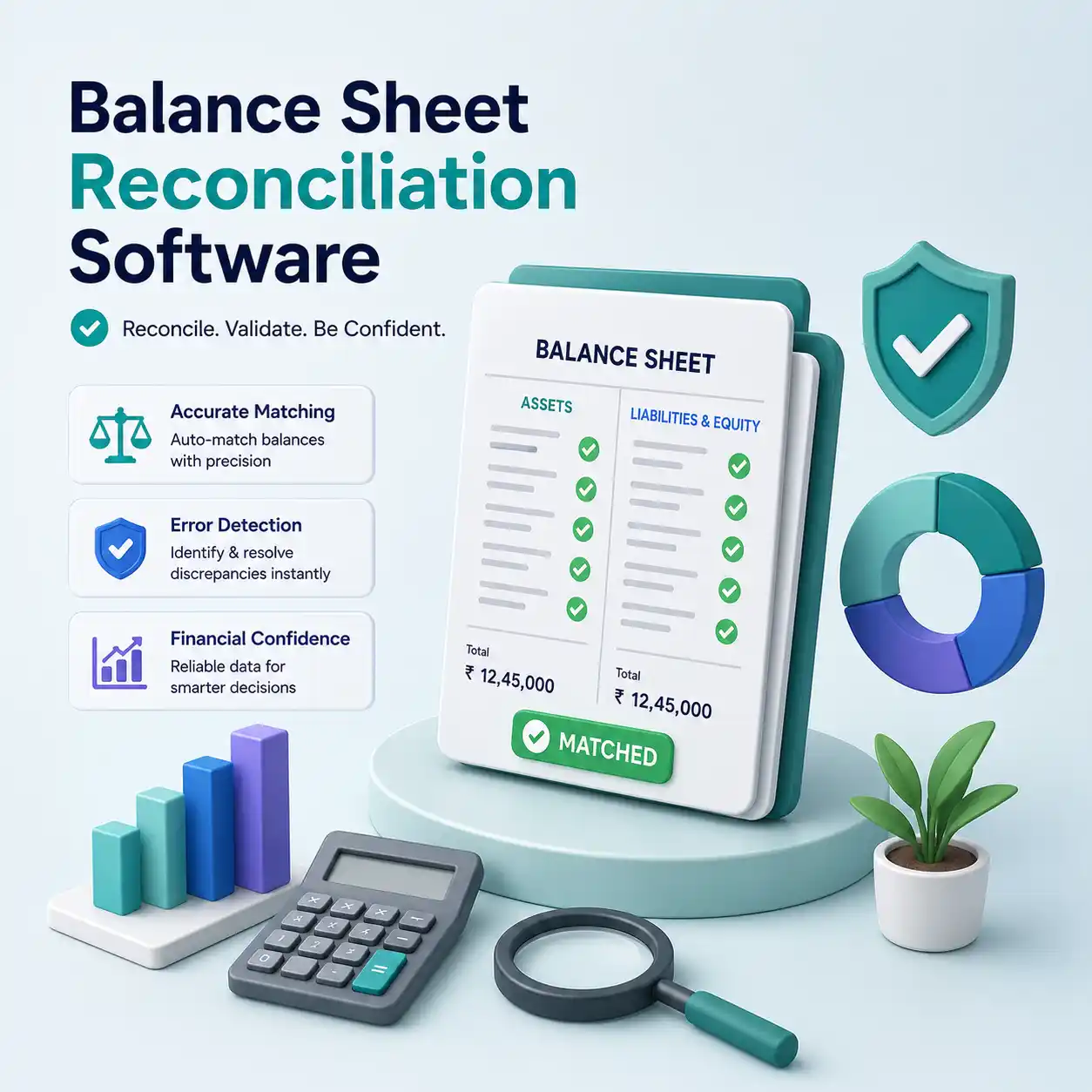
For instance, if a check is issued for an amount that falls outside the normal range for a specific vendor, the system can flag it immediately. If a transaction is posted to an unusual account, the system can alert the manager before the payment is finalized. Many modern solutions integrate with balance sheet reconciliation software features that enforce segregation of duties—meaning the person who approves a payment cannot also reconcile the bank account without a second set of eyes.
This instant detection is crucial. According to the ACFE, organizations without automated monitoring lose fraud losses that are nearly twice as high as those with automated controls. By catching fraud instantly, businesses can stop losses in their tracks and prevent minor discrepancies from turning into major financial disasters.
5. Simplifying Multi-Currency and Complex Transactions
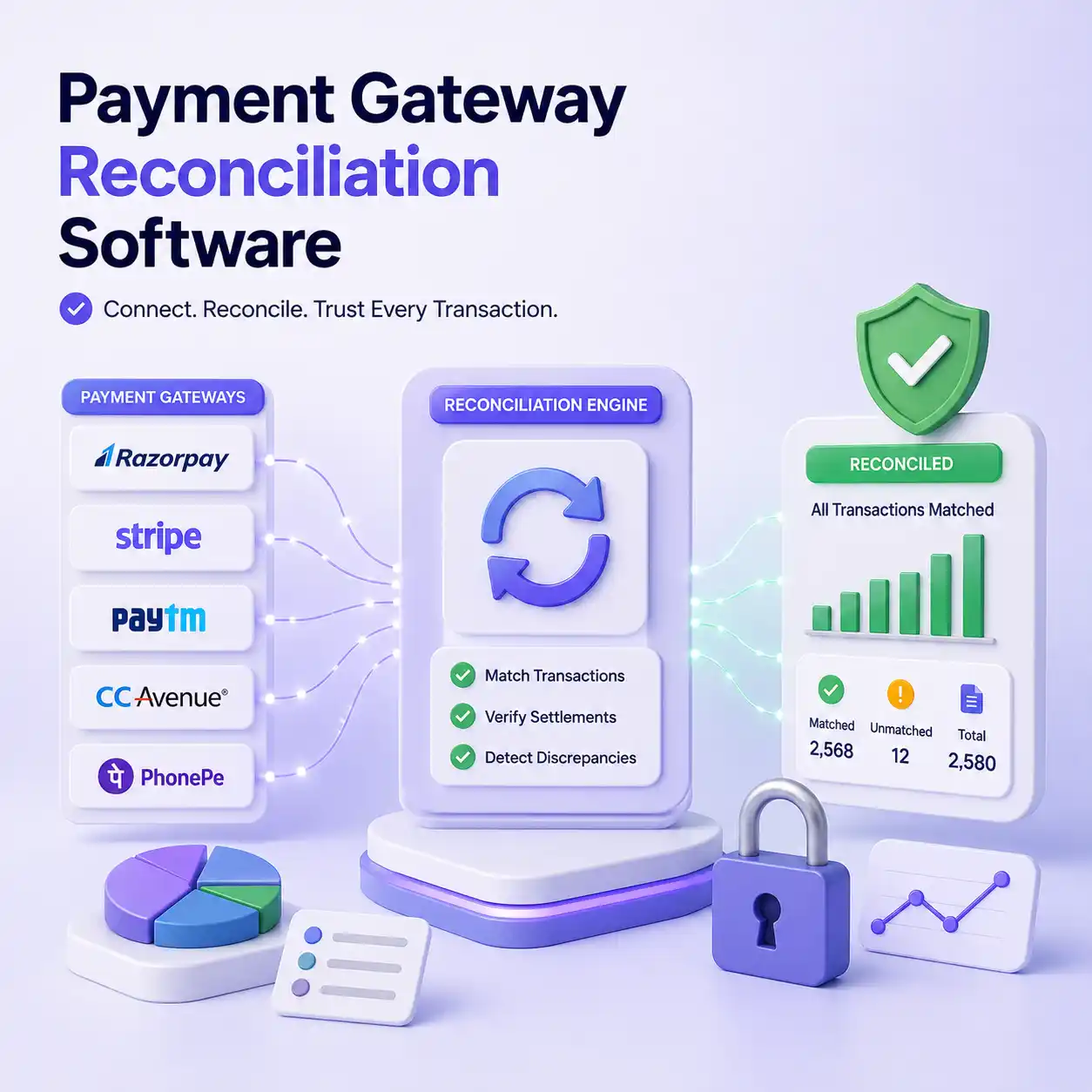
If your business operates globally, or even just sells to customers in different countries, reconciliation becomes exponentially harder. Exchange rates fluctuate, international wire transfer fees vary, and payments often come in through multiple gateways like Stripe, PayPal, and traditional merchant accounts.
Instant Consolidation
A robust reconciliation solution handles multi-currency complexities automatically. It pulls data from various payment processors and bank accounts across different countries, converts them using the correct exchange rate on the transaction date, and matches them to the corresponding invoices in your accounting system.
Without automation, a global business might need a dedicated team member just to manage PayPal reconciliations alone. With automation, the software aggregates all these sources into a single, unified dashboard. It instantly accounts for the variation in currency exchange and fees, ensuring that the books reflect the exact economic reality of each transaction. This eliminates the headache of manually calculating exchange rate gains and losses, which are often a source of major accounting errors.
6. Ensuring Audit Readiness at All Times
The thought of an audit is enough to make any business owner nervous. In a manual environment, preparing for an audit means digging through filing cabinets, searching email chains for approvals, and spending weeks compiling evidence for the auditors. If the auditors find discrepancies, it can lead to penalties, damaged reputation, and a longer, more invasive audit.
The Instant Advantage
When you utilize accounts reconciliation software, you are audit-ready at any moment. Every transaction that is reconciled comes with a complete audit trail. The software logs who created the transaction, who approved it, when it was matched to the bank statement, and if any adjustments were made.
This digital trail is searchable and reportable in seconds. If an auditor asks to see all transactions over $10,000 for the third quarter, you can generate that report in minutes, complete with supporting documentation. Because the reconciliation automation ensures accuracy and completeness, the risk of material misstatement during an audit drops significantly. This transforms the audit experience from a stressful interrogation into a simple verification process.
7. Improving Cash Flow Management and Forecasting
Cash flow is the lifeblood of a business. However, managing it effectively requires accurate, up-to-date data. If your books show a profit but your bank account is empty, you have a cash flow problem. Often, this disconnect is caused by timing differences that manual reconciliation fails to highlight.
Instant Insights
Automated tools provide a clear picture of "true" cash flow. By reconciling instantly, they distinguish between cleared funds and pending transactions. You can see exactly which receivables have actually hit the bank account and which are still in transit.
Furthermore, because the software categorizes transactions accurately in real-time, it provides rich data for forecasting. You can instantly see your burn rate, your average collection period, and your seasonal spending patterns. This allows for dynamic forecasting. Instead of creating a static budget once a year, you can adjust your financial strategy monthly or even weekly based on real-world data. This agility is a competitive advantage that manual processes simply cannot provide.
8. Reducing Operational Costs
Hiring a large accounting team to handle manual data entry and reconciliation is expensive. Salaries, benefits, and training costs add up. Moreover, manual processes lead to late payment fees (if you didn’t realize a bill was due) or lost discounts (if you missed early payment terms).
Cost Savings Instantly
By adopting a software for bank reconciliation, businesses can significantly reduce operational overhead. The software handles the work of what would traditionally require several junior accountants or bookkeepers. While you still need skilled professionals to analyze the data and make strategic decisions, the grunt work is eliminated.
According to a report by the Institute of Finance & Management (IOFM), organizations that automate their reconciliation processes reduce the cost of processing by up to 80%. This is achieved through fewer errors (which means less time fixing mistakes), faster processing times, and reduced reliance on temporary staff during month-end peaks.
9. Streamlining Payment Processing Integration
For e-commerce and service-based businesses, payments come in through a variety of channels. A customer might pay an invoice online via a payment link, another might pay via ACH, and a third might mail a check. In a manual system, matching these disparate payments to open invoices is a puzzle.
Seamless Connection
Reconciliation automation tools integrate directly with your payment processors, e-commerce platforms, and bank accounts. They automatically pull in payment data and match them to the corresponding open invoices in your accounts receivable ledger.
If a customer pays an invoice via a credit card through Stripe, the software automatically marks that invoice as paid in your accounting system, records the processing fee, and reconciles the net deposit when it hits the bank account. This eliminates the need for manual matching and ensures that your accounts receivable aging report is always accurate. This is particularly vital for businesses with high transaction volumes, where manual matching would be logistically impossible.
Also Read: Automated Bank Reconciliation Software: Features and Benefits
10. Managing Vendor and Customer Relationships
Believe it or not, inaccurate reconciliation can damage relationships. If a vendor calls because they haven’t received payment, but your records show you paid them, you have a problem. Similarly, if a customer is double-billed or receives a dunning notice for a payment they already made, trust is eroded.
Building Trust Instantly
Because automated bank reconciliation ensures that payments and receipts are matched instantly, your communication with vendors and customers becomes more reliable. When a vendor asks about payment status, you can confidently look at your system and see if the check cleared.
For customers, this means no more "lost" payments. The moment a payment is received and matched, the customer’s account is updated. This reduces the number of customer service inquiries related to billing and ensures that collections efforts are focused on actual delinquent accounts rather than administrative errors.
Conclusion: The Shift from Bookkeeping to Strategy
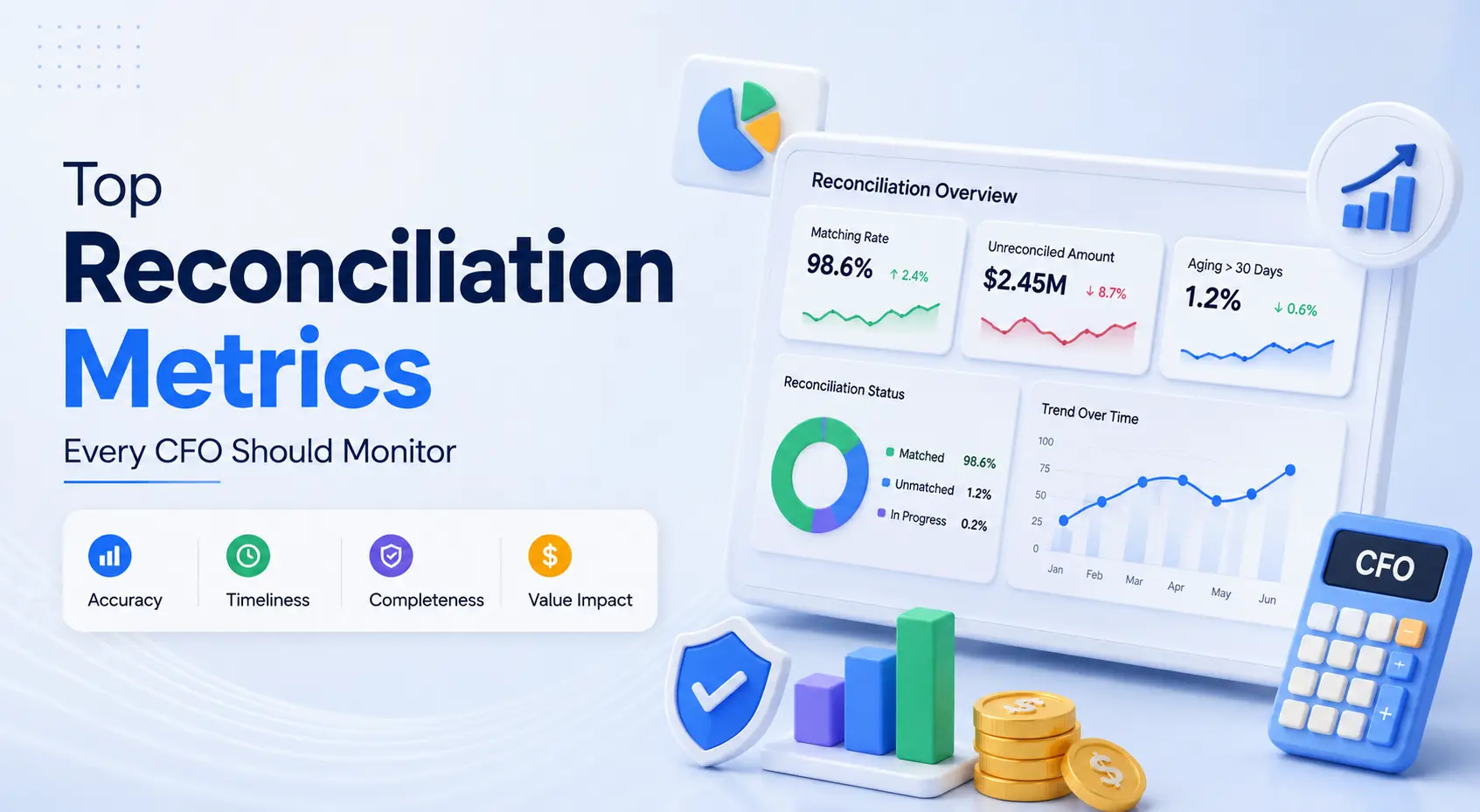
The problems that automated bank reconciliation software solves are not just about saving time—they are about elevating the role of finance within a business. When you eliminate human error, you gain accuracy. When you gain real-time visibility, you gain control. When you speed up the close, you gain agility. And when you strengthen fraud detection, you gain peace of mind.
We have moved beyond the era where being a good accountant meant being good at spreadsheets. Today, the best finance professionals leverage technology to become strategic partners to the business. They use tools that handle the reconciliation of thousands of transactions in seconds, allowing them to focus on analyzing data, optimizing cash flow, and driving growth.
If your finance team is still spending hours manually matching transactions, asking "Why doesn’t the bank balance match the book balance?" you are losing more than time. You are losing the opportunity to make informed decisions in the moment. By adopting a modern reconciliation solution, you are not just buying software; you are investing in the financial health and scalability of your business.
The transition to automation may seem daunting, but the instant benefits—from the first successful sync—prove that it is one of the highest-ROI decisions a business can make. It is time to let the software handle the counting, so you can focus on the strategy.
Also Read: What Makes a Reconciliation Solution Future-Ready?
Frequently Asked Questions
1. Is automated bank reconciliation software secure?
Yes, reputable providers use bank-level encryption (256-bit SSL) and secure APIs to connect to your bank. They do not store your login credentials in a vulnerable way. Furthermore, they offer role-based access controls so you can restrict who can view and approve transactions, adding an extra layer of security against internal fraud.
2. How long does it take to set up automated reconciliation?
Most modern platforms are designed for quick implementation. Typically, you can connect your bank accounts and accounting software within a few minutes. The full configuration, including setting up rules for matching and categorization, usually takes a few hours. Most businesses are fully operational within a week.
3. Can this software handle historical data?
Yes, most automated reconciliation tools allow you to import historical bank statements and ledgers. This is useful for cleaning up old discrepancies and starting from a clean slate. However, the time it takes to reconcile historical data depends on the volume of past transactions and the complexity of previous errors.
4. What happens if the software makes a wrong match?
The software is designed to learn, but it does not replace human oversight. It typically flags "uncertain" matches for your review. You can set tolerance levels (e.g., match if the amount is within $5). If a wrong match occurs, you can unmatch it, correct the entry, and the system will learn from that correction to avoid the same mistake in the future.
5. Do I need to be a tech expert to use this?
Not at all. The best reconciliation software is built with user-friendly dashboards that resemble a simple email inbox. If you know how to use online banking, you can use this software. Vendors also offer onboarding support, webinars, and customer support to ensure you get up to speed quickly.
6. Is automated reconciliation only for large businesses?
No. While large enterprises certainly benefit from the scalability, small and medium-sized businesses (SMBs) often see the most dramatic impact. SMBs typically have lean finance teams where the owner or a single bookkeeper handles everything. Automating reconciliation frees up that one person to focus on sales, customer service, and business growth instead of data entry.
Ready to get started?
Contact us now
Contact us now
* By clicking on Contact Us you are agreeing to our Terms & Conditions and Privacy policy.