What’s the Difference Between Manual and Automated Reconciliation?
Kosh.ai
January 12, 2026
Picture this: it’s month-end close. The finance team is buried under stacks of bank statements, spreadsheets, and ledgers. For hours, they manually compare thousands of transactions, line by line, hunting for that one elusive discrepancy that throws the entire balance sheet off. This grueling process is manual reconciliation—a familiar, yet painful, ritual for many businesses.
.webp)
Now, imagine a different scenario. With a few clicks, a system imports all financial data, matches transactions in minutes, and flags only the exceptions that need human attention. This is the power of an automated reconciliation system.
But what truly sets these two worlds apart? Is it just about speed, or is there a deeper impact on your business's financial health? This article will clearly break down the differences between manual and automated reconciliation, helping you understand which approach is the right solution for your organization’s needs.
What is Financial Reconciliation? A Simple Explanation
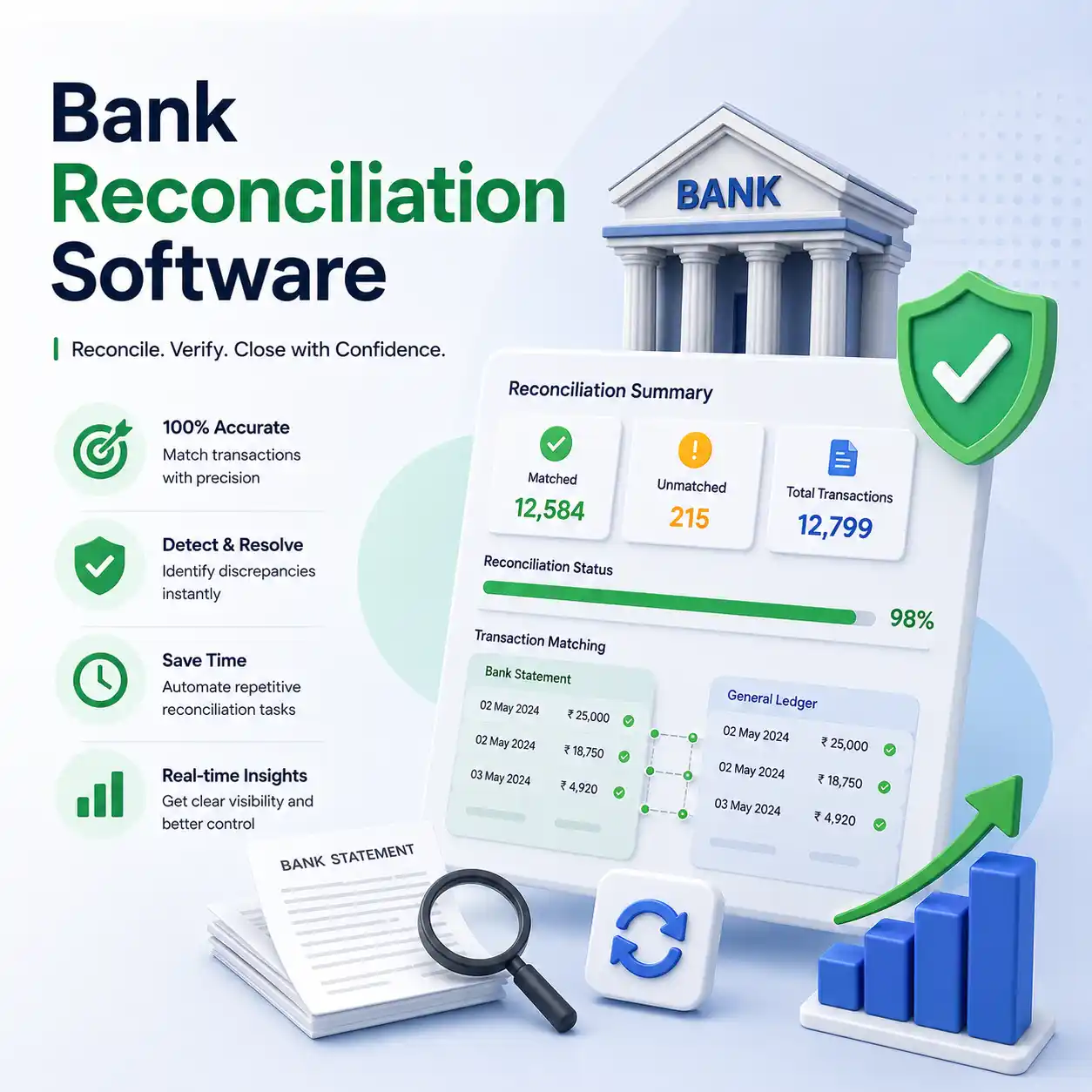
Before we dive into the differences, let's establish what we're talking about. Financial reconciliation is the process of ensuring two sets of records agree. The most common example is bank reconciliation—comparing your company's internal cash records (from your accounting software) against the monthly statement from your bank.
The goal is simple: confirm that every transaction is accounted for correctly, identify any differences (like missing checks, bank fees, or errors), and ensure your financial accuracy is rock solid. It’s a fundamental accounting control that protects against fraud, catches mistakes, and guarantees the integrity of your financial reporting.
The Manual Reconciliation Process: A Step-by-Step Walkthrough
For decades, this has been the standard approach. Let’s break down how it typically works.
The Stages of Manual Work
The first stage is data gathering. An accountant collects paper bank statements, PDFs, export files from payment processors, and internal reports from their ERP or accounting system.
Next comes the comparison grind. Using a tool like Microsoft Excel, the accountant painstakingly lines up transactions from both sources. This often involves complex VLOOKUP formulas, color-coding, and endless scrolling.
Then begins the investigation of discrepancies. Any unmatched items—an unexpected fee, a deposit not yet cleared, or a simple data entry typo—must be hunted down individually. This involves digging through emails, checking with other departments, or calling the bank.
Finally, there is adjustment and documentation. Once discrepancies are resolved, journal entries are made to adjust the company's books. The process is then documented, often in a separate file, for audit trails.
The Human Cost of Manual Methods
The human cost is significant. A survey by Sage found that accountants spend an average of 15 days per year just on manual reconciliation tasks. This is time not spent on analysis, forecasting, or strategic advisory work.
The Automated Reconciliation Process: How Technology Takes Over
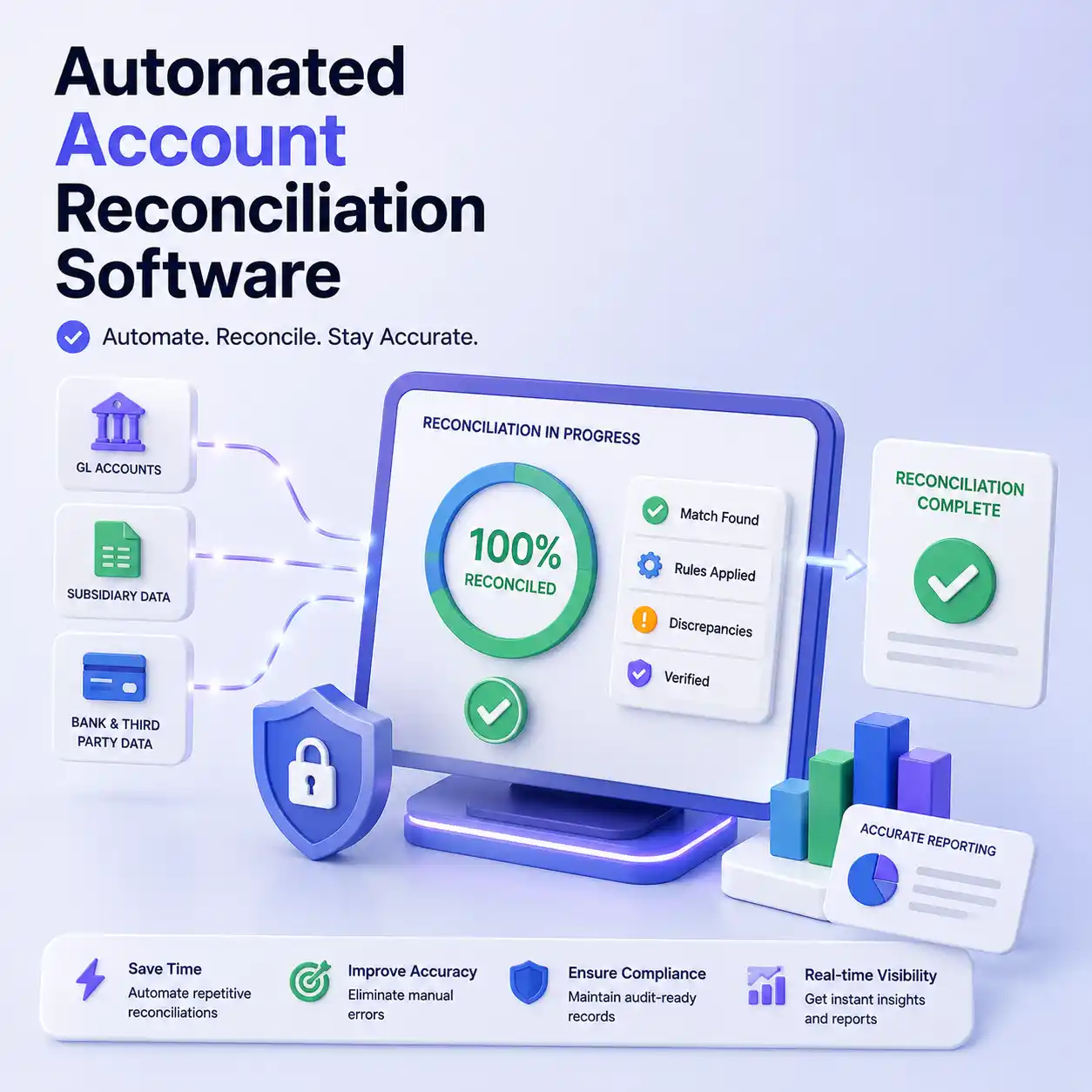
An automated reconciliation system transforms the same core process by leveraging rules, algorithms, and direct data feeds.
How Automation Works
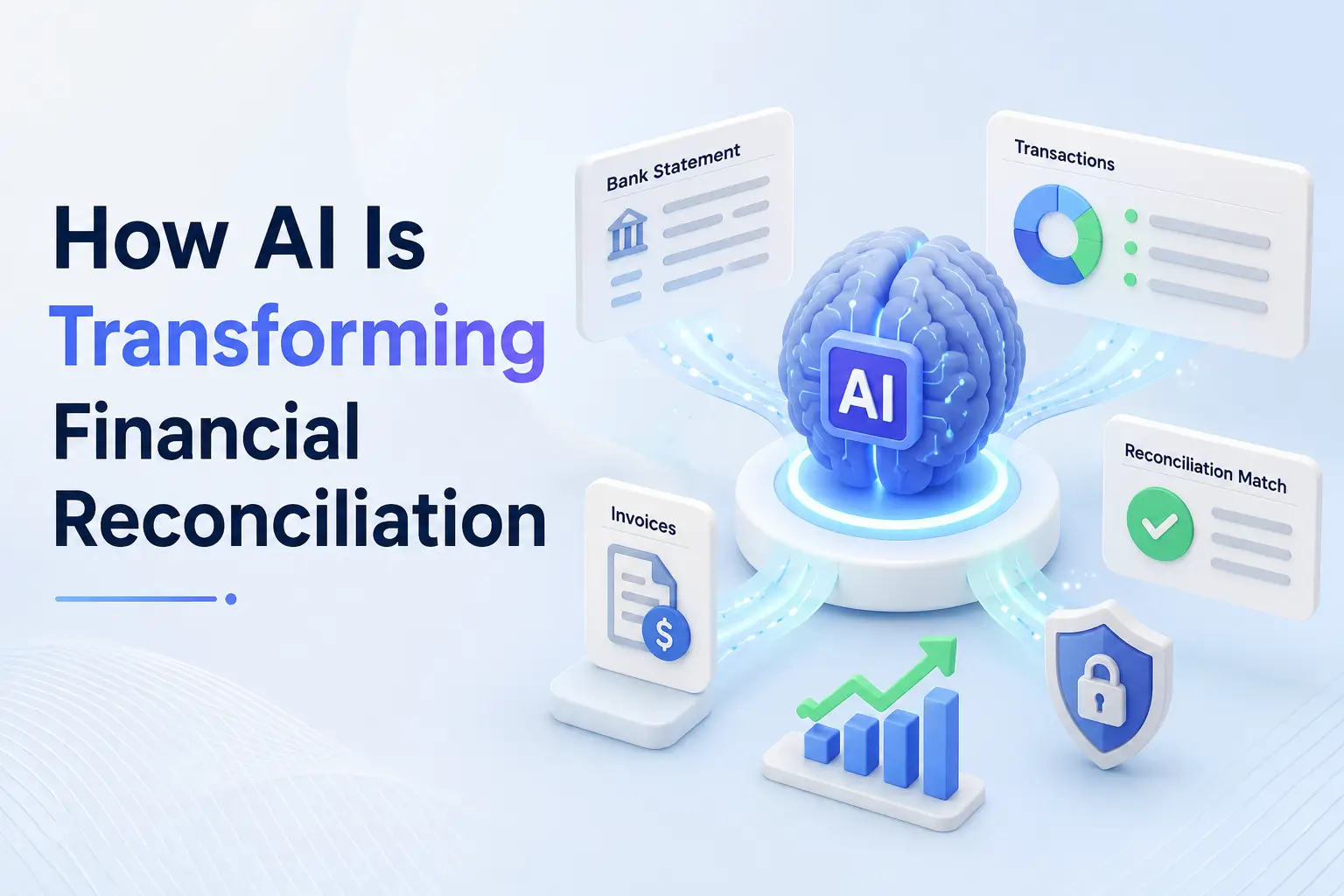
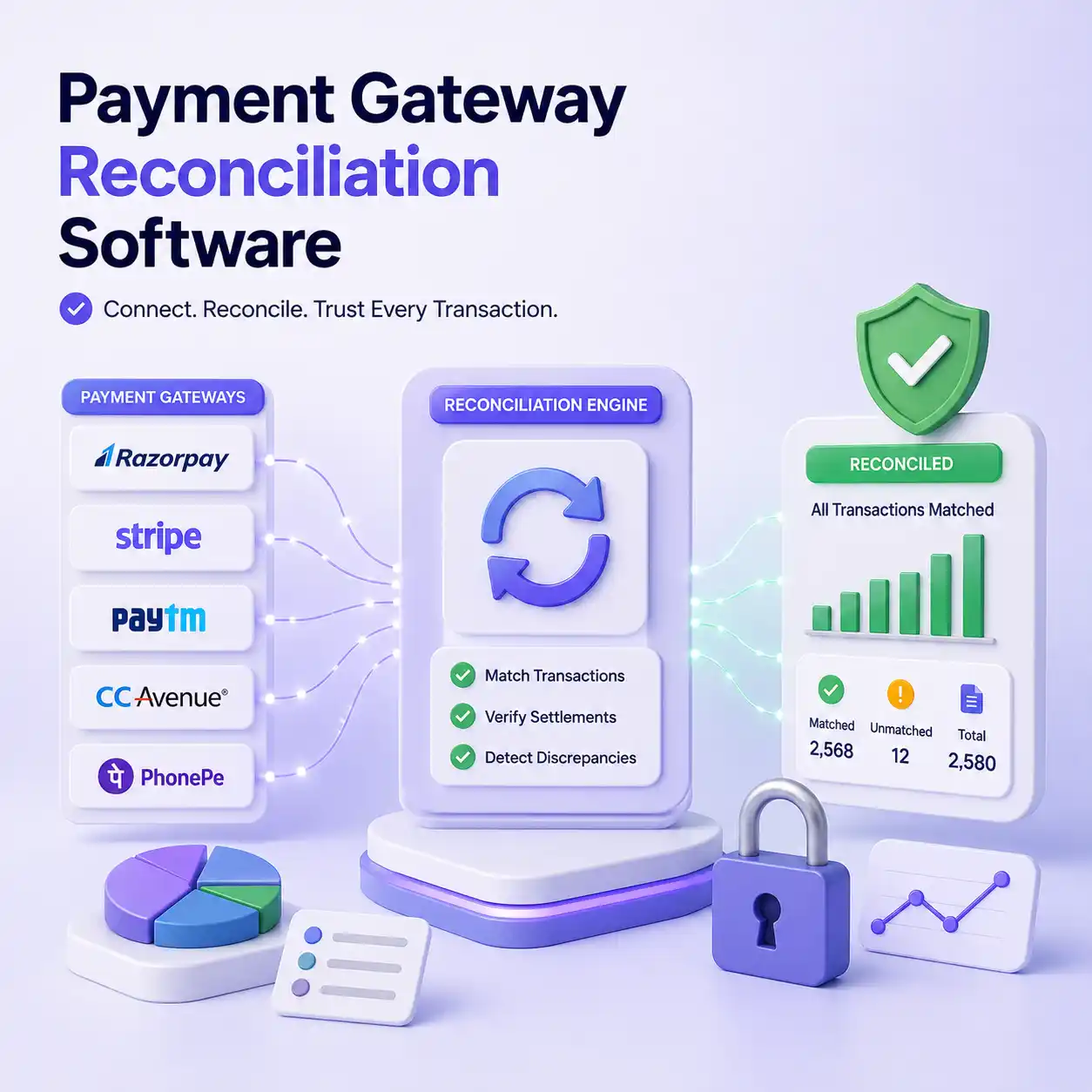
It begins with automated data ingestion. The software for bank reconciliation connects directly to banks, payment gateways, and internal systems via secure APIs. It pulls in all data automatically on a scheduled basis.
The core of the system is intelligent rule-based matching. This is the engine of any reconciliation automation tool. You define matching rules (e.g., match by transaction ID, date, and amount). The automated reconciliation software then processes thousands of transactions in seconds, pairing them accurately.
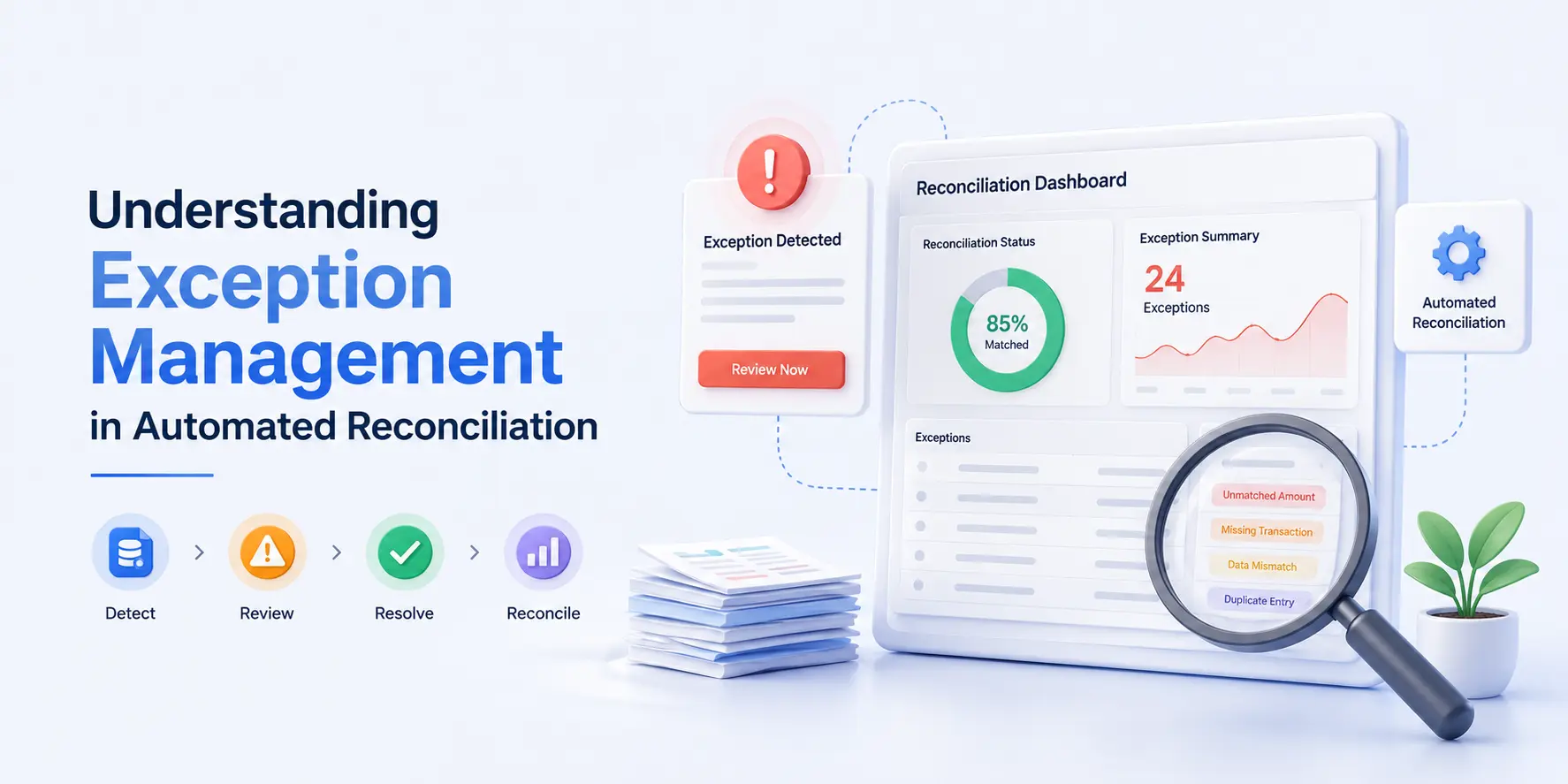
The process then focuses on exception management. Instead of reviewing every transaction, the team focuses only on the "exceptions"—the items the system couldn't match. The software highlights these clearly, often with suggested actions or links to source documents.
Finally, the system handles automated reporting and audit trails. It generates reconciliation reports automatically, with a complete, unalterable digital audit trail. Approvals can be managed within the workflow of the balance sheet reconciliation software.
The Efficiency Leap with Automation
According to industry data, reconciliation automation can reduce process time by up to 90%, turning a weekly chore into a daily, seamlessly integrated task.
Head-to-Head: The Core Differences
Let’s put these two methods side-by-side across key business dimensions.
Speed and Efficiency
Manual reconciliation is slow and linear. Time required scales directly with transaction volume. A process that takes 4 hours for 100 transactions might take 40 hours for 1000.
Automated reconciliation is fast and scalable. A robust automated account reconciliation system can process tens of thousands of transactions in the time it takes to get a cup of coffee. Volume increases have minimal impact on processing time.
Accuracy and Error Reduction
The manual path is prone to human error. Fatigue, distraction, and complex spreadsheets lead to missed matches and incorrect adjustments. The error rate in manual data entry is estimated to be around 1%, which is significant in finance.
The automated path offers exceptional accuracy. Once rules are correctly set, the automated reconciliation engine performs with consistent, repeatable precision. It eliminates transcription and oversight errors, drastically improving financial accuracy.
Cost Implications
Manual methods carry high and hidden costs. The direct cost is in employee hours spent on repetitive tasks. The indirect costs are greater: opportunity cost, error correction costs, and potential compliance penalties.
Automation offers predictable and ROI-positive spending. There’s an upfront investment in a reconciliation solution. However, the cost savings from freed-up staff time, reduced errors, and faster closes typically deliver a clear return on investment, often within the first year.
Control, Visibility, and Security
With manual processes, control is fragmented. Data lives in spreadsheets on individual desktops. Version control is a problem, and visibility is limited. Security depends on individual device controls.
With an automated reconciliation system, control is centralized and secure. A cloud-based reconciliation software for banks and businesses provides a single source of truth. Role-based access controls, encrypted data, and a complete audit trail offer superior security and governance.
Scalability and Business Growth
Manual reconciliation often becomes a barrier to growth. As transaction volume grows, so does the reconciliation team and the close timeline. It creates a bottleneck.
Automation is an enabler of growth. The system easily handles increased volume from new sales channels, acquisitions, or market expansion without requiring proportional increases in headcount.
Employee Morale and Strategic Impact
Manual tasks can be demoralizing and tedious. Talented finance professionals burn out on repetitive data-matching instead of using their skills for analysis.
Automation is empowering. It elevates the team's role from data processors to strategic analysts and advisors, investigating exceptions and providing business insights.
When Does Manual Reconciliation Make Sense?
Automation isn't always the immediate answer. Manual processes can still be viable for very small businesses or startups with extremely low transaction volume, for one-off complex investigations, or as a learning tool for new accountants.
However, as soon as transaction volume grows, complexity increases, or the need for real-time data emerges, the limitations of the manual method become starkly apparent.
Also Read: Why Bank Reconciliation Automation Is Essential for Finance Teams
Making the Shift: What to Look for in a Reconciliation Solution
If you're considering bank reconciliation automation, here’s what to prioritize. Look for ease of use and implementation, a flexible rule engine, comprehensive exception handling, robust reporting, and a clear audit trail. Ensure the vendor offers scalable reconciliation software with strong support.
Investing in the right accounting reconciliation software is an investment in your finance team's potential and your company's financial control.
Conclusion: The Future is Automated
The difference between manual and automated reconciliation is not merely a choice of tools; it’s a choice of direction for your finance function.
Manual reconciliation is reactive, burdensome, and a bottleneck. Automated bank reconciliation software is proactive, efficient, and a strategic accelerator. It represents a shift from simply checking the numbers to truly understanding the business.
In an era where data is plentiful but time is not, reconciliation automation is no longer a luxury. It is an essential solution for any growing business that values accuracy, efficiency, and strategic insight. The question is no longer if you should automate, but when you will start.
Also Read: Complete Reconciliation Solution for High-Volume Transactions
Frequently Asked Questions (FAQs)
1. Is automated reconciliation software secure?
Yes, reputable automated reconciliation software providers invest heavily in security. They use bank-level encryption, host data in secure compliant data centers, and offer robust role-based access controls, often making them more secure than scattered spreadsheets.
2. Can automation handle complex reconciliations beyond bank statements?
Absolutely. Modern accounts reconciliation software is designed to handle various types like credit card, inter-company, and ledger-to-ledger reconciliations. The rule-based engine can be configured to manage complex matching scenarios.
3. How long does it take to implement an automated reconciliation system?
Implementation time varies, but cloud-based solutions are typically faster. A standard bank reconciliation software implementation can often be up and running in a matter of weeks, not months.
4. Will automation eliminate the need for my accounting staff?
No. It eliminates the need for them to perform tedious tasks. It repositions their role towards exception management, analytical review, and higher-value strategic work, making them more valuable to the organization.
5. What's the typical ROI for reconciliation automation tools?
ROI is seen primarily in time savings, reduced error rates, faster financial close, and the recovered strategic capacity of your team. Many businesses achieve a full return on their investment within 12-18 months.
6. We have custom processes. Can an automated system adapt?
A good reconciliation solution should be flexible. Look for software that allows you to define custom matching rules, workflows, and approval hierarchies to mirror your specific internal controls and processes.
Ready to get started?
Contact us now
Contact us now
* By clicking on Contact Us you are agreeing to our Terms & Conditions and Privacy policy.