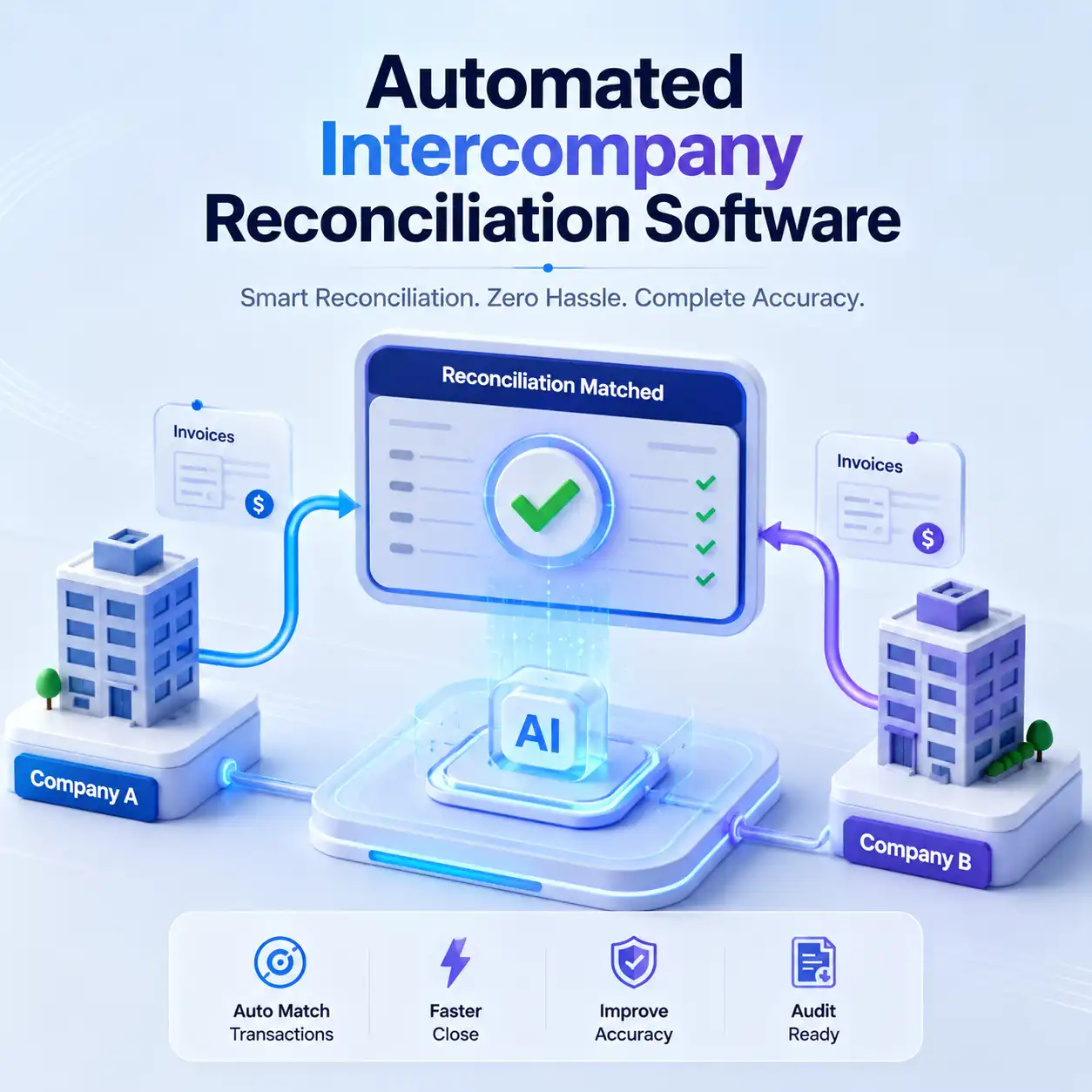
What are the Top Cloud-Based Platforms for Financial Data Reconciliation?
Kosh.ai
April 28, 2026

Financial data reconciliation is the process of matching your internal financial records with external sources like bank statements, credit card reports, and payment gateway logs. When every transaction lines up, you know your books are accurate. When things do not match, you risk cash flow problems, accounting errors, or even fraud.
Doing this work manually on paper or spreadsheets is slow and risky. A single typo can throw off an entire month of records. That is why thousands of businesses now use cloud-based platforms. These tools connect directly to your financial accounts, match transactions automatically, and flag only the exceptions for you to review. They save time, reduce errors, and give you real-time visibility into your cash position.
In this blog, we will explore the top cloud-based platforms for financial data reconciliation. We have ranked them based on ease of use, automation power, security, and real customer feedback. We will keep the language simple, share relevant facts and statistics, and help you choose the right tool for your business.
Why Cloud-Based Reconciliation Matters in 2026 and Beyond
Before we dive into the platforms, let us understand why moving to the cloud is no longer optional. A report by Aptitude Software found that 68% of finance leaders still rely on manual spreadsheets for at least some part of their reconciliation process. The same report revealed that companies lose an average of 1.2% of their annual revenue due to reconciliation errors and delays.
Cloud-based reconciliation automation solves these problems in three key ways. First, it pulls data automatically from multiple sources. Second, it applies smart matching rules so you do not have to check every line item. Third, it provides a single dashboard where you can see all unmatched transactions instantly.
According to a 2025 survey by Gartner, finance teams using cloud reconciliation tools reduce their month-end closing time by 55% on average. That means instead of spending 10 days closing the books, you spend 4 or 5 days. Those extra days can be used for analysis, planning, and growing your business.
What to Look for in a Cloud Reconciliation Platform
Not all platforms are built the same. When you evaluate a reconciliation solution, keep these features in mind:
- Automated data import: The platform should connect directly to banks, credit cards, payment processors, and ERPs without manual file uploads.
- Rule-based matching: You should be able to set custom rules. For example, match transactions when the amount is the same and the date is within one day of each other.
- Exception handling: The system must clearly show which transactions did not match and why. This saves hours of hunting.
- Audit trails: Every action (matching, editing, approving) must be recorded with a timestamp and user name. Auditors love this.
- Multi-currency support: If you sell globally, look for automatic exchange rate handling and multi-currency ledgers.
- Security certifications: SOC 1 Type II, SOC 2, and ISO 27001 are gold standards. Also check for bank-level encryption.
Now let us look at the top platforms available today.
1. Kosh AI – Best Overall for Automated Bank Reconciliation
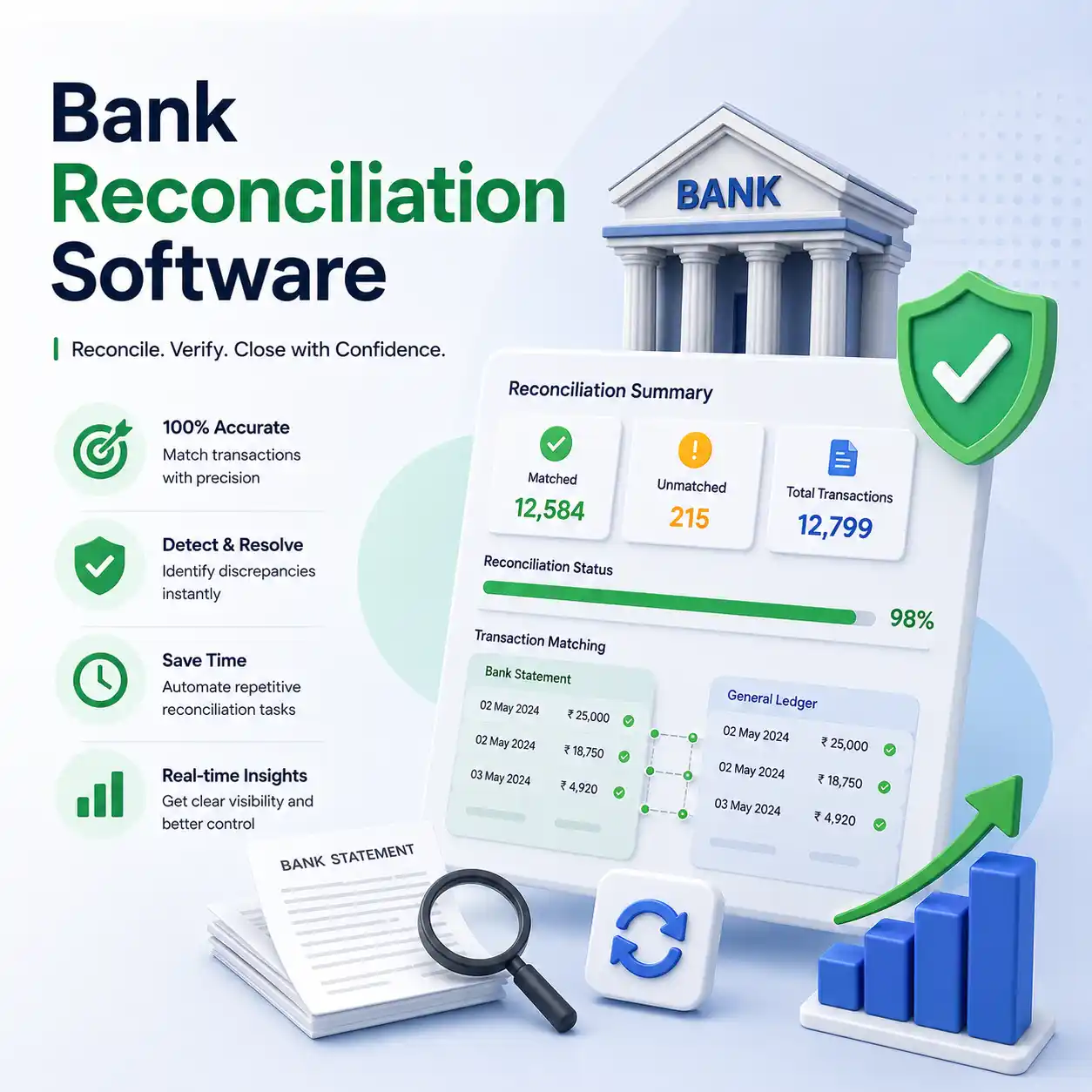
Kosh AI is a modern cloud platform built specifically for automated bank reconciliation. It was designed to take the pain out of matching thousands of transactions across multiple bank accounts and payment gateways. Finance teams love it because it is simple enough for a small business owner to use but powerful enough for a fast-growing company.
What Makes Kosh AI Different
Kosh AI connects directly to over 5,000 financial institutions in North America, Europe, and Asia. Once connected, it pulls bank data every few hours automatically. You do not need to download CSV files or copy-paste anything. The platform then uses smart algorithms to match each bank transaction to your accounting records.
One of the best features is the exception dashboard. Instead of showing you every single transaction, Kosh AI only shows you the ones that do not match. You can review and fix them in bulk or one by one. This approach saves finance teams roughly 75% of the time they previously spent on reconciliation.
Real-World Performance
According to published customer data on the Kosh AI website, users report a 90% reduction in manual data entry. The platform also includes an audit trail that records every change. For month-end closing, Kosh AI users say they finish their bank reconciliation in under 15 minutes, even with hundreds of transactions.
Kosh AI also offers a software for bank reconciliation that supports both single-entity businesses and multi-entity holding companies. You can switch between entities with one click, and the system keeps all reconciliation data separate and secure.
Security and Support
Kosh AI holds SOC 2 Type II certification and uses 256-bit encryption for all data. The platform also offers 24/7 chat support and a dedicated onboarding manager for new customers. Pricing is transparent and starts at a flat monthly fee based on transaction volume.
2. BlackLine – Best for Large Enterprises
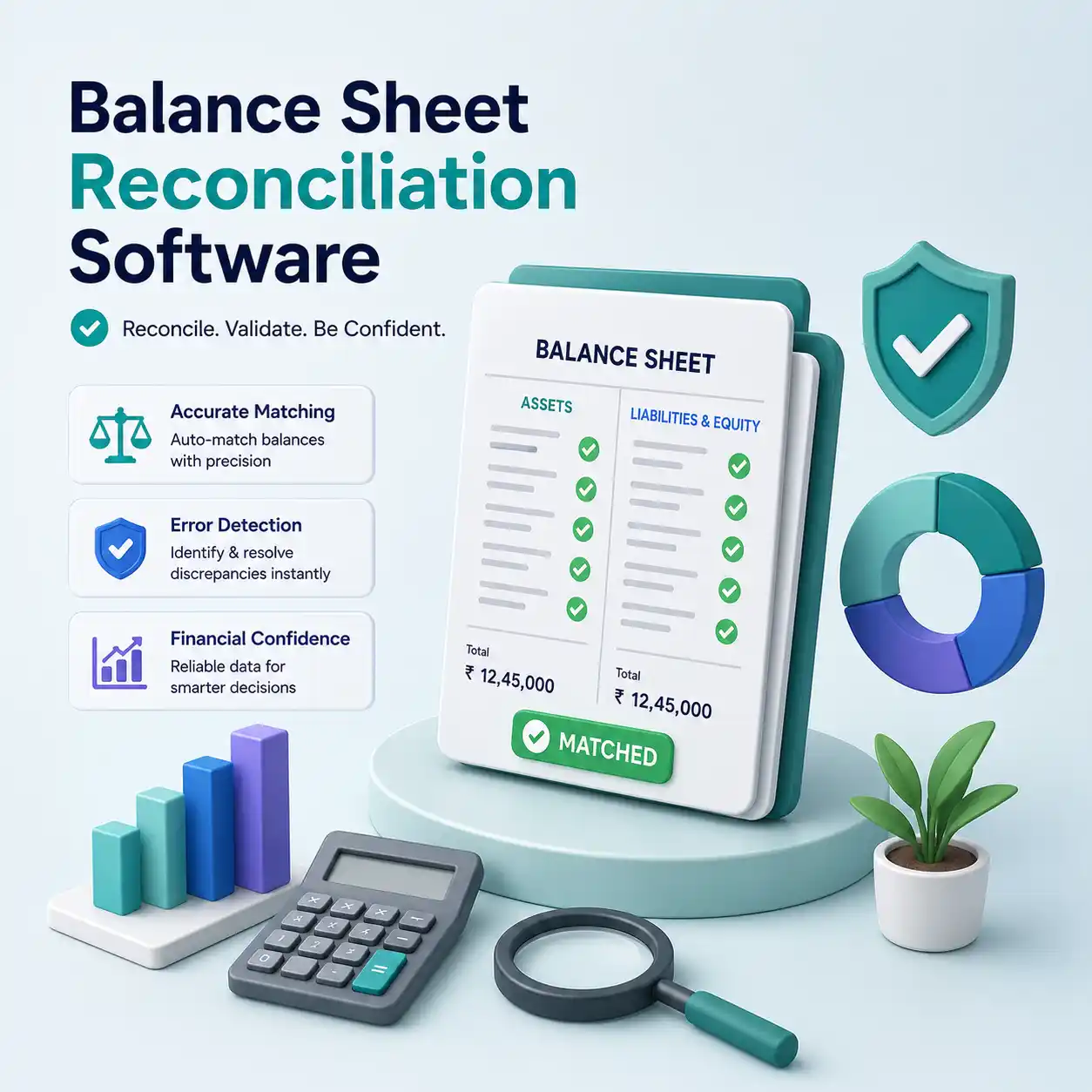
BlackLine has been a leader in financial close automation for over 20 years. Many Fortune 500 companies use BlackLine as their balance sheet reconciliation software. It is a heavy-duty platform designed for complex organizations with multiple legal entities, currencies, and ERP systems.
What BlackLine Offers
BlackLine connects to major ERPs like SAP, Oracle, and Microsoft Dynamics. It automates the entire reconciliation workflow from data import to approval. The platform includes task management, so you never miss a reconciliation deadline. It also has a journal entry module that lets you post adjustments directly from the reconciliation screen.
Data and Facts
A case study published by BlackLine showed that a global manufacturing company reduced its month-end close time from 14 days to 5 days after implementing the platform. The same study noted a 70% reduction in manual reconciliation hours.
BlackLine is not cheap. It is best suited for companies with annual revenues over $100 million or those with very complex accounting needs. Smaller businesses may find the platform too expensive and complicated.
3. AutoRek – Best for Banks and Financial Institutions
AutoRek is a specialized reconciliation software for banks and other financial institutions. It handles extremely high transaction volumes, sometimes millions of transactions per day. The platform is also used by insurance companies, investment firms, and payment processors.
Key Strengths
AutoRek can ingest data from almost any source: SWIFT files, ISO 20022 messages, credit card settlement files, and even paper statements scanned with OCR. Its matching engine is highly customizable. You can set up multi-step matching rules that consider time, amount, reference number, and even narrative text.
Industry Recognition
In a 2024 report by Chartis Research, AutoRek was named a category leader in reconciliations for capital markets. The report highlighted AutoRek's ability to handle real-time reconciliation across multiple asset classes. However, the platform requires dedicated IT resources to set up and maintain. It is not a plug-and-play tool for small businesses.
4. Xero – Best for Small Businesses and Accountants
Xero is a cloud accounting platform that includes powerful bank reconciliation automation as a built-in feature. It is designed for small to medium-sized businesses, freelancers, and accounting firms. Unlike standalone reconciliation tools, Xero combines reconciliation with invoicing, expense tracking, and financial reporting.
How Xero Handles Reconciliation
When you connect your bank account to Xero, the platform imports your latest transactions automatically. It then suggests matches based on previous rules you have set. For example, if you have a monthly Office 365 subscription, Xero learns that pattern and matches it automatically after the first time.
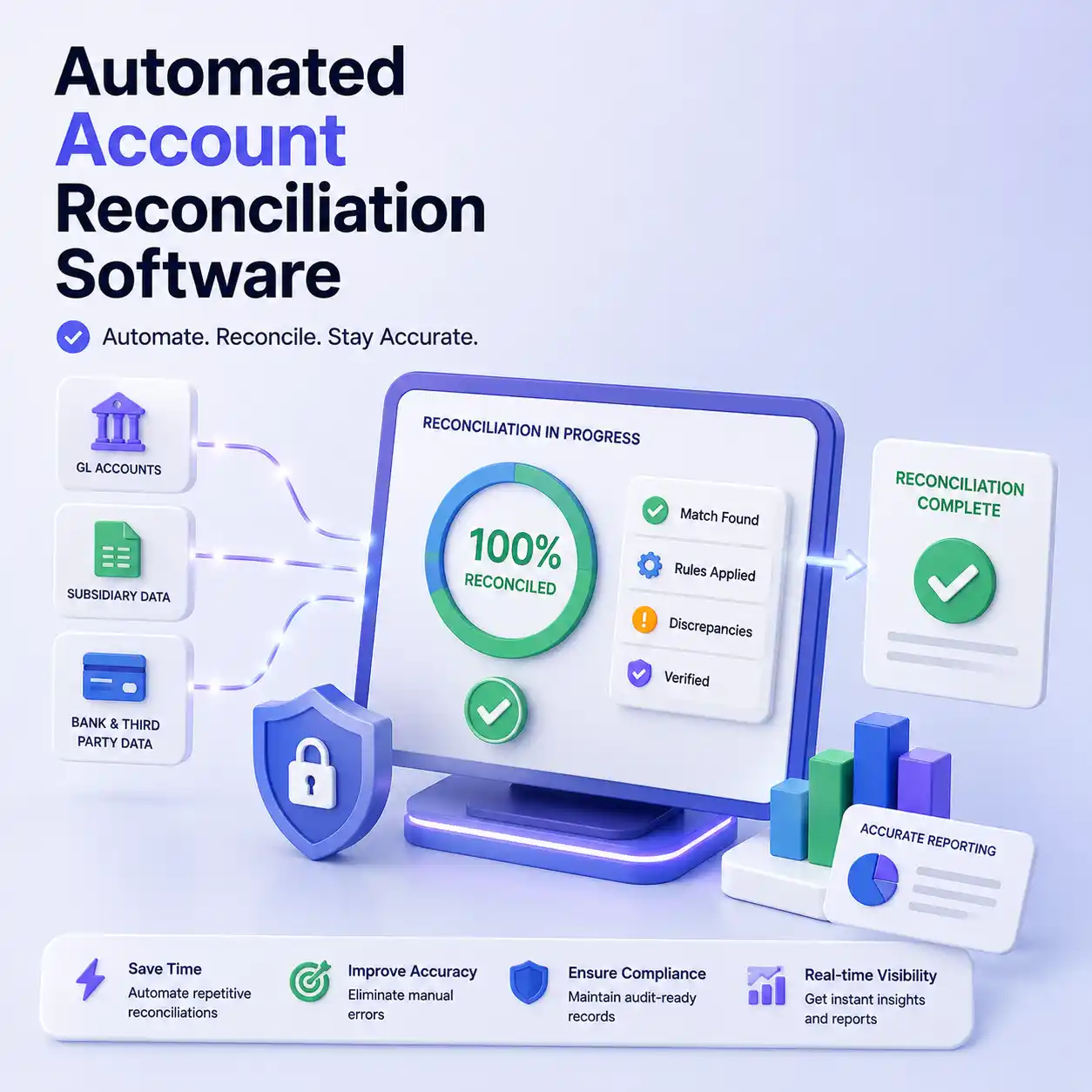
Xero’s automated account reconciliation feature also includes a "find and match" tool. You can search for specific transactions and match them in bulk. The mobile app lets you review and approve matches from your phone.
Limitations
Xero works best for businesses with fewer than 500 monthly transactions. As your volume grows, the manual oversight needed increases. For high-volume reconciliation, a dedicated platform like Kosh AI or BlackLine is a better fit.
5. Oracle Account Reconciliation Cloud – Best for Oracle ERP Users
Oracle Account Reconciliation Cloud is part of Oracle’s Enterprise Performance Management suite. It is a full automated reconciliation system for companies already using Oracle Fusion or other Oracle ERPs. The platform automates balance sheet reconciliations, transaction matching, and intercompany reconciliations.
Features and Benefits
The platform includes pre-built templates for common reconciliation types: bank accounts, credit cards, fixed assets, and accruals. It also has a transaction matching engine that can handle millions of rows of data. Oracle’s system uses machine learning to improve its matching accuracy over time.
Market Position
According to a 2025 IDC MarketScape report, Oracle is a leader in financial close and reconciliation software for large enterprises. However, the platform is complex to implement. Most customers work with Oracle consulting partners for setup. Pricing is also high, with multi-year contracts being the norm.
6. SolveXia – Best for Audit and Compliance Heavy Industries
SolveXia is a cloud platform that combines reconciliation with audit trails and compliance reporting. It is popular in insurance, healthcare, and retail industries where regulators demand detailed proof of every financial control. SolveXia is both a reconciliation automation tool and a process automation platform.
What SolveXia Does Differently
SolveXia allows you to build fully custom reconciliation workflows without writing code. You can drag and drop data sources, matching rules, approval steps, and exception handlers. The platform then runs these workflows on a schedule: daily, weekly, or monthly. Every step is logged, and you can generate audit-ready reports with one click.
Customer Results
A published SolveXia case study showed that a global retailer reduced its reconciliation errors by 96% after switching from spreadsheets. The same company cut its monthly close time from 12 days to 3 days. SolveXia is priced on a per-workflow basis, which works well for companies with specific, repeatable reconciliation needs.
How to Choose the Right Platform for Your Business
With so many options, choosing the right platform can feel overwhelming. Here is a simple decision framework.
Step 1: Count your monthly transactions. Under 500? Start with Xero. 500 to 10,000? Kosh AI is ideal. Over 10,000? Look at BlackLine or AutoRek.
Step 2: Check your existing software. If you already use Oracle ERP, Oracle Account Reconciliation Cloud makes sense. If you use QuickBooks or Xero, Kosh AI integrates smoothly.
Step 3: Decide your budget. Small businesses should spend under 200permonth.Mid−marketcompaniescanspend200permonth.Mid−marketcompaniescanspend500 to 2,000.Enterprisesoftenspend2,000.Enterprisesoftenspend5,000 or more monthly.
Step 4: Test before you buy. Every platform on this list offers a free trial or a demo. Use it. Connect a real bank account. Run a real reconciliation. See if the platform saves you time.
Also Read: Asset Reconciliation Explained for Accounting Professionals
The Future of Financial Data Reconciliation
The world of reconciliation is changing fast. Artificial intelligence and machine learning are making automated matching smarter. Soon, platforms will not just match transactions; they will also predict where errors will happen and suggest fixes before you even see them.
Another trend is real-time reconciliation. Instead of matching transactions at month-end, platforms will match them as they happen. This gives business owners a live, accurate cash balance at all times. Kosh AI and several other platforms are already moving in this direction.
Finally, open banking APIs are making connections easier and more secure. In the next two years, nearly every bank in the US and Europe will offer direct, read-only API access for reconciliation tools. That means no more manual file uploads or broken connections.
Conclusion
Financial data reconciliation does not have to be a headache. The right cloud-based platform can turn a multi-day manual chore into a five-minute automated review. Whether you are a freelancer with one bank account or a global enterprise with hundreds, there is a tool that fits your needs.
For most businesses looking for a perfect balance of power, simplicity, and affordability, Kosh AI stands out as the top choice. It is built specifically for automated bank reconciliation and delivers real time savings without complexity. For large enterprises with complex ERP systems, BlackLine and Oracle are excellent. For banks and financial institutions, AutoRek is a proven leader.
Try a free trial of any platform that interests you. Connect your bank. Watch the software work. You will wonder why you ever did reconciliation manually.
Also Read: How Does Automated Bank Software Speed Up Month-End Close?
Frequently Asked Questions
1. What is financial data reconciliation in simple words?
Financial data reconciliation is the process of checking that your company’s internal records match your bank statements and other external financial records. If they match, your books are accurate. If they do not, you have errors that need to be fixed.
2. How does automated bank reconciliation software work?
Automated bank reconciliation software connects directly to your bank account via secure APIs. It imports all your transactions automatically. Then it uses matching rules to pair each bank transaction with the corresponding entry in your accounting system. Only unmatched transactions require your attention.
3. Is cloud-based reconciliation software safe to use?
Yes, when you choose a reputable provider. Look for SOC 2 certification, 256-bit encryption, and multi-factor authentication. Top platforms like Kosh AI and BlackLine meet banking-level security standards. Your data is actually safer in a good cloud platform than on a personal computer.
4. Can I use reconciliation software if I have multiple bank accounts?
Absolutely. Most cloud reconciliation platforms are built to handle multiple bank accounts, credit cards, and payment gateways. Kosh AI, BlackLine, and Xero all support unlimited accounts depending on your pricing plan.
5. How much time can I save with automated reconciliation?
Finance teams typically save 70% to 80% of the time they previously spent on manual reconciliation. A task that took four hours can take 30 minutes or less. Month-end closing often goes from 10 days to 3 or 4 days.
6. Do I need to be an accountant to use reconciliation software?
Not at all. Modern cloud platforms are designed with simple interfaces. They show you exactly what needs your attention. If you can read a bank statement, you can use these tools. That said, having basic accounting knowledge helps you understand why certain transactions do not match.
Ready to get started?
Contact us now
Contact us now
* By clicking on Contact Us you are agreeing to our Terms & Conditions and Privacy policy.