Invoice Reconciliation Software That Keeps Every Invoice Tracked

Let Kosh AI Match Every Invoice to the Payment Behind It, Down to the Line Item, So Nothing Sits Unresolved

  • Matches Invoices to Payments at the Line-Item Level
  • Flags Short-Pays and Partial Payments the Moment They Post
  • Covers Both Invoices You Send and Invoices You Receive
  • Keeps a Clear Reason Behind Every Open Invoice
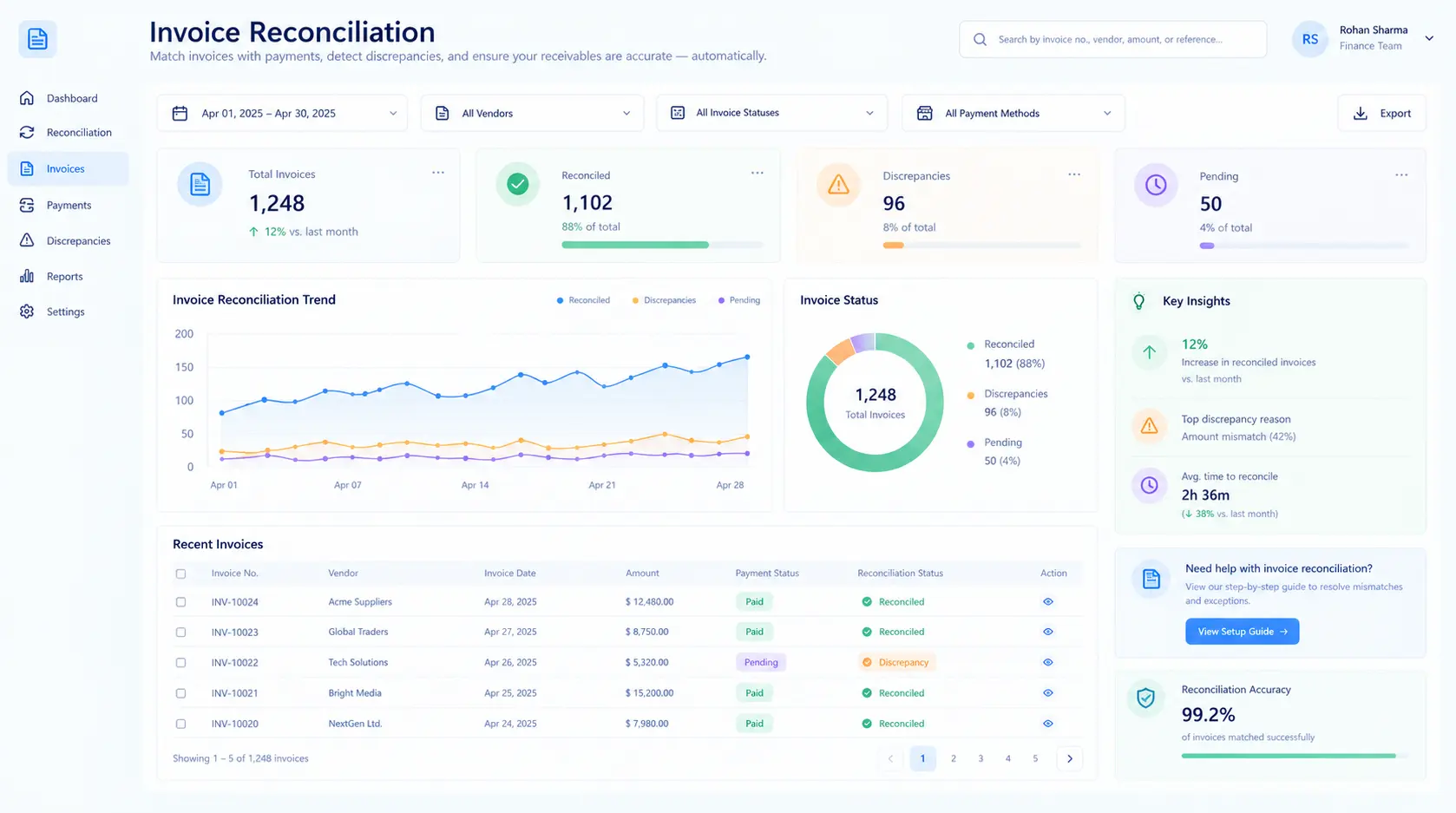
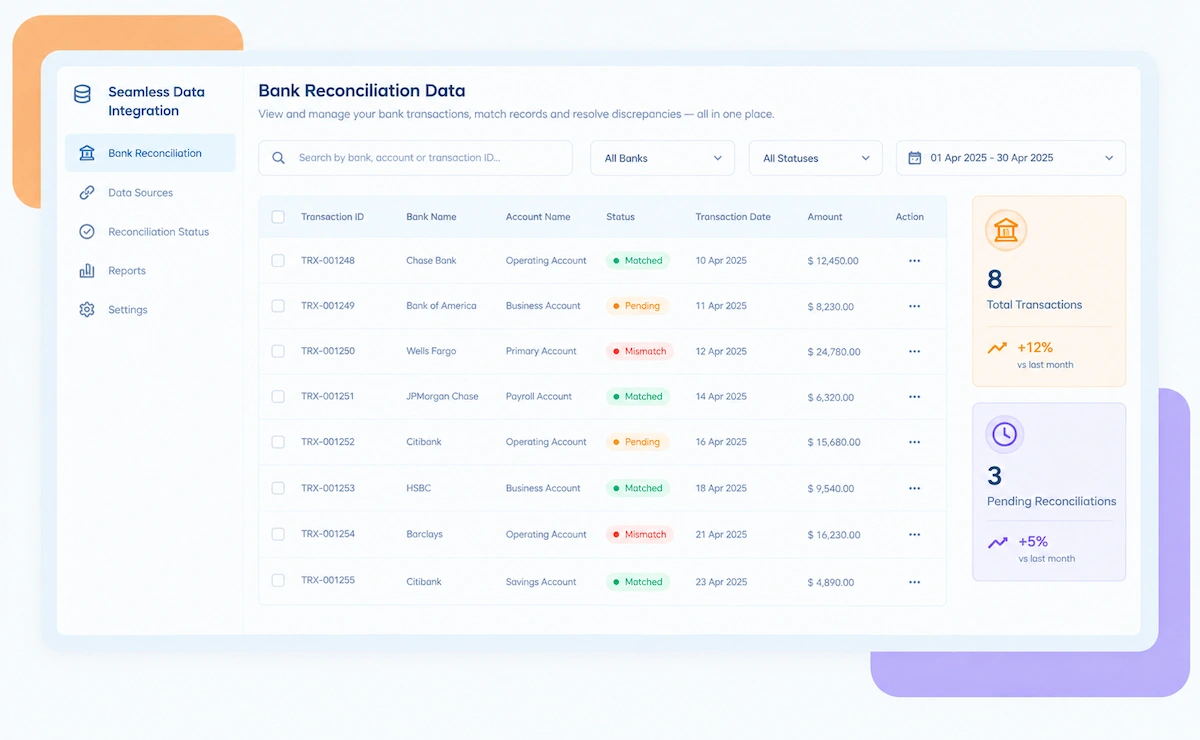
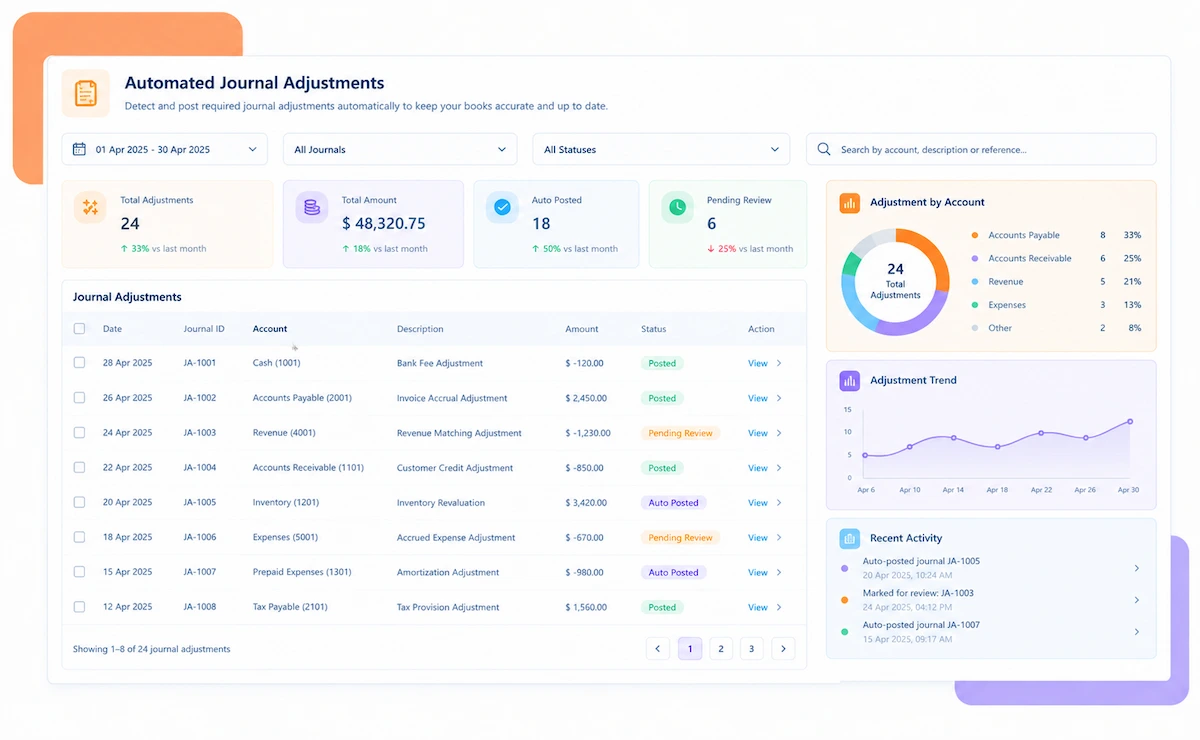
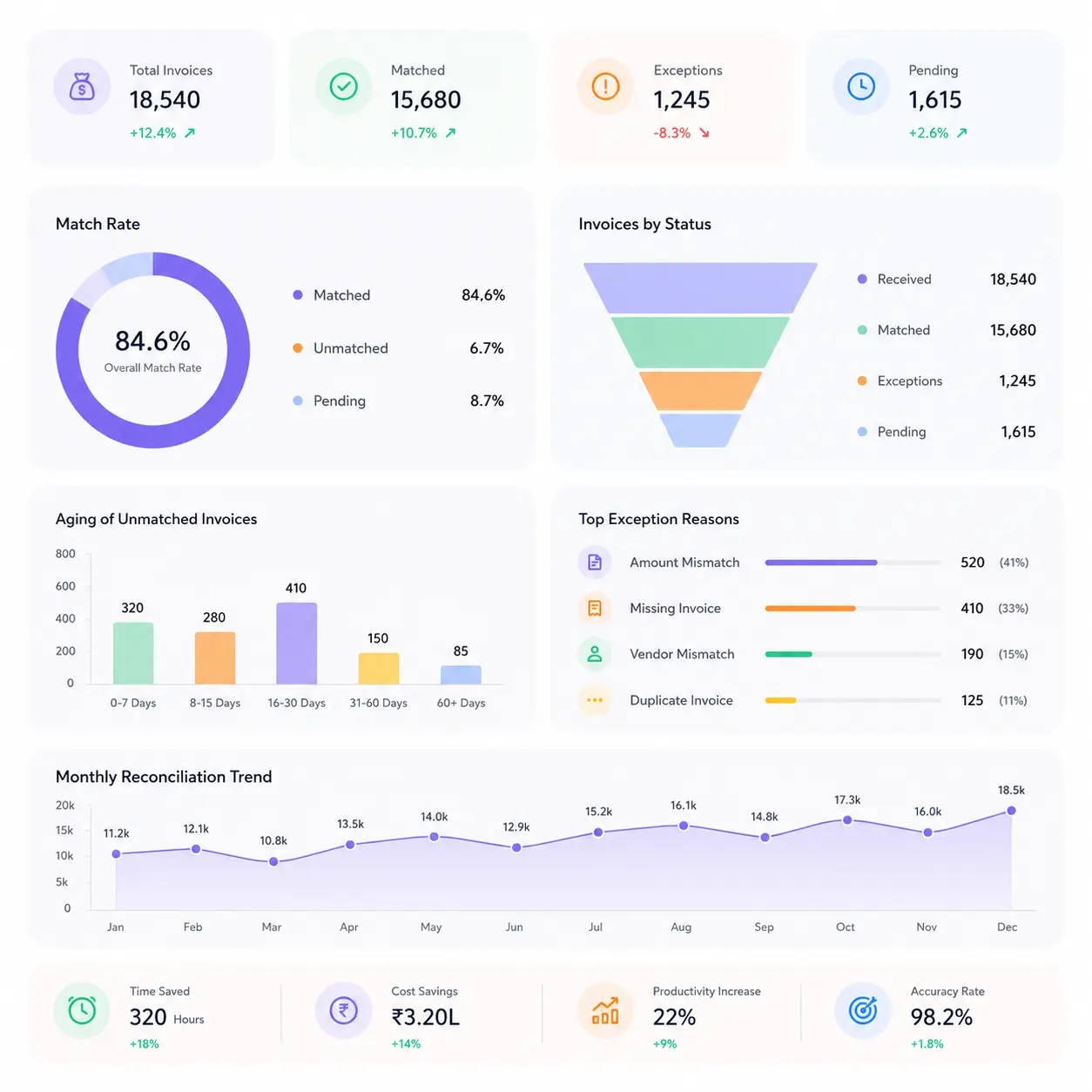
Kosh AI Invoice Reconciliation Software Dashboard

NEW 2026 Invoice Reconciliation Tool

Invoice Reconciliation Software Built for Teams Tired of Chasing Down Why an Invoice Is Still Open
See which invoices are fully paid, which are short, and exactly which line item caused the gap, all matched automatically against the payments you've actually received or made.

How Invoice Reconciliation Software Matches Invoices to Payments

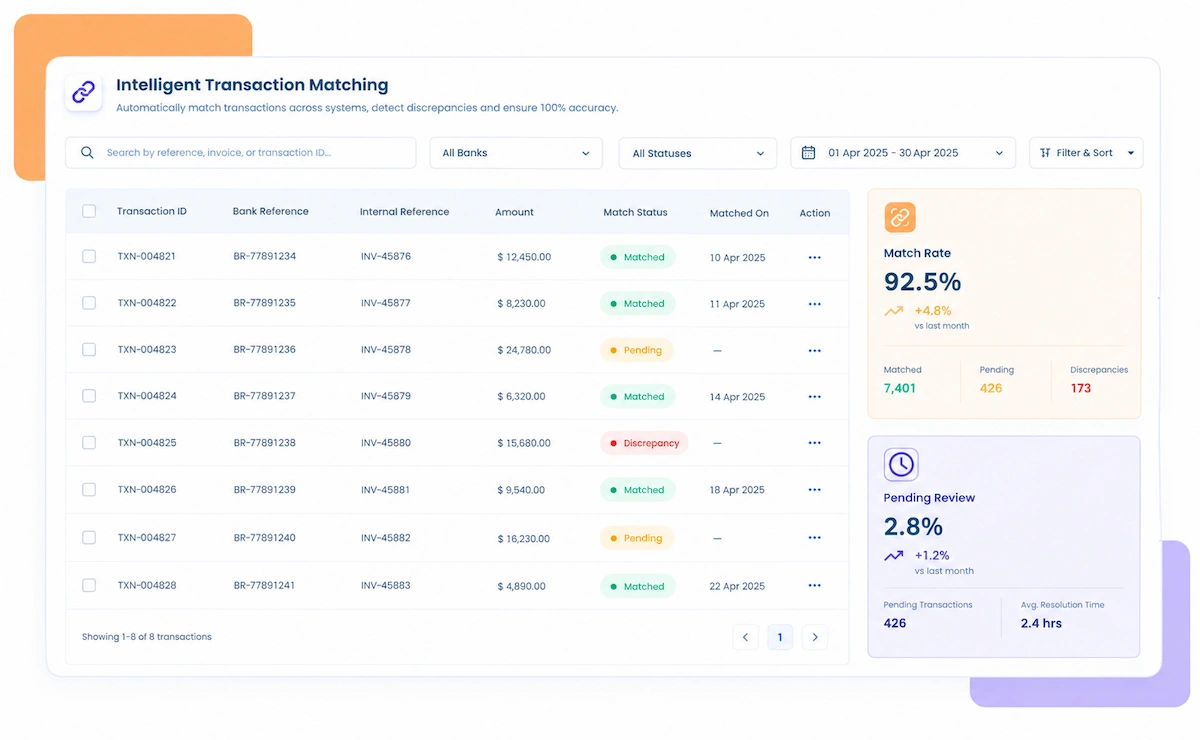
A single invoice can be paid in full, paid in part across two payments, or paid against the wrong invoice entirely. Most finance teams still work this out by hand, pulling an invoice list and a payment list and matching them one by one. Kosh AI pulls both into one place and handles the matching down to the line item.

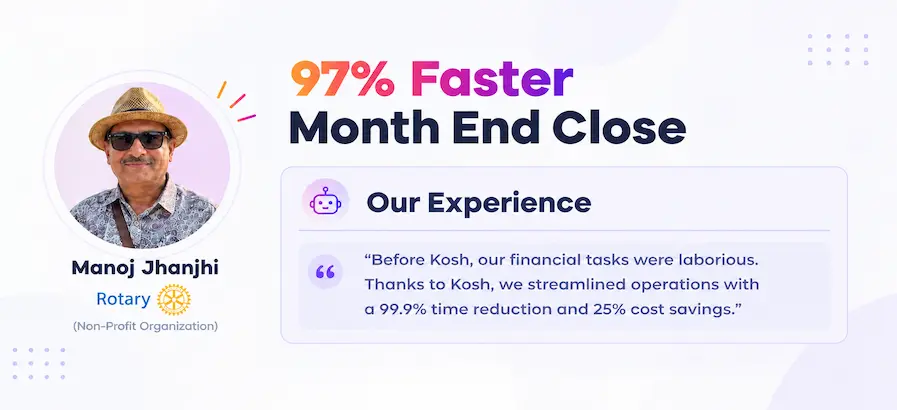
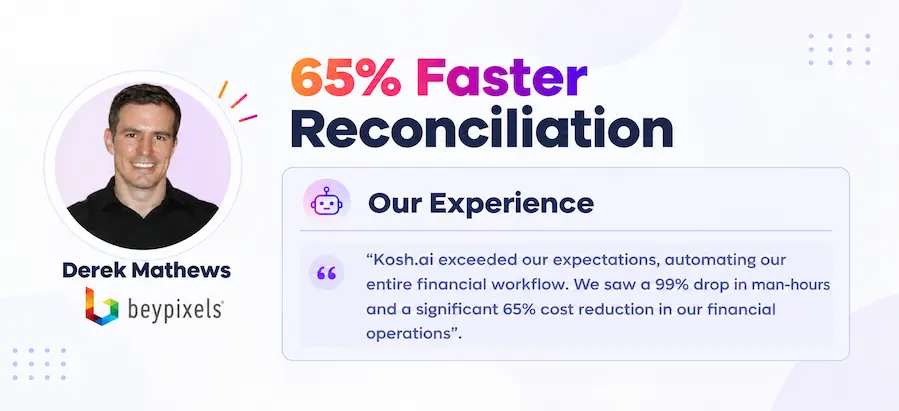
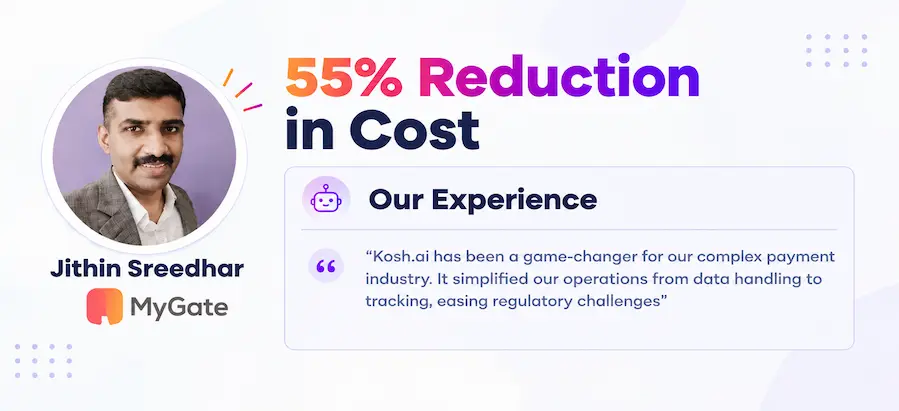
Proven Results From Automated Invoice Reconciliation

Konica Minolta Business Solutions, U.S.A., Inc.
Ring Container
Conference Direct

How Invoice Reconciliation Software Works in Four Steps

You don't need to change how you invoice customers or pay vendors. Kosh AI reads what's already there and handles the matching, the short-pay review, and the reporting.

  • From Your Invoicing System and Bank: Kosh AI pulls open and paid invoices alongside the payments made or received against them.
  • No Manual Exports: There's no need to download an invoice list and a payment list separately each period.

  • Receivable and Payable Together: Customer invoices and vendor invoices both show up in the same reconciliation view.
  • Ready as Payments Post: New payments are available to match the moment they clear.
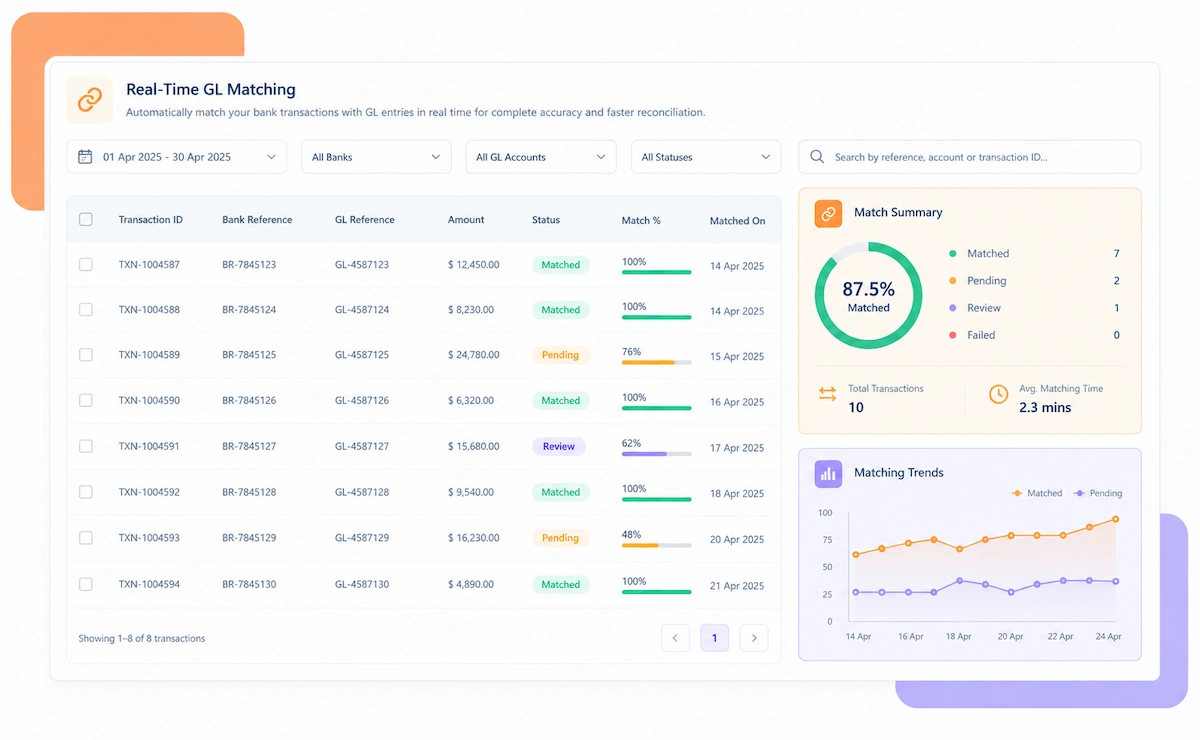
  • Done Automatically: Kosh AI links each payment to the specific invoice lines it settles, even when it's a partial payment.

  • Handles Multiple Payments: Several payments against one invoice are consolidated into a single accurate balance.

  • Short-Pays Flagged Instantly: Any payment below the expected invoice amount is surfaced right away.
  • Improves With Use: Matching accuracy gets sharper the longer Kosh AI works with your invoicing patterns.
  • Aging Updated Automatically: Open balances and aging buckets reflect actual remaining amounts, not original invoice totals.
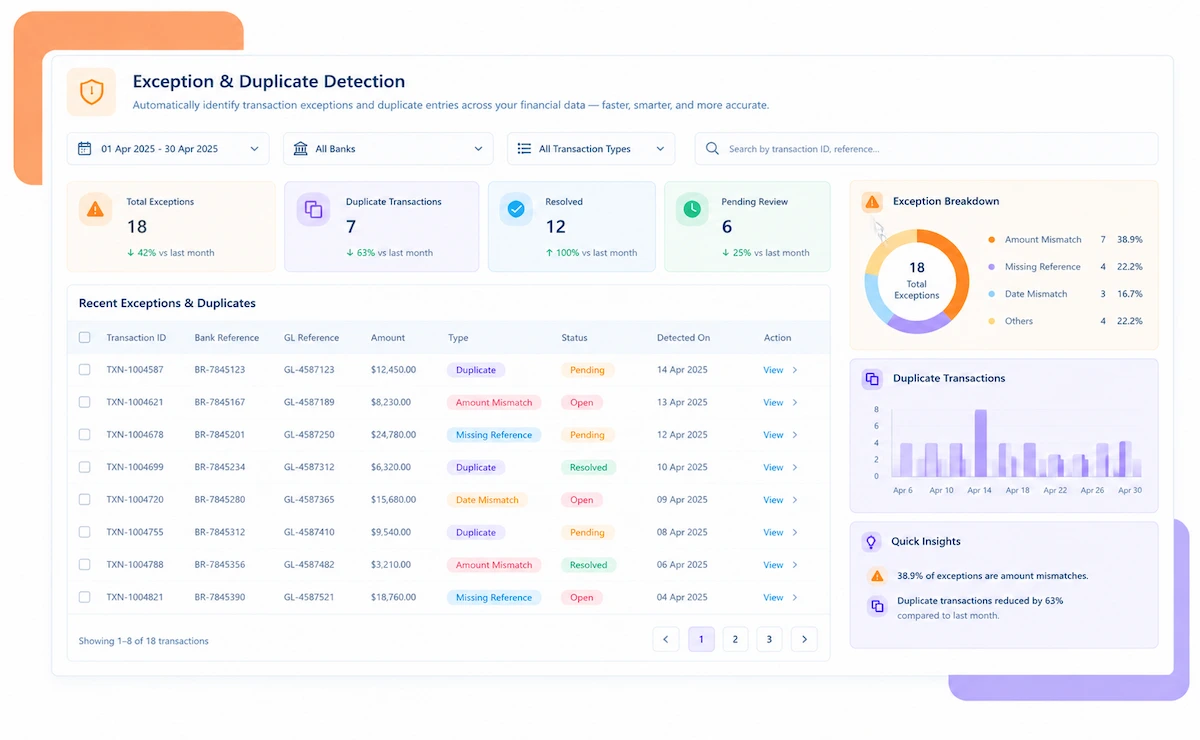
  • A Likely Reason Attached: Each short-pay or open balance comes with a probable cause, not just a dollar figure.
  • Sorted by Size and Age: The invoices most overdue or most likely to need follow-up rise to the top of the list.
  • Resolved Before It Ages Further: Disputes and short-pays are cleared before they turn into a bad-debt write-off.
  • Status Tracked Automatically: Invoice reconciliation status is calculated without manual tallying.
  • Reports for Any Audience: Pull a collections summary for a credit manager or a full detail file for a vendor dispute.
  • A Trail for Every Match: Invoice and payment detail stay attached to every reconciled line item.
  • Collections Confidence at a Glance: Always know which customers or vendors are paying cleanly and which need attention.

Invoice Reconciliation That Fits How You Bill and Pay

No two businesses invoice the same way. Kosh AI fits the invoicing model you run, the industry you work in, and how your finance team is structured.

Customer Invoices (AR)

Receivable invoices are matched to incoming payments, with short-pays flagged by likely cause.

Vendor Invoices (AP)

Payable invoices are matched to outgoing payments, catching duplicate or missed payments before they go out.

Multi-Line Invoices

Invoices with many line items are reconciled down to each line, not just the invoice total.

Recurring and Project Invoices

Recurring billing and milestone-based project invoices are reconciled in the same system.

Manufacturing

High invoice volumes with frequent partial payments are reconciled without a manual AR review every week.

Professional Services

Project-based and milestone invoices are matched against payments as engagements progress.

Distribution & Wholesale

High-volume vendor invoices are reconciled against payments to avoid duplicate or missed disbursements.

Healthcare

Invoices tied to insurance and patient billing are reconciled with records clean enough for compliance review.

Invoice Reconciliation at Scale

Kosh AI centralizes invoice-to-payment reconciliation for large finance teams, giving real-time visibility across every customer and vendor.

  • Reconcile hundreds of thousands of invoices across AR and AP in one system.
  • Spot chronic short-pays with 15+ ML-driven risk models.
  • Keep a fully documented history behind every invoice-to-payment match.
  • Invoice Reconciliation for Growing Finance Teams

    Kosh AI gives smaller finance teams automated invoice matching without the headcount a manual process usually needs.

  • Replace spreadsheet-based invoice matching with automatic reconciliation.
  • Handle a growing invoice volume without adding staff.
  • Go live in weeks with ready-made invoicing and ERP connectors.
  • The Business Impact of Automated Invoice Reconciliation

    Reconciling invoices against payments by hand ties up your AR and AP team every period, and short-pays are easy to miss when you're matching totals instead of line items. Kosh AI takes that load off your team and gives you invoice records you can trust.

    1

    Catch Short-Pays the Day They Happen

    A payment that's lower than expected is flagged immediately, not discovered weeks later during collections.

    2

    Keep Aging Reports Accurate

    Open balances reflect real remaining amounts, so collections teams chase the right invoices.

    3

    Let Finance Focus on Collections, Not Matching

    Instead of matching payments to invoices in spreadsheets, your team spends its time resolving genuine disputes.

    4

    Avoid Duplicate or Missed Vendor Payments

    Payable invoices are checked against what's already been paid before a duplicate payment goes out.

    5

    Resolve Disputes Faster

    A documented line-item trail makes it easier to explain a short-pay or deduction to a customer or vendor.

    6

    Reduce Bad-Debt Write-Offs

    Catching short-pays and disputes early means fewer invoices age into write-off territory.

    The Results of Automating Invoice Reconciliation

    65%Faster Invoice Reconciliation
    85%Of Invoices Matched Without Help
    90%Fewer Manually Re-Keyed Entries

    Integrate Seamlessly with Your Existing ERP Systems

    Kosh AI connects directly with all major banks and ERPs, enabling real-time data sync for faster, more accurate reconciliations—no manual uploads, no delays.

    Why Automated Invoice Reconciliation Beats Spreadsheets

    A shared spreadsheet breaks down the moment an invoice gets paid in parts across different dates, or a customer disputes a single line item. Kosh AI is built for how invoices actually get paid.

    Smart matching icon

    Line-Item-Aware Matching for More Accurate Reconciliation

    Kosh AI matches payments down to the invoice line, not just the invoice total, so partial payments reconcile correctly.

    Exception handling icon

    Turn Short-Pays Into Actionable Exceptions

    A short-pay comes with a likely reason and the invoice lines it affects, not just a dollar difference.

    Learning system icon

    Improve Matching Accuracy With Every Invoice Cycle

    Every resolved short-pay feeds back into how Kosh AI matches that customer's or vendor's future invoices.

    Flexible matching icon

    Handle Any Invoicing Structure You Use

    From simple single-line invoices to complex multi-line project billing, Kosh AI handles the reconciliation logic each one needs.

    What Is Invoice Reconciliation Software?

    Invoice reconciliation software matches every invoice a business sends or receives against the payments made against it, down to the individual line item, to confirm exactly what's been settled and what's still open. It pulls invoice data from your invoicing or ERP system and payment data from your bank or AP ledger, so your finance team sees the match without exporting both and comparing them manually. Kosh AI takes it further by flagging short-pays the moment they post, tracking disputes to the specific line item they relate to, and keeping aging reports accurate as payments apply. The result is an invoice-to-payment process your finance team can trust on both the receivable and payable side.

    Invoice reconciliation dashboard illustration

    Manual vs. Automated Invoice Reconciliation: What Changes?

    Here's what actually changes when invoice reconciliation moves off spreadsheets and onto software built for line-item-level matching.

    What You're Comparing Automated Invoice Reconciliation Doing It Manually
    Matching Payments to InvoicesPayments are matched to specific invoice line items automatically.Someone matches payments to invoice totals, often missing partial or split payments.
    Catching Short-PaysShort-pays are flagged the moment a payment posts, with a likely reason attached.Short-pays often surface only during a manual collections review.
    Keeping Aging AccurateOpen balances update automatically as payments are matched.Aging reports can lag behind actual remaining balances if updates are manual.
    Handling AR and AP TogetherCustomer and vendor invoices are reconciled in one system.Receivable and payable invoices are usually tracked in separate spreadsheets.
    Resolving DisputesDisputes are linked to the specific invoice line they relate to, with supporting detail attached.Disputes require someone to manually trace back which line item caused the deduction.
    Scaling With Invoice VolumeA growing invoice volume doesn't require more manual matching staff.More invoices usually means more hours spent reconciling payments every period.

    See the Value of Invoice Reconciliation Automation

    Set up Kosh AI, start matching invoices to payments down to the line item, and stop chasing short-pays through spreadsheets.

    Schedule a Quick Demo
    Loreal Touchless

    Why Invoices Stay Open Longer Than They Should

    An invoice that gets paid in full on time doesn't need much attention. The problem is that a meaningful share of invoices don't work that way: a customer pays most of the amount and disputes one line item, a vendor invoice gets paid twice because two people processed it separately, a payment lands days after the invoice date and nobody connects the two. Invoice reconciliation software exists because tracking every one of those cases by hand stops being realistic once invoice volume grows past what a couple of people can match in a spreadsheet.

    The case for using it isn't just about catching errors, though that matters. It's about knowing, at any point, exactly which invoices are genuinely open and why. A credit manager chasing collections needs an aging report that reflects real remaining balances, not totals that ignore a partial payment made three weeks ago. An AP team trying to avoid duplicate payments needs to know instantly whether an invoice has already been paid, not discover it after the second payment clears. Invoice reconciliation software keeps that picture accurate in real time instead of reconstructing it during a monthly close.

    There's also a dispute-resolution angle that spreadsheets handle poorly. When a customer or vendor disputes an invoice, the conversation goes faster if finance can point to the exact line item and payment history behind the disagreement. Matching at the invoice-total level loses that detail, which is exactly why line-item matching matters more as invoice complexity grows.

    Who Actually Needs Invoice Reconciliation Software

    It's not only for businesses drowning in invoices. Here's who tends to benefit most.

    AR team icon

    For Accounts Receivable Teams

    Anyone chasing collections benefits from an aging report that reflects real open balances, not stale invoice totals.

    AP team icon

    For Accounts Payable Teams

    Avoiding duplicate or missed vendor payments depends on knowing instantly what's already been paid.

    Multi-line invoice icon

    For Businesses Issuing Multi-Line Invoices

    Complex invoices with many line items are exactly where total-level matching starts missing real discrepancies.

    High volume icon

    For High Invoice Volume Businesses

    Once invoice volume outpaces what two people can match by hand, automation is what keeps accuracy from slipping.

    Dispute resolution icon

    For Teams Handling Frequent Invoice Disputes

    Line-item-level detail makes it far easier to resolve a disputed invoice without a lengthy back-and-forth.

    Finance leadership icon

    For Finance Leaders Who Need Accurate Working Capital Visibility

    Real open balances across AR and AP matter for cash flow planning and working capital decisions.

    Invoice Reconciliation Software: An Honest Assessment

    No tool is a perfect fit for every invoicing process. Here's an honest look at what invoice reconciliation software gets right, and what's worth planning around before you adopt it.

    • Line-Item-Level Accuracy: Payments are matched to specific invoice lines, not just totals, which catches what total-level matching misses.
    • Catches Short-Pays Early: A short-pay is flagged the moment it posts, instead of surfacing during a later collections review.
    • Reduces Duplicate Vendor Payments: AP teams can check instantly whether an invoice has already been paid before issuing another payment.
    • Scales With Invoice Volume: A growing invoice volume doesn't require a proportional increase in manual matching staff.
    • Faster Dispute Resolution: A documented line-item trail makes it easier to explain a deduction or short-pay to a customer or vendor.
    • Upfront Setup Time: Connecting your invoicing system, bank, and ERP takes real effort before reconciliation runs smoothly.
    • Data Quality Matters: Inconsistent invoice numbering or missing line-item detail limits how precisely payments can be matched.
    • Change Management: A team used to matching invoice totals by hand needs time to trust line-item-level automated matching.
    • Not a Fix for Invoicing Errors: Software can flag a mismatched invoice, but it won't correct a billing error at the source.
    • Ongoing Maintenance: Customer and vendor payment patterns need occasional review as business terms change.

    Invoice Reconciliation Software FAQs

    What is invoice reconciliation software?

    Invoice reconciliation software matches every invoice a business sends or receives against the payments made against it, down to the line item, to confirm what's settled and what's still open. Kosh AI does this automatically for both receivable and payable invoices.

    How does invoice reconciliation software work?

    It pulls invoice data from your invoicing or ERP system and payment data from your bank or AP ledger, then matches payments to the specific invoice lines they settle. Short-pays and unmatched amounts are flagged automatically for review.

    Why is invoice reconciliation software important for finance teams?

    Short-pays, partial payments, and duplicate vendor payments are easy to miss when matching is done at the invoice-total level. Invoice reconciliation software catches these at the line-item level, which matters for accurate aging reports and working capital visibility.

    Does invoice reconciliation software cover both AR and AP?

    Yes, invoice reconciliation applies to invoices a business sends and invoices it receives. Kosh AI reconciles both receivable and payable invoices in the same system, so finance isn't maintaining two separate processes.

    How is invoice reconciliation different from billing reconciliation?

    Invoice reconciliation matches individual invoices to payments, typically for one-off or project-based billing. Billing reconciliation also handles recurring, prorated, and usage-based charges across a subscription's lifecycle. Kosh AI supports both under one system.

    Can invoice reconciliation software connect to my invoicing system and ERP?

    Yes, most invoice reconciliation software is built to pull data from common invoicing platforms and ERPs. Kosh AI connects to major invoicing tools alongside SAP, Oracle, NetSuite, Sage, QuickBooks, and Xero, so data flows in without manual exports.

    Does invoice reconciliation software replace the need for an AR or AP team?

    No, but it takes most of the manual matching work off their plate. Kosh AI handles routine invoice-to-payment matching automatically, so your team can focus on collections, vendor relationships, and resolving genuine disputes.

    What happens when a payment doesn't fully match an invoice?

    It gets flagged as a short-pay immediately, usually with a likely reason and the affected line items already attached. From there, it's routed for review instead of sitting unresolved until the next collections cycle.

    How long does it take to set up invoice reconciliation software?

    Most businesses can have core invoice reconciliation running automatically within a few weeks, since the software connects to an invoicing system and ERP you already use. Kosh AI follows a similar timeline, with high-volume, multi-entity rollouts typically taking 2 to 4 months to fully configure.

    How do I choose the right invoice reconciliation software for my business?

    Start with how many invoices you process and how much of your matching is still done manually today. From there, compare options on line-item matching accuracy, invoicing and ERP connectivity, and how well disputes get tracked. Kosh AI is built around exactly that checklist, but it applies to any software you're comparing.

    Ready to Automate Invoice Reconciliation?

    Book a demo and watch Kosh AI reconcile your own invoice and payment data.

    Book a Demo