Transaction Reconciliation Software for Matching Records Across Every System

Let Kosh AI Match Every Transaction While Your Team Focuses on What Actually Needs Review

  • Matches Transactions Across Any Two or More Systems
  • Flags Mismatched Line Items the Moment They Appear
  • Handles High Transaction Volumes Without Slowing Down
  • Cuts the Manual Work Out of Line-Item Checking
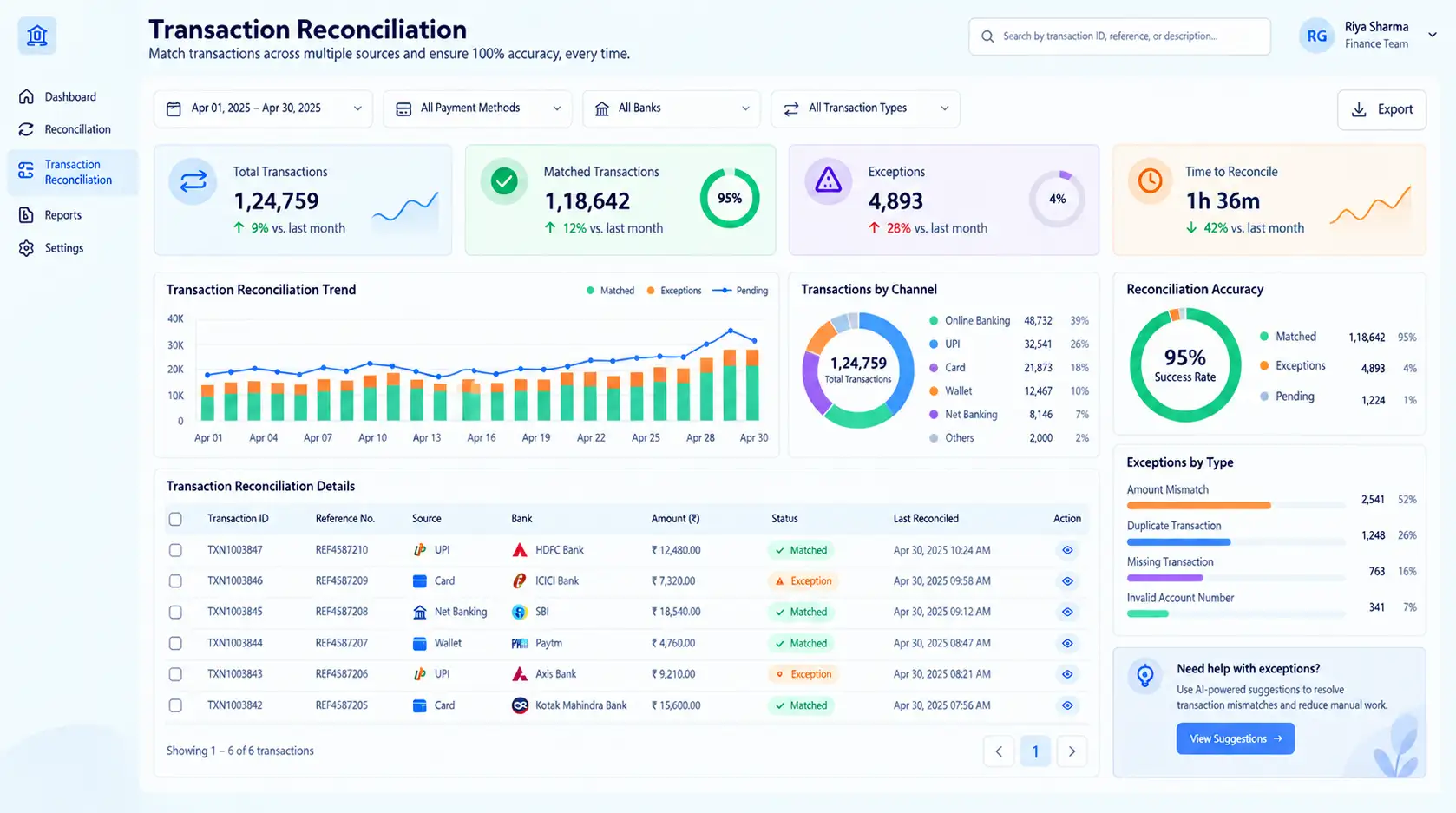
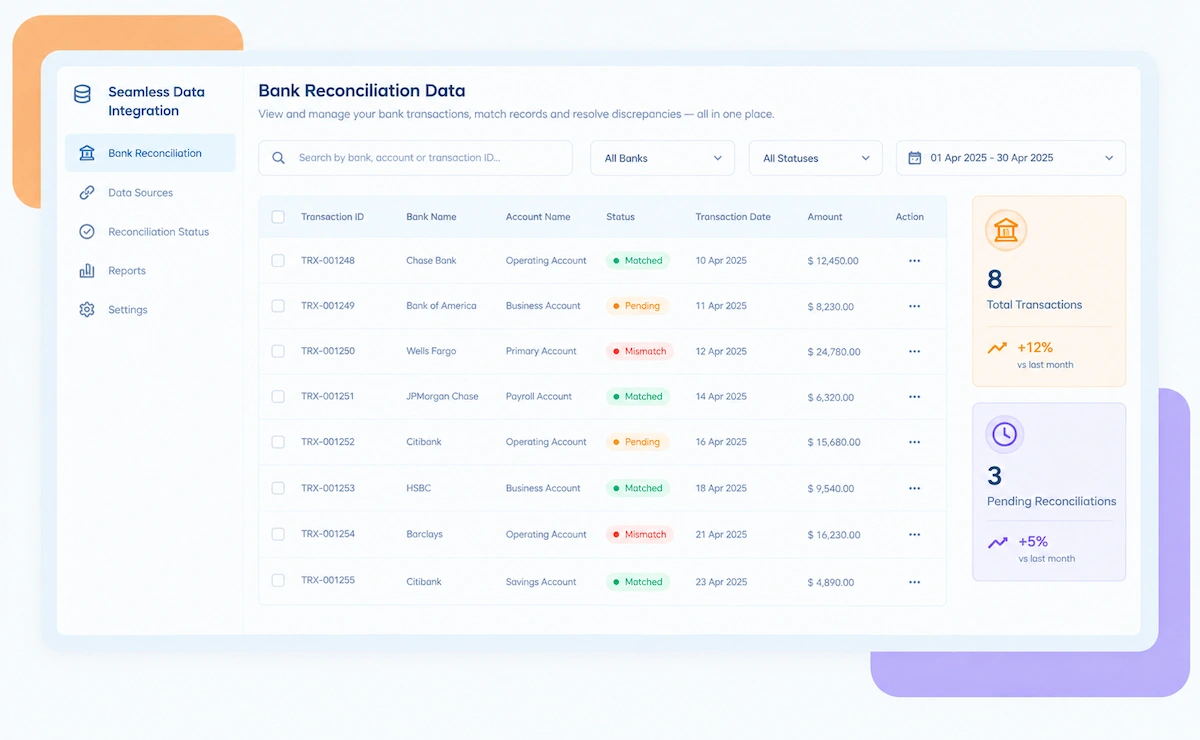
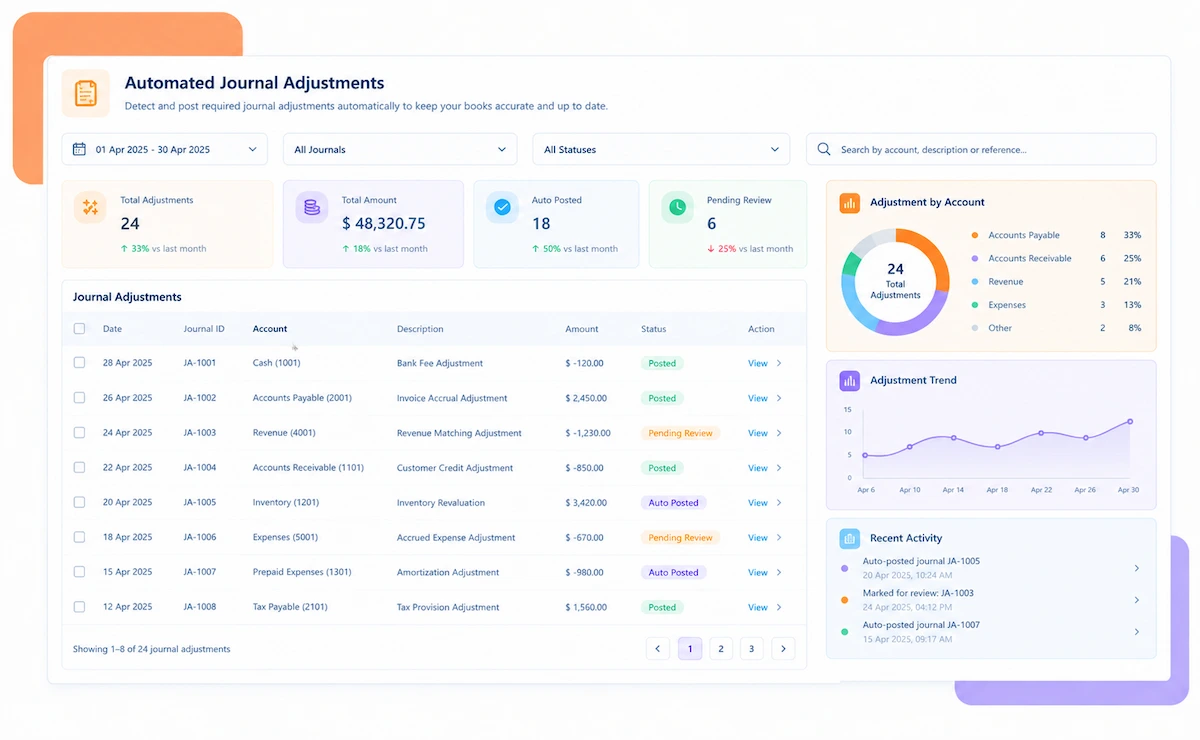
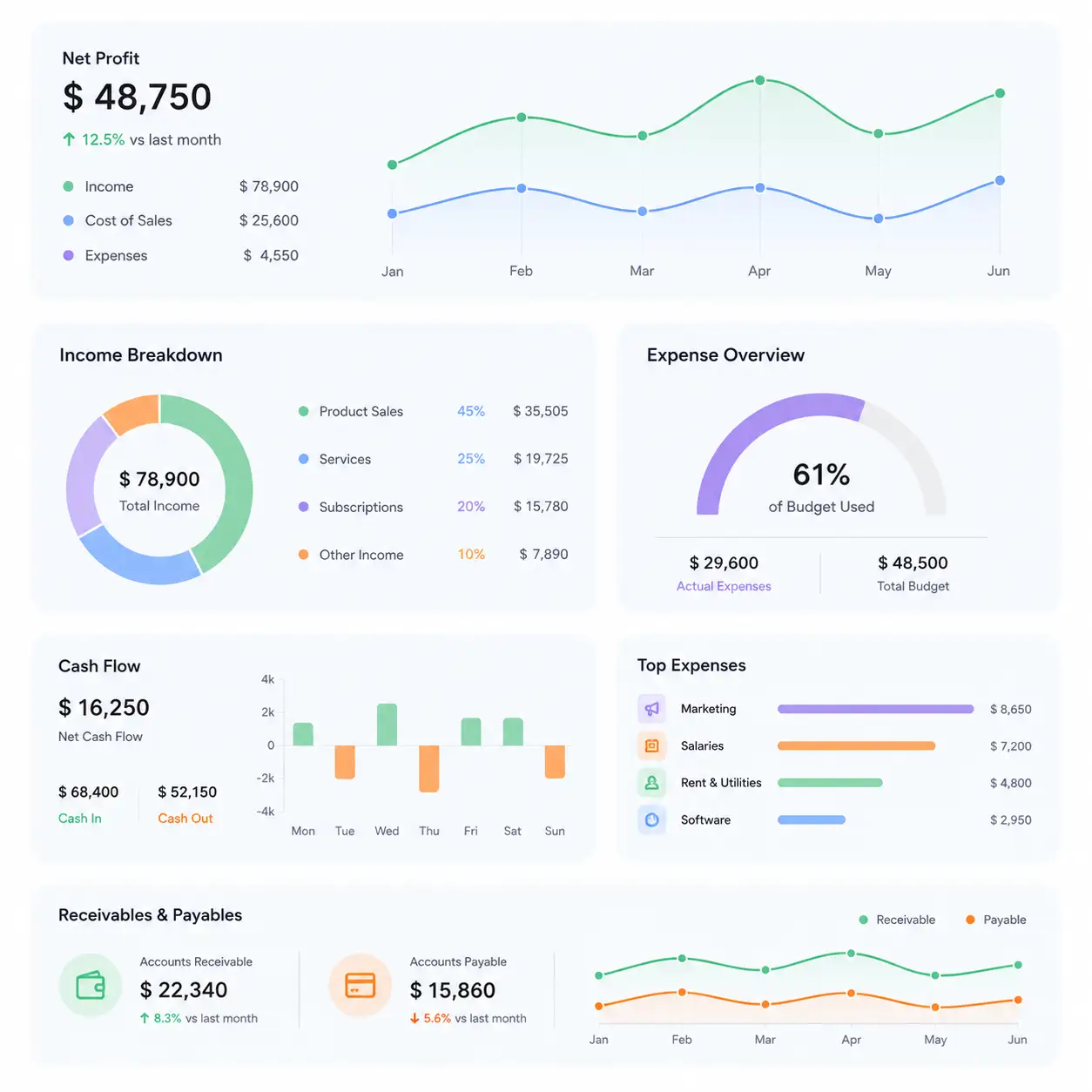
Kosh AI Transaction Reconciliation Software Dashboard

NEW 2026 Transaction Reconciliation Tool

Transaction Reconciliation Software Built for Teams Matching Records Across Multiple Systems

See which transactions are fully matched, which ones keep showing the same timing or formatting mismatch every period, and how Kosh AI clears that backlog before your next report is due.

How Transaction Reconciliation Software Simplifies Line-Item Matching

Most finance teams still reconcile transactions the same way they did ten years ago: export two reports, open a spreadsheet, and check each line against the other by hand. Kosh AI replaces that routine. It pulls transaction data straight from your source systems, lines it up record by record, and tells you exactly which transactions need a second look before you close the books.

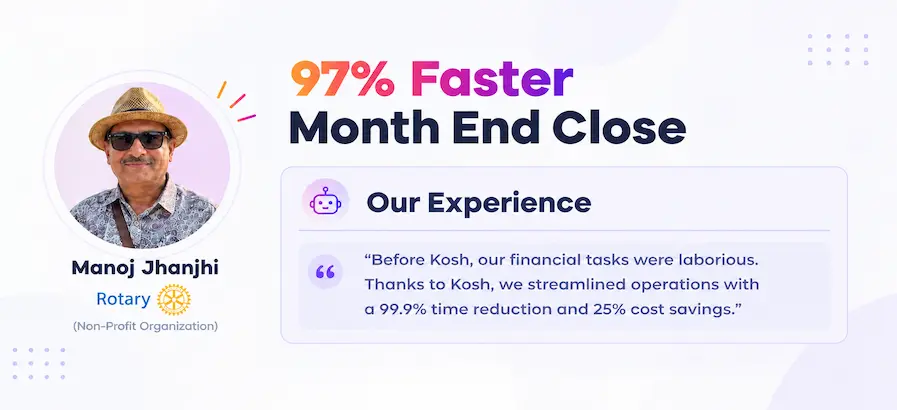
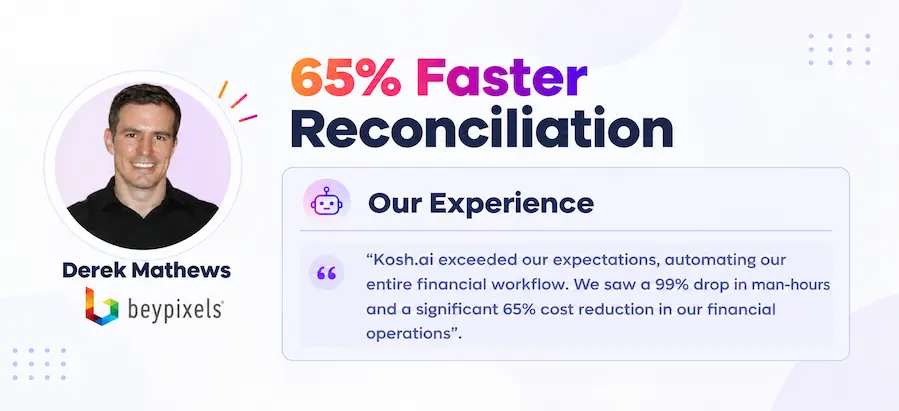
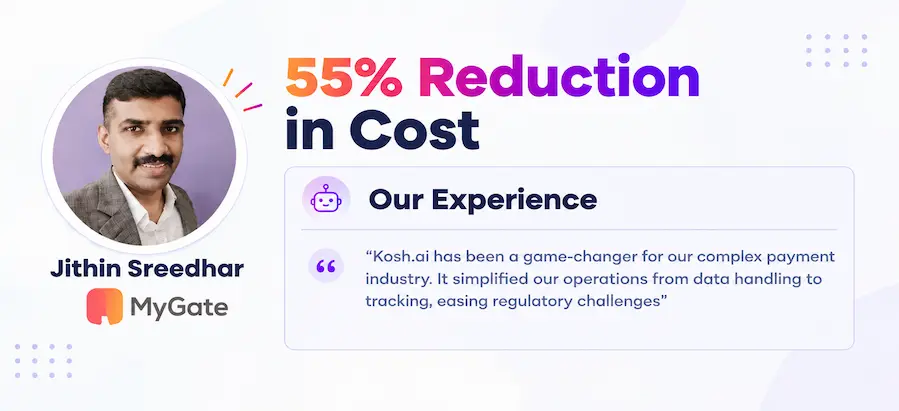
Proven Results From Automated Transaction Reconciliation

Konica Minolta Business Solutions, U.S.A., Inc.
Ring Container
Conference Direct

How Transaction Reconciliation Software Works in Four Steps

You don't need to change your source systems or restructure how transactions are recorded. Kosh AI reads what's already there and handles the matching, the checking, and the reporting.

  • Direct System Connections: Kosh AI reads transaction records straight from your ERP, payment processors, and other source systems.
  • No Manual Exports: There's no need to pull reports from each system and paste them into a spreadsheet.
  • Every System Together: Transactions from every connected system show up in one place.
  • Ready as Records Post: New transactions are available to reconcile the moment they're recorded.
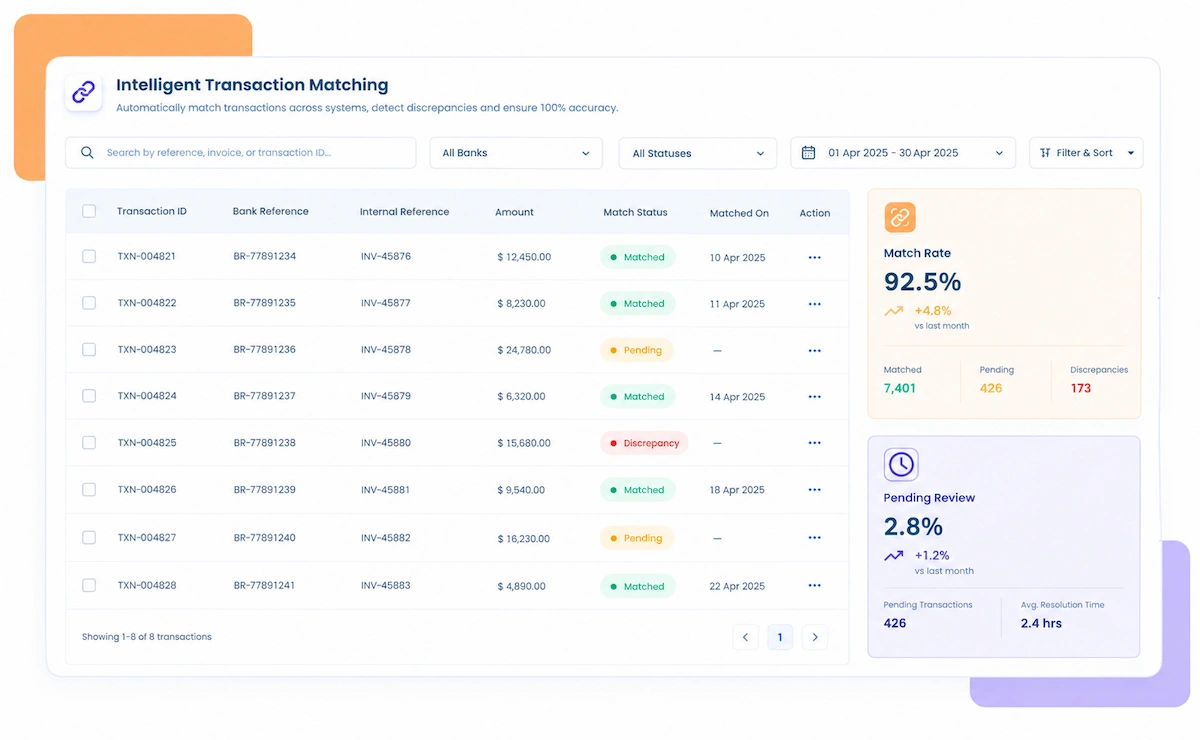
  • Done Automatically: Kosh AI ties each transaction in one system to its counterpart in another.
  • Your Rules, Not a Generic Template: Matching logic follows the definition of a match your team already uses.
  • Handles the Edge Cases: Timing differences, rounding, and partial matches still get handled correctly.
  • Improves With Use: Matching accuracy gets sharper the longer Kosh AI works with your data.
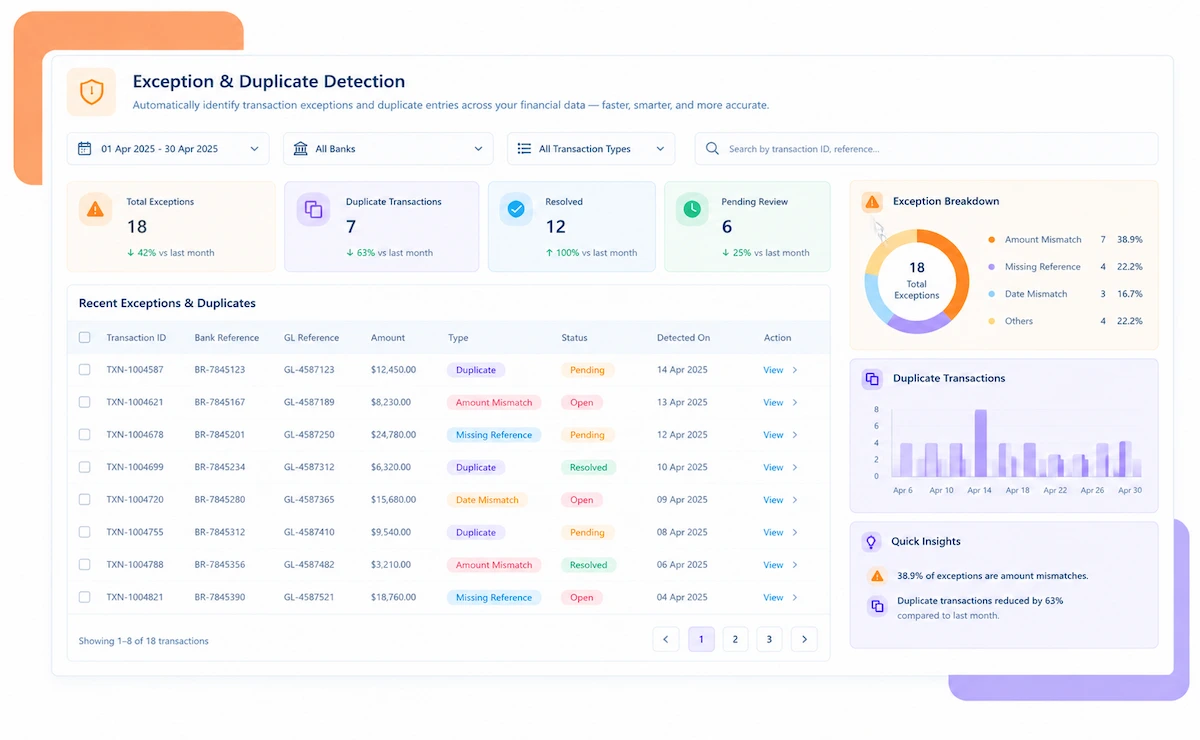
  • Flagged Right Away: Transactions that don't match are surfaced immediately, not at month-end.
  • A Reason Attached: Each flagged transaction comes with a likely cause, not just an unexplained difference.
  • Sorted by Value and Age: Larger or older unmatched transactions rise to the top of the review list.
  • Resolved While It's Fresh: Issues get worked while the source records and context are still easy to check.
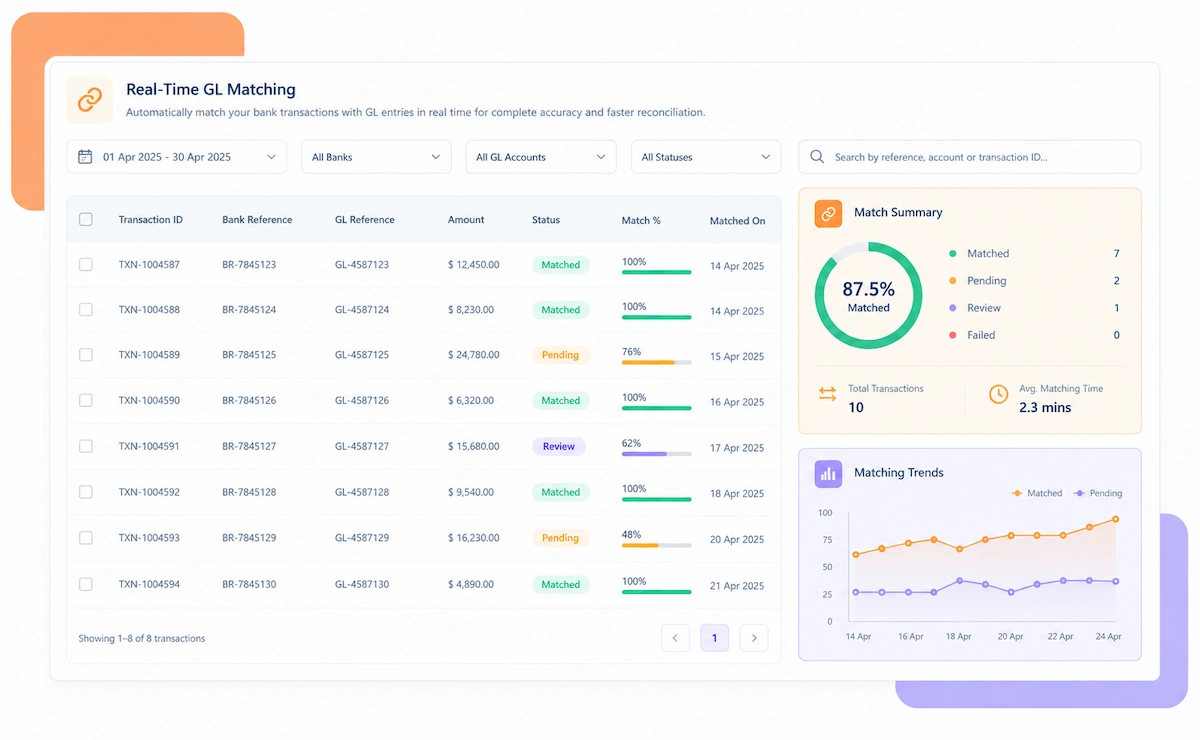
  • Always Current: Reconciliation status updates as new transactions are matched, not once a period.
  • Reports for Any Audience: Pull a reconciliation summary for leadership or a full support file for an auditor.
  • A Trail for Every Transaction: Supporting records and matching logic stay attached to every cleared item.
  • Status at a Glance: Always know what's matched, what's open, and what needs review.

Transaction Reconciliation That Fits How Your Business Operates

No two businesses move transaction data between the same set of systems. Kosh AI fits the systems you use, the industry you work in, and how your finance team is structured.

ERP-to-Bank Transactions

Transactions recorded in your ERP are matched against bank activity automatically, closing the gap between what's booked and what's cleared.

Payment Gateway Transactions

Transactions processed through a payment gateway are matched against orders and ledger entries, catching fee and timing differences.

Point-of-Sale Transactions

High-volume POS transactions are matched against settlement and ledger records without staff checking terminals one by one.

Intersystem Transfers

Transactions moving between two internal systems are matched on both sides, with mismatches surfaced before they affect reporting.

Manufacturing

High-volume purchase and inventory transactions are matched across ERP and supplier systems daily instead of waiting for month-end.

Software & SaaS

Billing and payment gateway transactions are reconciled automatically, without anyone building a side spreadsheet.

Retail & Distribution

Transactions across POS, e-commerce, and ERP systems are matched every day, not just at period close.

Healthcare

Billing and payment transactions are reconciled across systems with records clean enough to hold up under audit.

Enterprise Transaction Reconciliation at Scale

Kosh AI centralizes transaction reconciliation for teams matching data across many systems, giving real-time visibility and built-in controls across every entity.

  • Reconcile millions of transactions across 100+ systems and entities.
  • Spot unusual transaction activity with 15+ ML-driven risk models.
  • Keep a fully documented, auditor-ready trail behind every transaction.
  • Transaction Reconciliation for Growing Finance Teams

    Kosh AI gives mid-market finance teams automated transaction matching without the headcount a manual process usually needs.

  • Replace spreadsheet-based line-item checks with automatic matching.
  • Handle growing transaction volume without adding staff.
  • Go live in weeks with ready-made system connectors.
  • The Business Impact of Automated Transaction Reconciliation

    Reconciling transactions by hand ties up your finance team for hours every week, and the pressure to close on time makes it easy to miss something. Kosh AI takes that load off your team and gives you transaction data you can trust.

    1

    Match Transactions Faster

    Records that used to take hours to compare line by line clear on their own, freeing up time at the end of every period.

    2

    Catch Mismatches Earlier

    Every transaction is checked the same way, every time, so an overlooked discrepancy stops being a recurring risk.

    3

    Let Finance Teams Focus on Exceptions, Not Data Entry

    Instead of comparing reports line by line in spreadsheets, your team spends its time on the transactions that actually need judgment.

    4

    Identify Reconciliation Issues Before They Affect Reporting

    Mismatches are flagged as soon as they appear, not discovered weeks later during the close.

    5

    Get Real-Time Visibility Into Match Status

    See which transactions are matched, which are open, and which need attention, without asking for a status update.

    6

    Maintain a Complete Audit Trail for Every Transaction

    Every matched transaction keeps its supporting detail attached, so audit requests get answered in minutes.

    The Results of Automating Transaction Reconciliation

    60%Faster Transaction Matching
    85%Of Transactions Matched Without Help
    90%Fewer Manually Re-Keyed Entries

    Integrate Seamlessly with Your Existing ERP Systems

    Kosh AI connects directly with all major banks and ERPs, enabling real-time data sync for faster, more accurate reconciliations—no manual uploads, no delays.

    Why Automated Transaction Reconciliation Beats Spreadsheets

    A shared spreadsheet breaks down the moment transaction volume climbs, or a report arrives in a format nobody expected. Kosh AI is built for how a finance team actually reconciles data between systems.

    Smart matching icon

    System-Specific Matching for More Accurate Reconciliation

    Kosh AI applies logic suited to each system's data format, not one rigid rule forced onto every transaction.

    Exception handling icon

    Turn Mismatched Transactions Into Actionable Exceptions

    A transaction that doesn't match comes with a likely reason and a suggested action, not just a red flag.

    Learning system icon

    Improve Reconciliation With Every Review and Correction

    Every correction your team makes feeds back into how Kosh AI matches that type of transaction next time.

    Flexible matching icon

    Handle Complex Transactions and Reconciliation Scenarios

    From a simple one-to-one match to a many-to-many transaction split, Kosh AI handles the reconciliation logic each one needs.

    What Is Transaction Reconciliation Software and How Does It Work?

    Transaction reconciliation software checks individual transaction records held in two or more systems—an ERP, a bank, a payment gateway, a point-of-sale system—to confirm they agree with each other down to the line item. It pulls data straight from each connected system, so your team sees which transactions tie out and which don't, without exporting reports and comparing them by hand in a spreadsheet. Kosh AI takes it further by clearing matched transactions on its own, flagging mismatches with a likely cause, and keeping the supporting records attached to every match. The result is transaction-level data your finance team can rely on for reporting and audits.

    Transaction reconciliation concept illustration

    Manual vs. Automated Transaction Reconciliation: What Changes?

    Here's what actually changes when transaction reconciliation moves off spreadsheets and onto software built to match records between systems.

    What You're Comparing Automated Transaction Reconciliation Doing It Manually
    How Fast Transactions Are MatchedMost transactions match within hours of posting in each system.Each transaction is checked one at a time, often over several days.
    Room for ErrorMatching logic applies the same way to every transaction, every time.Copy-paste mistakes and missed rows are easy to overlook under deadline pressure.
    Handling More VolumeHigher transaction counts are processed without extra headcount.Growing transaction volume usually means more people needed to keep up.
    Getting the Data InPulls transaction data directly from every connected system.Someone has to export, format, and paste reports into a spreadsheet.
    Cost Over TimeLess manual effort keeps the ongoing cost of reconciliation down.Relies on hours of staff time every single period.
    Seeing Match StatusA live view of what's matched, open, or flagged for review.Status usually means waiting for someone to finish the next manual check.

    See the Value of Transaction Reconciliation Automation Within Weeks

    Set up Kosh AI, start matching transactions automatically, and close your next period with records you already trust.

    Schedule a Quick Demo
    Loreal Touchless

    Making the Case for Automated Transaction Reconciliation

    As a business adds more systems, more payment channels, or simply more transactions, keeping records consistent between every system becomes a real strain on a finance team. A finance lead who could once check every report personally ends up relying on whoever happened to update a spreadsheet last, and that's exactly where errors creep in—a transaction recorded in one system but never picked up in another, a timing gap mistaken for a real discrepancy, a report that was "probably matching" without anyone confirming it. Transaction reconciliation software exists to close that gap before it turns into a reporting error or an audit finding.

    The case for using it isn't just about saving time, though that's part of it. It's about consistency: every transaction gets checked the same way, every period, whether it's a high-volume POS sale or a one-off wire transfer. That consistency is what lets finance report numbers with actual confidence instead of a hope that nothing slipped through. It also means your team spends its hours on judgment calls—why did this transaction not match, is this a timing difference or a real error—rather than on the mechanical work of comparing two reports line by line.

    There's a growth angle too. A business reconciling a few hundred transactions a month between two systems can often get by with manual checks and a disciplined routine. The moment that grows to tens of thousands of transactions across several systems, manual reconciliation simply can't keep pace without adding headcount every time the business expands. Transaction reconciliation software is built to scale with that growth instead of forcing you to hire your way through it, which is a large part of why finance teams bring it in well before a backlog forces the decision.

    Teams That Get the Most From Transaction Reconciliation Software

    It's not only for large enterprises with complex system landscapes. Here's who tends to get the most value from it.

    Finance team icon

    For Finance and Accounting Teams

    Anyone responsible for making sure records agree between systems benefits from having transactions matched automatically every day.

    Growing business icon

    For Businesses Moving Beyond Spreadsheets

    Once transaction volume outpaces what a spreadsheet-based process can reasonably handle, it's time to automate.

    Multi-system icon

    For Businesses Running Multiple Systems

    Reconciling data between an ERP, a payment gateway, and a POS system is exactly the repetitive work automation handles best.

    Audit preparation icon

    For Finance Teams Preparing for Audits

    If audit season means weeks of scrambling to document matched transactions, automated reconciliation builds that trail year-round instead.

    Shared services icon

    For Shared Services and Accounting Operations Teams

    Teams reconciling transactions on behalf of multiple business units need a consistent process that doesn't depend on tribal knowledge.

    Finance leadership icon

    For CFOs Seeking Reliable Transaction-Level Data

    Finance leaders under pressure to report accurate numbers need a reconciliation process that doesn't trade speed for accuracy.

    Transaction Reconciliation Software: Where It Helps and Where to Plan Ahead

    No tool is a perfect fit for every business. Here's an honest look at what transaction reconciliation software gets right, and what's worth planning around before you adopt it.

    • Consistent Checks: Every transaction is reconciled the same way every period, removing the variation that creeps in when different people compare reports differently.
    • Faster Matching: Routine, high-volume transactions clear themselves, so your team spends time on the ones that actually need a human decision.
    • Built-In Audit Trail: Supporting records and matching history are captured automatically, instead of being assembled under pressure when an auditor asks.
    • Scales Without Added Headcount: Growing transaction volume or a new system doesn't automatically mean hiring more people to keep reconciliation on schedule.
    • Earlier Visibility Into Problems: Mismatches are flagged as they happen rather than discovered weeks later, giving your team more time to investigate and fix them properly.
    • Upfront Setup Time: Connecting every source system and defining matching rules takes real effort before the software starts paying off.
    • Data Quality Matters: If your source systems export messy or inconsistent data, that inconsistency carries into the reconciliation unless it's cleaned up first.
    • Change Management: A finance team used to spreadsheets needs time and training to trust automated matching instead of double-checking everything by hand.

    • Not a Fix for Process Gaps: If your underlying data entry or system integration process is unclear, software can surface that gap, but it won't resolve it on its own.
    • Ongoing Maintenance: Matching rules need the occasional review as systems and transaction types change, not a one-time setup.

    Transaction Reconciliation Software FAQs

    What is transaction reconciliation software?

    Transaction reconciliation software checks individual transaction records held in two or more systems to confirm they agree with each other, instead of a person comparing reports by hand each period. Kosh AI does this automatically, clearing matched transactions and flagging anything that doesn't tie out.

    How does transaction reconciliation software work?

    It pulls transaction data directly from each connected system, then compares records against each other using rules your team sets. Transactions that match cleanly get cleared automatically, and anything that doesn't gets flagged with a likely reason for review.

    Why is transaction reconciliation software important for finance teams?

    A reconciliation process that depends on manually comparing reports between systems gets slower and riskier as transaction volume grows. Transaction reconciliation software keeps that process consistent regardless of volume, which matters for accurate reporting, catching errors before they reach financial statements, and having a clean trail ready for auditors.

    What systems can transaction reconciliation software match data between?

    In practice, any two systems holding the same transactions can be reconciled, but ERPs, banks, payment gateways, and point-of-sale systems are usually the highest priority since they carry the most volume. Kosh AI supports all of these system types out of the box.

    How is transaction reconciliation software different from account reconciliation software?

    Account reconciliation software focuses on verifying the balance of a general ledger account against its supporting detail. Transaction reconciliation software works at a more granular level, matching individual transaction records between systems rather than account totals. Kosh AI handles both under one system.

    Can transaction reconciliation software connect to ERPs like SAP, Oracle, or NetSuite?

    Yes, most transaction reconciliation software is built to pull data directly from common ERPs. Kosh AI connects to SAP, Oracle, NetSuite, Sage, QuickBooks, and Xero, along with banks and payment gateways, so transaction data flows in without manual exports.

    Does transaction reconciliation software replace the need for a finance team?

    No, but it takes most of the manual comparison work off their plate. Kosh AI handles routine transaction matching automatically, so your finance team can focus on investigating mismatches and reviewing transactions that actually need judgment.

    What happens when a transaction doesn't match between systems?

    It gets flagged immediately, usually with a likely cause attached based on the type of transaction and what's driven similar mismatches before. From there, it's routed for review with the supporting records already pulled up, so it doesn't sit unresolved until someone notices during the close.

    How long does it take to set up transaction reconciliation software?

    Most businesses can have core systems reconciling automatically within a few weeks, since the software connects to systems you already use. Kosh AI follows a similar timeline, with more complex, multi-system rollouts typically taking 3 to 6 months to fully configure.

    How do I choose the right transaction reconciliation software for my business?

    Start with how many systems and how much transaction volume you need to reconcile, and how much of the process is still manual today. From there, compare options on matching accuracy, system connectivity, exception handling, and how workflows match your existing finance process. Kosh AI is built around exactly that checklist, but it applies to any software you're comparing.

    Ready to Automate Transaction Reconciliation?

    Book a demo and watch Kosh AI reconcile your own transaction data across sources.

    Book a Demo