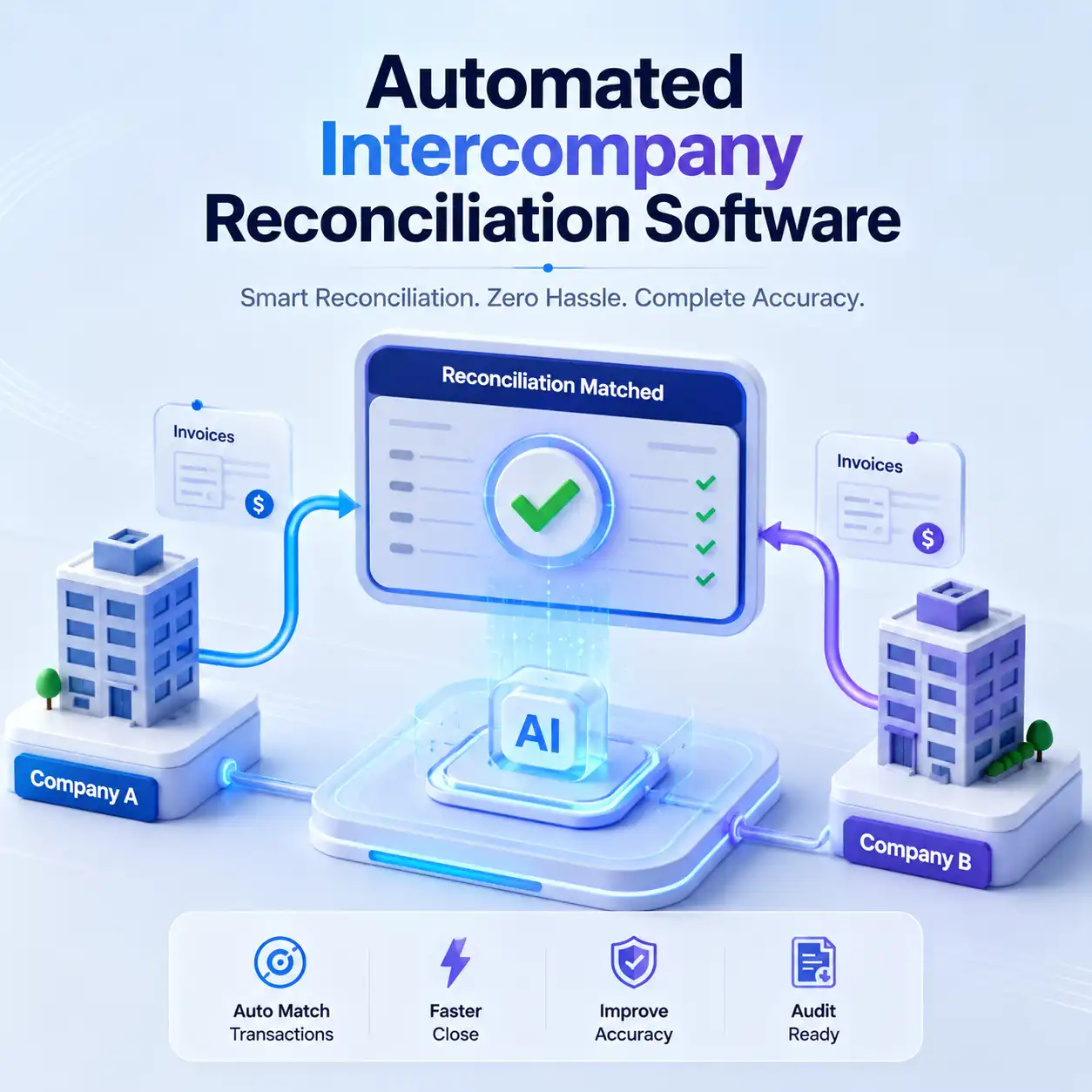
Automated Account Reconciliation: Save Time and Reduce Errors
Kosh.ai
December 16, 2025
Let’s be honest. For any finance professional, “account reconciliation” often brings to mind long, tedious hours spent staring at spreadsheets. It’s a process of matching your company’s internal financial records against external statements, like bank statements. The goal is simple: make sure every penny matches. The reality, however, is a painful cycle of scrolling, highlighting, and hunting for discrepancies.

If you’re using manual methods, you know the drill. You’re likely drowning in paper, complex Excel formulas, and constant human errors. A simple data entry mistake can snowball into a major reporting problem. But what if there was a way to turn this monthly headache into a smooth, efficient, and even error-free process? That’s where the power of automation comes in.
In this blog, we’ll explore how automated account reconciliation is revolutionizing finance departments. We’ll break down how it works, why it’s a game-changer, and how you can implement it to save precious time and protect your business from costly mistakes.
What is Automated Account Reconciliation, Really?
At its core, account reconciliation is like a detective checking two sets of books. You have your internal ledger (what you think happened) and an external statement from your bank or vendor (what actually happened). The detective’s job is to find and explain any differences.
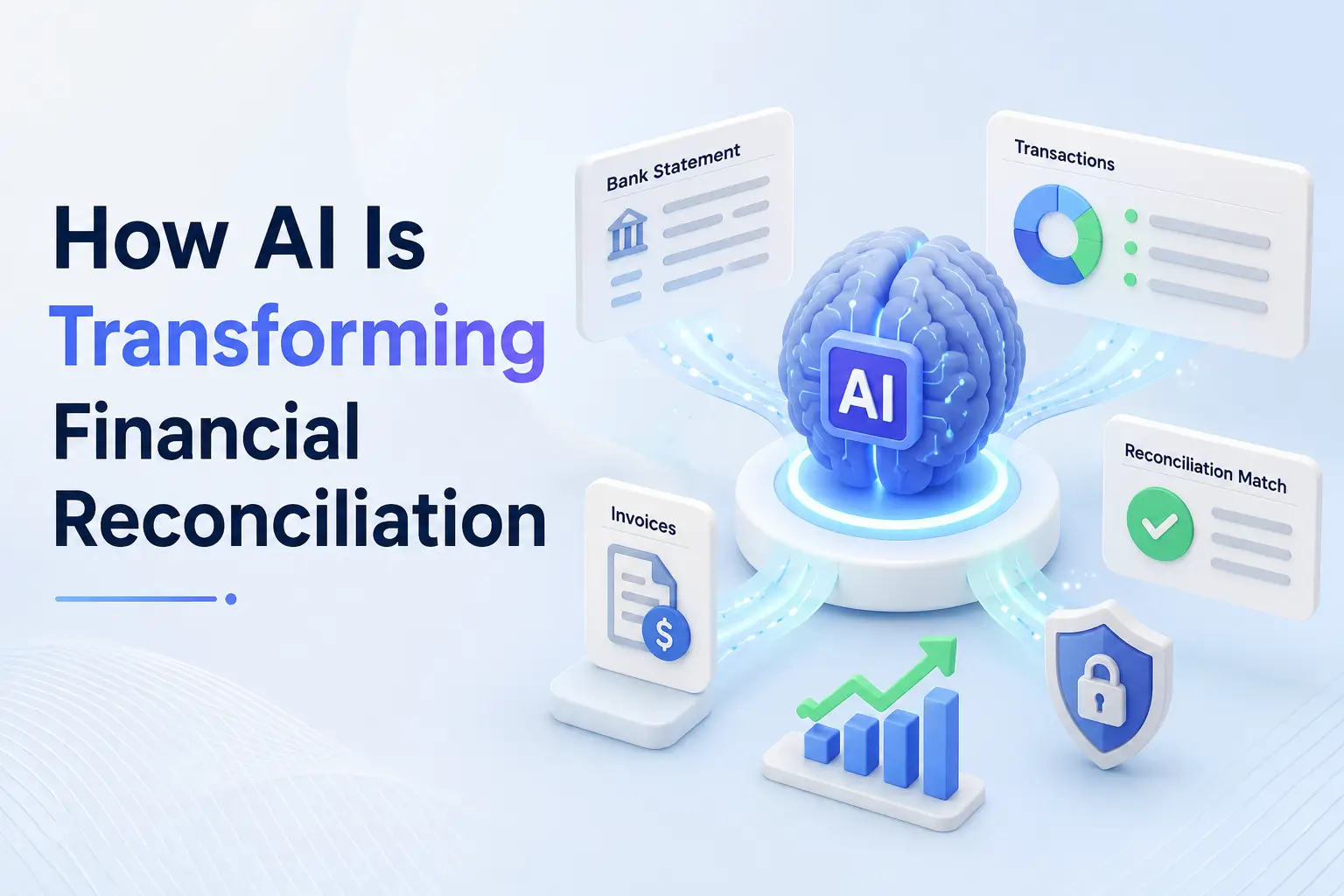
Automated account reconciliation is simply handing this detective work over to intelligent software. Instead of a person comparing lines manually, a specialized reconciliation solution uses rules and algorithms to match thousands of transactions in minutes.
Think of it as having a super-powered, never-sleeping assistant who:
- Fetches statements directly from your bank or payment platforms.
- Pulls data from your accounting software (like QuickBooks, Xero, or SAP).
- Automatically matches transactions based on rules you set (like date, amount, reference number).
- Instantly flags any mismatches or unusual items for your team to review.
This isn’t just fancy tech—it’s a fundamental shift from reactive, error-prone work to proactive, strategic financial management.
The Staggering Cost of Doing It Manually
Why is moving away from manual reconciliation so urgent? The numbers speak for themselves.
- Time Drain: According to industry insights, accountants can spend up to 15-20 hours per month just on bank reconciliation for a mid-sized business. That’s nearly half a workweek lost to a repetitive task.
- Error Rate: Humans are wonderful, but we make mistakes. Manual data entry has an average error rate of around 1%. That might sound small, but 1% of thousands of transactions is a lot of problems to find and fix.
- The Ripple Effect: A single unresolved discrepancy can delay month-end close, lead to inaccurate financial reports, cause cash flow misjudgments, and even result in compliance issues or failed audits.
Manual processes keep your best people stuck in the weeds, preventing them from doing higher-value work like analysis, forecasting, and advising the business. This is the true hidden cost.
How Does an Automated Reconciliation System Work?
You might imagine a complex robot, but the process is straightforward. Here’s a simple breakdown:
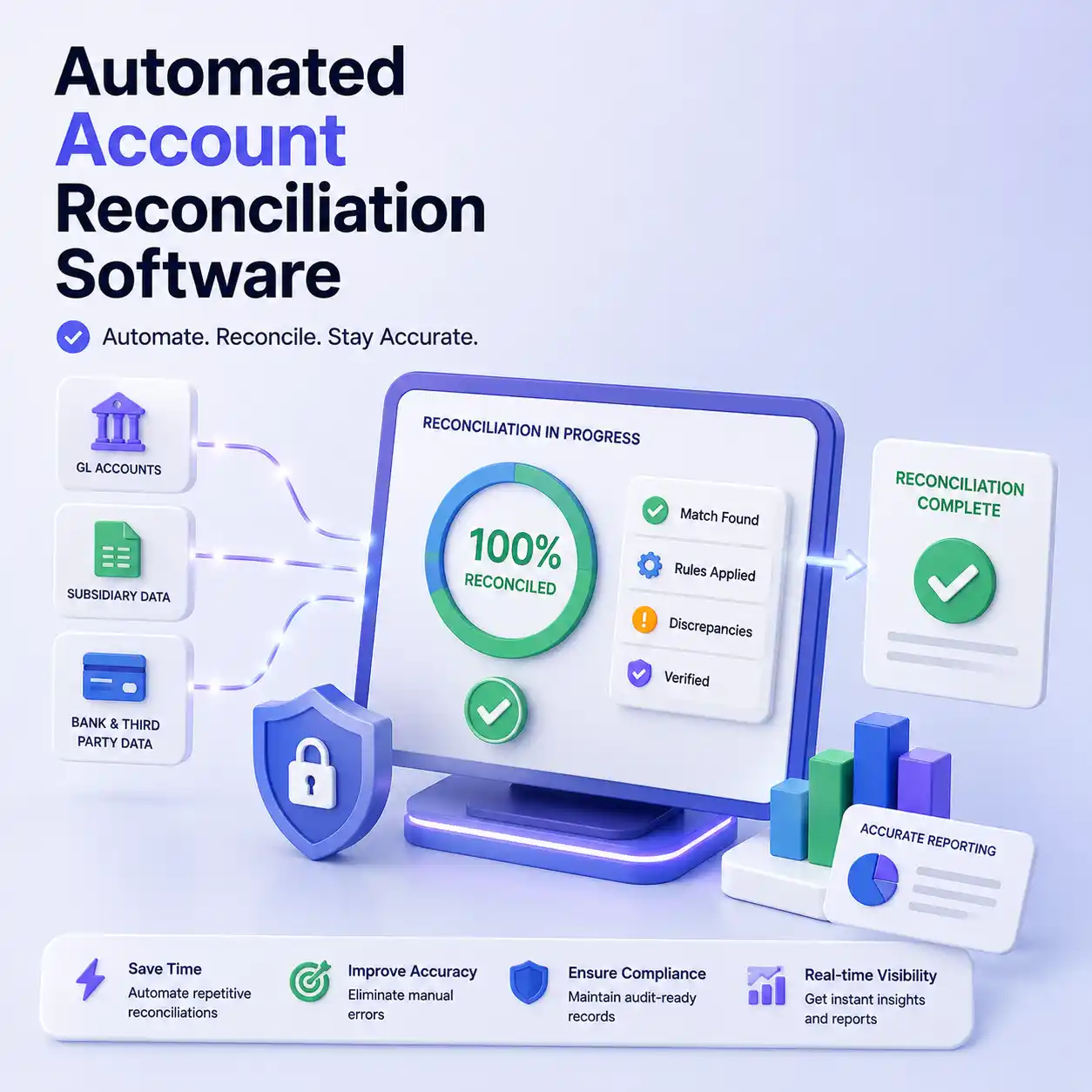
- Connection: The automated reconciliation software securely connects to your bank feeds and your accounting system.
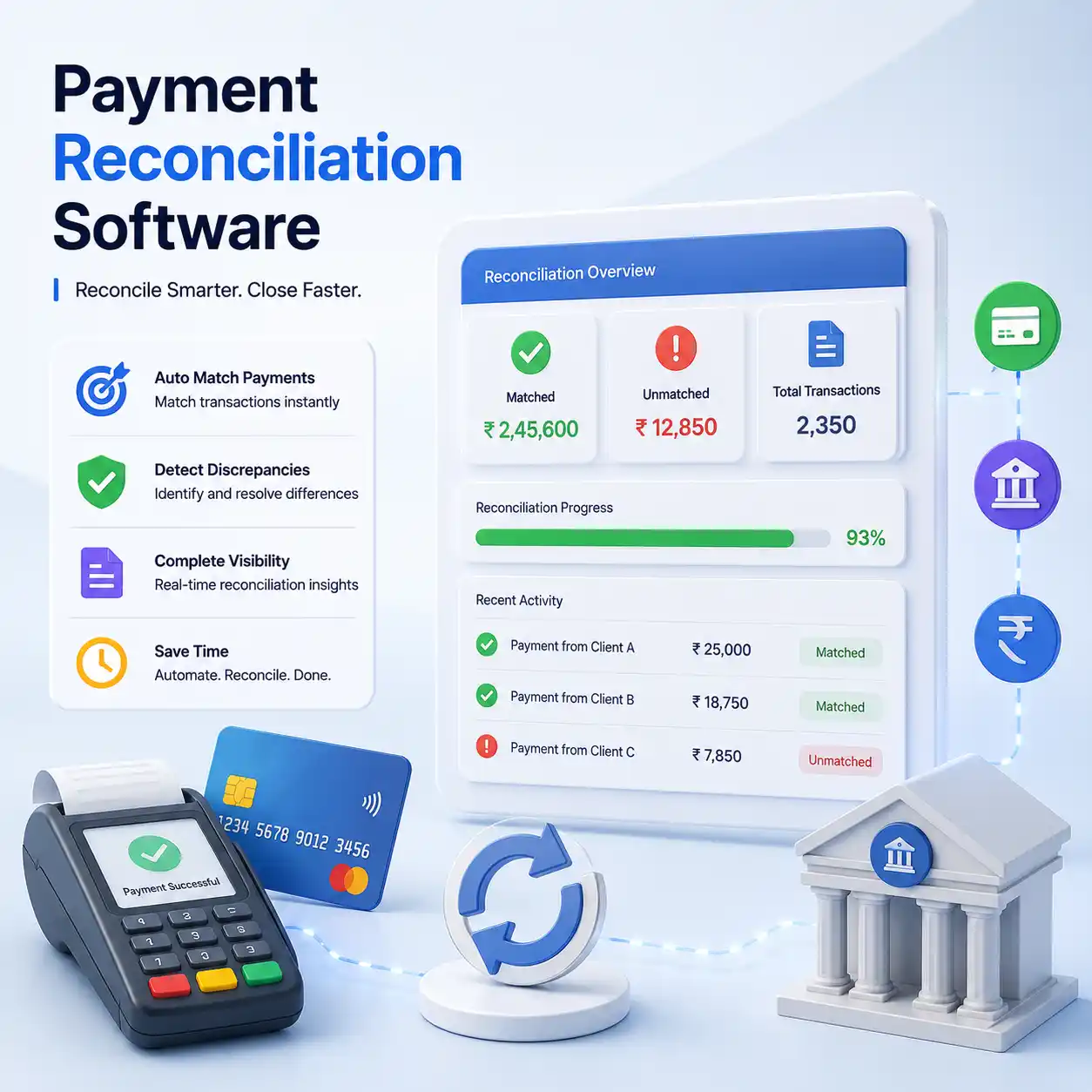
- Data Import: It automatically imports all transaction data from both sides into a single, secure dashboard.
- Rule-Based Matching: This is the magic. You teach the software your matching rules (e.g., “match by invoice number and amount”). The reconciliation automation tools then scan and pair transactions at incredible speed.
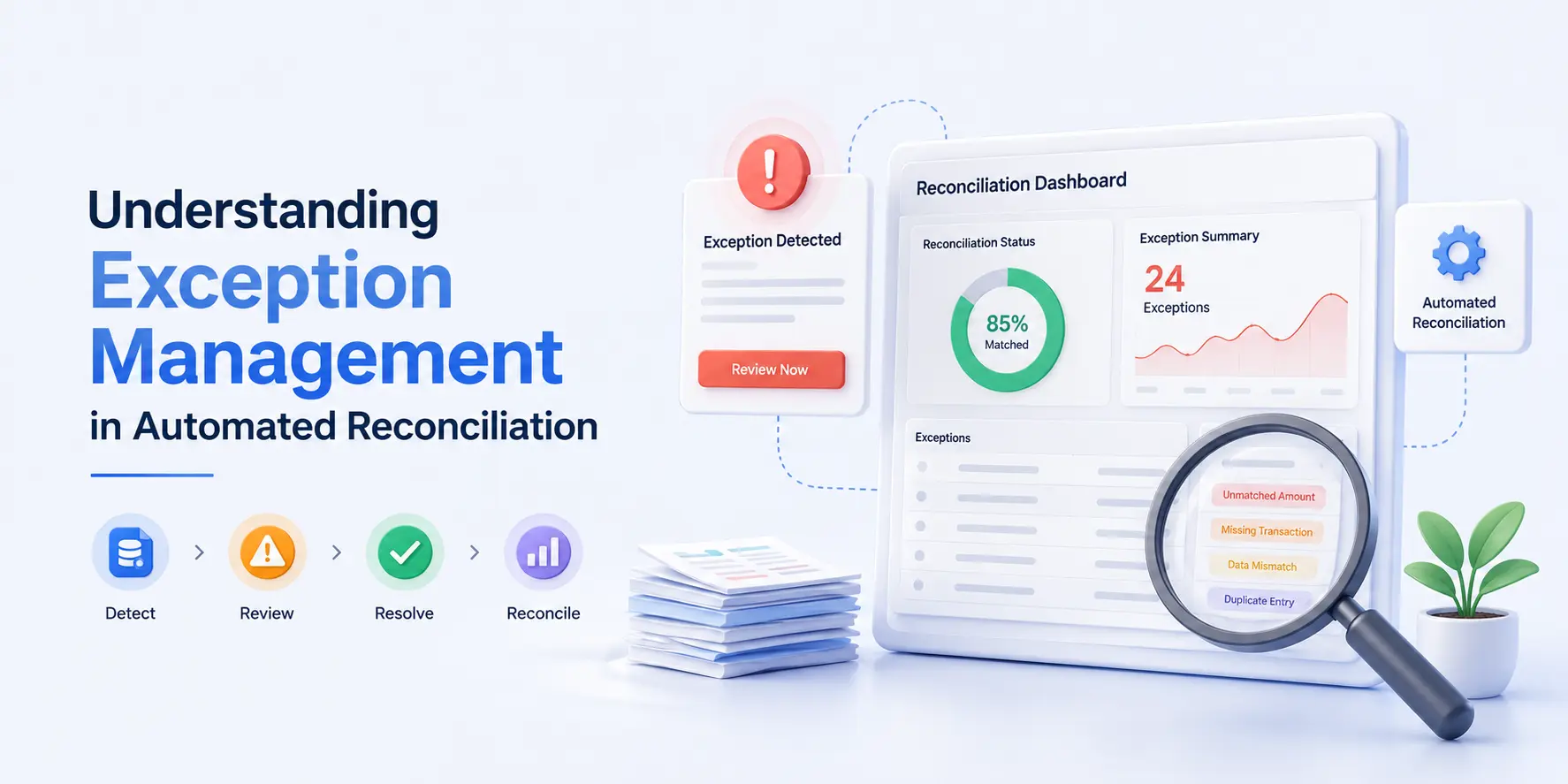
- Exception Handling: Any transaction that doesn’t have a clear match is flagged in an “exceptions” queue. Your team only needs to focus on these few items, not the thousands that cleared automatically.
- Reporting & Audit Trail: The software generates a complete report, showing what was matched, what was reviewed, and by whom. This creates a perfect, unchangeable audit trail.
This system works not just for bank statements but for credit cards, vendor statements, and internal balance sheet reconciliation, making it a versatile reconciliation software for banks and businesses alike.
Key Benefits: Beyond Just Saving Minutes
Adopting an automated reconciliation system delivers powerful advantages that touch every part of your finance operation.
1. Massive Time Savings and Faster Closing
The most immediate benefit is time. What used to take days is now done in hours or even minutes. This dramatically speeds up your financial close process—often by 50-70%. Teams can close the books faster, delivering financial insights to leadership sooner.
2. Drastic Reduction in Errors
Automated bank reconciliation software removes human error from the matching process. It doesn’t get tired, distracted, or mix up numbers. This leads to vastly more accurate financial statements, giving you confidence in your numbers.
3. Unbeatable Visibility and Control
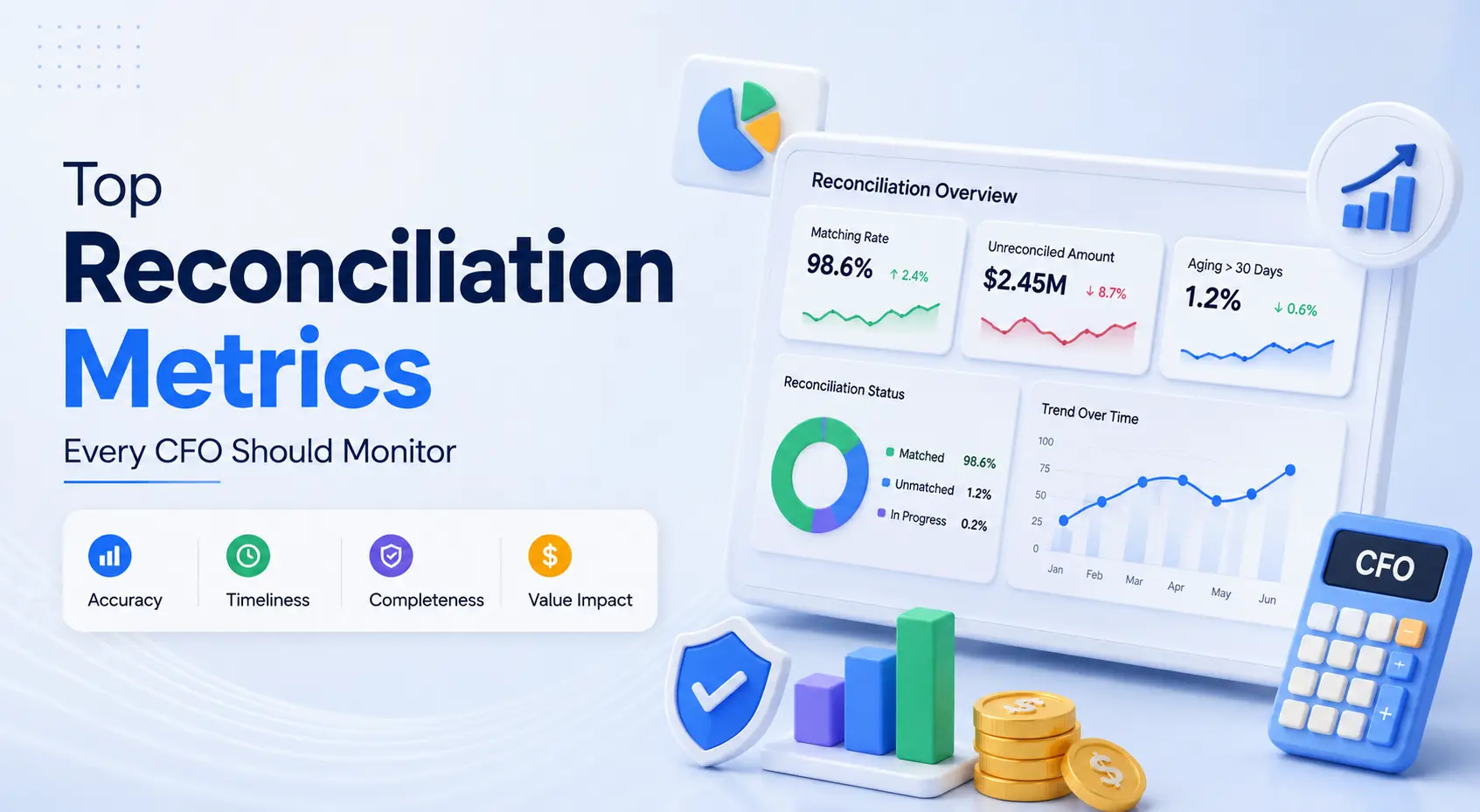
You gain a real-time, centralized view of your reconciliation status. No more wondering “is it done?”. Dashboards show you clear metrics, outstanding items, and potential risks instantly. This level of control is crucial for cash flow management.
4. Iron-Clad Compliance and Audit Readiness
Every action in the software is logged. Auditors love this. With a clear digital audit trail, you can prove the integrity of your financial data in seconds, reducing audit stress, duration, and cost.
5. Empower Your Finance Team
This is perhaps the biggest win. By automating the grunt work, you free your skilled accountants to do what they do best: analyze trends, find cost-saving opportunities, and provide strategic advice. This boosts job satisfaction and helps you retain top talent.
Choosing the Right Accounting Reconciliation Software
Not all reconciliation automation tools are created equal. Here’s what to look for when evaluating an accounts reconciliation software:
- Ease of Use: The interface should be intuitive. Your team should be able to use it without months of training.
- Strong Integrations: It must connect seamlessly with your existing bank, payment processors, and ERP or accounting system.
- Customizable Rules: You should be able to set and adjust matching rules to fit your unique business needs.
- Robust Security: Your financial data is sensitive. Ensure the provider uses bank-level security (like encryption and secure data centers).
- Scalability: The automated reconciliation software should grow with you, handling more transactions and complex reconciliations as your business expands.
- Quality Support: Look for a provider known for excellent customer service and support.
Investing in the right reconciliation solution is an investment in your finance team’s peace of mind and your company’s financial health.
Also Read: Reconciliation Automation: Improve Efficiency in Finance Operations
Implementation: Getting Started with Automation
Starting is easier than you think.
- Identify Pain Points: Which reconciliations are most time-consuming or error-prone? Start there.
- Clean Your Data: Begin with a clear, reconciled period. Automation works best with a clean slate.
- Start Small: Pilot the automated bank reconciliation process for one bank account or one type of reconciliation.
- Train and Adapt: Work with your team to learn the software and refine your matching rules.
- Scale Up: Once successful, roll it out to other areas like credit cards or inter-company reconciliations.
The transition is a journey, but the payoff begins almost immediately.
Conclusion: The Future of Finance is Automated
Manual reconciliation is more than just an outdated process; it’s a business risk. In today’s fast-paced world, relying on spreadsheets and human eyes alone is no longer sustainable.
Automated account reconciliation is not about replacing your finance team. It’s about empowering them with the best tools. It’s about trading stress for strategy, doubt for data confidence, and busywork for business insight.
By embracing a powerful automated reconciliation system, you’re not just streamlining a task—you’re building a more resilient, accurate, and strategic financial foundation for your entire organization. The question isn’t whether you can afford to implement it, but whether you can afford not to.
Also Read: Reconciliation Automation: The Future of Finance Operations
Frequently Asked Questions (FAQs)
1. Is automated reconciliation software secure?
Yes, reputable providers use enterprise-grade security measures similar to those used by banks, including data encryption (both in transit and at rest), secure data centers, and strict access controls. Always verify the security credentials of any provider.
2. Can it handle all types of reconciliations?
Most modern automated reconciliation software is highly flexible. While it excels at bank and credit card reconciliations, it can also be configured for complex balance sheet reconciliations, vendor statements, and internal ledger matching.
3. How long does it take to implement?
Implementation time varies. For a straightforward bank reconciliation automation project with common accounting software, you could be up and running in a few weeks. More complex deployments may take longer. A good provider will guide you through a smooth setup.
4. What if we have unique or complex matching rules?
A key strength of good software is customizable rules. You can define matching criteria based on transaction amounts, dates, reference numbers, or even combinations of fields to handle your specific business logic and exceptions.
5. Will this eliminate the need for my accounting staff?
Absolutely not. Automation handles the repetitive, high-volume matching, but your team’s expertise is still vital. They will focus on reviewing exceptions, analyzing discrepancies, managing the process, and performing higher-level financial analysis that software cannot do.
6. How do we justify the cost of this software?
Build a business case around the return on investment (ROI). Calculate the hours saved monthly, multiply by your team’s hourly cost, and factor in the reduction in errors (which can have real financial costs). Add the value of faster close times and improved audit readiness. The savings and risk reduction typically far outweigh the subscription cost.
Ready to get started?
Contact us now
Contact us now
* By clicking on Contact Us you are agreeing to our Terms & Conditions and Privacy policy.