How Does Reconciliation Software Integrate with ERP and Banking Systems?
Kosh.ai
January 30, 2026
In the world of finance and accounting, few tasks are as critical—and as tedious—as reconciliation. For decades, teams have manually compared spreadsheets, bank statements, and ledger entries, a process prone to human error and massive time consumption. Today, however, a powerful solution has transformed this landscape: reconciliation software.
.webp)
But how does this specialized tool actually connect with the other major systems a business uses? Specifically, how does it bridge the gap between your Enterprise Resource Planning (ERP) system, like SAP or Oracle, and your various banking platforms? This integration is the secret sauce that turns a helpful tool into a transformative powerhouse. This blog will break down, in simple terms, exactly how this integration works and why it’s a game-changer for modern businesses.
What is Reconciliation Software?
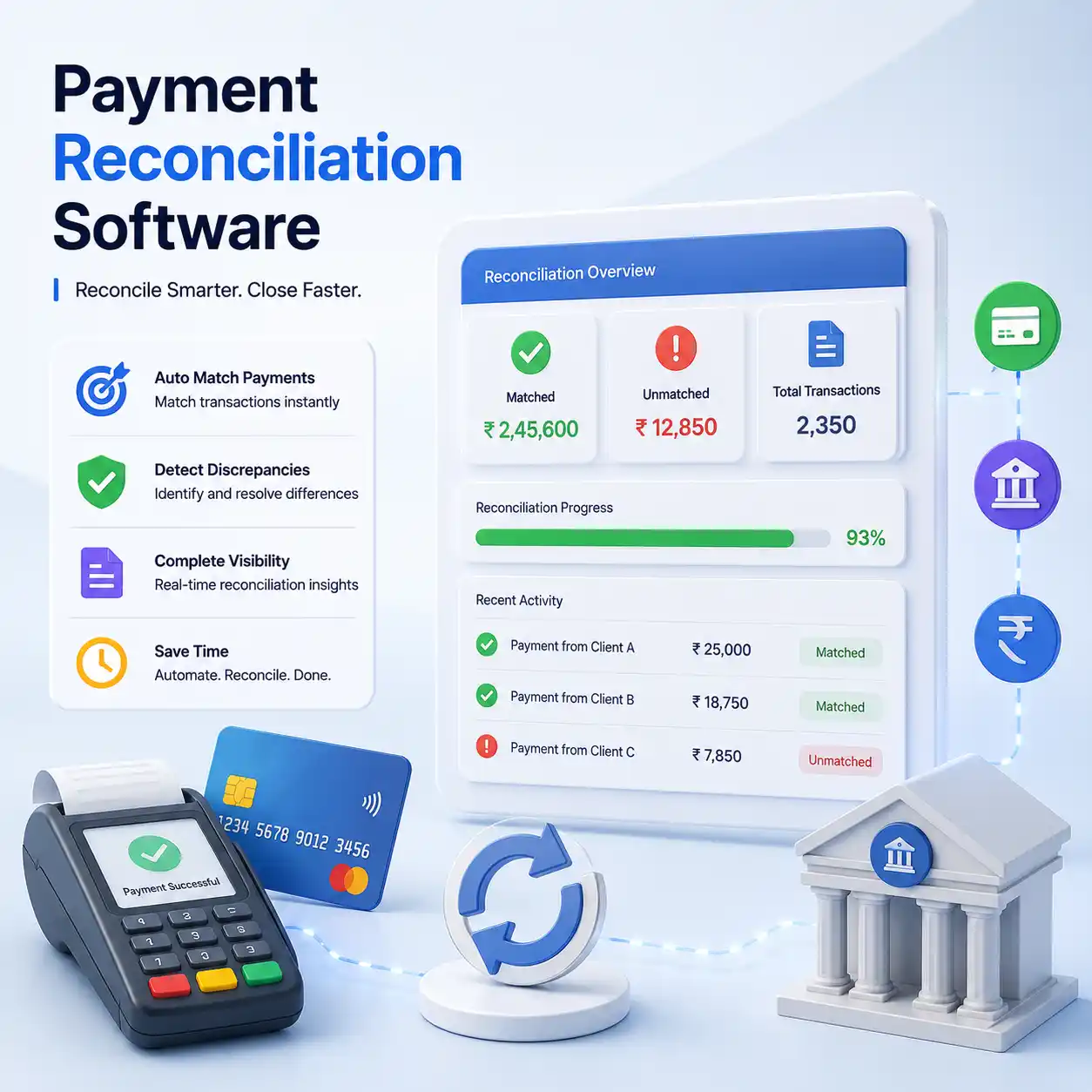
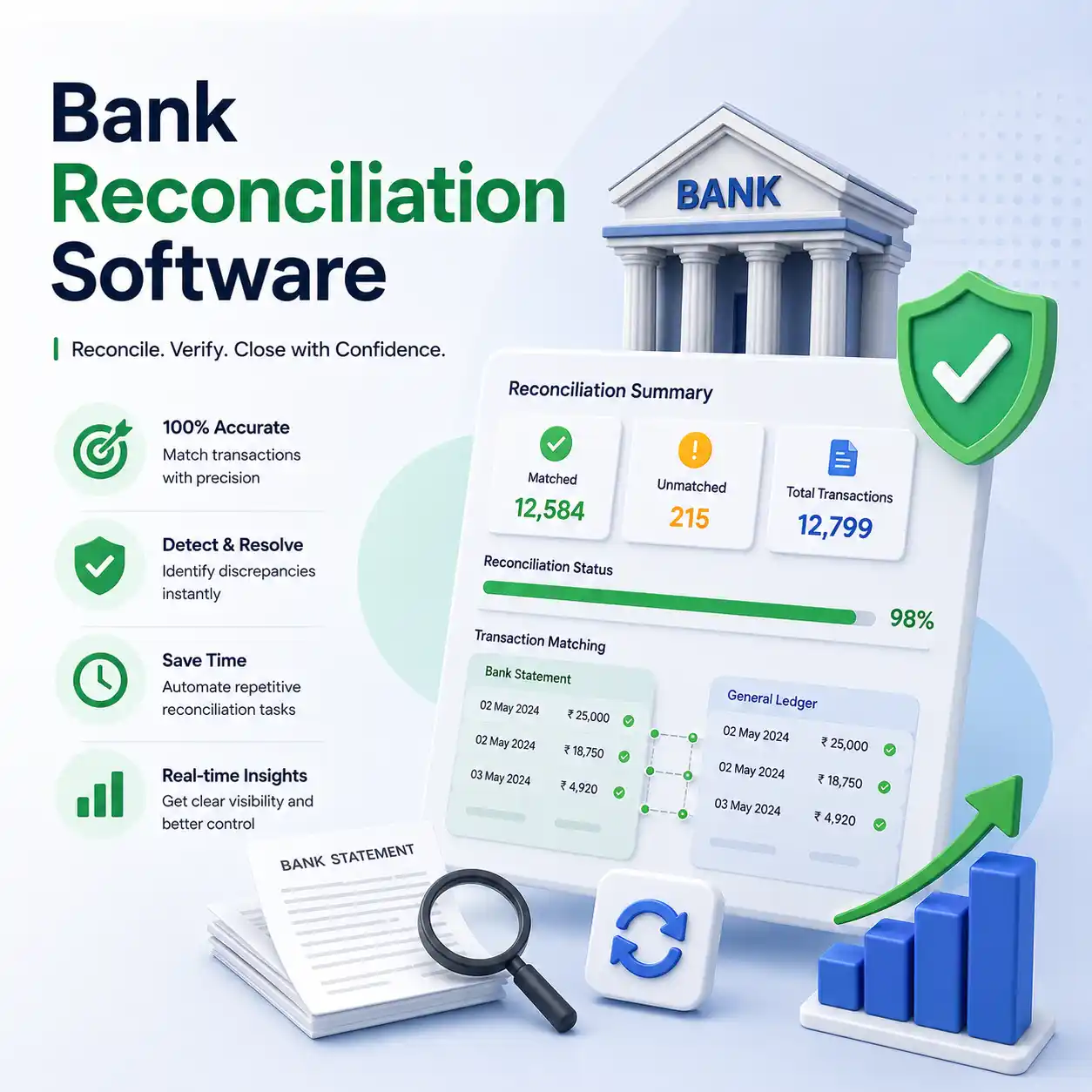
Before diving into integration, let’s define the core tool. Accounting reconciliation software is a specialized application designed to automate the process of comparing two sets of financial records to ensure they match. The most common type is bank reconciliation software, which matches the transactions in your company’s accounting ledger (the "book balance") with the transactions listed on your bank statement (the "bank balance").
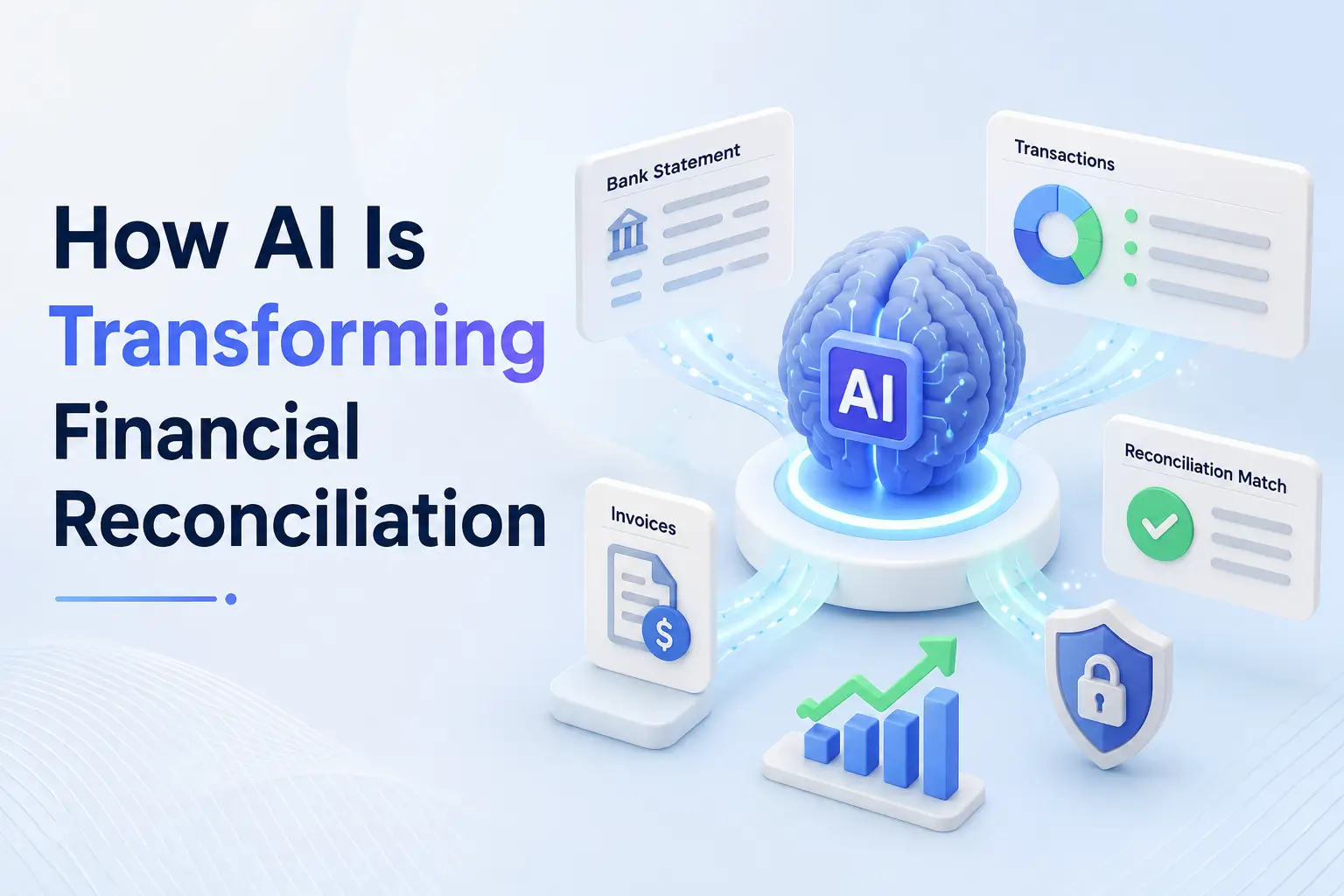
Instead of manual data entry and checkmarks, these reconciliation automation tools use rules, algorithms, and machine learning to identify matches, flag discrepancies, and suggest actions. This significantly reduces the time required—from days to hours or even minutes—and minimizes errors.
The Problem: Disconnected Systems Create Friction
To understand the need for integration, picture a typical company’s financial workflow:
- Banking Systems: Dozens, even hundreds, of transactions flow in daily via multiple bank portals and formats (e.g., checking accounts, credit cards, payment processors like PayPal).
- ERP System: This is the company’s financial brain. It records all invoices, payments, expenses, and general ledger entries. An ERP like NetSuite or Microsoft Dynamics is the single source of truth for the company's finances.
- The Accountant’s Desktop: Often, this is where the disconnect happens. Data is downloaded from banks in CSV or PDF format, and ledger reports are exported from the ERP. The actual reconciliation then happens manually in spreadsheets, acting as a fragile, error-prone bridge between the two systems.
This disconnect leads to delays, visibility gaps, and a high risk of inaccuracies. A 2023 report by Ventana Research noted that teams using manual methods spend over 65% of their time during the financial close just on reconciliation and investigation tasks.
The Integration Triad: How the Three Systems Connect
The true power of a reconciliation solution is realized when it acts as a secure, automated bridge between your ERP and your banking partners. Here’s a step-by-step look at how this triad functions.
Step 1: Data Extraction and Consolidation
First, the software must gather data from all relevant sources.
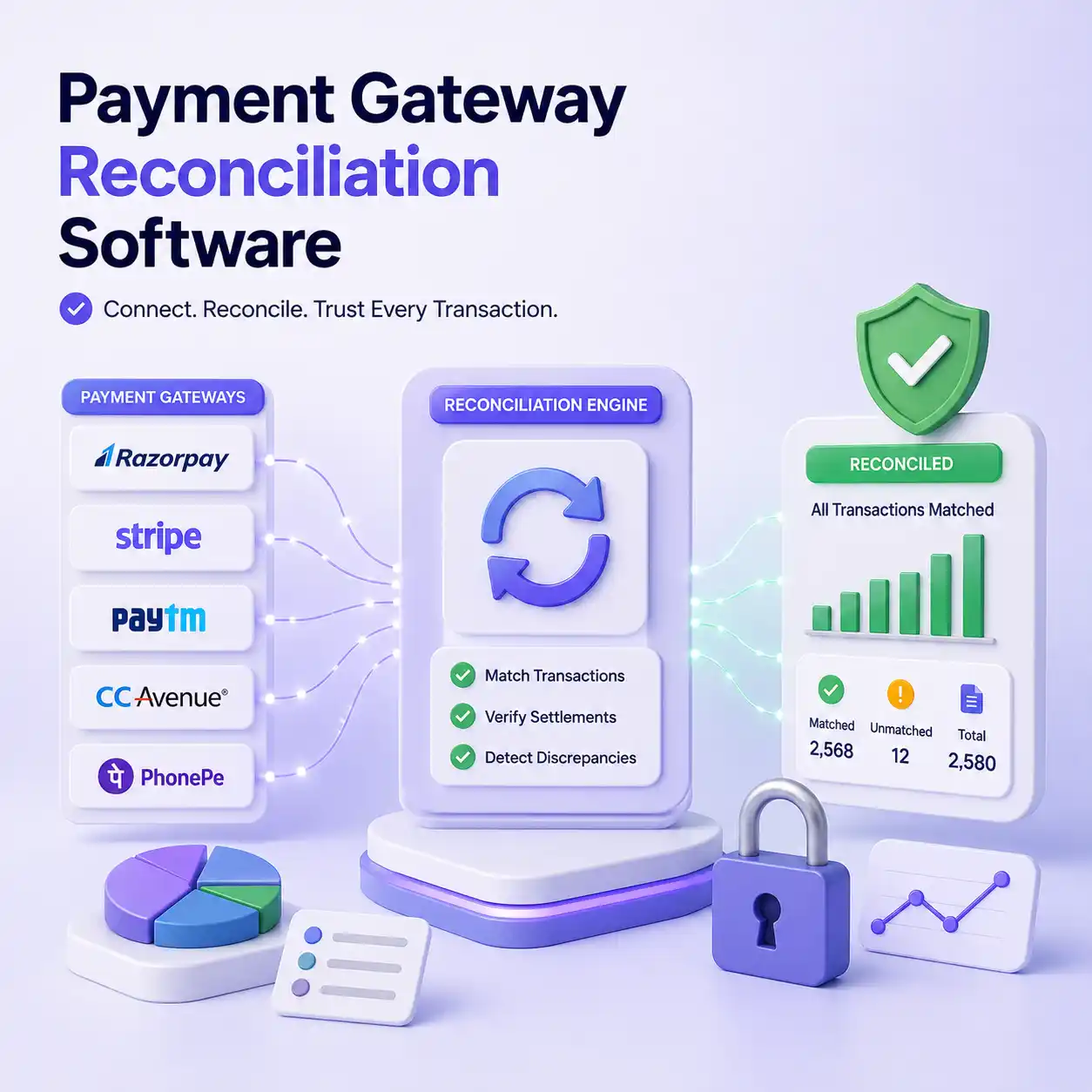
- Connecting to Banking Systems: Modern automated reconciliation software uses secure, standard protocols to connect directly to banks. The most common method is through bank APIs (Application Programming Interfaces). An API is a digital tunnel that allows two software applications to talk to each other safely. For older banks or specific cases, the software can also automatically ingest and parse files like BAI2, MT940, or plain CSV formats.
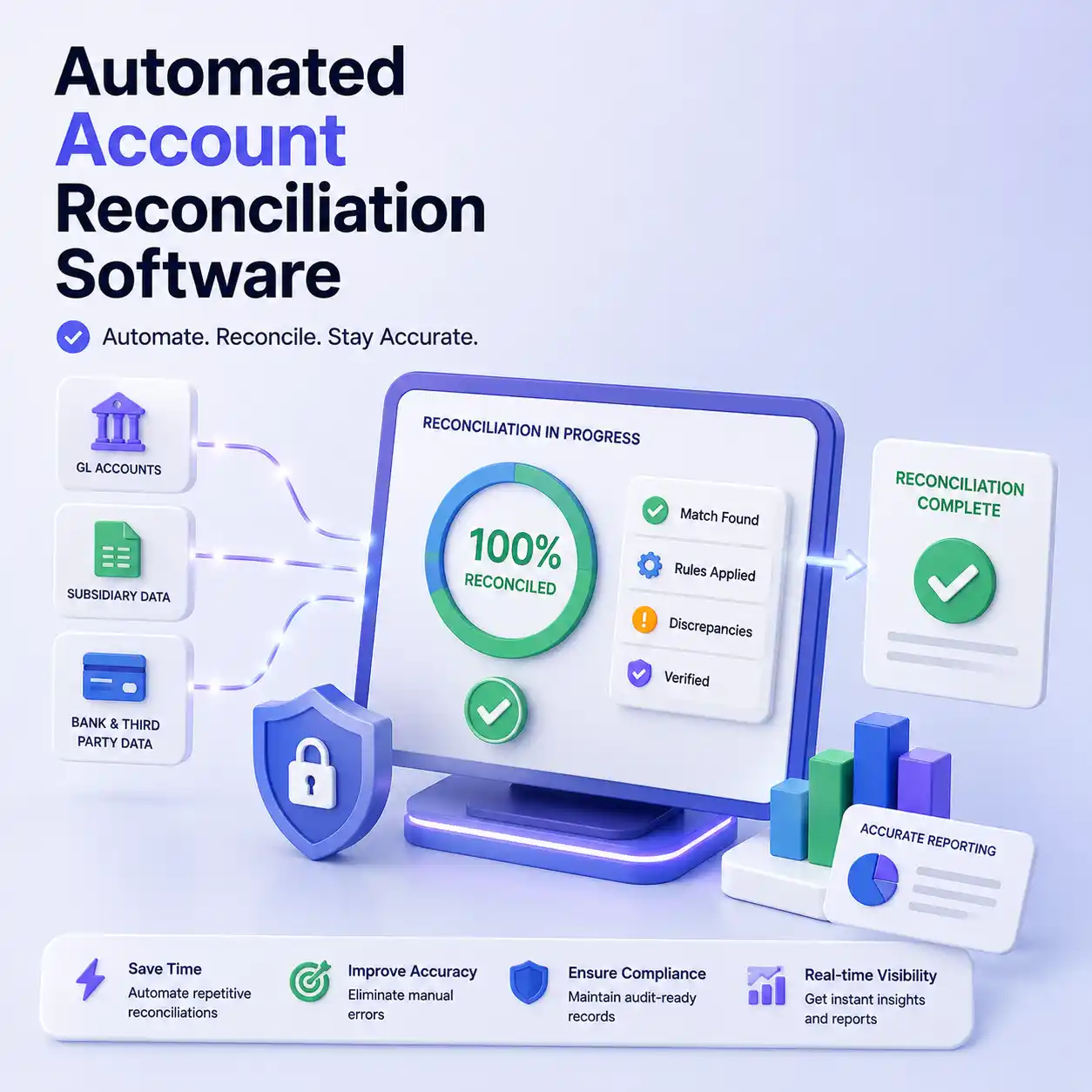
- Connecting to the ERP System: Similarly, the reconciliation software integrates with the ERP using the ERP’s native API. This allows it to pull in the necessary ledger data, such as the general ledger (GL) detail, accounts receivable, and accounts payable entries. It can also fetch chart of accounts information to ensure transactions are coded correctly.
The Result: Instead of logging into ten different bank portals and downloading files, then running reports from the ERP, all data flows automatically into a single, centralized automated reconciliation system.
Step 2: Transaction Matching - The Core Engine
With all data in one place, the software’s intelligent engine goes to work. This is where reconciliation automation truly shines. The system uses predefined rules to match transactions.
- Rule-Based Matching: These are rules set by the finance team. For example, "Match a bank debit of $1,000 with an ERP invoice payment for $1,000 using the invoice number as a reference." Other rules can match based on date, amount, or customer/vendor ID.
- Fuzzy & AI-Powered Matching: For more complex scenarios, advanced automated account reconciliation tools can perform "fuzzy" matching. This can handle differences like minor payment discrepancies (e.g., bank fees deducted from a payment) or match transactions when reference numbers are missing. Some systems learn from an accountant’s previous actions to improve matching accuracy over time.
According to industry estimates, this automated matching can correctly reconcile 85-95% of transactions without any human intervention.
Step 3: Exception Handling and Workflow
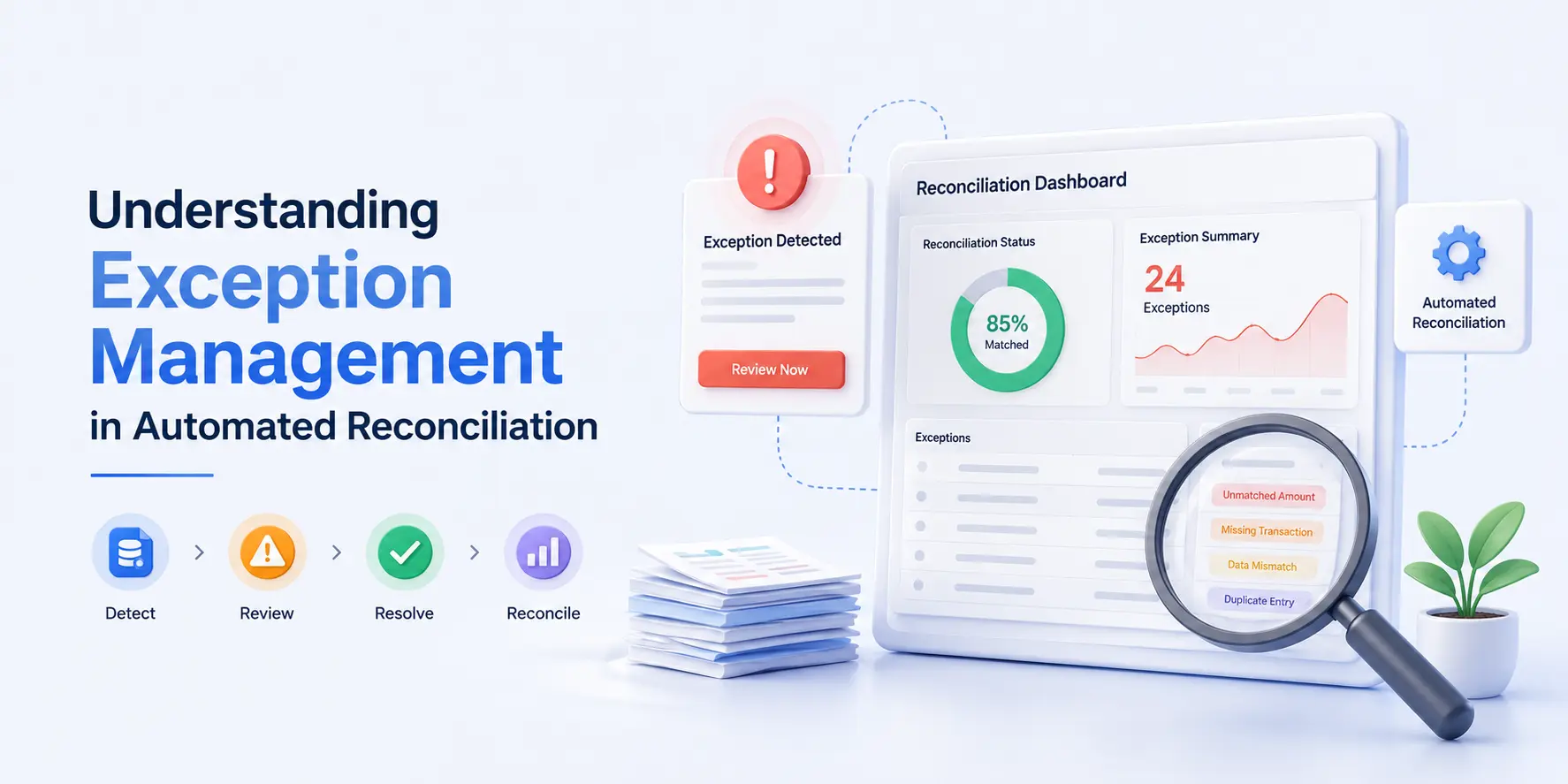
Not everything matches perfectly. The software efficiently flags these exceptions for human review.
- Centralized Dashboard: All discrepancies—like missing payments, duplicate entries, or fraud alerts—appear in a single investigative workspace.
- Streamlined Workflow: Accountants no longer hunt through emails and spreadsheets. They can review flagged items, add notes, attach supporting documents (like scanned checks), and take action directly within the balance sheet reconciliation software platform. Many systems offer audit trails that log every action taken.
Step 4: Validation, Reporting, and Posting Back
Once reconciliation is complete, the process comes full circle through integration.
- Reporting & Compliance: The software generates detailed audit trails, reconciliation reports, and compliance certificates automatically.
- Posting Back to the ERP: This is a critical integration point. Once a batch of transactions is reconciled and validated, the automated bank reconciliation software can post adjusting journal entries directly back to the ERP. For instance, if bank fees were identified during reconciliation, the software can create and post the exact journal entry to record those fees in the correct GL account. This keeps the ERP, the company’s single source of truth, continuously up-to-date.
Key Benefits of an Integrated Reconciliation System
Integrating your reconciliation software for banks with your ERP and banking feeds unlocks profound benefits:
- Unmatched Speed and Efficiency: Bank reconciliation automation can reduce the time spent on reconciliations by 70-90%. What was a monthly week-long task becomes a daily process completed in hours. A case study by one leading provider showed a client reducing their financial close time from 12 days to 4 days.
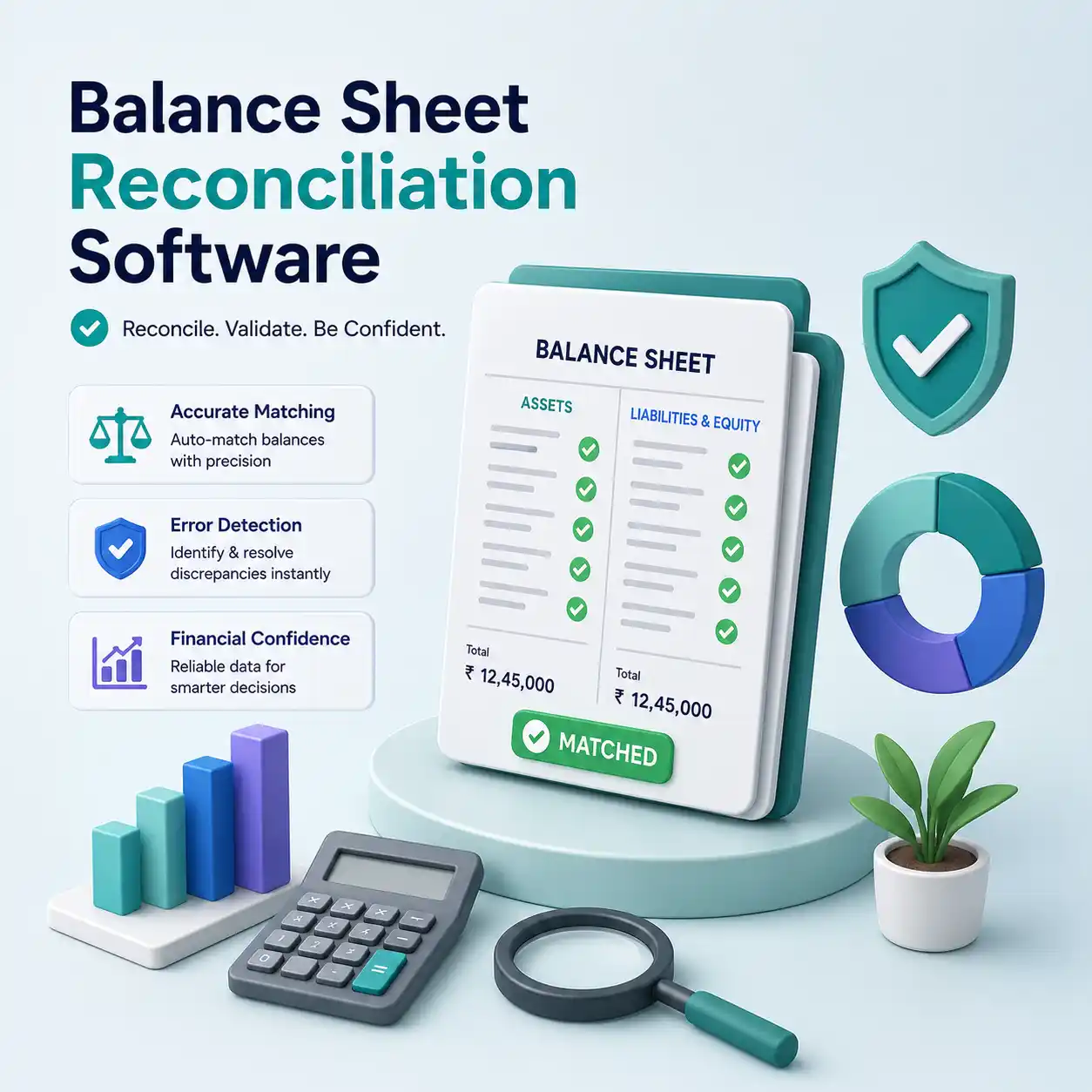
- Dramatically Improved Accuracy: Removing manual data entry and spreadsheet errors ensures financial integrity. This is crucial for reliable balance sheet reconciliation software processes, directly impacting the trustworthiness of financial statements.
- Real-Time Financial Visibility: With daily automated feeds, you have a near real-time view of cash positions across all accounts. This empowers better cash flow forecasting and strategic decision-making.
- Enhanced Security and Fraud Detection: Automated systems can be programmed with rules to flag unusual transactions immediately—like a payment to a new vendor over a certain threshold—enabling proactive fraud prevention rather than reactive discovery.
- Scalability and Control: As your business grows and transaction volumes explode, the automated reconciliation process scales effortlessly. It also standardizes procedures across departments and geographical locations, ensuring global control and consistency.
- Employee Satisfaction: By freeing finance professionals from repetitive, low-value tasks, they can focus on analysis, forecasting, and strategic advisory roles that add greater business value.
Also Read: Can Reconciliation Automation Tools Handle Multi-Currency Transactions?
Choosing the Right Software for Bank Reconciliation
When selecting a reconciliation solution, ensure it has robust, pre-built integration capabilities. Look for:
- A Large Library of Connectors: It should offer pre-configured connections for major ERPs (NetSuite, SAP, Sage, QuickBooks Online, etc.) and banking networks.
- Flexible Data Handling: It should be able to accept both modern API feeds and traditional file formats.
- Customizable Rules Engine: The matching logic should be powerful yet easy for your team to configure without needing IT support.
- Strong Audit Trail: This is non-negotiable for compliance and internal controls.
Conclusion
In conclusion, the integration of reconciliation software with ERP and banking systems is not just a technical detail—it is the foundation of a modern, efficient, and accurate financial operation. By acting as a seamless bridge, it automates the flow of data, the heavy lifting of transaction matching, and the final step of updating the general ledger. This creates a closed-loop process that eliminates manual bottlenecks, provides real-time insight into cash, and fortifies financial controls. For any business looking to streamline its finance function, improve accuracy, and empower its team, investing in an integrated automated reconciliation system is no longer a luxury; it is a strategic necessity for sustainable growth.
Also Read: How Does Accounting Reconciliation Software Improve Financial Accuracy?
Frequently Asked Questions (FAQs)
1. Is automated reconciliation software secure?
Yes, reputable providers implement bank-level security. Data is encrypted both in transit and at rest, and connections use secure protocols like TLS/SSL. Access is controlled through role-based permissions, ensuring only authorized personnel can view or approve reconciliations.
2. Can this software handle reconciliations beyond just bank statements?
Absolutely. While excellent for automated bank reconciliation, modern systems are versatile accounts reconciliation software. They can be configured for credit card reconciliations, inter-company reconciliations, ledger-to-ledger reconciliations, and more, making them a universal tool for the finance department.
3. How long does it typically take to implement such a system?
Implementation time varies based on complexity, but cloud-based solutions can often be up and running in a matter of weeks. A phased approach usually starts with a pilot on a few bank accounts before rolling out to the entire organization.
4. Will this software replace our accounting team?
No. The goal of reconciliation automation tools is not to replace accountants but to empower them. It eliminates the tedious, repetitive parts of their job, allowing them to focus on higher-value tasks like financial analysis, exception investigation, strategic planning, and providing insights to the business.
5. What if we use multiple banks and several different ERP modules?
This is where the software excels. A core strength of a robust reconciliation software is its ability to consolidate data from multiple banking sources (even in different countries) and integrate with various modules within your ERP (like AR, AP, and GL) into a single, unified platform for reconciliation.
6. How does the software handle complex discrepancies or errors it can’t resolve?
The software is designed to flag all items it cannot match with high confidence. These exceptions are routed to a designated workflow queue for human review. Accountants can then investigate using provided tools, link to source documents, and make the final decision, teaching the system for future similar transactions.
Ready to get started?
Contact us now
Contact us now
* By clicking on Contact Us you are agreeing to our Terms & Conditions and Privacy policy.