10 Benefits of Automated Reconciliation Software for Modern Businesses
Kosh.ai
June 29, 2026
In the modern corporate world, speed and accuracy are everything. Finance teams can no longer afford to spend days or weeks sorting through spreadsheets to match transactions. Relying on manual data entry to cross-reference statements with general ledgers is a recipe for errors, operational bottlenecks, and employee burnout. As digital transactions rise globally, the volume of data generated by everyday operations has become overwhelming.
Recent market studies show that the global account reconciliation software market size was valued at 3.9 billion dollars in 2025 and is projected to expand significantly to reach 9.4 billion dollars by 2034. This fast growth proves that forward-thinking organizations are leaving manual processes behind. Modern enterprises are adopting a sophisticated reconciliation automation tool to replace outdated workflows with smart, real-time data matching systems.
Whether it involves verifying sales, processing vendor payments, or tracking bank fees, automation has become essential for survival and growth. This comprehensive guide covers the top ten benefits of upgrading to automated reconciliation software and explains why it is a critical investment for your business today.
Top 10 Benefits of Automated Reconciliation Software
1. Drastic Reduction in Manual Errors and Reworks
Human error is inevitable when employees copy and paste numbers across large spreadsheets. A single misplaced decimal point or typo can throw off an entire financial report, leading to days of frustrating investigation. In fact, financial data shows that corporate financial statement retractions due to basic accounting errors hit a nine-year high recently, with 140 firms reissuing corrected figures in a single year.
Automated systems eliminate this risk. By importing transaction records directly from banks, credit card processors, and enterprise resource planning systems, the software handles information without human touch. If any differences occur due to processing fees or currency rounding, the platform uses pre-set tolerance rules to address minor variances automatically. This ensures that your books remain perfectly clean without requiring constant manual corrections.
2. Massive Time Savings and Faster Month-End Close
The month-end close process is traditionally a stressful time for accounting departments. Teams frequently work late into the night verifying ledger balances, looking for missing invoices, and matching cash receipts. This manual approach delays essential financial reporting and prevents leadership from accessing timely operational data.
Switching to an automated framework typically reduces reconciliation time by 75% to 90% per account. Tasks that used to take hours of manual filtering are completed in just minutes. Because data is ingested and matched continuously, the month-end close changes from a frantic monthly rush into a simple, routine check.
3. Streamlined Vendor Management with Invoice Reconciliation
Managing supplier relationships requires paying vendor invoices on time and accurately. When matching purchase orders, receiving logs, and supplier bills manually, accounts payable departments often experience delayed payments or accidental overpayments. This is where specialized invoice reconciliation software provides immense value.
The platform automatically extracts line-item data from incoming supplier bills and cross-checks it against internal purchase orders and goods receipt notes. It immediately flags discrepancies in unit prices, quantities, or tax calculations for human review, while matching correct items instantly. This level of automation prevents double payments, helps secure early-payment discounts, and builds strong trust with key suppliers.
4. Flawless Cash Flow Visibility and Capital Management
To make confident day-to-day operational decisions, business leaders must know exactly how much cash is available in their bank accounts. Relying on manual updates means that balance sheets are only accurate up to the last manual download, creating dangerous blind spots in cash flow visibility.
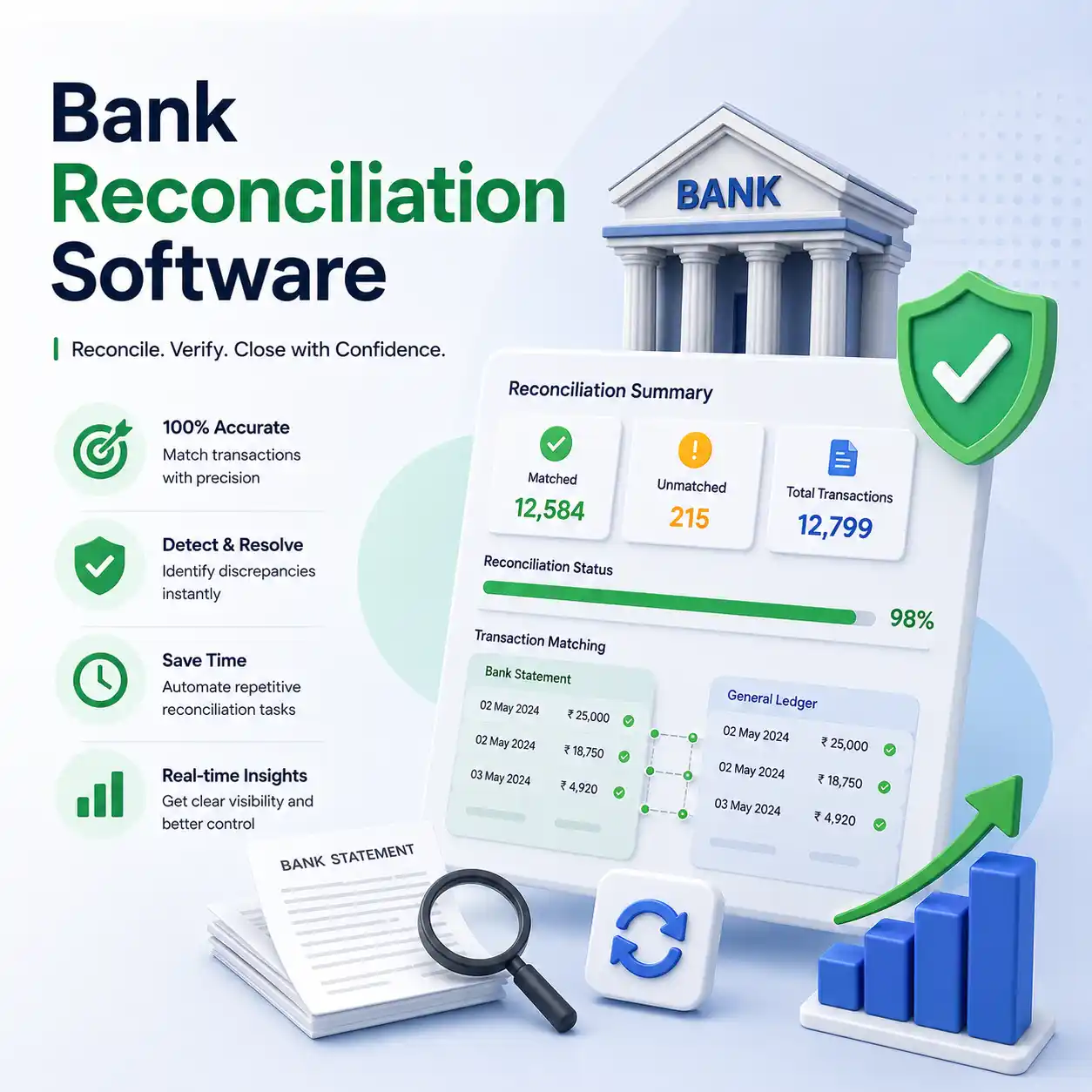
Using a modern cash reconciliation tool allows organizations to establish direct API connections with their banking institutions. The software normalizes bank feeds in real time, automatically matching outgoing payments and incoming deposits against corporate ledger accounts. This continuous visibility helps treasury teams manage working capital effectively, optimize short-term investments, and prevent accidental overdrafts.
5. Enhanced Fraud Detection and Prevention
Financial fraud is a growing threat for modern enterprises, with billing schemes, unauthorized transactions, and cybercrime accounting for significant corporate losses. When financial data is reviewed weeks after the fact, fraudulent activity can go unnoticed for long periods, making recovery incredibly difficult.
Automation acts as an always-on security system for your company accounts. The software monitors transactions continuously and uses machine learning to spot anomalies, unexpected duplicate charges, or unauthorized bank withdrawals instantly. Catching these discrepancies the day they happen allows your security and management teams to respond immediately, freeze compromised accounts, and minimize financial damage.
6. Seamless Scaling for High Transaction Volumes
As a business grows, its transaction volume increases rapidly. A company expanding its e-commerce footprints, launching new subscription products, or entering new regions will see its transaction numbers skyrocket from thousands to millions. Managing this growth manually requires hiring a large team of accountants, which increases overhead costs.
Automated platforms handle high volume effortlessly. Whether your business processes one thousand or one million transactions a day, cloud-based software scales instantly to match the demand without slowing down. This enables your business to scale operations and revenue smoothly while keeping your finance team lean and highly focused.
7. Optimized Revenue Operations with Payment Reconciliation
Modern businesses accept payments through many different channels, including credit cards, digital wallets, bank transfers, and point-of-sale systems. Each payment processor sends separate settlement reports, charges different transaction fees, and deposits payouts on varying schedules, creating a complex web of data.
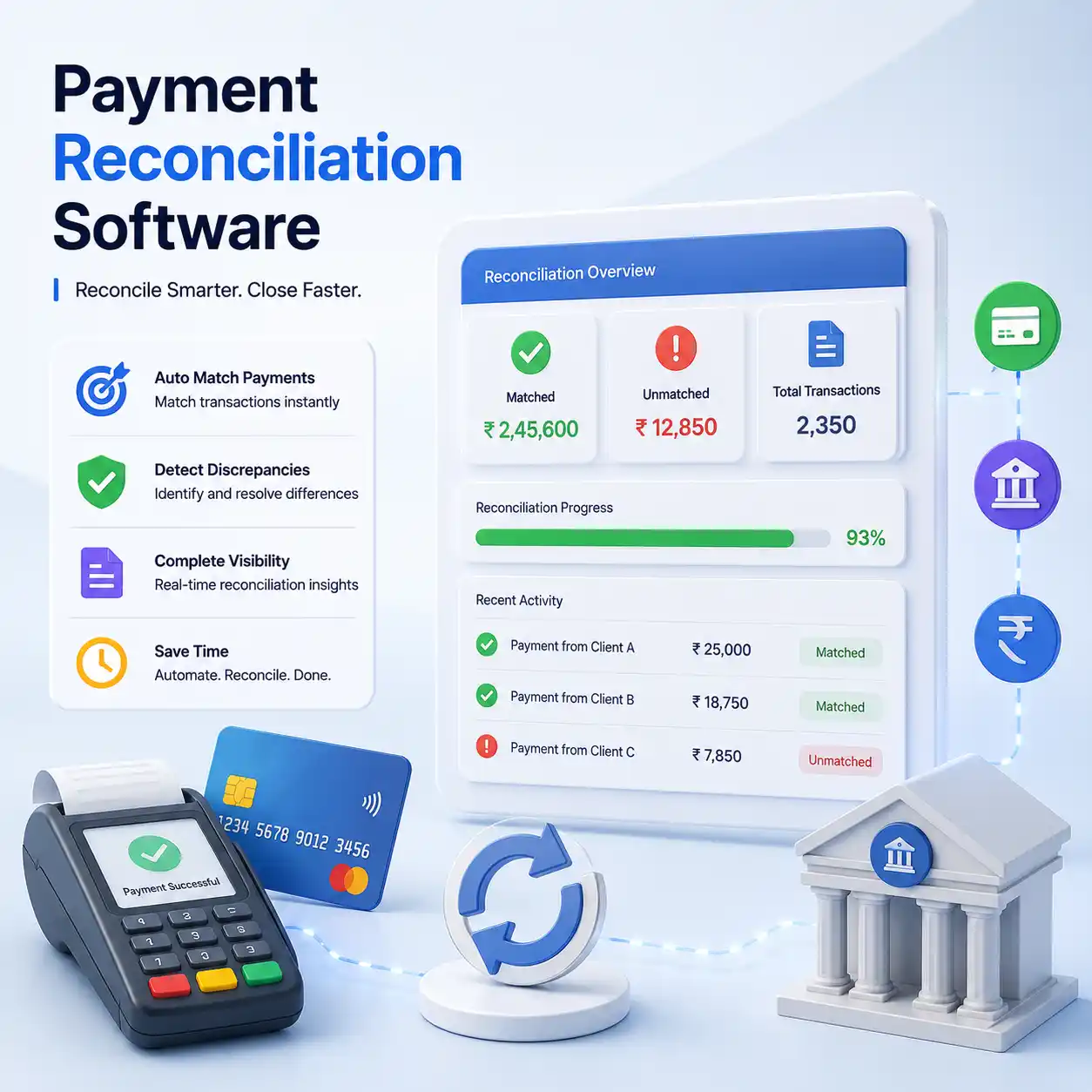
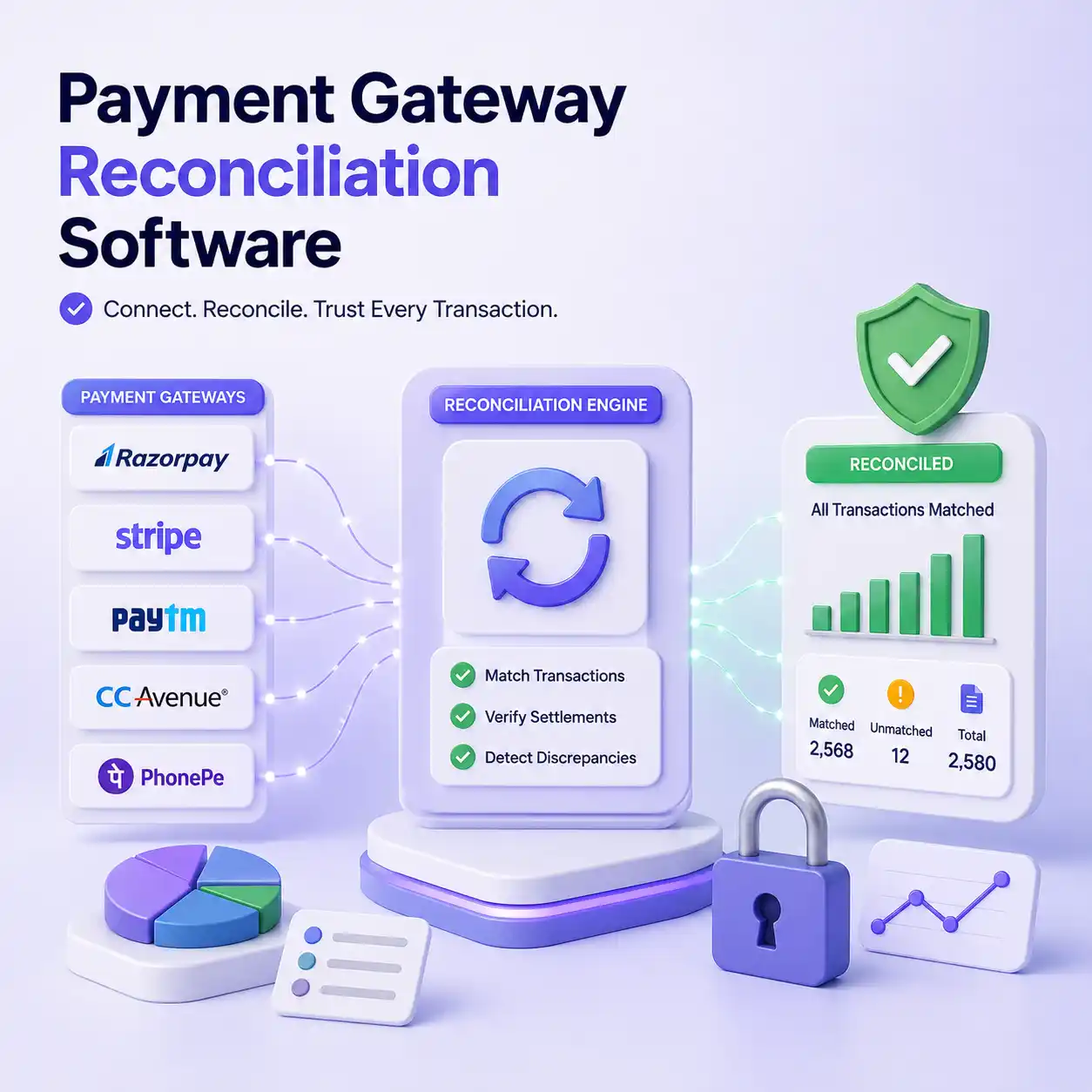
Implementing dedicated payment reconciliation software simplifies this complexity by connecting directly to gateways like Stripe, PayPal, and Adyen. The system automatically matches every customer order with the corresponding payment processor record and bank deposit statement. It automatically identifies missing payouts, high processing fees, or hidden chargebacks, ensuring your business receives every dollar it earns.
8. Total Audit Readiness and Regulatory Compliance
Preparing for financial audits can be a stressful experience, especially if teams have to dig through old emails, physical folders, and loose spreadsheets to find supporting documentation. Regulatory rules like SOX, IFRS, and local accounting laws demand clear proof of internal financial controls.
Automated platforms create an unalterable, step-by-step audit trail for every single transaction. The software records exactly when data was pulled, how it was matched, and who approved any exceptions. When auditors request proof of compliance, you can give them direct, read-only access to a centralized dashboard. This replaces months of stressful audit preparation with total transparency.
9. Higher Employee Morale and Better Talent Retention
Skilled accountants and finance professionals did not earn their degrees to spend hours performing repetitive copy-and-paste tasks. Forcing talented workers to do tedious, manual data matching leads to low employee engagement, exhaustion, and high turnover rates during close seasons.
Automating routine tasks frees your staff from data entry boredom. They can step into analytical roles, focusing on resolving complex variances, analyzing cost trends, and finding strategic ways to save money. This makes their daily work more meaningful, improves job satisfaction, and helps you retain top accounting talent.
10. Data-Driven Strategic Decision Making
When your accounting team is stuck dealing with manual close processes, they lack the time to analyze what the financial numbers actually mean. Decisions are often based on outdated historical reports rather than current operational realities.
Automated software provides real-time financial dashboards that give executives an accurate look at profitability, spending habits, and outstanding balances. Having access to trusted, live data allows leadership to build accurate forecasts, allocate budgets wisely, and pursue new market opportunities with total confidence.
Frequently Asked Questions
What exactly is automated financial reconciliation software?
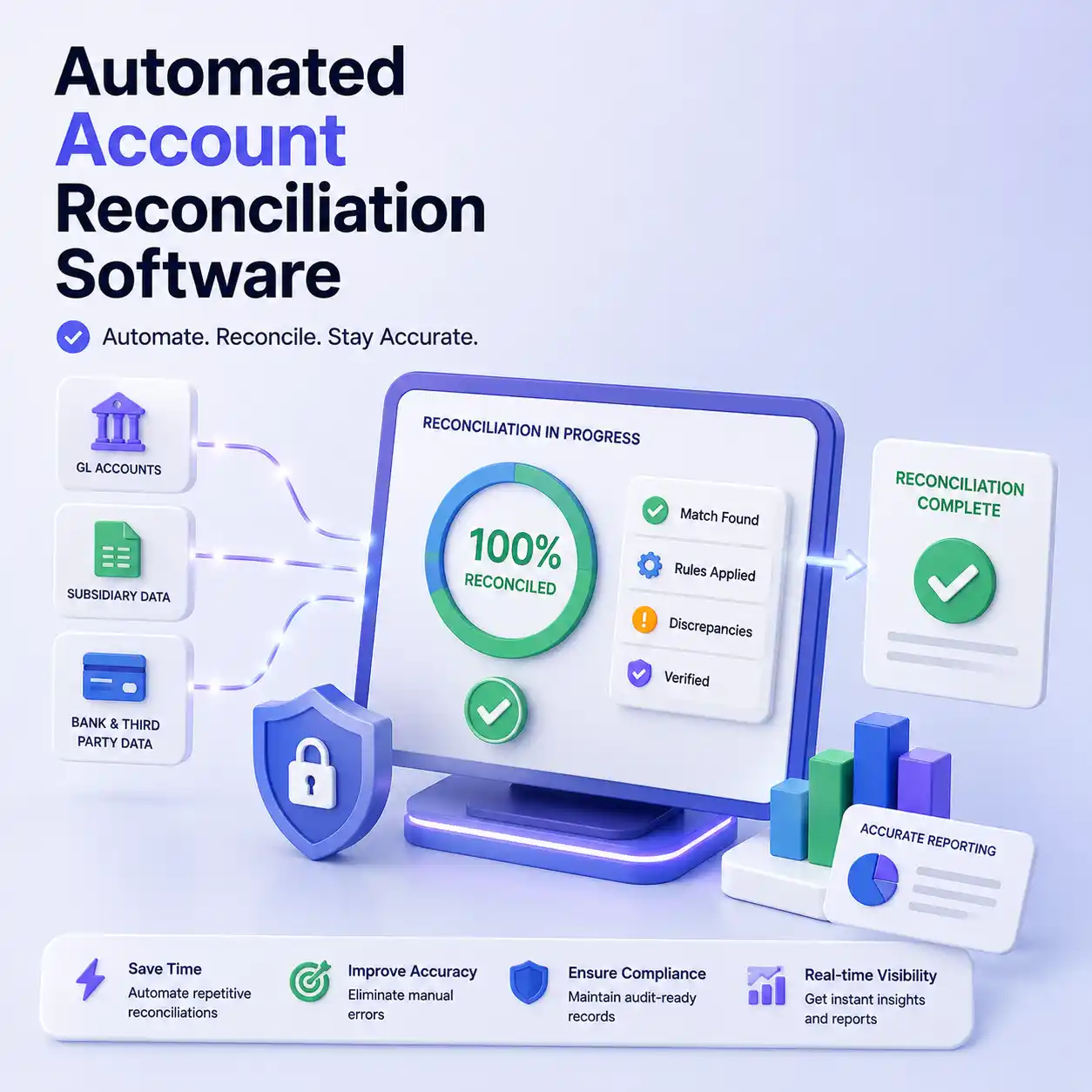
It is a specialized digital platform that automatically connects to your internal systems, such as ERPs and billing platforms, as well as external sources like bank feeds and payment processors. The software uses customizable, rule-based logic and machine learning algorithms to compare, match, and verify transactions without requiring manual data entry.
How does this software handle data format differences between banks?
Modern systems include built-in data normalization tools. When different banks display dates, currencies, or descriptions in different formats, the software automatically translates and standardizes them into a single, uniform internal format before running the matching process.
Is automated reconciliation safe for sensitive financial data?
Yes, enterprise-grade reconciliation tools prioritize high level data security. They use advanced encryption standards for data at rest and in transit, support secure API connections, and include multi-factor authentication along with role-based access controls to protect your financial assets.
Can small businesses benefit from reconciliation automation tools?
Absolutely. While large corporations deal with massive volume, small and medium enterprises often have limited administrative resources. Automating financial verification saves small business owners valuable time, eliminates expensive human errors, and provides the clear cash visibility needed to grow safely.
What is the typical implementation timeline for this software?
Implementation times vary based on your company size and system complexity. While older on-premises systems used to take several months to deploy, modern cloud-based solutions can integrate with your existing ERPs and bank accounts via APIs within a few weeks, allowing teams to see immediate value.
Does automation completely replace the need for corporate accountants?
No, it does not replace human accountants; it empowers them. The software handles the repetitive, high-volume matching tasks that consume most of their day. This allows human professionals to focus their time and expertise on solving complex transaction discrepancies, managing strategic vendor relationships, and performing deep financial analysis.
Ready to get started?
Contact us now
Contact us now
* By clicking on Contact Us you are agreeing to our Terms & Conditions and Privacy policy.