How Multi-Source Data Integration Improves Financial Reconciliation
Kosh.ai
July 2, 2026
Managing financial operations across a growing business is a major challenge. Finance teams must balance transaction data from bank statements, internal enterprise resource planning systems, payment gateways, and point of sale systems. When these data channels are isolated, manual verification becomes a tedious, slow, and error-prone chore.
A recent Gartner study revealed that 18% of accountants make financial errors on a daily basis, and 59% experience several mistakes every month due to complex manual workflows. These errors are not just minor inconveniences; they create blind spots, lead to regulatory non-compliance, and drain working capital.
The strategy to overcome these operational bottlenecks is multi-source data integration. By linking disparate data streams directly into modern reconciliation software, organizations can convert a chaotic month-end scramble into a smooth, accurate, and continuous workflow.
Understanding the Complexity of Modern Financial Data
In the past, financial reconciliation was a simple process of comparing an internal physical ledger against a monthly bank statement. Today, digital transformation has changed the landscape entirely. A single transaction might pass through an e-commerce storefront, an independent payment processor, an internal billing system, and multiple bank accounts.
This ecosystem creates a massive volume of fragmented data. Each platform formats dates, transaction IDs, currencies, and descriptions differently. For instance, a payment gateway might log a transaction under a unique reference number, while the receiving bank lists it under a generic merchant clearing ID.
Without unified data ingestion, accounting teams must spend hours manually exporting CSV files, cleaning messy spreadsheets, and trying to align mismatched fields. According to industry reports, the global market for account reconciliation platforms is projected to grow from USD 2.65 billion in 2026 to USD 8.10 billion by 2034, registering a compound annual growth rate of 15%. This rapid market expansion highlights a global corporate shift: businesses can no longer manage modern transaction volumes through manual intervention.
The Core Pitfalls of Siloed Financial Reconciliation
Relying on traditional spreadsheet matching or isolated software creates severe risks for modern enterprises. When data remains trapped in functional silos, finance teams face several operational issues.
Elevated Human Error and Data Mismatches
Human error is inevitable when professionals copy, paste, and manipulate rows of financial data across disconnected systems. Common manual mistakes include duplicate entries, transposed digits, broken Excel formulas, and accidental omissions. Industry studies indicate that manual entry workflows can experience error rates as high as 45%. A single misplaced decimal point or unrecorded fee can cascade through a company's balance sheets, forcing teams to waste valuable days tracking down the root cause of a discrepancy.
Delayed Visibility into Cash Flow
Siloed operations restrict data accessibility. If bank data is only refreshed weekly or monthly, the executive leadership team cannot view the company's actual cash position in real time. This visibility gap makes it difficult to manage daily working capital, plan short-term investments, or respond effectively to sudden market shifts.
Increased Susceptibility to Fraud
Fraud thrives in environments with delayed visibility and fragmented oversight. The 2024 ACFE Report to the Nations highlights that organizations lose an average of 5% of their annual revenue to fraudulent activities, with payment tampering and billing schemes ranking among the most prevalent methods. When reconciliation happens weeks after a transaction occurs, unauthorized charges, internal leakage, or duplicate vendor payments go unnoticed for far too long, making recovery difficult.
How Multi-Source Data Integration Transforms Financial Control
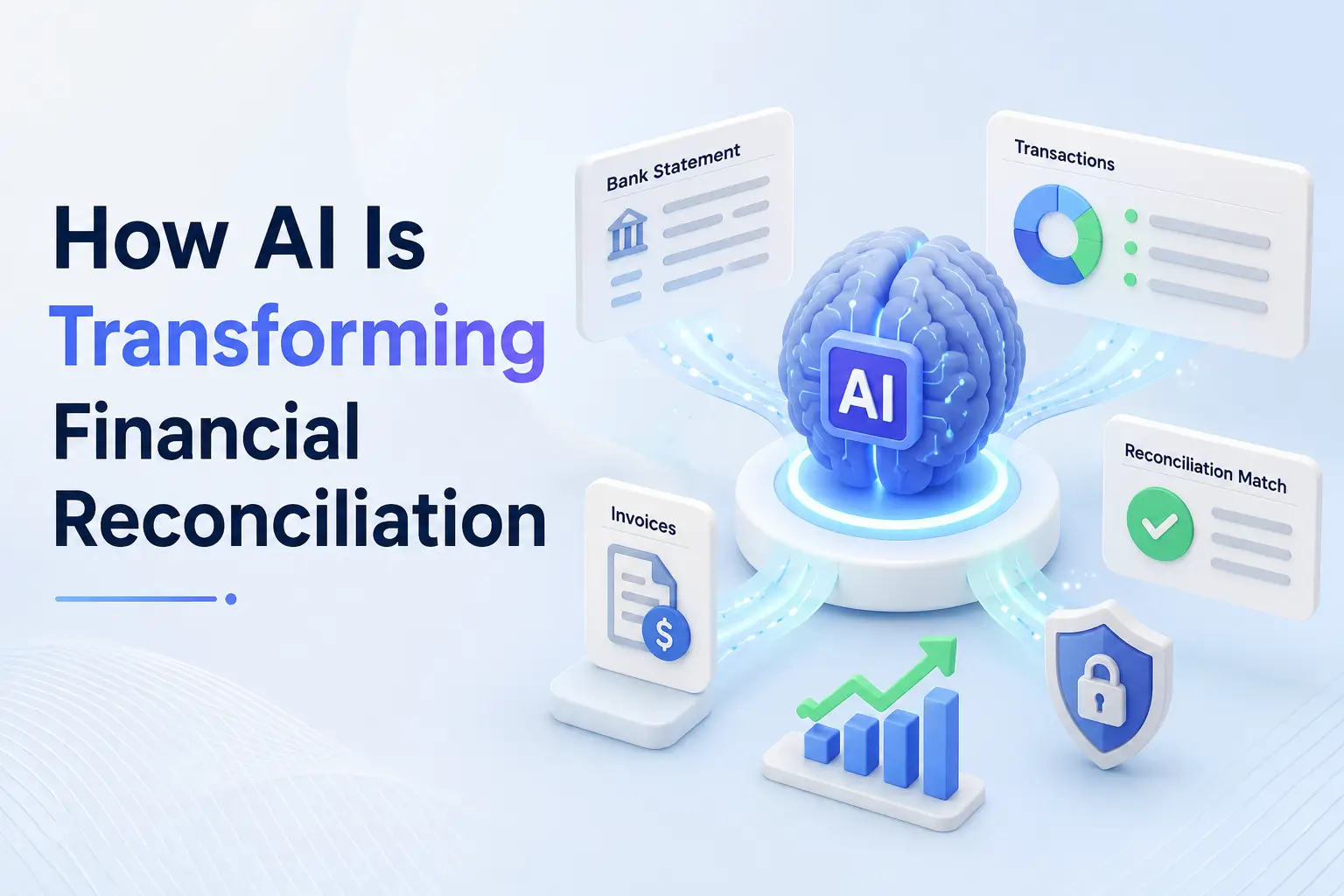
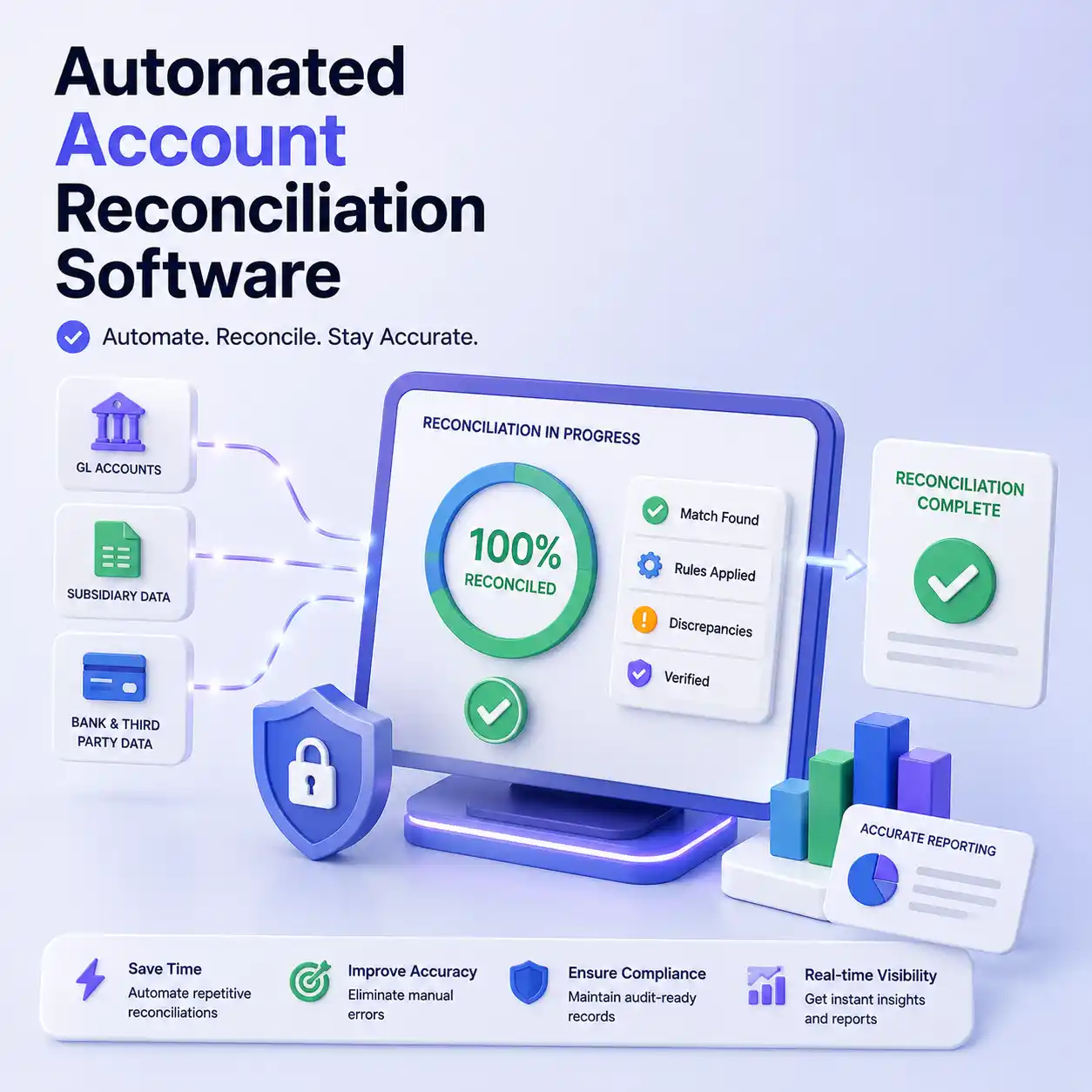
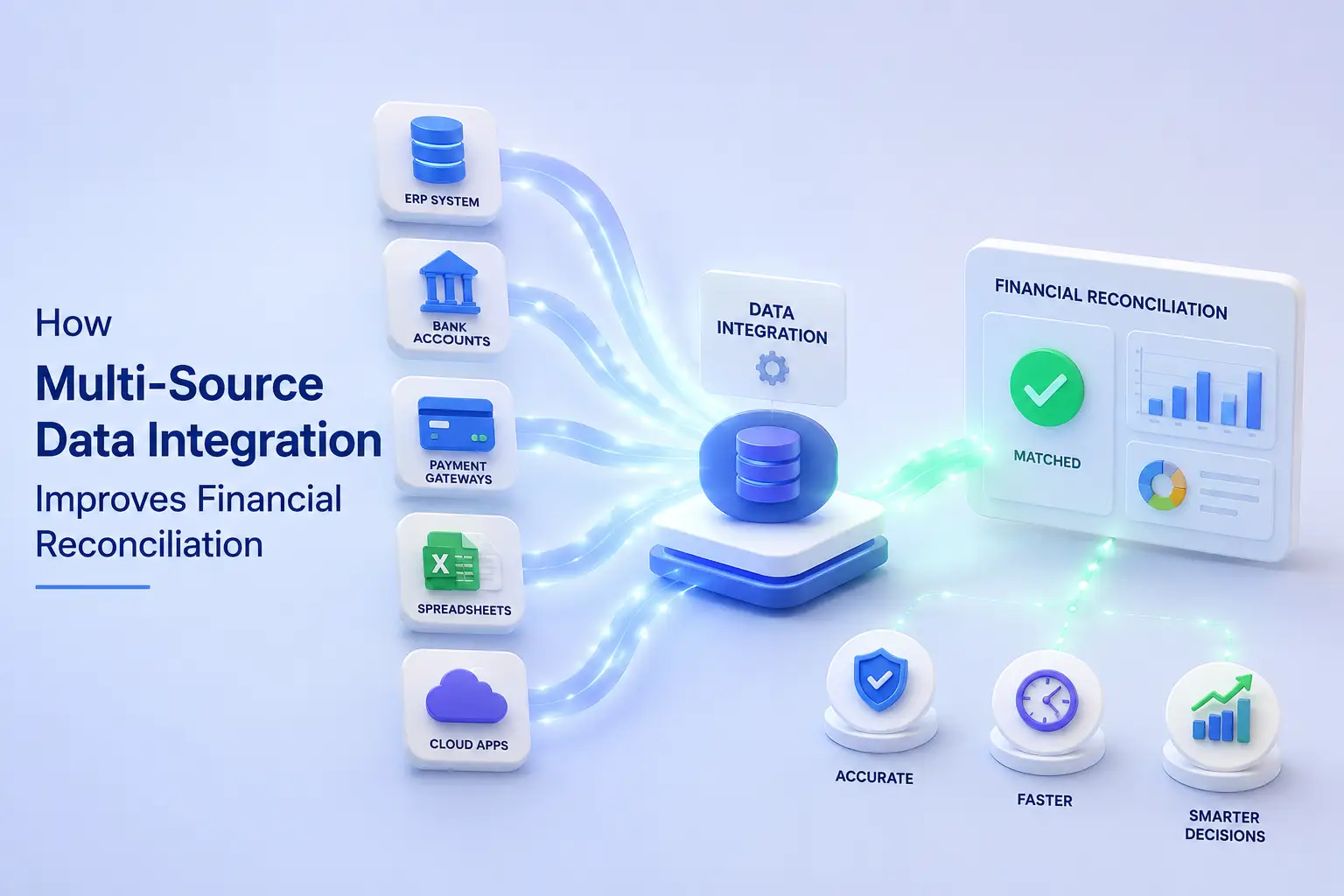
Multi-source data integration serves as the digital bridge connecting all financial data pipelines. Instead of handling data in fragments, an integrated system acts as a central hub that ingests, normalizes, and validates information from every internal and external touchpoint.
Automated Data Ingestion and Normalization
The first step in modern integration is automated data collection. Through secure application programming interfaces and automated file transfer protocols, financial records are pulled continuously from diverse endpoints.
Once ingested, the system normalizes the data. It cleans conflicting data fields, translates diverse currency formats, and aligns varying date formats into a single, standardized template. This upfront standardization removes the need for manual data preparation, allowing matching engines to process transactions instantly.
Intelligent Cross-System Transaction Matching
With normalized data streams feeding into a unified engine, advanced rules-based logic takes over. The platform automatically compares transactions across three or more independent sources at the same time, executing three-way or multi-way matching.
For example, the platform can simultaneously verify an order logged in your internal e-commerce database, the settlement statement from your digital payment processor, and the deposit recorded by your bank. A recent NetSuite study found that incorporating smart automation into financial reconciliation reduces overall processing errors by over 70%.
Immediate Exception Handling and Anomaly Detection
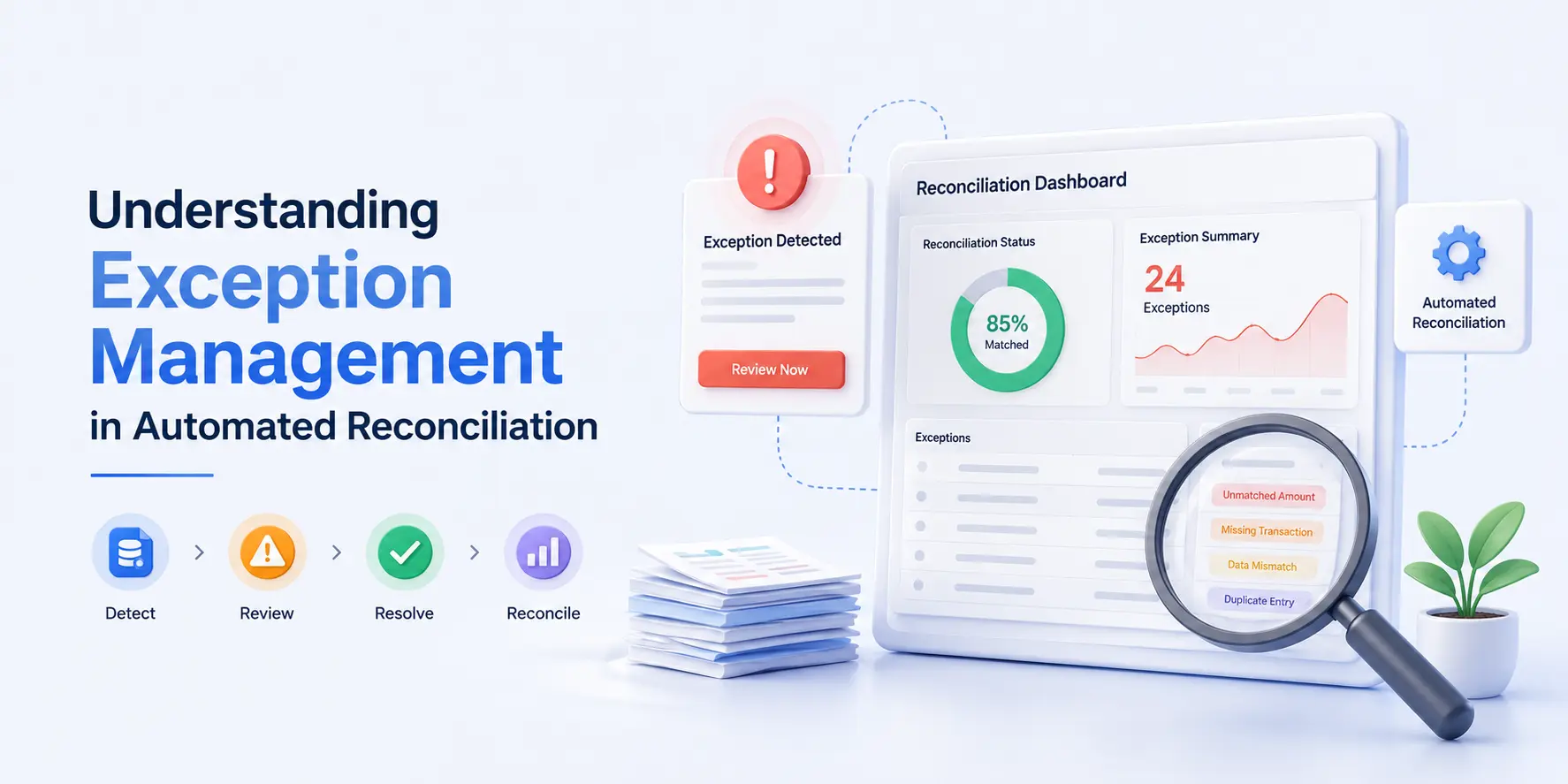
In an integrated environment, the system processes true matches silently in the background. The software only highlights discrepancies, unmatched records, or unexpected bank fees, flagging them as exceptions.
Finance professionals can then focus their time and expertise exclusively on solving these high-priority anomalies. This proactive strategy allows teams to resolve compliance, pricing, or billing disputes immediately, rather than waiting for the high-pressure month-end closing period.
Exploring the Varieties of Integrated Financial Reconciliation
Multi-source data integration addresses multiple layers of corporate accounting, ensuring that every financial sector remains accurate and synchronized.
Core Banking and Cash Integration
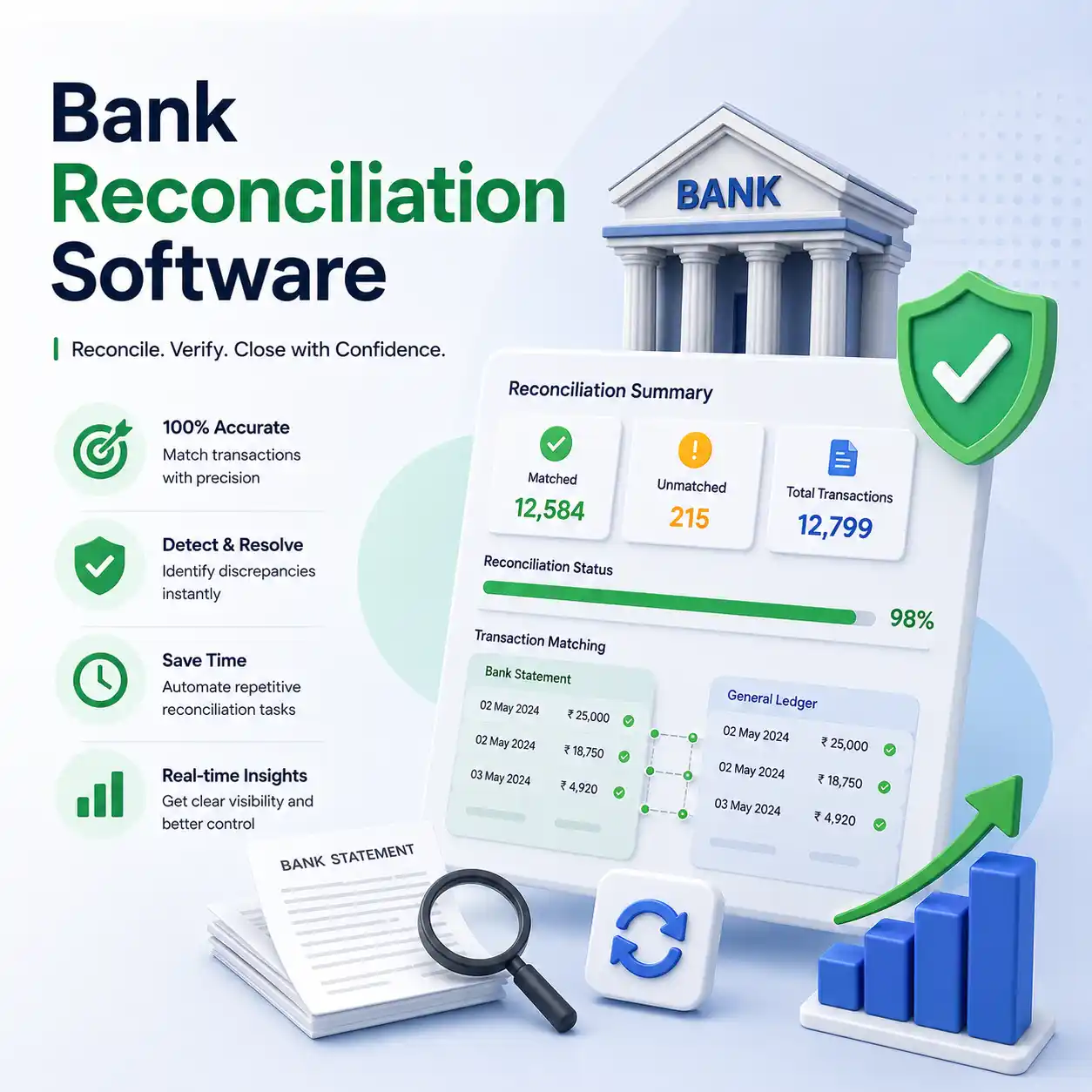
Ensuring agreement between internal cash ledgers and actual bank account statements is fundamental to corporate financial health. Utilizing automated bank reconciliation software allows enterprises to establish direct, secure connections with global banking networks.
Instead of waiting for physical end-of-month statements, companies can pull transaction details via daily feeds. This continuous cash oversight helps teams track outstanding deposits, identify unexplained bank fees, and maintain an accurate, up-to-date record of true cash reserves.
Payment Gateway and Merchant Cleardown
For modern digital businesses, tracking funds from the point of customer checkout to final bank deposit is a complex task. Transactions frequently encounter payment processing fees, chargebacks, currency exchanges, and delayed settlement windows.
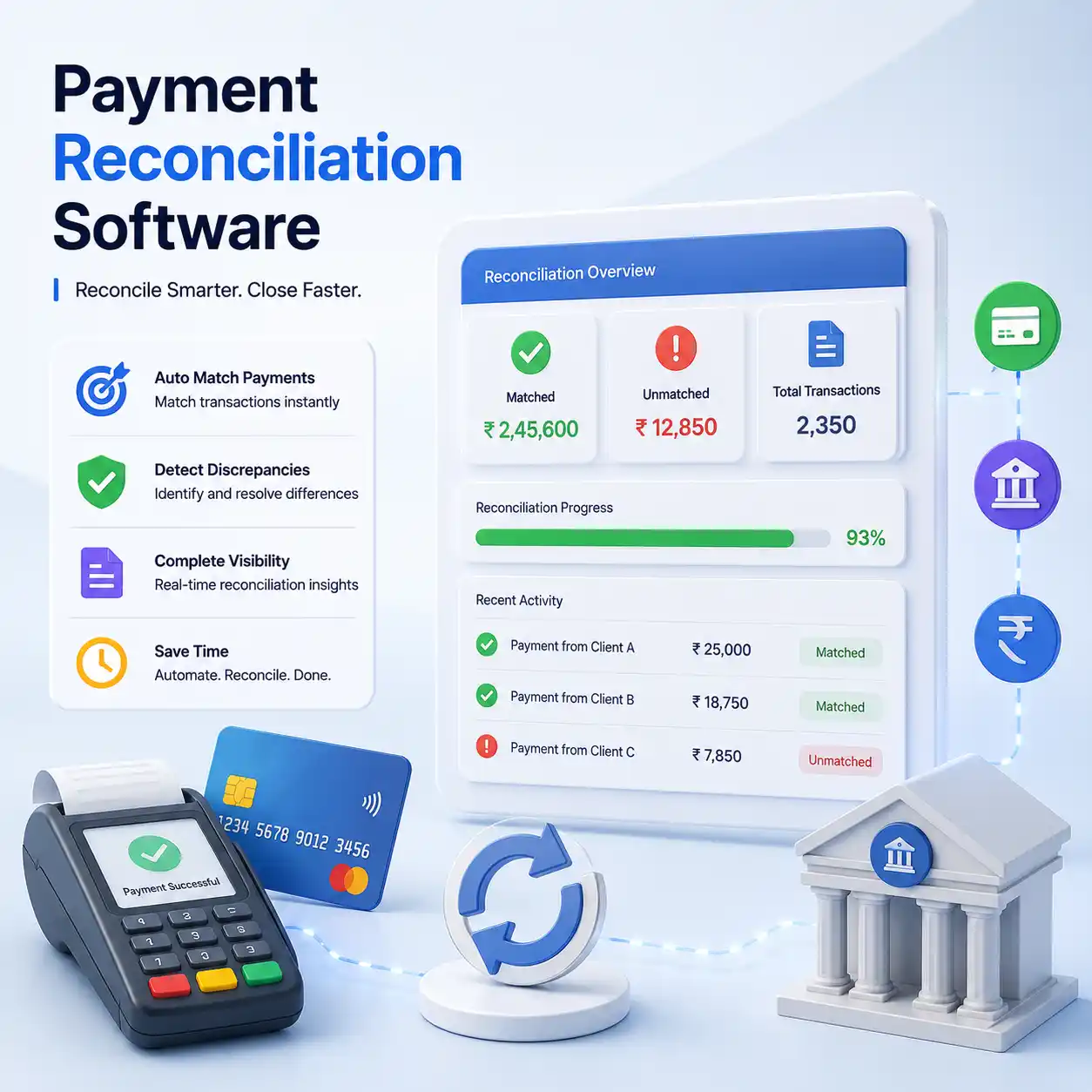
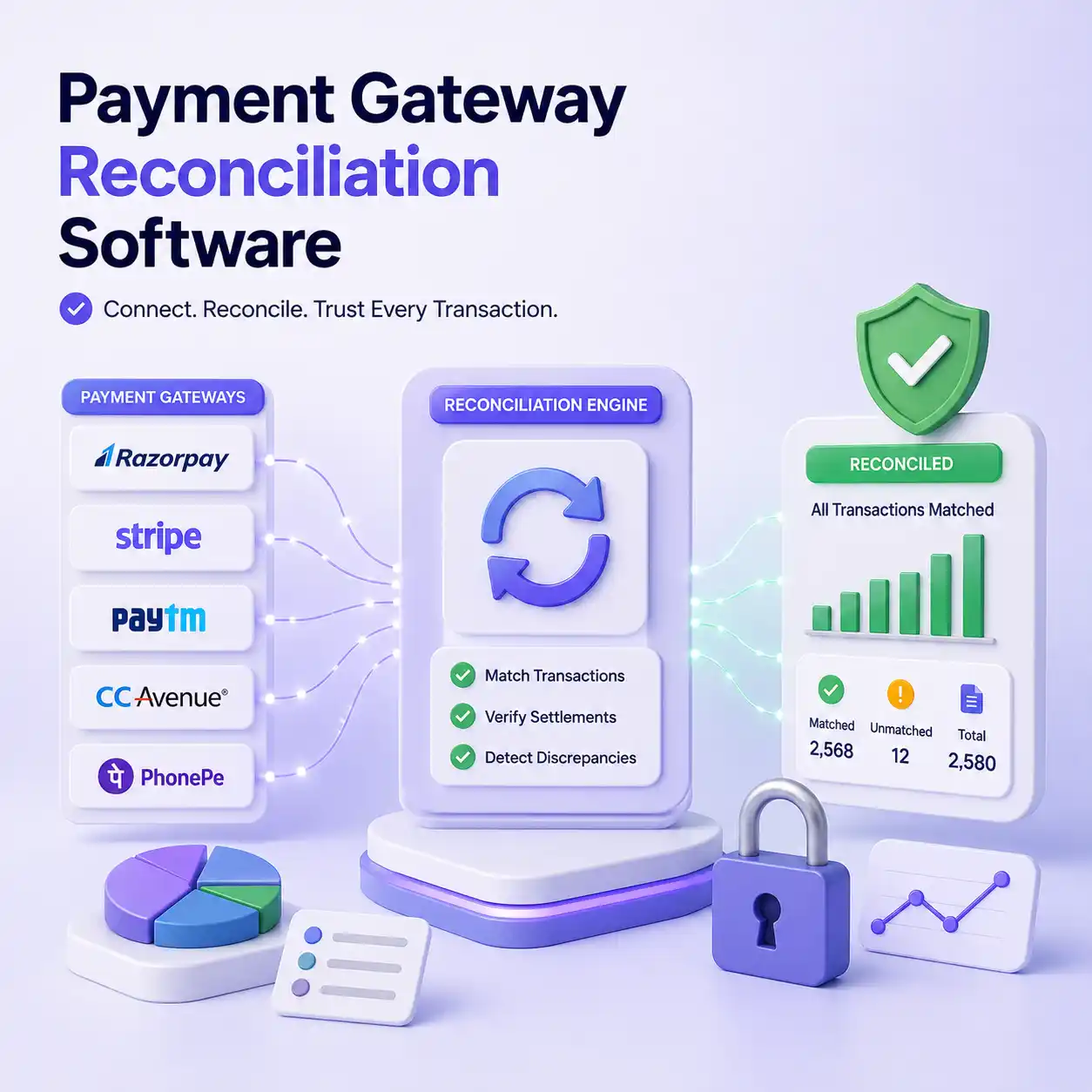
Implementing specialized payment reconciliation software solves this problem by tracking every transaction across its entire lifecycle. The software monitors the customer’s purchase, the processor's clearing statement, and the final net settlement in the corporate bank account. This thorough tracking ensures that payment processors deposit the correct amounts while accounting accurately for all processing fees.
Cash Flow and Liquidity Management
Effective corporate liquidity management requires a clear view of physical cash, retail deposits, digital wallets, and petty cash reserves. Relying on specialized cash reconciliation software ensures that all cash equivalents are tracked, categorized, and consolidated into a master ledger automatically. This unified view helps treasury departments manage working capital effectively, optimize funding pools, and lower overall currency exchange risks.
Strategic Benefits of Integrated Financial Data Management
Moving to an integrated, multi-source financial ecosystem provides significant benefits that extend far beyond the accounting department.
Drastic Reductions in Operational Expenses
Manual data matching is an expensive use of skilled labor. When finance teams spend their days copy-pasting numbers across spreadsheets, they are unable to focus on strategic financial planning. Automating these workflows can cut back-office operational costs by up to 50%, allowing companies to scale their transaction volumes without needing to increase their back-office headcount.
Accelerated Month-End Closing Cycles
The traditional month-end close is often a stressful period for accounting teams, marked by tight deadlines and long hours spent looking for data discrepancies. Multi-source data integration enables a continuous, daily reconciliation workflow. Because errors are caught and corrected as they happen throughout the month, closing the books at month-end becomes a quick, routine validation process rather than a frantic search for errors.
Stronger Compliance and Audit Readiness
Modern financial regulations demand strict data governance, secure storage, and clear operational transparency. Integrated software maintains an unalterable digital audit trail for every single transaction.
The software records exactly when data was pulled, how transactions were matched, and who approved any exception overrides. This high level of transparency minimizes compliance risks and makes regular financial audits much smoother, faster, and less disruptive to daily business operations.
Key Considerations for Implementing Integrated Reconciliation Systems
Switching to an integrated financial system requires careful planning, strategic technology choices, and clear internal alignment.
- API Connectivity and System Compatibility: Ensure the new platform offers pre-built API connectors that link seamlessly with your current ERP, CRM, payment gateways, and banking providers.
- Scalable Data Processing: Choose a system built to handle high volumes of data without lagging, ensuring it can easily accommodate your company's future transaction growth.
- User-Friendly Rule Customization: Look for platforms that let finance users create, modify, and manage matching rules directly, reducing the need for constant IT department intervention.
- Advanced Data Protection: Verify that the platform complies with global data security standards like SOC 1, SOC 2, and GDPR to safeguard your sensitive corporate financial records.
Also Read: Why Every Finance Team Needs Automated Reconciliation Software
Frequently Asked Questions
What does multi-source data integration mean for financial reconciliation?
Multi-source data integration is the process of connecting and combining financial data automatically from various independent platforms, including banks, payment gateways, ERP systems, and internal databases, into one central system. This allows the system to match transactions across multiple touchpoints simultaneously, eliminating manual data entry and improving accuracy.
Can integration software handle different file types and data structures?
Yes. Modern platforms can ingest, read, and normalize financial data in almost any format, including API feeds, BAI2, CAMT, CSV, XLS, and XML files. The system automatically standardizes these diverse data streams so they can be matched accurately.
How does multi-way matching differ from standard two-way matching?
Standard two-way matching compares two data sources, such as an internal sales log and a bank statement. Multi-way matching compares three or more data sources at the same time, such as verifying an internal customer order against both the payment gateway processor statement and the final bank deposit record, ensuring complete data consistency.
Will automated integration completely replace human accounting teams?
No. Automation handles the repetitive, time-consuming tasks of data collection, formatting, and clear transaction matching. Human expertise remains essential for investigating complex exceptions, resolving vendor disputes, and analyzing financial trends to support business growth.
How does continuous data integration help prevent financial fraud?
Continuous integration pulls and matches financial data in real time or daily schedules. This allows the software to spot duplicate payments, unauthorized bank withdrawals, or altered transaction amounts immediately, giving security teams the chance to stop fraudulent activity before it causes significant losses.
What should a business look for when selecting a reconciliation platform?
A business should prioritize platforms that offer secure API connectivity, scalable data processing, flexible rules engines that finance teams can manage without IT support, clear audit trails, and strong international data security certifications.
Ready to get started?
Contact us now
Contact us now
* By clicking on Contact Us you are agreeing to our Terms & Conditions and Privacy policy.