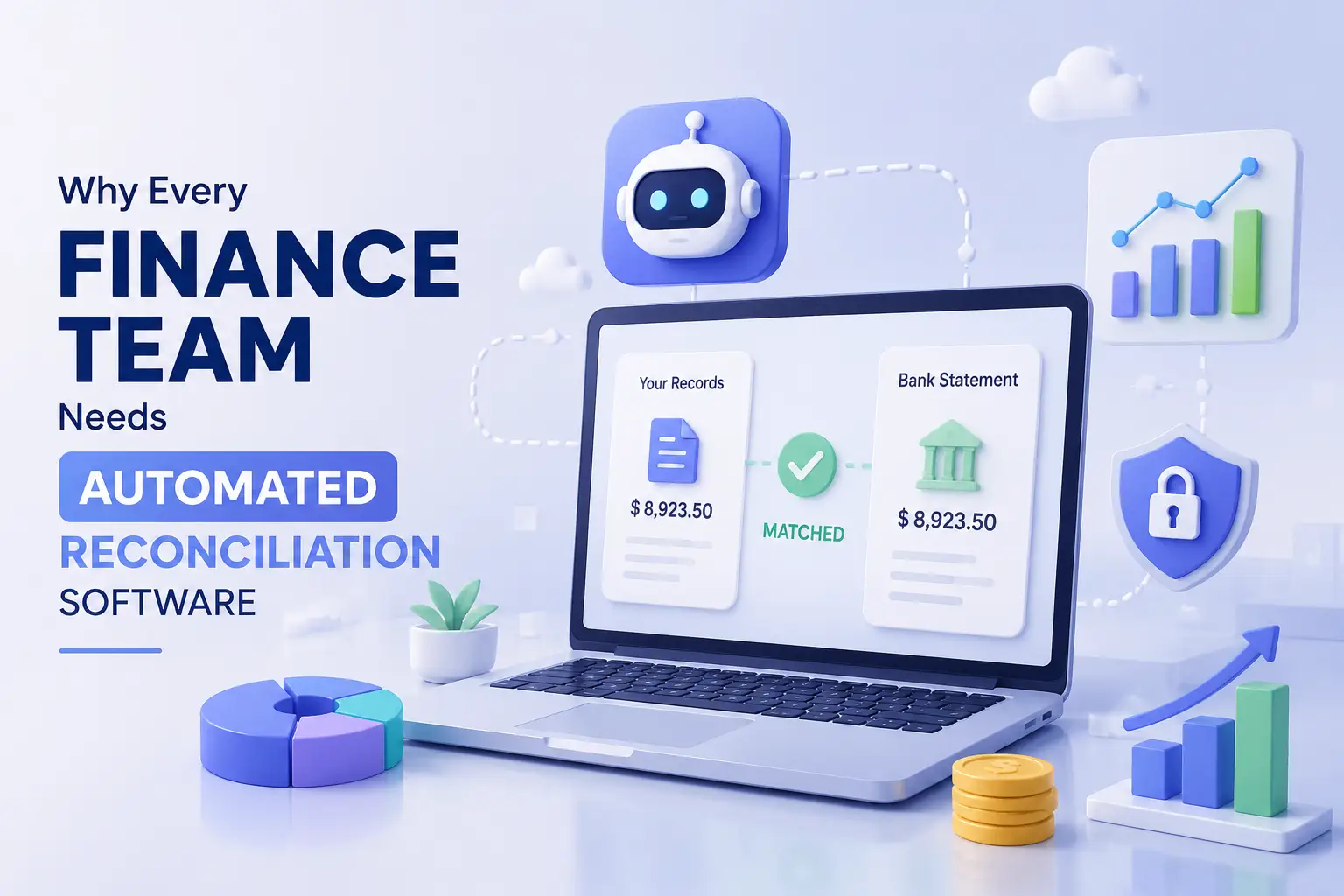
Why Every Finance Team Needs Automated Reconciliation Software
Kosh.ai
July 1, 2026
For decades, the finance department has been viewed as the backbone of corporate stability. Every transaction, invoice, and bank statement must perfectly align to reflect a company's true economic health. Yet, even in a technologically advanced business environment, many finance teams still spend countless hours manually cross-checking row after row of data in spreadsheets.
Manual financial reconciliation is no longer just a tedious task; it is a significant bottleneck. Relying on human fingers to type, copy, and paste financial numbers invites high operational risks, costly errors, and delayed reporting cycles. For growing companies managing multiple digital payment channels, enterprise platforms, and cross-border bank accounts, manual workflows are simply unsustainable.
Implementing modern automated solutions is no longer a luxury reserved for multi-billion-dollar conglomerates. It has become an operational necessity. To scale operations efficiently, modern financial teams must deploy dedicated reconciliation software to ensure complete financial accuracy, reduce manual workloads, and maintain strict data compliance.
The True Cost of Manual Financial Reconciliation
Every finance leader knows that numbers never lie, but manual accounting processes often obscure the truth until it is too late. The traditional approach to matching transactions involves exporting huge csv data sheets from bank accounts, downloading reports from internal billing tools, and manually attempting to make them agree. When data volumes grow, this practice introduces immediate vulnerabilities.
High Operational Error Rates
Human error remains an inherent risk in manual accounting. Financial studies show that manual spreadsheet-heavy processes carry error rates as high as 45%. A single misplaced decimal point, an accidental double entry, or an omitted cell formula can throw off an entire financial report. When basic accounting mistakes occur, they trigger days of frustrating investigation, forcing skilled senior accountants to sift through thousands of historical lines of data. In fact, corporate financial statement retractions due to basic errors regularly impact hundreds of firms every year, causing significant regulatory headache.
Severe Time Penalties and Stalled Closes
The month-end close is traditionally the most stressful time for finance professionals. Teams routinely work late into the night verifying ledger balances and looking for missing invoices. This intense reliance on manual data verification severely drags down the business's overall speed. Instead of providing the executive leadership team with timely operational metrics at the start of a new month, manual reconciliation delays critical financial insights by weeks. This delay compromises active decision-making and leaves executive leaders steering the corporate ship with outdated financial visibility.
Why Automation Changes the Financial Game
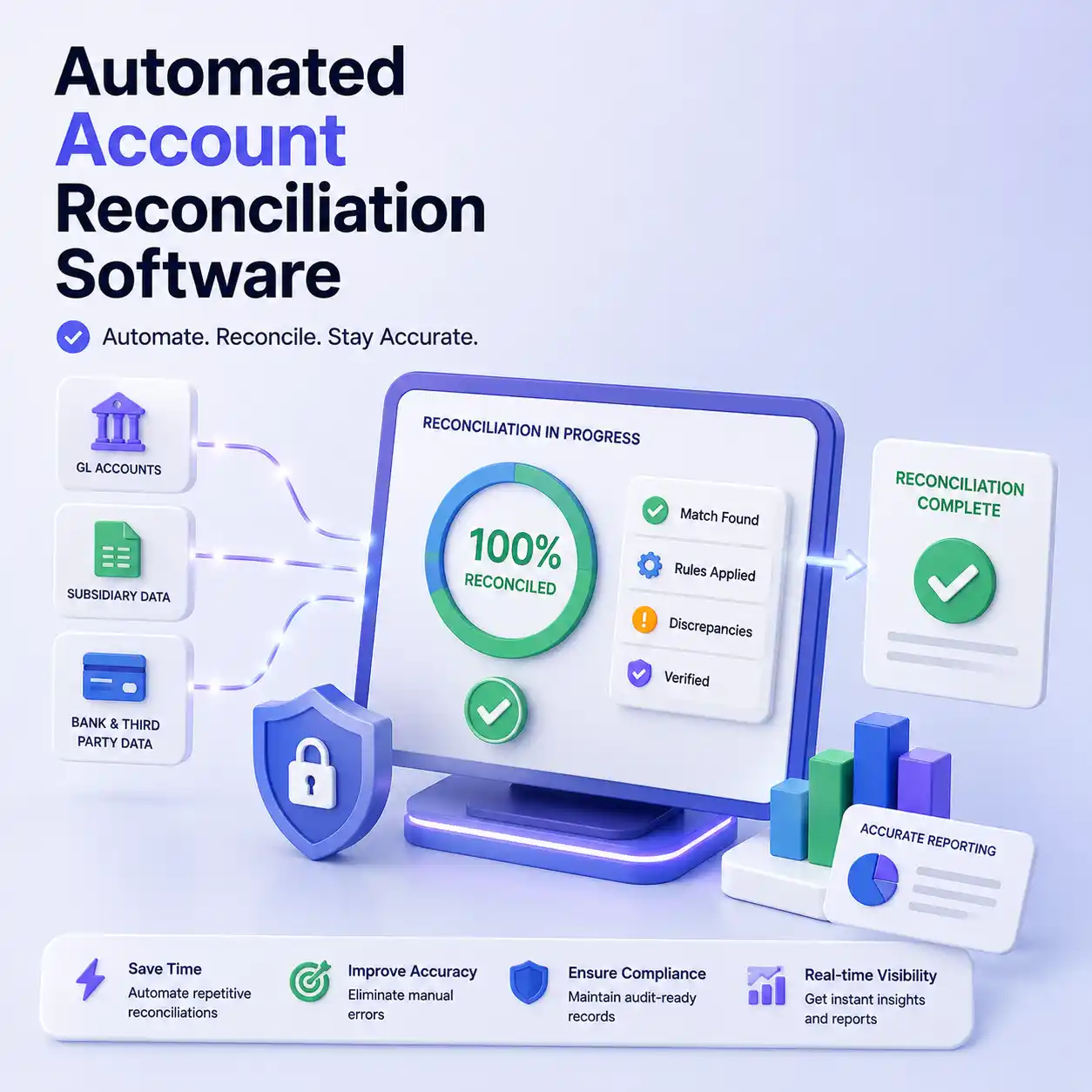
Moving from manual ticking and tying to an automated financial environment transforms the core capabilities of an enterprise. Instead of conducting batch-based lookbacks at the end of the month, automated platforms operate continuously. Software platforms use pre-configured rules-based engines and intelligent algorithms to read data directly from origin sources, analyze complex records, and provide complete data clarity.
Unmatched Scalability for Business Growth
As an organization expands, its transaction volumes do not grow linearly; they explode. A business that processes 5,000 transactions a month today could easily process 50,000 transactions tomorrow after launching a new product line or expanding into new markets. Under a manual framework, a tenfold increase in transaction volume demands a corresponding tenfold increase in accounting headcount. Automated workflows handle vast increases in transactional data seamlessly, allowing companies to scale their revenue without blowing out back-office human resources costs.
Drastic Reductions in Close Cycles
Automated data tools consistently reduce transaction matching times by 75% to 90% per financial account. Tasks that previously required an entire afternoon of manual spreadsheet filtering take just a few minutes of processing time. Because data is ingested, normalized, and balanced continuously throughout the operational month, the dreaded month-end close evolves into a routine, stress-free validation exercise.
The Strategic Power of Bank and Cash Matching Automation
Cash is the lifeblood of any operating company. Treasury leaders need to know exactly how much capital is available across every corporate repository to make safe, confident daily business decisions. Relying on periodic manual verification creates dangerous operational blind spots.
Real-Time Liquidity Visibility
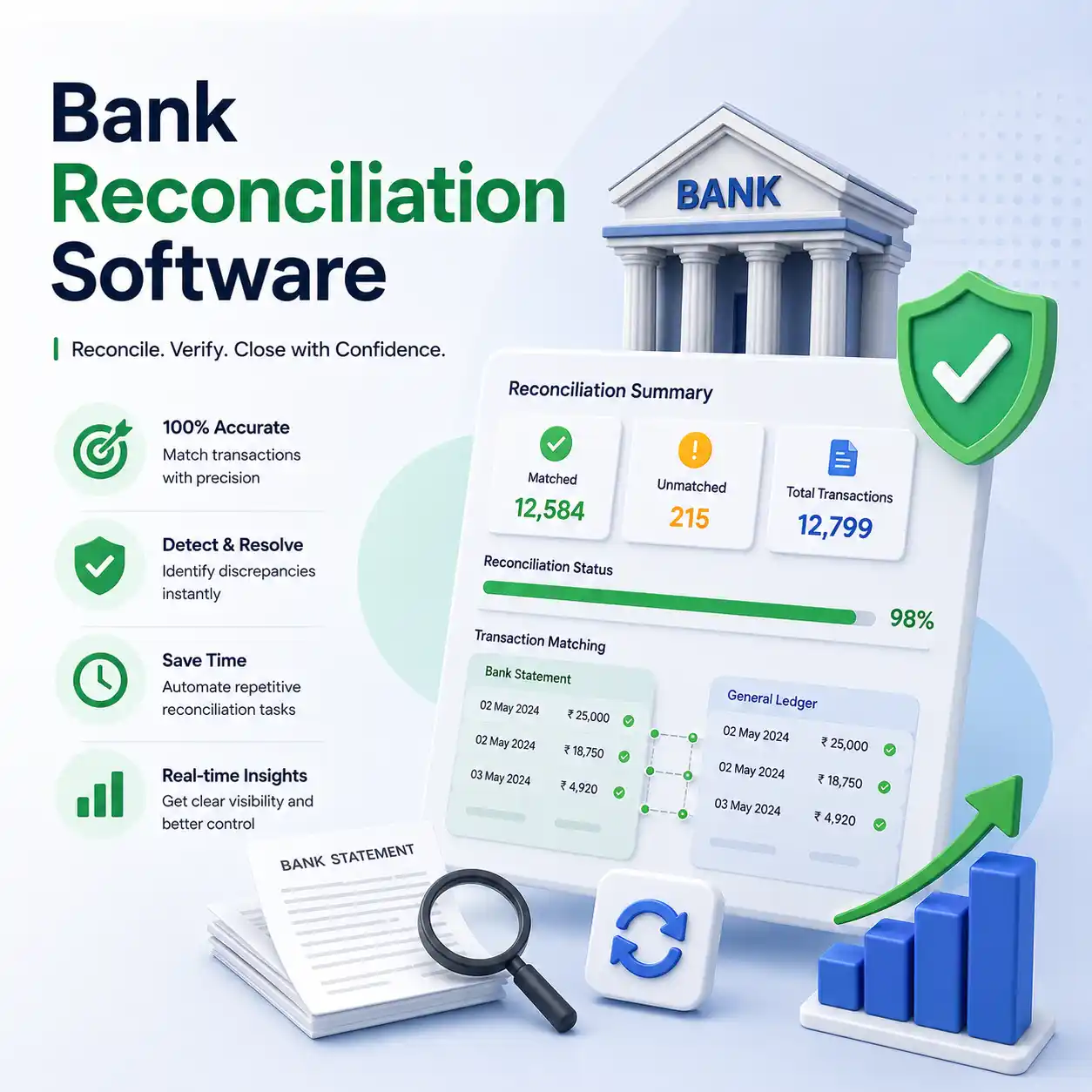
Utilizing a purpose-built bank reconciliation software allows finance teams to establish direct application programming interface connections with banking partners. The software safely ingests electronic bank feeds automatically each day. This ensures that cash balances, outgoing wires, and incoming clearings are monitored continuously. This automated framework gives treasury managers instant cash visibility, allowing organizations to optimize short-term investments and protect against costly overdrafts.
Instant Fraud and Anomaly Detection
Spotting an unauthorized withdrawal, an unexpected bank fee, or a duplicate vendor payment inside a massive monthly spreadsheet is highly challenging. Specialized cash reconciliation software solves this issue by immediately highlighting discrepancies the moment they occur. If a payment amount deviates even slightly from the ledger expectation, the transaction is instantly flagged as an exception. This rapid, proactive notification window allows organizations to identify potential corporate fraud or banking errors before they impact the bottom line.
Enhancing Corporate Governance and Balance Sheet Integrity
Reconciliation is not just an internal cleanup chore; it is a vital accounting control designed to ensure corporate compliance and satisfy strict external regulatory bodies. Incomplete documentation and untraceable data alterations can expose a business to significant regulatory penalties and negative audit findings.
Creating Impeccable Audit Trails
Modern automated accounting software tracks and logs every step of the reconciliation process, from data import to final human sign-off. When an accountant manually resolves a flagged mismatch, the platform captures their identity, timestamp, and supporting documentation. This structure creates a transparent, permanent audit trail. When external auditors arrive, the finance team no longer needs to hunt through paper files or old inbox threads; they can easily provide comprehensive digital logs directly from the centralized system.
Mitigating Post-Close Financial Adjustments
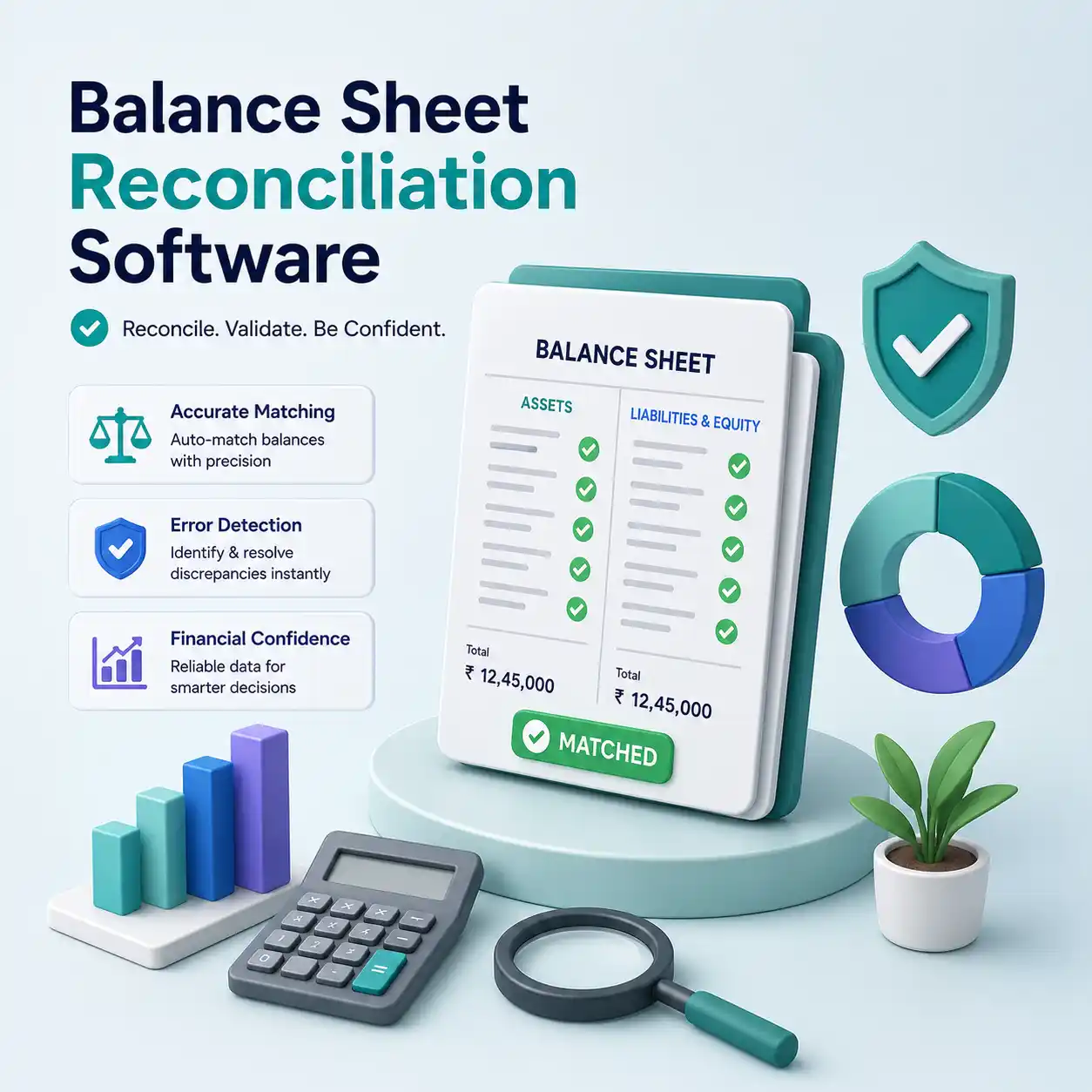
A major risk for any CFO is discovering a balance sheet error after the official period close has occurred. Post-close adjustments damage the credibility of financial reporting and raise warning signs for board members and investors. Implementing an advanced account reconciliation software helps minimize this threat. The system enforces strict matching controls and validation checks across all sub-ledgers, intercompany transactions, and balance sheet accounts before any books are finalized.
How to Select and Deploy the Right Automated Platform
Selecting the perfect technological fit for an enterprise requires looking beyond marketing buzzwords. Finance leaders must thoroughly assess their specific transaction types, operational bottlenecks, and existing enterprise resource planning software.
Key Considerations for Implementation
- System Integration: Ensure the software connects out-of-the-box with current banks, ERP systems, and internal billing tools.
- Flexible Matching Rules: Look for platforms that allow financial users to build custom, complex matching rules without needing help from software engineers.
- Intuitive Dashboarding: Choose software that provides clear visual overviews of unresolved items and overall team completion rates.
- Staff Up-skilling: Dedicate time to thoroughly train your team during the transition phase, shifting their focus from manual data typing to analytical exception management.
Also Read: Manual vs Automated Reconciliation: Which Is Better in 2026?
Frequently Asked Questions
What exactly is automated financial reconciliation software?
It is a specialized enterprise platform that connects directly to ERPs, billing systems, and bank accounts to automatically match transaction records. It replaces manual spreadsheet validation by using customizable rules engines to identify data agreements and highlight discrepancies.
Will automating the process replace human accounting staff?
No. Automation eliminates the tedious, low-value task of manual transaction typing and visual matching. It frees up your highly skilled accounting team to focus on strategic finance tasks, detailed variance analysis, fraud prevention, and business growth support.
How long does it usually take to implement a modern reconciliation tool?
Implementation timelines depend on your company's transaction volume and system complexity. While legacy enterprise software installations could take many months, modern cloud-based solutions can often be integrated and operational within a few business weeks.
Can automated tools handle complex multi-currency and cross-border transactions?
Yes. Advanced software platforms can ingest multi-currency feeds and apply real-time exchange rate integrations. This allows the system to accurately reconcile international accounts while automatically isolating minor foreign exchange differences.
How does this software help identify internal or external fraud?
The platform continuously compares transactional data points like dates, reference numbers, and precise monetary values. It instantly flags anomalies, duplicate supplier invoices, or unexpected banking withdrawals, giving your security team a chance to respond immediately.
Why are spreadsheets considered unsafe for enterprise transaction matching?
Spreadsheets are prone to manual typing errors, missing data lines, and broken formulas. They lack secure data access permissions and automated audit trails, which leaves your organization vulnerable to data loss and compliance penalties.
Ready to get started?
Contact us now
Contact us now
* By clicking on Contact Us you are agreeing to our Terms & Conditions and Privacy policy.