Let Kosh AI Match Your UPI Collections While Your Team Focuses on the Business
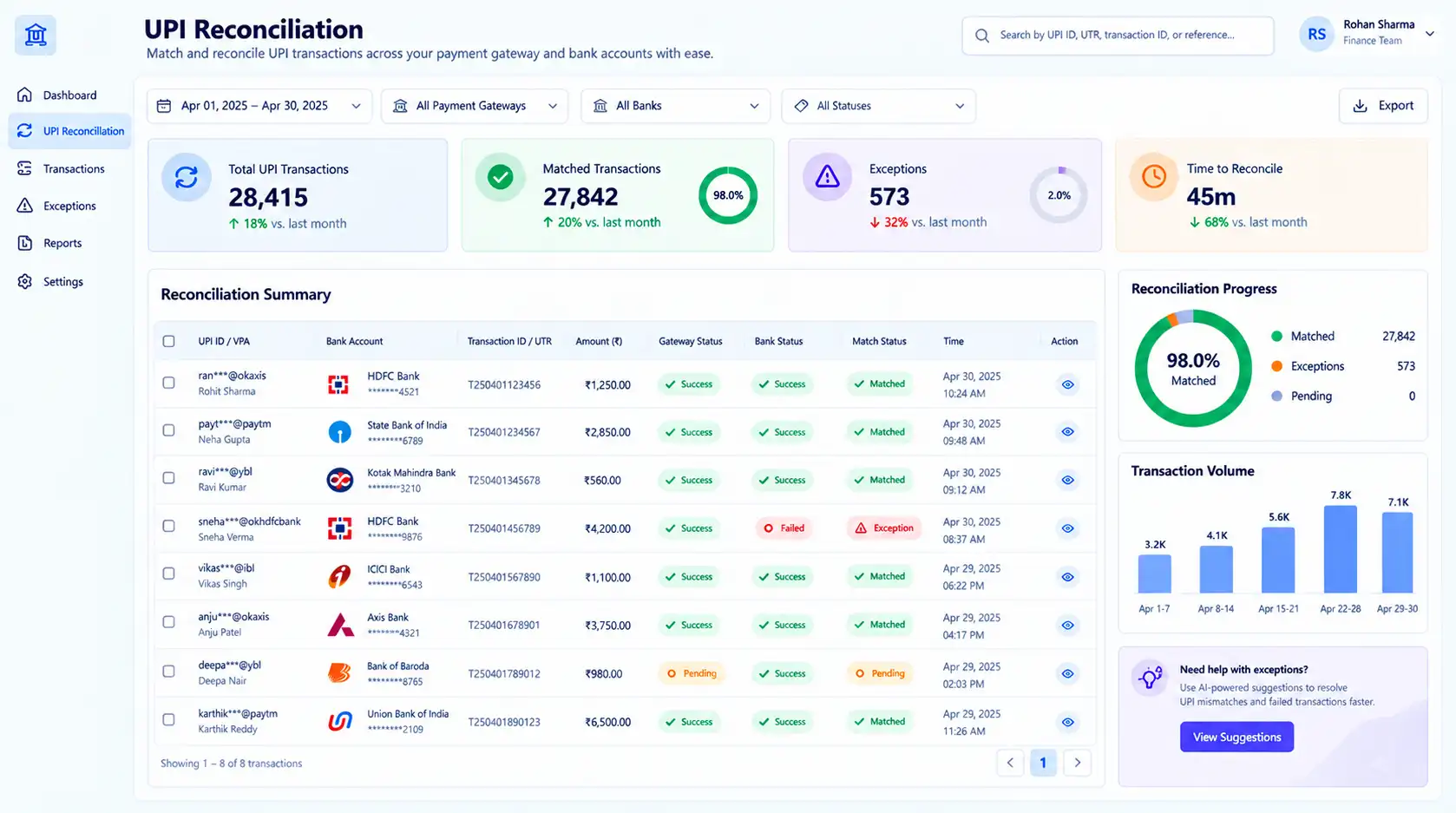
Most businesses taking UPI payments still reconcile them by downloading a settlement file from their bank or PSP and matching it line by line against their own order records in a spreadsheet. Kosh AI replaces that process. It pulls in UPI transaction data, PSP settlement files, and your order or invoice records, then lines them all up automatically so your team only looks at what actually needs attention.
You don't need to change which PSP or bank you use for UPI collections. Kosh AI sits on top of what you already have and does the matching, the checking, and the reporting for you.
Every business accepts UPI differently, whether through a payment gateway, a QR code, or a direct bank collection account. Kosh AI fits the setup you already use.
Walk-in payments collected via static or dynamic QR codes are matched to the order or invoice at the point of sale.
Online checkout payments routed through a gateway are matched to orders the moment the gateway confirms success.

Recurring UPI mandate collections are matched automatically each cycle, with failed mandates flagged right away.
Outgoing UPI refunds and vendor payouts are matched to the originating transaction, so nothing goes out twice.
High-volume UPI checkouts across online and in-store channels are matched to orders without manual review of settlement files.
Subscription and renewal payments collected via UPI autopay are matched across billing cycles automatically.
Cash-on-delivery-style UPI collections at the doorstep are matched to the right delivery and invoice the same day.
Patient payments collected via UPI at the counter or online are matched to bills, with records clean enough for audit.
Kosh AI centralizes UPI reconciliation for high-volume businesses, giving real-time visibility across every PSP and bank account.
Kosh AI gives growing businesses automated UPI reconciliation without adding staff as transaction volume rises.
Matching UPI transactions by hand means downloading settlement files, opening a spreadsheet, and checking every reference number against your order system. Kosh AI takes that work off your plate.
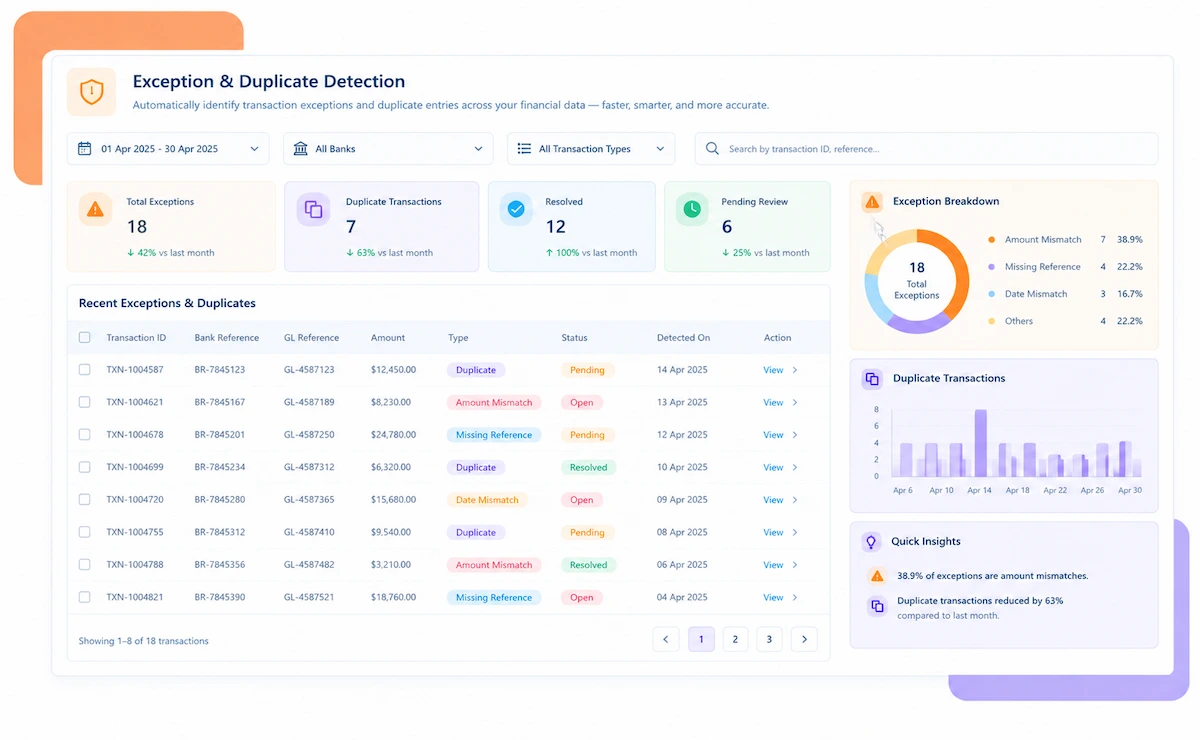
Every UPI transaction is checked against what actually lands in your bank, so a quiet gap doesn't go unnoticed.
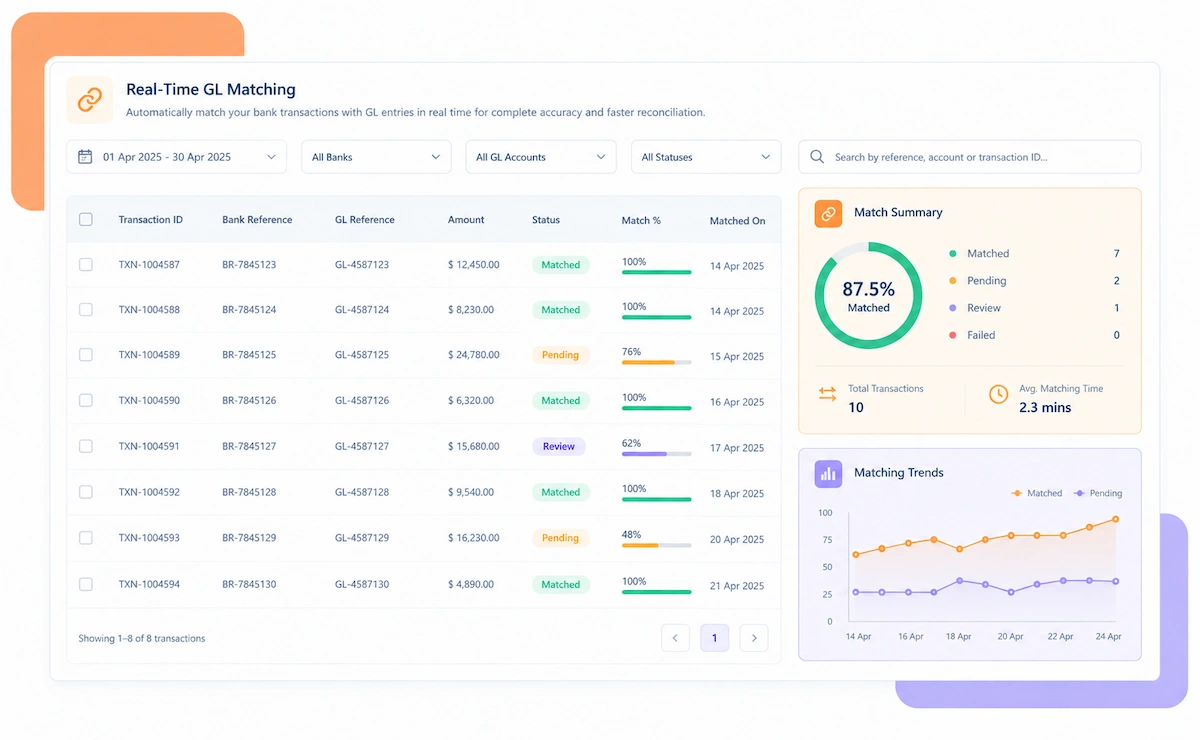
Payments are matched to orders as soon as settlement data arrives, instead of waiting for someone to check a file.
The repetitive work of matching settlement files to orders is handled for you, freeing up time for other work.
Failed, reversed, or stuck UPI payments are flagged the moment they're reported, not weeks later.
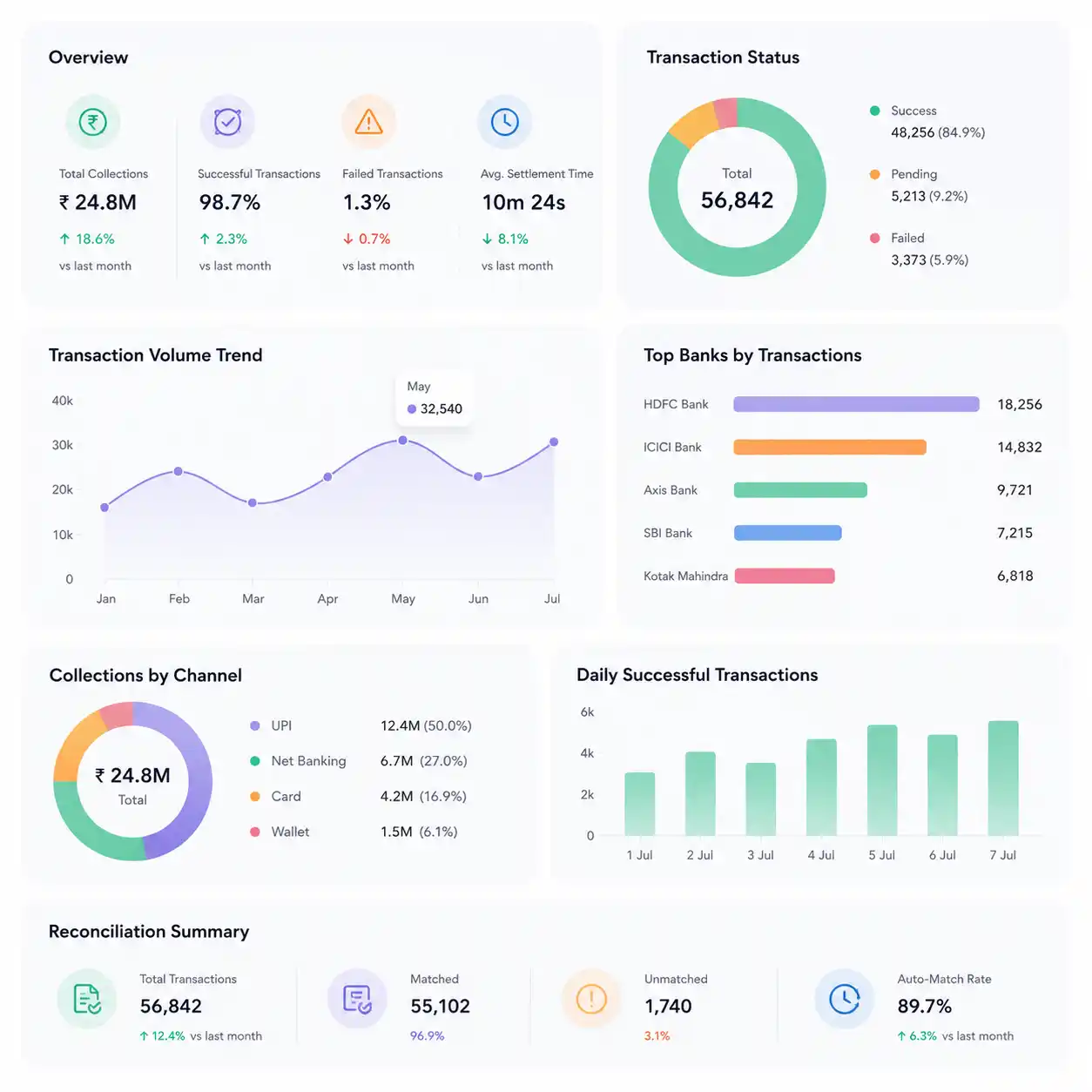
See what's settled, what's pending, and what's in question, across every PSP and bank account, in one view.
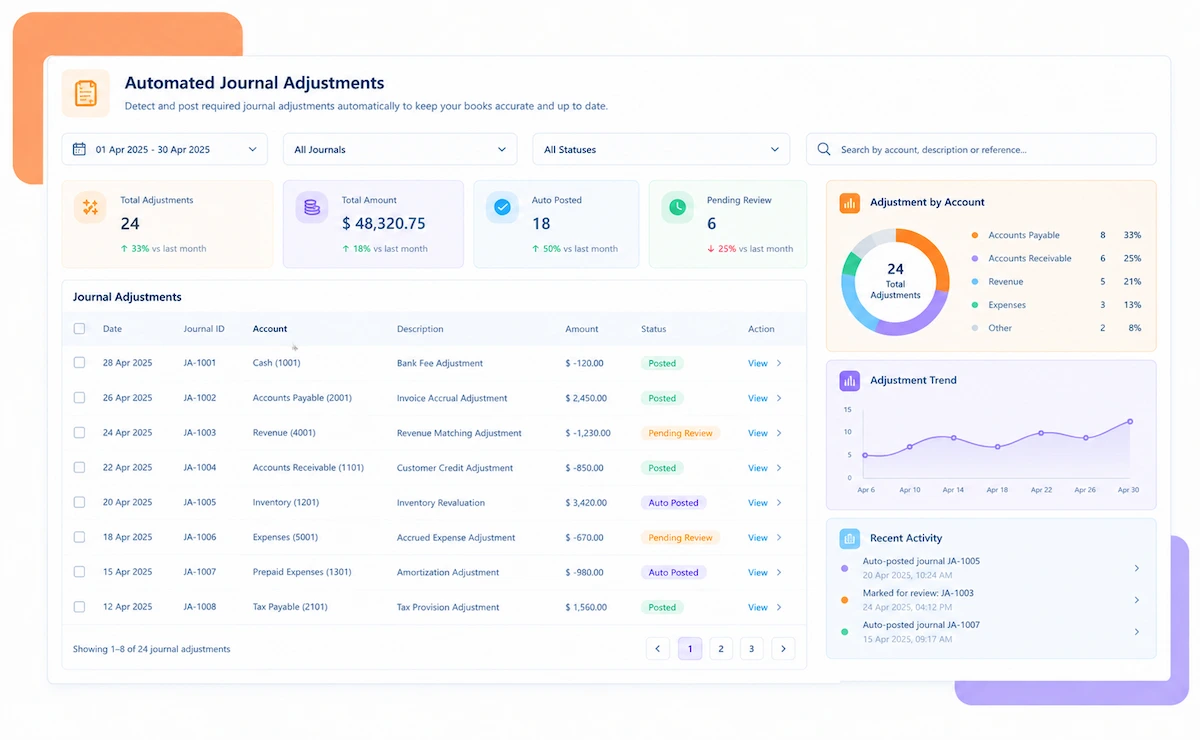
Every match and every adjustment is logged, so reconciling disputes or audits takes minutes, not days.
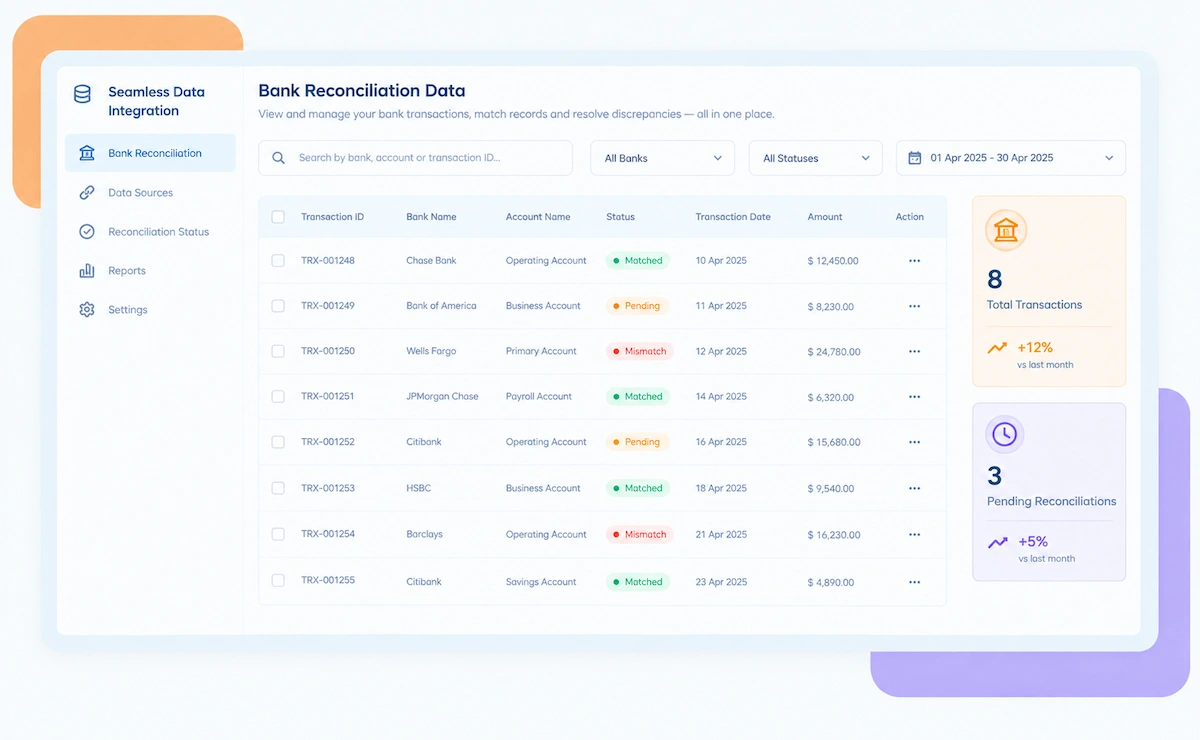
Kosh AI connects directly with all major banks and ERPs, enabling real-time data sync for faster, more accurate reconciliations—no manual uploads, no delays.


A settlement file spreadsheet only tells you what your PSP reported, not whether it actually matches your orders or your bank. Kosh AI closes that gap.
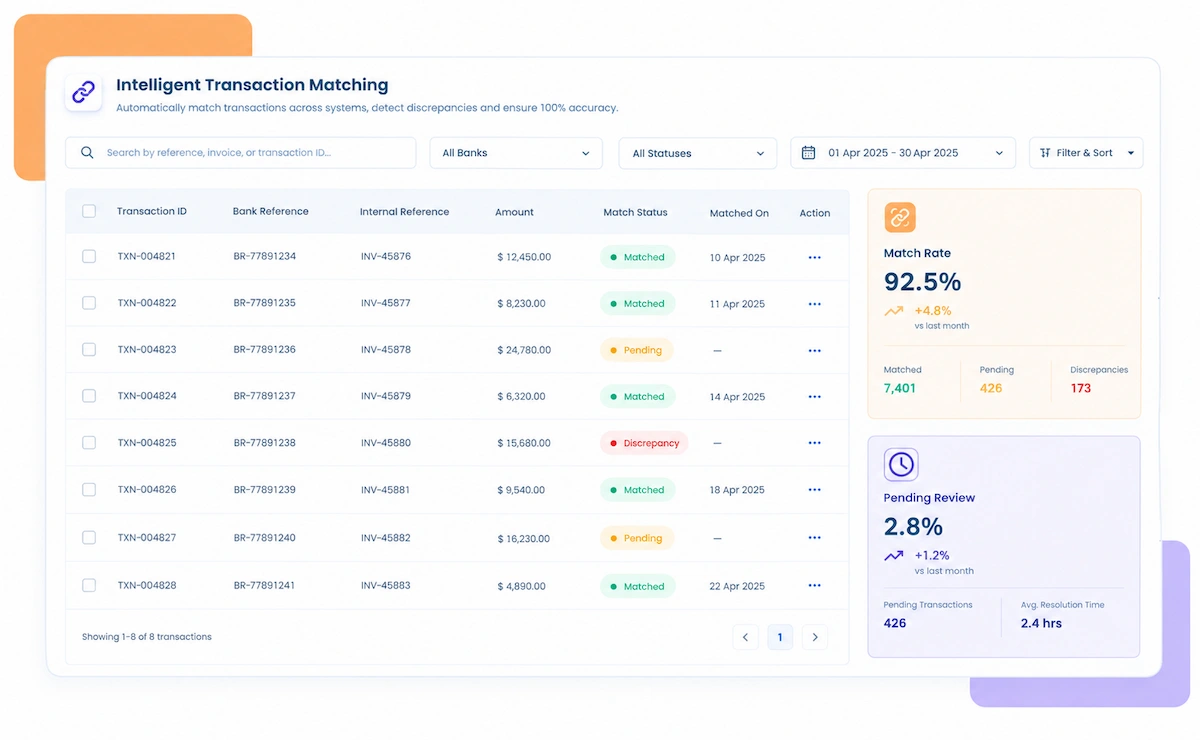
Kosh AI reads transaction reference numbers and payer details together to make the right call, not just a name match.
A failed or delayed UPI payment is flagged with a likely reason and a next step, not left sitting in a report.
Every correction your team makes helps Kosh AI match more accurately next time.
From a QR code payment to a recurring autopay mandate, Kosh AI matches it to the right order.
UPI reconciliation software checks every UPI transaction a business collects or pays out against its order record, invoice, and bank settlement, to confirm the money actually moved where it was supposed to. It pulls data from your PSP, payment aggregator, and bank settlement files directly, so you can see what's matched and what hasn't without downloading a settlement CSV yourself. Kosh AI goes a step further by matching transactions to orders automatically, catching failed or delayed settlements as they happen, and preparing adjustment entries for chargebacks and refunds without anyone having to chase them down. The result is a business that always knows exactly where its UPI collections stand.

Here's what actually changes when UPI reconciliation moves off settlement file spreadsheets and onto software built for it.
| What You're Comparing | Automated UPI Reconciliation | Doing It Manually |
|---|---|---|
| How Fast Orders Get Updated | Orders are matched the same day settlement data arrives. | Orders wait until someone downloads and checks the settlement file. |
| Room for Error | Matching is consistent, so reference number typos don't slip through. | Easy to miscount or mismatch rows when working across spreadsheets. |
| Handling More Volume | Keeps up as UPI transaction volume grows, no extra hires needed. | More transactions usually mean more people needed to check files. |
| Getting the Data In | Pulls directly from your PSP, aggregator, and bank. | Someone has to download settlement files and enter the numbers. |
| Cost Over Time | Less manual work means lower ongoing reconciliation cost. | Relies on hours of manual checking that add up every month. |
| Seeing Where Things Stand | A live view of what's settled, pending, or stuck. | You usually find out only once someone checks the file. |
Set up Kosh AI, start matching UPI transactions automatically, and get audit-ready settlement records without waiting months to see the payoff.
Schedule a Quick DemoUPI has become the default way most Indian customers pay, and that popularity is exactly what makes reconciling it manually so hard. The sheer transaction volume is one problem, but the bigger issue is how UPI payments behave: the name attached to a payment often doesn't match the billing name on an order, settlement timing can lag the transaction itself by a day or more, and failures or reversals can happen after an order has already been marked paid. A reconciliation process built around simple name-and-amount matching misses all of this.
This is why treating UPI reconciliation as just another payment method inside a broader payment gateway reconciliation process often falls short. UPI has its own data formats, its own settlement cycle through NPCI, and its own failure patterns that are different from card or net banking transactions. A business that handles UPI well in its reconciliation process catches these differences specifically, instead of lumping UPI in with every other payment type and hoping the same rules apply.
Getting this right matters for more than just tidy books. Orders that stay marked as paid after a UPI payment has actually failed or reversed create real problems downstream—goods shipped without payment, services delivered that were never actually settled. Reconciling UPI transactions properly, and quickly, is what keeps that risk from reaching your operations team in the first place.
It's built for any business where UPI has become a meaningful share of how customers pay.
Online sellers taking UPI at checkout need orders matched to settlement quickly so fulfillment isn't delayed by a reconciliation gap.
Once UPI transactions number in the thousands per day, manual settlement file checks stop being realistic.
UPI Autopay mandates need to be tracked across billing cycles, with failures caught before a subscription lapses unexpectedly.
Collecting UPI through more than one payment partner means more settlement formats to reconcile, which is where automation pays off fastest.
Doorstep UPI collections need to be tied back to the right delivery the same day to keep cash-on-delivery-style operations running smoothly.
Teams that need a reliable, auditable view of UPI collection performance benefit from records built automatically, not compiled manually each month.
A balanced look at what automated UPI reconciliation delivers, and what to plan for before adopting it.
UPI reconciliation software checks every UPI transaction a business collects or pays against its order, invoice, and bank settlement record, instead of someone matching settlement files by hand. Kosh AI does this automatically, matching transactions, flagging failures, and preparing adjustments for review.
It pulls transaction data directly from your PSP, payment aggregator, and bank settlement files, then compares each UPI transaction against your orders or invoices using the transaction reference number. Clean matches apply automatically, and anything that doesn't fit—a failed payment, a delayed settlement, a duplicate—gets flagged for review.
As UPI has become the dominant way Indian customers pay, the volume of transactions businesses need to match against orders and bank settlements has grown just as fast. UPI reconciliation software keeps that matching accurate regardless of volume, which matters for order fulfillment, catching failed payments early, and knowing your real cash position.
Yes, since many UPI payments come from a family member's or a different registered UPI ID than the billing name on an order, Kosh AI matches primarily by transaction reference number and amount, not by name alone, so these common mismatches still get reconciled correctly.
Payment gateway reconciliation covers every payment method a gateway processes—cards, net banking, wallets, and UPI together. UPI reconciliation focuses specifically on matching UPI transaction references, PSP reports, and NPCI settlement data, which has its own format and timing. Kosh AI handles both under one system.
Yes, Kosh AI tracks the full lifecycle of a UPI transaction, including failures, reversals, and refunds, and flags cases where an order was marked paid but the underlying UPI payment later failed or bounced back, so the mismatch gets caught instead of sitting unnoticed.
Yes, most UPI reconciliation software is built to connect with the PSPs, payment aggregators, and banks commonly used for UPI collections in India. Kosh AI integrates with leading payment gateways and bank accounts, along with ERPs like SAP, Oracle, NetSuite, and Tally, so settlement data flows in without manual downloads.
It's flagged right away with the likely cause, such as an MDR deduction, a partial settlement, or a delayed T+1 credit. From there, it's routed for review or adjustment, so it doesn't sit unresolved until someone happens to notice it during the books closing.
Most businesses can get basic UPI reconciliation running within a few weeks, since it connects to the PSP, bank, and ERP systems already in place. Kosh AI follows a similar timeline, with more complex, multi-entity or multi-PSP setups typically taking a bit longer to fully configure.
Start with your UPI transaction volume, how many PSPs or banks you collect through, and how much of your current reconciliation is still manual. From there, compare options on matching accuracy, settlement verification, and how well they handle failed and refunded transactions. Kosh AI is one option built around exactly those criteria, but the same checklist applies whichever software you end up comparing.
Book a demo and watch Kosh AI reconcile your own UPI payment and settlement data.
Book a Demo