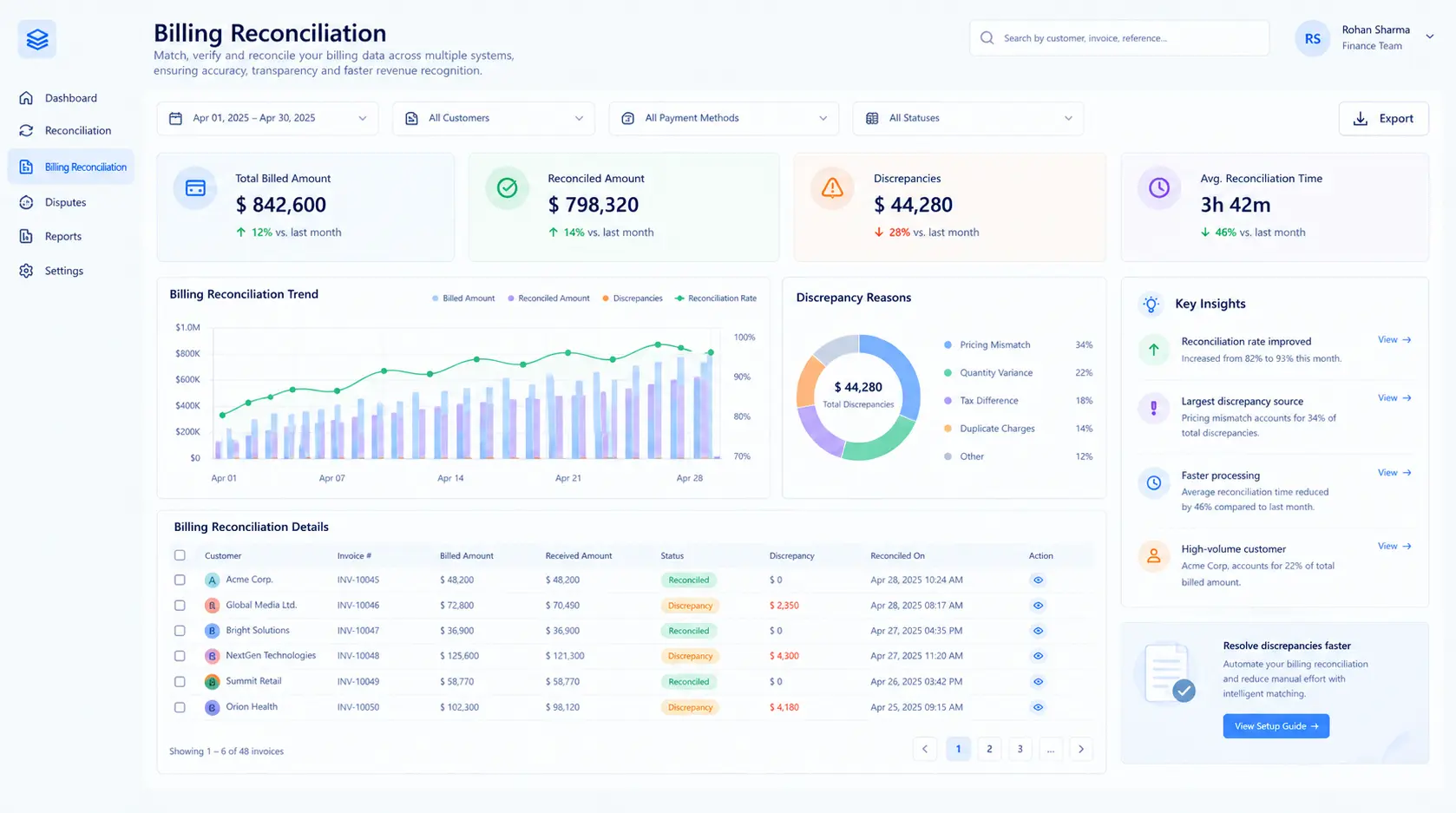
Let Kosh AI Match Every Billed Amount to What Was Collected and What Hit Your Ledger, Automatically
A recurring billing system can charge thousands of accounts a month, each one potentially mid-upgrade, mid-downgrade, or sitting on a failed renewal. Most finance teams still check that against the ledger by exporting both and matching line by line. Kosh AI pulls your billing system and your ledger into one place and handles that matching for you. Running this alongside 3PL invoice reconciliation software is common for finance teams that also handle matching 3PL invoices against shipment and rate data.
You don't need to change your billing system or how your pricing plans work. Kosh AI reads what's already there and handles the matching, the exception review, and the reporting. The same real-time matching also powers invoice reconciliation software, for teams handling matching invoices to purchase orders and receipts.
No two billing models work the same way. Kosh AI fits the pricing structure you run, the industry you work in, and how your revenue team is organized.
Recurring charges, renewals, and dunning outcomes are reconciled against collected payments automatically.
Metered charges are matched against usage data and the amounts actually collected each cycle.
One-time charges alongside recurring plans are reconciled together without a separate process for each.
Base fees and overage charges are reconciled separately so revenue teams see exactly where each dollar came from.
Subscription billing with frequent plan changes is reconciled against collections without a side spreadsheet.
Usage-based billing at scale is matched against metering data and payments automatically.
High-volume recurring billing with frequent cancellations is reconciled without manual review.
Recurring membership billing is reconciled with records clean enough to support compliance reviews.
Kosh AI centralizes billing-to-revenue reconciliation for large subscription businesses, giving finance real-time visibility across every plan type.
Kosh AI gives smaller revenue teams automated billing reconciliation without the headcount a manual process usually needs.
Reconciling billing against collections and the ledger by hand ties up your revenue team every cycle, and mid-cycle plan changes make it easy to miss a real discrepancy. Kosh AI takes that load off your team and gives you revenue numbers you can stand behind. Teams that need tying the order-to-cash cycle together end to end usually turn to order-to-cash reconciliation software alongside this.
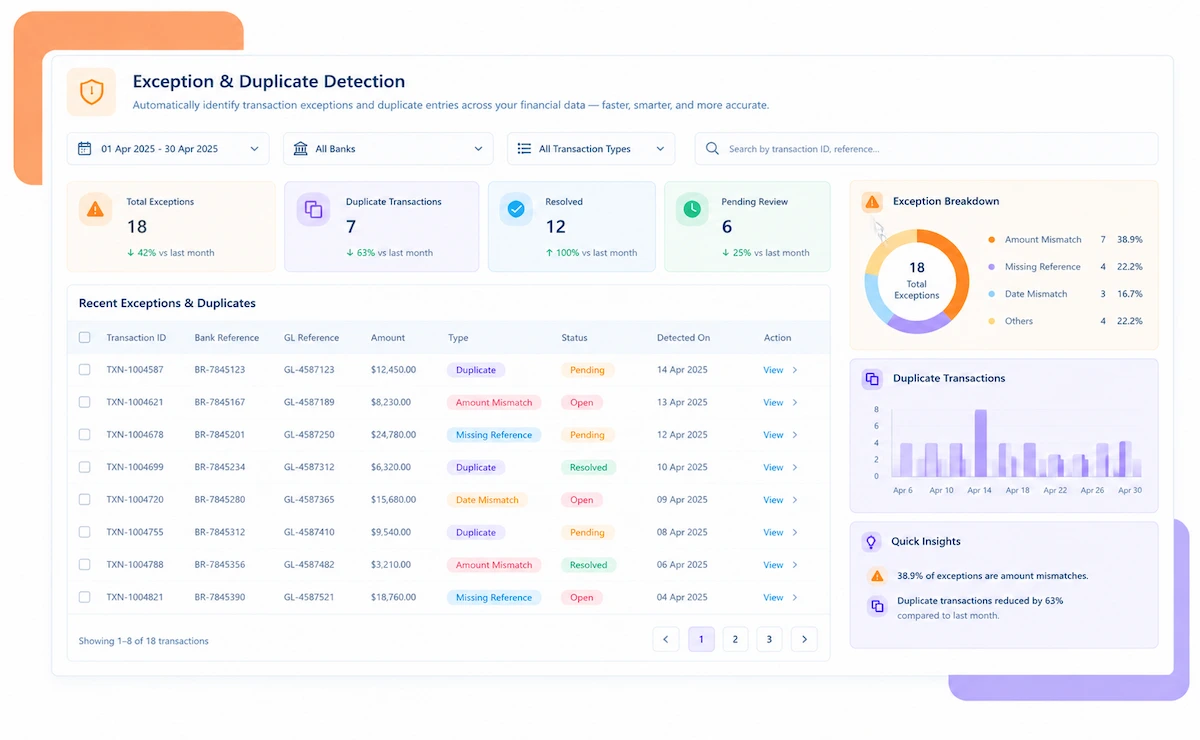
Mismatches between billed, collected, and recognized amounts are flagged before they reach the income statement.
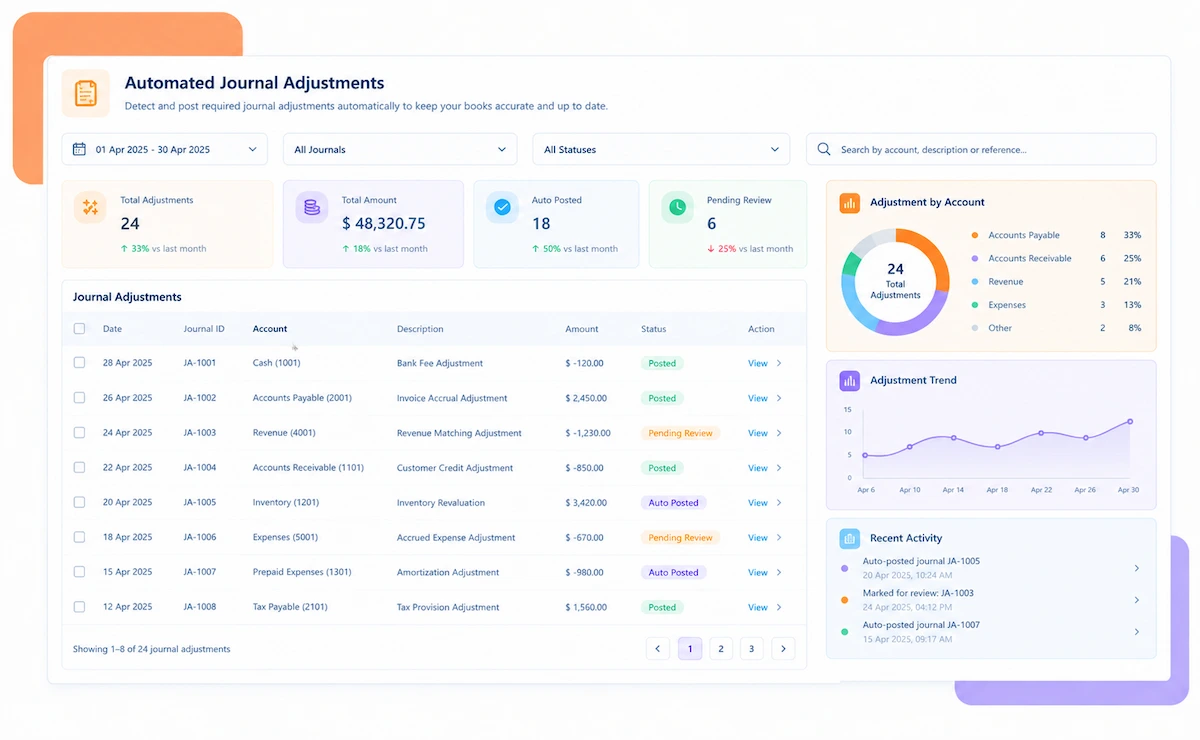
Prorations, upgrades, and downgrades are reconciled correctly instead of requiring a manual journal entry.
Instead of checking billing line items against the ledger, your team spends its time on pricing and retention.
A documented billing-to-revenue trail makes it easier to defend reported revenue in front of auditors or the board.
Failed and retried renewals are tracked to the same billing event, so collected revenue doesn't get undercounted.
Every reconciled amount keeps its supporting detail attached, so audits and revenue reviews move faster.
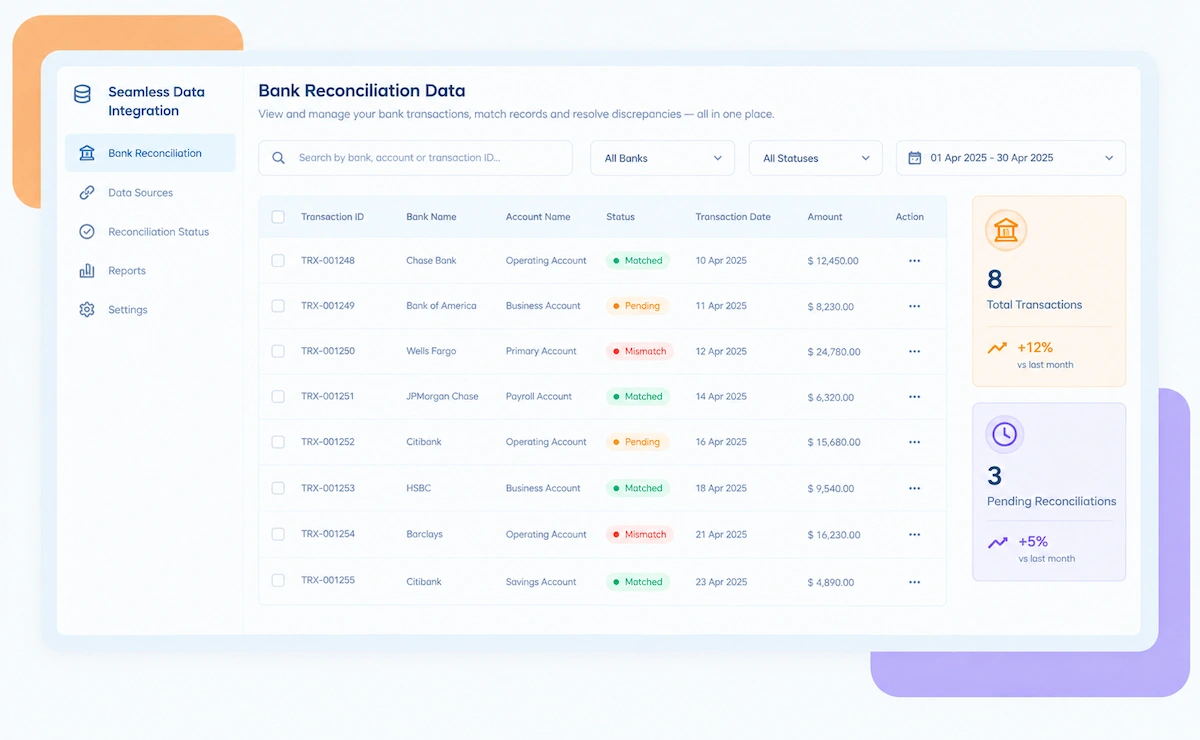
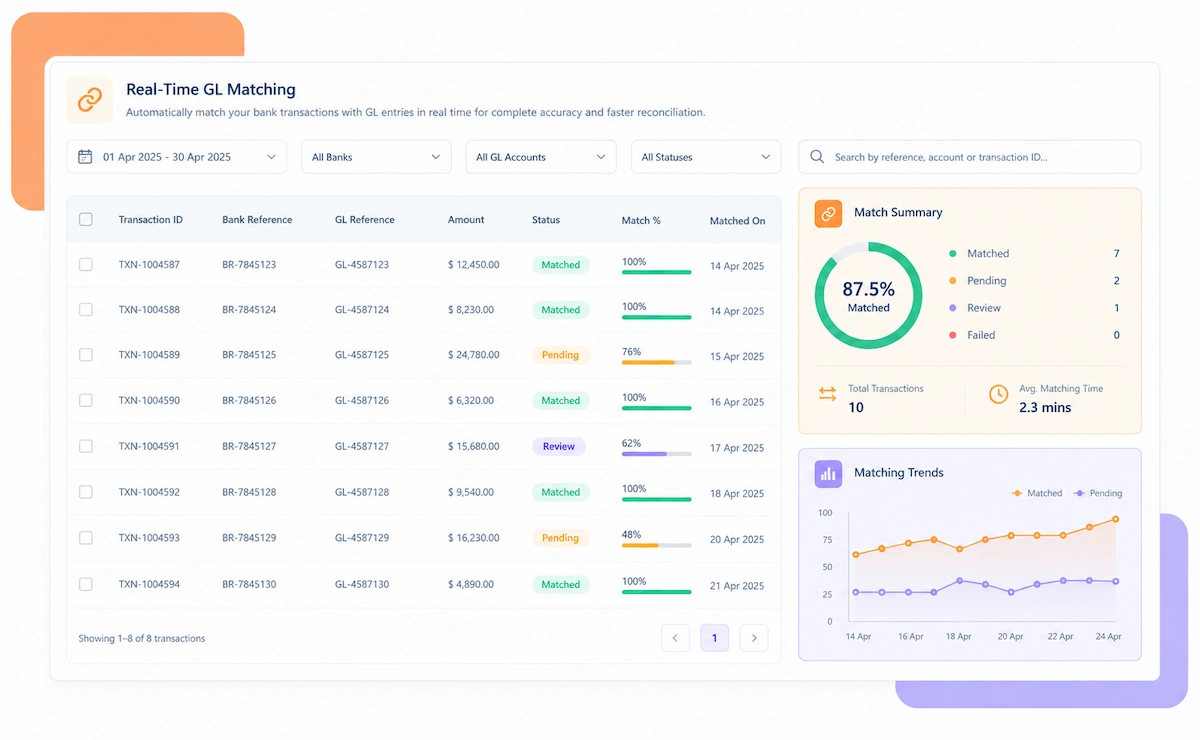
Kosh AI connects directly with all major banks and ERPs, enabling real-time data sync for faster, more accurate reconciliations—no manual uploads, no delays.


Billing isn't a single event like a one-off payment. A single customer can touch prorations, upgrades, failed renewals, and dunning retries within a single month, and that's exactly where billing reconciliation needs logic a generic matching tool doesn't have.
A mid-cycle upgrade generates a charge that doesn't match any standard plan price, which breaks simple amount-matching rules.
A single billing event can generate several payment attempts before it succeeds or is written off, and all of them need to map to one charge.
Revenue is often recognized on a different schedule than when it's billed or collected, which needs its own reconciliation layer.
A customer who's upgraded, downgraded, and paused over a year leaves a trail that's hard to reconstruct without automation.
A shared spreadsheet breaks down the moment a pricing plan changes or a renewal fails and retries twice before succeeding. Kosh AI is built for how subscription billing actually behaves.
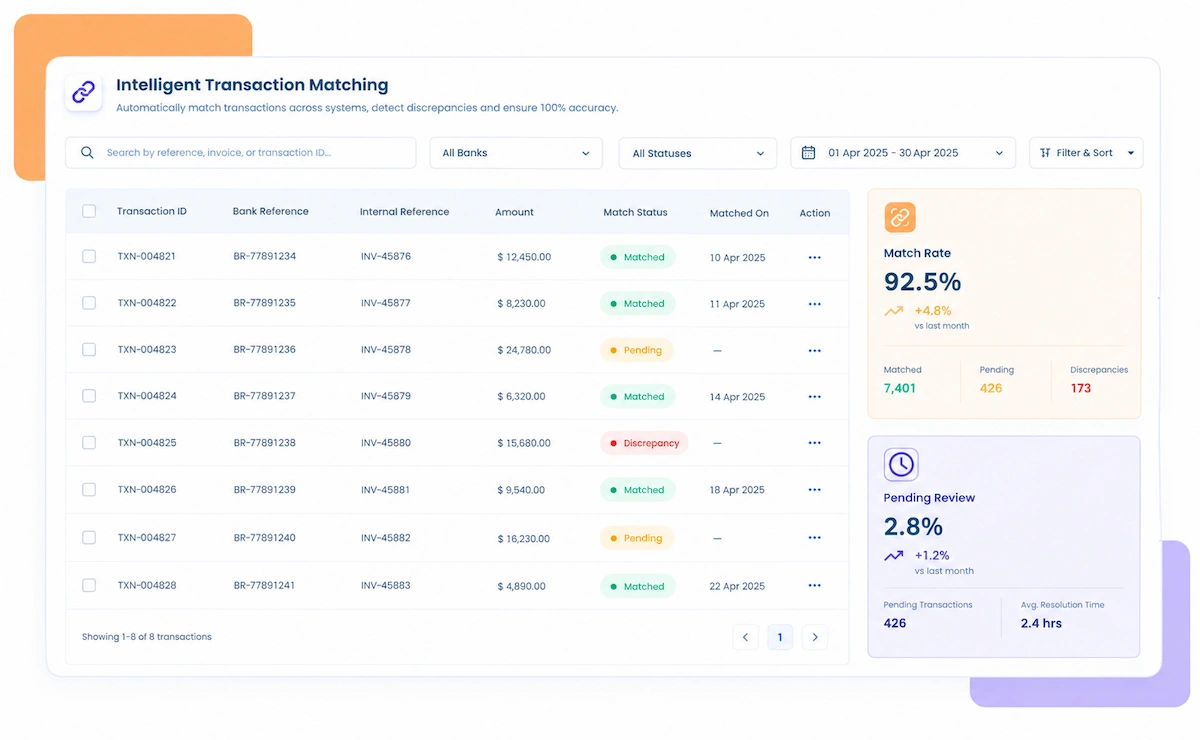
Kosh AI applies logic suited to prorations, retries, and usage-based charges, not one rigid rule forced onto every billing event.
A revenue mismatch comes with the billing event and collection attempt behind it, not just a dollar difference.
Every resolved mismatch feeds back into how Kosh AI reconciles that billing plan going forward.
From flat monthly plans to usage-based pricing, Kosh AI handles the reconciliation logic each one needs.
Billing reconciliation software compares every amount your billing system charges against what was actually collected and what shows up as recognized revenue in your ledger. It pulls data from your billing platform, your payment processor, and your ERP, so your revenue team sees the full picture without exporting three reports and matching them manually. Kosh AI takes it further by understanding prorations, tracking failed and retried renewals to the correct billing event, and checking recognition timing against collections. The result is a billing process your finance team can trust even as pricing plans and subscriber behavior keep changing.
For matching AP ledgers against vendor invoices and payments, see how accounts payable reconciliation software handles it end to end.

A spreadsheet can handle a flat monthly subscription fee reasonably well. The trouble starts the moment plans change mid-cycle, a renewal fails and retries twice before succeeding, or usage-based charges need to be calculated before they can even be matched. At that point, someone is manually working out what a prorated amount should have been, and a single wrong assumption throws off every number downstream of it.
This gets expensive in ways that aren't always obvious. A formula built for one pricing plan doesn't transfer cleanly to the next one a product team launches, so revenue teams end up rebuilding reconciliation logic every time pricing changes. And because that logic usually lives in someone's personal spreadsheet rather than a documented system, it's hard for anyone else to trust the numbers or explain exactly why a billing discrepancy was written off. Billing reconciliation software exists to turn that fragile, person-dependent process into a reusable system the whole revenue team can rely on.

Here's what actually changes when billing reconciliation moves off spreadsheets and onto software built for subscription revenue.
| What You're Comparing | Automated Billing Reconciliation | Doing It Manually |
|---|---|---|
| Handling Prorations | Mid-cycle charges and credits are matched against the plan change that caused them. | Someone calculates the expected prorated amount by hand before it can even be checked. |
| Tracking Failed Renewals | Every retry attempt is linked to the same billing event automatically. | Retried payments are easy to double-count or lose track of across billing cycles. |
| Matching Revenue Recognition | Recognized revenue is checked against collections and billing timing automatically. | Recognition timing mismatches are rarely caught until an audit flags them. |
| Handling Plan Changes | Upgrades, downgrades, and cancellations are reconciled without manual journal entries. | Each plan change usually needs a manual adjustment somewhere in the process. |
| Cost Over Time | Less manual effort keeps the ongoing cost of billing reconciliation down. | Relies on hours of revenue team time every single billing cycle. |
| Scaling With Subscriber Growth | A growing subscriber base doesn't require more reconciliation headcount. | More subscribers usually means more hours spent matching billing to collections. |
Set up Kosh AI, start reconciling billed, collected, and recognized revenue automatically, and close your books without chasing proration errors by hand.

Schedule a Quick DemoNo tool is a perfect fit for every billing model. Here's an honest look at what billing reconciliation software gets right, and what's worth planning around before you adopt it. Looking for something similar for reconciling supplier statements against your payables? supplier statement reconciliation software is built for exactly that.
Billing reconciliation software compares every amount your billing system charges against what was actually collected and what's recognized as revenue in your ledger. Kosh AI does this automatically, including for prorated and usage-based charges.
It pulls data from your billing system, payment processor, and ERP, then matches billed amounts to collections and recognized revenue. Prorations, failed renewals, and plan changes are handled with logic built for how billing systems actually behave.
Subscription billing involves constant mid-cycle changes that a simple matching process misses. Billing reconciliation software catches proration errors, failed renewal leakage, and recognition timing mismatches before they reach revenue reporting.
In practice, any billing model benefits, but subscription, usage-based, and hybrid billing are the most common. Kosh AI supports all of these billing models out of the box.
Invoice reconciliation matches individual invoices to payments received, typically for one-off or project-based billing. Billing reconciliation also handles recurring, prorated, and usage-based charges across a subscription's full lifecycle. Kosh AI supports both under one system.
Yes, most billing reconciliation software is built to pull data from common billing platforms and ERPs. Kosh AI connects to leading billing and subscription management systems alongside SAP, Oracle, NetSuite, and QuickBooks, so data flows in without manual exports.
No, but it takes most of the manual matching work off their plate. Kosh AI handles routine billing-to-revenue matching automatically, so your team can focus on investigating genuine exceptions and improving pricing strategy.
It gets flagged immediately, usually with the proration, retry attempt, or plan change that likely caused it already attached. From there, it's routed for review with the supporting billing detail pulled up, instead of going unexplained until revenue reporting.
Most businesses can have core billing reconciliation running automatically within a few weeks, since the software connects to a billing platform and ERP you already use. Kosh AI follows a similar timeline, with complex, multi-plan rollouts typically taking 2 to 4 months to fully configure.
Start with how complex your pricing model is and how much proration or usage-based billing you handle today. From there, compare options on billing platform connectivity, how well they handle mid-cycle changes, and the audit trail they keep. Kosh AI is built around exactly that checklist, but it applies to any software you're comparing.
This pairs naturally with accounts receivable reconciliation software, which is purpose-built for matching AR ledgers against customer payments.Book a demo and watch Kosh AI reconcile your own billing and collections data.
Book a Demo