Let Kosh AI Reconcile Forecasted Cash Flow Against Actuals While Your Team Plans With Confidence
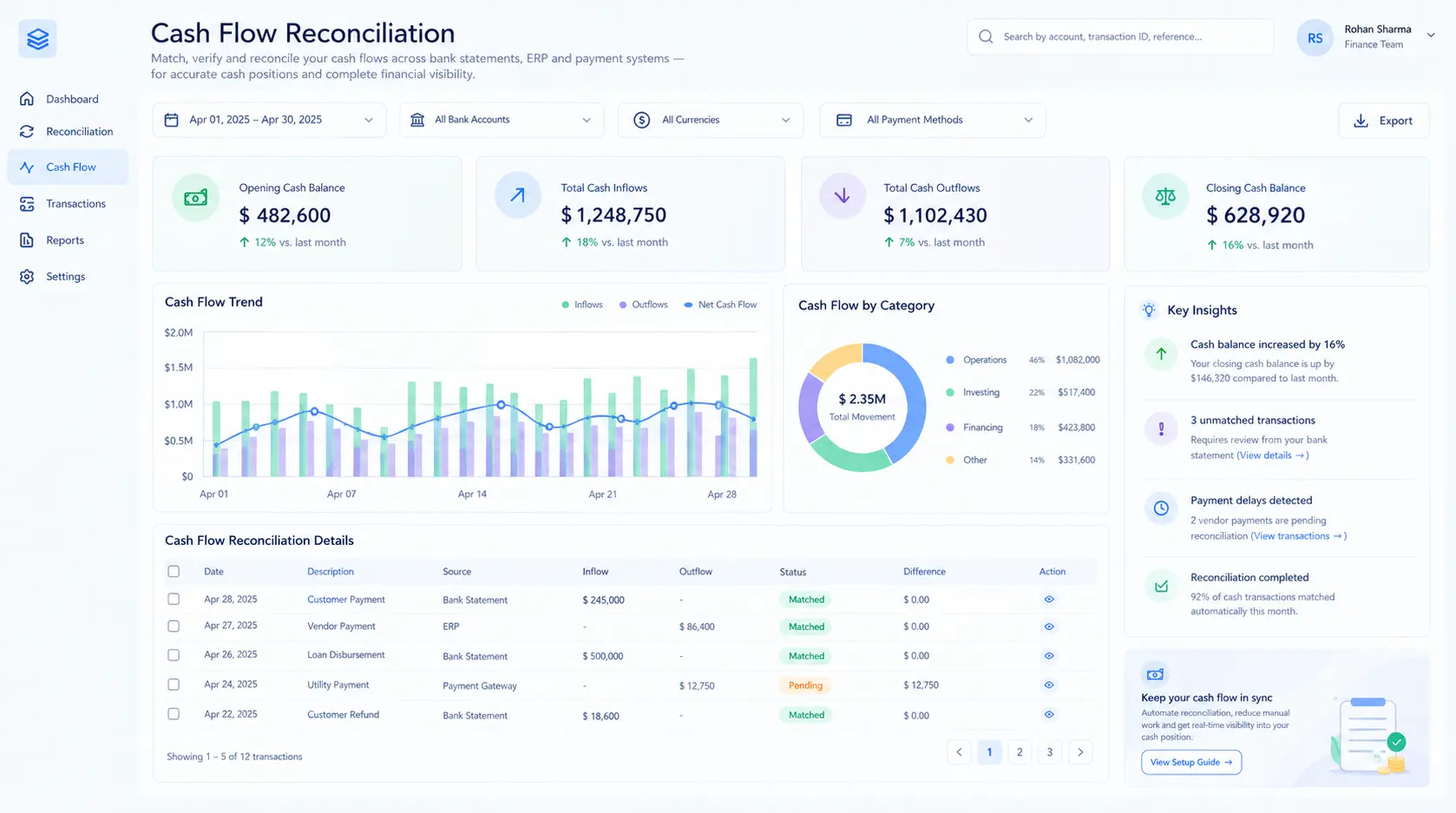
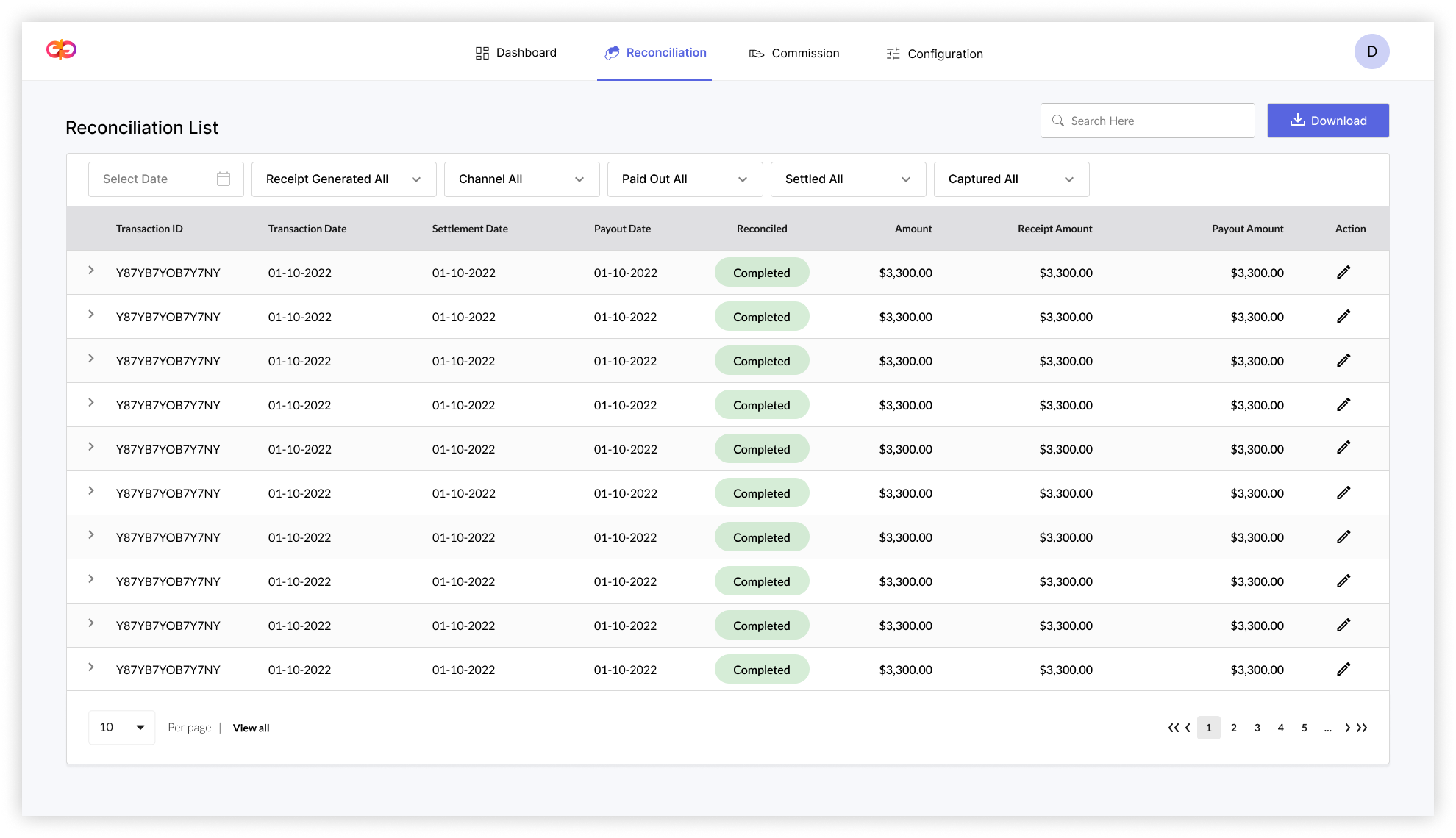
Most finance teams still compare forecasted cash flow to actuals the same way they did years ago: export both from different systems, open a spreadsheet, and work out the variance line by line. Kosh AI replaces that routine. It pulls your forecast and your actual cash activity into one place, lines them up by category, and tells you exactly where the plan and reality are diverging.
You don't need to change how you build a forecast or switch planning tools. Kosh AI reads what's already there and handles the matching, the variance analysis, and the reporting.
No two finance teams forecast the same way. Kosh AI fits the cash flow categories you track, the industry you work in, and how your planning team is structured.
Collections and operating disbursements are matched to forecast lines, with timing variances separated from real misses.
Planned versus actual capex is tracked project by project, catching overruns before they affect the full-year forecast.
Debt draws, repayments, and financing costs are reconciled against the financing plan automatically.
Forecasts rolled up across entities are reconciled at both the entity and consolidated level.
Working capital-heavy forecasts are reconciled against actual supplier and customer cash flow every period.
Recurring revenue cash flow forecasts are reconciled against actual collections without a side spreadsheet.
Seasonal cash flow forecasts are checked against actuals weekly, catching drift before peak season.
Reimbursement-driven cash flow forecasts are reconciled with records clean enough to support board reporting.
Kosh AI centralizes forecast-to-actual reconciliation for large finance teams, giving real-time visibility across every entity and category.
Kosh AI gives mid-market FP&A teams automated variance analysis without the headcount a manual process usually needs.

Reconciling forecasted and actual cash flow by hand ties up your FP&A team every period, and the pressure to explain variances quickly makes it easy to guess instead of investigate. Kosh AI takes that load off your team and gives you forecasts you can stand behind.
Categories that used to take hours to investigate are mapped and flagged automatically, freeing up time every forecast cycle.
Every category is checked the same way, every period, so a chronic miss stops going unnoticed until year-end.
Instead of matching line items in spreadsheets, your team spends its time improving the forecast itself.
A documented accuracy history makes it easier to defend a forecast in front of the board or investors.
See which categories are tracking to plan and which are drifting, without waiting for a manual variance report.
Every explained variance keeps its supporting detail attached, so year-end reviews move faster.
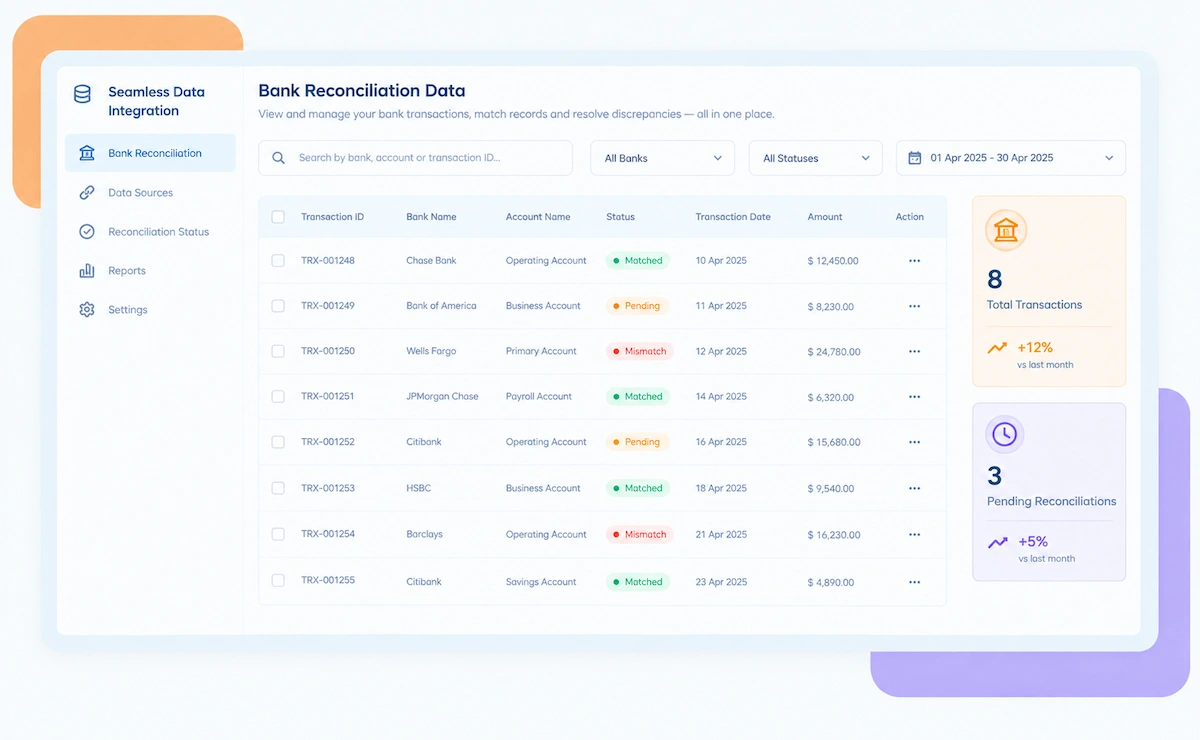
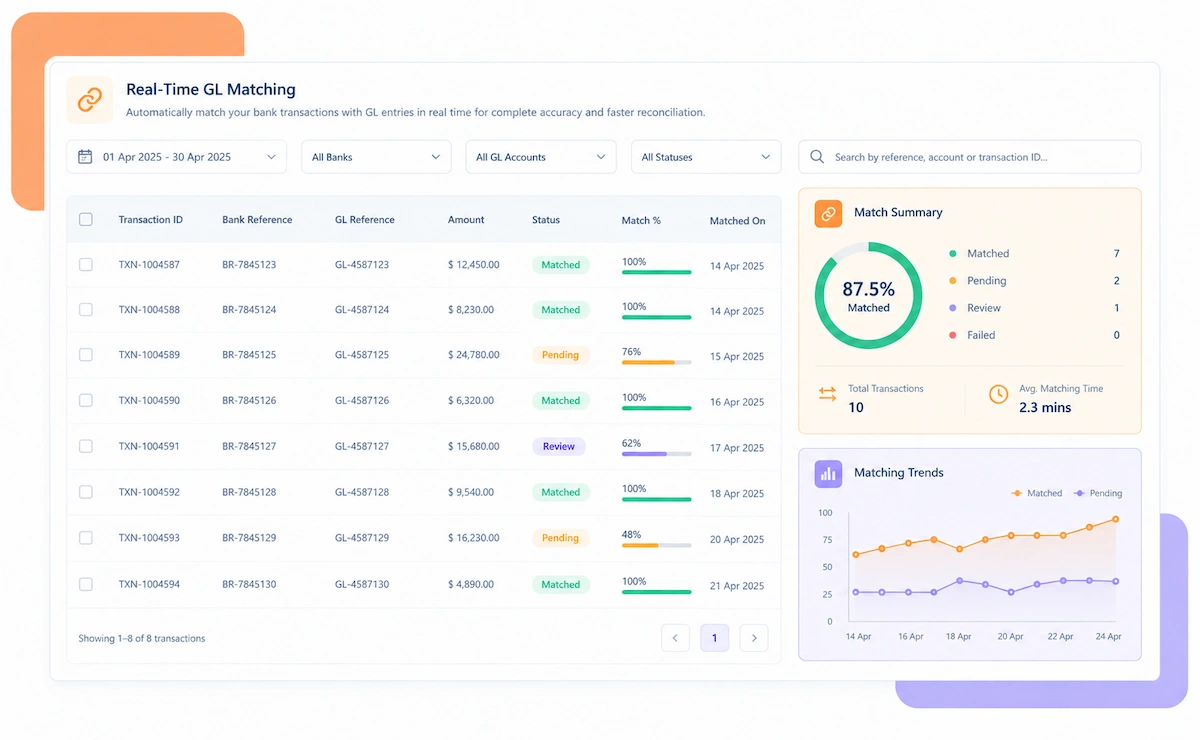
Kosh AI connects directly with all major banks and ERPs, enabling real-time data sync for faster, more accurate reconciliations—no manual uploads, no delays.


A shared spreadsheet breaks down the moment a forecast model changes structure, or two people update variance notes at once. Kosh AI is built for how an FP&A team actually tracks plan against actual.
Kosh AI applies logic suited to each cash flow category, not one rigid rule forced onto every line.
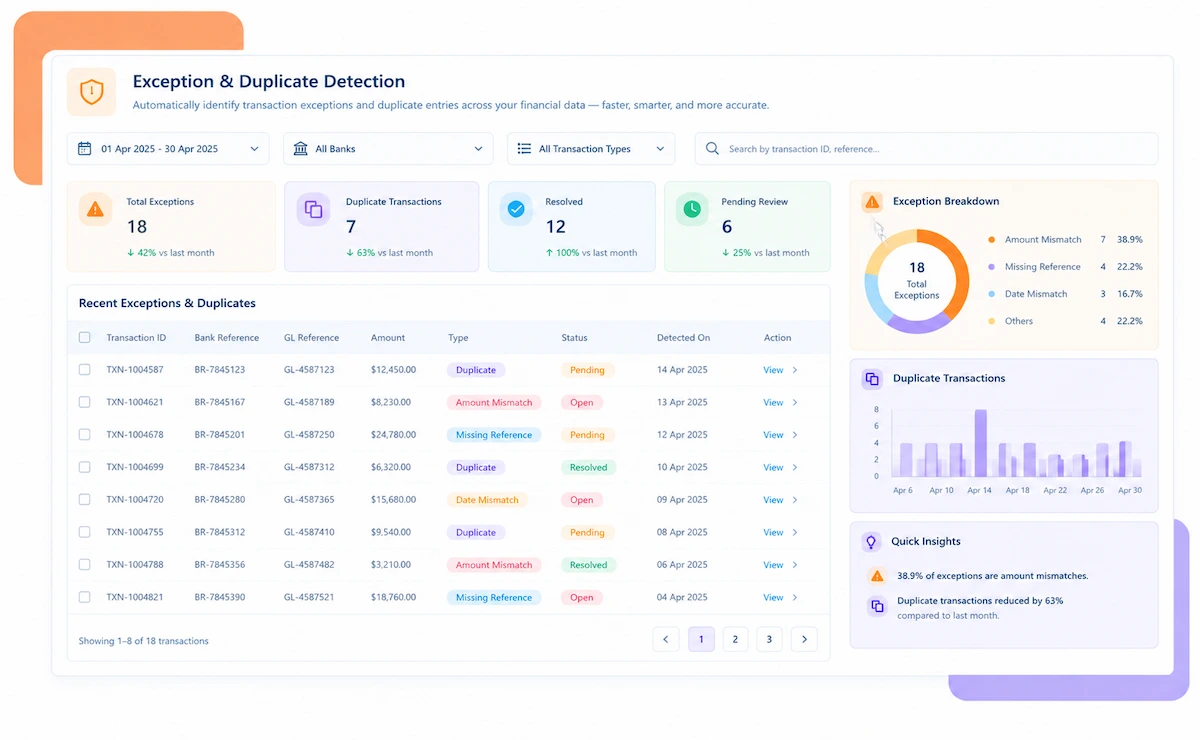
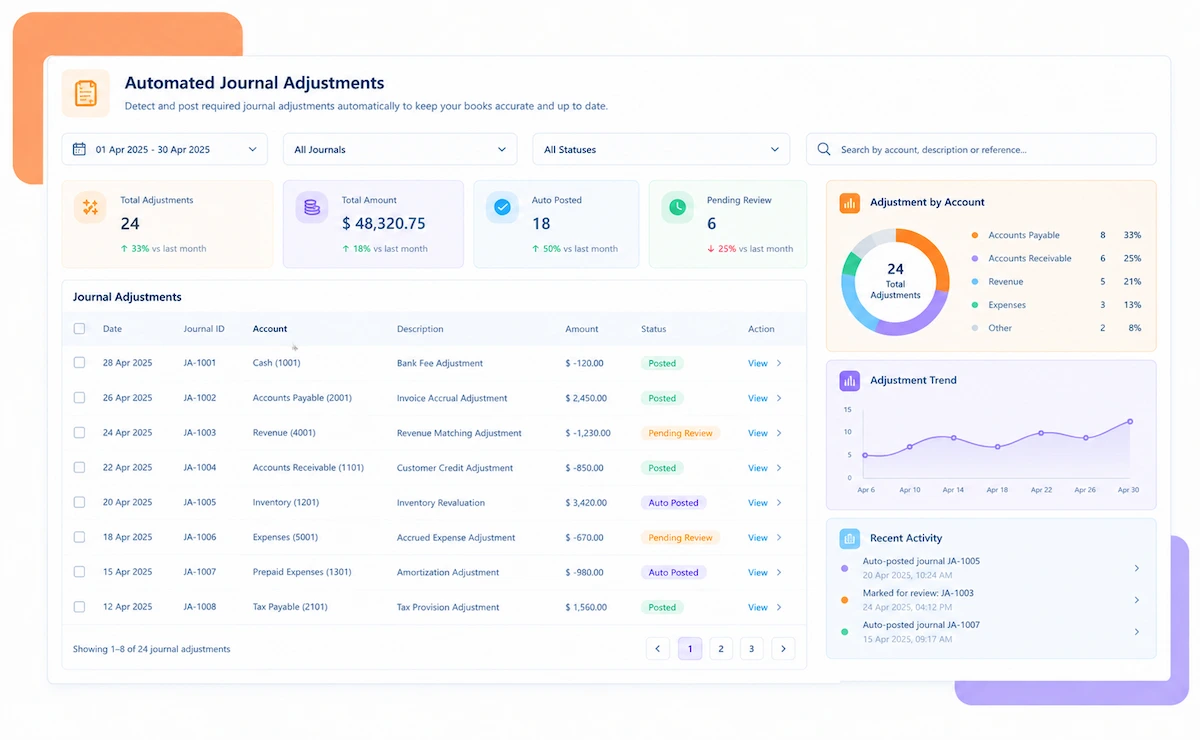
A variance comes with a likely driver and the transactions behind it, not just a number to investigate.
Every explained variance feeds back into how Kosh AI tracks that category's accuracy going forward.
From a simple monthly forecast to a rolling 13-week cash flow model, Kosh AI handles the reconciliation logic each one needs.
Cash flow reconciliation software compares the cash flow a business forecasted against what actually happened, category by category, to show exactly where a plan held up and where it didn't. It pulls forecast data from your planning tool and actual transactions from your banks and ERP, so your FP&A team sees the variance without exporting both and matching them in a spreadsheet. Kosh AI takes it further by categorizing variances by likely cause, tracking forecast accuracy over time, and keeping the supporting transactions attached to every explanation. The result is a forecasting process your finance team can trust and improve every single cycle.

Here's what actually changes when cash flow reconciliation moves off spreadsheets and onto software built for FP&A teams.
| What You're Comparing | Automated Cash Flow Reconciliation | Doing It Manually |
|---|---|---|
| How Fast Variances Are Explained | Variances are categorized and flagged within hours of actuals posting. | Someone has to pull two reports and match them line by line, often over days. |
| Room for Error | Category mapping applies the same way every period. | Misclassified transactions and formula errors are easy to miss under deadline pressure. |
| Handling a Growing Forecast Model | New categories and entities are added without extra headcount. | A more detailed forecast usually means more people needed to track it. |
| Getting the Data In | Pulls forecast and actuals directly from your planning tool, banks, and ERP. | Someone has to export, format, and paste both into a spreadsheet. |
| Cost Over Time | Less manual effort keeps the ongoing cost of variance analysis down. | Relies on hours of FP&A time every single forecast cycle. |

| Improving Forecast Accuracy | A documented accuracy history makes it clear which assumptions need adjusting. | Accuracy is rarely tracked systematically, so the same assumptions often repeat. |
Set up Kosh AI, start reconciling forecast to actuals automatically, and walk into your next planning cycle with a forecast you already trust.
Schedule a Quick DemoA cash flow forecast is only useful if someone checks it against what actually happened, and that check is exactly the step most finance teams struggle to keep up with. An FP&A analyst who could once compare a handful of forecast lines to actuals by hand ends up buried the moment the model grows more detailed, and that's exactly where forecasting problems go unnoticed—a category that's been off by the same amount for three quarters running, an assumption nobody revisited since it was first built, a variance explained with a guess instead of a transaction. Cash flow reconciliation software exists to close that gap before a board presentation reveals a forecast nobody can defend.
The case for using it isn't just about saving time, though that's part of it. It's about building a forecast that actually improves: every category gets checked against actuals the same way, every period, so patterns in what's working and what isn't become visible instead of buried in a one-off variance report. That visibility is what lets FP&A walk into a planning cycle with real evidence about which assumptions to keep and which to change, rather than starting from scratch each time. It also means your team spends its hours improving the model instead of manually matching two reports together.
There's a complexity angle too. A simple, single-entity forecast can often be checked by hand without much trouble. The moment that forecast spans multiple entities, currencies, or a rolling 13-week cadence instead of a monthly one, manual reconciliation starts missing real misses simply because there's too much detail for a person to track reliably every period. Cash flow reconciliation software is built to keep pace with that complexity instead of forcing a simpler, less useful forecast just to stay checkable by hand.
It's not only for large enterprises with complex forecast models. Here's who tends to benefit most.
Anyone responsible for forecast accuracy benefits from a documented, automatic view of plan versus actual every period.
Once the forecast model gets detailed enough that manual variance checks take real time, it's worth automating.
Reconciling forecasts across many entities and currencies is exactly the repetitive work automation handles best.
A documented forecast accuracy history makes variance explanations easier to defend under scrutiny.
A weekly or rolling forecast cadence makes manual reconciliation especially hard to sustain without automation.
Finance leaders under pressure to give reliable guidance need a forecast that's checked against reality every period.
No tool is a perfect fit for every business. Here's an honest look at what cash flow reconciliation software gets right, and what's worth planning around before you adopt it.
Cash flow reconciliation software compares a business's forecasted cash flow against what actually happened, category by category, instead of a person matching two reports by hand each period. Kosh AI does this automatically, categorizing variances and flagging anything that needs explanation.
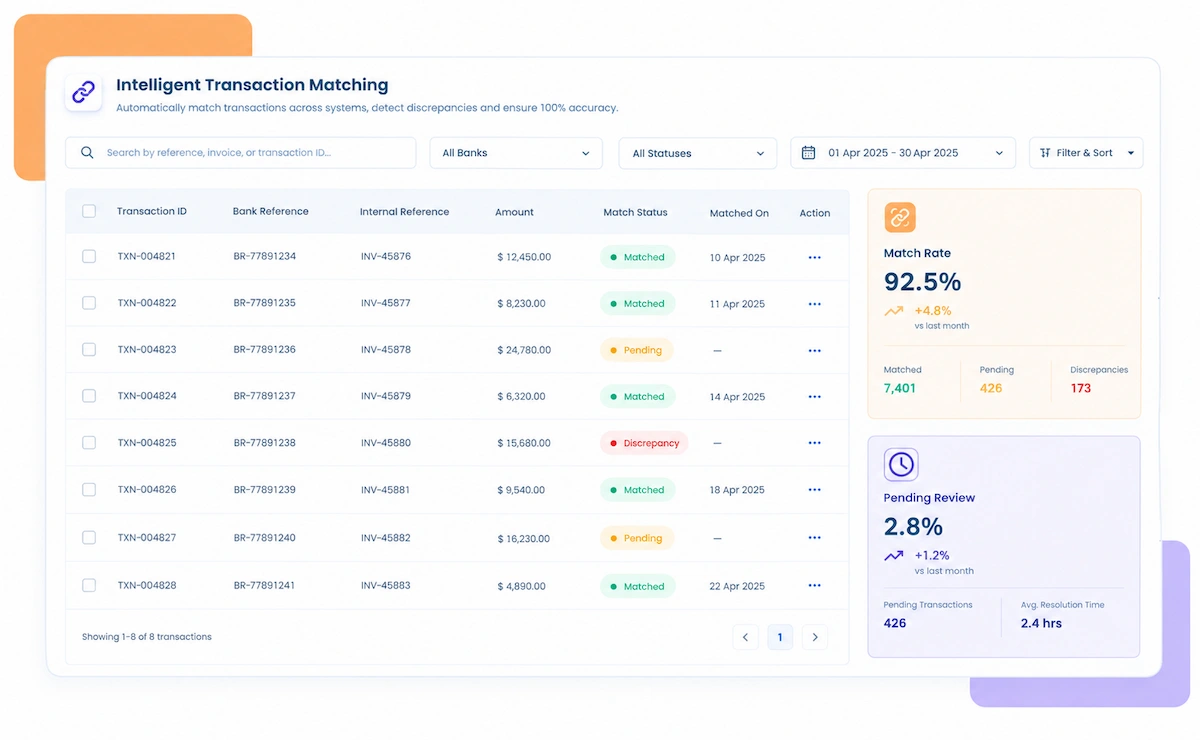
It pulls your cash flow forecast from your planning tool and actual transactions from your banks and ERP, then maps actuals to the forecast categories you already use. Variances within normal range clear automatically, and anything larger gets flagged with a likely driver for review.
A forecast that's never checked against actuals doesn't improve, and the same flawed assumptions tend to repeat every cycle. Cash flow reconciliation software keeps that check consistent, which matters for building forecasts leadership can trust and catching forecasting drift before it compounds.
In practice, any forecasted category benefits, but operating cash flow, capital expenditure, and financing activity are usually the highest priority since they carry the most forecasting risk. Kosh AI supports all of these categories out of the box.
Cash reconciliation software matches bank transactions to the ledger to confirm today's cash position. Cash flow reconciliation software compares forecasted cash flow to actuals over time to confirm the plan is accurate. Kosh AI supports both under one system.
Yes, most cash flow reconciliation software is built to pull forecast data from common planning tools and actuals from ERPs. Kosh AI connects to major FP&A platforms alongside SAP, Oracle, NetSuite, Sage, QuickBooks, and Xero, so data flows in without manual exports.
No, but it takes most of the manual variance-matching work off their plate. Kosh AI handles routine categorization automatically, so your FP&A team can focus on interpreting variances and improving the forecast model.
It gets flagged immediately, usually with a likely driver attached based on the type of variance and what's caused similar misses before. From there, it's routed for review with the supporting transactions already pulled up, so it doesn't go unexplained until the next planning cycle.
Most businesses can have core forecast categories reconciling automatically within a few weeks, since the software connects to a planning tool and ERP you already use. Kosh AI follows a similar timeline, with more complex, multi-entity rollouts typically taking 2 to 4 months to fully configure.
Start with how detailed your forecast model is and how much of your variance analysis is still manual today. From there, compare options on category mapping flexibility, planning tool and ERP connectivity, and how well accuracy tracking fits your reporting needs. Kosh AI is built around exactly that checklist, but it applies to any software you're comparing.


Book a demo and watch Kosh AI reconcile your own forecasted and actual cash flow data.
Book a Demo