Kosh AI Catches Every Payment Your Checkout Marked Successful That Never Actually Shows Up in the Bank
A customer sees a success screen the instant a digital payment goes through. The money, though, still has to move through a card network, a UPI handle, or a wallet provider before it lands in your bank account, and that journey doesn't always finish the way it started. Most finance teams never check closely enough to notice when it doesn't. Kosh AI checks every single payment.
You don't need to change which payment rails you accept. Kosh AI reads what's already flowing through your systems and checks each one for the gap between a success screen and an actual settlement.
No two businesses accept the same mix of digital payment rails. Kosh AI fits the rails you use, the industry you operate in, and how your finance team is structured.
High-volume, low-value UPI transactions are checked for successful-but-unsettled gaps without slowing down the close.
Card and net banking settlements are matched to payments and expected fees are calculated for every transaction.
Wallet-based checkout payments are reconciled against the actual wallet provider settlement.
Partial payments and refunds are tracked against the original transaction so the net position stays accurate.
High payment volumes across multiple rails are checked for unsettled gaps without a manual review each week.
Fast settlement cycles across multiple payment rails are matched as quickly as they post.
Loan repayments and collections across digital rails are matched down to the transaction, not just the batch total.
Recurring digital payments are reconciled alongside one-off purchases in the same view.
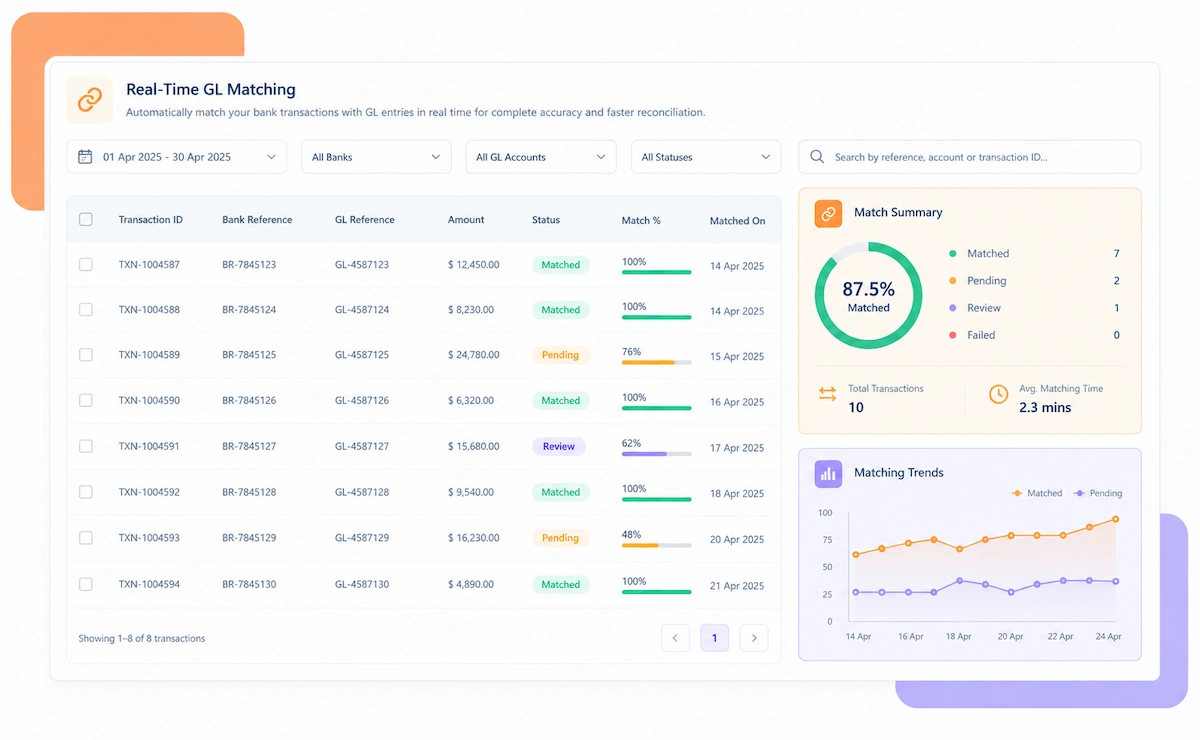
Kosh AI centralizes payment-to-bank reconciliation for high-volume businesses, giving finance real-time visibility across every rail.
Kosh AI gives smaller finance teams automated settlement matching without adding headcount as payment volume grows.
Most finance teams assume a success screen at checkout means the money is on its way. Kosh AI checks that assumption on every single payment, across every rail.
A payment marked successful but never settled overstates revenue until someone notices, which Kosh AI does the same cycle.
Unsettled rates tracked by rail give your product and finance teams real data on which payment methods are actually reliable.
Expected fees are calculated per rail, so your team can see which payment methods are genuinely costing more.
Cards, UPI, wallets, and net banking are all reconciled in one system instead of one spreadsheet per rail.
A documented payment-to-settlement trail makes it easier to resolve rail-level discrepancies without back-and-forth.
Payment volume can grow without a proportional increase in manual settlement matching work.
Kosh AI connects directly with all major banks and ERPs, enabling real-time data sync for faster, more accurate reconciliations—no manual uploads, no delays.


A checkout success screen tells the customer their payment worked. It doesn't tell finance whether the money is actually on its way. Kosh AI checks the part that matters to your books.
Kosh AI applies logic suited to each payment rail's settlement pattern, not one rigid rule forced onto every rail.
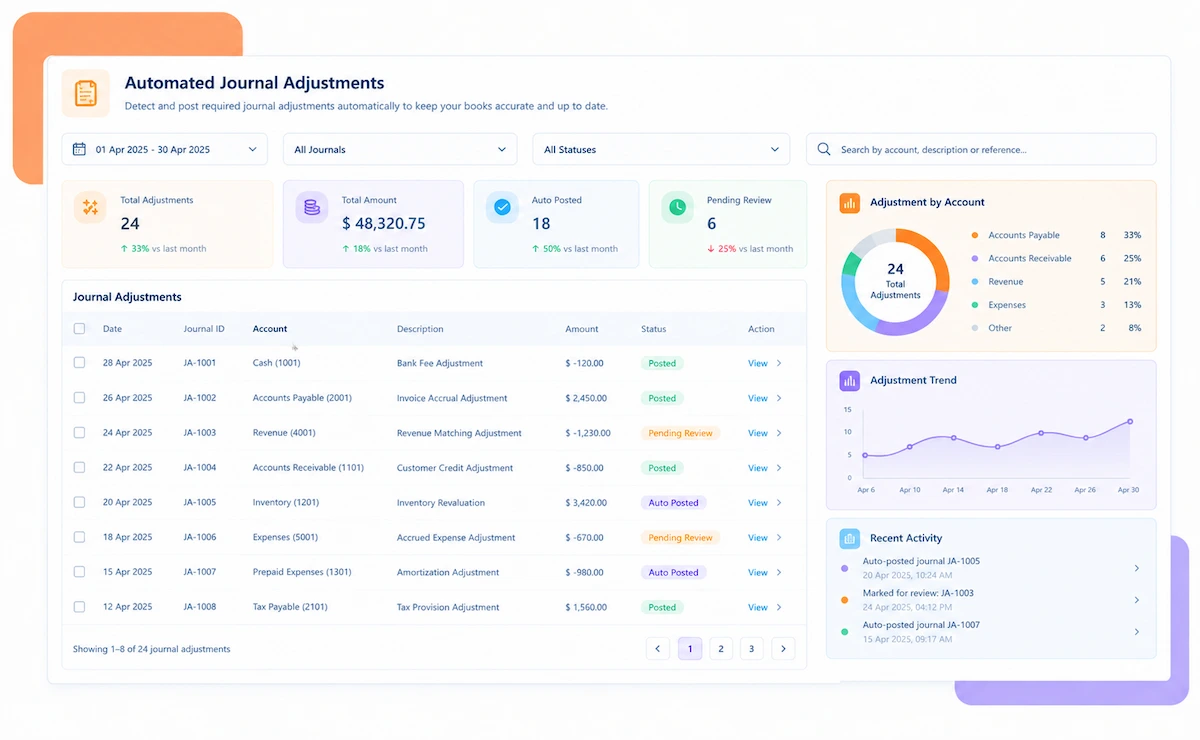
An unsettled payment comes with the rail, amount, and expected date attached, not just a line in a report.
Every resolved exception feeds back into how Kosh AI matches that rail's settlements going forward.
From a single card gateway to a dozen regional payment rails, Kosh AI handles the reconciliation logic each one needs.
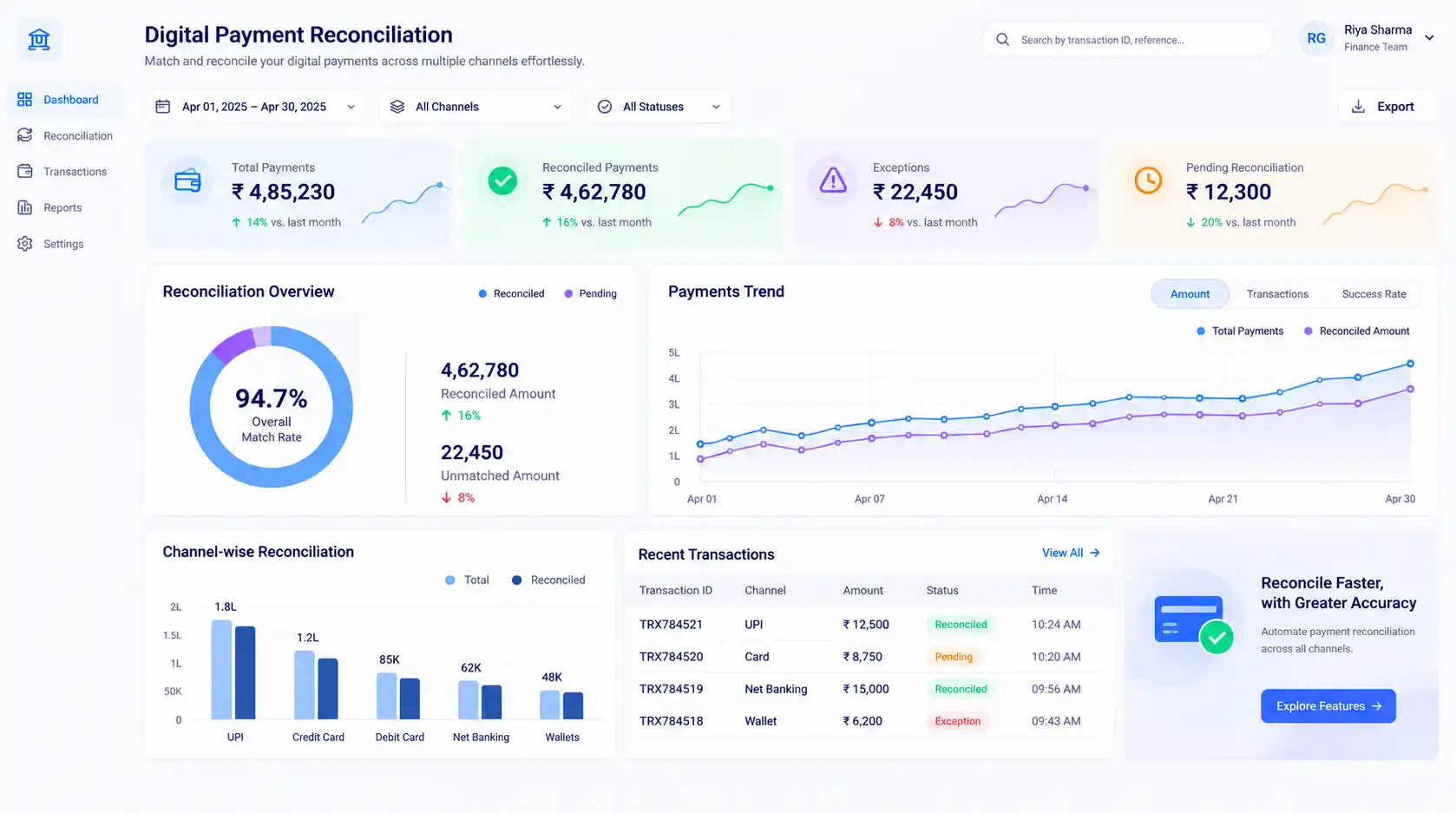
Digital payment reconciliation software matches every payment a business receives across cards, UPI, wallets, and net banking against the settlement and bank deposit it's eventually paid out in. The thing most checkout flows don't tell you is that a success screen only confirms the payment was authorized, not that it has actually settled into your bank account. Those are two separate events, usually a day or two apart, and the gap between them is where real revenue can quietly go missing without anyone noticing. Kosh AI checks every successful payment against its actual settlement, across every rail a business accepts, and flags the gap the same cycle it happens instead of leaving it for someone to stumble on months later.

Here's what actually changes when digital payment reconciliation moves from assuming a success screen means settled money to checking it on every transaction.
| What You're Comparing | Verified Digital Payment Reconciliation | Trusting the Checkout Success Screen |
|---|---|---|
| Confirming Money Actually Arrived | Every successful payment is checked against its actual settlement, across every rail. | A success screen is assumed to mean the payment settled, with no further check. |
| Spotting Unsettled Payments | Payments that never settle are flagged within the same reconciliation cycle. | Unsettled payments often surface only when a cash shortfall forces a review. |
| Handling Multiple Payment Rails | Cards, UPI, wallets, and net banking are reconciled together in one system. | Each payment rail usually needs its own spreadsheet and its own process. |
| Explaining Fee Variance | Expected fees are calculated per transaction, so shortfalls get explained automatically. | Fee shortfalls are often assumed to be errors since nobody calculated the expected fee first. |
| Choosing Which Rail to Prioritize | Unsettled rate and fee data by rail inform real checkout decisions. | Rail reliability is assumed rather than measured. |
| Scaling With Payment Volume | A growing payment volume or a new rail doesn't require more manual matching staff. | Payment growth usually means more hours spent reconciling settlements every cycle. |
Set up Kosh AI, connect your payment rails, and see within the first cycle which successful payments never actually settled.
Schedule a Quick DemoWhen a customer completes a digital payment, the checkout shows a success message almost instantly. What that message actually confirms is that the payment was authorized, not that the money has made it all the way into the business's bank account. In between those two events sits a settlement cycle, routed through a card network, a UPI handle, or a wallet provider, and that journey doesn't always complete cleanly. A payment can be authorized and still fail to settle because of a technical issue on the rail's side, and from the customer's perspective, everything looked fine.
The case for digital payment reconciliation software isn't only about saving hours matching settlement reports, although that's part of it. It's about catching the specific, easy-to-miss gap between a payment that looked successful and one that actually turned into cash. A business accepting payments through five different rails can easily have a small, steady trickle of these unsettled payments going unnoticed, because nobody is checking every single transaction against its actual settlement. Multiplied across a month of transactions, that trickle adds up to real revenue nobody budgeted for being missing.
There's also a decision-making angle that's easy to overlook. Most businesses add new payment rails to improve checkout conversion without ever measuring whether those rails actually settle reliably. Digital payment reconciliation software that tracks unsettled rates by rail turns that into a measurable decision instead of a guess, so a rail that looks convenient at checkout but settles poorly doesn't keep quietly costing the business money.
It's not only for businesses running a dozen payment rails. Here's who tends to benefit most.
If nobody is checking successful payments against actual settlement, there's a good chance some of them never arrive.
The moment a second rail is added, manual reconciliation effort roughly doubles, which is exactly where automation pays off.
Businesses processing thousands of payments a day can't realistically spot-check settlements manually without missing real exceptions.
High-volume, low-value digital payments add a reconciliation step that's easy to under-track without automation.
Unsettled rate data by rail turns a checkout decision based on convenience into one based on actual reliability.
Knowing exactly which payments converted to real cash matters for accurate reporting.
No tool is a perfect fit for every business. Here's an honest look at what digital payment reconciliation software gets right, and what's worth planning around before you adopt it.
Digital payment reconciliation software matches every payment a business receives across cards, UPI, wallets, and net banking against the settlement and bank deposit it's eventually paid out in. Kosh AI specifically checks for payments that showed a success screen but never settled, flagging the gap as it happens.
Yes. A checkout success screen confirms the payment was authorized, not that the money has completed its journey through the card network, UPI handle, or wallet provider into your bank account. A technical issue on the rail's side can break that journey after the customer has already seen a success message.
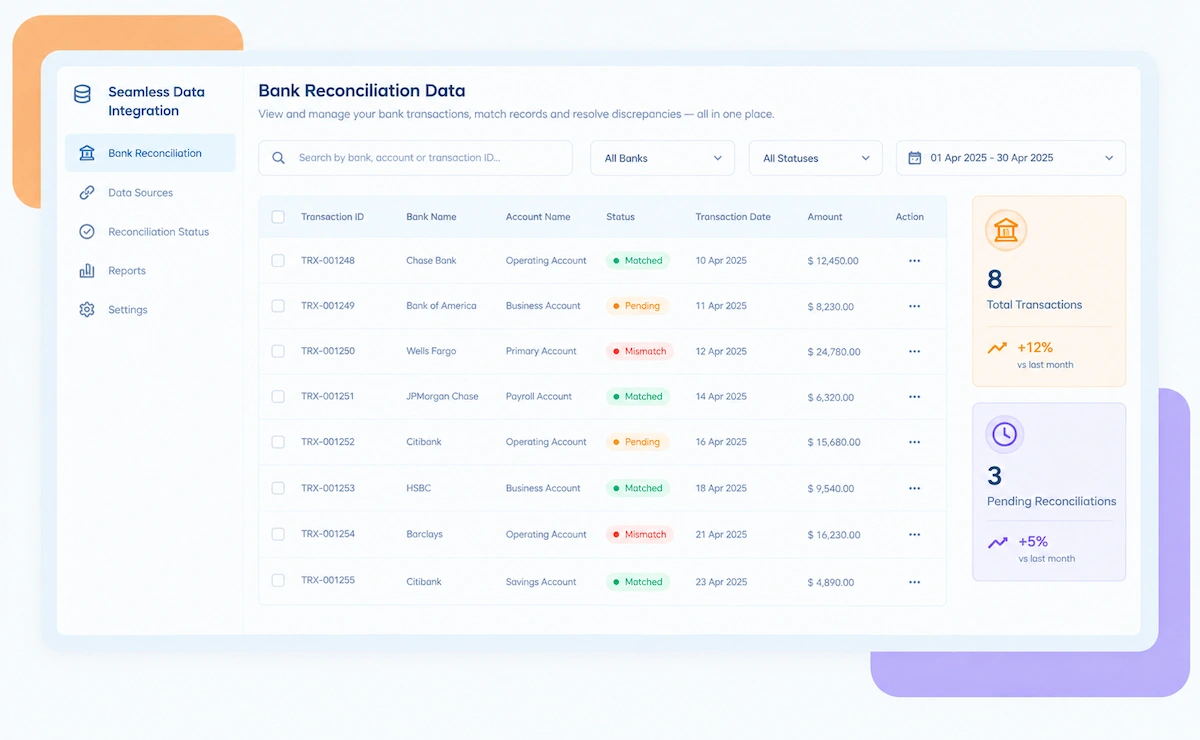
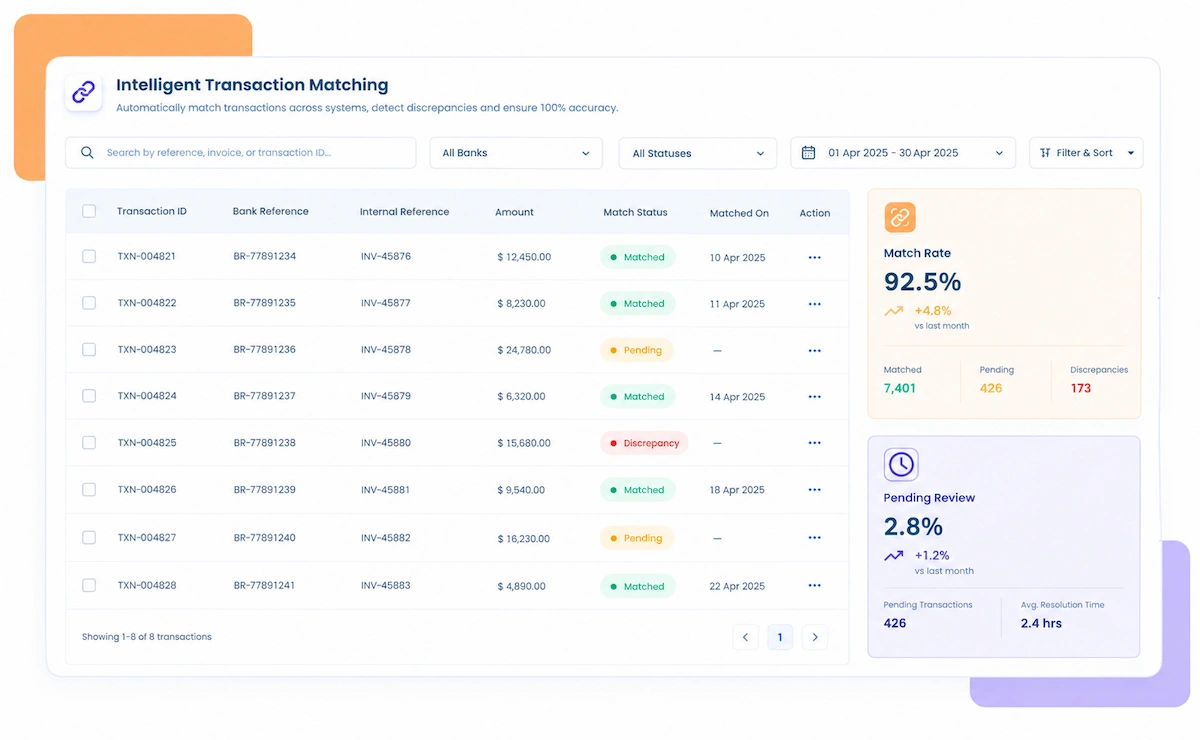
It pulls payment data from your systems and settlement data from every payment rail you use, then checks each successful payment against its actual settlement and bank deposit. Anything that doesn't match within the expected fee range gets flagged for review.
In practice, any rail your business accepts can be reconciled, but cards, UPI, net banking, and wallets are the most common. Kosh AI supports all of these payment rails out of the box.
Digital payment reconciliation covers every payment rail a business accepts, including cards and net banking. Wallet reconciliation focuses specifically on digital wallet balances, top-ups, and payouts. Kosh AI supports both, built for how each payment method actually settles.


Yes, most digital payment reconciliation software is built to pull payment data from common systems and settlement data from major payment rails. Kosh AI connects to leading payment gateways and rails, alongside ERPs like SAP, Oracle, NetSuite, and QuickBooks, so data flows in without manual exports.
No, but it takes most of the manual settlement-matching work off their plate. Kosh AI handles routine matching automatically, so your finance team can focus on investigating genuine exceptions, not reconstructing the payment-to-bank trail by hand.
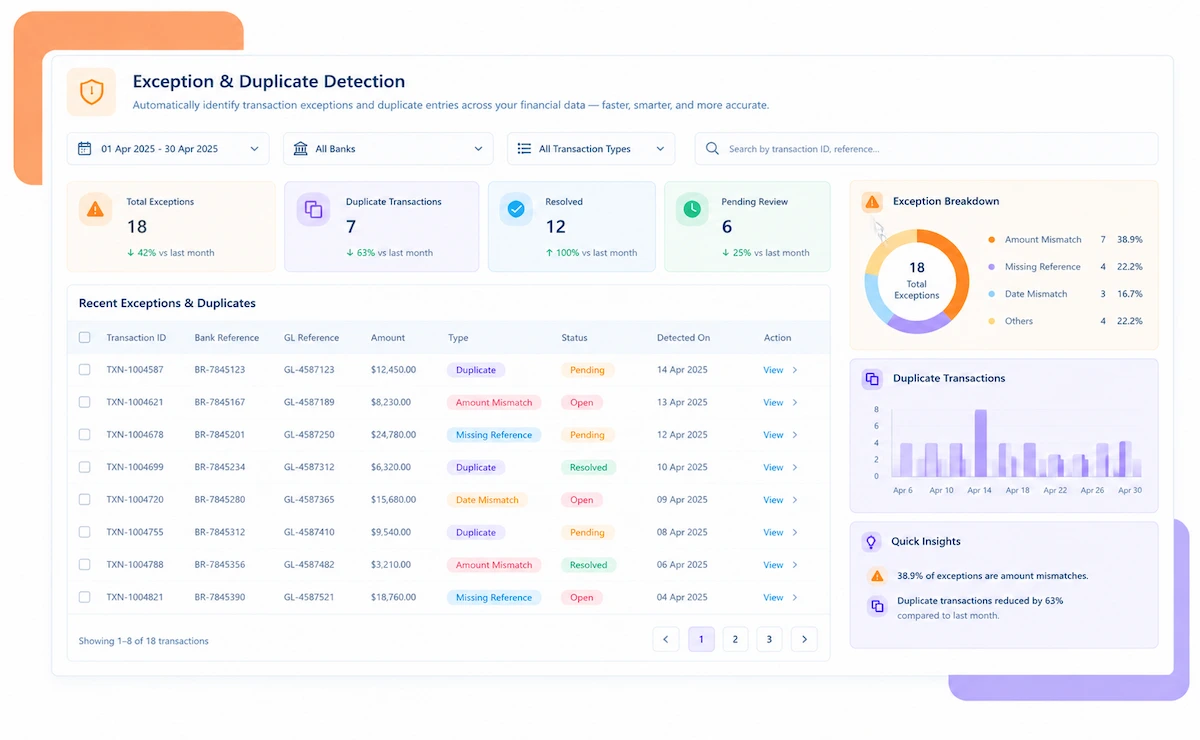
It gets flagged as an exception within the same reconciliation cycle, with the payment details, expected rail, and amount already attached. From there, it's routed for review instead of sitting unnoticed until a cash shortfall forces someone to go looking for it.
Most businesses can have their main payment rails reconciling automatically within a few weeks, since the software connects to systems you already use. Kosh AI follows a similar timeline, with businesses running many payment rails typically taking 2 to 3 months to fully configure.
Start with how many payment rails you accept and whether anyone currently checks successful payments against actual settlement. From there, compare options on rail connectivity, fee calculation accuracy, and how well the audit trail supports partner disputes. Kosh AI is built around exactly that checklist, but it applies to any software you're comparing.
Book a demo and watch Kosh AI check your own payment and settlement data for the gap.
Book a Demo