Wallet Reconciliation Software for a Liability Balance You Can Trust

Kosh AI Keeps Your Wallet Liability Account Matched to Real User Balances, So What's on the Books Is What You Actually Owe

  • Matches the Wallet Liability Ledger to Actual User Balances Daily
  • Flags Breakage and Drift Before It Becomes an Audit Finding
  • Tracks Top-Ups, Spends, and Payouts Against Bank Movements
  • Keeps a Compliance-Ready Trail for Every Wallet Movement
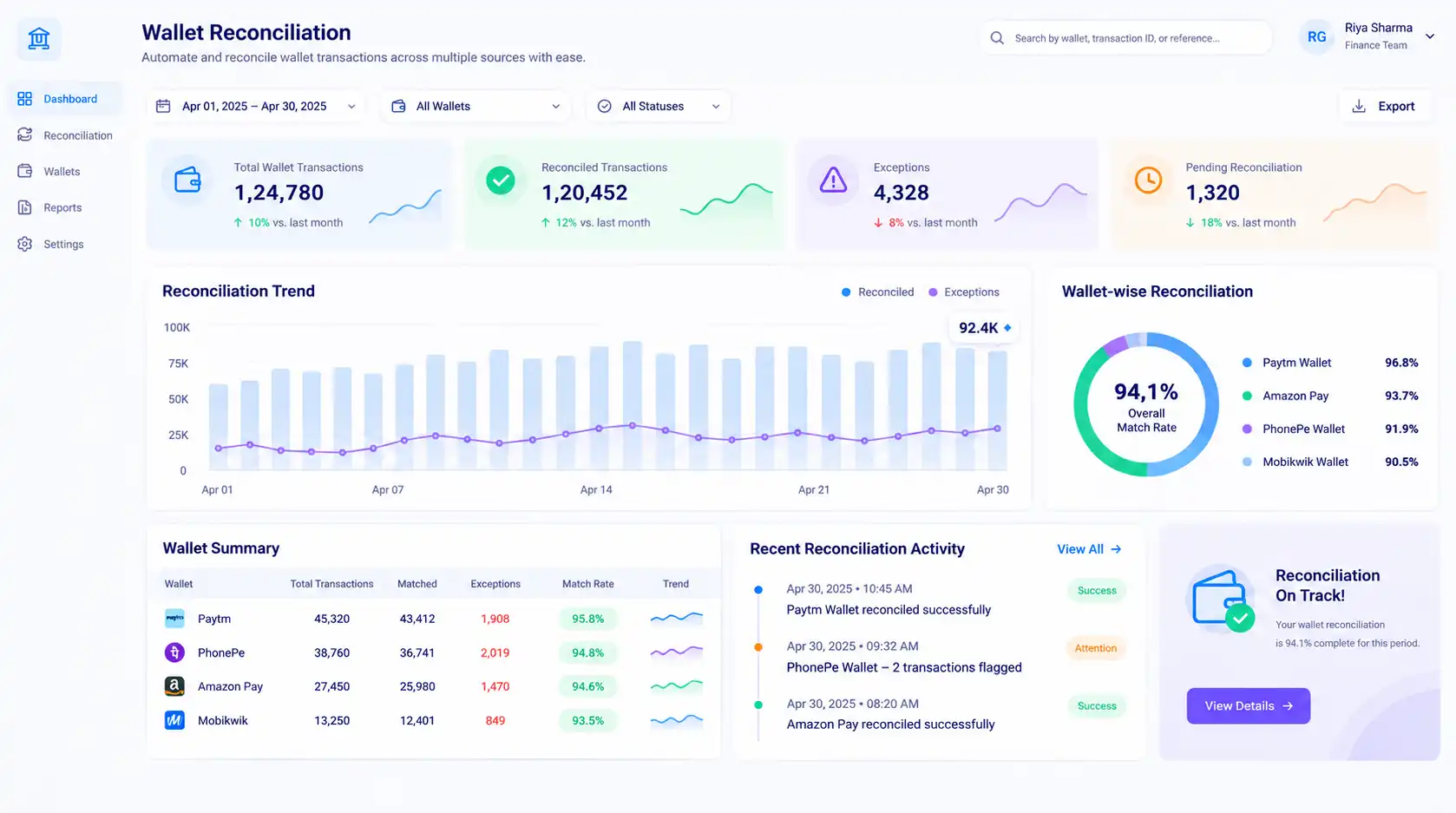
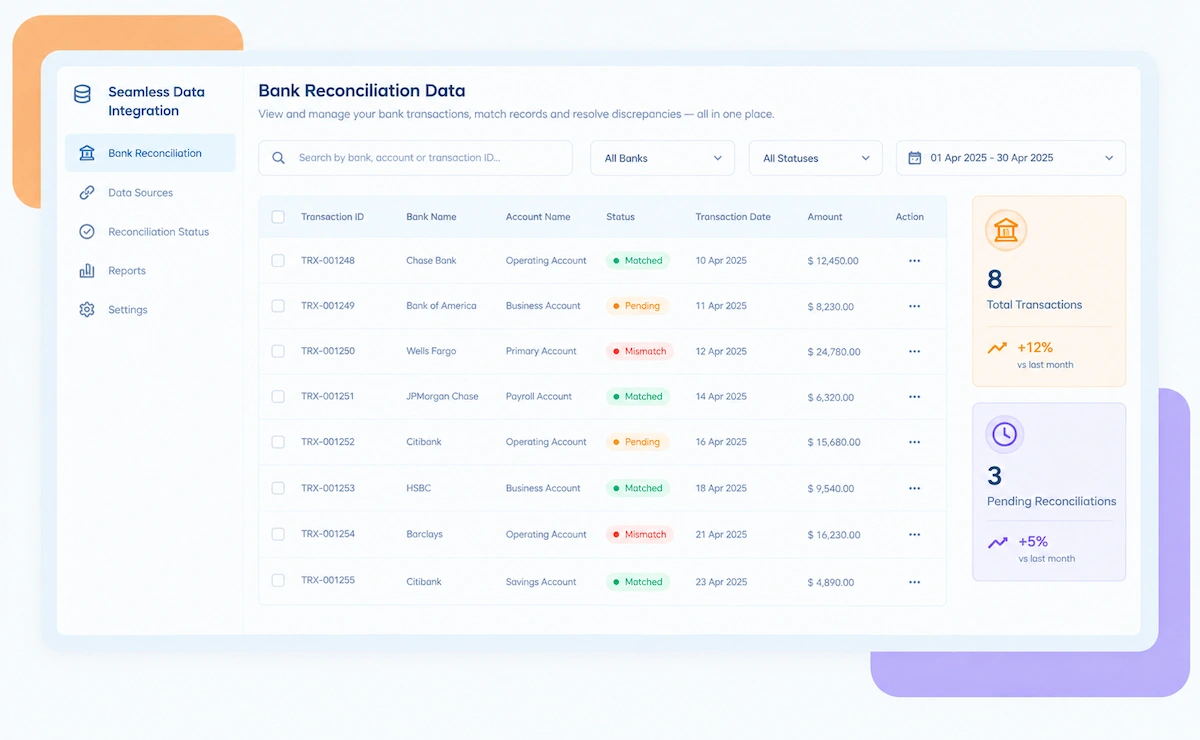
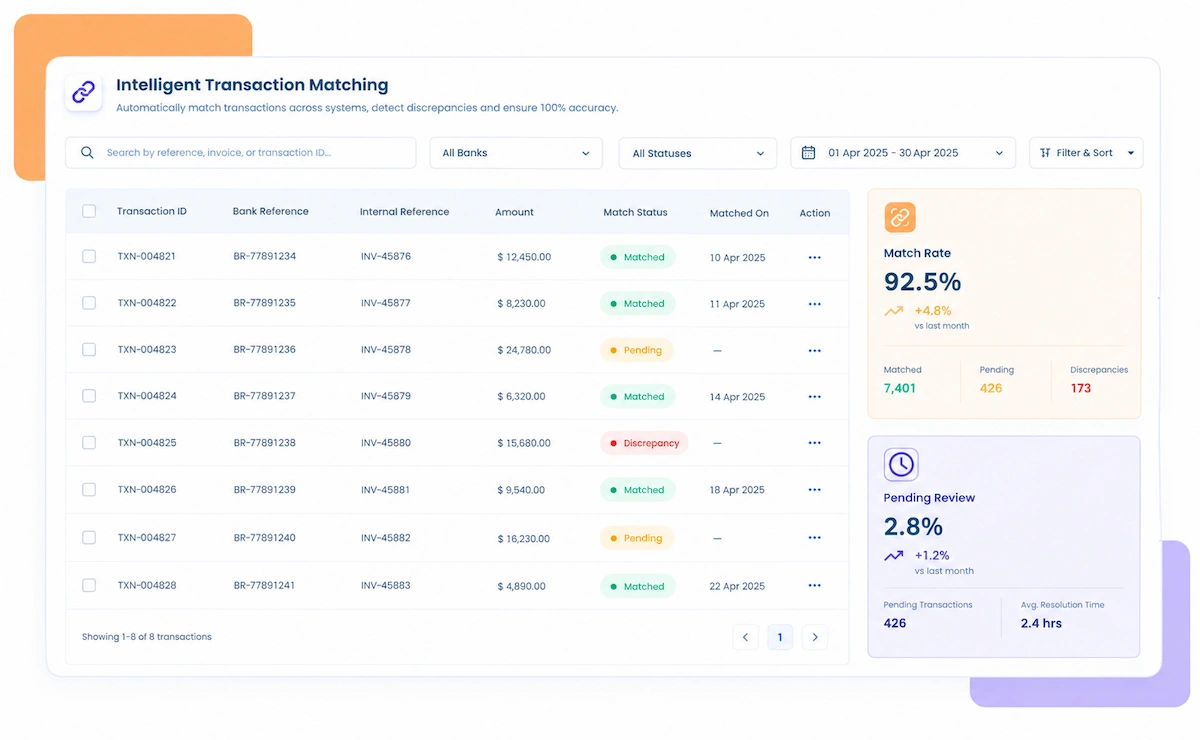
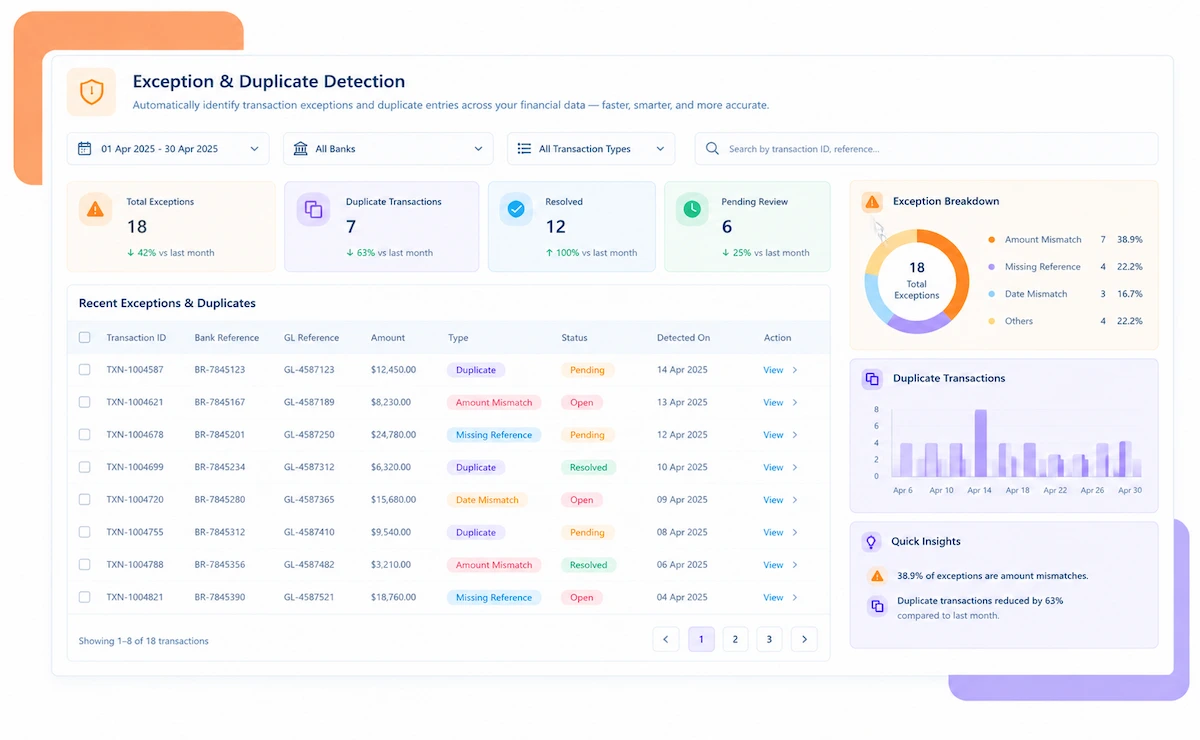
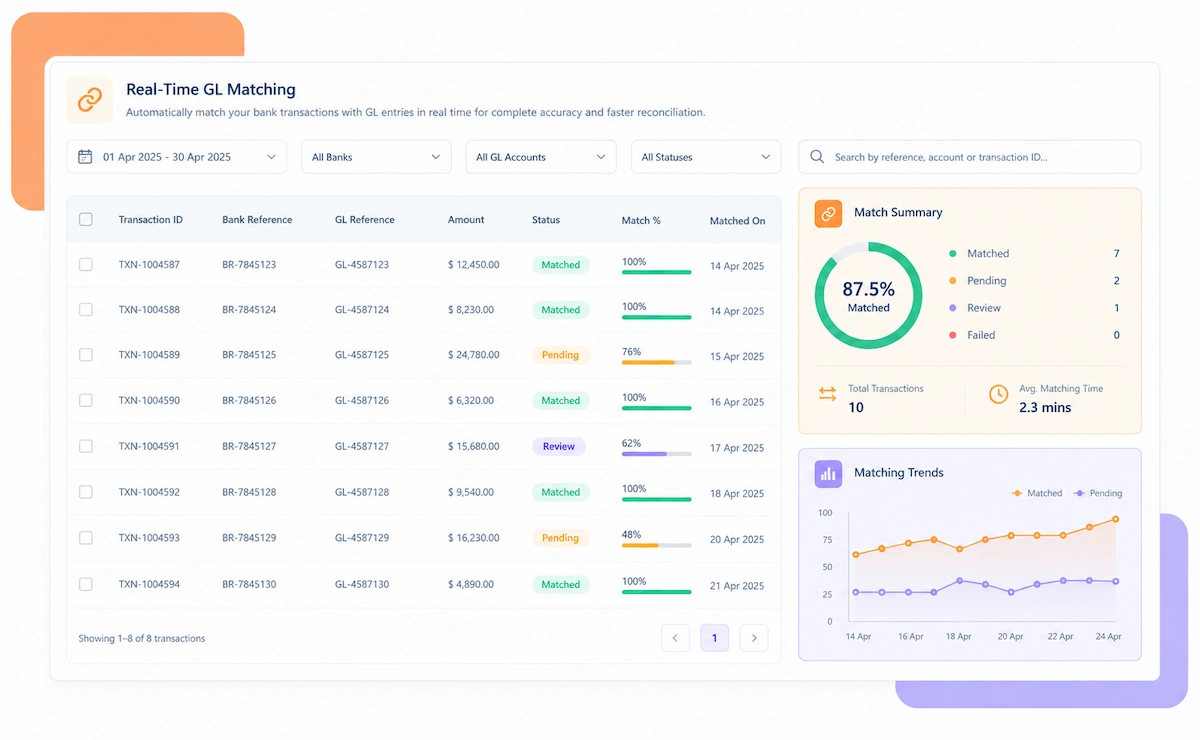
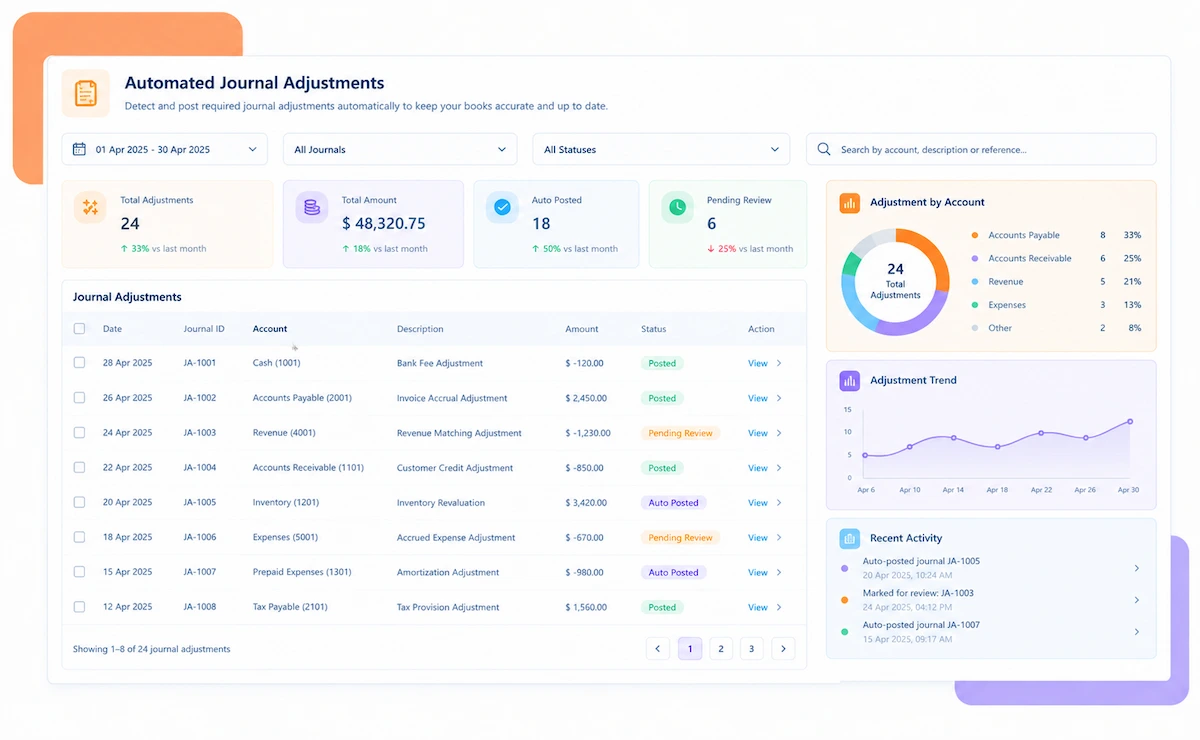
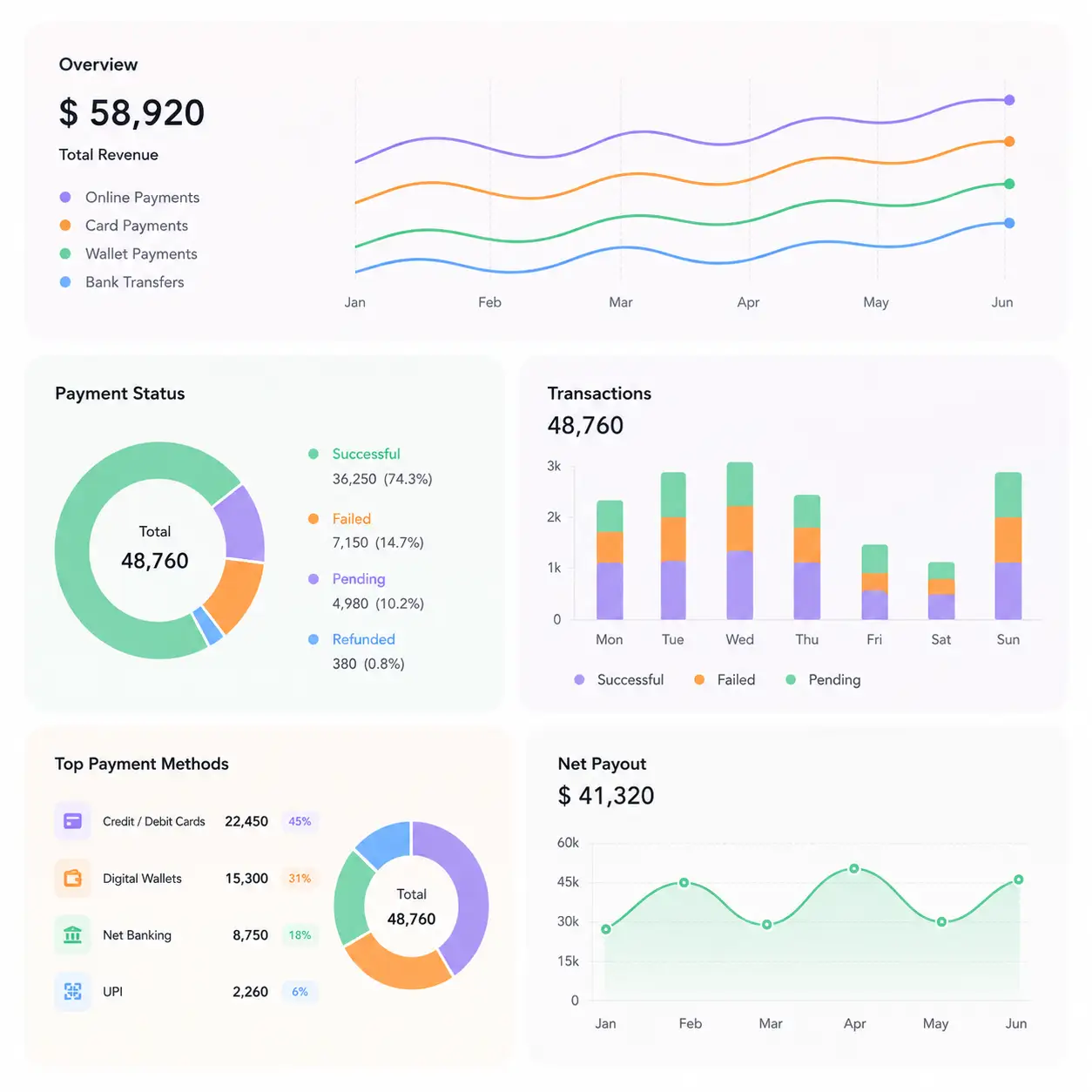
Kosh AI Wallet Reconciliation Software Dashboard

NEW 2026 Wallet Reconciliation Tool

Does Your Wallet Liability Account Actually Match What Users Are Holding?

A wallet balance sheet entry that quietly drifts from what users actually hold is a compliance problem waiting to surface at the worst time. Kosh AI checks that match every day, not once a quarter when an auditor asks.

What Wallet Reconciliation Software Automates for Finance Teams

A wallet liability account on the balance sheet is supposed to represent exactly what the business owes its users in stored value. In practice, that number drifts quietly through top-ups that didn't post correctly, spends that didn't deduct cleanly, and payouts that settled differently than recorded. Most finance teams only catch the drift at quarter-end, if at all. Kosh AI checks it daily.

Proven Results From Automated Wallet Reconciliation

Konica Minolta Business Solutions, U.S.A., Inc.
Ring Container
Conference Direct

How Wallet Reconciliation Software Works in Four Steps

You don't need to change your wallet provider or add extra steps for users. Kosh AI connects to the wallet systems you already use and checks the liability balance against reality every day.

  • From Every Wallet Provider: Kosh AI pulls wallet transaction data from every provider and bank account you work with.
  • No Manual Exports: There's no need to log into each wallet dashboard and export a ledger file separately.
  • Every Wallet Together: All wallet balances show up against bank movements in one place.
  • Ready as Movements Post: New top-ups, spends, and payouts are available to match the moment they post.
  • Done Daily: Kosh AI compares the wallet liability account against the sum of actual user wallet balances every day, not just at quarter-end.
  • Handles Split Transactions: Top-ups and payouts spread across more than one transfer are still matched correctly.
  • Fees Calculated Per Transaction: Expected processing fees are worked out automatically so shortfalls get explained.
  • Improves With Use: Matching accuracy gets sharper the longer Kosh AI works with your wallet providers.
  • Carried Through to the Ledger: Matched wallet movements are confirmed against the ledger entries they should have posted to.
  • Drifted Balances Flagged Same-Day: A wallet liability balance that doesn't tie to actual user balances is surfaced immediately.
  • Sorted by Size and Age: The exceptions most likely to need attention rise to the top of the review list.
  • Resolved Before Month-End: Open exceptions are cleared in time to close the books without a scramble.
  • Status Tracked Automatically: Reconciliation status by wallet provider is calculated without manual tallying.
  • Reports for Any Audience: Pull a compliance-ready report for an auditor or a full detail file for a provider dispute.
  • A Trail for Every Match: Wallet movement, bank, and ledger detail stay attached to every reconciled record.
  • Provider Mix Confidence: Always know which wallet providers are reconciling cleanly and which need attention.

Wallet Reconciliation That Fits How You Manage Balances

No two businesses manage wallet balances the same way. Kosh AI fits the providers you use, the industry you operate in, and how your finance team is structured.

Customer Wallets

Customer-facing wallet liability balances are reconciled against actual user holdings, top-ups, spends, and refunds.

Vendor and Partner Wallets

Wallet payouts to vendors and partners are matched against ledger entries and bank transfers.

Mobile and App Wallets

High-volume, low-value mobile wallet transactions are matched in bulk without slowing down the close.

Refunds and Cashbacks

Wallet refunds and cashbacks are tracked against the original transaction so the net liability position stays accurate.

Ecommerce and D2C

Store credit and wallet balances are reconciled without a manual review each settlement cycle.

Ride-Hailing and Mobility

Driver and rider wallet balances are matched against payouts and top-ups at scale.

BFSI and Fintech

Regulated wallet liability balances, including PPI float, are reconciled with full audit trails to support compliance reviews.

Marketplaces and Platforms

Seller wallet balances are reconciled alongside the commissions and payouts owed to them.

Wallet Reconciliation at Scale

Kosh AI centralizes wallet liability reconciliation for high-volume businesses, giving finance and compliance real-time visibility across every provider.

  • Reconcile millions of wallet movements across every provider in one system.
  • Spot liability drift with 15+ ML-driven risk models.
  • Keep a fully documented trail behind every wallet-to-ledger match.
  • Wallet Reconciliation for Growing Businesses

    Kosh AI gives smaller finance teams automated wallet matching without adding headcount as wallet volume grows.

  • Replace manual wallet ledger matching with automatic reconciliation.
  • Handle a growing wallet provider mix without extra staff.
  • Go live in weeks with ready-made wallet provider connectors.
  • What Changes When Your Wallet Liability Balance Is Actually Verified

    A wallet liability account that nobody checks against real user balances is a number on faith. Kosh AI turns it into a number that's verified every day.

    1

    Catch Liability Drift Before an Auditor Does

    A wallet balance sheet entry that's quietly drifted from actual user holdings is flagged daily, not discovered during an audit.

    2

    Separate True Breakage From a Reconciliation Error

    Dormant balances that should legitimately roll off are tracked separately from drift that signals a real posting problem.

    3

    Understand What's Actually Driving Fee Costs

    Expected fees are calculated per wallet provider, so your team can see which ones are genuinely costing more.

    4

    Close Faster Across Every Wallet Provider

    Every wallet provider is reconciled in one system instead of one spreadsheet per provider.

    5

    Reduce Disputes With Wallet Providers

    A documented wallet-to-ledger trail makes it easier to resolve provider discrepancies without back-and-forth.

    6

    Scale Without Adding Reconciliation Headcount

    Wallet volume can grow without a proportional increase in manual matching work.

    The Results of Automating Wallet Reconciliation

    65%Faster Wallet Reconciliation
    85%Of Wallet Movements Matched Without Help
    90%Fewer Manually Re-Keyed Entries

    Integrate Seamlessly with Your Existing ERP Systems

    Kosh AI connects directly with all major banks and ERPs, enabling real-time data sync for faster, more accurate reconciliations—no manual uploads, no delays.

    Why Daily Liability Checks Beat a Quarterly Audit

    A quarterly check only tells you the liability balance was wrong sometime in the last three months. Kosh AI is built to catch the drift the day it starts.

    Smart matching icon

    Provider-Aware Matching for More Accurate Reconciliation

    Kosh AI applies logic suited to each wallet provider's data pattern, not one rigid rule forced onto every provider.

    Exception handling icon

    Turn Liability Gaps Into Actionable Exceptions

    A drifted balance comes with the provider, amount, and likely cause attached, not just a line in a report.

    Learning system icon

    Improve Matching Accuracy With Every Reconciliation Cycle

    Every resolved exception feeds back into how Kosh AI matches that provider's wallet movements going forward.

    Flexible matching icon

    Handle Any Wallet Provider Mix You Add

    From a single wallet provider to a dozen regional ones, Kosh AI handles the reconciliation logic each one needs.

    What Is Wallet Reconciliation Software?

    Wallet reconciliation software matches every wallet top-up, spend, transfer, and payout against the bank movement and ledger entry it's eventually recorded as, across every wallet provider a business works with. The part that matters most for a business holding user funds is whether the wallet liability account on the balance sheet actually matches what users hold in their wallets at that moment. That gap can open quietly: a top-up that posted to the bank but not the wallet ledger, a spend that deducted inconsistently, a payout that settled for a different amount than recorded. Kosh AI checks the liability balance against the aggregate of real user balances every day, not just when an auditor asks for the number.

    Wallet reconciliation dashboard illustration

    Quarterly Audit vs. Daily Wallet Liability Reconciliation

    Here's what actually changes when wallet reconciliation moves from a periodic check to a daily verification of the liability balance.

    What You're Comparing Daily Wallet Liability Reconciliation Quarterly or Manual Reconciliation
    Verifying the Liability BalanceChecked against actual user balances every day.Checked only at quarter-end or when an auditor requests it.
    Matching Wallet Movements to BankEvery wallet movement is matched to its bank transaction automatically, across every provider.Someone exports a wallet ledger and a bank statement and matches them by hand.


    Spotting Balance DriftFlagged the day it happens, with the likely cause attached.Balance drift often surfaces only during a periodic audit or compliance review.
    Handling Multiple Wallet ProvidersEvery wallet provider is reconciled together in one system.Each provider usually needs its own spreadsheet and its own process.
    Explaining Fee VarianceExpected fees are calculated per transaction, so shortfalls get explained automatically.Fee shortfalls are often assumed to be errors since nobody calculated the expected fee first.
    Scaling With Wallet VolumeA growing wallet volume or a new provider doesn't require more manual matching staff.Wallet growth usually means more hours spent reconciling every cycle.

    Verify Your Wallet Liability Balance in Just Weeks

    Set up Kosh AI, connect your wallet providers, and start checking the liability account against real user balances every single day.

    Schedule a Quick Demo
    Loreal Touchless

    Why a Wallet Liability Balance Drifts Without Anyone Noticing

    A business holding user funds in a digital wallet carries a liability on its balance sheet representing exactly what it owes those users. In theory, that number should always equal the sum of what every user's wallet actually shows. In practice, it rarely gets checked that precisely. A top-up that hits the bank but doesn't post cleanly to the wallet ledger, a spend that deducts inconsistently across a retry, a payout that settles for a slightly different amount than what was recorded, each of these nudges the liability account a little further from reality, and none of them show up as an obvious error on their own.

    The case for wallet reconciliation software isn't only about catching fraud or theft, though it can do that too. It's about the much more common problem of a liability balance that's technically wrong without anyone being dishonest about it. That matters more than it might seem, because a wallet liability account is exactly the kind of number regulators and auditors scrutinize closely, especially for businesses holding float under a prepaid instrument license or similar compliance framework. A mismatch discovered during an audit is a finding. The same mismatch caught the day it happened is a routine correction.

    There's also a trust dimension specific to wallets. If a user's wallet balance ever doesn't match what the business's own books say it should, that's a support ticket, a complaint, or worse, a regulatory inquiry. Wallet reconciliation software that checks the liability ledger against actual user balances daily is built to catch that mismatch internally, before a user or a regulator catches it externally.

    Who Actually Needs Wallet Reconciliation Software

    It's not only for businesses running a dozen wallet providers. Here's who tends to benefit most.

    Finance team icon

    For Finance Teams Who Haven't Verified the Liability Balance

    If the wallet liability account has never been checked line by line against real user balances, there's a good chance it has drifted somewhere.

    Multi-provider icon

    For Businesses Working With More Than One Wallet Provider

    The moment a second wallet provider is added, manual reconciliation effort roughly doubles, which is exactly where automation pays off.

    High volume icon

    For High-Volume Wallet Businesses

    Businesses processing thousands of wallet movements a day can't realistically spot-check balances manually without missing real drift.

    Regulated wallet icon

    For Regulated Fintech and BFSI Businesses

    Wallet balances backed by a prepaid instrument license or similar framework need a continuous, auditable reconciliation trail, not a monthly check.

    Compliance icon

    For Compliance Teams Preparing for a Regulatory Review

    A liability account that's verified daily holds up to scrutiny far better than one checked for the first time right before an audit.

    Finance leadership icon

    For Finance Leaders Who Need Reliable Liability Visibility

    Knowing exactly what the wallet liability account represents matters for planning, and that visibility depends on daily checks.

    Wallet Reconciliation Software: An Honest Assessment

    No tool is a perfect fit for every business. Here's an honest look at what wallet reconciliation software gets right, and what's worth planning around before you adopt it.

    • Verifies the Liability Balance Daily: The wallet liability account is checked against actual user balances every day, not just at quarter-end.
    • Catches Drift Before an Audit: A wallet balance that doesn't tie to the ledger is flagged within the same cycle, not discovered during an audit.
    • One View for Every Wallet Provider: Every wallet provider is reconciled in the same system instead of a spreadsheet per provider.
    • Scales With Wallet Growth: A growing wallet volume doesn't require a proportional increase in manual reconciliation staff.
    • Full Wallet-to-Ledger Trail: Every match keeps the wallet movement, bank, and ledger record attached for audits or compliance reviews.
    • Upfront Provider Setup: Connecting every wallet provider and mapping its ledger format takes real effort before reconciliation runs smoothly.
    • Report Format Changes: When a provider changes its ledger export format, mappings may need a quick update.
    • Dependency on Provider Reporting: Reconciliation is only as reliable as the wallet ledger data providers report back.
    • Not a Fix for App-Level Issues: Software can flag a wallet discrepancy, but it won't fix the app bug causing a failed top-up.
    • Ongoing Fee Rule Maintenance: Expected fee calculations need occasional review as wallet providers change their pricing structures.

    Wallet Reconciliation Software FAQs

    What is wallet reconciliation software?

    Wallet reconciliation software matches every wallet top-up, spend, transfer, and payout against the bank movement and ledger entry it's eventually recorded as, and verifies that the wallet liability balance on the books matches what users actually hold. Kosh AI does this automatically, flagging drift and fee discrepancies as they happen.

    What is wallet liability drift, and why does it matter?

    Wallet liability drift happens when the balance sheet entry for what a business owes its users stops matching the sum of actual user wallet balances. It matters because this account is closely scrutinized by auditors and regulators, especially for businesses holding float under a prepaid instrument license or similar framework.

    How does wallet reconciliation software work?

    It pulls wallet ledger data from every provider you use and bank statement data from your accounts, then matches each wallet movement to its bank transaction and ledger entry, checking the liability balance against actual user balances daily. Anything that doesn't match gets flagged for review.

    Which wallet providers does this software cover?

    In practice, any wallet provider your business works with can be reconciled, including customer-facing wallets, vendor wallets, and mobile app wallets. Kosh AI supports multiple wallet providers out of the box.

    How is wallet reconciliation different from digital payment reconciliation?

    Wallet reconciliation focuses specifically on wallet liability balances, top-ups, and payouts. Digital payment reconciliation covers every payment rail a business accepts, including cards and net banking alongside wallets. Kosh AI supports both, built for how each payment method actually settles.

    Can wallet reconciliation software connect to my wallet providers and ERP?

    Yes, most wallet reconciliation software is built to pull ledger data from common wallet providers and bank statement data from major banks. Kosh AI connects to leading wallet platforms, alongside ERPs like SAP, Oracle, NetSuite, and QuickBooks, so data flows in without manual exports.

    Does this software replace the need for a finance team?

    No, but it takes most of the manual wallet-matching work off their plate. Kosh AI handles routine matching and liability verification automatically, so your finance team can focus on investigating genuine exceptions instead of reconstructing the wallet-to-ledger trail by hand.

    What happens when a wallet liability balance drifts from actual user balances?

    It gets flagged as an exception within the same reconciliation cycle, with the provider, amount, and likely cause already attached. From there, it's routed for review instead of sitting unnoticed until an audit forces someone to go looking for it.

    How long does it take to implement wallet reconciliation software?

    Most businesses can have their main wallet providers reconciling automatically within a few weeks, since the software connects to providers you already use. Kosh AI follows a similar timeline, with businesses running many wallet providers typically taking 2 to 3 months to fully configure.

    How do I choose the right wallet reconciliation software for my business?

    Start with how many wallet providers you work with and whether your liability account has ever actually been verified against real user balances. From there, compare options on provider connectivity, fee calculation accuracy, and how well the audit trail supports compliance needs. Kosh AI is built around exactly that checklist, but it applies to any software you're comparing.

    Ready to Verify Your Wallet Liability Balance?

    Book a demo and watch Kosh AI check your own wallet ledger against actual user balances.

    Book a Demo