Kosh AI Tracks Real Cost and Reliability Per PSP, So Routing Decisions Are Based on Data, Not the Rate Card From Onboarding
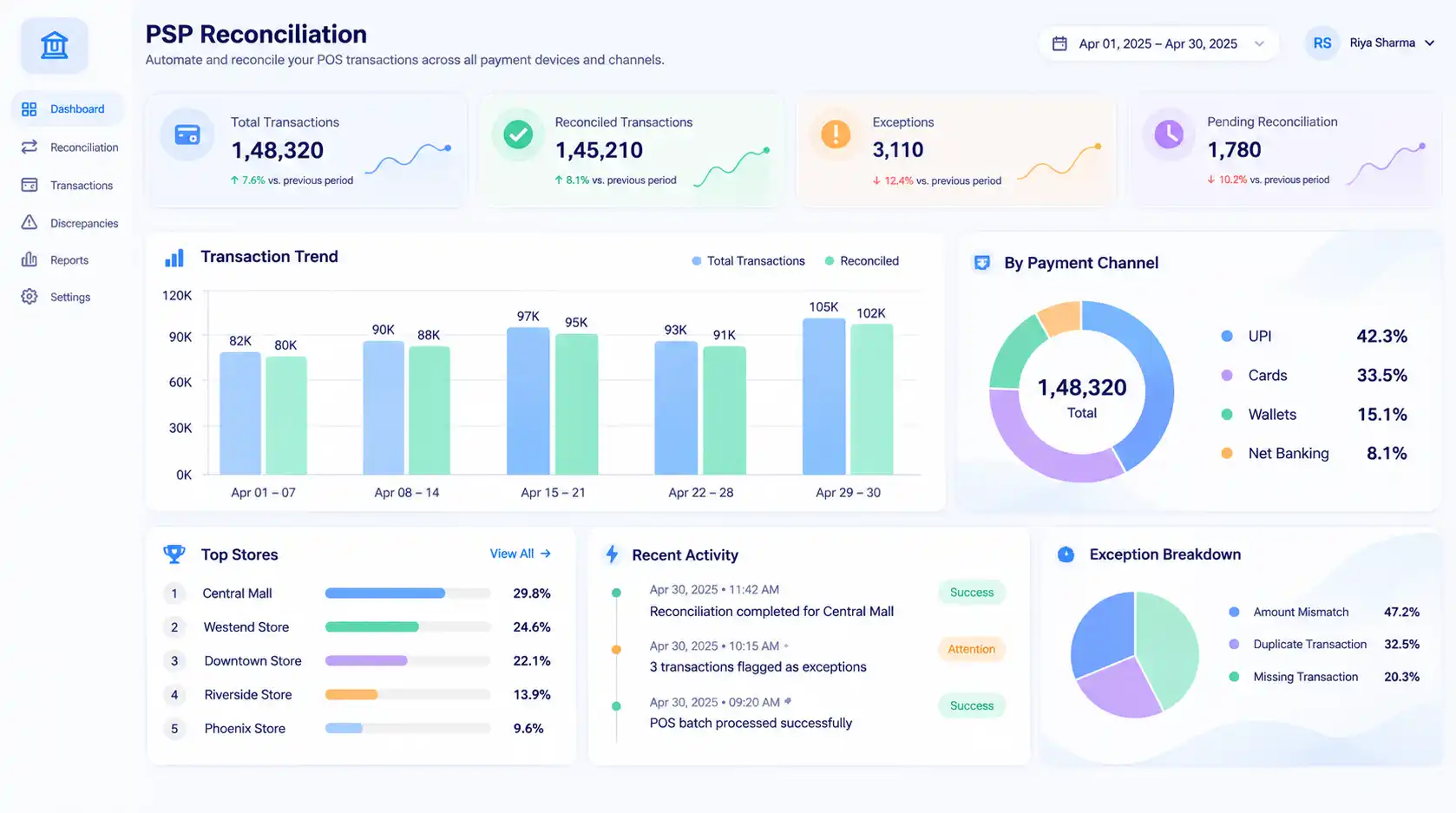
Routing payments across several PSPs to improve approval rates is a payments-team decision. Reconciling what each PSP actually costs after fees, declines, and settlement delays is usually nobody's job, because it falls in the gap between payments and finance. Kosh AI closes that gap by reconciling every PSP down to its real, effective cost.
You don't need to change your PSP routing logic. Kosh AI connects to the payment service providers you already work with and builds a real cost and reliability picture around them.
No two businesses route payments through the same mix of PSPs. Kosh AI fits the providers you use, the industry you operate in, and how your finance team is structured.
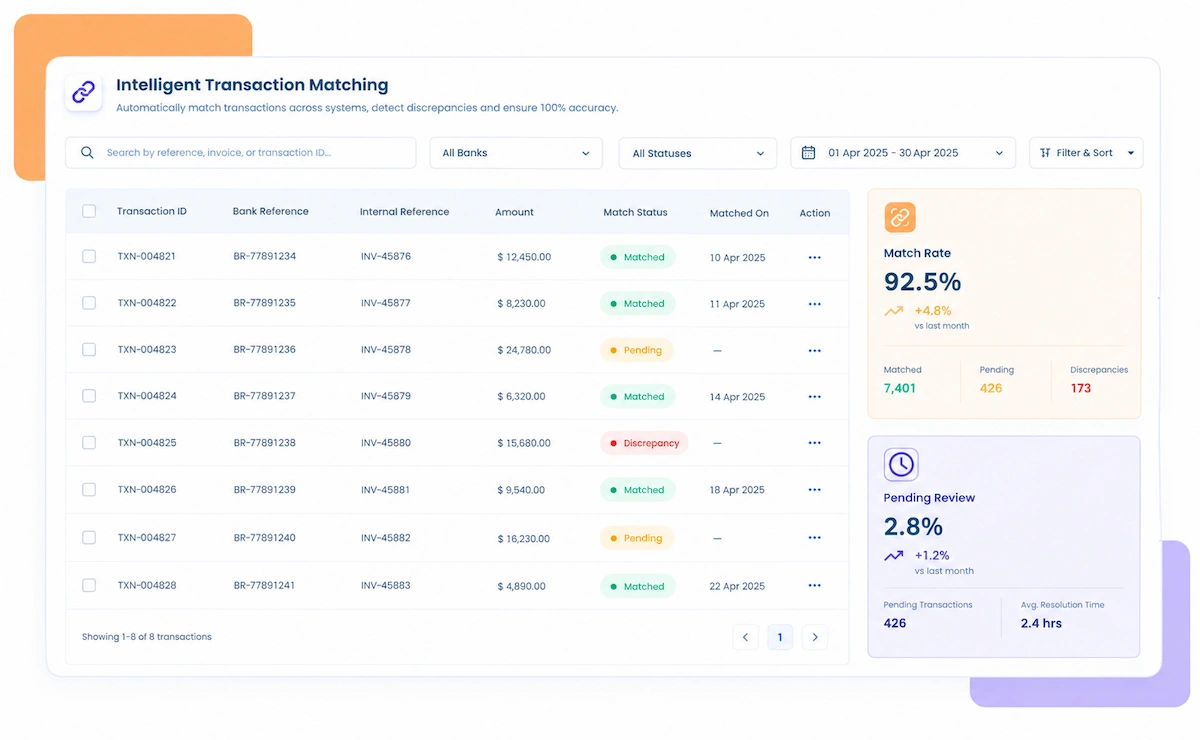
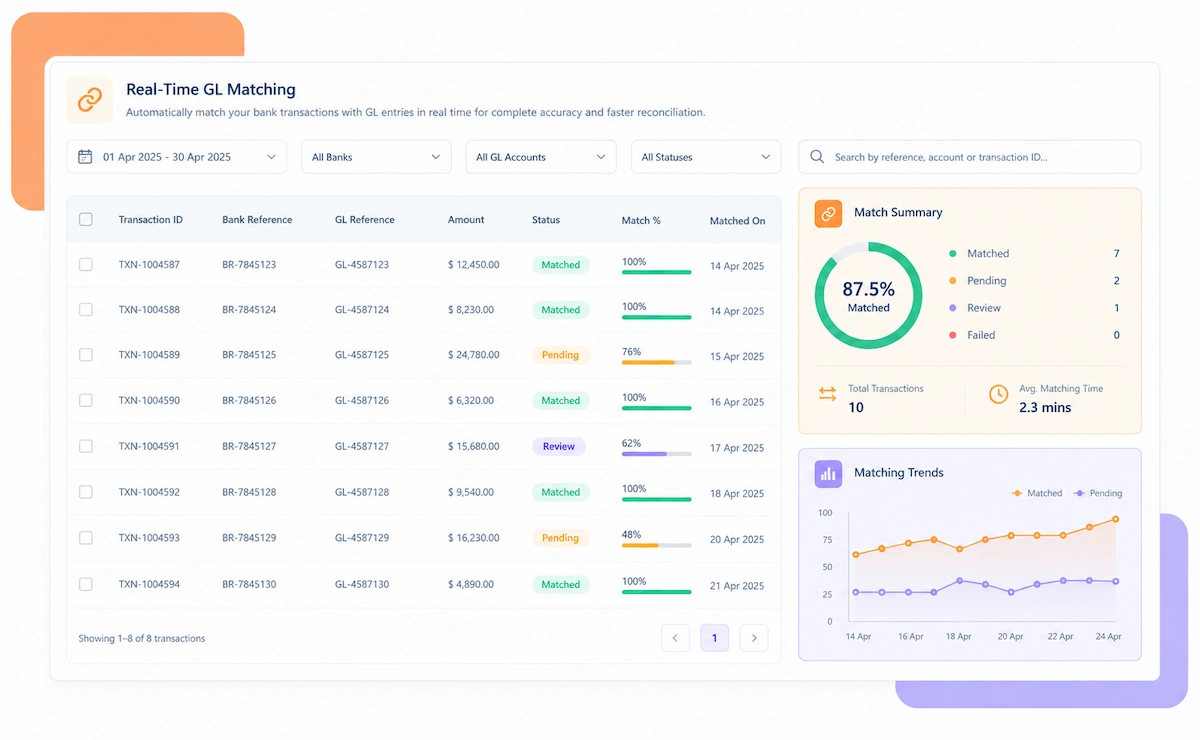
Card settlements routed through PSPs are matched to transactions and effective cost is calculated per provider.
Multi-currency PSP settlements are matched with FX variance tracked separately from genuine fee cost.
Transactions routed dynamically across multiple PSPs are matched back to the correct provider automatically.
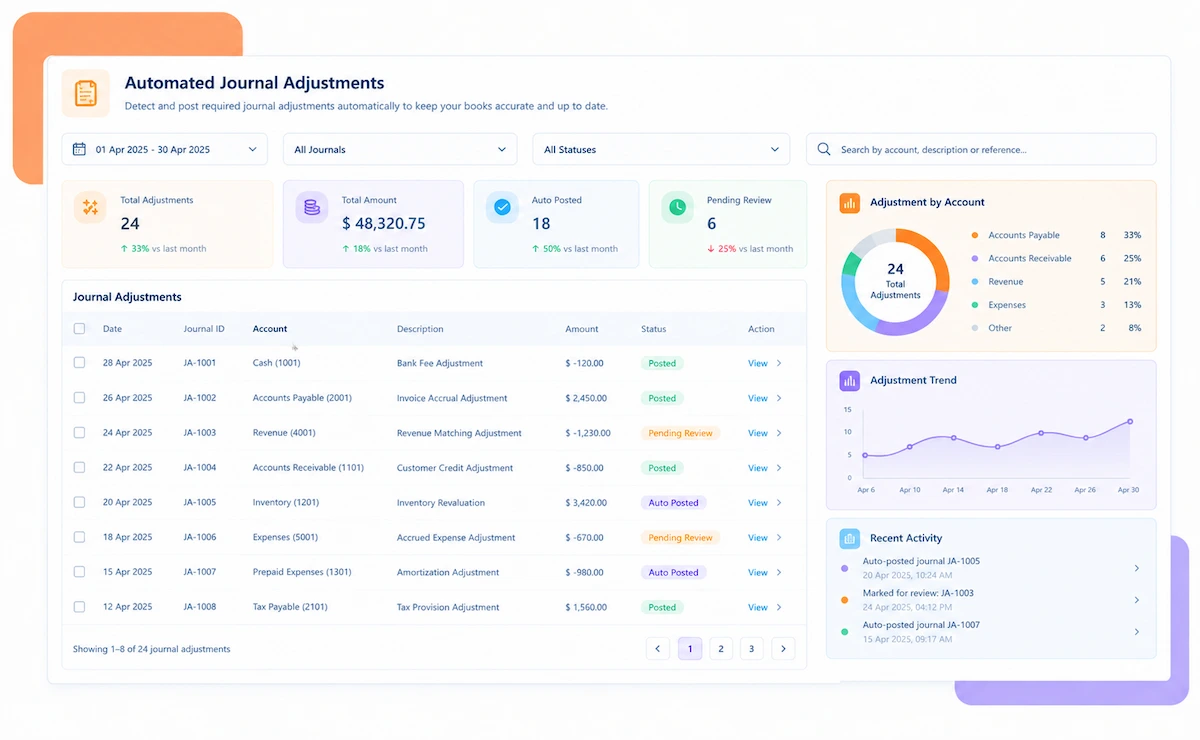
Chargebacks and refunds are tracked against the original transaction so the net PSP cost picture stays accurate.
High transaction volumes routed across multiple PSPs are reconciled and cost-compared without a manual review each week.
Regulated payment flows through multiple PSPs are reconciled with full audit trails for compliance.
Recurring payments routed for better approval rates are reconciled alongside one-off transactions.
Region-specific PSP routing is reconciled centrally while keeping each provider's settlement data separate.
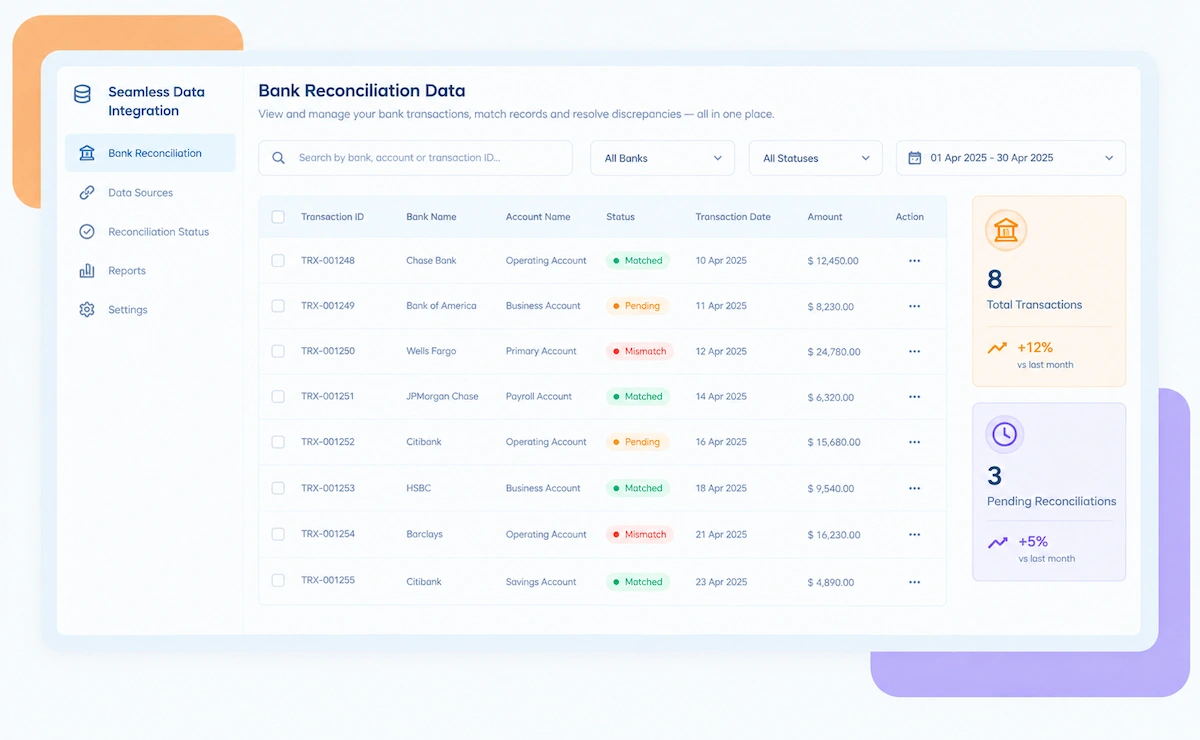
Kosh AI centralizes transaction-to-bank reconciliation for high-volume businesses, giving payments and finance real-time visibility across every PSP.
Kosh AI gives smaller finance teams automated settlement matching and cost tracking without adding headcount as PSP volume grows.
Most routing decisions get made on approval rate alone. Kosh AI adds the number that's usually missing: what each PSP actually costs after fees, declines, and delays.
A PSP with a great headline approval rate can still be the costliest option once declines and effective fees are factored in.
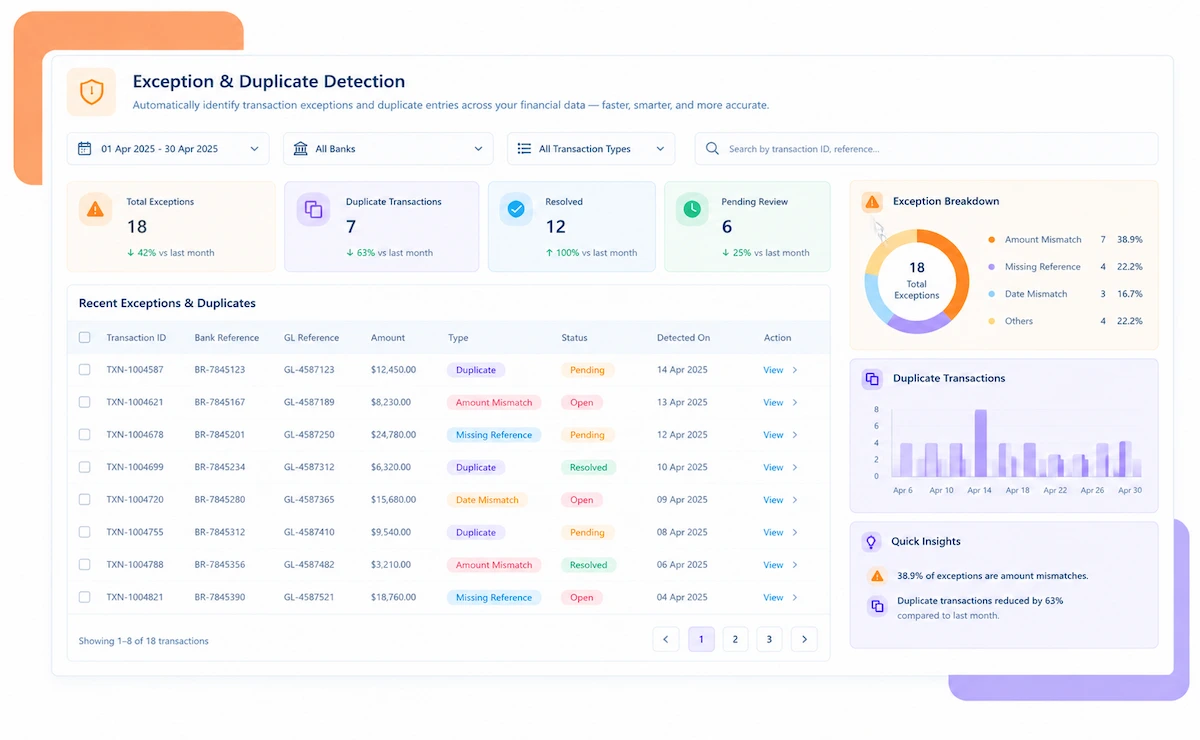
A transaction that never settles is flagged within the same cycle, not discovered weeks later during a cash shortfall review.
Effective cost and reliability by PSP, tracked over time, turns a routing decision into something backed by evidence.
Every PSP is reconciled in one system instead of one spreadsheet per provider.
A documented transaction-to-settlement trail makes it easier to resolve PSP discrepancies without back-and-forth.
Transaction volume can grow without a proportional increase in manual settlement matching work.
Kosh AI connects directly with all major banks and ERPs, enabling real-time data sync for faster, more accurate reconciliations—no manual uploads, no delays.


A PSP's quoted rate at onboarding rarely reflects what it actually costs once declines, retries, and settlement delays are factored in. Kosh AI tracks the number that actually matters.
Kosh AI applies logic suited to each PSP's settlement pattern, not one rigid rule forced onto every provider.
An unsettled transaction comes with the PSP, amount, and expected date attached, not just a line in a report.
Every resolved exception feeds back into how Kosh AI matches that PSP's settlements going forward.
From a single PSP to a dozen regional providers, Kosh AI handles the reconciliation logic each one needs.
PSP reconciliation software matches every transaction a business routes through a payment service provider against the settlement and bank deposit it's eventually paid out in, across every PSP the business works with. What makes it genuinely useful for a business routing across multiple PSPs is the cost picture it builds alongside the matching. A PSP's quoted rate at onboarding rarely tells the whole story once declines, retries, and the occasional settlement delay are factored in. Kosh AI calculates the effective cost per PSP from actual transaction data, so a routing decision can be based on what a provider truly costs, not what it was pitched as costing a year ago.

Here's what actually changes when PSP evaluation moves from trusting the quoted onboarding rate to reconciling what each provider truly costs.
| What You're Comparing | Reconciled Effective Cost Per PSP | Quoted Rate at Onboarding |
|---|---|---|
| Knowing the Real Cost | Calculated from actual settlement and fee data, including decline impact. | Based on a rate card that may not reflect current performance. |
| Matching Transactions to Settlements | Every transaction is matched to its PSP settlement batch automatically, across every provider. | Someone exports a transaction report and a settlement report per PSP and matches them by hand. |
| Spotting Unsettled Transactions | Transactions that never settle are flagged within the same reconciliation cycle. | Unsettled transactions often surface only when a cash shortfall forces a review. |
| Handling Multiple PSPs | Every PSP is reconciled together in one system, cost-compared on the same basis. | Each PSP usually needs its own spreadsheet and its own process. |
| Supporting a Routing Decision | Effective cost and reliability trends give routing changes a factual basis. | Routing decisions rely on approval rate alone, or the original sales pitch. |

| Scaling With Transaction Volume | A growing transaction volume or a new PSP doesn't require more manual matching staff. | Transaction growth usually means more hours spent reconciling settlements every cycle. |
Set up Kosh AI, connect your PSPs, and get an effective cost comparison that accounts for fees, declines, and settlement delays.
Schedule a Quick DemoWhen a business starts routing payments through more than one PSP, usually to improve approval rates or cover more regions, the decision about how to split volume between them almost always gets made at onboarding, based on the rate card each PSP presents. What that rate card doesn't capture is what happens afterward: a PSP with a slightly higher headline rate but a much better approval rate might actually be cheaper per successful transaction. A PSP that settles reliably on schedule might be worth more than one that occasionally runs days late, even at a lower quoted fee.

The case for PSP reconciliation software isn't really about matching transactions, which most payment teams already track at some level. It's about calculating the number that actually matters for a routing decision: effective cost per successful transaction, inclusive of declines, retries, and fees, tracked over time per PSP. Without that number, a routing split tends to stay whatever it was set to at onboarding, even as PSP performance drifts in either direction over months.
There's also an organizational gap this tends to fall into. Payments teams own the routing decision and usually optimize for approval rate. Finance owns the fee reconciliation and usually checks settlements landed correctly. Neither team, on its own, typically builds the combined view of cost and reliability per PSP that a genuinely informed routing decision needs. PSP reconciliation software is built to close exactly that gap, giving both teams the same underlying numbers to work from.


It's not only for businesses running a dozen PSPs. Here's who tends to benefit most.
A routing decision based on approval rate alone is missing half the picture without effective cost data per PSP.

The moment a second PSP is added, manual reconciliation and cost comparison effort roughly doubles.

Businesses processing thousands of transactions a day can't realistically spot-check settlements manually without missing real exceptions.
Transactions routed across providers for better approval rates need a combined cost and reliability view to stay optimized.
A shared reconciliation view gives both teams the same effective cost and reliability data to make routing decisions together.

Knowing exactly which settlements have cleared, and at what real cost, matters for planning.
No tool is a perfect fit for every business. Here's an honest look at what PSP reconciliation software gets right, and what's worth planning around before you adopt it.
PSP reconciliation software matches every transaction a business routes through a payment service provider against the settlement and bank deposit it's eventually paid out in, and calculates the real, effective cost per PSP. Kosh AI does this automatically, flagging unsettled transactions and tracking cost and reliability by provider.
A quoted rate doesn't account for declines, retries, or the occasional settlement delay, all of which affect what a PSP actually costs per successful transaction. Kosh AI calculates effective cost from real settlement data, so PSPs can be compared on an apples-to-apples basis.
It pulls transaction data from your systems and settlement data from every PSP you route through, then matches each transaction to its settlement batch and bank deposit while calculating effective cost per provider. Anything that doesn't match within the expected fee range gets flagged for review.
A payment service provider, or PSP, handles the broader relationship of processing and settling payments on a business's behalf, often including gateway, acquiring, and risk functions together. Kosh AI reconciles both PSPs and payment gateways, matched to the way each one actually settles.
PSP reconciliation focuses on matching transactions to the settlements and effective fees from each payment service provider in a multi-PSP routing setup. Merchant reconciliation is the broader process of matching all transactions to acquirer settlements and contracted MDR. Kosh AI supports both, built for how each business actually gets paid.
Yes, most PSP reconciliation software is built to pull transaction data from common systems and settlement data from major PSPs. Kosh AI connects to leading PSPs and payment orchestrators, alongside ERPs like SAP, Oracle, NetSuite, and QuickBooks, so data flows in without manual exports.
No, but it gives them the reconciled cost and reliability data they need to make routing decisions with evidence instead of assumptions. Kosh AI handles the matching and calculation automatically, so payments and finance can focus on the actual routing strategy.
It gets flagged as an exception within the same reconciliation cycle, with the transaction details, expected PSP, and amount already attached. From there, it's routed for review instead of sitting unnoticed until a cash shortfall forces someone to go looking for it.
Most businesses can have their main PSPs reconciling automatically within a few weeks, since the software connects to providers you already use. Kosh AI follows a similar timeline, with businesses running many PSPs typically taking 2 to 3 months to fully configure.
Start with how many PSPs you route payments through and whether anyone currently tracks effective cost per provider rather than just the quoted rate. From there, compare options on PSP connectivity, cost calculation accuracy, and how well the audit trail supports PSP disputes. Kosh AI is built around exactly that checklist, but it applies to any software you're comparing.
Book a demo and watch Kosh AI calculate effective cost and reliability across your own PSP mix.
Book a Demo