Kosh AI Matches Every Line in an Amazon Settlement Report Back to the Order, Fee, and Refund Behind It
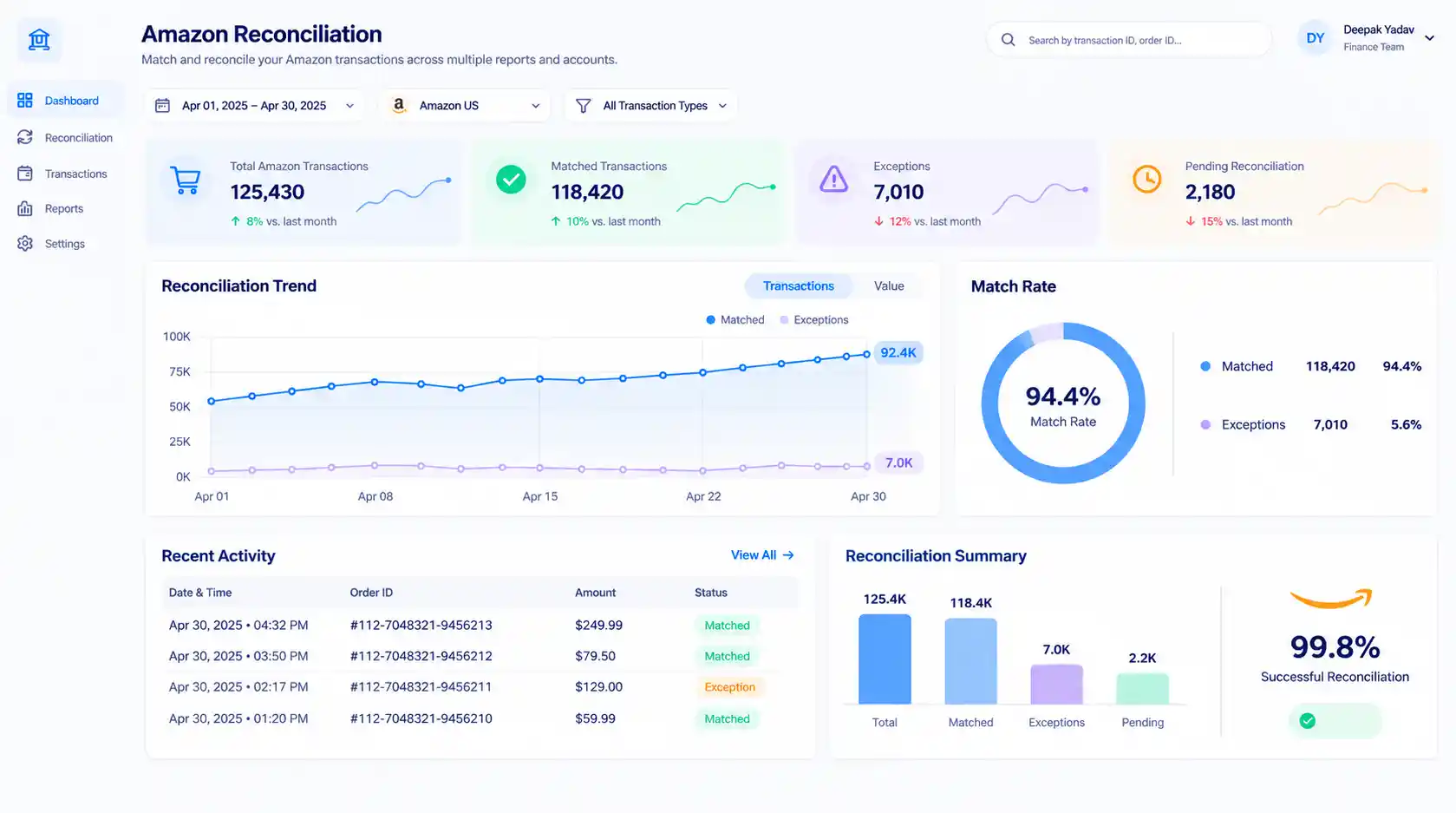
Amazon pays sellers in settlement batches that cover a two-week period, net of referral fees, FBA fees, storage charges, and refunds. The settlement report lists every line, but matching it back to actual orders and verifying the fees applied is usually a manual, spreadsheet-heavy job. Kosh AI automates that matching from the order level up.
Kosh AI connects to your Amazon Seller Central or Vendor Central account and your books, then reconciles every settlement down to the order it came from.
Whether you run FBA, FBM, Vendor Central, or all three, Kosh AI reconciles Amazon settlements the way your business actually operates.
FBA fulfillment and storage fees are checked against Amazon's rate card for every order's size and category.
Self-fulfilled orders are matched to referral fees and payouts without the added FBA fee layer.
Vendor Central's different settlement structure and chargeback codes are reconciled on their own logic.
Each Amazon marketplace's currency and fee structure is reconciled separately, then rolled up.
High SKU counts with frequent promotions are reconciled without a manual fee check per listing.
Chargebacks and compliance deductions common to Vendor Central are matched and explained.
Amazon settlements are reconciled alongside Shopify, Flipkart, or other channels in one system.
Reconciliation across dozens of acquired Amazon storefronts is centralized instead of per-brand.
Kosh AI reconciles high-SKU, high-order-volume Amazon accounts down to the order level without manual review.
Kosh AI gives smaller seller teams automated settlement matching without adding headcount as order volume grows.
A bundled settlement report hides a lot. Kosh AI unbundles it so sellers can see exactly what each order actually paid out.
A single mischarged fee is easy to miss. Hundreds of them across a settlement period add up to real money.
An under-refunded return is flagged against the original order instead of disappearing into the next settlement.
Every order, fee, and refund behind a payout is documented, not just the net number.
Amazon settlements stop being the reconciling item that holds up month-end close.
An order-level audit trail makes it possible to dispute a fee with evidence instead of a guess.
Order volume can grow without a proportional increase in manual settlement-checking work.
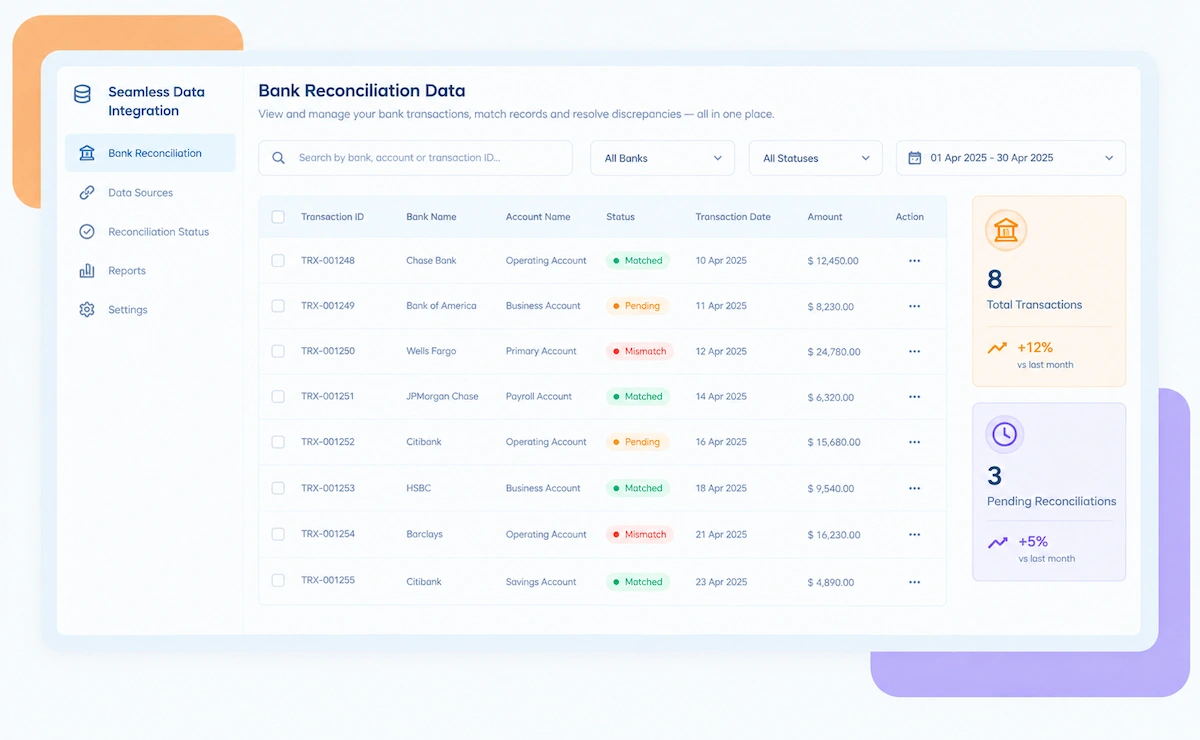
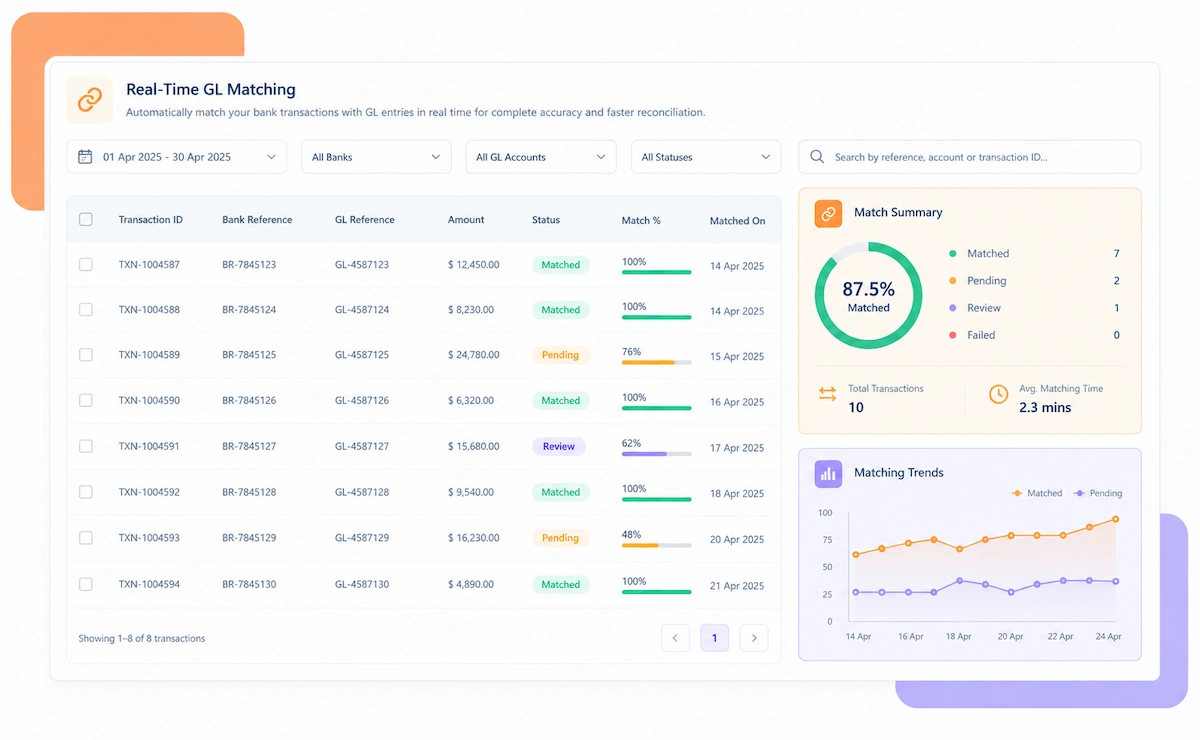
Kosh AI connects directly with all major banks and ERPs, enabling real-time data sync for faster, more accurate reconciliations—no manual uploads, no delays.


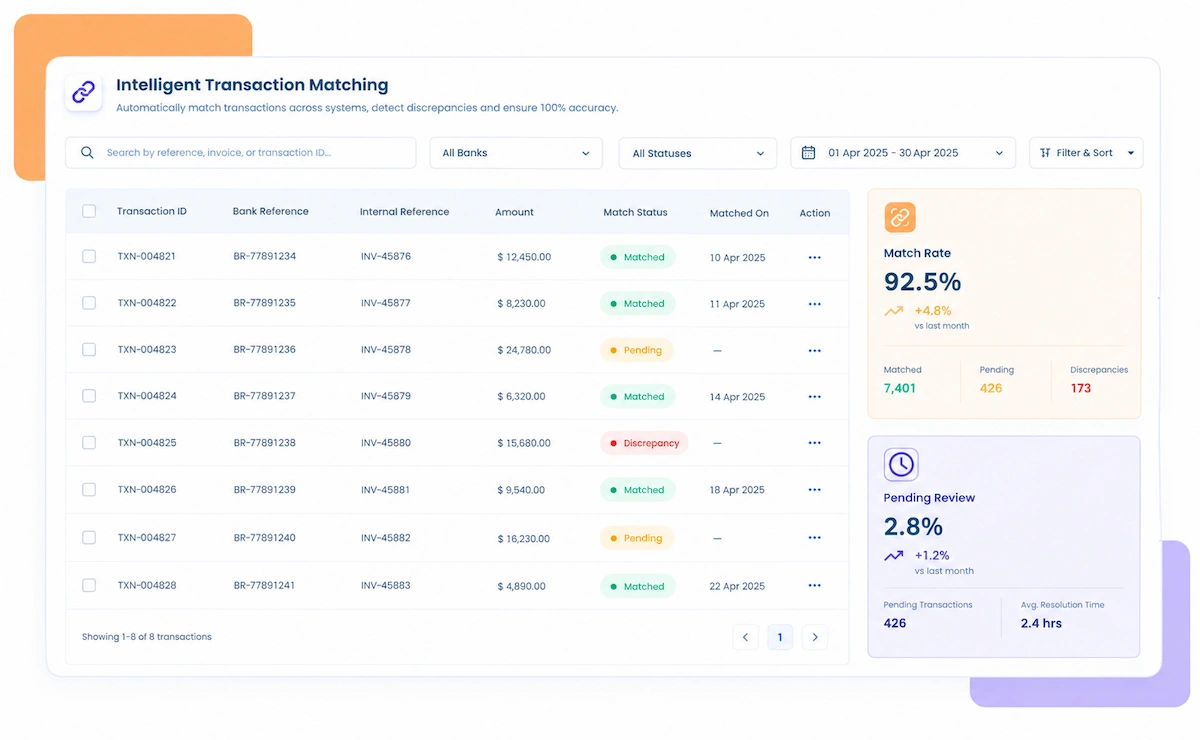
Amazon reconciliation software matches every order, fee, and refund in a seller's Amazon settlement report against the orders placed and the bank deposit eventually received. What makes it genuinely useful is working at the order level rather than the settlement level. A settlement report nets out thousands of orders into one payout figure, and a fee charged incorrectly on any single order is nearly impossible to spot in that net number. Kosh AI breaks every settlement down to its individual orders, checks each fee against Amazon's rate card, and matches every refund back to the order it reverses, so sellers can see exactly what a settlement paid for.

Here's what actually changes when Amazon settlement checking moves from a net-total spot check to full order-level reconciliation.
| What You're Comparing | Order-Level Amazon Reconciliation | Spreadsheet Settlement Matching |
|---|---|---|
| Checking a Settlement | Every settlement line matched to its order, fee, and refund automatically. | Someone exports the settlement report and skims it for anything that looks wrong. |
| Catching Fee Errors | Every fee checked against Amazon's rate card for that order's category and size tier. | Fee errors are caught only if someone happens to notice one that looks off. |
| Matching Refunds | Every refund matched to its original order, with fee reversals checked. | Refunds are usually accepted as reported without checking the fee reversal. |
| Handling Multiple Marketplaces | Each marketplace reconciled on its own currency and fee structure, in one system. | Each marketplace usually needs its own separate spreadsheet and process. |
| Disputing a Fee With Amazon | An order-level audit trail supports the dispute with evidence. | Disputes rely on manually digging through reports to rebuild the evidence. |
| Scaling With Order Volume | A growing order count doesn't require more manual reconciliation staff. | Order growth usually means more hours spent checking settlements every period. |
Connect your Amazon account to Kosh AI and get every settlement broken down to the order level, fees included.
Schedule a Quick DemoAmazon pays sellers in settlement batches, each one netting out referral fees, FBA fulfillment and storage charges, promotions, and refunds across a two-week period. The settlement report lists every line, but it's structured for Amazon's accounting, not for a seller trying to verify that each fee is correct. A single mischarged FBA fee or an under-refunded return is easy to lose inside thousands of lines netting to one deposit figure.
The case for Amazon reconciliation software isn't about replacing the settlement report. It's about unbundling it, matching every line back to the order it belongs to, and checking every fee against what Amazon's own rate card says it should be. That's the only way to reliably catch the fee errors and under-refunds that a net-total check will never surface, since they're designed to be small enough individually to pass unnoticed.
For sellers running high order volumes or multiple marketplaces, this isn't optional diligence; it's the only practical way to keep up. A seller moving a few hundred orders a month can eyeball a settlement report. A seller moving tens of thousands can't, and that's exactly where fee errors tend to go uncaught the longest.
It's not only for sellers running thousands of SKUs. Here's who tends to benefit most.
FBA fulfillment and storage fees are easy to mischarge at scale, and order-level checks are the only way to catch them.
Each additional marketplace roughly doubles the manual reconciliation work without automation.
Amazon settlements that don't tie out cleanly tend to delay month-end close every single period.
A high SKU count with frequent promotions means more opportunities for a fee to be charged incorrectly.
Reconciling dozens of acquired Amazon accounts needs a centralized system, not a spreadsheet per brand.
Chargebacks and compliance deductions on Vendor Central need their own reconciliation logic to make sense.
No tool is a perfect fit for every seller. Here's an honest look at what Amazon reconciliation software gets right, and what's worth planning around before you adopt it.
Amazon reconciliation software matches every order, fee, and refund in a seller's Amazon settlement report against actual orders and the bank deposit received. Kosh AI does this at the order level, checking every fee against Amazon's rate card automatically.
A settlement report nets out thousands of orders into one deposit figure, which makes an individual fee error or under-refund nearly impossible to spot by eye. Kosh AI unbundles every settlement to the order level, so each fee and refund can be checked on its own.
It pulls order, fee, and settlement data from Seller Central or Vendor Central, matches every settlement line to its order, and checks fees against Amazon's rate card for that order's category and size tier. Anything that doesn't match is flagged for review.
Yes. Kosh AI reconciles FBA fulfillment and storage fees, FBM referral-fee-only orders, and Vendor Central's chargeback and compliance deduction structure, each on its own logic.
Yes, Kosh AI calculates the expected fee for every order based on its category and size tier, then flags any fee that doesn't match what Amazon's rate card says it should be.
Every refund is matched back to its original order, and the fee reversal that should accompany it is checked against Amazon's refund policy. An under-refunded return is flagged for dispute.
Yes, most Amazon reconciliation software is built to pull order and settlement data from Amazon and transaction data from the systems you already use. Kosh AI connects to Amazon Seller Central and Vendor Central, alongside ERPs like SAP, Oracle, NetSuite, and QuickBooks.
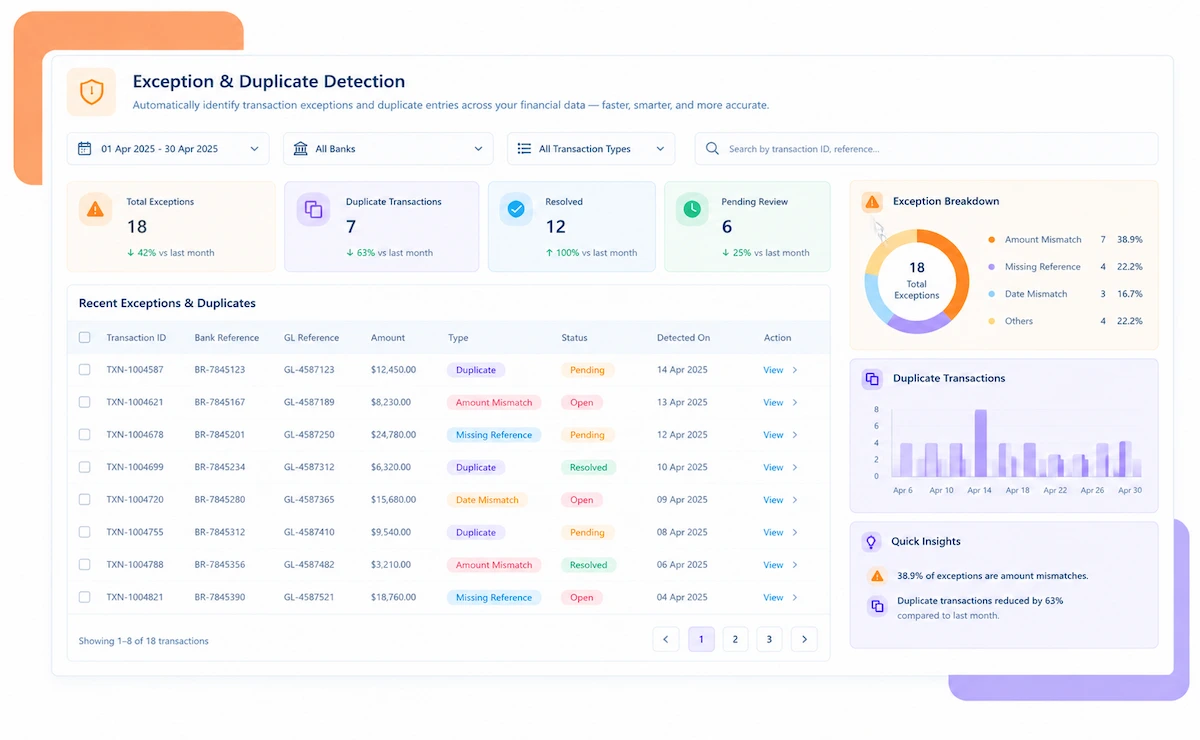
It gets flagged as an exception within the same reconciliation cycle, with the expected and actual amounts attached. From there, it's routed for review instead of sitting unexplained until month-end.
Most sellers can have their main marketplace reconciling automatically within a few weeks, since the software connects directly to Amazon. Kosh AI follows a similar timeline, with sellers running multiple marketplaces typically taking 2 to 3 months to fully configure.


Start with how many orders and marketplaces you're reconciling and whether fee errors have gone uncaught before. From there, compare options on order-level matching accuracy, FBA fee verification, and how well the audit trail supports a dispute with Amazon. Kosh AI is built around exactly that checklist, but it applies to any software you're comparing.
Book a demo and watch Kosh AI break down your own Amazon settlements to the order level.
Book a Demo