Razorpay Reconciliation Software for the Gap Between Captured and Settled

Kosh AI Matches Every Razorpay Transaction to Its RRN, UTR, and Bank Settlement, Catching What Never Actually Clears

  • Matches Transactions by RRN and UTR, Not Just Order ID
  • Catches Captured Payments That Never Settle to the Bank
  • Reconciles Across UPI, Cards, and Razorpay Route Splits
  • Flags Fee and Refund Mismatches the Same Settlement Cycle
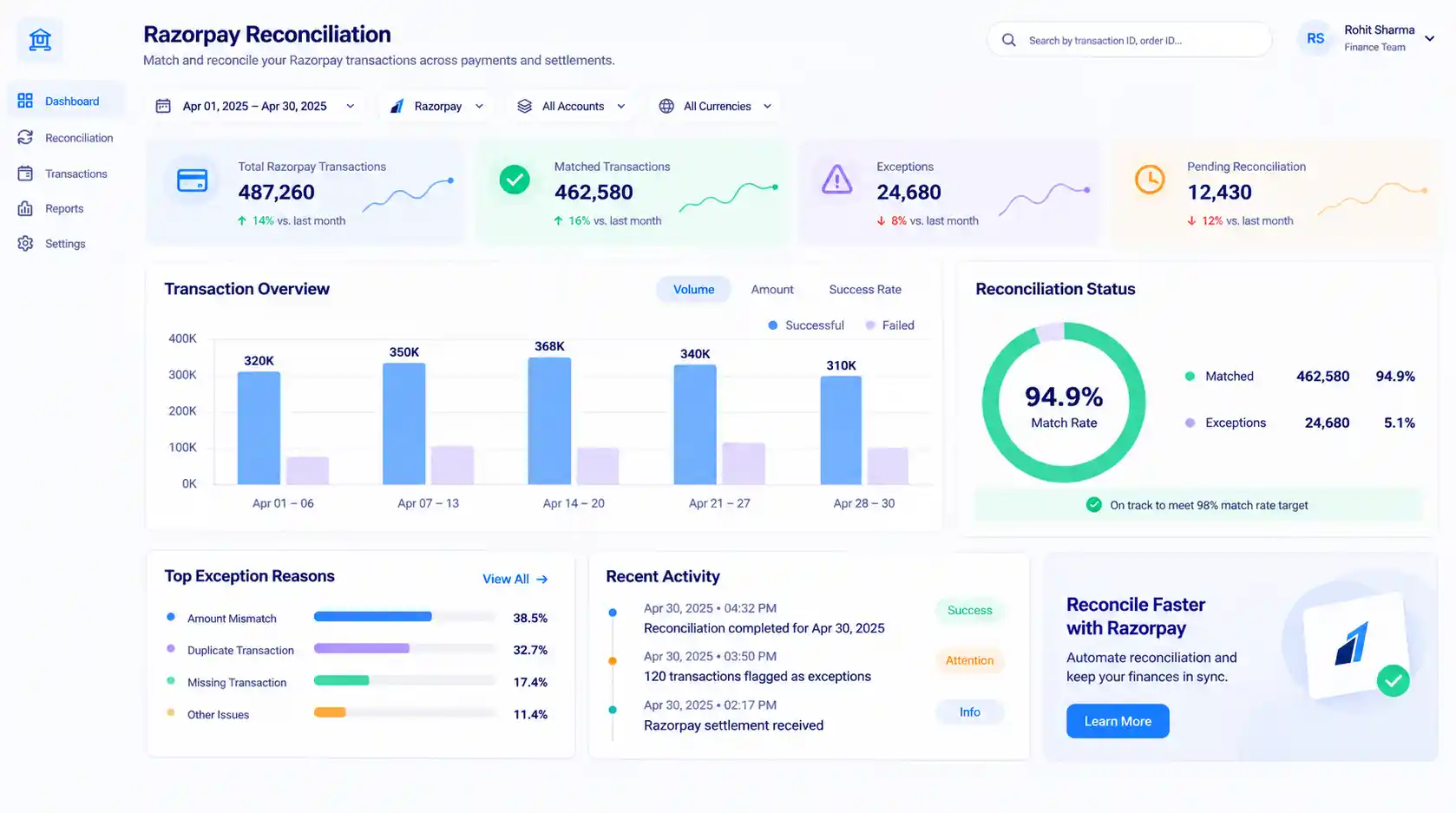
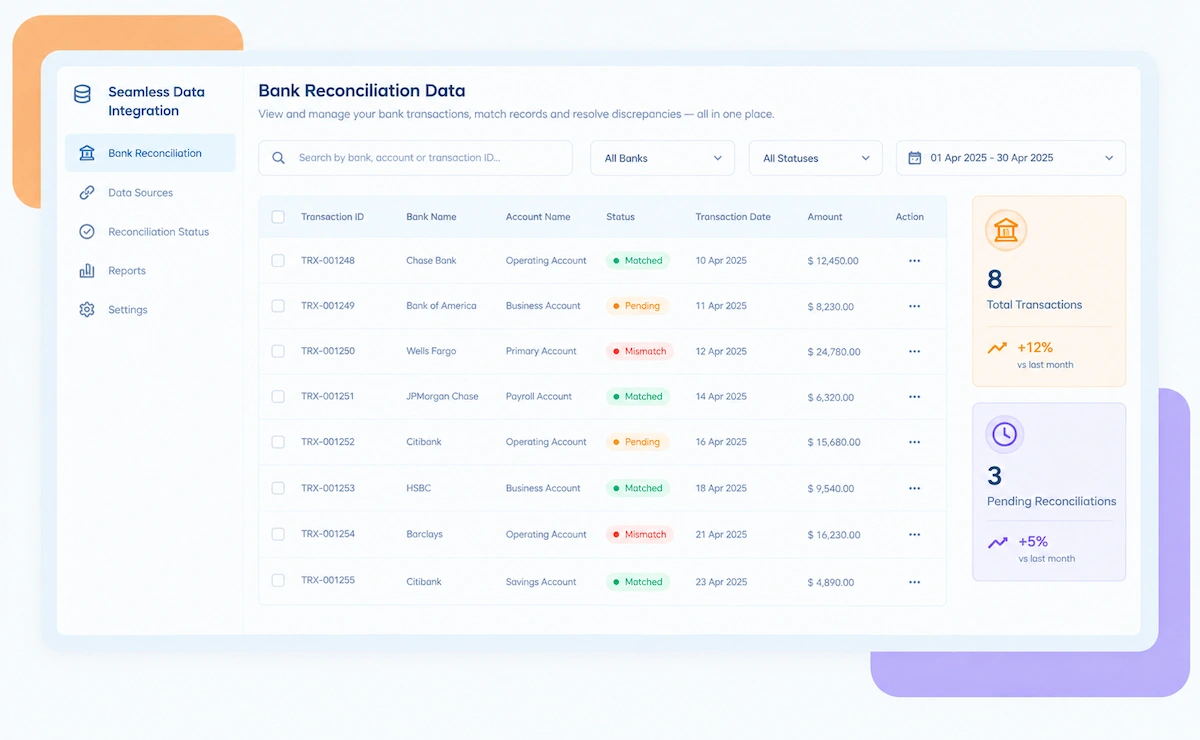
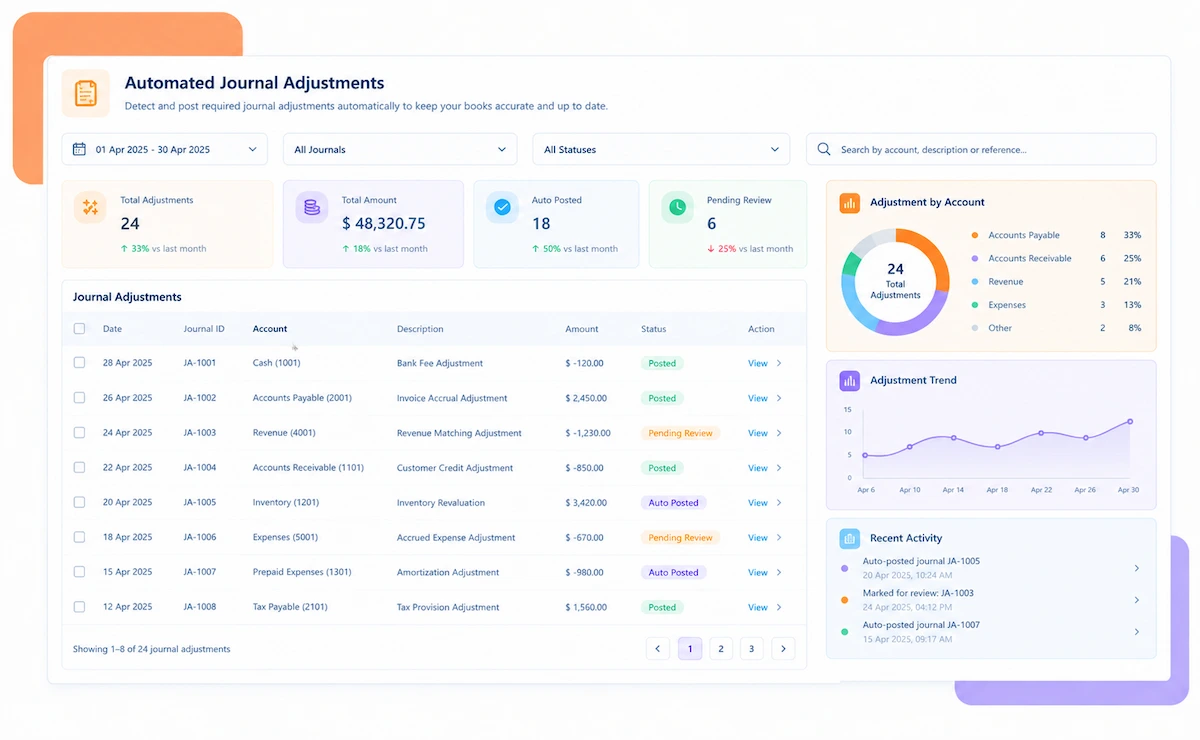
Kosh AI Razorpay Reconciliation Software Dashboard

NEW 2026 Razorpay Reconciliation Tool

Razorpay Shows the Payment as Captured. Did It Actually Settle to Your Bank?

A captured status in Razorpay isn't the same as money in the bank. Kosh AI tracks every transaction by its RRN and UTR, all the way to the actual settlement.

What Razorpay Reconciliation Software Automates for Finance Teams

Razorpay processes payments across UPI, cards, net banking, and wallets, each generating its own reference numbers and settlement timelines. A transaction showing as captured in the dashboard still has to actually settle to the bank, and that gap is where most reconciliation gaps hide. Kosh AI tracks every transaction by its RRN and UTR until it's confirmed in the bank statement.

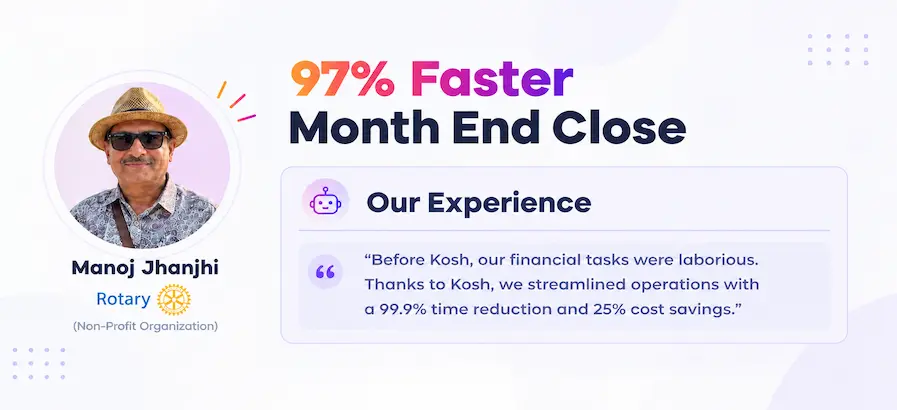
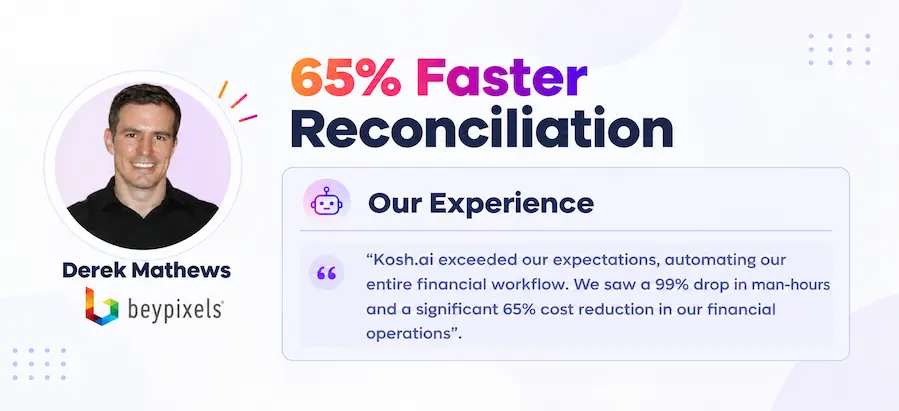
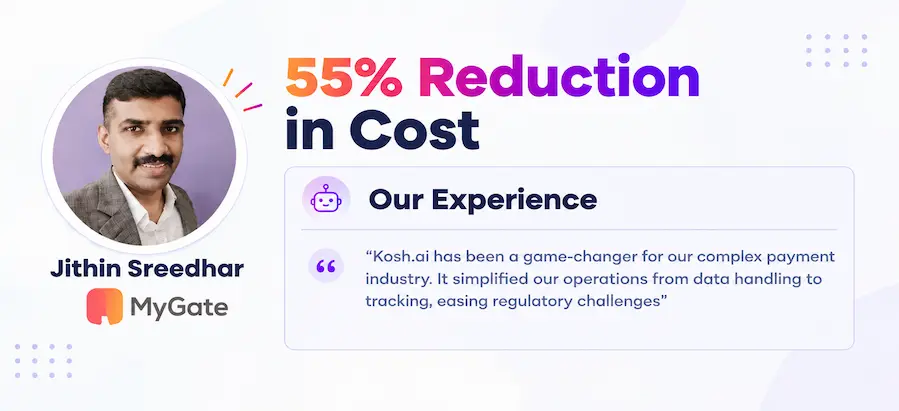
Proven Results From Automated Razorpay Reconciliation

Konica Minolta Business Solutions, U.S.A., Inc.
Ring Container
Conference Direct

How Razorpay Reconciliation Software Works in Four Steps

Kosh AI connects to your Razorpay account and bank statements, then tracks every transaction by its RRN or UTR until it's confirmed settled.

  • From Razorpay Directly: Kosh AI pulls transaction, settlement, and fee data straight from your Razorpay account.
  • Bank Statements Included: Bank statement data is pulled in parallel, ready to match against settlements as they post.
  • Every Payment Method Covered: UPI, cards, net banking, and wallet transactions are all tracked under one system.
  • Ready as Transactions Post: New captures and settlements are available to reconcile the moment Razorpay reports them.
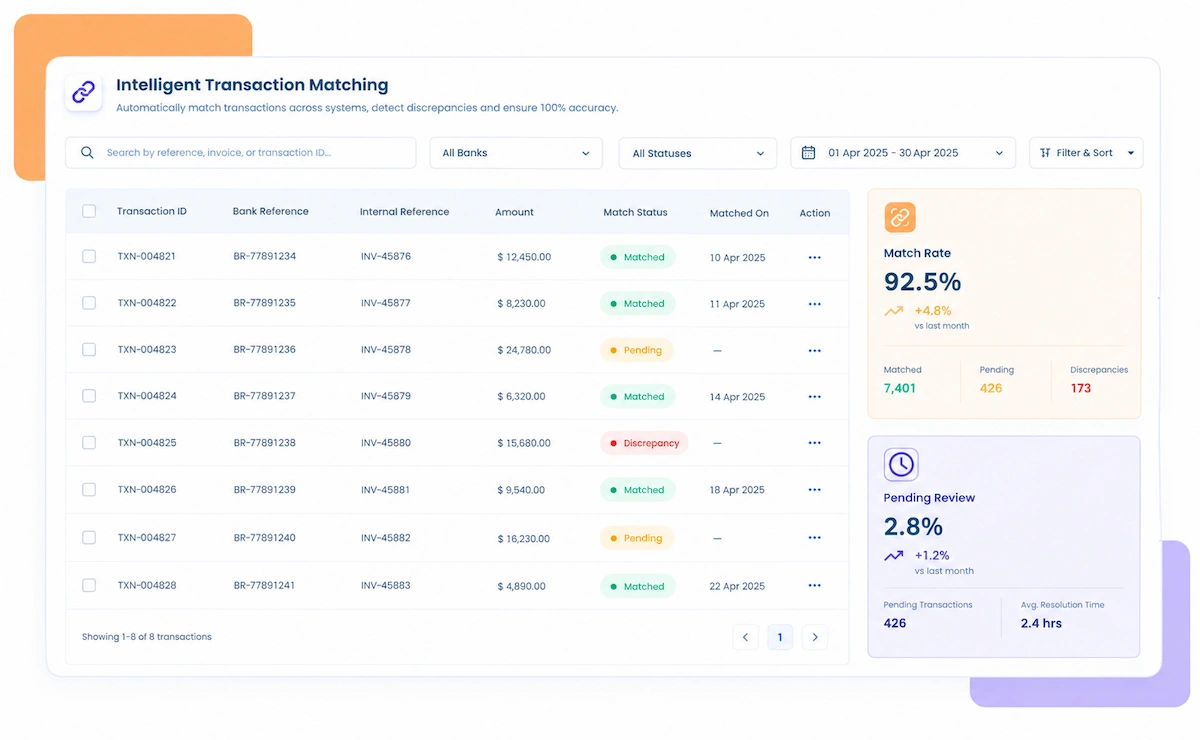
  • Reference-Number Matching: Transactions are matched using RRN for UPI and card payments, UTR for bank transfers.
  • Captured vs. Settled Tracked: Every captured transaction is tracked through to its actual bank settlement.
  • Route Splits Handled: Razorpay Route payouts are matched back to the originating transaction and linked account.
  • Improves With Use: Matching accuracy gets sharper the longer Kosh AI works with your transaction mix.
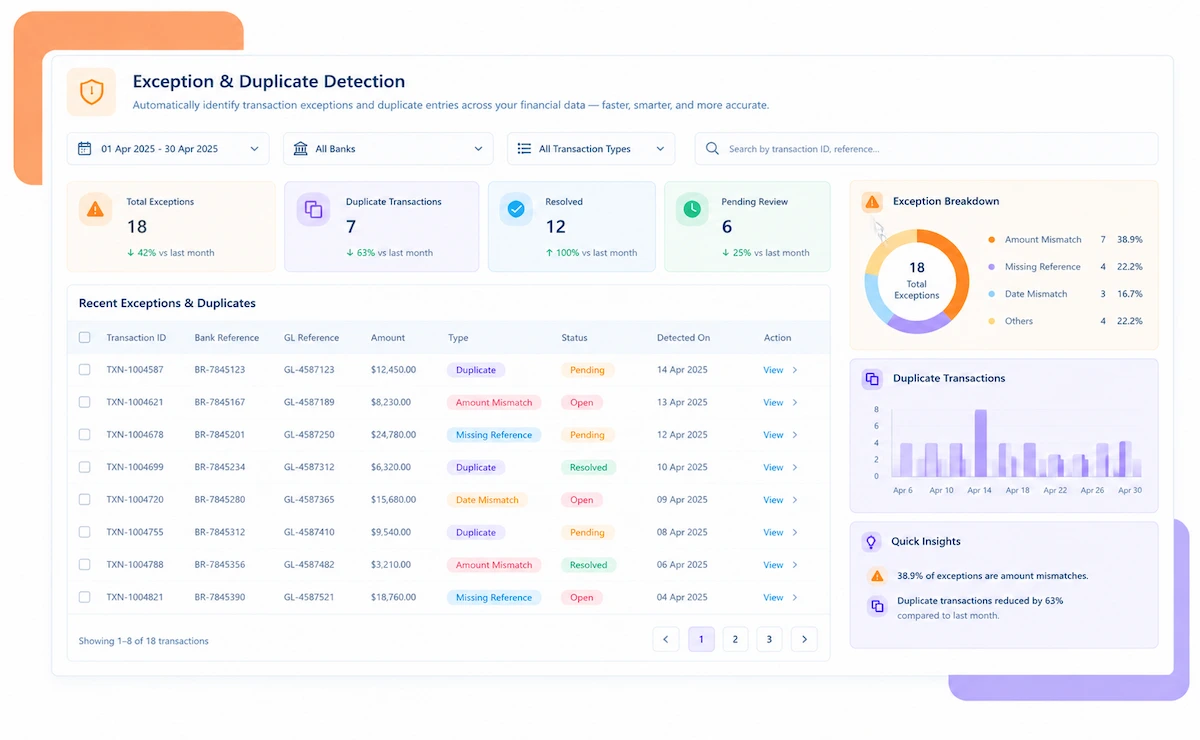
  • Captured-but-Unsettled Flagged: A transaction that never reaches the bank is surfaced within the same cycle.
  • Fee Mismatches Surfaced: Fees that don't match the expected rate for the payment method are flagged with the gap.
  • Sorted by Impact: The exceptions worth the most money rise to the top of the review list.
  • Resolved Before Month-End: Open exceptions are cleared in time to close the books without a scramble.
  • RRN-Level Audit Trail: Every transaction, fee, and refund stays attached to its RRN, UTR, and bank record.
  • Reports for Any Audience: Pull a settlement summary or a full dispute file for Razorpay support.
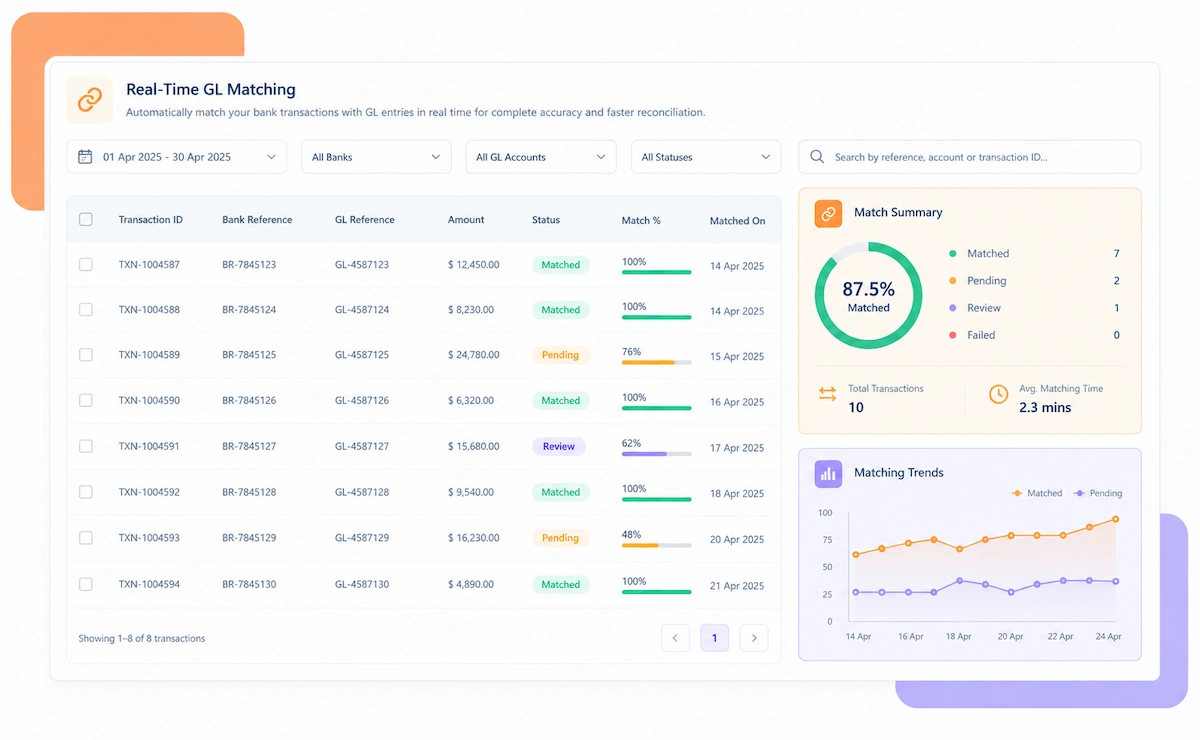
  • Reconciled to the Bank: Every settlement is matched to the actual bank statement line it produces.
  • Confidence in Every Number: Know exactly which transactions settled, which didn't, and why.

Razorpay Reconciliation That Fits How You Process Payments

Whether you take payments directly, split them across vendors, or run a marketplace, Kosh AI reconciles Razorpay the way your business actually operates.

UPI Transactions

UPI payments are matched by RRN, tracked through to settlement, and checked for any unsettled capture.

Card Payments

Card transactions are reconciled with their own fee structure, separate from UPI and net banking.

Net Banking and Bank Transfers

NEFT and RTGS transactions are matched by UTR against the expected settlement.

Wallet Payments

Wallet-based transactions are reconciled on their own settlement timeline and fee structure.

Ecommerce and D2C

High transaction volumes across payment methods are reconciled without a manual review each week.

Marketplaces Using Razorpay Route

Split settlements across vendors or sub-accounts are matched back to the originating transaction.

Subscriptions and SaaS

Recurring Razorpay payments are reconciled alongside one-off transactions.

BFSI and Fintech

Regulated payment flows through Razorpay are reconciled with full RRN and UTR-level audit trails.

Razorpay Reconciliation at Scale

Kosh AI reconciles high-volume Razorpay accounts down to the RRN and UTR level without manual review.

  • Reconcile millions of transactions across every payment method.
  • Spot captured-but-unsettled gaps with 15+ ML-driven risk models.
  • Keep a fully documented trail behind every transaction-to-bank match.
  • Razorpay Reconciliation for Growing Businesses

    Kosh AI gives smaller finance teams automated RRN and UTR matching without adding headcount as volume grows.

  • Replace manual settlement report matching with automatic reconciliation.
  • Handle rising transaction volume without extra staff.
  • Go live in weeks with a ready-made Razorpay connector.
  • What Changes When Razorpay Reconciles at the RRN Level

    A captured status alone doesn't confirm money reached the bank. Kosh AI tracks every transaction until settlement is actually confirmed.

    1

    Catch Payments That Never Settle

    A captured transaction that fails to settle is flagged within the same cycle, not discovered weeks later.

    2

    Trust Every RRN and UTR Match

    Matching by the actual bank-side reference number holds up even when order IDs don't align cleanly.

    3

    Catch Fee Errors by Payment Method

    Fees that don't match the expected rate for UPI, cards, or net banking are flagged automatically.

    4

    Reconcile Marketplace Splits Accurately

    Razorpay Route payouts are matched back to the originating transaction and linked account.

    5

    Close Faster Every Settlement Cycle
    Every payment method is reconciled in one system instead of separate reports per method.

    6

    Scale Without Adding Reconciliation Headcount

    Transaction volume can grow without a proportional increase in manual reconciliation work.

    The Results of Automating Razorpay Reconciliation

    65%Faster Settlement Reconciliation
    85%Of Transactions Matched Without Help
    90%Fewer Manually Re-Keyed Entries

    Integrate Seamlessly with Your Existing ERP Systems

    Kosh AI connects directly with all major banks and ERPs, enabling real-time data sync for faster, more accurate reconciliations—no manual uploads, no delays.

    What Is Razorpay Reconciliation Software?

    Razorpay reconciliation software matches every transaction processed through Razorpay against its actual bank settlement, using the bank-side reference numbers, RRN for UPI and card payments, UTR for bank transfers, rather than relying solely on order IDs that don't always align cleanly across systems. What makes this matter is the gap between a transaction showing as captured in Razorpay's dashboard and that same transaction actually settling to the bank. Kosh AI tracks every capture through to confirmed settlement, catching the cases where that gap never closes.

    Razorpay reconciliation dashboard illustration

    Order-ID Matching vs. RRN-Level Razorpay Reconciliation

    Here's what actually changes when Razorpay reconciliation moves from matching on order ID alone to matching on the actual bank-side reference number.

    What You're Comparing RRN-Level Razorpay Reconciliation Order-ID-Only Matching
    Matching TransactionsMatched by RRN or UTR, the actual bank-side reference number for the payment.Matched by order ID alone, which can break when systems don't align cleanly.
    Catching Unsettled CapturesA captured transaction is tracked until bank settlement is confirmed or flagged as unsettled.A captured status is often taken as confirmation that the payment settled.
    Handling Razorpay Route SplitsEvery split payout matched back to its source transaction and linked account.Split settlements across vendors are usually reconciled manually, if at all.
    Verifying FeesExpected fees recalculated per payment method and compared automatically.Fees are usually accepted as reported without recalculating them.
    Closing the BooksEvery payment method reconciles in one system with a documented trail.Each payment method often needs its own separate check and spreadsheet.
    Scaling With VolumeA growing transaction volume doesn't require more manual reconciliation staff.Transaction growth usually means more hours spent reconciling every cycle.

    Reconcile Every Razorpay Transaction in Just Weeks

    Connect your Razorpay account to Kosh AI and track every transaction by RRN and UTR, all the way to the bank.

    Schedule a Quick Demo
    Loreal Touchless

    Why RRN-Level Matching Matters for Razorpay Reconciliation

    A payment gateway like Razorpay reports a transaction's status as captured the moment authorization succeeds, which is a different event from the money actually settling into the merchant's bank account. Most of the time that gap closes without incident. The cases that matter are the ones where it doesn't, and those are exactly the cases that order-ID-based matching tends to miss, because the order still looks complete on the business side.

    The case for RRN and UTR-level reconciliation is that it matches on the reference number the bank actually uses, not the order ID the business system generated. That distinction matters most during disputes, partial settlements, or when Razorpay Route splits a single transaction across multiple linked accounts, situations where an order ID alone doesn't reliably map to what happened on the settlement side.

    For any business processing meaningful volume across UPI, cards, and net banking, manually tracking which captured transactions actually settled isn't realistic past a certain scale. Reconciliation software that works at the RRN and UTR level is what makes that tracking possible without a growing reconciliation team.

    Who Actually Needs Razorpay Reconciliation Software

    It's not only for businesses running a dozen payment methods. Here's who tends to benefit most.

    1

    Businesses Processing High Transaction Volumes

    A small percentage of unsettled captures still adds up to real money at scale, and manual tracking can't keep up.

    2

    Marketplaces Using Razorpay Route

    Split settlements across vendors or sub-accounts need RRN-level matching to trace correctly.

    3

    Businesses Accepting Multiple Payment Methods

    UPI, cards, net banking, and wallets each need their own fee and settlement logic reconciled correctly.

    4

    Finance Teams Closing the Books Monthly

    Unexplained Razorpay settlement gaps tend to delay month-end close every single period.

    5

    BFSI and Regulated Fintech Businesses

    A documented RRN and UTR-level audit trail supports compliance and dispute resolution.

    6

    Subscription and Recurring-Revenue Businesses

    Recurring Razorpay charges need to be reconciled alongside one-off transactions without extra manual tracking.

    Razorpay Reconciliation Software: An Honest Assessment

    No tool is a perfect fit for every business. Here's an honest look at what Razorpay reconciliation software gets right, and what's worth planning around before you adopt it.

    RRN matching icon

    Pro: True RRN and UTR-Level Matching

    Reconciliation holds up on the actual bank-side reference number, not just the order ID.

    Unsettled detection icon

    Pro: Catches Captured-but-Unsettled Payments

    A transaction that never actually settles is flagged within the same cycle, not months later.

    Setup effort icon

    Con: Upfront Mapping Effort

    Connecting Razorpay and your bank accounts correctly takes real setup effort before matching runs smoothly.

    Dependency icon

    Con: Depends on Bank Statement Timeliness

    Matching accuracy depends on how quickly and consistently your bank statement data is available.

    Razorpay Reconciliation Software FAQs

    What is Razorpay reconciliation software?

    Razorpay reconciliation software matches every transaction processed through Razorpay against its actual bank settlement, using reference numbers like RRN and UTR. Kosh AI does this automatically, catching captured transactions that never actually settle.

    What is an RRN, and why does it matter for reconciliation?

    An RRN, or retrieval reference number, is the bank-side reference tied to a UPI or card transaction. Matching by RRN holds up even when order IDs don't align cleanly across systems, which makes reconciliation more reliable than order-ID matching alone.

    How is a captured payment different from a settled one?

    Captured means the payment authorization succeeded on Razorpay's side. Settled means the money has actually landed in the merchant's bank account. Kosh AI tracks every captured transaction until settlement is confirmed, flagging any that never close that gap.

    How does Razorpay reconciliation software work?

    It pulls transaction and settlement data from Razorpay and bank statement data from your accounts, then matches transactions using RRN for UPI and card payments and UTR for bank transfers. Anything that doesn't match within the expected window gets flagged.

    Does it work with Razorpay Route for marketplaces?

    Yes, Kosh AI matches split settlements processed through Razorpay Route back to the originating transaction and the linked account they were routed to.

    Can it verify Razorpay fees?

    Yes, expected fees are recalculated per payment method and transaction type, then compared against what was actually charged, with mismatches flagged for review.

    Can Razorpay reconciliation software connect to my ERP and bank?

    Yes, most Razorpay reconciliation software is built to pull transaction data from Razorpay and statement data from your bank. Kosh AI connects to Razorpay and major banks, alongside ERPs like SAP, Oracle, NetSuite, and QuickBooks.

    What happens when a transaction never settles?

    It gets flagged as an exception within the same reconciliation cycle, with the RRN, amount, and expected settlement date already attached, ready for review instead of sitting unnoticed.

    How long does it take to implement Razorpay reconciliation software?

    Most businesses can have their main payment methods reconciling automatically within a few weeks, since the software connects directly to Razorpay and your bank. Kosh AI follows a similar timeline, with businesses using Razorpay Route typically taking 2 to 3 months to fully configure.

    How do I choose the right Razorpay reconciliation software for my business?

    Start with how many payment methods and how much volume you're reconciling, and whether unsettled captures have gone unnoticed before. From there, compare options on RRN and UTR-level matching accuracy, Route support, and how fast mismatches are flagged. Kosh AI is built around exactly that checklist, but it applies to any software you're comparing.

    Ready to Find Out Which Captures Never Settled?

    Book a demo and watch Kosh AI reconcile your own Razorpay transactions down to the RRN.

    Book a Demo