Kosh AI Validates Every Scheme Fee, Interchange Line, and Local Acquiring Settlement in Adyen's Own Settlement Detail Report
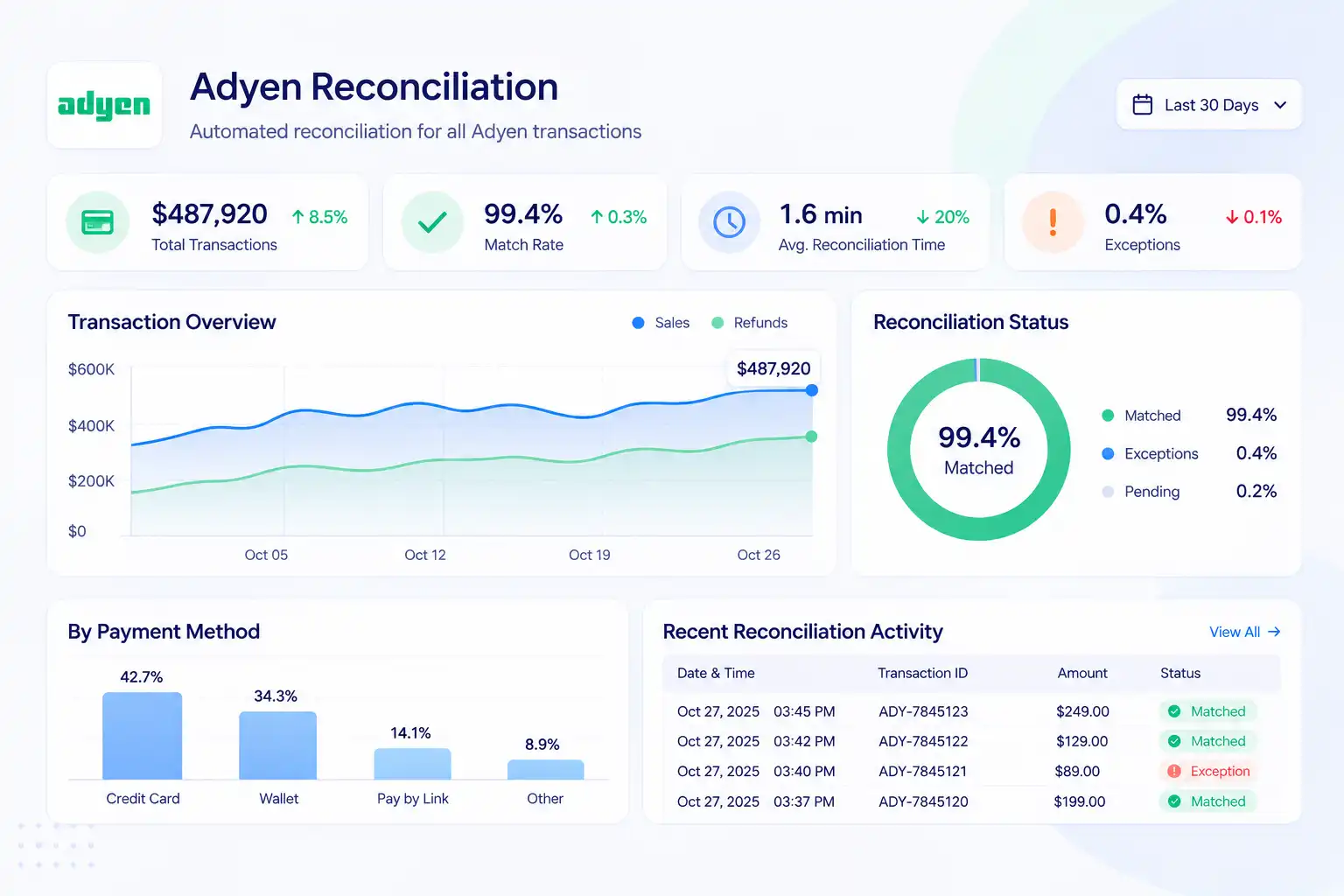
Adyen's Settlement Detail Report is granular by design, it itemizes interchange, scheme fees, and processing fees per transaction rather than rolling everything into one blended number. That level of detail is valuable, but only if someone actually validates it. Kosh AI checks every line automatically.
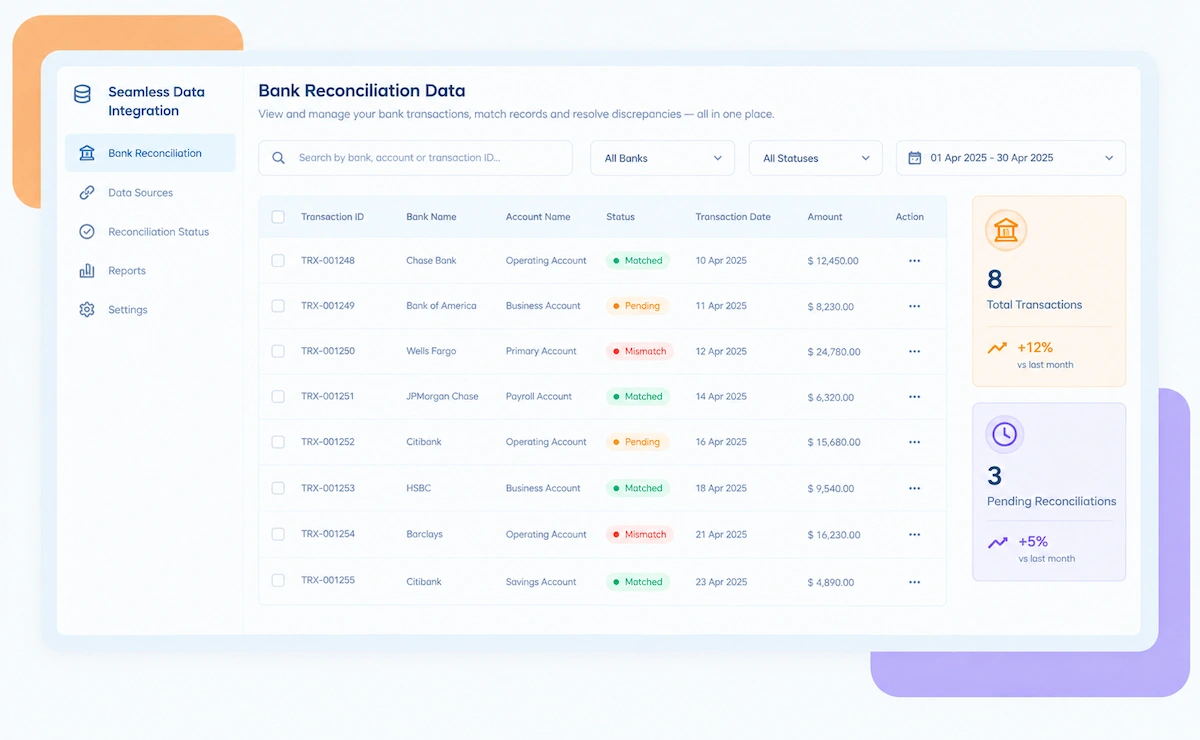
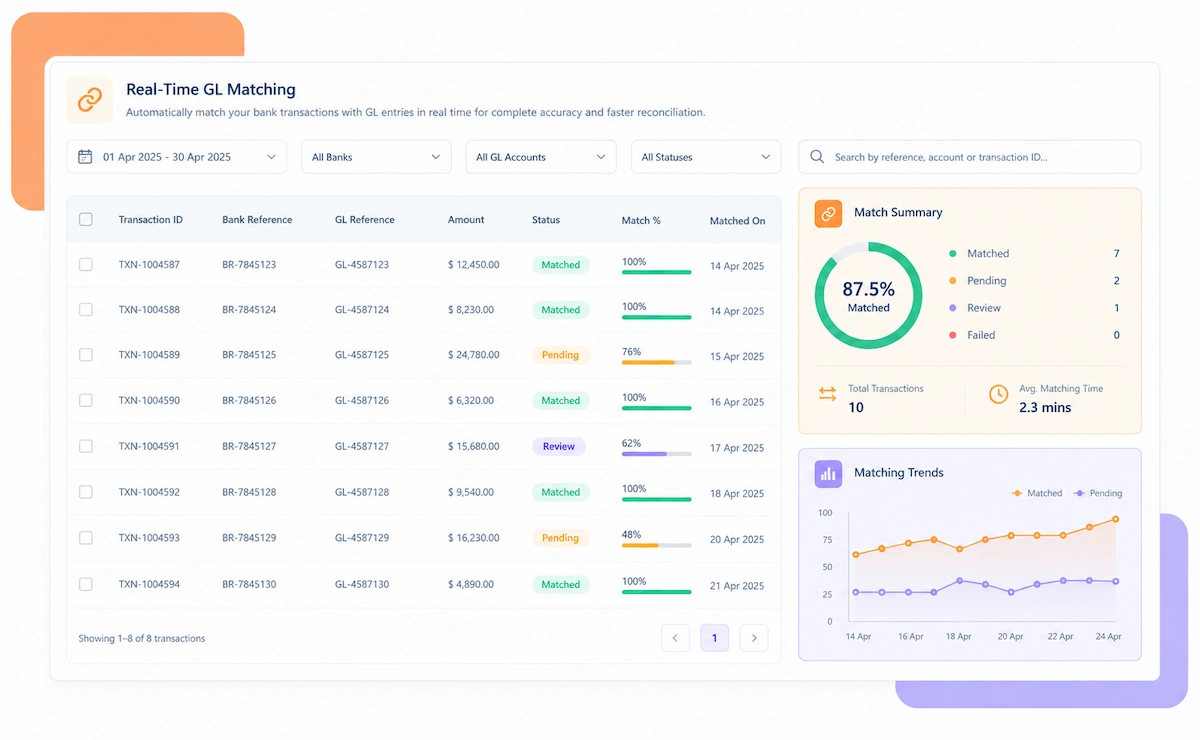
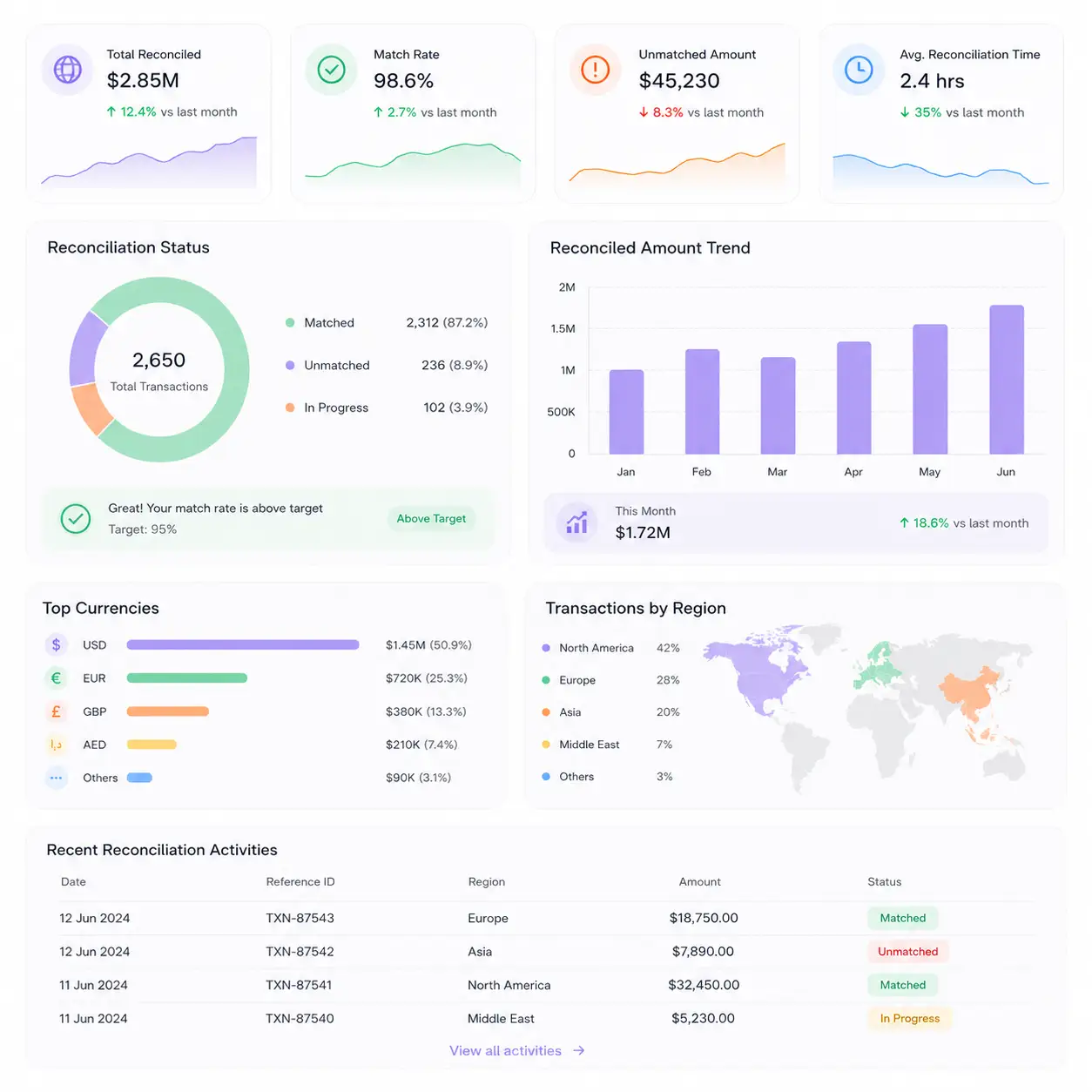
Kosh AI connects to your Adyen account and bank statements, then validates every line in the Settlement Detail Report across every market you operate in.
Whether you sell online, in-store, or across both at once, Kosh AI reconciles Adyen the way your business actually operates.
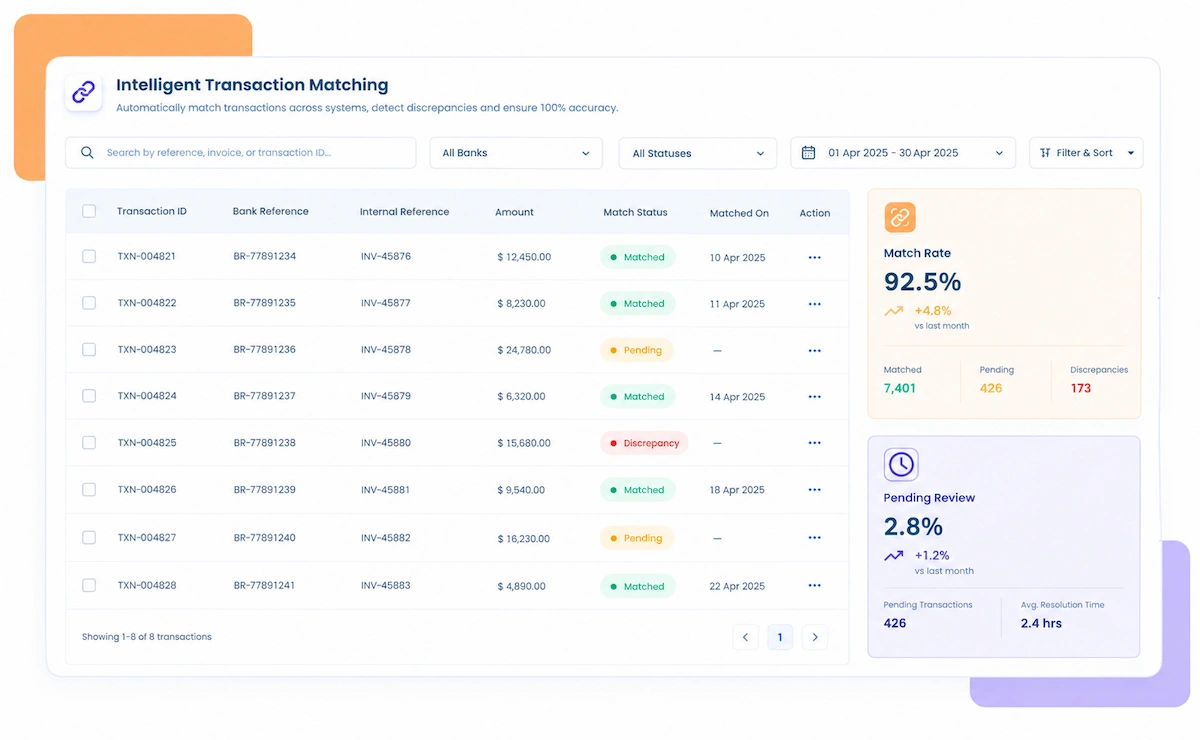
Online transactions are matched to their settlement and every fee line validated.
In-store transactions through Adyen's unified commerce platform are reconciled on the same view as online.
Settlements across every country Adyen acquires in are matched to the correct local entity.
Recurring Adyen charges are reconciled alongside one-off transactions.
Online and in-store sales are reconciled under one view, including cross-channel refunds.
High-volume microtransactions across multiple markets are reconciled without manual review.
Cross-border bookings and multi-currency settlements are matched to the correct local entity.
Split settlements across sellers are matched back to the originating transaction.
Kosh AI validates Settlement Detail Reports across high-volume, multi-market Adyen accounts.
Kosh AI gives smaller finance teams automated fee validation without adding headcount as volume grows.
Adyen gives you the detail. Kosh AI makes sure someone's actually checking it, line by line, batch by batch.

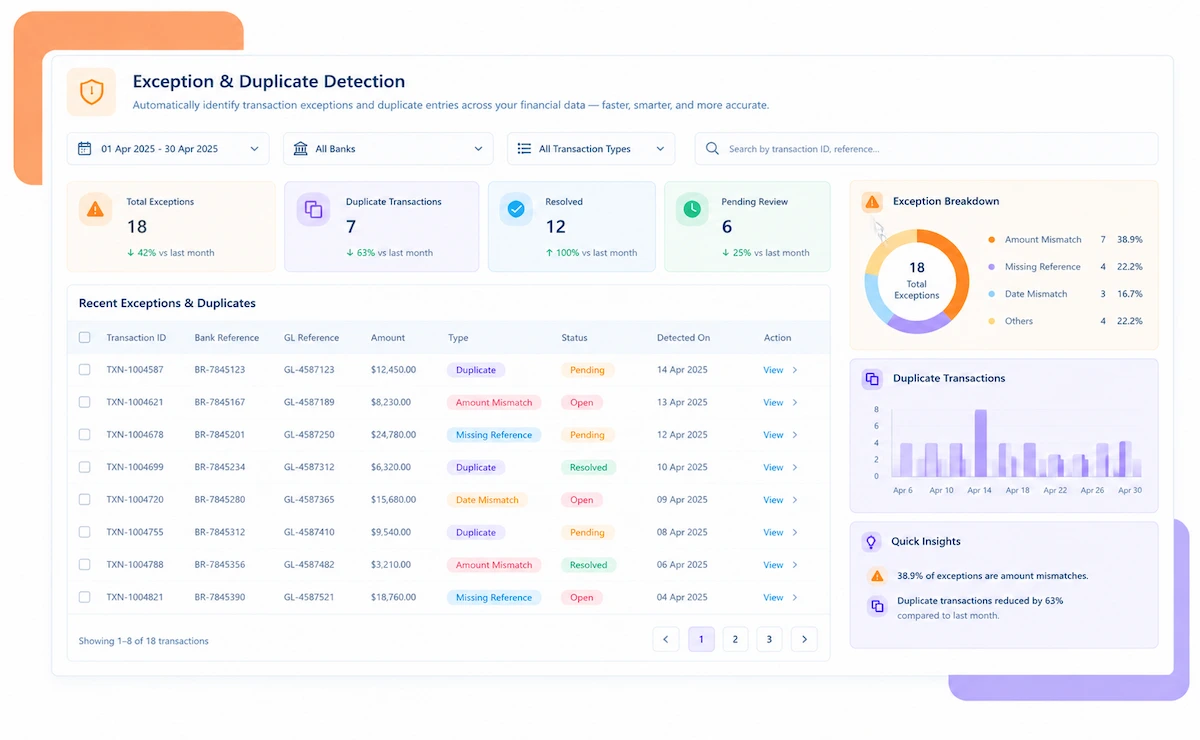
A single mispriced interchange line is flagged the same cycle, instead of going unnoticed inside a long settlement report.
Each transaction's interchange and markup is checked against your contracted rate, not just trusted at face value.
Settlements across markets are matched to the right entity and currency instead of blended together.
Unified commerce transactions are reconciled on one view, including cross-channel refunds.
Every market and channel reconciles in one system instead of separate reports per entity.
New countries and currencies don't require a proportional increase in manual reconciliation work.
Kosh AI connects directly with all major banks and ERPs, enabling real-time data sync for faster, more accurate reconciliations—no manual uploads, no delays.


Adyen reconciliation software validates every line item in Adyen's Settlement Detail Report, interchange, scheme fees, and processing fees, against what each transaction should have cost, rather than simply trusting the itemized report at face value. What makes Adyen reconciliation distinct is the level of detail it provides: because Adyen passes through interchange and scheme fees transparently rather than blending them into one rate, and because it often acts as local acquirer across multiple countries, there's a lot of detail to check. Kosh AI checks all of it, across every market and channel, local or cross-border, online or in-store.

Here's what actually changes when Adyen reconciliation moves from trusting the Settlement Detail Report to validating every line in it.
| What's Being Checked | Line-by-Line Settlement Validation | Trusting the Report as Reported |
|---|---|---|
| Checking Fee Lines | Every interchange, scheme, and processing fee line is validated against its expected value. | The Settlement Detail Report is accepted without checking individual lines. |
| Local Acquiring Entities | Settlements matched to the correct entity and currency per market. | Multi-market settlements are often reconciled as one blended total. |
| Unified Commerce | Online and in-store transactions reconciled together on one view. | Online and POS are usually reconciled as separate, disconnected systems. |
| Catching Modification Gaps | Refunds and captures matched back to their original authorization. | Modifications are checked only when a discrepancy is noticed elsewhere. |
| Closing the Books | Every market and channel reconciles in one system with a documented trail. | Each local entity often needs its own separate check and spreadsheet. |
| Adding a new country or acquiring entity | New countries and currencies don't require more reconciliation staff. | Market expansion usually means more hours spent reconciling every cycle. |
Connect your Adyen account to Kosh AI and check every fee line in the Settlement Detail Report, across every market you operate in.
Schedule a Quick DemoMost payment providers blend fees into a single rate. Adyen does the opposite, which means the detail to catch errors is already there.

It's not only for businesses operating in a dozen countries. Here's who tends to benefit most.
Local acquiring settlements across markets need to be matched to the correct entity and currency.
Online and in-store transactions need one reconciled view, not two disconnected systems.
Itemized fee lines only pay off if every one of them is actually checked against the contracted rate.
Unexplained settlement report gaps tend to delay month-end close every single period.
Microtransaction volumes across markets make manual fee line checking impractical.
Payouts split across sellers need to be matched back to the originating transaction.
No tool is a perfect fit for every business. Here's an honest look at what Adyen reconciliation software gets right, and what's worth planning around before you adopt it.
Interchange, scheme fees, and processing fees are each checked against their expected value, not just trusted as reported.

Both channels reconcile on one view, including refunds that cross between them.
Connecting Adyen's multi-entity structure and your bank accounts correctly takes real setup effort.
A late or incomplete bank statement delays confirming settlements even after every fee line checks out.
Adyen reconciliation software validates every line in Adyen's Settlement Detail Report, interchange, scheme fees, and processing fees, against what each transaction should have cost. Kosh AI does this automatically across every market and channel.
Adyen itemizes interchange, scheme fees, and processing fees separately rather than blending them into one rate, which gives finance teams the detail to catch pricing errors, as long as someone actually checks every line.
Adyen acts as the local acquirer in many countries, meaning settlements can come from different legal entities in different currencies. Reconciliation needs to match each settlement to the correct entity, not blend them into one total.
Yes, Kosh AI reconciles online and point-of-sale transactions through Adyen together, including refunds that cross between channels.
It pulls the full Settlement Detail Report from Adyen and bank statement data from your accounts, then validates every fee line and matches settlements to the correct bank deposit.
Yes, each transaction's interchange and markup is checked against your contracted pricing, with mismatches flagged for review.
Yes, Kosh AI connects to Adyen and major banks, alongside ERPs like SAP, Oracle, NetSuite, and QuickBooks, pulling data from all of them automatically.
It's flagged as an exception within the same reconciliation cycle, with the specific line item, expected value, and actual value already attached, ready for review.
Most businesses can have their main markets reconciling automatically within a few weeks. Businesses operating across many local acquiring entities typically take 2 to 3 months to fully configure.
Start with how many markets and channels you operate across, since that determines how much settlement detail you're actually dealing with. From there, compare options on fee-line validation accuracy and multi-entity support. Kosh AI is built around exactly that checklist, but it applies to any software you're comparing.
Book a demo and watch Kosh AI check your own Adyen Settlement Detail Report, line by line.
Book a Demo