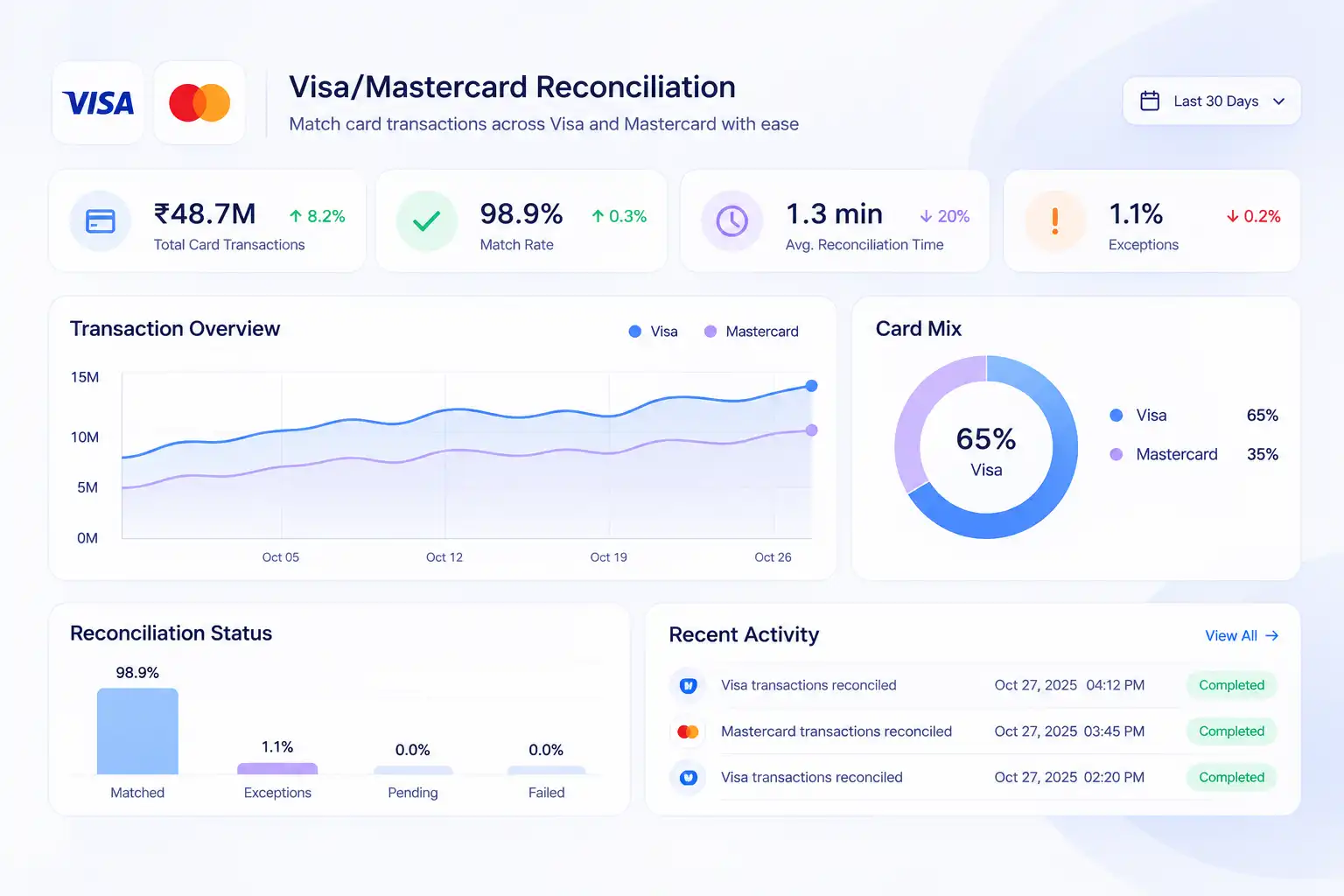
Kosh AI Checks Every Visa and Mastercard Transaction Against the Interchange Rate It Should Have Qualified For, Not Just the Rate You Were Charged
Interchange isn't one number. It's a category assigned per transaction based on card type, how it was processed, and whether every required data field was submitted correctly. Missing one field can downgrade a transaction to a more expensive category without any obvious signal. Kosh AI checks every transaction against the category it should have qualified for.


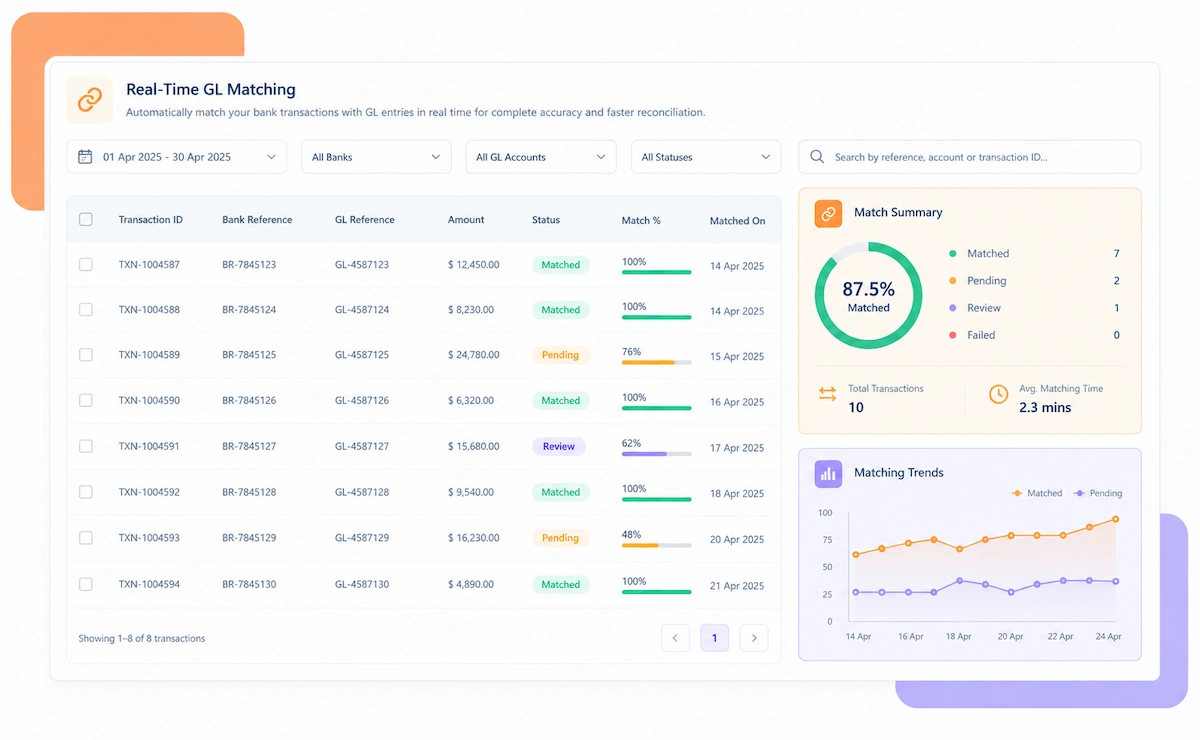
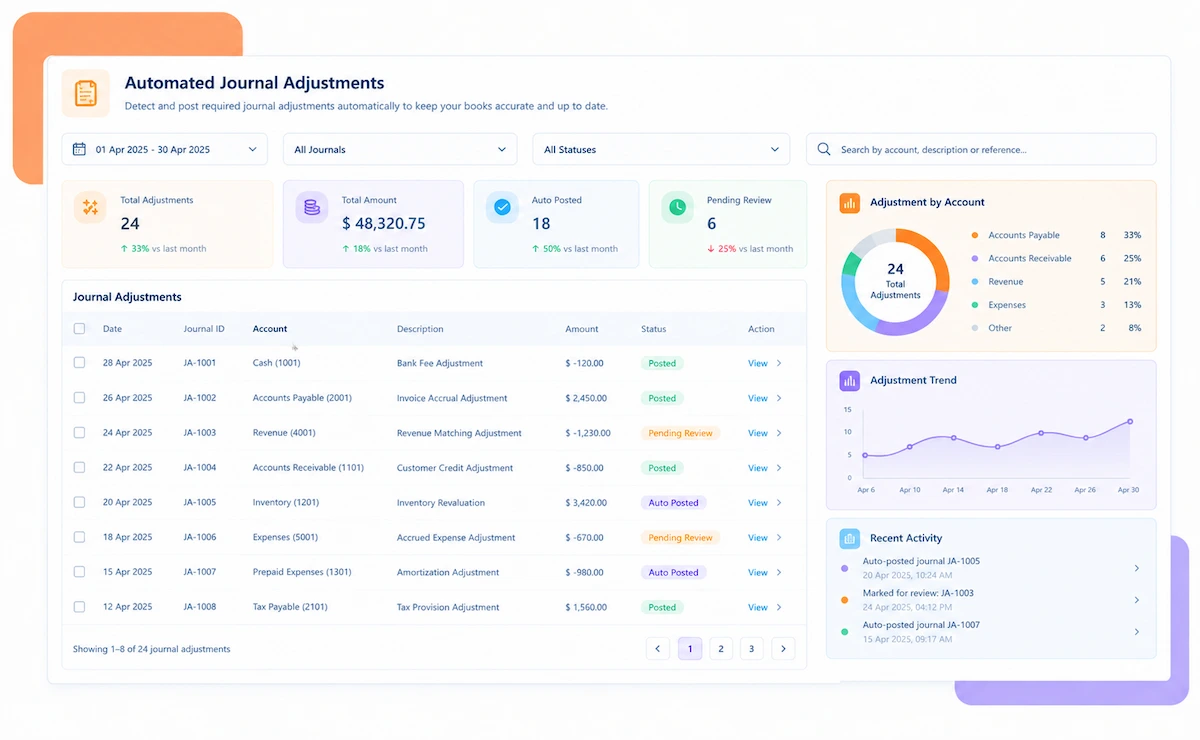
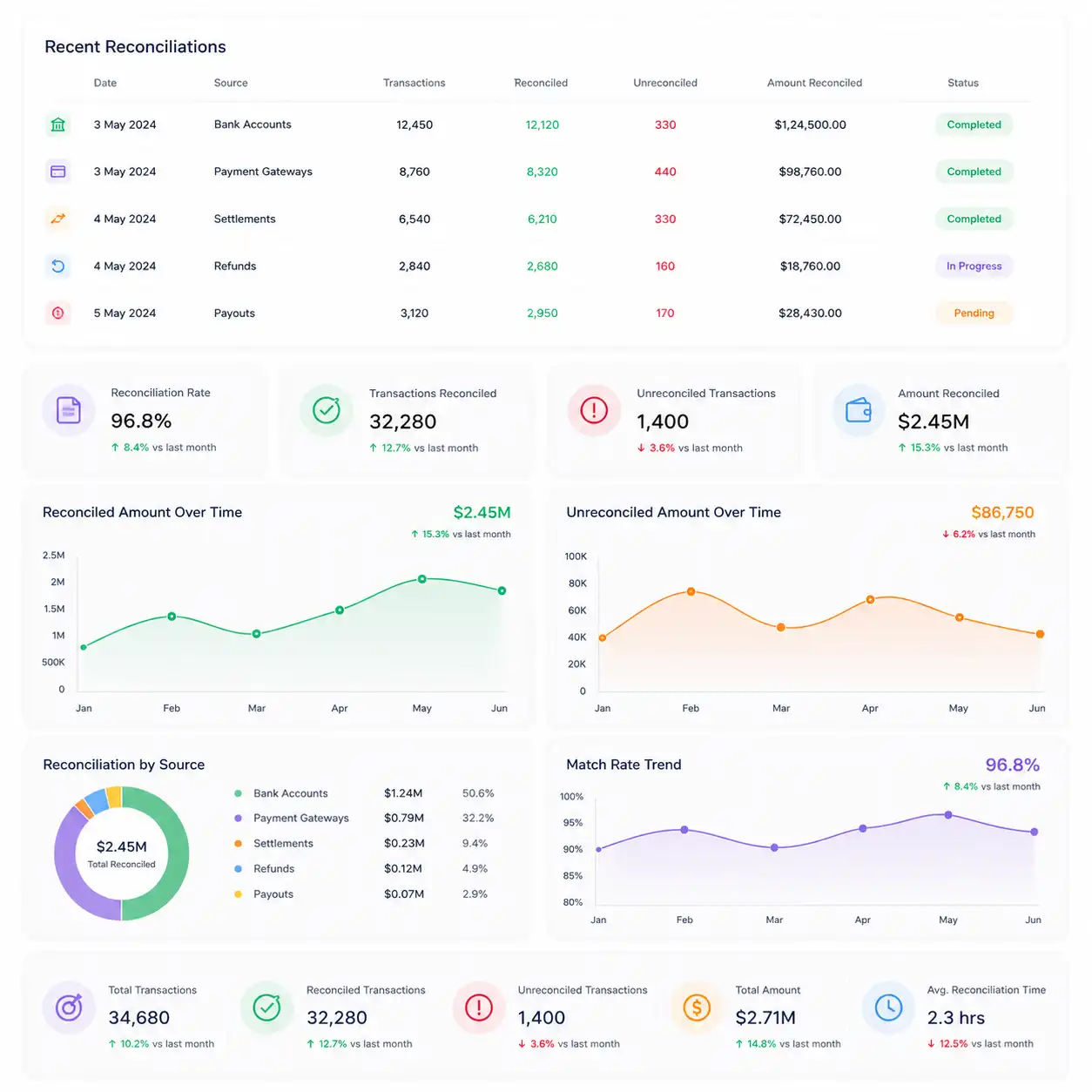
Kosh AI connects to your acquirer or processor feed and bank statements, then checks every card transaction against the interchange category it should have earned.

Whether you process card-present retail transactions, card-not-present ecommerce, or a mix of both, Kosh AI checks interchange qualification the way your business actually operates.
In-store transactions are checked against the qualifying category for card-present processing.

Online transactions are checked against AVS, CVV, and other data requirements that affect qualification.
Level 2 and Level 3 data requirements for commercial cards are checked separately from consumer cards.
Stored-credential transactions are checked against their own interchange rules.
High transaction volumes across locations are checked for downgrades without a manual review each week.
Card-not-present transactions are checked for the data gaps that commonly trigger downgrades.
Commercial card transactions are checked against Level 2 and Level 3 qualifying data requirements.
Businesses processing on behalf of sub-merchants check qualification across their entire portfolio.
Kosh AI checks interchange qualification across high-volume card portfolios without manual review.
Kosh AI gives smaller finance teams automated downgrade detection without adding headcount as volume grows.
A blended acquirer rate hides which transactions downgraded and why. Kosh AI checks every transaction against the category it should have earned.

A downgraded transaction is flagged within the same cycle, not discovered months later in an annual review.
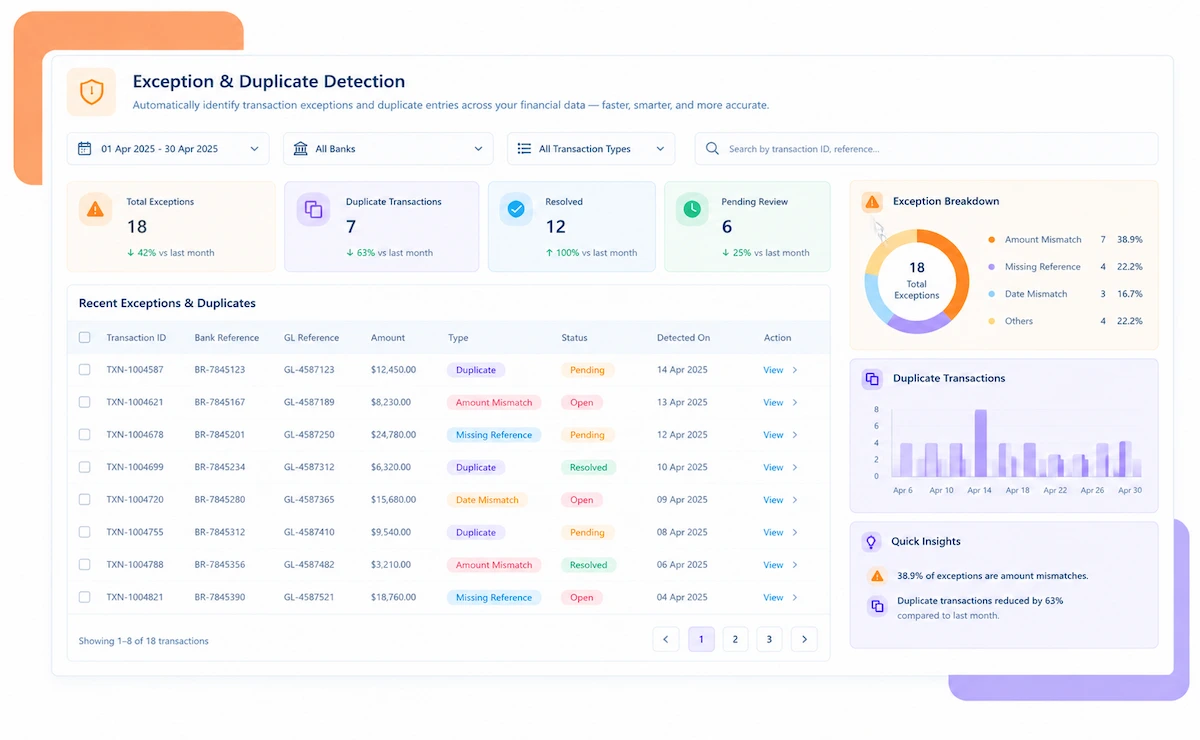
Downgrades are grouped by likely cause, like missing AVS data, so fixes target the actual problem.
Blended acquirer statements are decomposed into interchange, scheme fees, and acquirer markup.
Level 2 and Level 3 data requirements for B2B cards are checked separately from consumer transactions.
Every card type and channel is reconciled in one system instead of separate manual reviews.
Identified downgrade patterns support corrections with your acquirer and better qualification going forward.
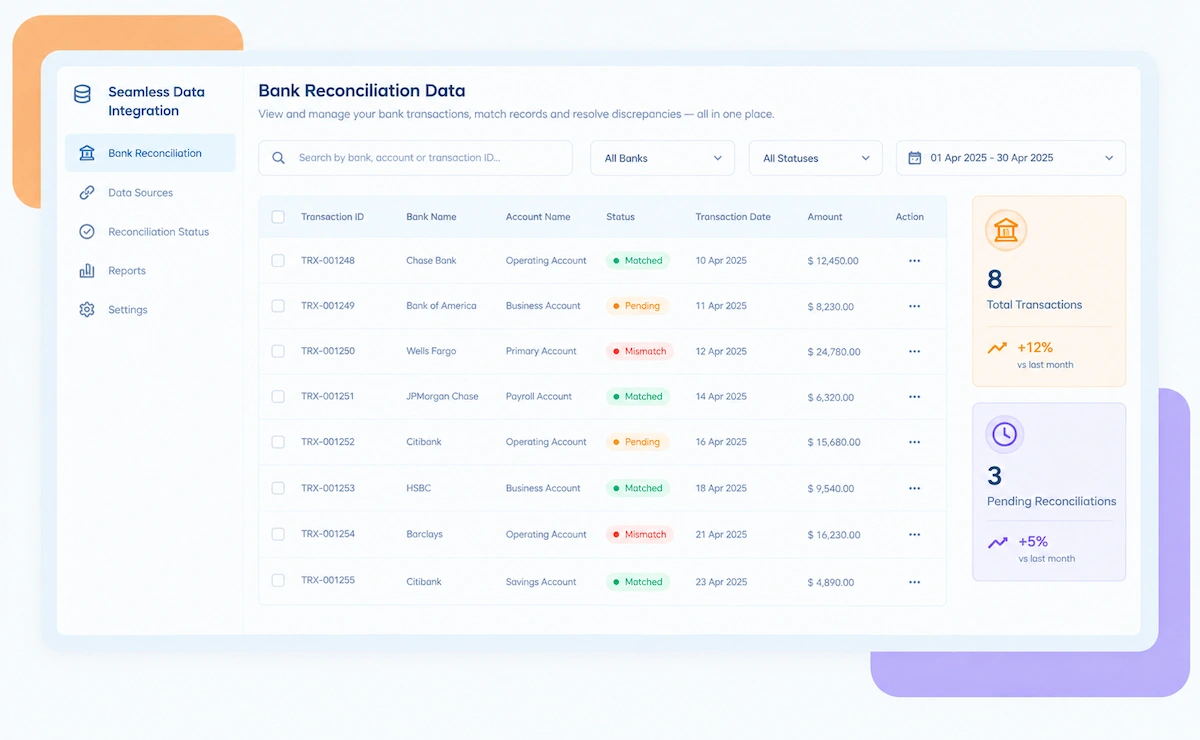
Kosh AI connects directly with all major banks and ERPs, enabling real-time data sync for faster, more accurate reconciliations—no manual uploads, no delays.


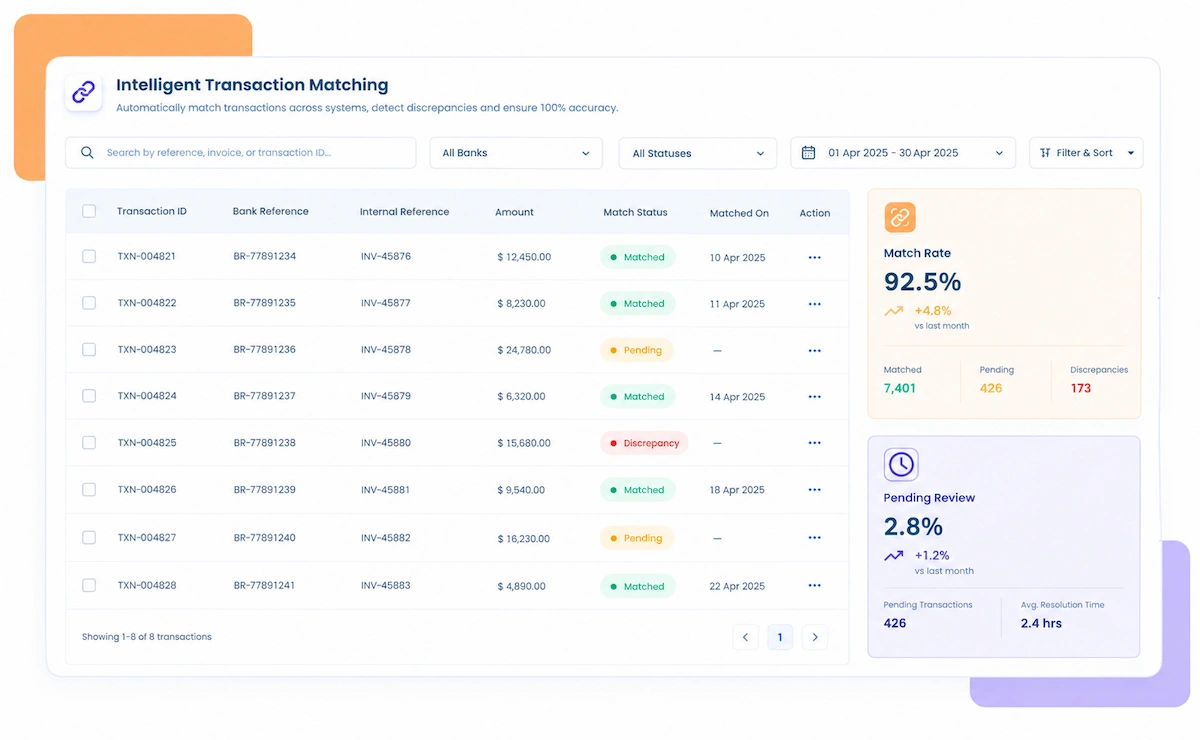
Visa and Mastercard interchange reconciliation software checks every card transaction against the interchange category it should have qualified for, based on the card type, how the transaction was processed, and whether every required data field was submitted correctly, rather than simply accepting whatever blended rate appears on the acquirer statement. Interchange qualification can downgrade silently: a missing address verification field, a late batch submission, or an incomplete data element can shift a transaction into a more expensive category without any obvious signal in the merchant's own systems. Kosh AI recalculates the expected category for every transaction and flags the gap when the actual rate doesn't match.

Here's what actually changes when interchange reconciliation moves from trusting the acquirer's blended rate to checking every transaction individually.
| What's Being Qualified | Transaction-Level Interchange Reconciliation | Blended-Rate Acquirer Statements |
|---|---|---|
| Checking Qualification | Every transaction checked against the interchange category it should have earned. | A single blended rate is accepted without checking individual transactions. |
| Finding Downgrades | Downgraded transactions are flagged with the likely root cause. | Downgrades are invisible inside a blended rate unless manually audited. |
| Scheme Fees vs. Markup | Interchange, scheme fees, and acquirer markup are tracked as separate components. | These are usually combined into fewer line items than actually exist. |
| Commercial Card Data | Level 2 and Level 3 qualifying data is checked for B2B transactions. | Commercial card downgrades are rarely checked separately from consumer cards. |
| Closing the Books | Every card type and channel reconciles in one system with a documented trail. | Each channel often needs its own separate check, if checked at all. |
| Scaling With Volume | Growing transaction volume doesn't require more manual reconciliation staff. | Transaction growth usually means downgrade losses scale with it, unnoticed. |
Connect your acquirer feed to Kosh AI and check every Visa and Mastercard transaction against its qualifying interchange category.
Schedule a Quick DemoMost reconciliation conversations focus on whether a transaction settled. Interchange qualification is a different question entirely: whether that transaction settled at the rate it should have. A blended acquirer statement reports one effective rate across thousands of transactions, which makes it structurally impossible to see which individual transactions downgraded to a more expensive interchange category, and why.
The case for transaction-level interchange reconciliation is that qualification depends on details most merchants never look at directly, address verification data, batch submission timing, the specific fields required for commercial card Level 2 and Level 3 processing. A single missing field can shift a transaction's cost without triggering any alert in a typical merchant dashboard, because the transaction still settles, just at a worse rate.
For any business processing meaningful card volume, especially a mix of card-present, card-not-present, and commercial card transactions, the downgrade losses compound quietly over time. Reconciliation software that checks qualification transaction by transaction is what makes those losses visible before they become a permanent cost of doing business.

It's not only for businesses negotiating acquirer contracts. Here's who tends to benefit most.
A small per-transaction downgrade cost adds up to real money at scale.
B2B and corporate card transactions need Level 2 and Level 3 data checked to qualify for the best rate.
Each channel has its own qualification requirements and its own common downgrade causes.
Businesses processing on behalf of sub-merchants benefit from qualification visibility across their whole portfolio.
No tool is a perfect fit for every business. Here's an honest look at what interchange reconciliation software gets right, and what's worth planning around before you adopt it.
It's software that checks every card transaction against the interchange category it should have qualified for, based on card type and processing data, rather than accepting a blended acquirer rate at face value. Kosh AI does this automatically, flagging downgrades as they happen.
Common causes include missing address verification or CVV data, late batch submission, and incomplete Level 2 or Level 3 data on commercial card transactions. Any of these can shift a transaction into a more expensive interchange category without an obvious signal.
Regular reconciliation checks whether a transaction settled. Interchange reconciliation checks whether it settled at the correct rate. A transaction can fully settle and still have downgraded to a worse interchange category.
It pulls transaction-level data from your acquirer or processor, calculates the interchange category each transaction should qualify for under Visa and Mastercard rules, and compares that to the rate actually charged.
Yes, Kosh AI decomposes a blended acquirer statement into its actual components, interchange, scheme fees, and acquirer markup, so each can be verified on its own.
Yes, Level 2 and Level 3 data requirements for commercial cards are checked separately from consumer card transactions, since they qualify under different interchange categories.
Yes, Kosh AI connects to major acquirers and processors, alongside ERPs like SAP, Oracle, NetSuite, and QuickBooks, pulling transaction-level data automatically.
It's flagged as an exception with the expected category, actual category, and likely root cause attached, ready for review or dispute with your acquirer.
Most businesses can have their main card channels checking automatically within a few weeks. Businesses with commercial card programs or multiple acquirers typically take 2 to 3 months to fully configure.
Start with how much of your volume is card-not-present or commercial card, since those carry the most common downgrade risk. From there, compare options on root-cause detection and how clearly they separate scheme fees from acquirer markup. Kosh AI is built around exactly that checklist, but it applies to any software you're comparing.
Book a demo and watch Kosh AI check your own Visa and Mastercard transactions for downgrades.
Book a Demo