Kosh AI Reconciles Both Your Platform's Revenue Share and Every Sub-Merchant Payout, Not Just One Side of the Ledger
A software platform using WePay to accept payments on behalf of its own users isn't reconciling one settlement, it's reconciling two: the platform's own revenue share across every transaction, and each sub-merchant's own payout. Most reconciliation tools are built for one settlement stream. Kosh AI is built for both, together.
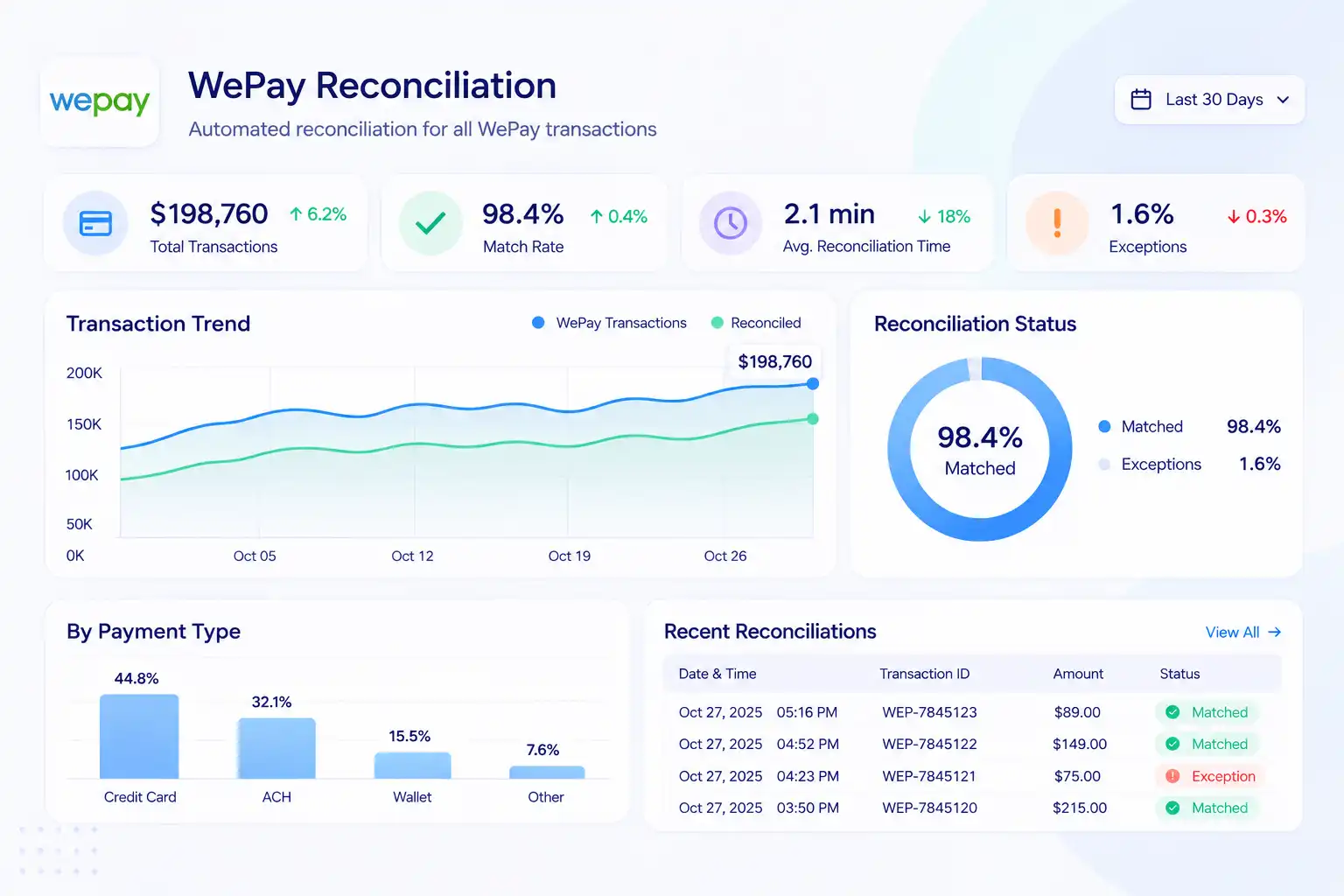
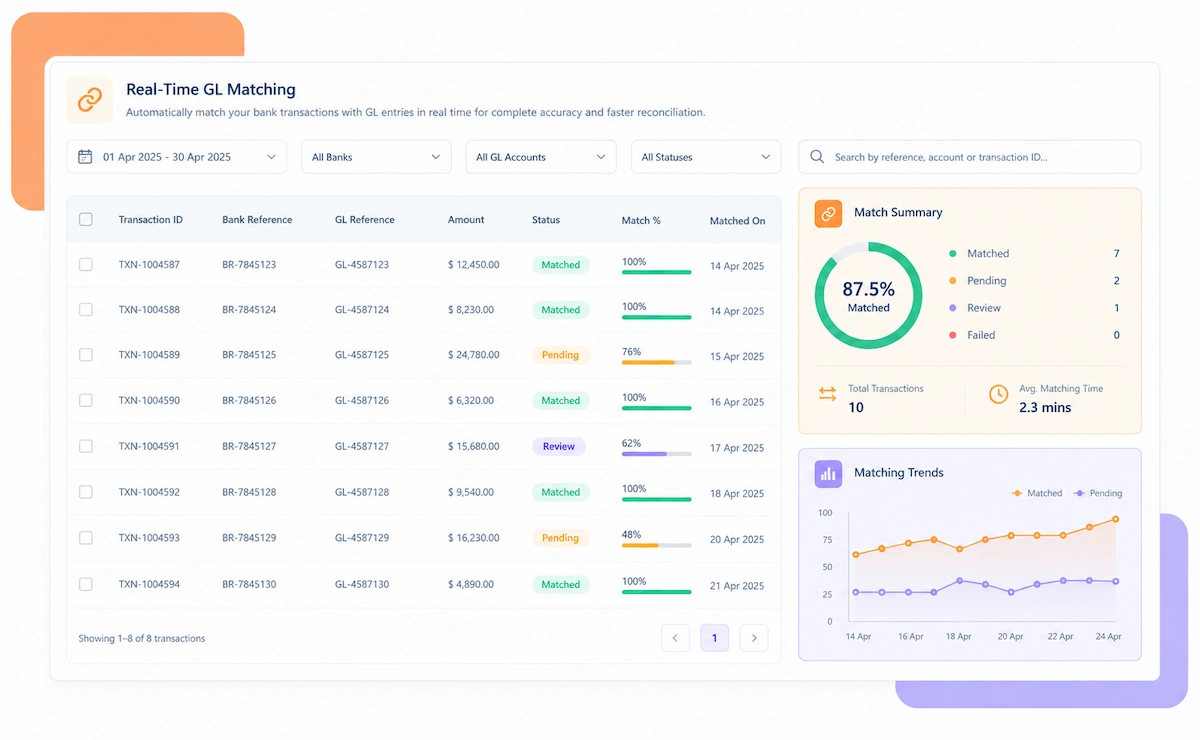
Kosh AI connects to your WePay platform account and bank statements, then reconciles both your revenue share and every sub-merchant's payout together.
Whether you run a handful of sub-merchants or thousands, Kosh AI reconciles WePay the way an embedded payments platform actually operates.
Your fee share across every sub-merchant transaction is matched against the expected rate.
Each sub-merchant's net payout is traced back to the transactions that funded it.
Reserve balances are tracked per sub-merchant and visible at the portfolio level.
Payout timing tied to sub-merchant onboarding status is distinguished from genuine errors.

Software platforms embedding payments for their own users reconcile both ledgers in one view.
Platform fees and individual campaign or organizer payouts are reconciled together.
Platform commission and organizer or vendor payouts are matched to the bookings behind them.
Platform revenue and seller payouts are reconciled as one connected flow.
Kosh AI reconciles both ledgers across large sub-merchant portfolios without manual review.
Kosh AI gives smaller platform teams automated dual-ledger matching without adding headcount as sub-merchants grow.
Most tools only reconcile the platform side. Kosh AI reconciles the sub-merchant side too, so nothing in your embedded payments model goes unchecked.
Platform revenue share and sub-merchant payouts are reconciled together, not just one side of the model.
A payout that can't be matched to its source transactions is flagged individually, not blended into an aggregate.
Reserve balances are visible individually, not just as one portfolio-level number.
Payout timing linked to onboarding status is correctly distinguished from genuine reconciliation exceptions.


Both ledgers reconcile in one system instead of reconciling the platform side and guessing at the rest.

Onboarding more sub-merchants doesn't require a proportional increase in manual reconciliation work.
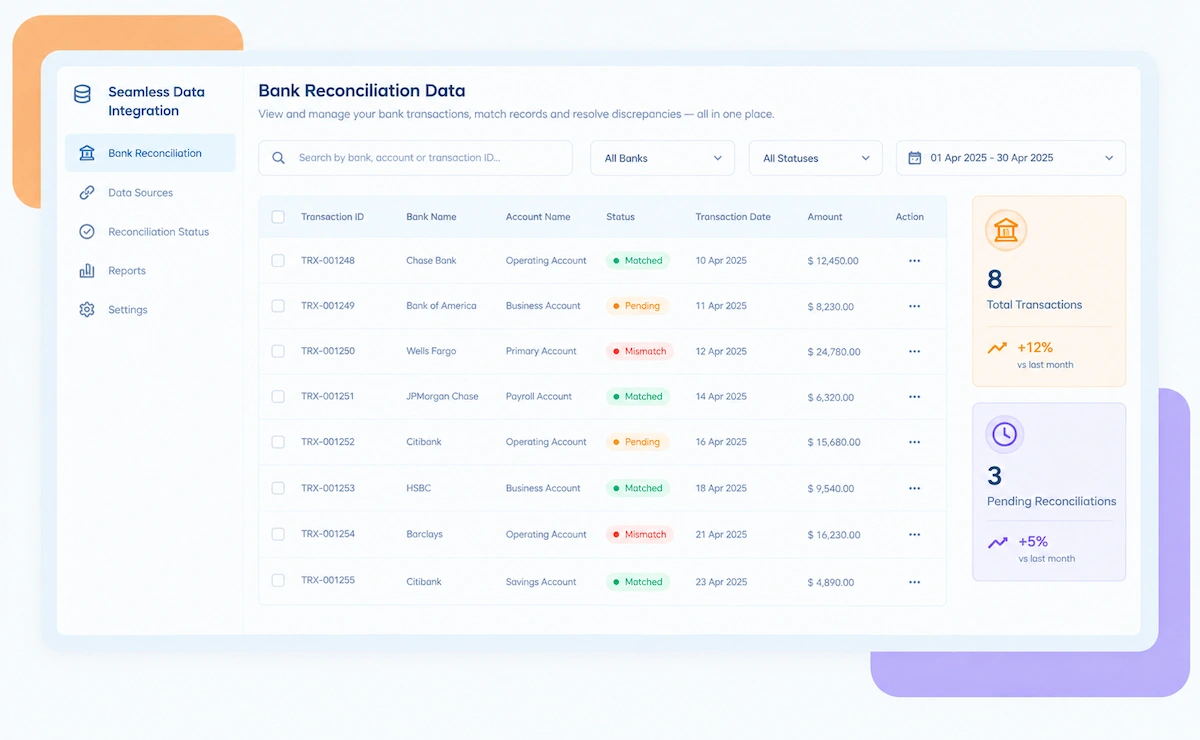
Kosh AI connects directly with all major banks and ERPs, enabling real-time data sync for faster, more accurate reconciliations—no manual uploads, no delays.


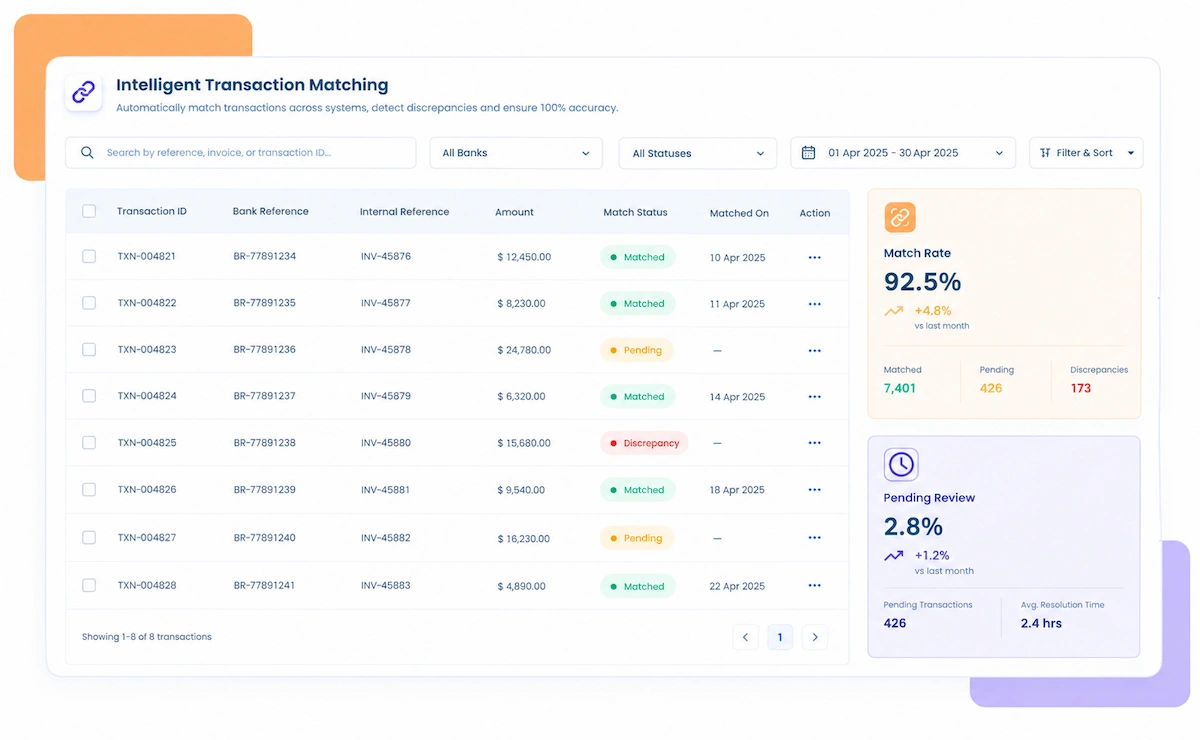
WePay reconciliation software matches transactions across both sides of a payment facilitator model, the platform's own revenue share earned across every transaction, and each individual sub-merchant's net payout, rather than reconciling only one side and treating the other as someone else's problem. A software platform using WePay to embed payments for its own users isn't settling once, it's settling twice: once at the platform level, and once per sub-merchant. Most reconciliation tools, built around a single settlement feed, only handle the platform side. Kosh AI reconciles both, connected to each other, so every sub-merchant payout can be traced back to the transactions that funded it.

Here's what actually changes when WePay reconciliation moves from checking only the platform side to reconciling the full payment facilitator model.
| What's Being Reconciled | Dual-Ledger WePay Reconciliation | Platform-Only Reconciliation |
|---|---|---|
| Scope of Reconciliation | Both platform revenue share and sub-merchant payouts are reconciled. | Only the platform's own revenue is typically checked. |
| Tracing Sub-Merchant Payouts | Every payout matched back to the transactions that funded it. | Sub-merchant payouts are usually accepted as correct without tracing the source. |
| Risk Reserve Visibility | Reserve balances tracked per individual sub-merchant. | Reserves are often visible only as one portfolio-level number, if at all. |
| Onboarding-Related Delays | Payout timing linked to onboarding status is distinguished from real errors. | Onboarding delays are often mistaken for reconciliation exceptions. |
| Closing the Books | Both ledgers reconcile in one system with a documented trail. | The sub-merchant side often has no formal reconciliation process at all. |
| Scaling the Sub-Merchant Base | Growing the number of sub-merchants doesn't require more reconciliation staff. | Sub-merchant growth usually means more unreconciled payout risk. |
Connect your WePay platform account to Kosh AI and reconcile your revenue share and every sub-merchant payout together.
Schedule a Quick DemoRunning embedded payments through WePay means your platform isn't the only party being settled. Reconciliation needs to cover both.
It's not only for large payment facilitator platforms. Here's who tends to benefit most.
Platforms accepting payments on behalf of their own users need both revenue share and payouts reconciled.
Manually tracing individual payouts doesn't scale once the sub-merchant count climbs.
Unexplained gaps between platform revenue and sub-merchant payouts tend to delay month-end close.
Reserve visibility at the individual sub-merchant level matters for managing portfolio risk.
No tool is a perfect fit for every platform. Here's an honest look at what WePay reconciliation software gets right, and what's worth planning around before you adopt it.
WePay reconciliation software matches both sides of a payment facilitator model, your platform's own revenue share and every sub-merchant's net payout, tracing each payout back to the transactions that funded it. Kosh AI does this automatically.
A platform using WePay to embed payments earns a fee share on every transaction while each of its sub-merchants also receives its own payout. Most reconciliation tools only check the platform side, leaving the sub-merchant side unreconciled.
A payment facilitator may hold reserves against risk across its sub-merchant portfolio. Kosh AI tracks these reserve balances per individual sub-merchant, not just as one aggregate portfolio number.
It pulls transaction, fee share, and payout data from WePay across your entire sub-merchant portfolio, then matches platform revenue and individual sub-merchant payouts against their source transactions and bank deposits.
Yes, Kosh AI links payout timing to sub-merchant onboarding or verification status when relevant, so a delay caused by onboarding isn't mistaken for a genuine reconciliation exception.
Yes, Kosh AI connects to WePay and major banks, alongside ERPs like SAP, Oracle, NetSuite, and QuickBooks, pulling data from all of them automatically.
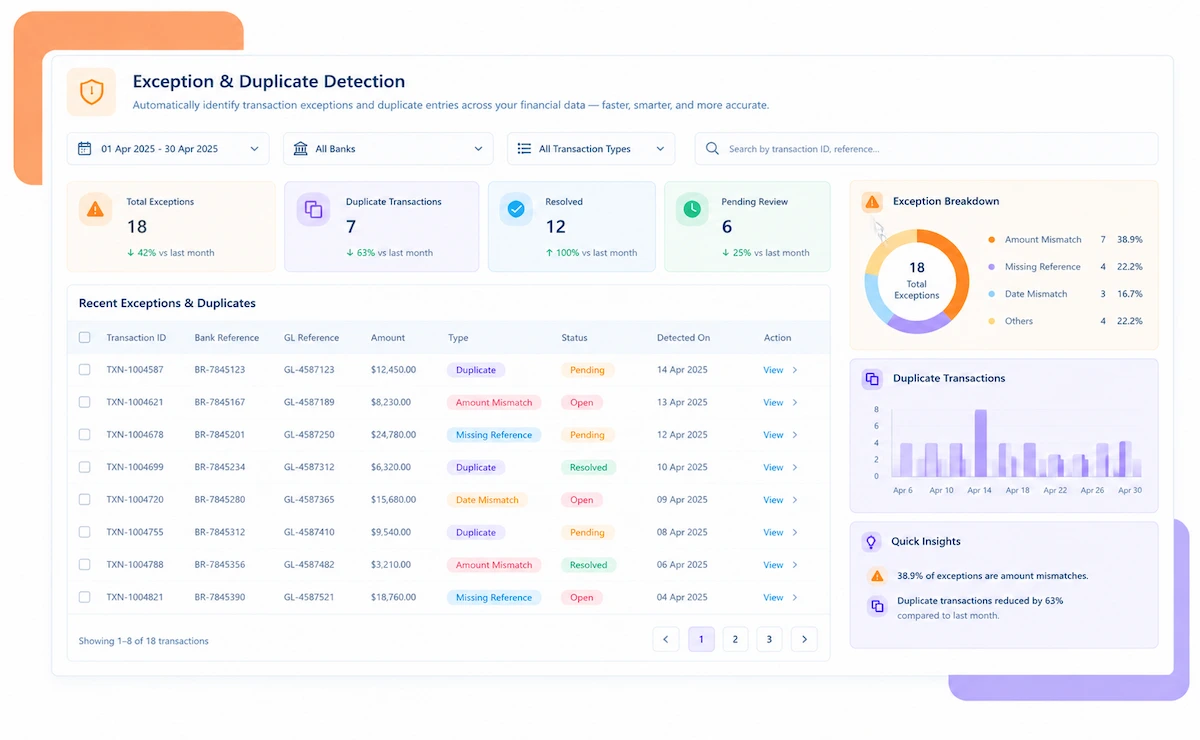
It gets flagged as an exception within the same reconciliation cycle, with the sub-merchant, payout amount, and expected source transactions already attached, ready for review.
Yes, the dual-ledger approach works at any scale, though the time savings become more significant as your sub-merchant count grows.
Most platforms can have their main revenue share reconciling automatically within a few weeks. Platforms with large or complex sub-merchant portfolios typically take 2 to 3 months to fully configure.
Start with whether you need just platform-side reconciliation or full sub-merchant payout tracing, since that's the core distinction. From there, compare options on per-sub-merchant reserve visibility and onboarding-aware exception handling. Kosh AI is built around exactly that checklist, but it applies to any software you're comparing.
Book a demo and watch Kosh AI reconcile your own platform revenue and sub-merchant payouts together.
Book a Demo