Kosh AI Reconciles Direct Card Settlements and the Linked PayPal and Venmo Wallet Rail Together, Instead of as Two Separate Systems
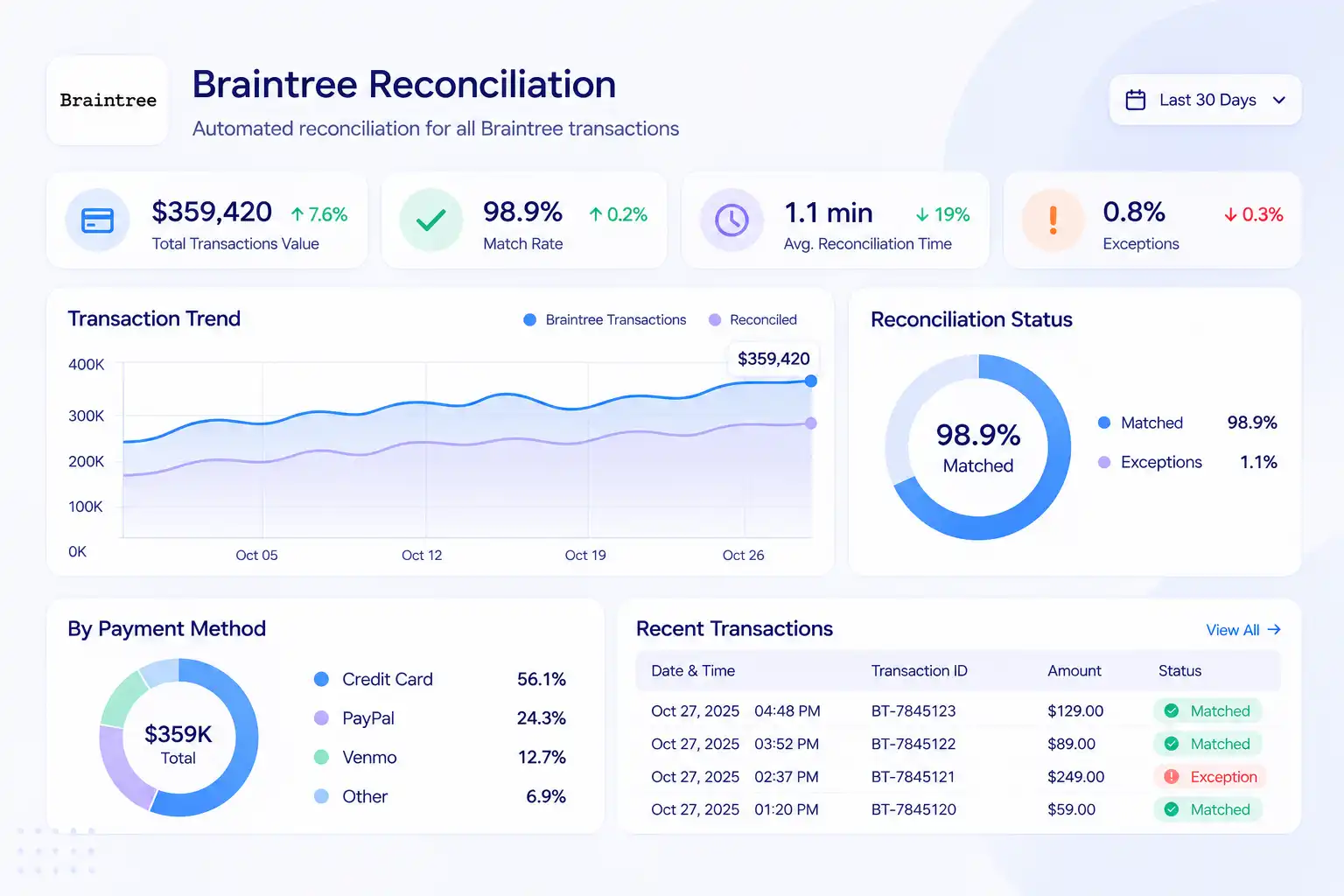
Braintree, owned by PayPal, lets a single checkout accept both direct card payments and PayPal or Venmo wallet payments. What isn't obvious from the Braintree dashboard is that these follow genuinely different settlement paths, direct card networks for one, PayPal's own settlement batch for the other. Kosh AI reconciles both rails without conflating them.
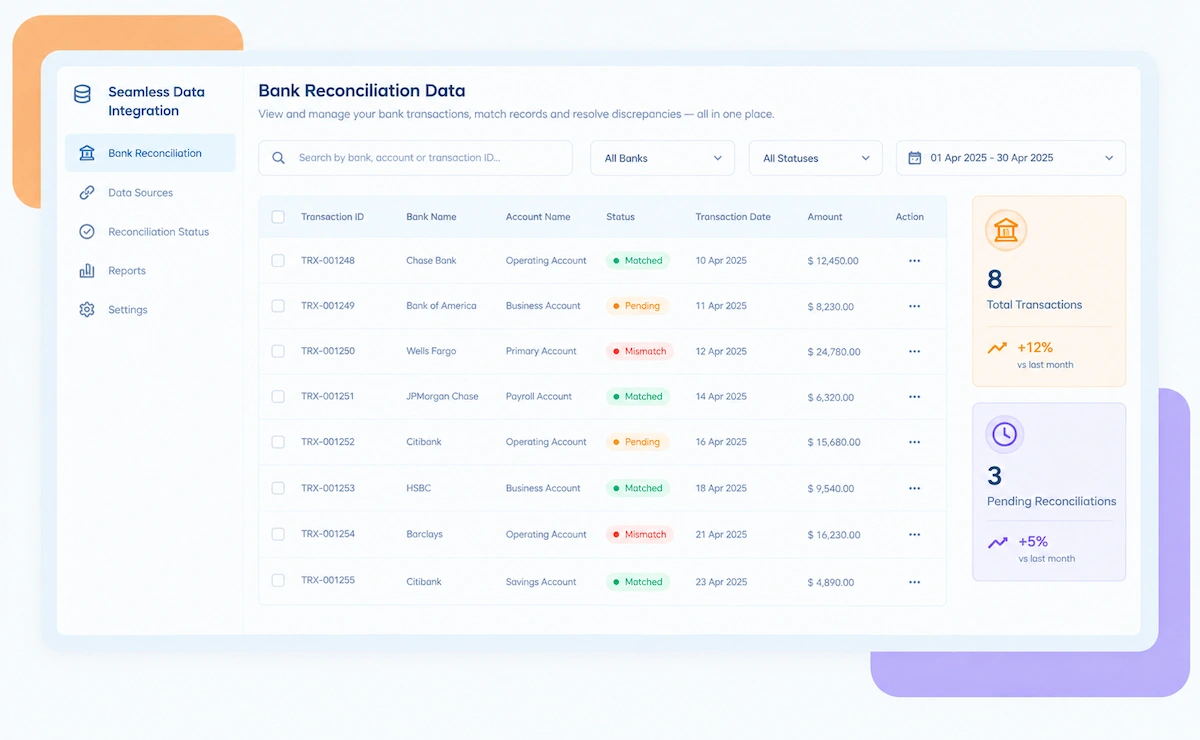
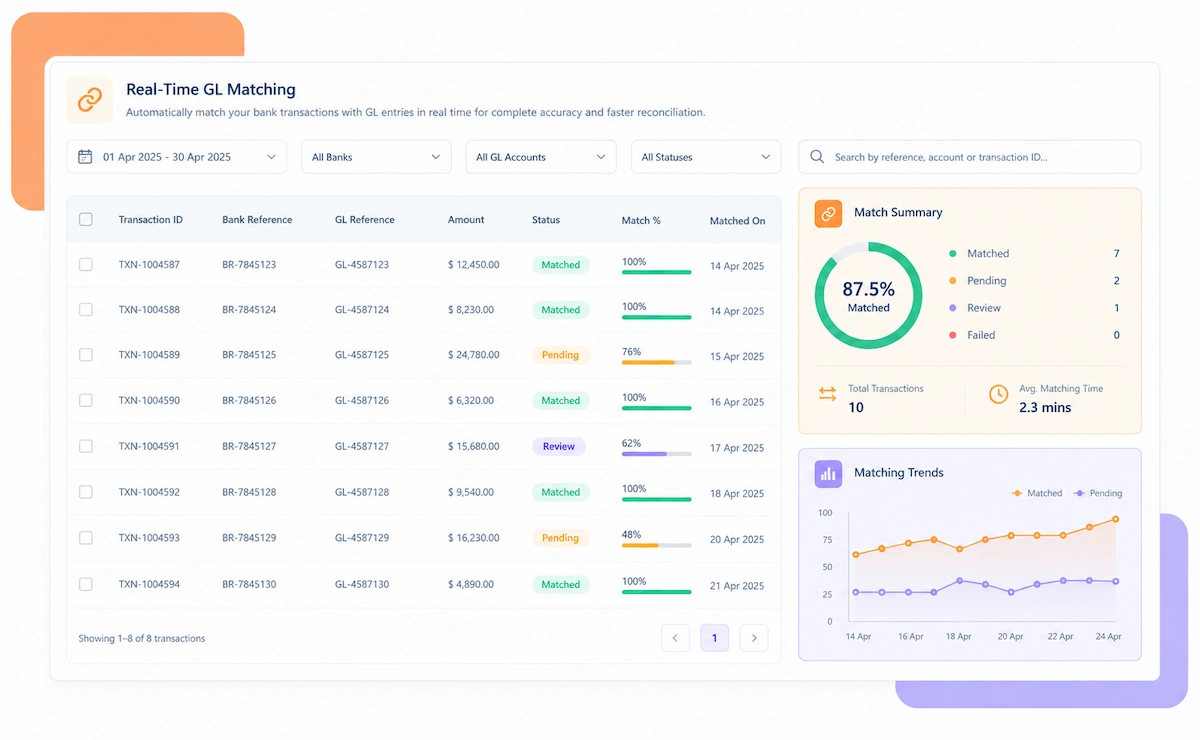
Kosh AI connects to your Braintree account and bank statements, then tracks every transaction through whichever settlement rail it actually used.
Whether most of your checkout runs through cards, wallets, or a genuine mix of both, Kosh AI reconciles Braintree the way your customers actually pay.
Card transactions are matched to their own network settlement cycle, separate from the wallet rail.
Wallet transactions are matched to PayPal's own settlement batch, on its own calendar.
Subscription charges stored in the vault are reconciled on whichever rail they actually route through.
Businesses offering both options at checkout get every transaction correctly attributed to its rail.
High transaction volumes across both rails are reconciled without a manual review each week.
Vaulted recurring charges are reconciled alongside one-off purchases on whichever rail they use.
Mixed checkout options across buyers are reconciled under one consistent view.
High volumes across card and wallet rails are reconciled with full audit trails.
Kosh AI reconciles high-volume Braintree accounts across both settlement rails without manual review.
Kosh AI gives smaller finance teams automated dual-rail matching without adding headcount as volume grows.
Treating card and wallet transactions as one undifferentiated feed hides where the actual timing gaps and duplicates come from. Kosh AI keeps the two rails straight.
Each transaction is correctly attributed to the card network or the PayPal wallet, not treated as one generic feed.
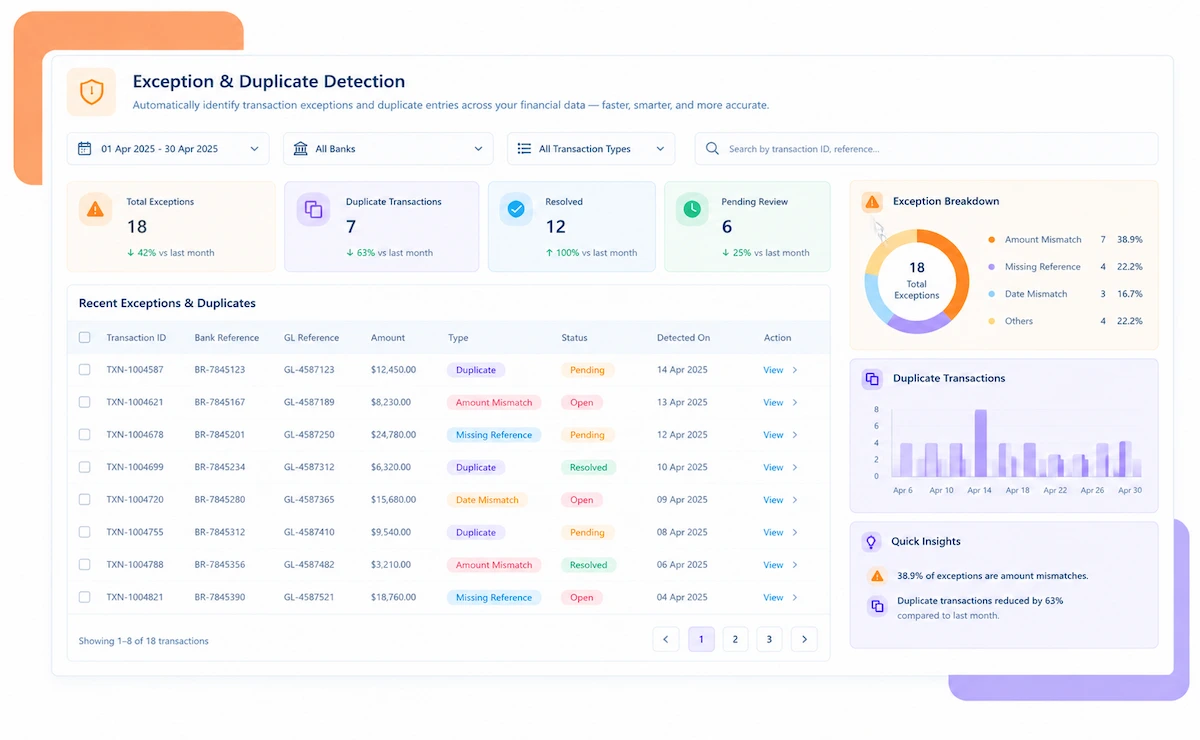
A transaction that misses its expected settlement window, on either rail, is flagged the same cycle.
Activity that looks duplicated across rails is checked and resolved instead of distorting your totals.
Recurring vault charges are matched using the same rigor as one-off transactions, on whichever rail they use.
Both rails reconcile in one system instead of two disconnected reports.
Transaction volume can grow across both rails without a proportional increase in manual work.
Kosh AI connects directly with all major banks and ERPs, enabling real-time data sync for faster, more accurate reconciliations—no manual uploads, no delays.


Braintree reconciliation software matches every transaction processed through Braintree against the settlement rail it actually used, direct card processing through the card networks, or the linked PayPal and Venmo wallet, which settles through PayPal's own batch system, rather than treating every Braintree transaction as if it followed one unified path. Because Braintree is owned by PayPal and lets a single checkout accept both payment types, it's easy to assume everything settles the same way. It doesn't. Kosh AI tracks each transaction through its actual rail and reconciles both against the bank deposits they separately produce.

Here's what actually changes when Braintree reconciliation moves from treating every transaction the same to tracking which rail it actually used.
| What's Being Tracked | Rail-Aware Braintree Reconciliation | Undifferentiated Transaction Matching |
|---|---|---|
| Identifying the Settlement Rail | Every transaction tagged as card-network or PayPal-wallet rail. | All transactions are treated as one generic settlement feed. |
| Settlement Timing | Each rail's own expected settlement window is tracked separately. | A delay on one rail is often mistaken for the other rail's normal timing. |
| Duplicate Detection | Cross-rail activity is checked before being counted as duplicate. | Refunds or disputes touching both rails can look like duplicated activity. |
| Vaulted Subscriptions | Recurring vault charges reconciled on whichever rail they route through. | Subscription charges are often reconciled separately from the rail logic. |
| Closing the Books | Both rails reconcile in one system with a documented trail. | Card and wallet transactions often need separate manual checks. |

| Scaling With Volume | Growing transaction volume across both rails doesn't require more staff. | Transaction growth usually means more hours spent reconciling each rail. |


Connect your Braintree account to Kosh AI and track every transaction through its actual settlement rail, card or wallet.
Schedule a Quick DemoBraintree presents one dashboard, but it doesn't settle through one path. A card payment processed through Braintree follows the standard card network settlement cycle. A PayPal or Venmo wallet payment, even though it's accepted through the same Braintree checkout, settles through PayPal's own batch system instead. Treating both as one undifferentiated feed means reconciling against the wrong expected timing for whichever rail a given transaction actually used.
The case for rail-aware reconciliation is that it matches the reality of how Braintree actually works under the hood. A wallet transaction that looks late by card-settlement standards might be exactly on schedule for PayPal's batch cycle, and a business that doesn't separate the two risks either chasing a non-issue or missing a real one. The same logic applies to duplicate detection: a refund or dispute that touches both a card network and PayPal's system can look like two events instead of one if the rails aren't tracked distinctly.
For any business accepting both card and wallet payments through Braintree at meaningful volume, especially with recurring vaulted charges in the mix, manually tracking which transaction used which rail isn't realistic past a certain scale. Reconciliation software that understands Braintree's dual-rail structure is what makes that tracking possible without a growing finance team.

It's not only for businesses running high transaction volume. Here's who tends to benefit most.
Every transaction needs to be correctly attributed to its actual settlement rail, not treated as one generic feed.
Vaulted recurring charges need to be reconciled on whichever rail they route through, alongside one-off payments.
Unexplained gaps between the two settlement calendars tend to delay month-end close every single period.
Cross-rail refunds and disputes need to be checked before they're mistaken for duplicate activity.
Mixed checkout options across buyers need consistent reconciliation regardless of which rail they chose.
Manually tracking which transaction used which rail stops being realistic past a certain scale.
No tool is a perfect fit for every business. Here's an honest look at what Braintree reconciliation software gets right, and what's worth planning around before you adopt it.
Braintree reconciliation software matches every transaction against the settlement rail it actually used, direct card processing or the linked PayPal/Venmo wallet, since the two follow genuinely different settlement paths. Kosh AI does this automatically.
Braintree, owned by PayPal, lets a single checkout accept both direct card payments and PayPal or Venmo wallet payments. Card payments settle through the card networks, while wallet payments settle through PayPal's own batch system.
Yes, a refund or dispute that touches both a card network and PayPal's system can appear as duplicate activity if the rails aren't tracked distinctly. Kosh AI checks this and resolves it as one event when that's what it actually is.
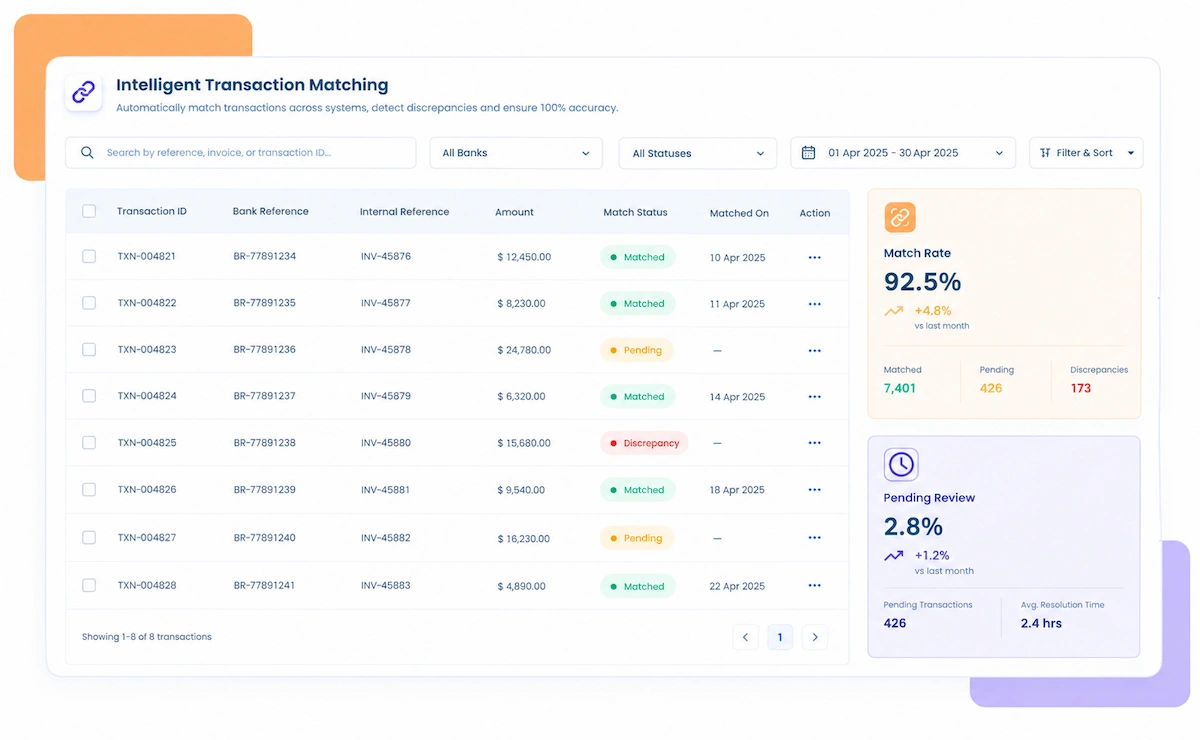
It pulls transaction and settlement data from Braintree, identifies which rail each transaction used, and matches each rail against its own expected settlement timing and bank deposit.
Yes, recurring vault charges are reconciled using the same logic as one-off transactions, on whichever rail they actually route through.
Yes, Kosh AI connects to Braintree and major banks, alongside ERPs like SAP, Oracle, NetSuite, and QuickBooks, pulling data from all of them automatically.
It's flagged as an exception within the same reconciliation cycle, with the rail, expected window, and actual status already attached, ready for review.
Yes, if you only accept card payments or only accept PayPal/Venmo through Braintree, Kosh AI reconciles that rail on its own. The dual-rail logic becomes relevant once you accept both.
Most businesses can have their main rail reconciling automatically within a few weeks. Businesses running both card and wallet rails at volume typically take 2 to 3 months to fully configure.
Start with whether you accept both card and wallet payments, since that determines whether dual-rail tracking matters for you. From there, compare options on settlement calendar accuracy and duplicate detection. Kosh AI is built around exactly that checklist, but it applies to any software you're comparing.
Book a demo and watch Kosh AI reconcile your own Braintree card and PayPal/Venmo transactions together.
Book a Demo