Before a Number Reaches Your Metabase Dashboard, Kosh AI Has Already Checked It Against the Ledger and the Bank
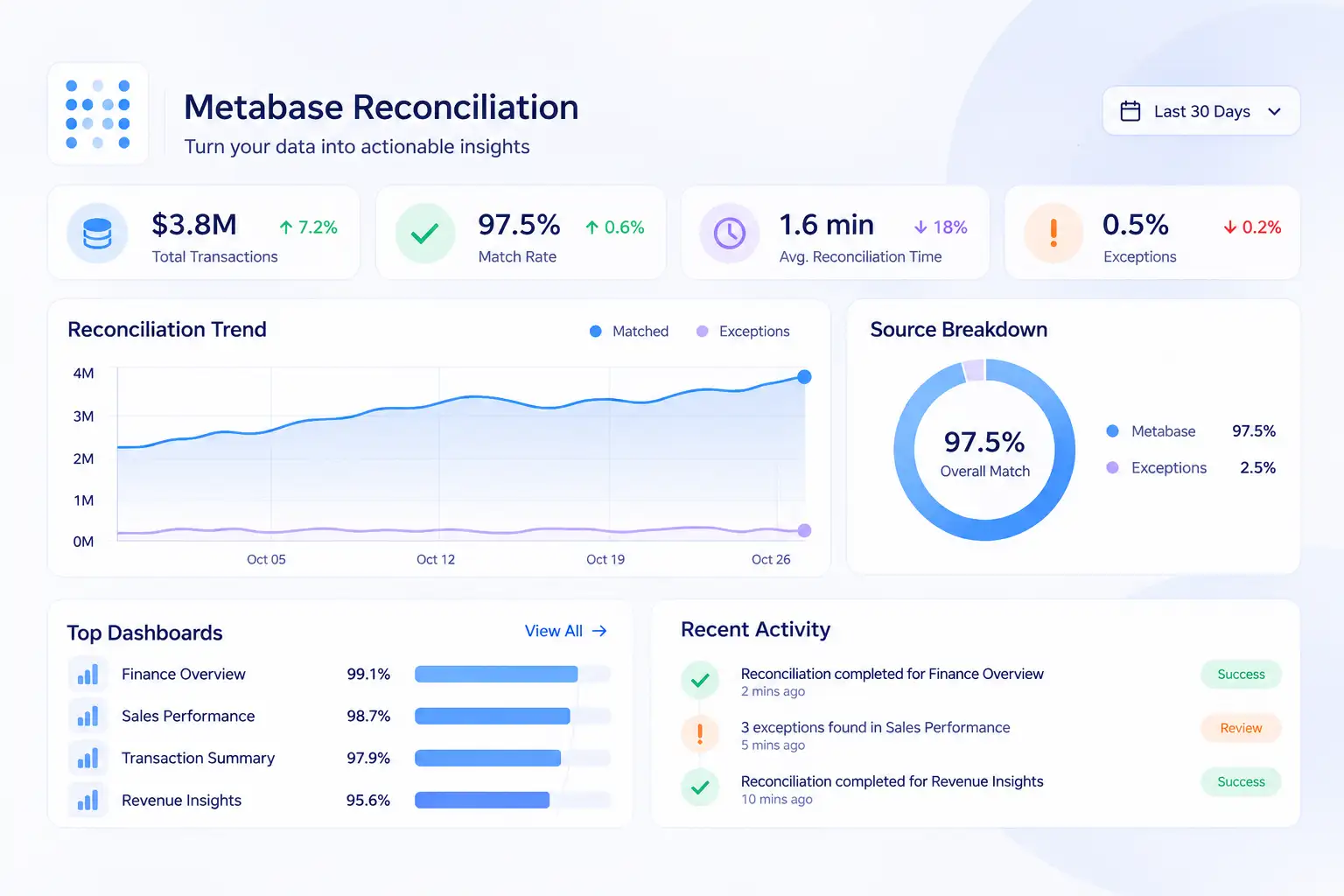
Metabase doesn't generate transactions, it queries them. If the underlying transaction data has unmatched entries, duplicate records, or timing gaps, a Metabase dashboard will confidently display the wrong number. Kosh AI reconciles the data before it gets anywhere near a dashboard.
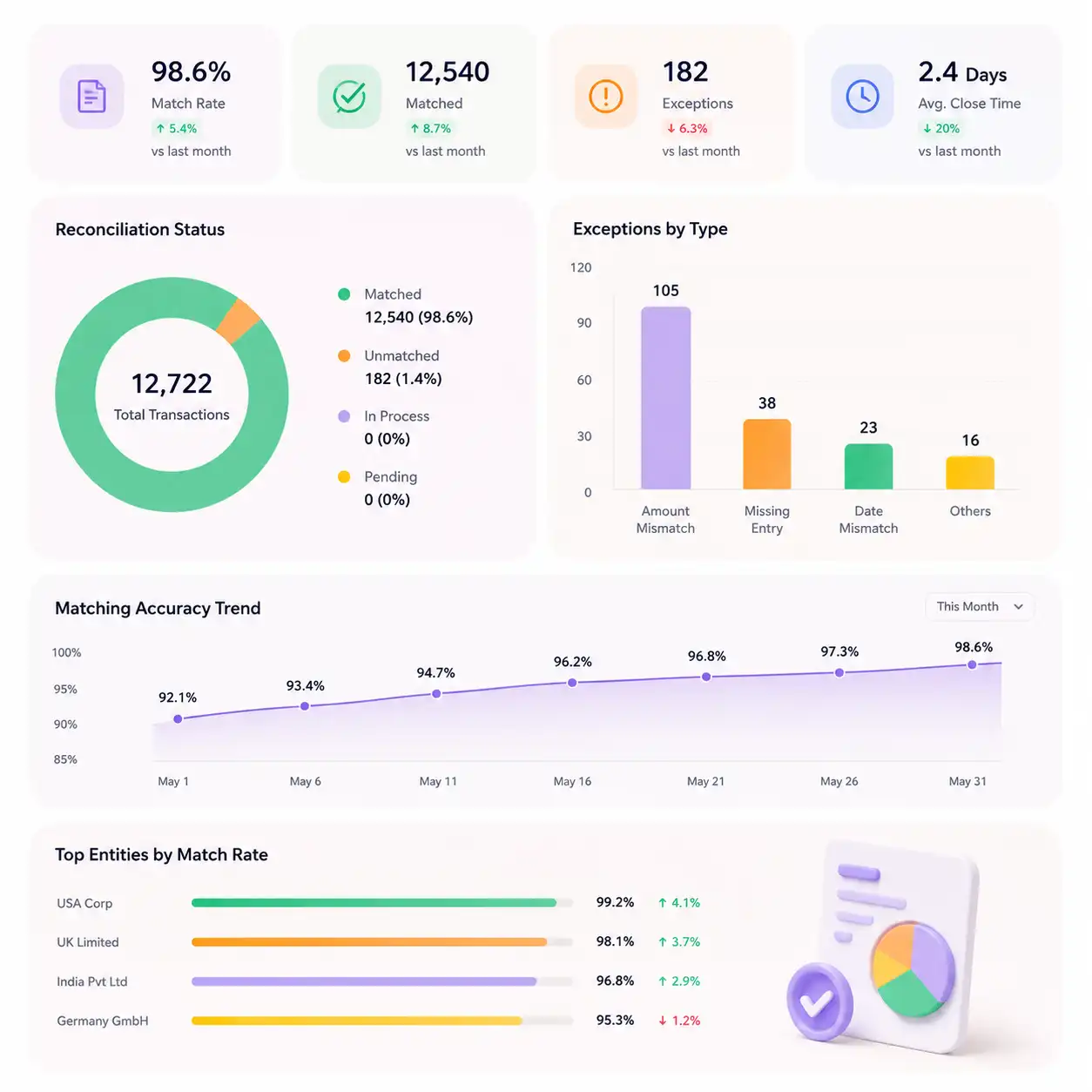
The work happens before a dashboard ever loads. Kosh AI checks the transaction data behind Metabase against your ledger and bank, on a schedule that matches your own data refresh.
Different teams pull different things out of Metabase. Here's how the reconciled data underneath holds up across each of those use cases.
Transaction data pulled into Metabase from your ERP is reconciled against the ledger first.
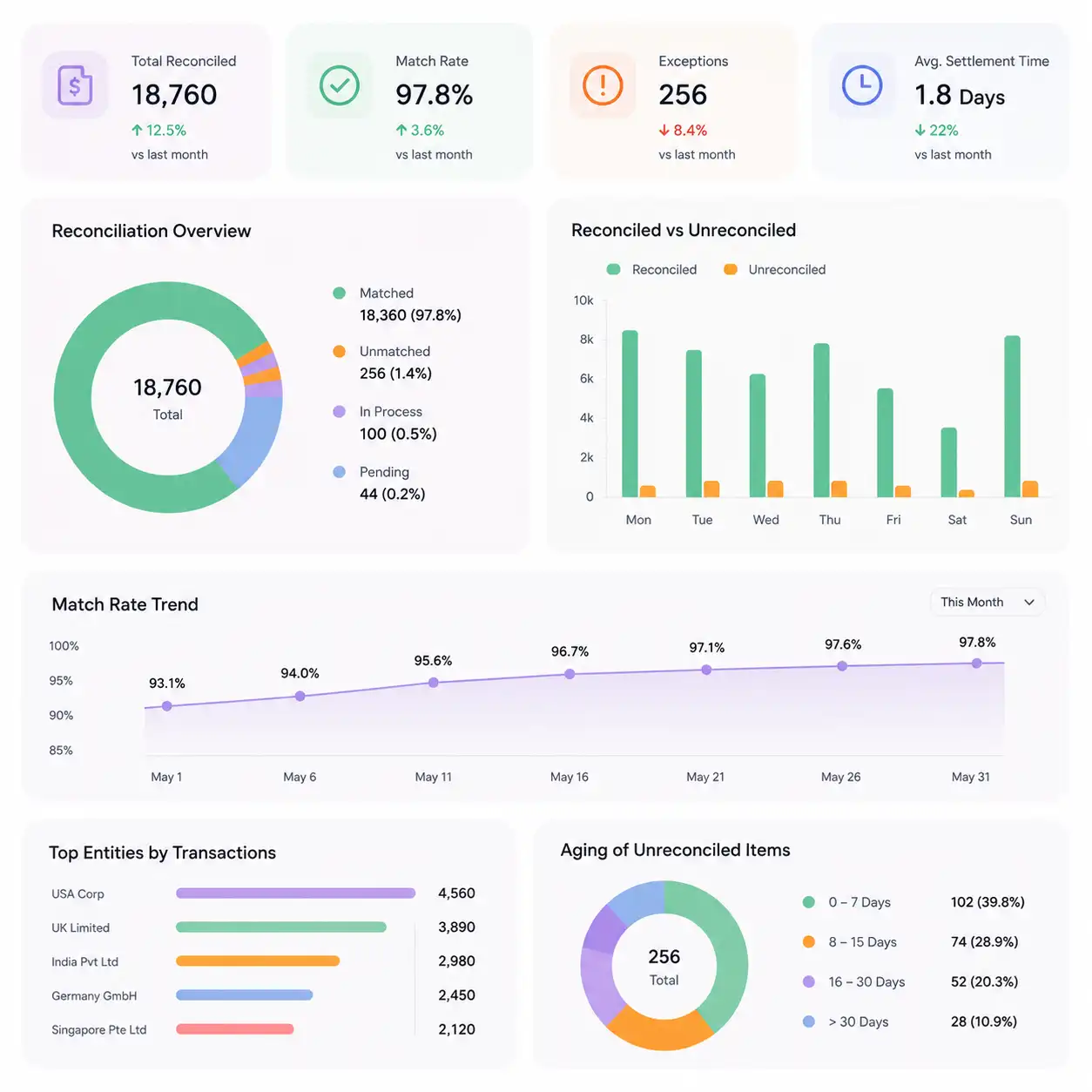
Payment records feeding revenue dashboards are matched against bank settlement data.
Each source is reconciled on its own before being blended into a consolidated view.
Period-over-period totals are checked for timing errors before they reach a trend chart.
Dashboards used for forecasting and reporting are backed by reconciled, trustworthy data.
Revenue dashboards blending CRM and payment data are reconciled before leadership sees them.
Any number on a dashboard can be traced back to its source transactions on request.
Board-level dashboards are backed by data that's already been reconciled, not just displayed.
Kosh AI reconciles the transaction data behind high-volume dashboards without manual review.
Kosh AI gives lean finance teams trustworthy dashboard data without adding analyst headcount.
A dashboard that looks finished isn't the same as data that's actually correct. Here's what changes once the numbers underneath get checked first.
A total on screen is backed by transaction-level data that's already been matched and verified.
A dashboard number drifting from its source is flagged before it turns into an awkward question in a meeting.
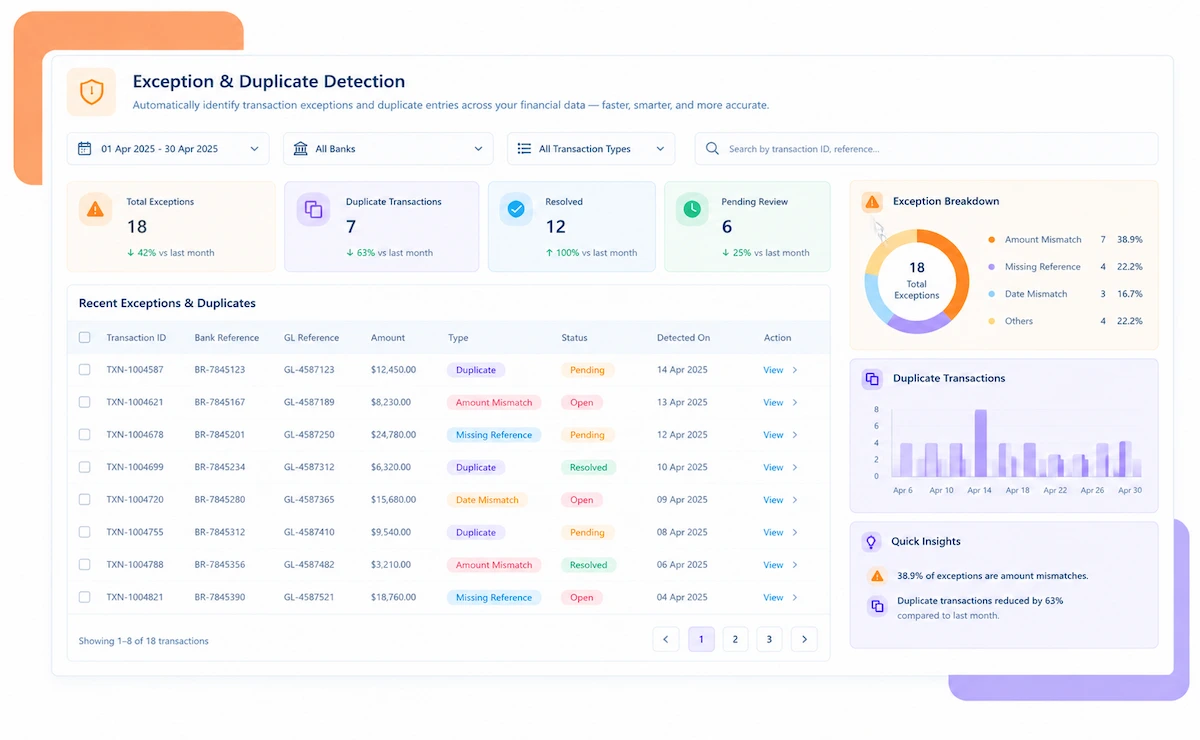
Inflated totals from duplicate rows or wrong-period entries are caught before they reach a report.
Each system feeding a blended dashboard is checked on its own before the numbers get combined.
A question about a specific number gets answered with the actual records behind it, not a guess.
More dashboards and data sources don't require a proportional increase in manual verification work.
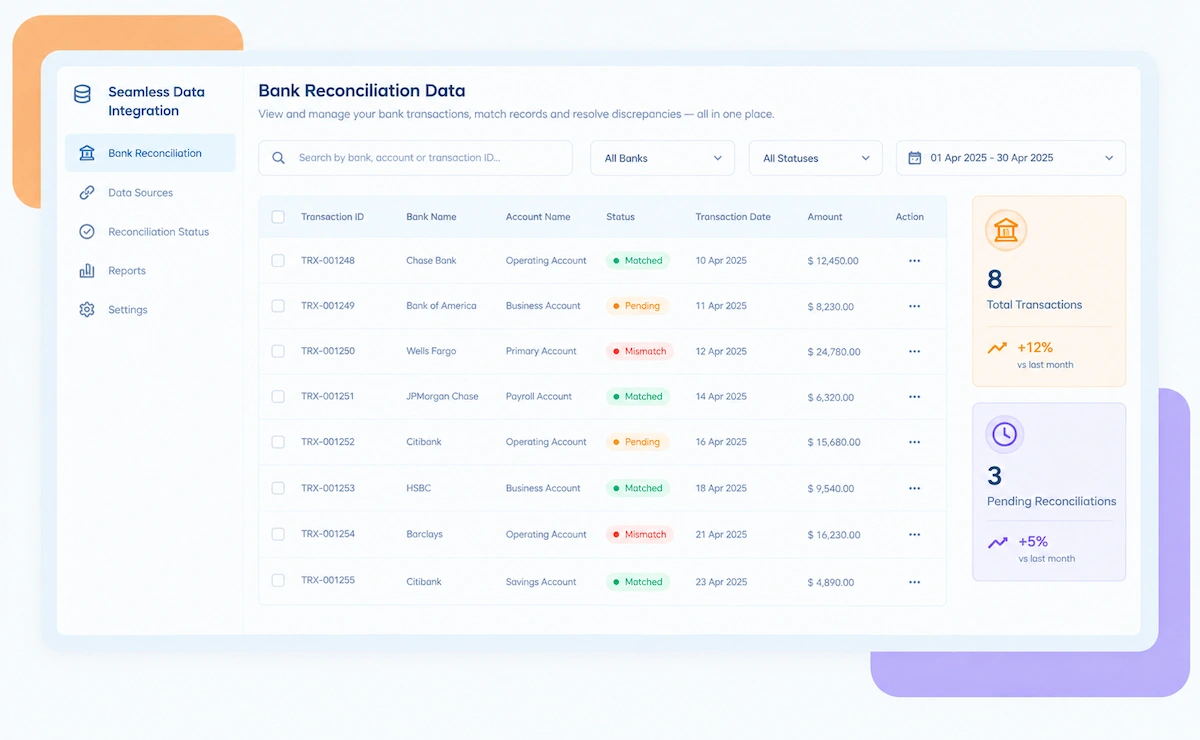
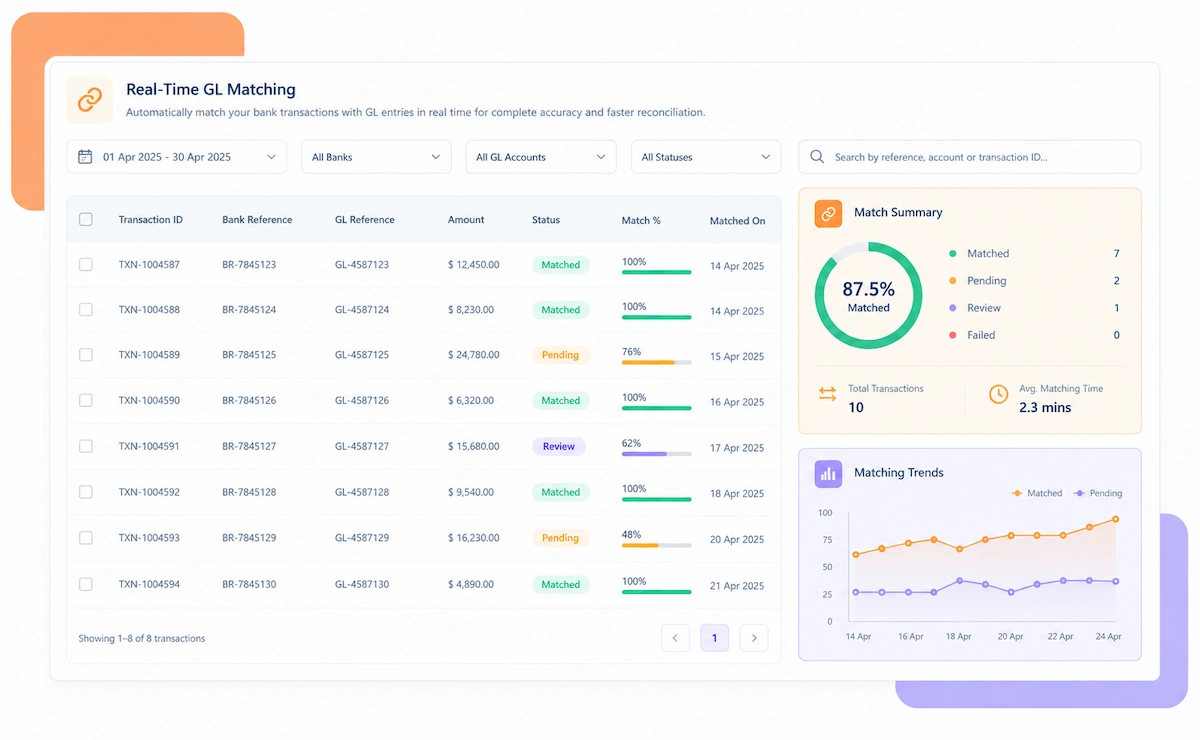
Kosh AI connects directly with all major banks and ERPs, enabling real-time data sync for faster, more accurate reconciliations—no manual uploads, no delays.


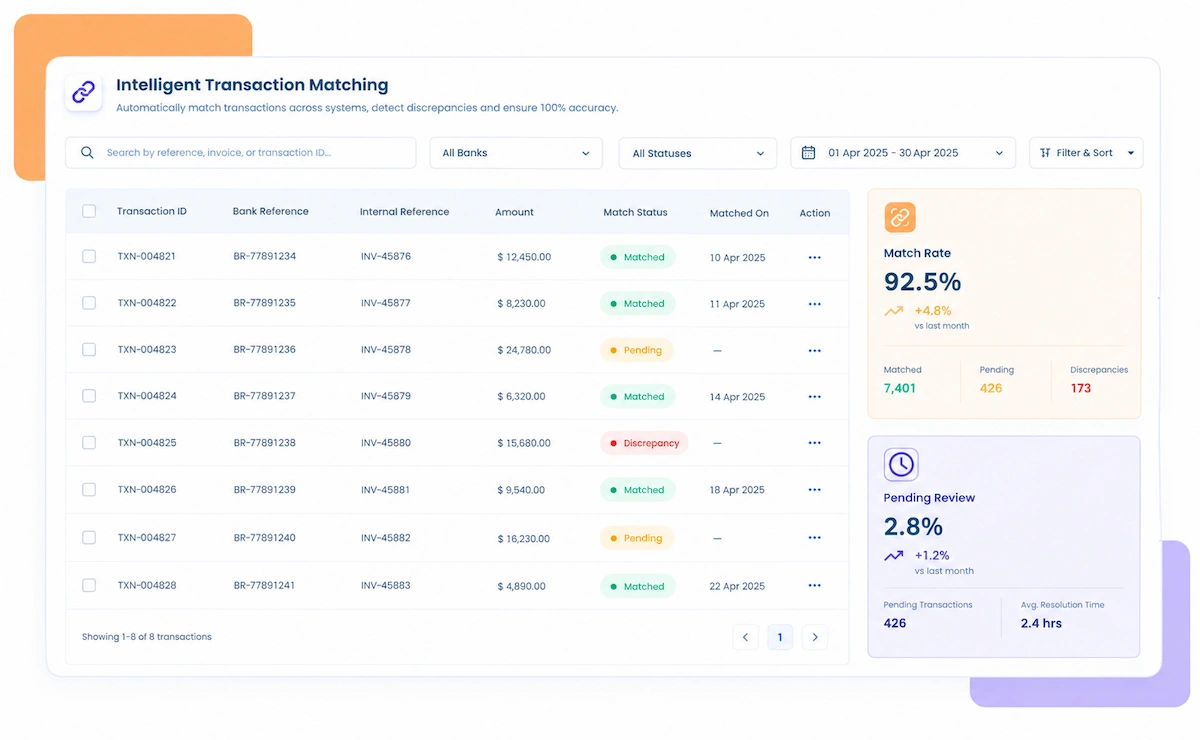
Metabase reconciliation software reconciles the underlying transaction data that feeds a Metabase dashboard, rather than treating the dashboard's displayed numbers as automatically correct. Metabase itself is a query and visualization layer, it shows whatever the connected data source contains, duplicate rows, mistimed entries, and unmatched transactions included. A dashboard can look polished while the numbers underneath have quietly drifted from the ledger or bank records they're supposed to represent. Kosh AI reconciles the transaction data at the source, matching it against the ledger and bank before it ever reaches a Metabase query, so the dashboard reflects data that's already been verified.

Spot-checking a dashboard number occasionally is not the same discipline as reconciling the data behind it every time. Here's the comparison.
| Feature | Automated Metabase Data Reconciliation | Manual Spot-Checking |
|---|---|---|
| Source Data Accuracy | Transaction data matched against ledger and bank before reporting. | Dashboard numbers are often trusted without checking the source. |
| Dashboard Drift | Drift from source data flagged automatically by dollar amount. | Drift is usually caught only when someone questions a number. |
| Multi-Source Dashboards | Each data source reconciled independently before blending. | Blended totals are hard to break down and verify by source. |
| Duplicate Records | Duplicate transactions identified and removed automatically. | Duplicates often go unnoticed until a total looks obviously wrong. |
| Traceability | Any dashboard total traceable down to individual transactions. | Tracing a number back to its source usually means a manual pull. |
| Scaling Dashboards | New data sources reconcile the same way as existing ones. | More dashboards usually mean more manual verification work. |
Point Kosh AI at the same data sources feeding Metabase, and the numbers behind your dashboards start getting checked before anyone sees them.
Schedule a Quick DemoA Metabase dashboard is a mirror, it reflects exactly what its data source contains, including every duplicate record and timing error nobody has caught yet. Reconciliation needs to happen upstream, before the data reaches a query, because by the time a number is on screen, it already looks finished and trustworthy, which makes a hidden error easy to miss. Kosh AI reconciles transaction data against the ledger and bank at the source, so whatever Metabase ends up querying has already been checked.

Dashboard count isn't really the deciding factor. These are the teams where reconciled source data makes the biggest difference.
A forecast or close process built on dashboard numbers needs those numbers to actually be correct.
Each source needs to reconcile on its own before being combined into one dashboard view.
More transactions flowing into a dashboard means more opportunity for duplicates and timing errors to slip through.
Being able to trace a total back to its transactions turns a tense question into a quick answer.

Dashboards blending CRM, payment, and ERP data need each source checked before the blend is trusted.
A documented trail behind every dashboard number makes an audit faster and less disruptive.
This isn't a tool that redesigns your dashboards. Here's what it actually does well, and where its limits sit.
Get on a call and we'll reconcile a sample of your own dashboard's underlying data in front of you.

Book a Demo