Input VAT, Output VAT, and the Return You're About to File Don't Always Agree. Kosh AI Checks All Three Before Submission
Input VAT, output VAT, and the return itself all need to tell the same story. Kosh AI checks that story holds together across every invoice, before submission rather than after.
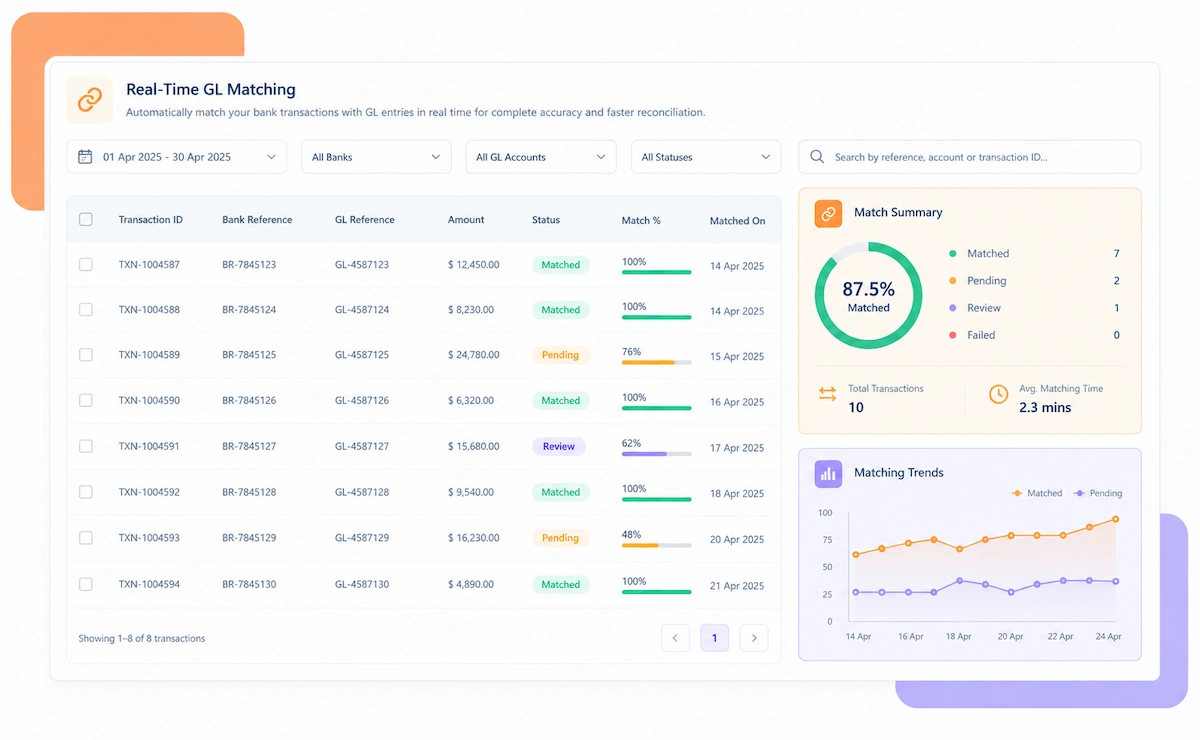
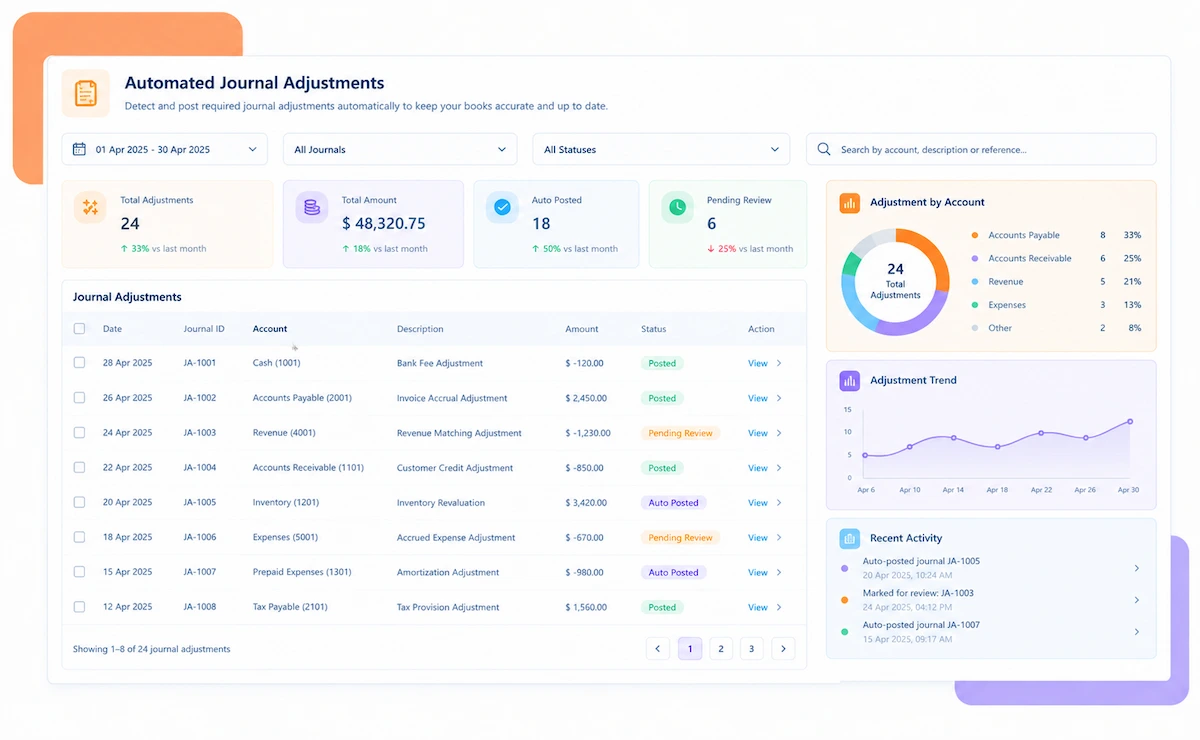
Four steps take input VAT, output VAT, and the return itself from three separate numbers to one reconciled figure, every filing period.
Add more VAT registrations and the paperwork multiplies, but what actually needs confirming, that input and output VAT agree, never changes.
Even one VAT registration benefits from automatic input-to-output matching.
Every registration reconciles on its own rules, then rolls into one consolidated view.
Cross-border reverse charge entries get tied back to their originating invoice.
Thousands of monthly invoices reconcile without a manual rate-by-rate review.
Cross-border VAT timing gets tracked against the jurisdiction each invoice belongs to.
Input VAT on bulk purchases reconciles against invoices at the line-item level.
VAT charged on cross-border digital services reconciles against each jurisdiction's return.
Several VAT-registered entities reconcile together or separately, as the group needs.
Kosh AI reconciles input and output VAT across several jurisdictions without manual review.
Kosh AI gives lean tax teams automatic matching without adding headcount.
A VAT return built from unreconciled figures carries risk forward into every future period. Here's what's different once both sides get checked before filing.
Input and output VAT are reconciled before the return is built, not after it's questioned.
A wrong rate applied at invoice level is caught before it compounds across the period.
Reverse charge and cross-border entries are tied to the period they actually belong to.
Every VAT registration reconciles into one view instead of several spreadsheets.
The filing team starts from reconciled figures instead of raw ledger exports.
New jurisdictions or entities can reconcile without adding manual review work.
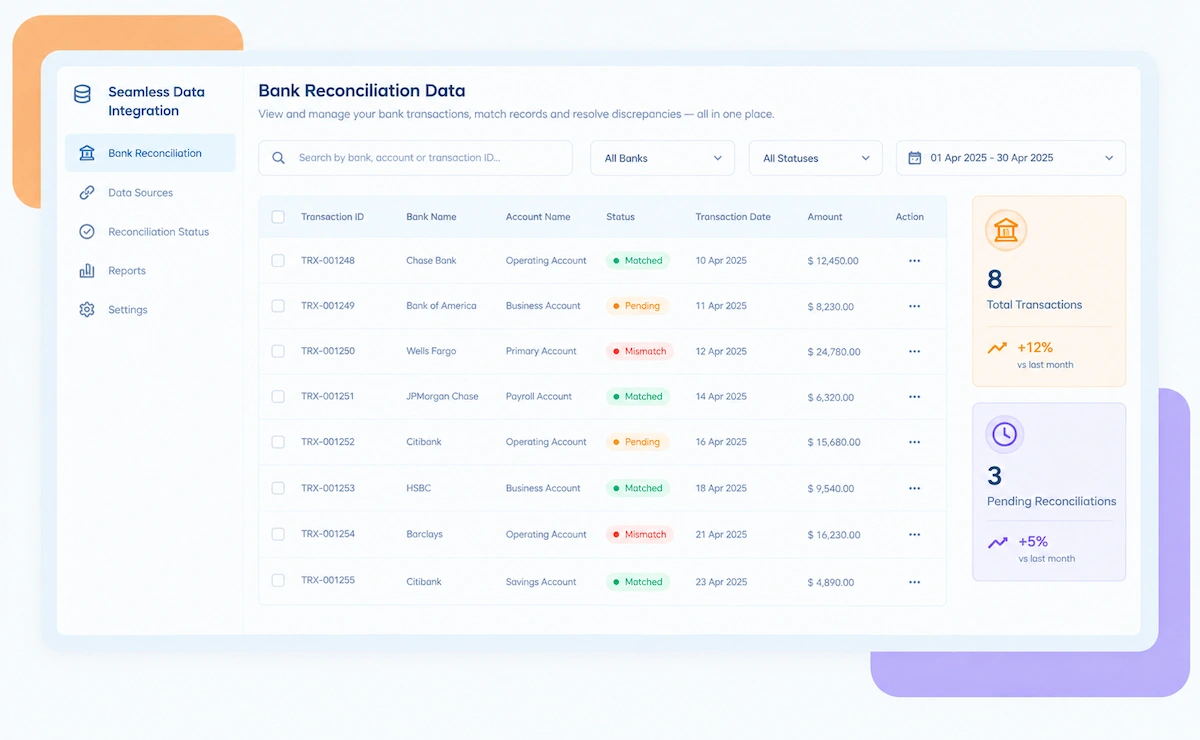
Kosh AI connects directly with all major banks and ERPs, enabling real-time data sync for faster, more accurate reconciliations—no manual uploads, no delays.


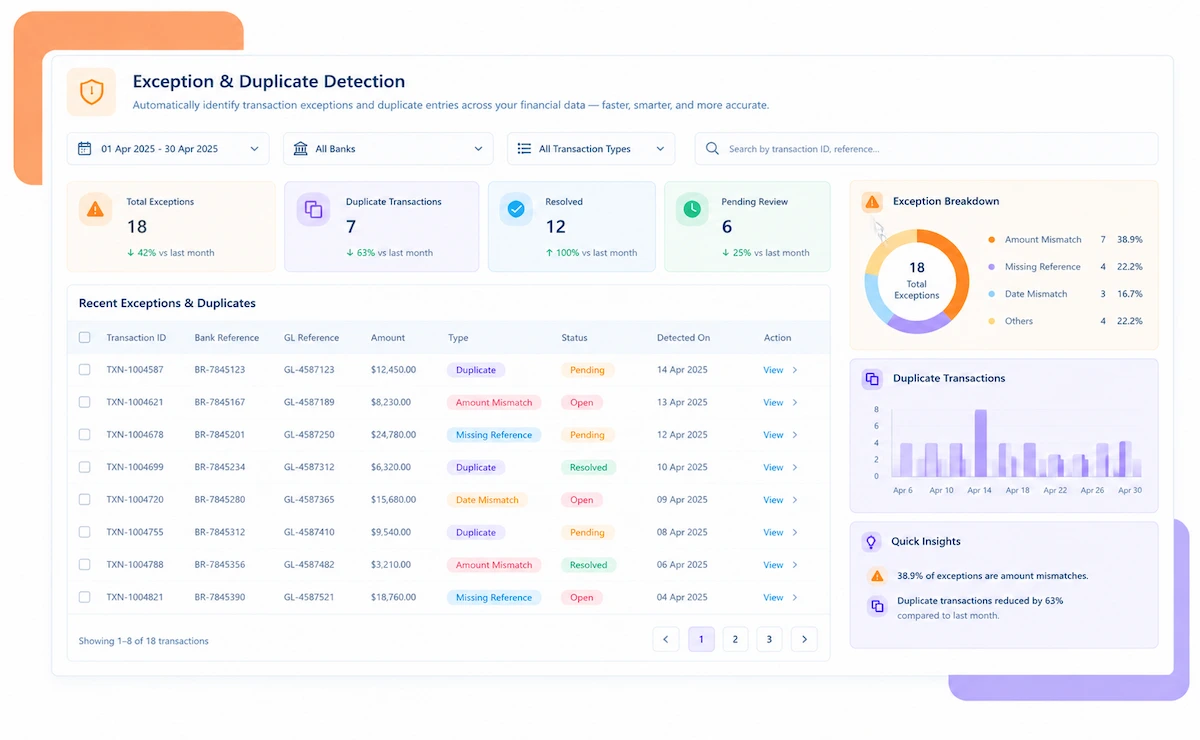
A VAT return that balances on the surface can still be built on invoices that don't actually match their claimed rate or their reported total. Here's what a dedicated reconciliation step catches that a final review won't.

Some teams discover this the hard way, during an audit. These are the ones who usually catch it before that happens.
Each registration's rules differ, and reconciling them separately by hand doesn't scale.
Timing gaps between jurisdictions are easy to miss without a dedicated check.
Rate-by-rate manual review stops being realistic past a certain invoice count.
Rate mismatches and missing invoices tend to surface right before the filing is due.
There's a real case for automating VAT reconciliation, and a few things it won't solve for you. Both sides are worth laying out plainly.
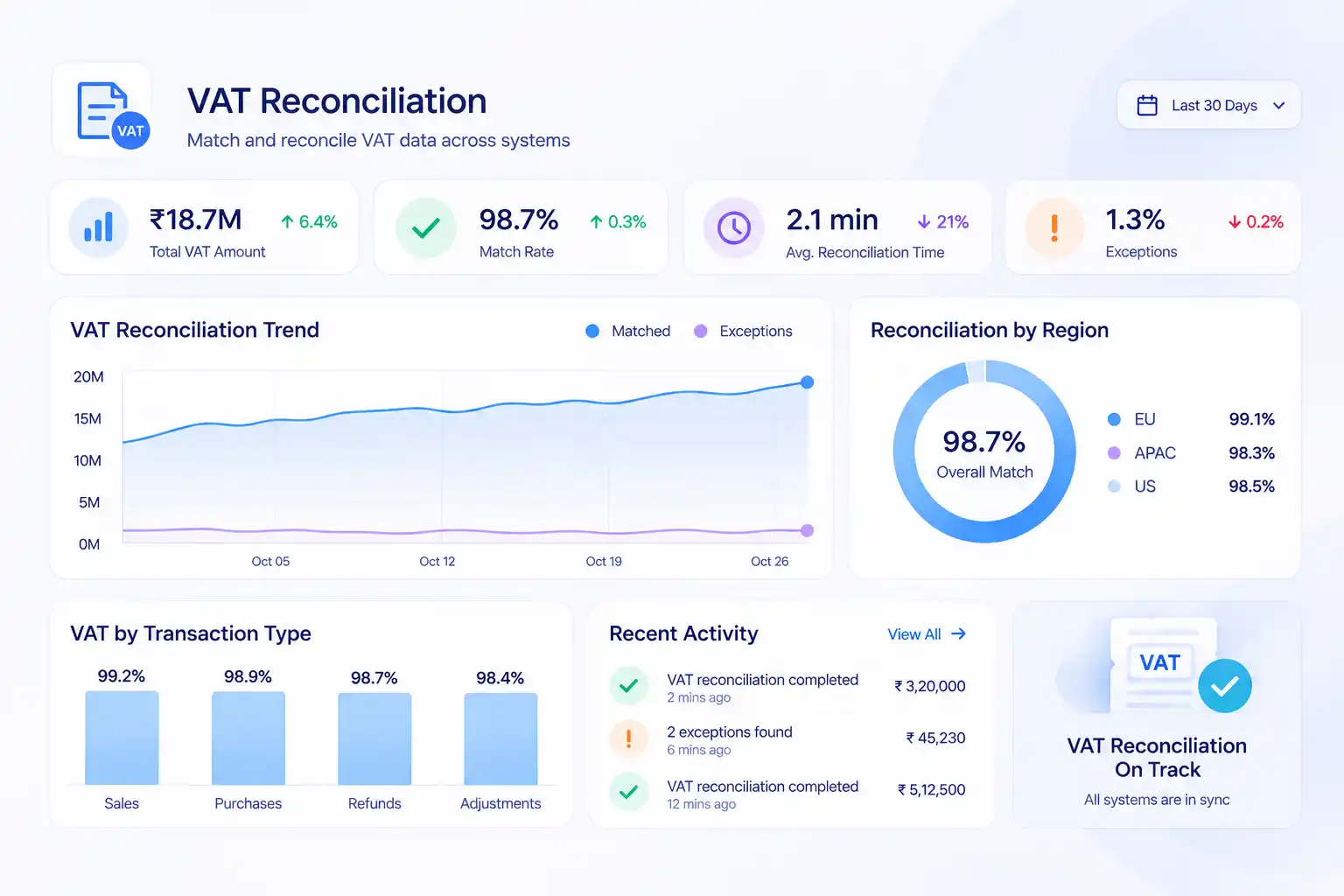
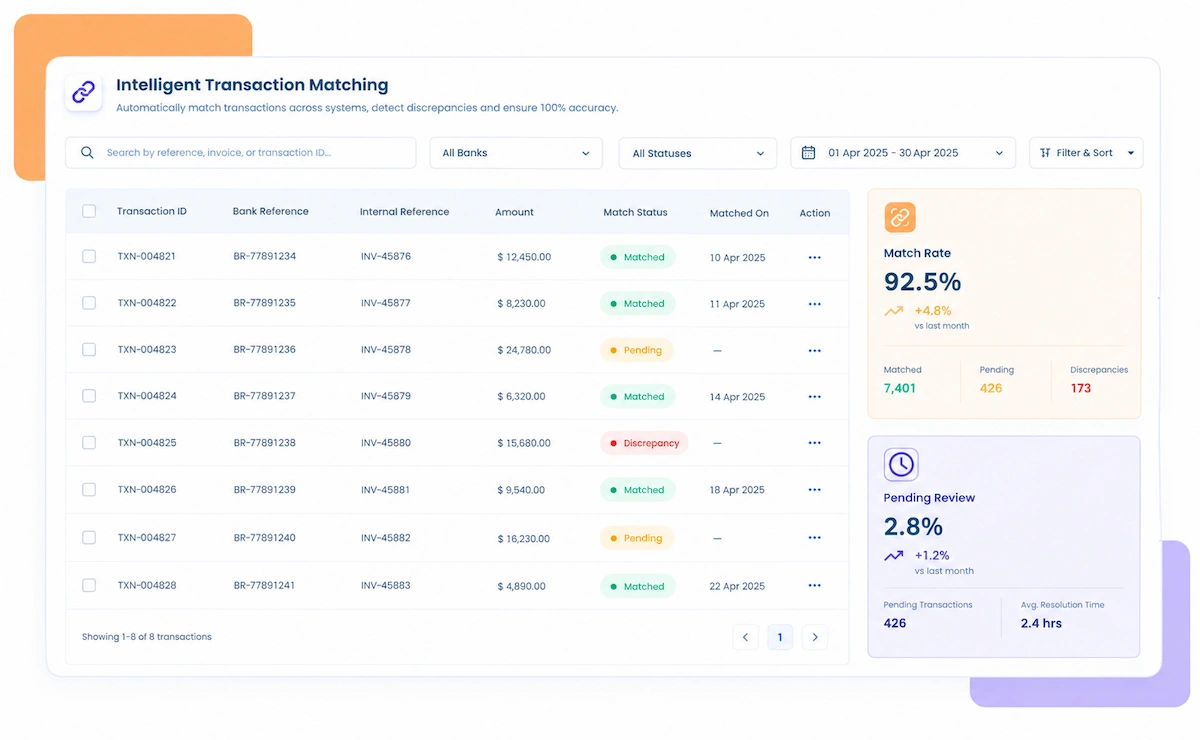
VAT reconciliation software matches input VAT claimed on purchase invoices and output VAT charged on sales invoices against the figures that actually go onto a VAT return, catching rate mismatches, missing invoices, and cross-border timing gaps before submission. A business registered across several VAT jurisdictions can end up with input and output figures that balance on the surface while individual invoices underneath are still wrong. Kosh AI pulls in both sides of the ledger automatically, checks every invoice against its rate and reported total, and hands the filing team a reconciled ledger instead of two exports to compare by hand.

Put a hand-reconciled VAT period next to an automatically matched one, and the difference isn't subtle, especially once rates and cross-border entries pile up.
| Feature | Automated VAT Reconciliation | Manual VAT Reconciliation |
|---|---|---|
| Input-to-Output Matching | Every invoice matched against its claimed or reported VAT automatically. | Teams compare ledgers invoice by invoice, usually in a spreadsheet. |
| Cross-Border Timing | Reverse charge entries tied to the period they actually belong to. | Timing gaps are often caught only when a jurisdiction's return looks off. |
| Multi-Jurisdiction Coverage | Every registration reconciles on its own rules within one view. | Each jurisdiction is usually reconciled separately, often by different people. |
| Rate Mismatches | Applied rates checked against registered jurisdiction rates automatically. | A misapplied rate can repeat across a whole period before it's noticed. |
| Filing Readiness | A reconciled ledger is ready well ahead of the deadline. | Teams often reconcile exceptions in the final days before filing. |
| Scaling Up | New jurisdictions or entities reconcile the same way as existing ones. | More jurisdictions usually means more manual reconciliation work. |


Plug your accounting system into Kosh AI, and the very next VAT period starts closing with input and output figures that already agree.

Schedule a Quick DemoSet up a short session and we'll bring in your own input and output VAT to show exactly where they tie out, and where they currently don't.
Book a Demo