A Wire Sent Isn't a Wire Confirmed. Kosh AI Closes the Loop Between Instruction, Confirmation, and Ledger
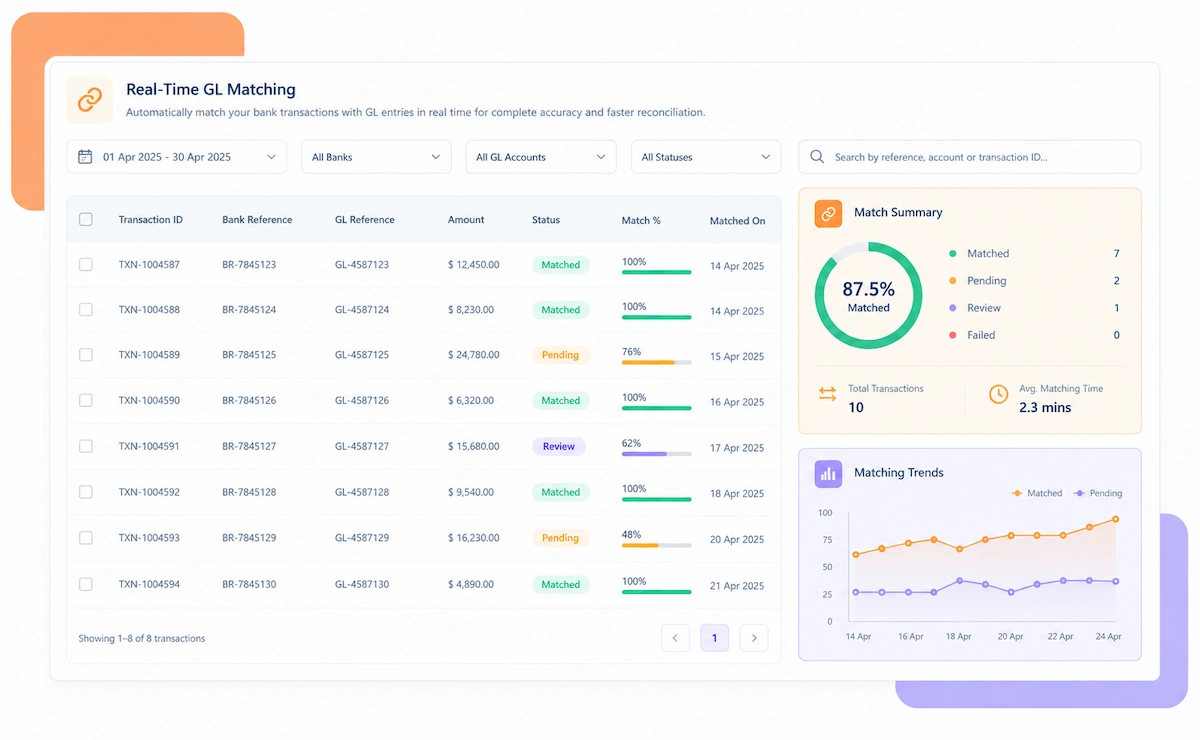
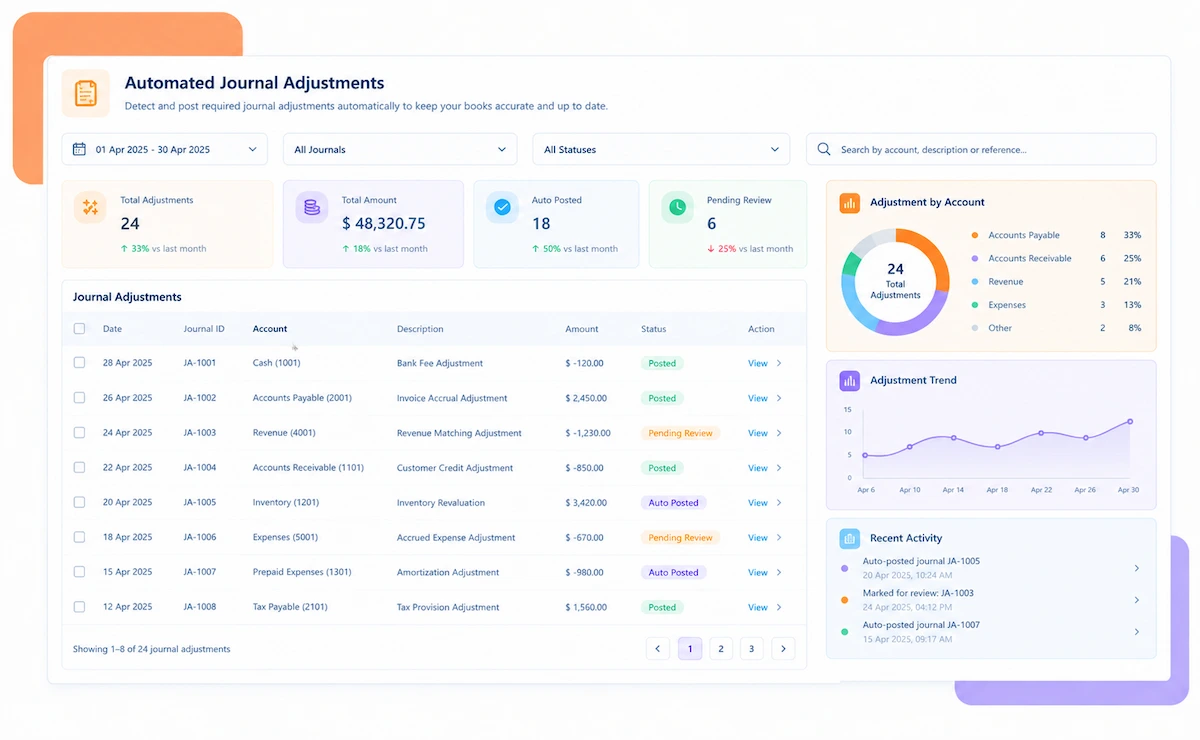
An instruction sent, a confirmation received, and a ledger entry booked all need to describe the same wire. Kosh AI checks that chain holds for every transfer, outgoing or incoming.
Four steps take a wire from instruction to confirmed settlement, checked against the ledger the whole way, for every transfer you send or receive.
Whether it's five wires a week or five hundred, treasury still needs proof that each instruction turned into an actual confirmed settlement.
Even one banking relationship benefits from automatic instruction-to-confirmation matching.
Every bank relationship reconciles on its own confirmation format, then rolls into one view.
Hundreds of weekly wire instructions reconcile without a manual confirmation check.
Duplicate and unconfirmed instructions are flagged before funds move incorrectly.
High-value supplier wires reconcile against confirmations before payment runs close.
Cross-border wires through correspondent banks reconcile against expected settlement timing.
High transfer volume across client accounts reconciles without manual confirmation chasing.
New bank relationships reconcile the same way as existing ones, without added manual work.
Kosh AI reconciles wires across several banking relationships without manual confirmation chasing.
Kosh AI gives lean treasury teams confirmation-level matching without adding headcount.
An instruction sent doesn't mean funds actually arrived where they were supposed to. Here's what changes once every wire gets checked against its confirmation.
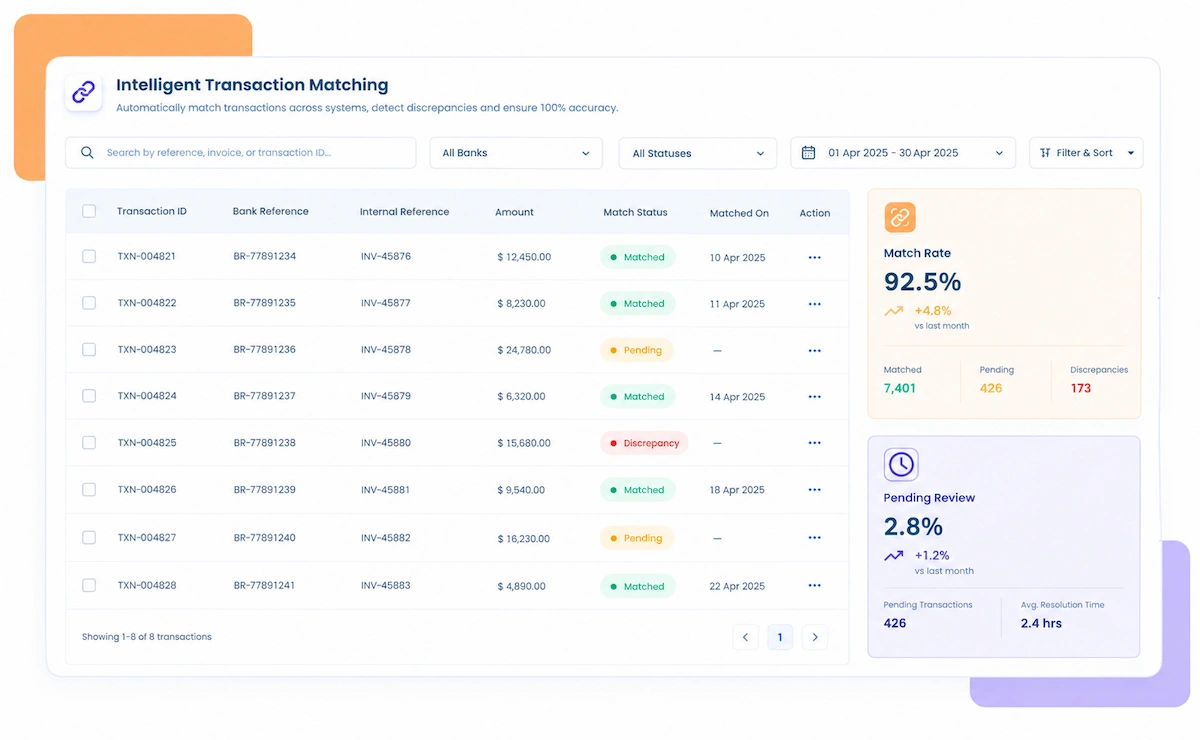
Every outgoing instruction is checked against an actual bank confirmation before it's treated as complete.
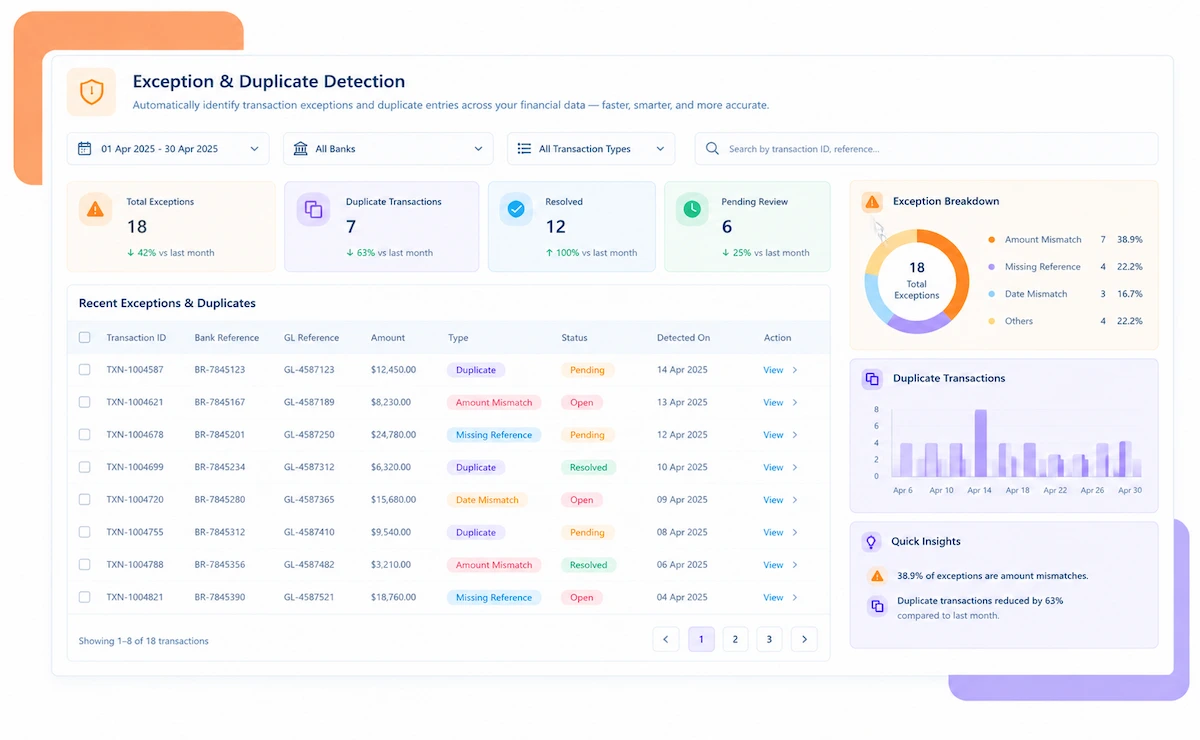
A resent or duplicated wire is flagged before funds move a second time.
Deposits are matched against open receivables instead of sitting unapplied.
A delayed correspondent-bank wire is distinguished from one that's genuinely missing.
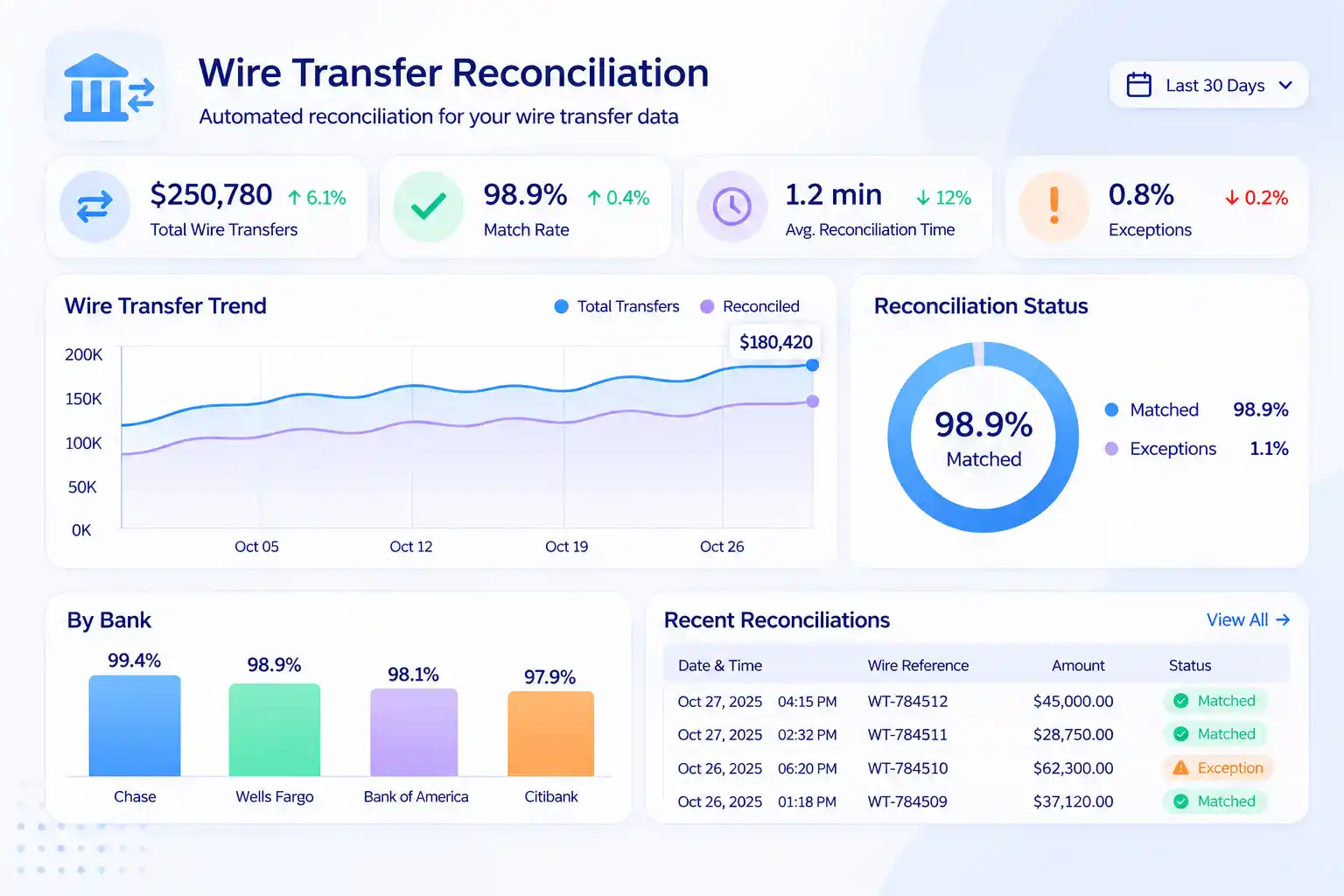
Treasury's cash position reflects reconciled wires instead of a raw, unchecked feed.
New banking relationships can reconcile without adding manual confirmation work.
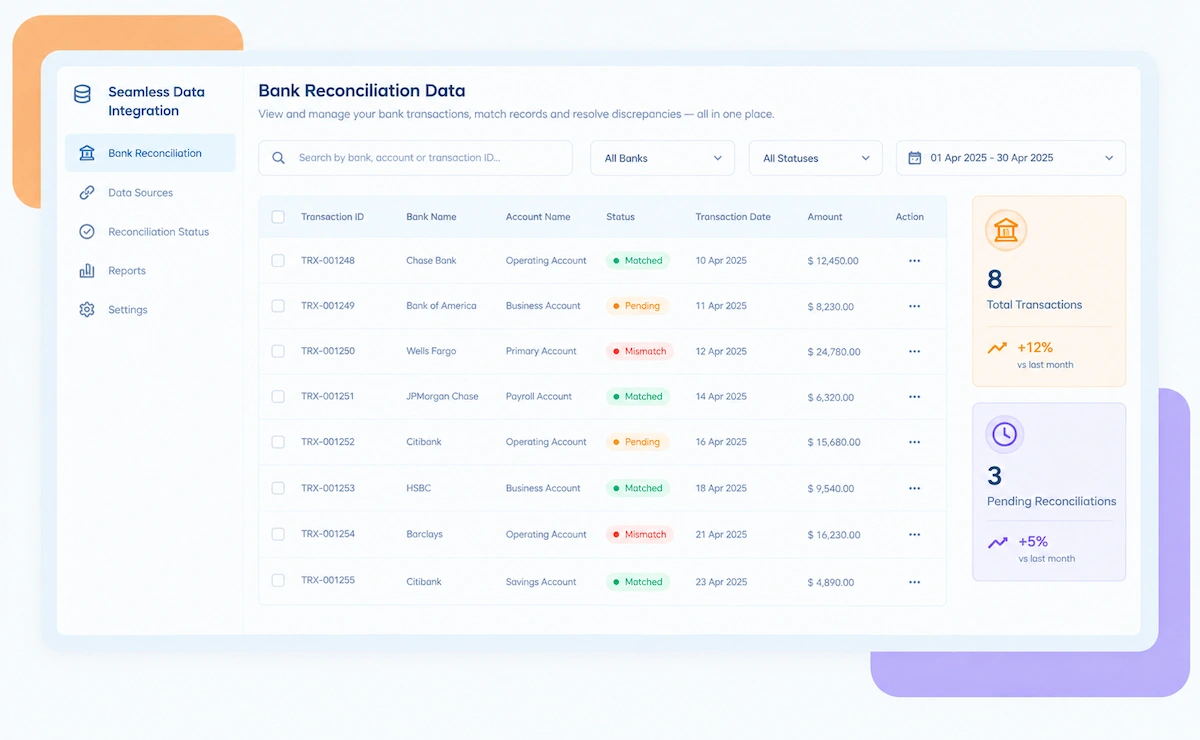
Kosh AI connects directly with all major banks and ERPs, enabling real-time data sync for faster, more accurate reconciliations—no manual uploads, no delays.


A wire instruction sent to the bank doesn't guarantee it was confirmed, settled on time, or even unique. Here's what a dedicated reconciliation step catches that a bank statement glance won't.

It isn't the number of wires sent that decides who feels this most, it's how much a single unconfirmed one could cost.
A single unconfirmed six- or seven-figure wire carries more risk than a hundred small ones.
Correspondent bank delays need a reconciliation path, not a guess about where the wire is.

Duplicate detection matters most where a single error is expensive to reverse.
Each bank's confirmation format needs checking on its own terms, not assumed consistent.
Automated wire reconciliation closes a lot of real risk, though a few judgment calls stay firmly with treasury no matter how good the matching gets.
No more treating a sent instruction as complete without a matching bank confirmation.
A resent instruction is flagged before it becomes a second real transfer of funds.
Each bank's confirmation format and feed needs to be configured individually at first.
Reconciliation flags unusual patterns, but confirming intent behind them is still a human call.
Wire transfer reconciliation software matches every outgoing and incoming wire against its bank confirmation and ledger entry, catching unconfirmed instructions, duplicate transfers, and delayed cross-border settlements before they turn into a cash position problem. A treasury team moving high-value wires across multiple banks and correspondent relationships can't rely on a sent instruction being treated as a completed transfer, since confirmations, timing, and duplicate risk all need their own check. Kosh AI pulls in instructions and confirmations automatically, matches them against each other and against open receivables, and hands treasury a reconciled wire ledger instead of a raw bank feed to interpret by hand.

A high-value wire sitting unconfirmed for a day feels very different depending on whether someone caught it manually or the system flagged it the moment it happened.
| Feature | Automated Wire Transfer Reconciliation | Manual Wire Transfer Reconciliation |
|---|---|---|
| Instruction-to-Confirmation Matching | Every wire matched to its confirmation automatically. | Treasury checks confirmations against instructions manually. |
| Duplicate Detection | Resent or duplicate instructions flagged before execution. | Duplicates are often caught only after funds have already moved. |
| Incoming Wire Application | Deposits matched against open receivables automatically. | Unapplied wires can sit unmatched until someone investigates. |
| Cross-Border Timing | Correspondent bank delays tracked against expected settlement time. | A delayed wire is often mistaken for a missing one. |

| Daily Cash Reporting | Cash position built from a reconciled wire ledger. | Cash reporting often relies on an unreconciled raw bank feed. |
| Adding New Banks | A new banking relationship reconciles the same way as existing ones. | A new bank usually means extending a manual confirmation process. |
Link your treasury and banking platforms once, and the very next wire you send gets checked against its confirmation before anyone has to ask whether it settled.
Schedule a Quick DemoTalk to us and we'll pull in a sample of your recent wire activity to show exactly which ones are confirmed and which still aren't.
Book a Demo