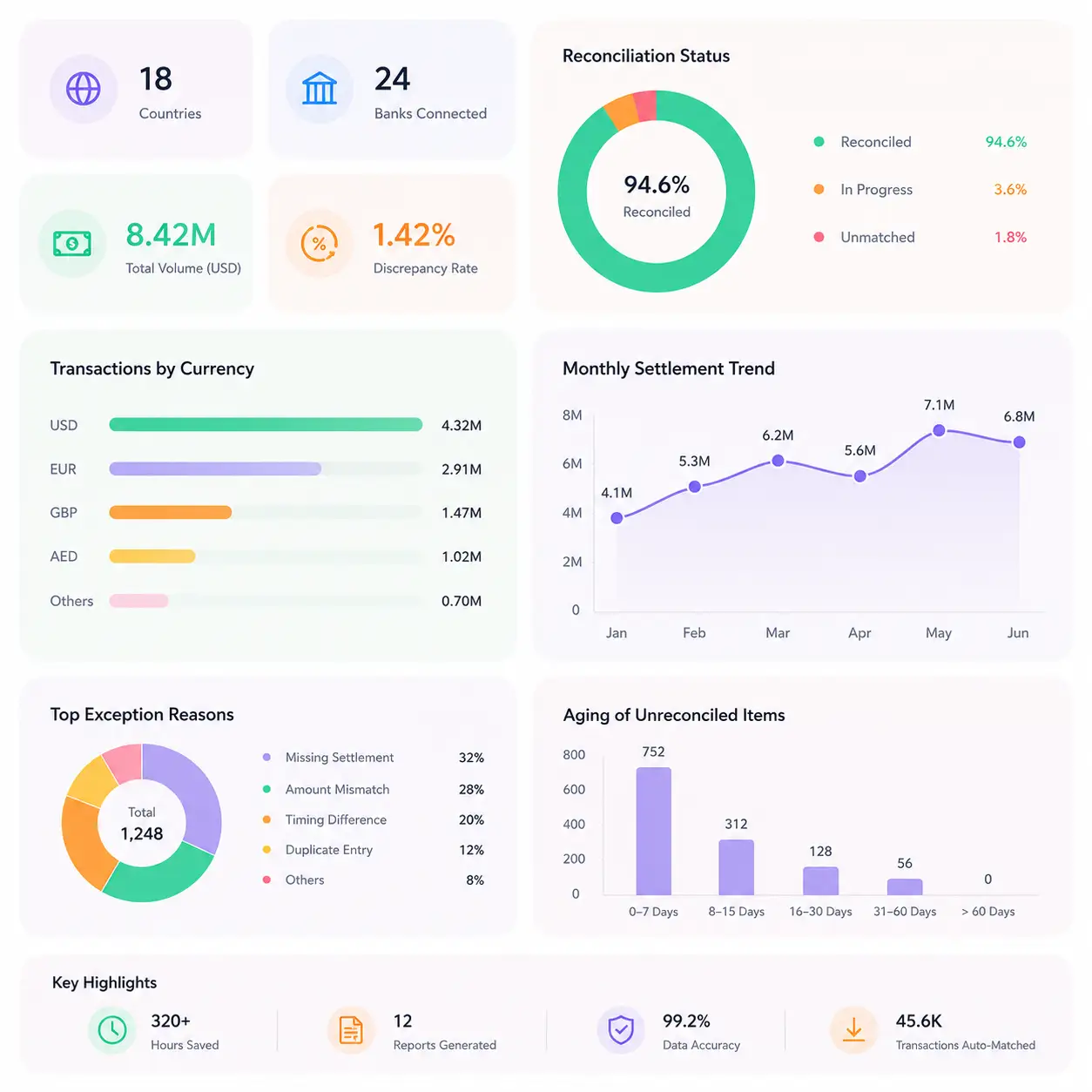
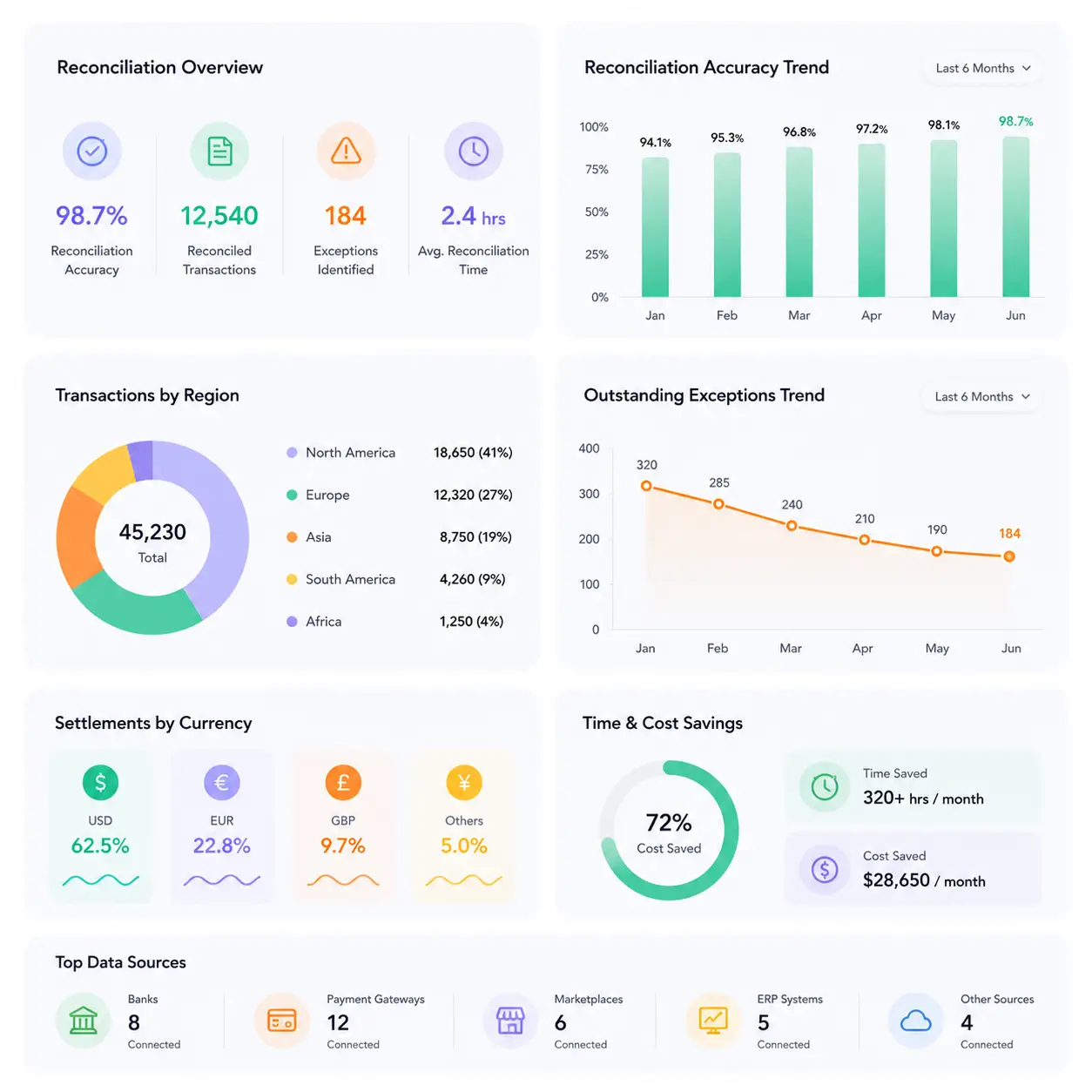
Multi-Currency Reconciliation Software Built for Businesses Trading Across Borders

One Ledger in Rupees. One Bank Statement in Dollars. Kosh AI Checks Whether the Conversion Actually Matches

  • Matches Transactions Converted at Different FX Rates Automatically
  • Separates Realized From Unrealized Gains and Losses
  • Flags Revaluation Entries That Don't Tie Back to Source Transactions
  • Reconciles Across Any Number of Currencies and Entities at Once
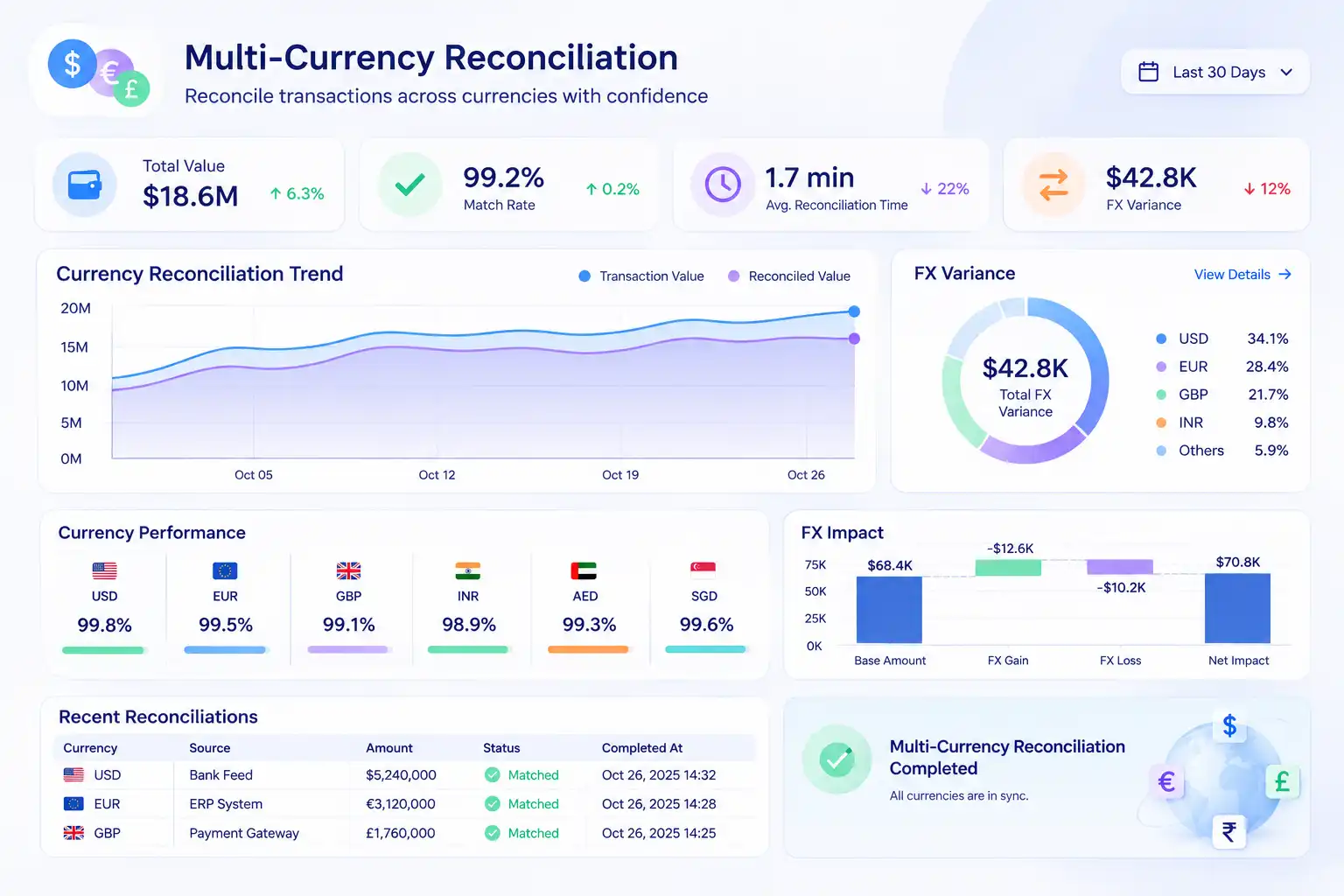
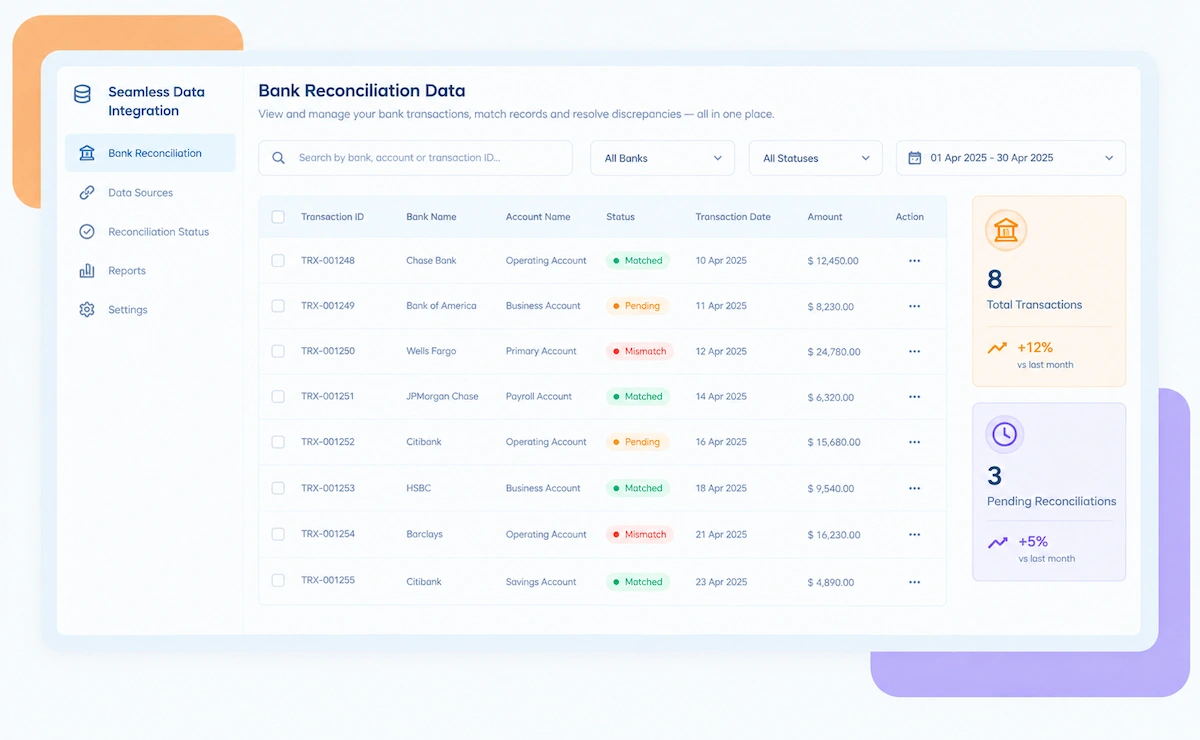
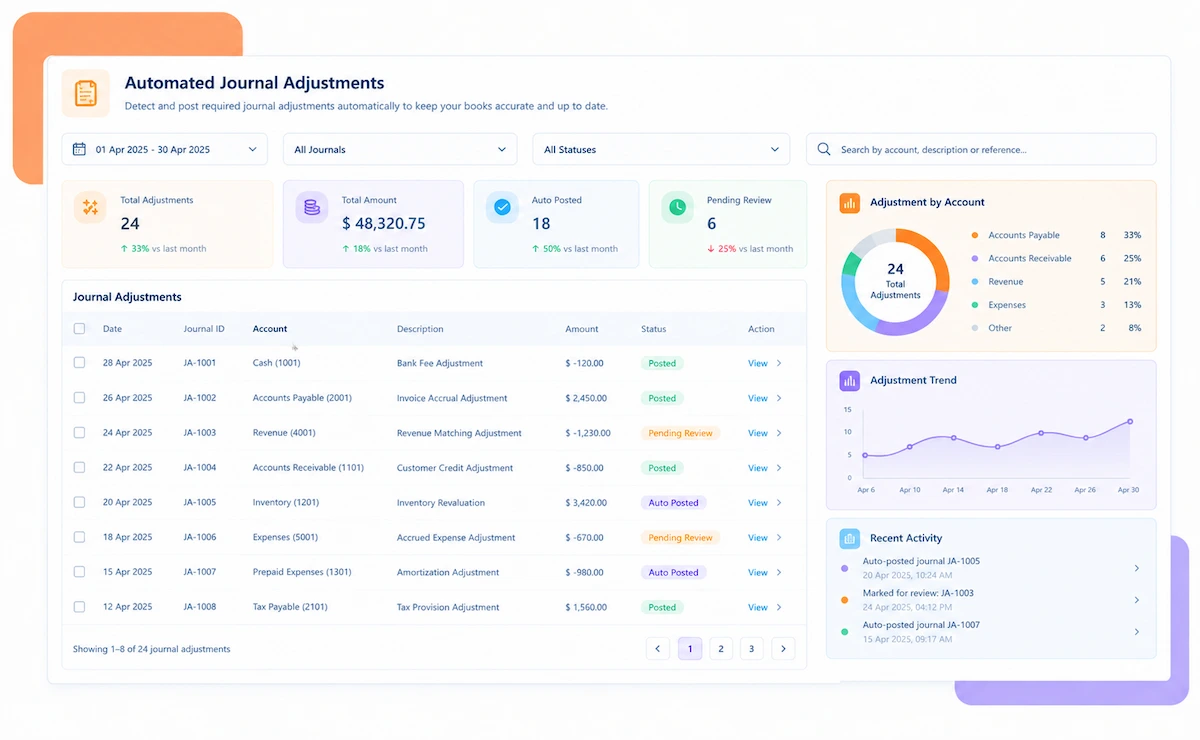
Multi-currency reconciliation software dashboard

NEW 2026 Multi-Currency Reconciliation Tool

Different Currency, Same Unexplained Gap

A transaction booked in one currency and settled in another almost never lines up to the last decimal, and most teams can't tell whether the gap is a real error or just the exchange rate moving between the two dates. Kosh AI works out which one it is.

What Multi-Currency Reconciliation Software Checks

A transaction that crosses currencies picks up a second way to go wrong: the rate. Kosh AI checks the amount and the rate separately instead of blending them into one number.

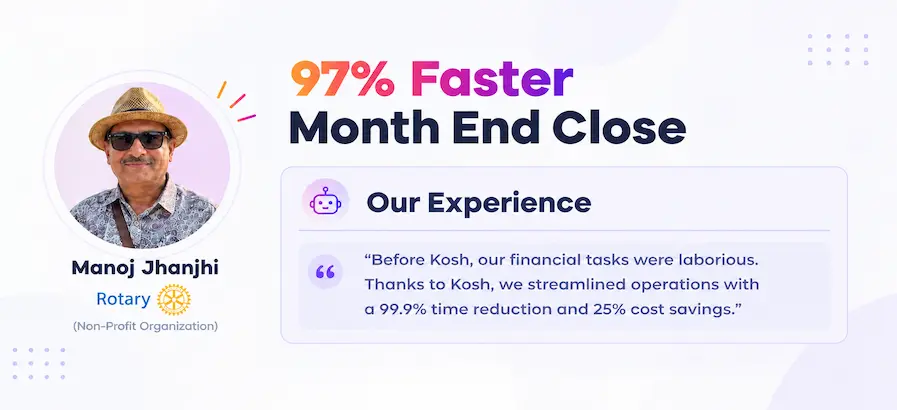
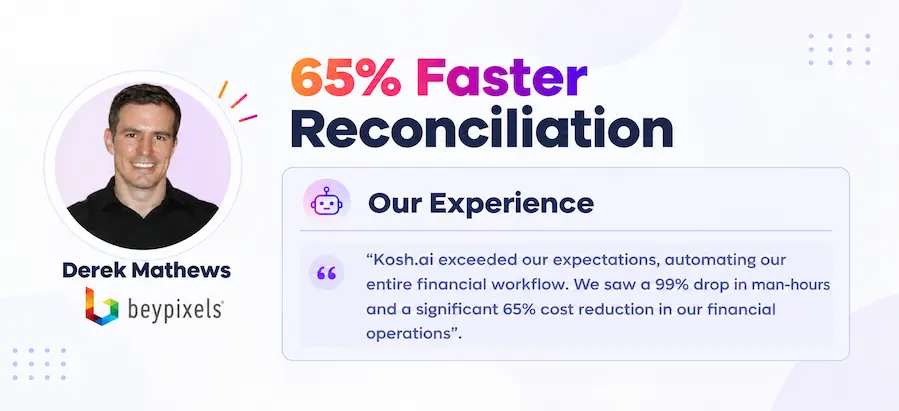
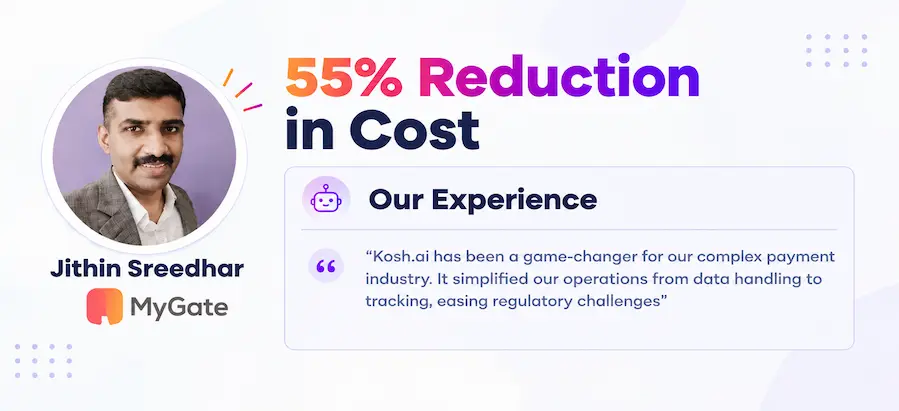
See How Businesses Like Yours Use Kosh AI

Konica Minolta Business Solutions, U.S.A., Inc.
Ring Container
Conference Direct

How Multi-Currency Reconciliation Software Works

Four steps take a transaction from two mismatched currency entries to a fully explained match, rate and amount checked separately.

  • Transactions Imported: Entries come in from every entity and currency they were originally booked in.
  • Rate Sources Connected: The exchange rates used at booking and settlement are pulled in alongside the entries.
  • Revaluation Data Included: Period-end balances and the rates used to revalue them come in too.
  • Every Entity Covered: Every subsidiary's currency positions land in the same pull, so nobody is stitching together separate exports by hand.
  • Amount Matched in Both Currencies: Each transaction is checked in its original and converted currency side by side.
  • Rate Checked Separately: The rate itself is verified against the source your policy specifies.

  • Tolerances Set by Your Policy: Rounding allowances follow your existing FX policy, not a generic default.
  • Timing Differences Isolated: A booking-date-to-settlement-date gap is told apart from an actual error.
  • Realized Gains and Losses Separated: Settled transactions are classified distinctly from entries still open at period-end.
  • Unrealized Revaluation Checked: Open balances are revalued and matched against the journal that was posted.
  • Genuine Errors Flagged: A mismatch that isn't explained by rate or timing gets raised for review.
  • Priority by Exposure: A six-figure FX gap gets a reviewer's attention before a few cents of rounding noise does.
  • One View Across Currencies: Every currency's reconciled position rolls into a single consolidated report.
  • Review Simplified: What reaches you already names the rate movement behind it, instead of a bare conversion gap you'd have to trace back yourself.
  • Full Trail Preserved: Every match keeps its path from the original transaction to the converted balance.
  • Ready for Audit: Rate sources and calculations are documented, not reconstructed afterward.

Multi-Currency Reconciliation for Every Kind of Global Business

A company billing in two currencies and one running a group across a dozen subsidiaries both need the same rate-and-amount check, just at a different scale.

Cross-Border Sellers

Revenue collected in a customer's currency reconciles against the home-currency ledger.

Multi-Entity Groups

Each subsidiary reconciles in its own currency, then rolls into one group view.

Businesses With Frequent Intercompany Transfers

Cross-currency transfers get checked on both the sending and receiving side.

Growing International Operations

Opening a new currency corridor doesn't mean someone has to build its reconciliation steps from scratch first.

Global E-Commerce Sellers

Marketplace payouts in local currencies reconcile against the home-currency ledger automatically.

SaaS Companies Billing Internationally

Subscription revenue collected in multiple currencies ties out without a manual FX adjustment.

Import and Export Businesses

Supplier payments and customer receipts reconcile across currency pairs on both ends.

Financial Institutions

High-volume FX transactions reconcile at the transaction level, not a daily net figure.

Reconciliation at Scale

Kosh AI reconciles transactions across dozens of currency pairs without manual spreadsheet work.

  • Match every transaction in both original and converted currency.
  • Catch rate mismatches before they're written off as rounding.
  • Keep a documented rate trail behind every reconciled entry.
  • Reconciliation for a Handful of Currencies

    A two-person international finance team gets FX-level matching without hiring a dedicated treasury analyst.

  • Stop looking up daily rates by hand to check a conversion.
  • Bring on another currency pair without a new line of manual work.
  • Start from the bank and ERP exports you already produce today.
  • What Changes When Currencies Reconcile Automatically

    A ledger that balances in one currency doesn't mean it balances in the other. Automating the match changes what actually happens at close.

    1

    Know Whether It's the Rate or the Amount

    Every mismatch gets classified as a rate difference, a timing gap, or a genuine error.

    2

    Separate Realized From Unrealized Automatically

    Settled gains and losses are tracked distinctly from open, revalued positions.

    3

    Catch Revaluation Errors Before Sign-Off

    An entry that doesn't tie back to its source balance is flagged before the close is approved.

    4

    Track Intercompany Transfers End to End

    Cross-currency transfers are checked on both the sending and receiving side.

    5

    Close Faster Across Entities

    Every currency's position reconciles into one view instead of a spreadsheet per subsidiary.

    6

    Scale Without Growing the Treasury Team

    Expanding into a new market's currency is a configuration change, not a reason to grow the treasury headcount.

    The Results of Automating Multi-Currency Reconciliation

    68%Faster Multi-Currency Close
    85%Of FX Transactions Matched Automatically
    90%Fewer Unexplained Rate Variances

    Integrate Seamlessly with Your Existing ERP Systems

    Kosh AI connects directly with all major banks and ERPs, enabling real-time data sync for faster, more accurate reconciliations—no manual uploads, no delays.

    Why Multi-Currency Reconciliation Needs More Than a Converted Total

    A converted balance that looks close to the ledger can still hide transactions that are badly off in opposite directions once the rate is factored in. Here's what a dedicated reconciliation step catches that a top-line comparison won't.

    • Converted Totals Hide Offsetting Rate Errors: One transaction converted at the wrong rate and another at a slightly different one can cancel out in the total while both stay wrong.
    • Realized and Unrealized Look the Same Until Separated: Without separating the two, a settled gain gets booked the same way as a position that's still open and could still move.
    • Revaluation Drifts From Source Balances Quietly: A revaluation journal calculated on the wrong balance can sit unnoticed until the next audit asks where the number came from.
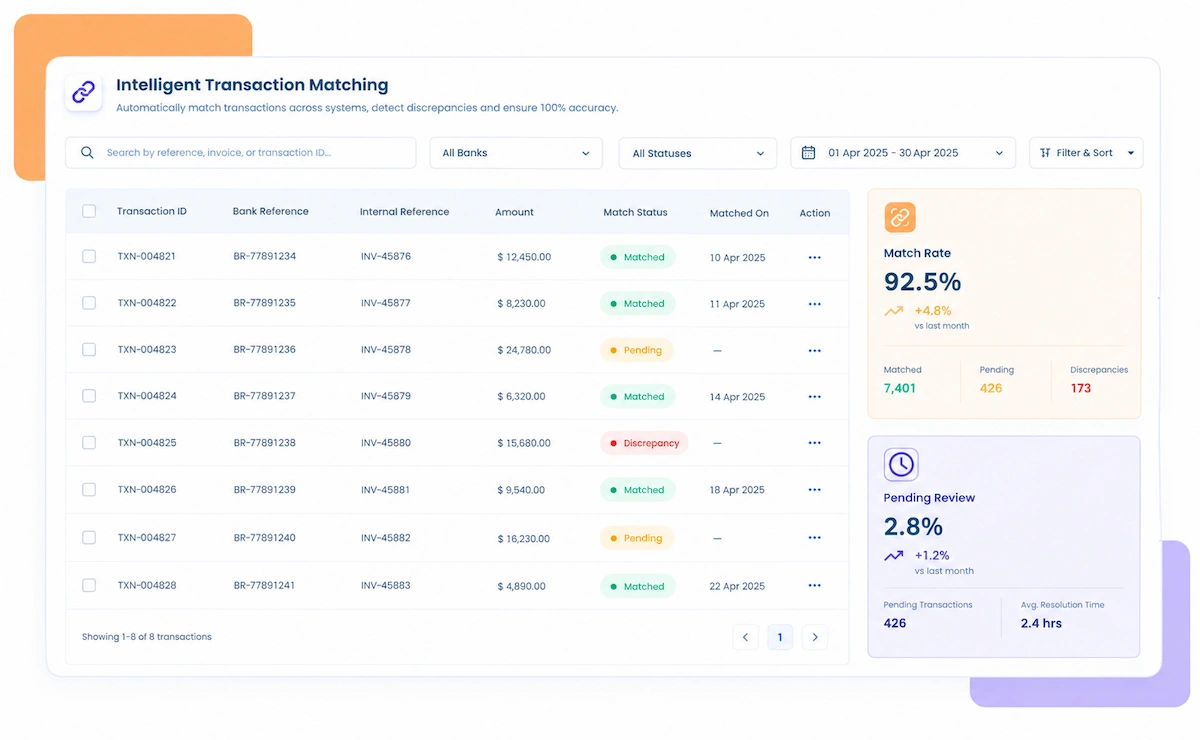
    Multi-currency matching illustration

    Who Actually Needs Multi-Currency Reconciliation Software

    Operating in more than one currency is enough on its own. Here's who tends to feel the gap first.

    1

    Businesses Billing in Multiple Currencies

    Each currency's transactions need their own rate check before they roll into one group view.

    2

    Groups With Several International Subsidiaries

    Every entity's currency position needs reconciling before group consolidation.

    3

    Businesses With Frequent Cross-Currency Transfers

    Transfers between currencies need checking on both ends, not just where they landed.

    4

    Import and Export Businesses

    Supplier and customer payments in foreign currency need tracking accurately over time.

    5

    Finance Teams Reporting Under Multiple GAAPs

    Realized and unrealized FX movements need separating correctly for each reporting standard.

    6

    Growing International Operations

    Opening a new currency corridor is a setup step inside the same tool, not a reason to build a new manual process.

    Multi-Currency Reconciliation Software: An Honest Assessment

    This tool handles the mechanical side of FX reconciliation well. Setting the actual rate and revaluation policy it follows is still a finance decision, not something it makes for you.

    Rate-level matching

    Matches Transactions at the Rate Level

    No more trusting a converted total that can hide rate errors underneath.

    Realized vs unrealized

    Separates Realized From Unrealized Automatically

    Settled gains and losses get classified differently from positions that are still open.

    FX policy setup

    FX Policy Mapping Takes Setup

    Rate sources and rounding tolerances need to be configured correctly before matching runs well.

    Source data discipline

    Source Data Discipline Still Matters

    Matching works best when bank and ERP exports carry the original transaction currency consistently.

    What Is Multi-Currency Reconciliation Software?

    Multi-currency reconciliation software matches transactions that were booked, converted, or settled in more than one currency, checking the amount and the exchange rate behind any gap instead of writing off a difference as rounding. A group running several international entities ends up with transactions, revaluations, and transfers happening across currencies at once, and a converted balance that looks close to the ledger can still be hiding entries that are badly wrong in opposite directions. Kosh AI pulls in transactions, rate sources, and revaluation journals automatically, matches them at the transaction level, and separates genuine FX movement from an entry that simply needs correcting.

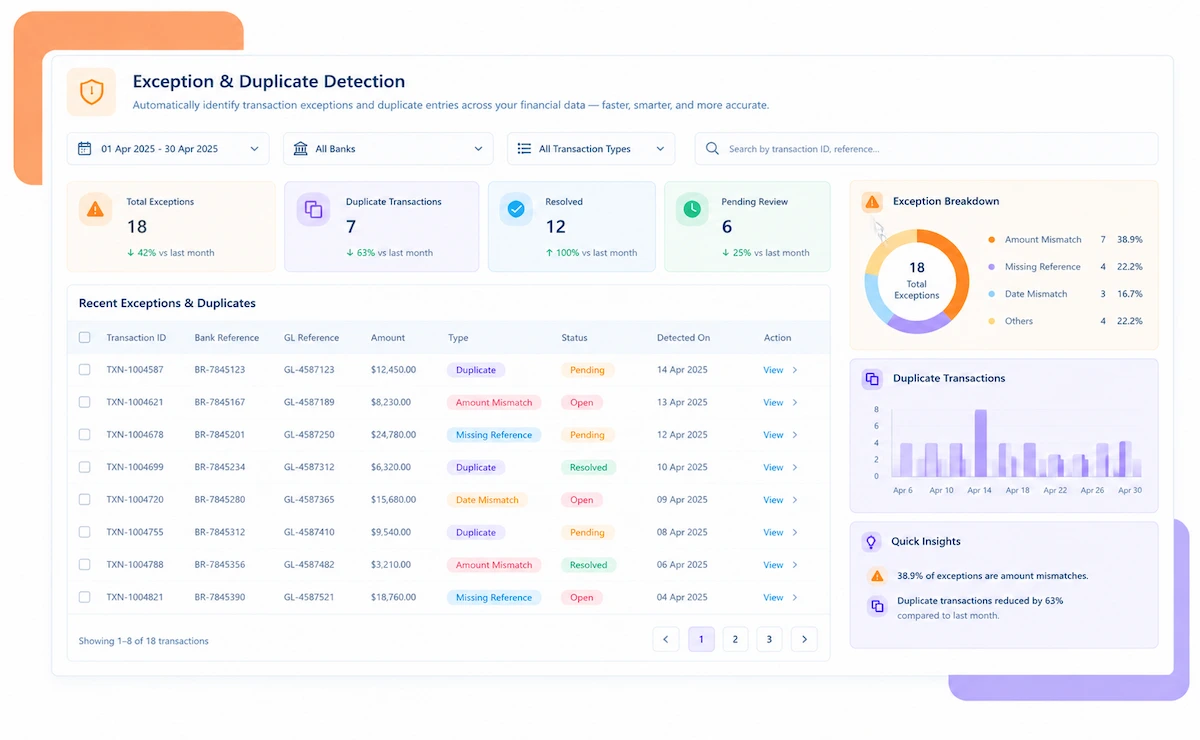
    Multi-currency reconciliation illustration

    Manual vs. Automated Multi-Currency Reconciliation

    Run one FX close through a manual tie-out, then compare it to a close that checks the rate and the amount on every transaction automatically. The gap between the two shows up fast.

    Feature Automated Multi-Currency Reconciliation Manual Multi-Currency Reconciliation
    Rate-Level MatchingEvery transaction matched in both original and converted currency.Teams usually compare converted totals, not individual transactions.
    Realized vs. UnrealizedSettled and open FX positions separated automatically.Many teams book both the same way unless someone happens to dig into the detail.
    Revaluation AccuracyRevaluation journals checked against the balances they were calculated on.Revaluation errors are often caught only when an auditor asks.
    Multi-Entity CoverageA controller opens one view and sees every entity's currency exposure reconciled together.Getting that same picture usually means pulling five separate currency templates into one sheet by hand.
    Transfer TrackingCross-currency transfers checked on both the sending and receiving end.A transfer mismatch is often caught only at the receiving entity.
    Adding New CurrenciesSwitching on a new currency pair takes the same setup steps as the ones already running.Supporting a new currency pair usually means someone extends last year's spreadsheet macro by hand.

    Reconcile Every Currency in Just Days

    Connect your ERP and banking rails inside Kosh AI, and the next FX transaction starts reconciling against the ledger automatically.

    Schedule a Quick Demo
    Loreal Touchless

    Multi-Currency Reconciliation Software FAQs

    What is multi-currency reconciliation software?

    Multi-currency reconciliation software matches transactions across currencies at the amount and rate level. Kosh AI does this automatically and classifies the gaps it finds.

    Does it separate realized from unrealized gains?

    Yes, settled transactions are classified as realized, and open balances are revalued and tracked as unrealized.

    Can it check revaluation entries?

    Yes, revaluation journals are matched against the balances they were calculated from before the close is signed off.

    Does it work across multiple entities and currencies?

    Each entity keeps reconciling in its own local currency, and a controller can still pull a consolidated group view without converting anything by hand first.

    What happens when a cross-currency transfer doesn't match?

    It's flagged at both the sending and receiving entity, so a timing gap doesn't get mistaken for a genuine loss.

    Does this replace our treasury system?

    No — it sits on top of the ERP and treasury platforms you already use, checking what's recorded there against the bank and rate data, and surfacing what doesn't line up.

    What does it plug into on our side?

    It connects to ERPs like SAP, Oracle, and NetSuite along with the bank and treasury feeds tied to your currency accounts, then keeps pulling fresh rates and transactions on its own.

    Does this work for just two currencies?

    It works fine with just two currency pairs; the hours it saves become more noticeable as you add a third, fourth, and fifth.

    How quickly does FX reconciliation stop being manual?

    Your busiest currency pairs are usually reconciling on their own inside the first two or three weeks after you connect your ERP and bank feeds.

    What matters most when comparing FX reconciliation tools?

    Start with whether it separates rate differences from genuine errors and tracks realized versus unrealized positions, not just whether it compares converted totals. Kosh AI is built around exactly that, but the checklist applies to any option you're comparing.

    See What's Driving Your FX Variance Before Quarter Close

    Bring a recent multi-currency statement to the call. We'll walk through it live and separate the rate movement from the lines that actually need fixing.

    Book a Demo