Reconcile Every Entity, Currency, and System From One Platform
Scale changes what a reconciliation tool actually needs to do. Kosh AI is built around the problems that only show up once you're past a handful of entities.

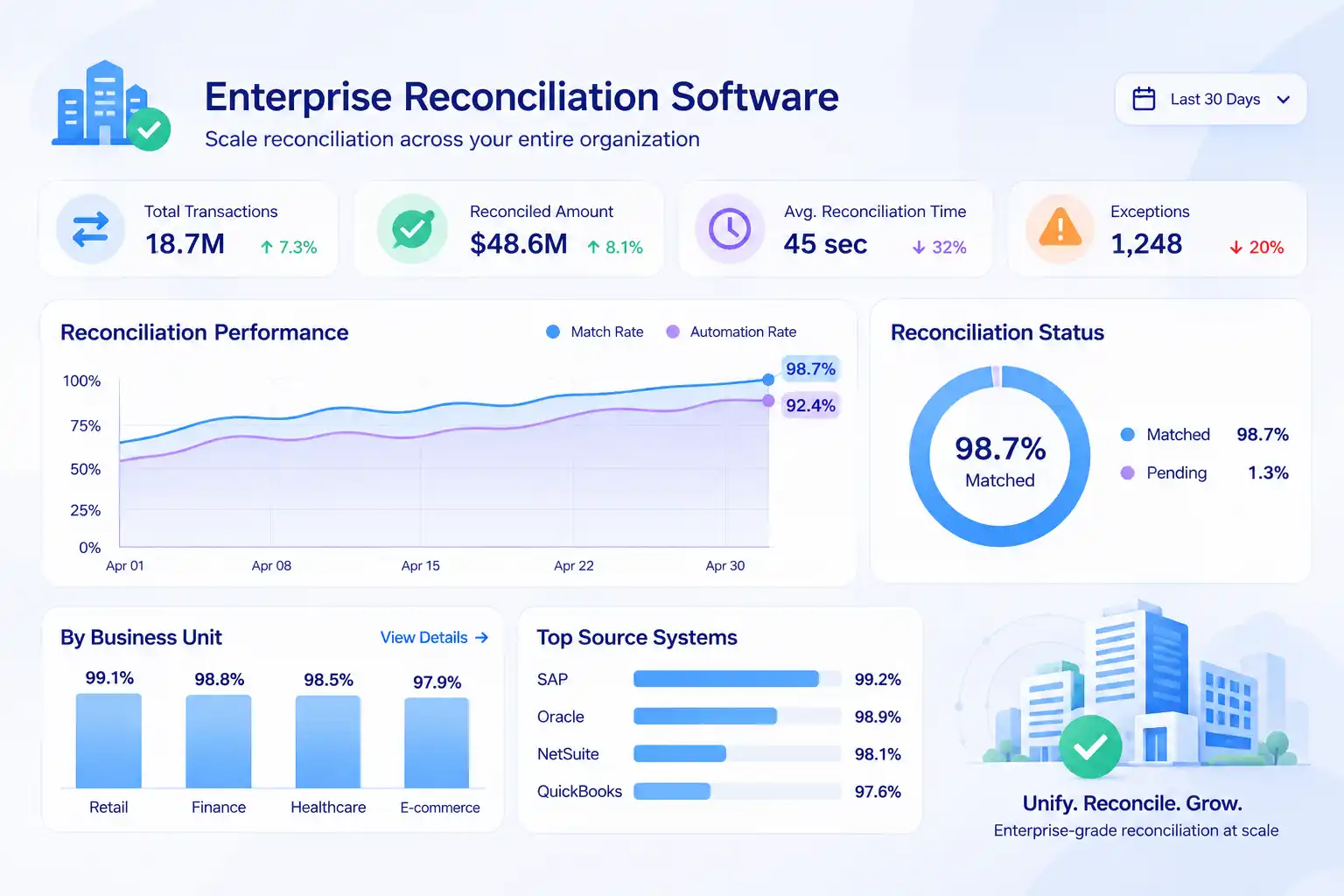
The same four stages run across every entity, every currency, and every system you connect.
What 'enterprise' means for reconciliation looks different depending on structure, geography, and how the business has grown.
Dozens of subsidiaries reconciling locally while a group controller needs one consolidated view.
A parent entity overseeing reconciliation standards across businesses that were each run differently before.
One team handling reconciliation for multiple business units, each with its own exceptions and sign-off chain.
A newly acquired entity's accounts need to reconcile under the parent's standards without a manual rebuild.
New currencies and new regulatory requirements arrive together, and the reconciliation process needs to keep pace.
Transaction volume growing faster than the finance team can hire for manual reconciliation work.
High transaction volume and strict regulatory reporting requirements that demand a complete audit trail.
Multiple plants and warehouses, each generating their own transaction volume that still needs central oversight.
Fast-scaling revenue recognition and subscription billing that outpaces what spreadsheets can track accurately.
No more a different reconciliation process for every subsidiary depending on who set it up.
A consolidated close doesn't wait on the slowest entity's manual tie-out.
Transfers between entities are matched automatically instead of discovered as a variance at consolidation.
Rate-driven variance is separated from genuine errors instead of lumped together.
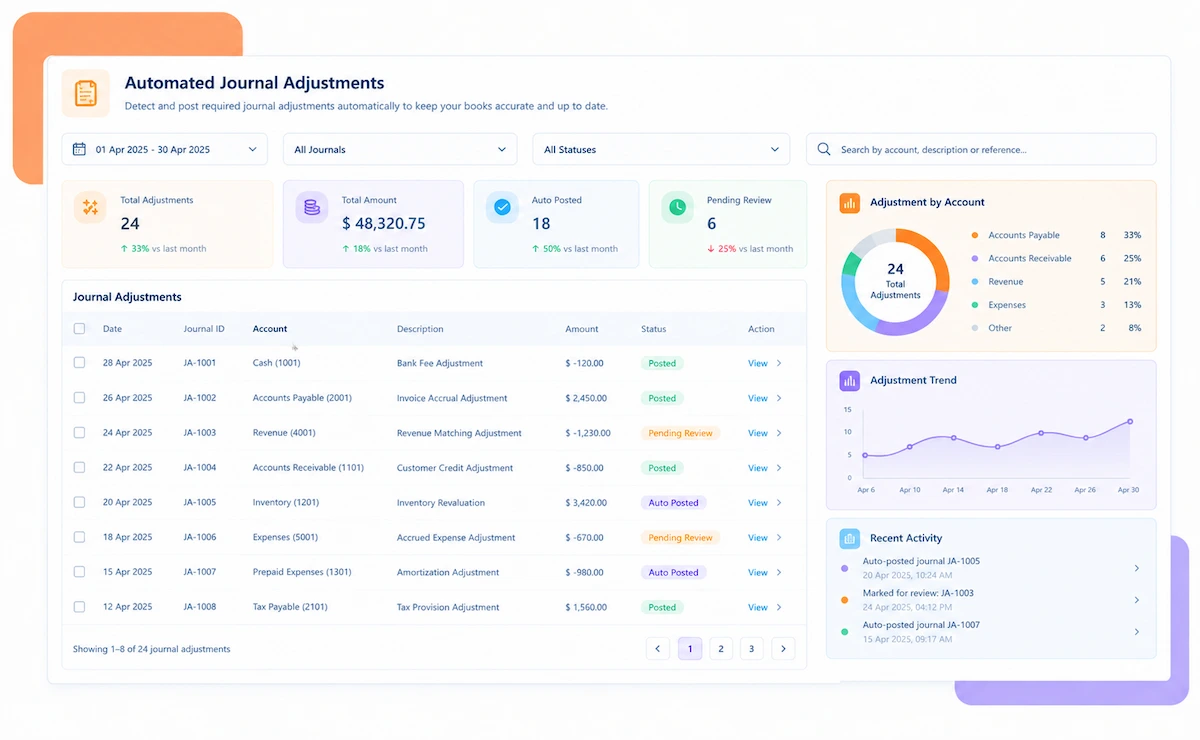
Approval trails and exception history are captured as part of the process, not assembled afterward.
A new entity or acquisition is a configuration step, not a hiring decision.
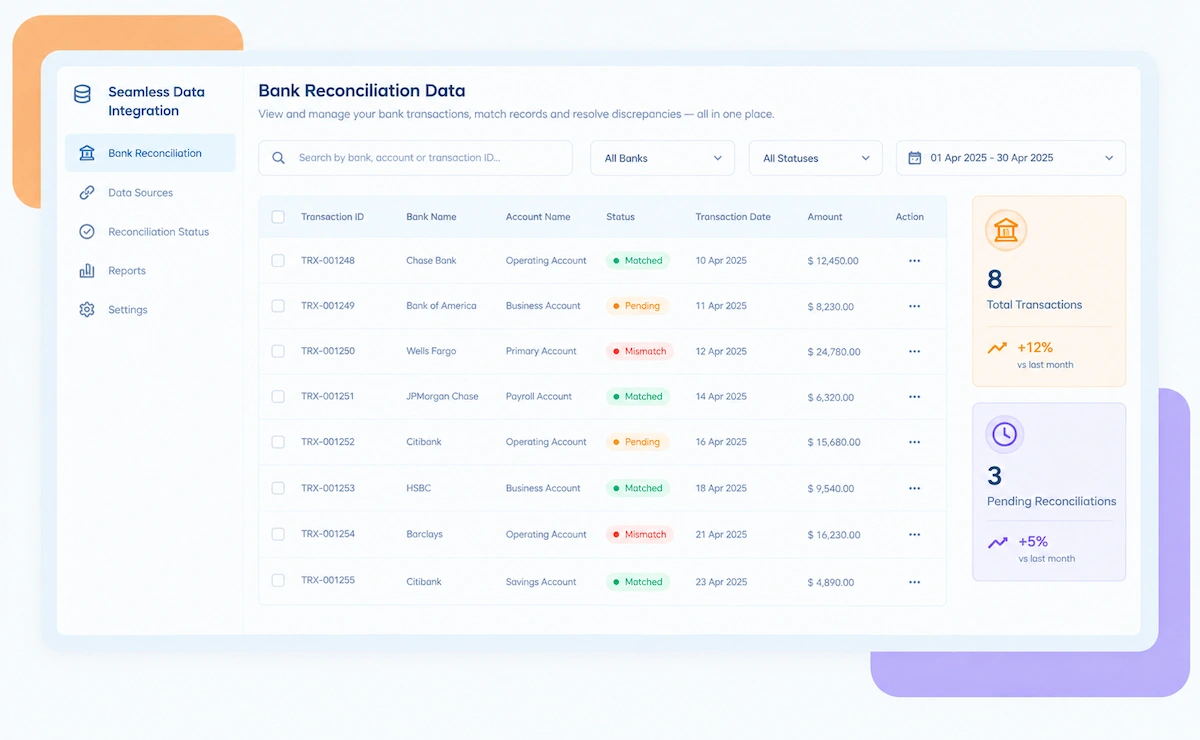
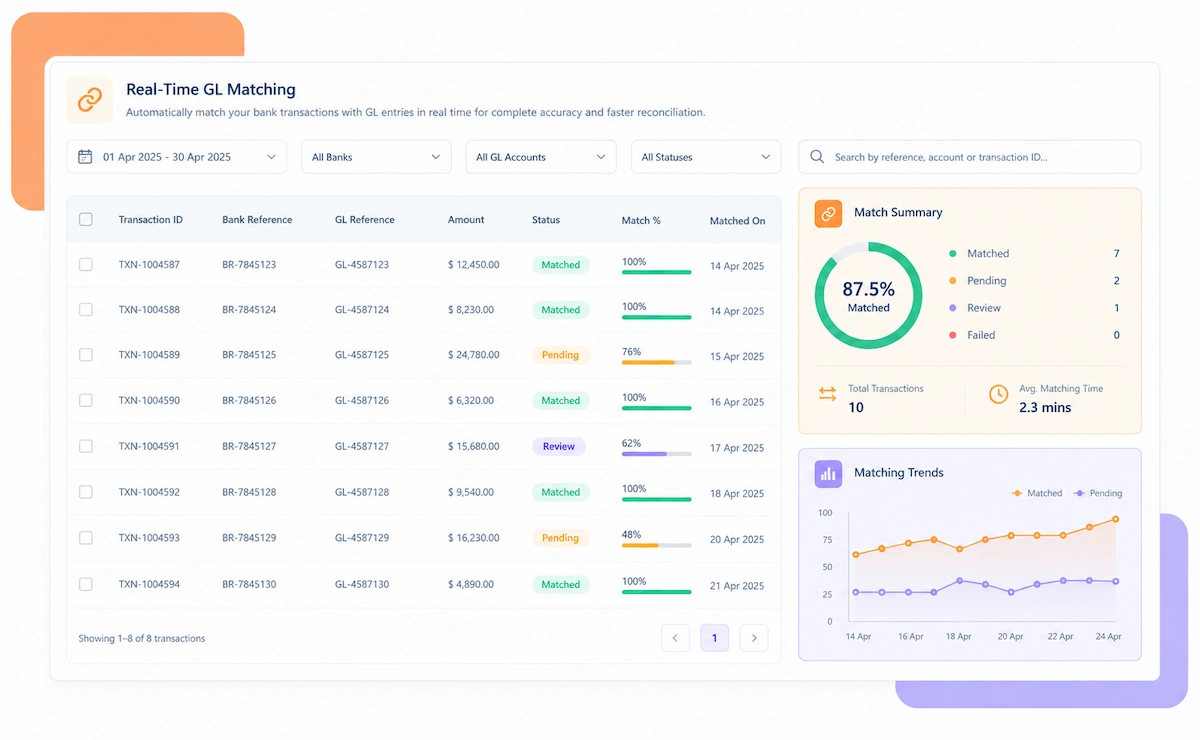
Kosh AI connects directly with all major banks and ERPs, enabling real-time data sync for faster, more accurate reconciliations—no manual uploads, no delays.


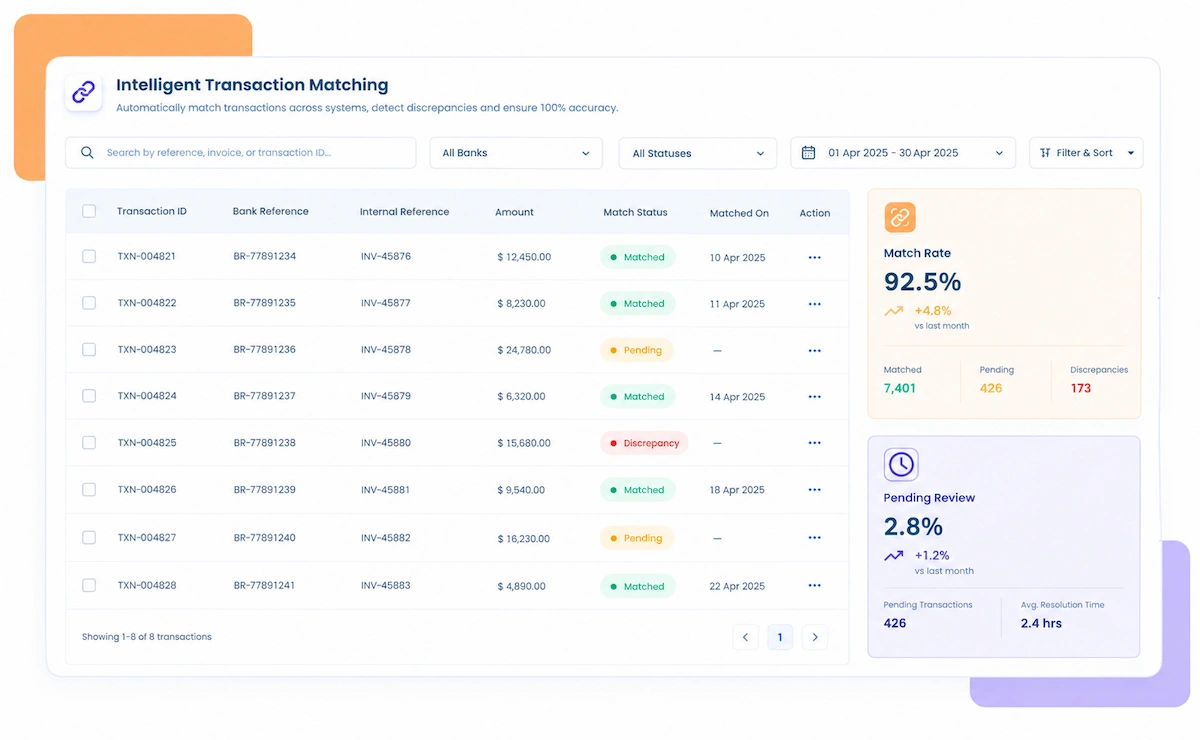
At enterprise scale, pattern recognition matters more than static rules. Kosh AI learns how your organization actually reconciles.
Learns how intercompany transactions typically flow between specific entity pairs, improving match accuracy over time.
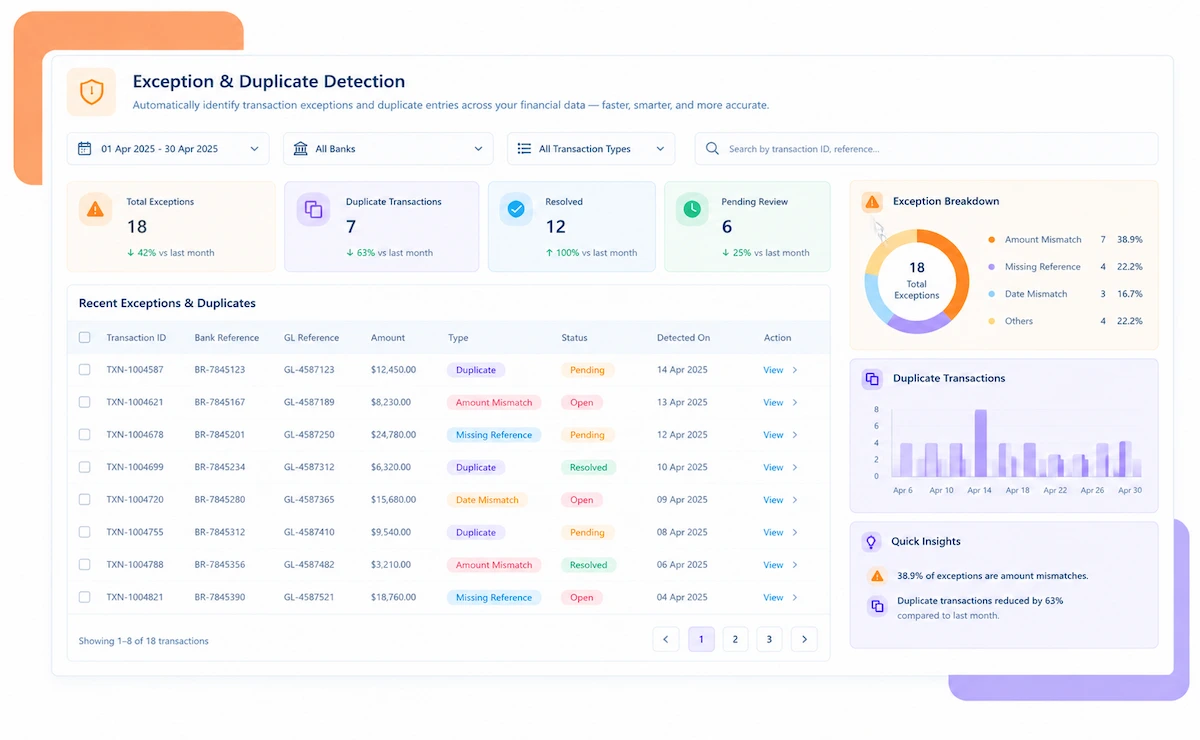
Surfaces the exceptions most likely to affect close timing first, instead of a flat, unordered list.
Distinguishes currency-driven variance from genuine discrepancies instead of flagging both the same way.
Adjusts sign-off thresholds and escalation rules per entity based on historical variance patterns, not a single fixed number.
Enterprise reconciliation software is built to handle reconciliation across many entities, currencies, and ERP systems at once, under one consistent process. It's the category that sits above standard bank or account reconciliation tools, which are usually designed around a single entity's books.
The difference isn't just scale. A reconciliation tool built for a single company doesn't need to handle intercompany eliminations, FX-driven variance across currency pairs, or sign-off hierarchies that differ by entity. An enterprise tool has to handle all of that simultaneously, while still giving a group controller one clean, consolidated view of close status.
Kosh AI's enterprise reconciliation software connects natively to the ERPs each entity already runs, applies consistent matching logic across all of them, and handles intercompany and multi-currency reconciliation as part of the same process, so a group close doesn't depend on manually reconciling each entity separately and then stitching the results together.

Reconcile a hundred entities by hand, or let one platform apply the same matching logic across all of them at once. The difference compounds with every additional entity.
| Feature | Automated Enterprise Reconciliation | Manual Enterprise Reconciliation |
|---|---|---|
| Consistency Across Entities | The same matching rules applied to every entity automatically. | Each entity often runs its own version of the process, built by whoever set it up. |
| Intercompany Matching | Transfers between entities matched and eliminated automatically. | Intercompany variances usually surface late, during consolidation. |
| Multi-Currency Handling | FX variance separated from real discrepancies by rule. | Currency differences are often investigated manually, one at a time. |
| Onboarding New Entities | A new entity plugs into existing rules within days. | A new entity, especially post-acquisition, can take a quarter to fully integrate. |
| Audit Evidence | Approval trails and exception history captured automatically. | Evidence has to be assembled from each entity's own records separately. |
| Close Visibility | One consolidated view of status across every entity. | A status call with an analyst from each entity is usually required. |
A tool that works for ten entities doesn't automatically work for a hundred. These are the capabilities that hold up at real scale.

Reconciliation at scale runs into the same handful of problems, no matter the industry.
A process built for ten entities turns into a bottleneck well before it reaches a hundred.
Different acquisitions often mean different ERPs still running side by side.
The more entities transact with each other, the more eliminations need checking every close.
FX-driven variance needs its own handling, separate from genuine discrepancies.
A newly acquired entity needs to be onboarded into existing standards, not reconciled manually until it catches up.
A large organization's audit scope covers far more ground than a single entity's books.
A few habits separate organizations that scale reconciliation smoothly from ones that keep adding headcount to keep up.
Bring your entity structure to the call. We'll show you how Kosh AI reconciles across all of them from one platform.
Book a Demo