Match Every Supplier Statement to Your Ledger Automatically
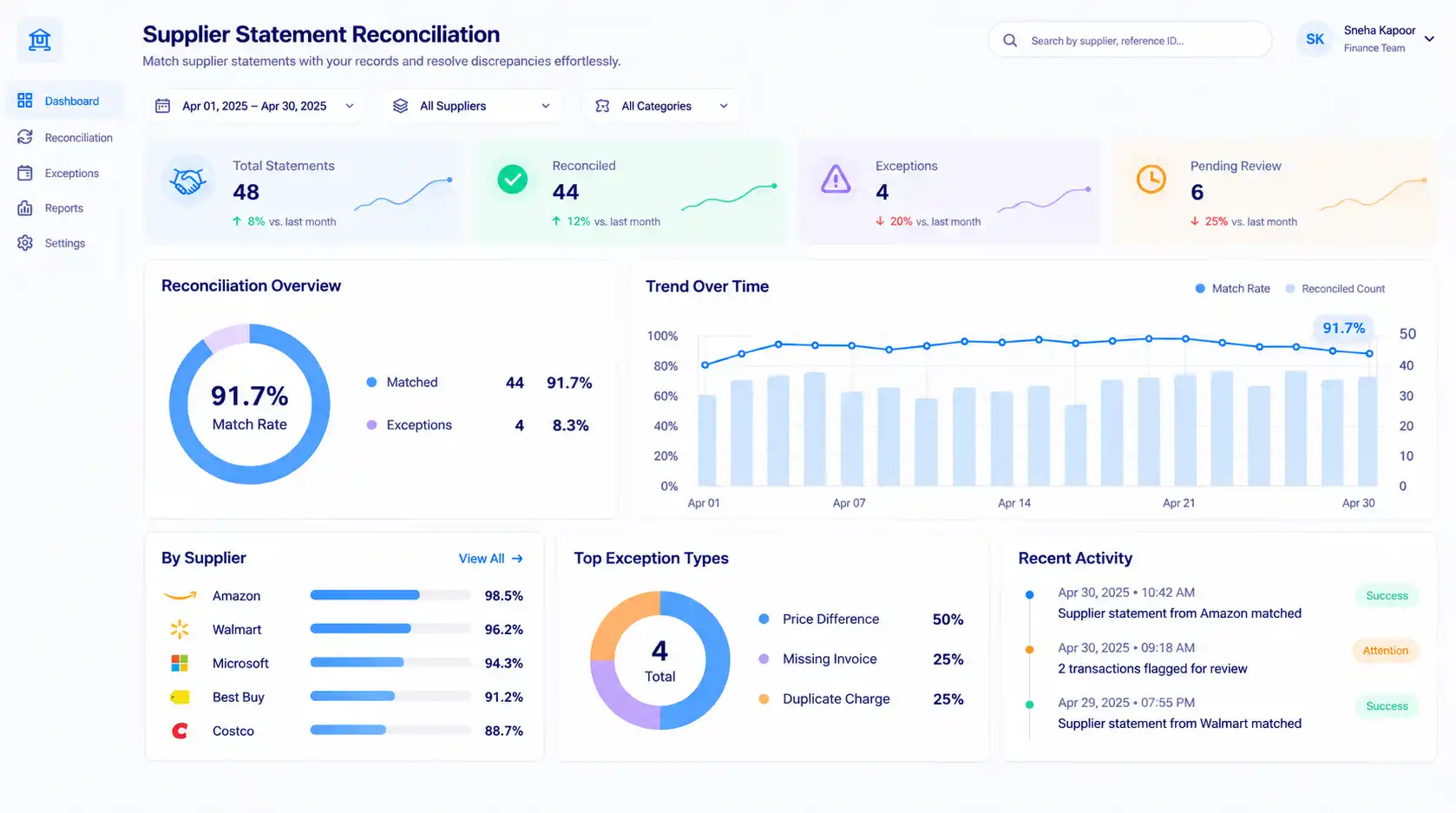
A vendor statement is really just a claim that needs checking against your own records. Kosh AI does that checking the moment the statement arrives.
Four steps, running on their own every time a statement lands in the inbox.
The statement-reconciliation workload looks different depending on supplier count, invoice volume, and how your AP team is structured.

Even five or six suppliers can generate a steady stream of statement checks. Kosh AI handles them without a dedicated headcount.

At scale, manually checking every statement isn't realistic. Matching runs the same way whether it's 10 suppliers or 500.
Retail and manufacturing teams that bring on extra suppliers during peak season don't need to staff up just to keep statements reconciled.
Raw material suppliers send frequent statements tied to ongoing purchase orders, making line-level matching essential.
High SKU counts and frequent restocking mean a constant flow of supplier statements that need fast turnaround.
Medical supply vendors often bill against multiple purchase orders at once, which needs matching logic that can split correctly.
One team handling statements for every business unit gets a single queue instead of a spreadsheet per supplier.
A shared services team reconciling statements for multiple entities keeps each entity's exceptions visible separately.
A two-person AP function gets the same line-level matching a larger team would need to build by hand.
Suppliers stop chasing because the answer is ready before they ask.
A statement that took an afternoon to check gets reconciled in minutes.
Nothing falls through the cracks between what's billed and what's been entered.
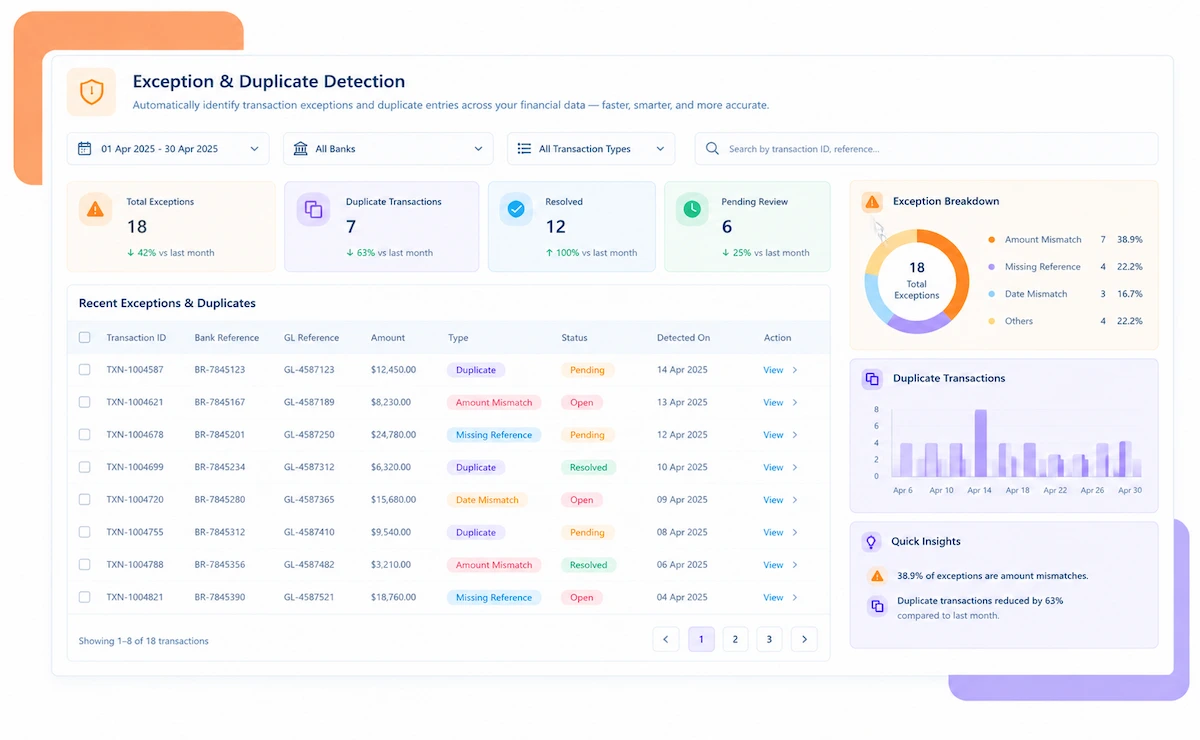
A duplicate invoice gets caught against the statement before it's paid twice.
Every match carries the evidence an auditor would ask to see.
Adding a new supplier doesn't mean adding a new manual process.
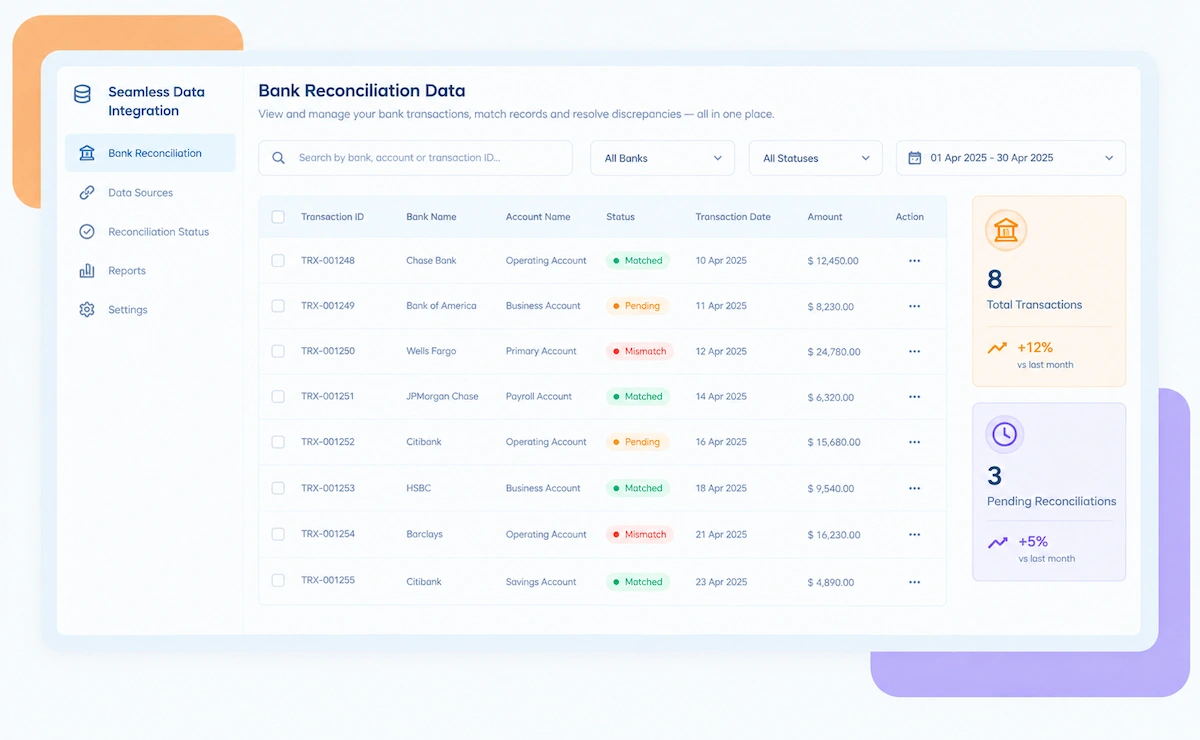
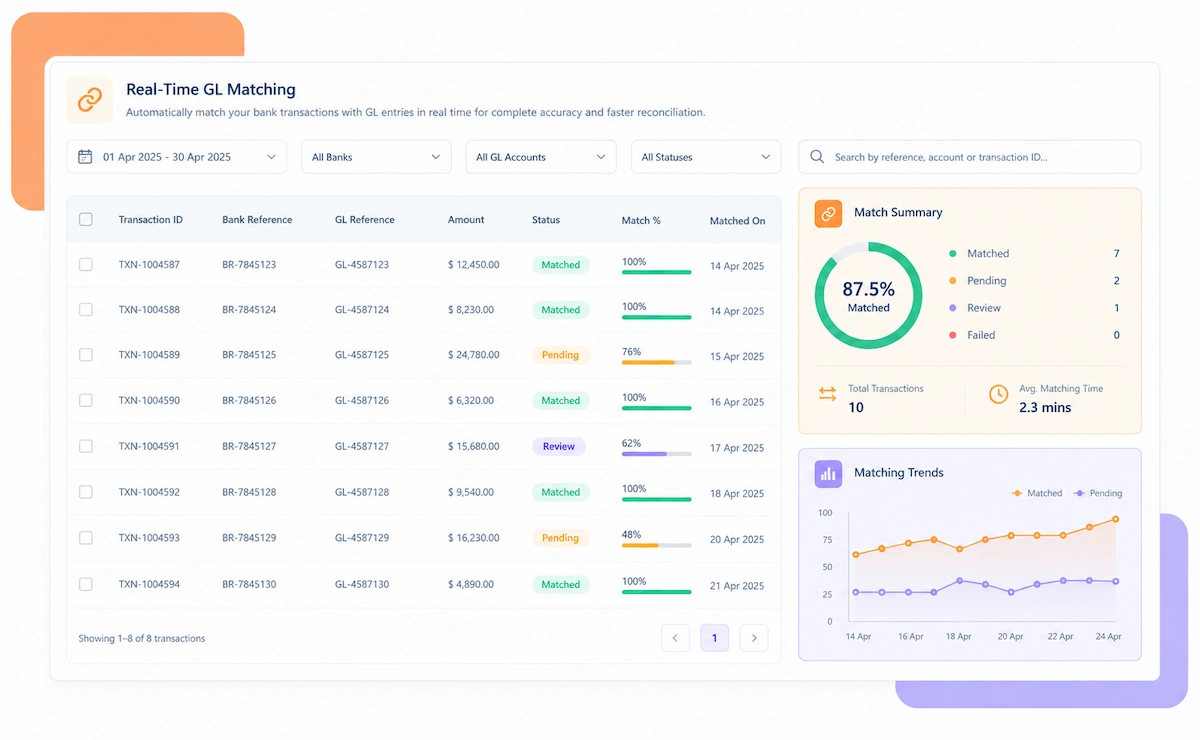
Kosh AI connects directly with all major banks and ERPs, enabling real-time data sync for faster, more accurate reconciliations—no manual uploads, no delays.


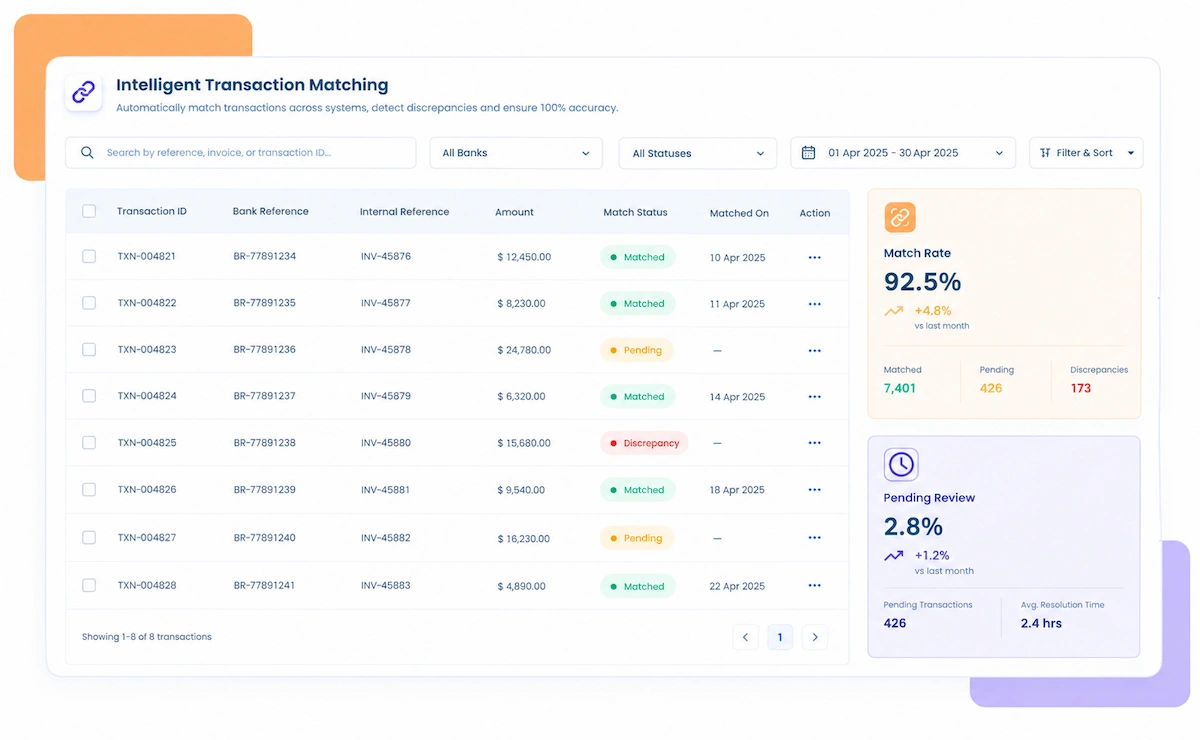
Matching a statement is more than comparing two totals. Kosh AI reads context the way an AP analyst would.
Reads PDF, Excel, and inline-email statements without needing a fixed template from each supplier.
Handles part-shipments and partial payments that would otherwise need a manual split in a spreadsheet.
Picks up on how a given supplier formats references and amounts over time, improving match accuracy with every cycle.
Generates a clear, statement-specific summary that's ready to send back without manual drafting.
Supplier statement reconciliation software checks a vendor's statement against your own accounts payable records, line by line, instead of just comparing the totals at the bottom. It reads the statement, matches each item to an open invoice in your ledger, and flags anything that doesn't line up, whether that's a missing invoice, a price difference, or a payment that hasn't posted yet.
Done manually, this means someone opens the statement, opens the AP ledger, and checks every line by hand, usually once a month and usually under time pressure. The more suppliers a company works with, the more this turns into a backlog that slows down the close and generates a steady stream of supplier phone calls asking where a payment stands.
Kosh AI automates that matching from the moment the statement arrives. It reads the format your supplier actually sends, checks every line against your open AP data, and sorts whatever doesn't match by what's actually wrong with it, so the AP team spends its time resolving real exceptions instead of hunting for them.

Run one supplier statement through a manual check, then through Kosh AI. The time difference shows up immediately.
| Feature | Automated Supplier Statement Reconciliation | Manual Supplier Statement Reconciliation |
|---|---|---|
| Matching Speed | A full statement matched against open AP within seconds of arriving. | A single statement can take an afternoon to check line by line. |
| Missing Invoice Detection | Flagged automatically, with the specific line that's unaccounted for. | Usually discovered only when the supplier calls to ask about it. |
| Duplicate Invoice Risk | Caught against the statement before payment goes out. | Often missed until a supplier flags a duplicate payment after the fact. |
| Supplier Communication | A reconciliation summary is ready to send without manual drafting. | Someone has to write a one-off reply for every supplier query. |
| Scaling to More Suppliers | A new supplier's statements are matched under the same rules as every other. | Each new supplier adds to an already growing manual backlog. |
| Audit Trail | Every match and flag is logged automatically with supporting detail. | Evidence has to be pieced together from emails and spreadsheets after the fact. |
Not every AP automation tool actually reconciles statements at the line level. These are the capabilities worth checking for.

Supplier statement reconciliation gets harder in a few predictable ways. Here's where automation makes the clearest difference.
Past a few dozen suppliers, manually checking every statement turns into a backlog that never fully clears.
If your AP inbox is full of 'where's my payment' emails, the statements behind those questions probably aren't being checked fast enough.
A supplier statement that regularly shows charges with no matching invoice usually points to a gap in your own intake process worth catching early.
A shared services team reconciling statements for several business units needs one consistent process, not a different spreadsheet per entity.
A few habits keep supplier statement reconciliation from turning into a monthly scramble.
Bring a recent supplier statement to the call. We'll show you live which lines match, which don't, and why.
Book a Demo