Match Fund Administrator NAV Packs, Cash, and Positions Against Your Books Automatically
Shadowing a fund administrator means checking NAV, cash, positions, and trades against the official record, every single cycle.
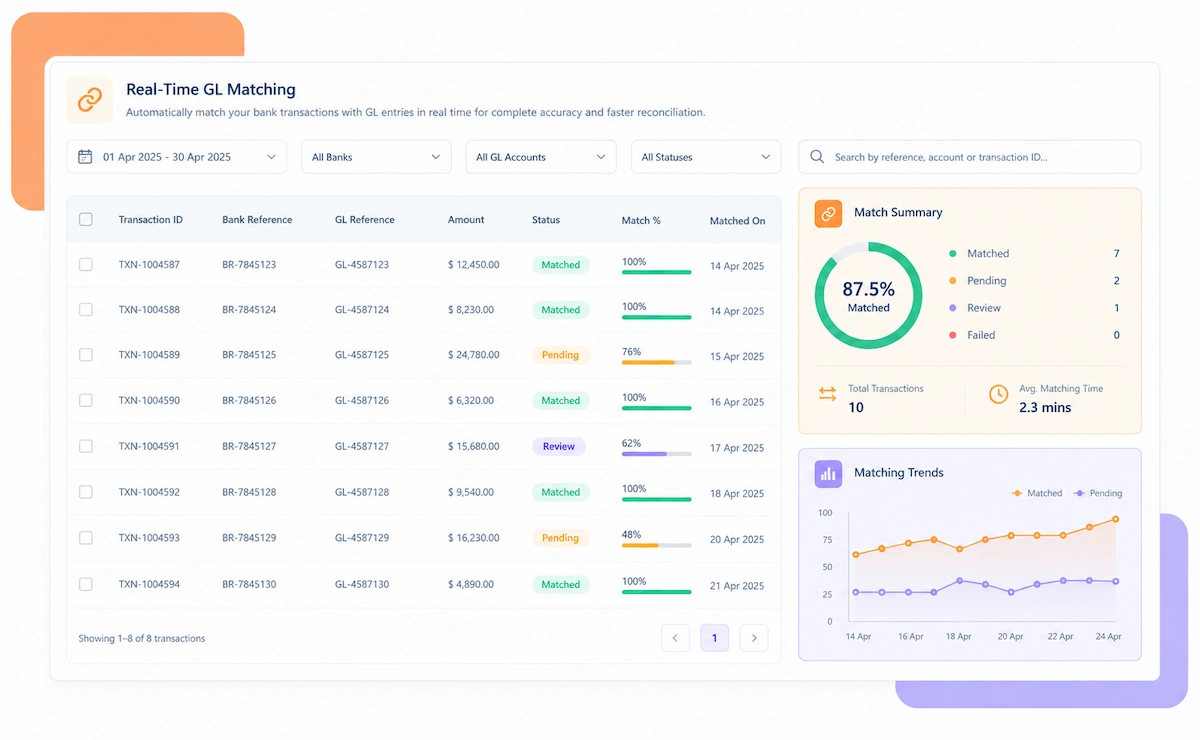
Four steps that take a fund administrator's NAV pack from arrival to a closed, reconciled position.
What fund reconciliation needs to cover changes with fund structure and asset class.
Shadowing a fund administrator's NAV pack daily or weekly, across fast-moving positions.
Reconciling capital calls, distributions, and valuations on a slower, less frequent cycle.
Matching on-chain and exchange records against internal books, where timing and custody add extra complexity.
Reconciling NAV, cash, and positions against the fund administrator every cycle.
Investigating breaks and keeping an audit trail investors and regulators can rely on.
Getting a reliable NAV close without waiting on a fully manual shadow-accounting process.
Funds running shadow accounting with a lean team and limited reconciliation tooling.
Funds reconciling across several asset classes and counterparties at once.
Funds where manual NAV reconciliation stopped scaling with position count and complexity.
NAV, cash, and positions reconcile continuously, not in a scramble right before the close deadline.
Breaks are classified by cause, not just flagged by amount, so investigation starts faster.
Every line in the NAV pack is checked, not just the ones that look obviously wrong.
NAV, cash, position, trade, and collateral reconciliation all run in the same place.
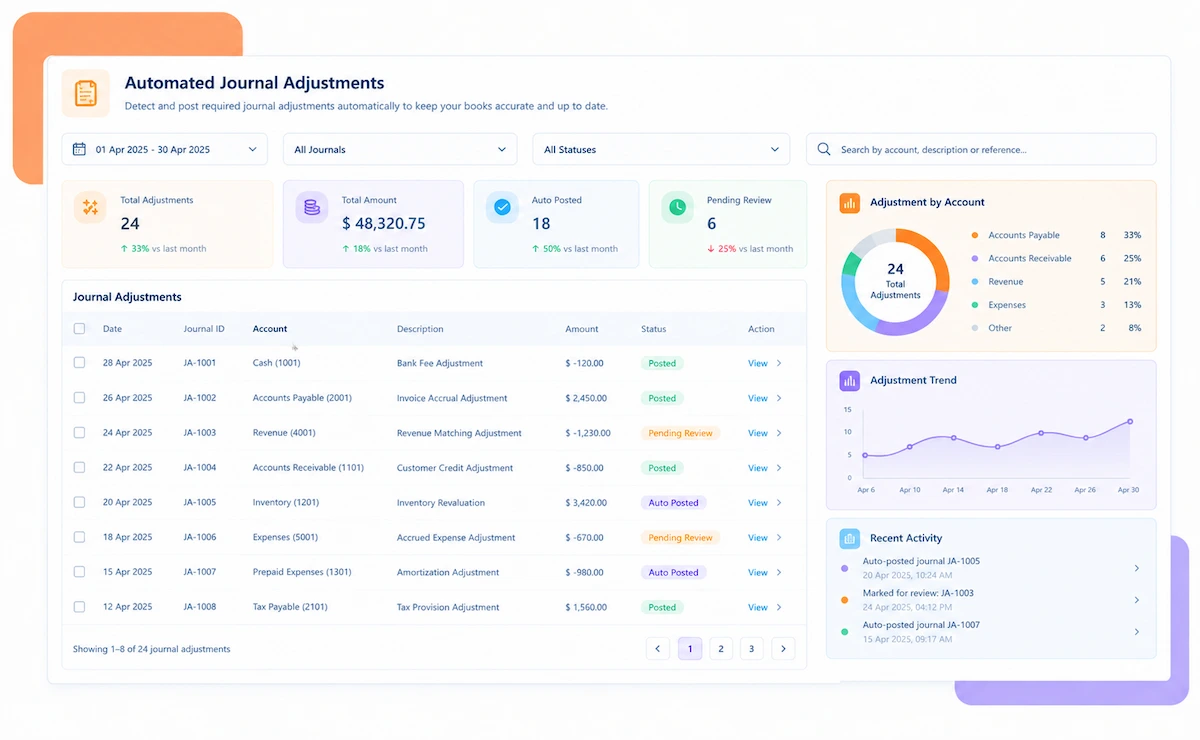
A full trail of exceptions, adjustments, and approvals is ready for investors and auditors on demand.

Adding positions, counterparties, or asset classes doesn't mean adding headcount to reconciliation.
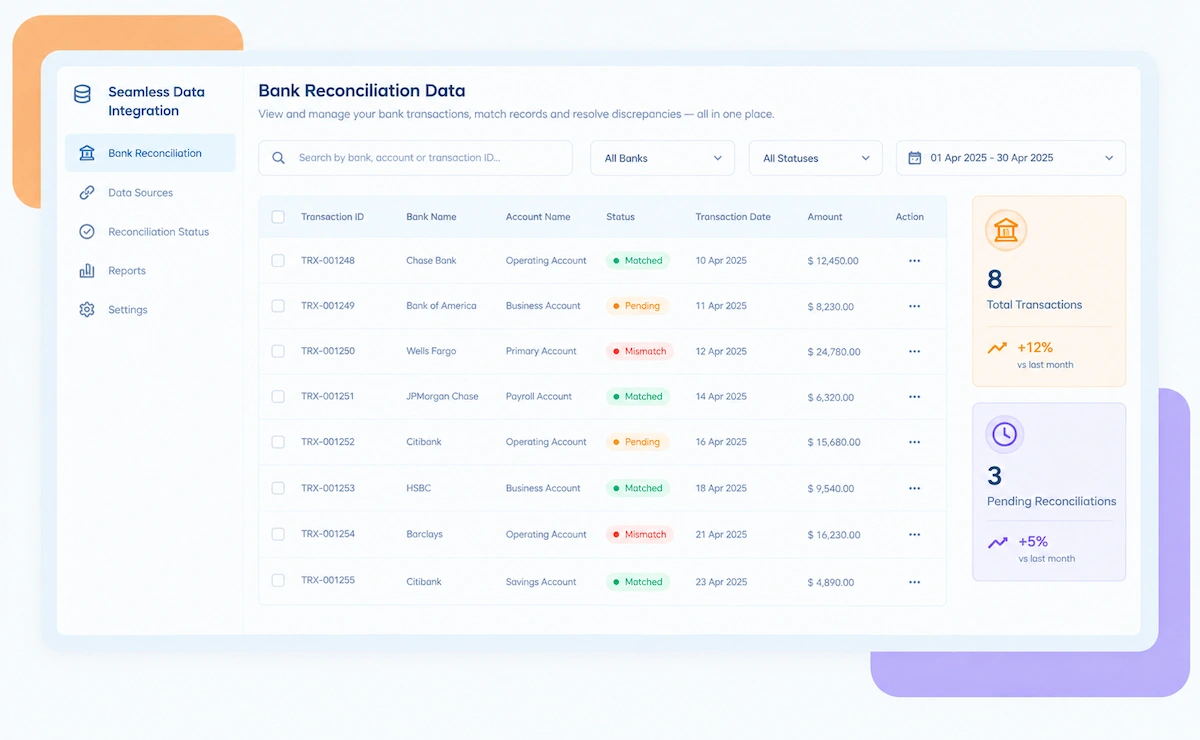
Kosh AI connects directly with all major banks and ERPs, enabling real-time data sync for faster, more accurate reconciliations—no manual uploads, no delays.


Spotting a real break takes more than comparing totals. Kosh AI understands which variances are timing and which ones need an analyst's attention.
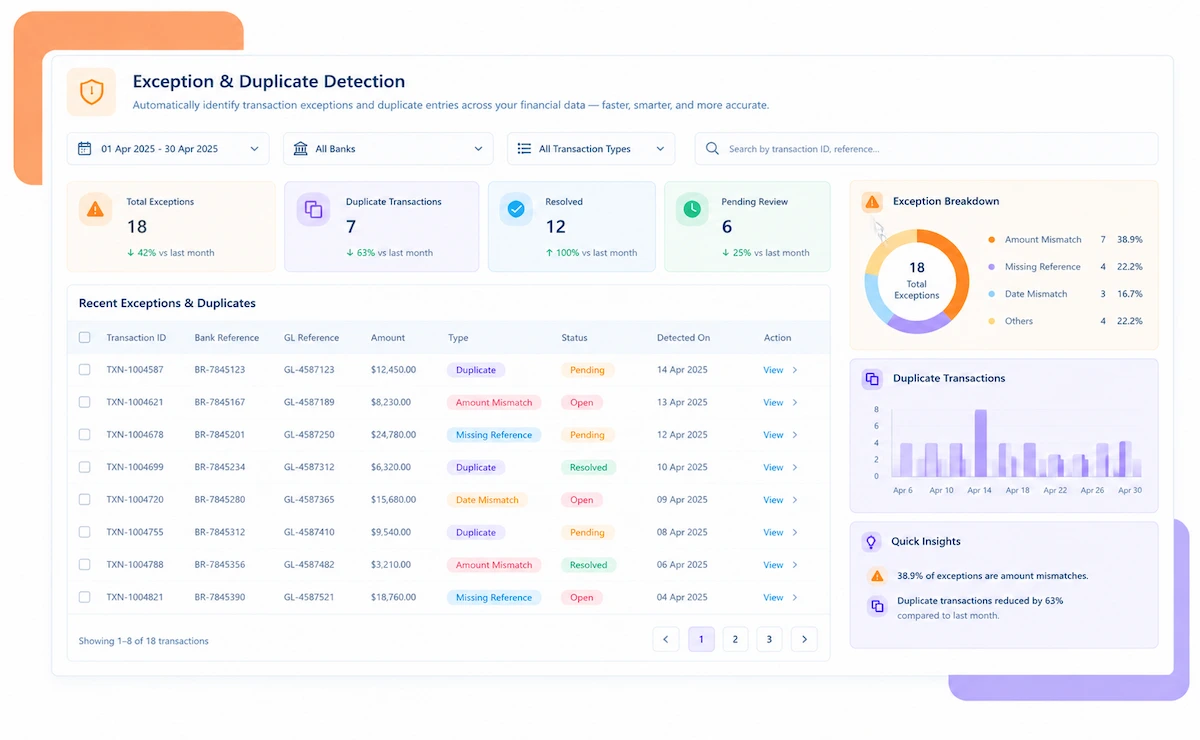
Sorts a NAV, cash, or position break into timing, missing entry, or genuine error before anyone opens a ticket.
Learns which counterparties and security types keep generating the same type of break, surfacing the pattern instead of one exception at a time.
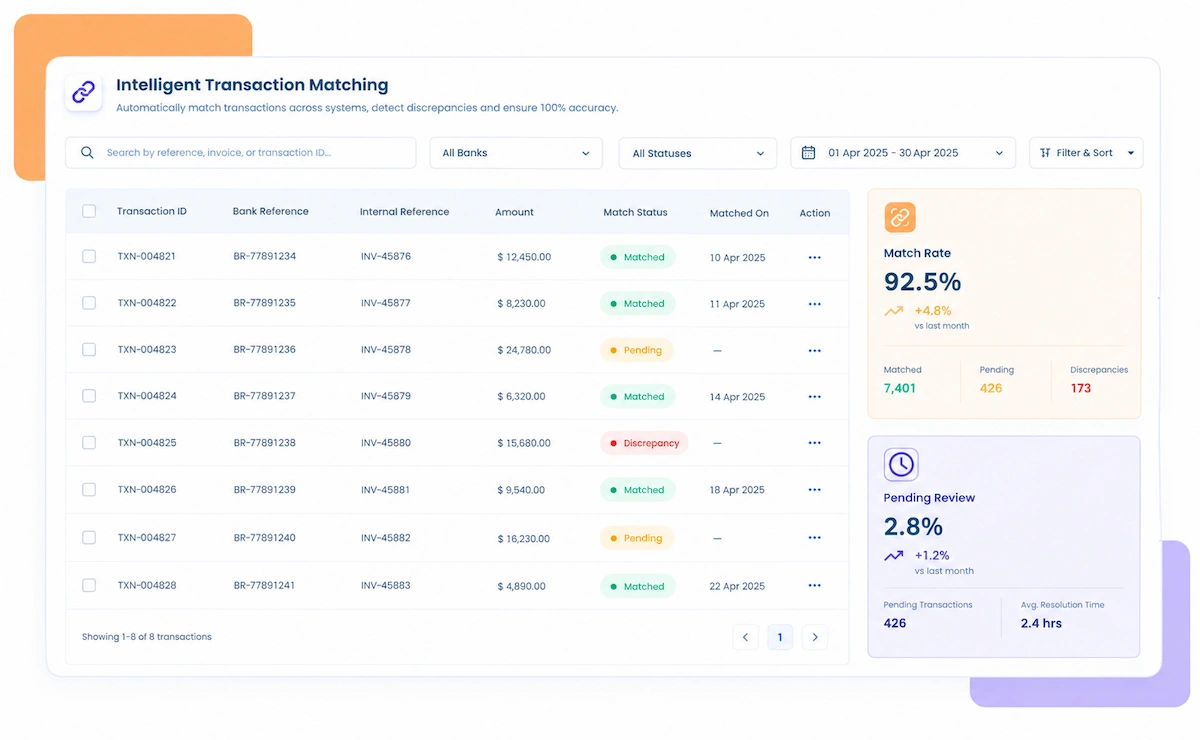
Matches on the fund's own NAV cycle, whether that's daily, weekly, or monthly, instead of forcing every fund onto the same cadence.
Builds the exception and approval record as reconciliation happens, ready for the next investor or regulator request.
Fund reconciliation software matches a fund's internal books against the official records held by its fund administrator, custodian, and prime brokers, covering NAV, cash, positions, trades, and collateral. This shadow accounting process confirms that the NAV an administrator reports is actually correct before it goes out to investors.
Done manually, this means a fund accountant comparing a NAV pack line by line against the internal ledger, often working from SWIFT messages, PDFs, and CSVs that each arrive in a different format. Most of the effort goes into chasing exceptions: a dividend that posted a day late, a position quantity that doesn't match the custodian, a fee calculation that's slightly off. A break that isn't caught early can hold up the entire NAV close.
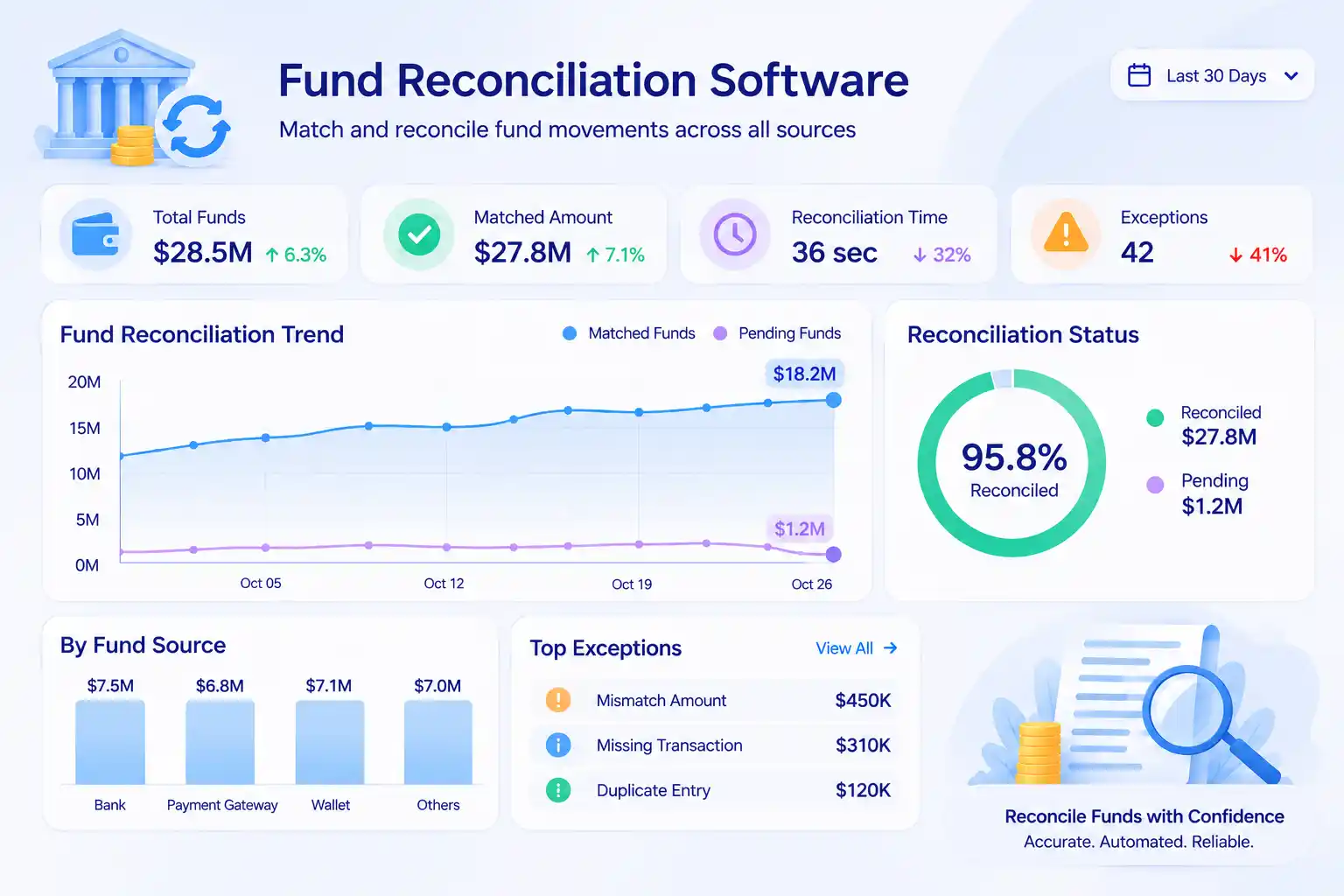
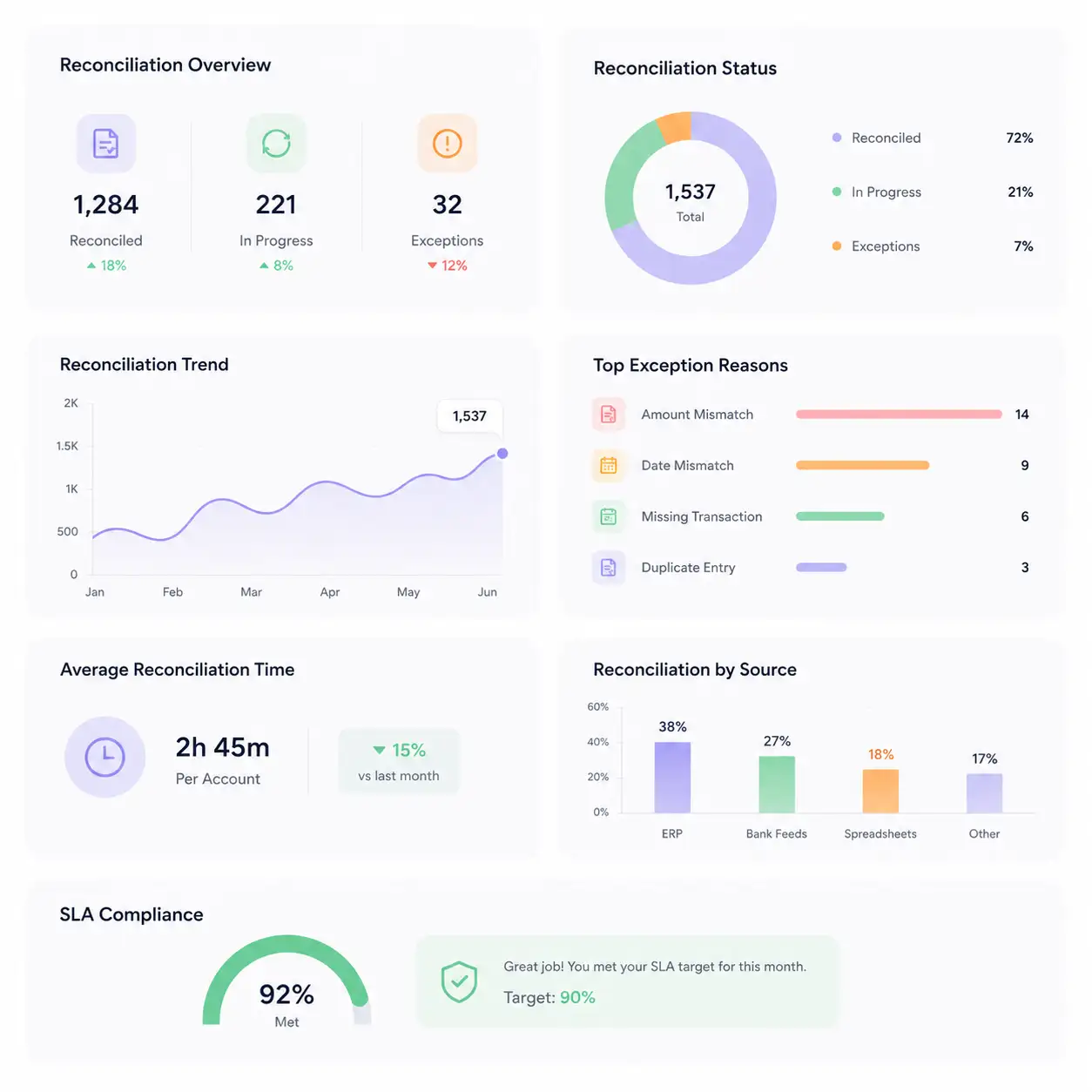
Kosh AI's fund reconciliation software matches NAV, cash, positions, trades, and collateral against administrator and custodian records automatically, classifies every break by root cause, and keeps a continuous audit trail, so the NAV close runs on figures that are already reconciled.

Shadowing a fund administrator by hand can work for a smaller book. See what changes as positions and counterparties grow.
| Feature | Automated Fund Reconciliation | Manual Fund Reconciliation |
|---|---|---|
| NAV Matching | Matched against the administrator automatically. | Checked line by line in a spreadsheet. |
| Break Classification | Sorted by root cause automatically. | Investigated from scratch for each exception. |
| Cash & Position Matching | Reconciled against custodian and prime broker data continuously. | Reviewed on a periodic cycle, often monthly. |
| Trade & Collateral Checks | Confirmed against counterparty records in the same platform. | Tracked separately, often in different spreadsheets. |
| Audit Trail | Built continuously as reconciliation happens. | Assembled manually before an investor or audit request. |
| NAV Close Timing | Runs on data that's already reconciled. | Can be delayed by unresolved breaks found late. |
A fund accountant shadowing an administrator's NAV pack by hand is checking pricing, accruals, fees, cash movements, and position quantities against the internal ledger, line by line, every single cycle. Most of that effort doesn't go into the matching itself, it goes into figuring out why something didn't match once it doesn't.
The real risk isn't the breaks that are big and obvious. It's the small ones that get waved through under deadline pressure, or the ones that look like a timing difference but turn out to be a genuine pricing error. A NAV that goes out to investors before a break is properly resolved is a problem that compounds the longer it goes unnoticed.

Kosh AI reconciles NAV, cash, positions, trades, and collateral against administrator and custodian records automatically, and classifies every break by root cause as soon as it appears, so the team's time goes into resolving genuine exceptions instead of hunting for them.

A few signs point to shadow accounting outgrowing a manual, spreadsheet-based process.
Funds where manual NAV reconciliation stopped scaling with the number of positions and counterparties.
Funds reconciling against several custodians, prime brokers, and administrators at once.

Funds with daily or weekly NAV calculations, where a manual process can't keep pace with the deadline.

Funds that need a continuous, defensible audit trail ready for investor due diligence or regulatory review.
A few habits keep NAV reconciliation accurate as a fund's book grows.
Reconciling on the fund's actual NAV cadence, not a slower batch schedule, catches breaks while there's still time to fix them.
Sorting a break into timing, missing entry, or genuine error before investigating saves real analyst time.
An audit trail built as reconciliation happens is far easier to defend than one reconstructed after the fact.
A recurring break pattern with one custodian or prime broker is worth raising directly, not re-investigating each cycle.
Bring a recent NAV pack with an unresolved break to the call. We'll show you how Kosh AI would have classified and traced it automatically.
Book a DemoShadow accounting rarely stands alone. See how Kosh AI reconciles the rest of the books too.