Match Carrier Commission Statements Against Policies, Trust Balances, and Producer Splits Automatically
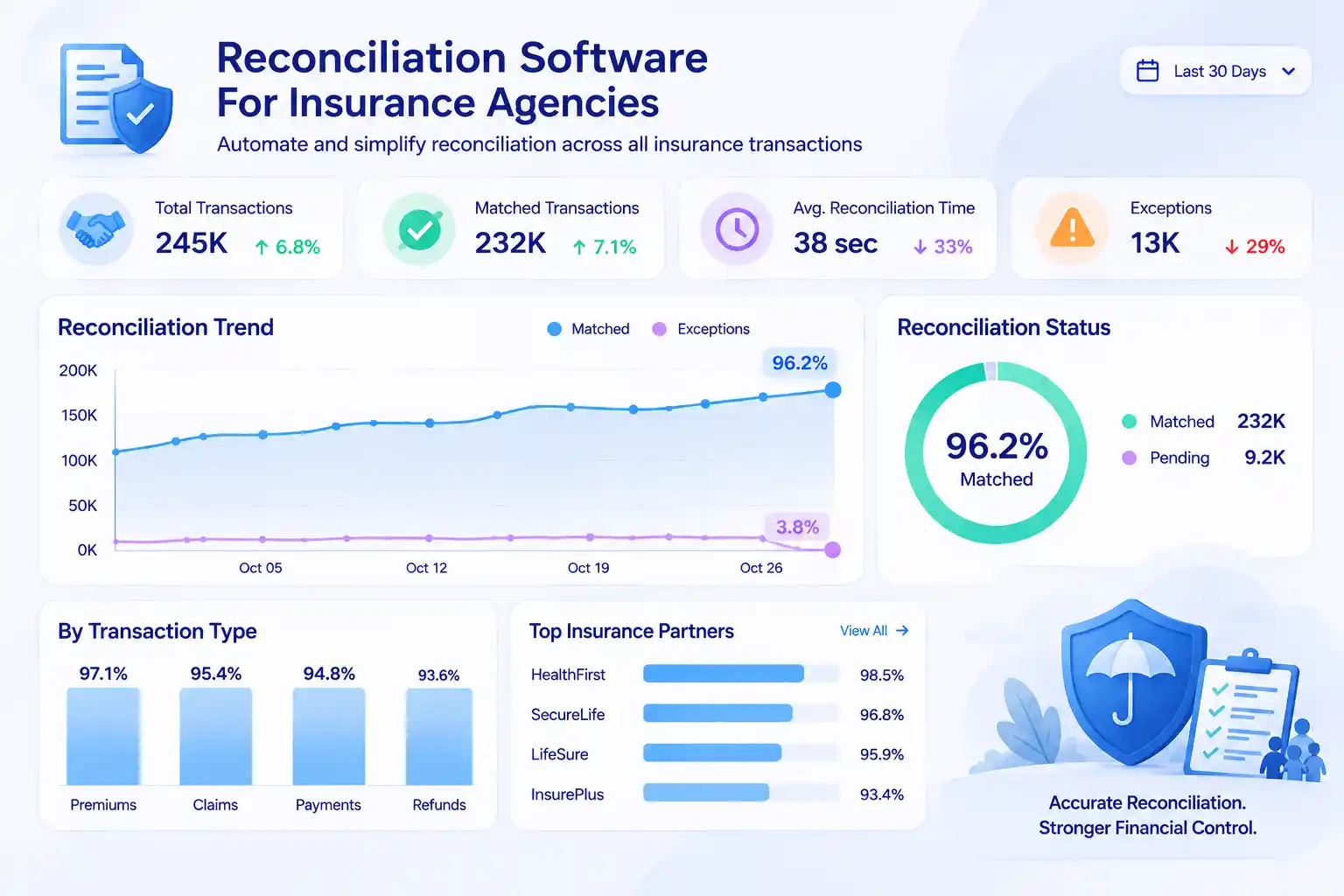
Reconciling an insurance agency's books means matching carrier money against policies, trust balances, and the producers who earned a share of it.
Four steps that take a carrier statement from import to a fully reconciled position.
What reconciliation needs to cover changes with agency size and how business is written.
Keeping commission reconciliation accurate without a dedicated back-office accounting team.
Reconciling carrier statements consistently across locations and sub-agencies.

Matching carrier money against policies for a larger book written on behalf of other agencies.
Reconciling carrier statements against policies, trust balances, and producer splits every cycle.
Trusting that their commission statement actually reflects the documented split rule.
Seeing missed commissions and trust account variances before they become a bigger problem.

Reconciling recurring commission payments that change with renewals and lapses.
Matching direct bill and agency bill commissions across a high volume of policies.
Agencies that outgrew their spreadsheet-based reconciliation process a while back.
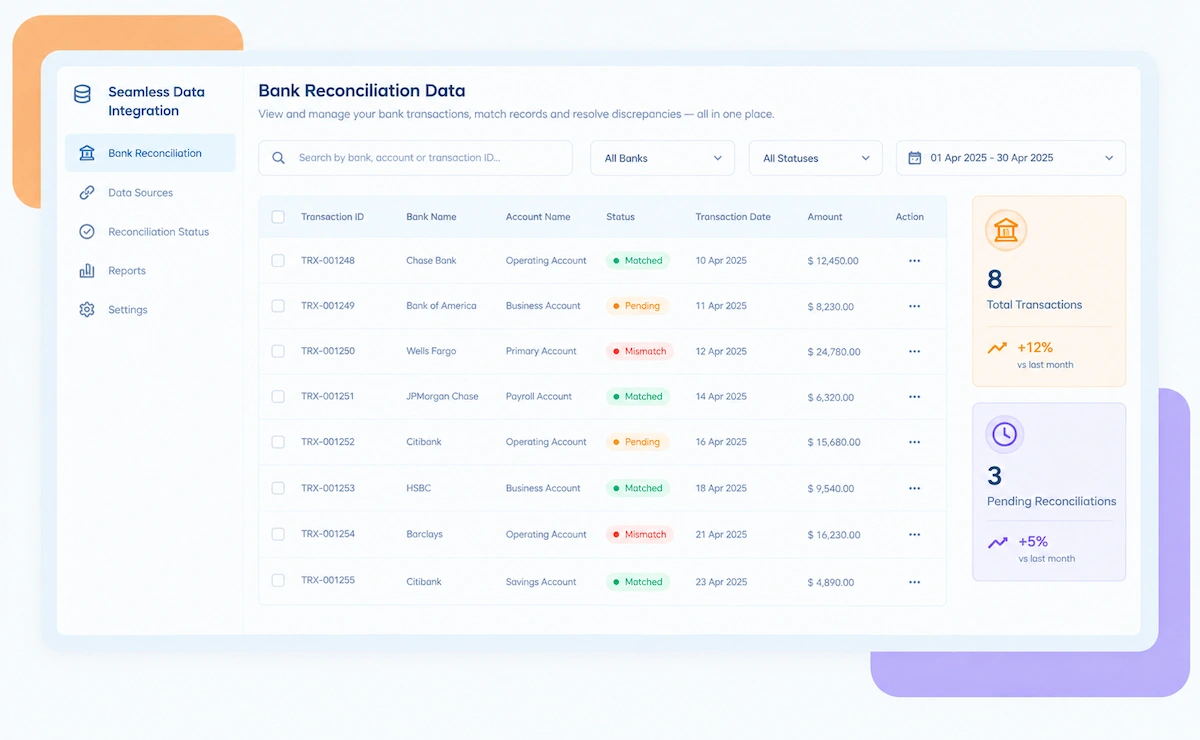
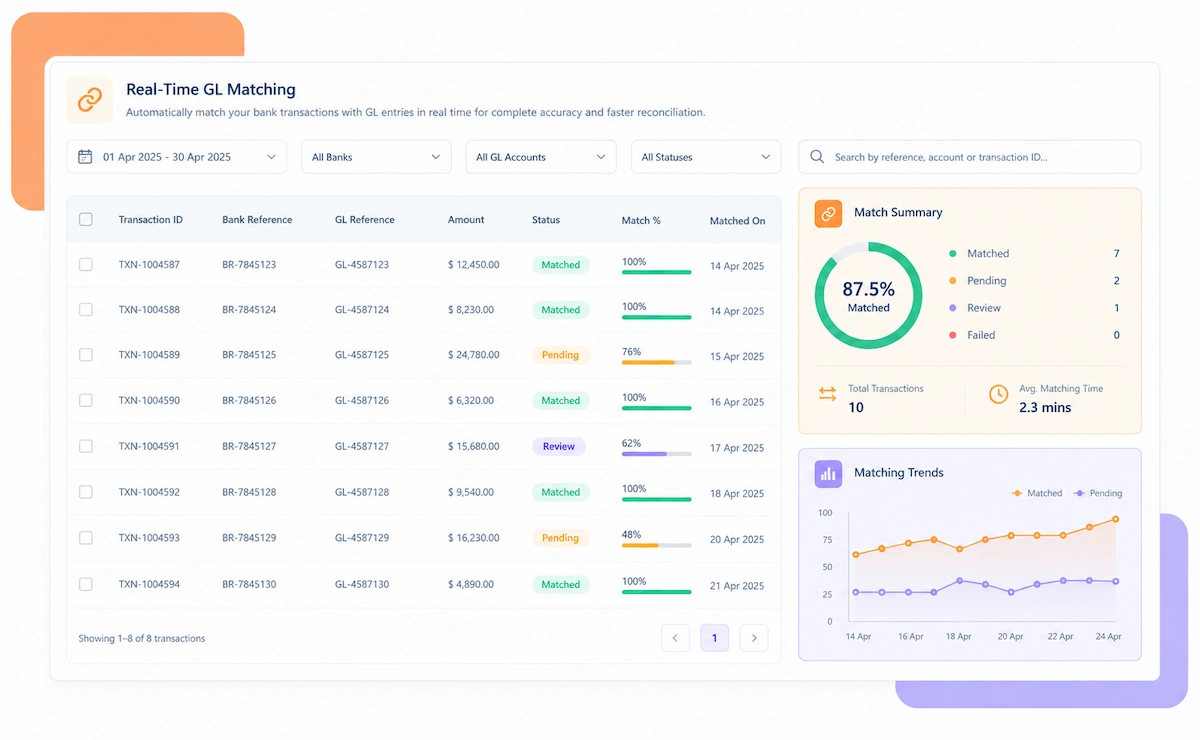
Kosh AI connects directly with all major banks and ERPs, enabling real-time data sync for faster, more accurate reconciliations—no manual uploads, no delays.


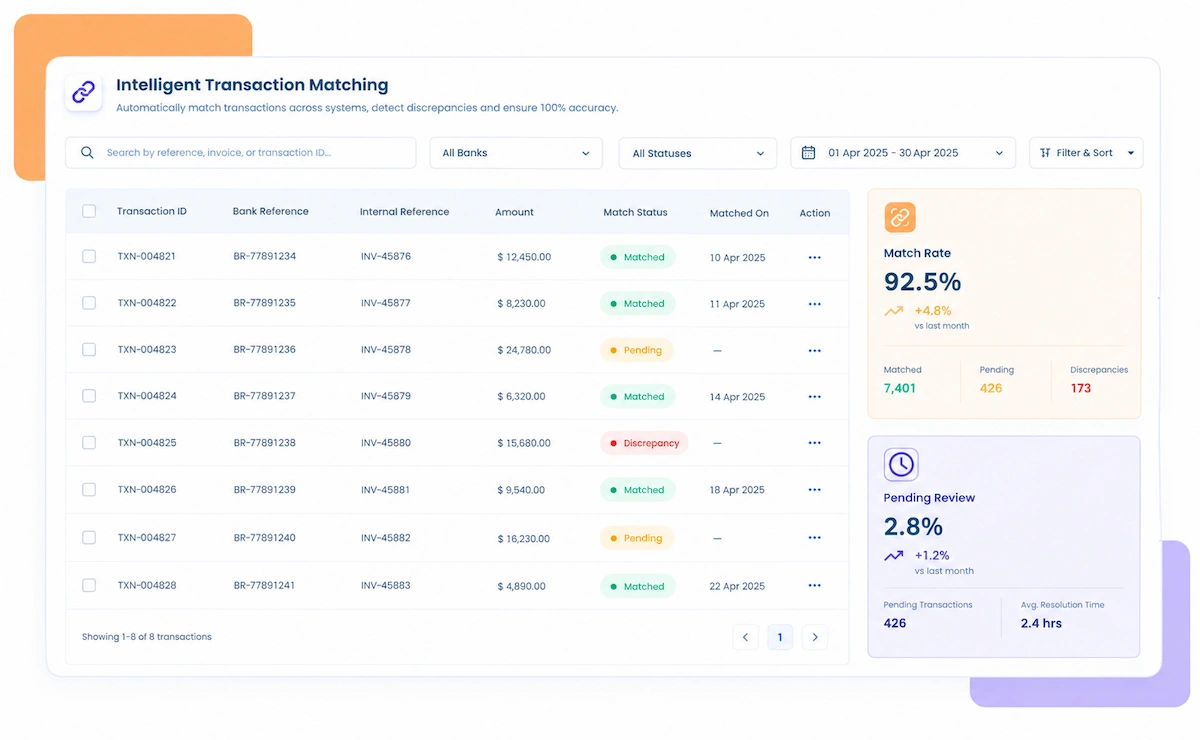
Spotting a real missed commission takes more than comparing totals. Kosh AI understands the difference between a timing lag and an actual gap.
Distinguishes a carrier statement that's simply running behind from a genuinely missed or short payment.
Checks every payout against the documented split rule, including overrides and house account shares.
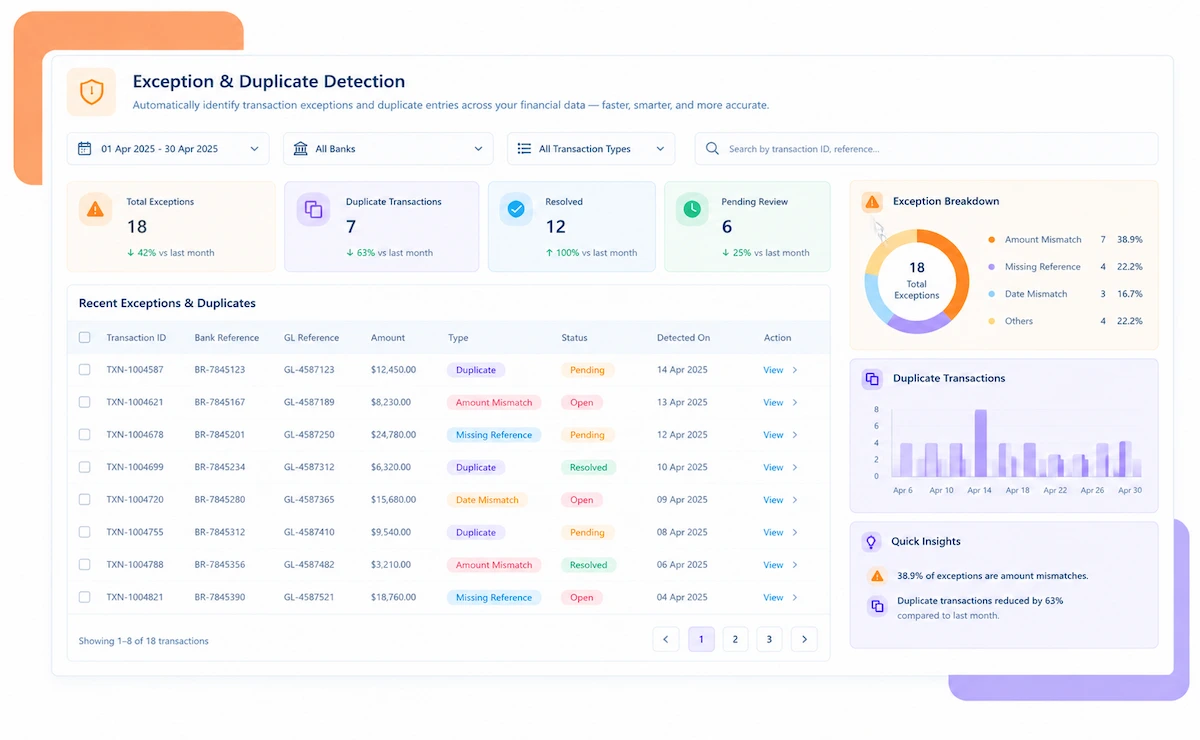
Keeps trust and operating balances reconciled on their own terms, flagging commingled funds before they become a problem.
Surfaces a canceled policy the agency wasn't told about, instead of letting it look like a missed payment.
Matching carrier statements by hand can work for a small book of business. See what changes as policy count grows.
| Feature | Automated Agency Reconciliation | Manual Agency Reconciliation |
|---|---|---|
| Carrier Statement Matching | Matched to policies automatically, across formats. | Mapped and checked row by row in a spreadsheet. |
| Trust Account Reconciliation | Reconciled separately from operating funds, every cycle. | Often reviewed only at month-end, if at all. |
| Producer Split Verification | Checked against documented rules automatically. | Manually recalculated, prone to rate-change errors. |
| Missed Commission Detection | Timing lags distinguished from genuine gaps. | Can look like a missed payment either way. |
| Unreported Cancellations | Surfaced automatically from statement mismatches. | Often discovered weeks later, if at all. |

| Month-End Close | Accruals and unearned premium kept current continuously. | Assembled manually right before close. |
A growing agency runs into the same handful of reconciliation problems once policy count and producer headcount climb:

A growing book of business tends to outgrow manual reconciliation in a few familiar ways.
Past a certain volume, matching every carrier statement row to a policy by hand stops being realistic.
Each carrier brings its own statement format and payment cadence to reconcile against.
More producers and split arrangements make manual payout verification increasingly error-prone.
Agencies that need trust and operating balances reconciled and documented, not just reviewed casually.
A few habits keep agency reconciliation accurate as the book of business grows.
Matching statements as they arrive, rather than batching them, keeps timing lags from masquerading as missed payments.
A payout rule that isn't updated when a producer's terms change is the most common source of split errors.
Trust balances need their own cadence and sign-off, not a once-a-quarter glance.
An unmatched statement row with no owner is the one most likely to become a missed commission.
Bring a recent carrier statement to the call. We'll show you how Kosh AI would have matched it against your policies automatically.
Book a Demo