Reconciliation Automation Built for How NBFCs Actually Collect

Match NACH Batches, Co-Lending Settlements, and Collections to Every Loan Account Automatically

  • NACH Returns Matched by UMRN With DPD Posted From the Right Due Date
  • Co-Lending Settlements Split and Reconciled Against the Master Agreement
  • Collections Across NACH, UPI, RTGS, and Cash Tagged to the Right Instalment
  • Servicing Fee and GST Figures Reconciled Without a Manual Cross-Check
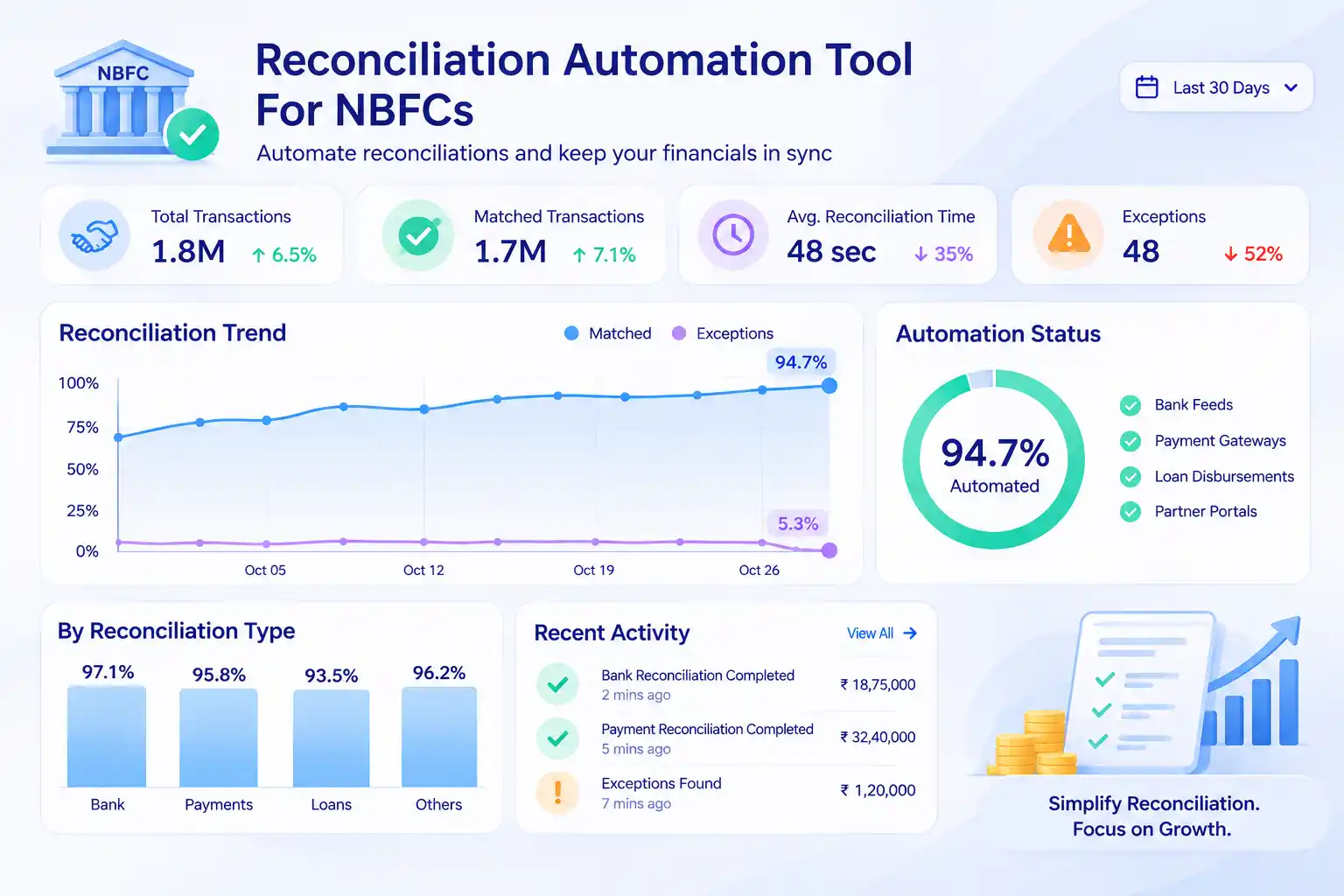
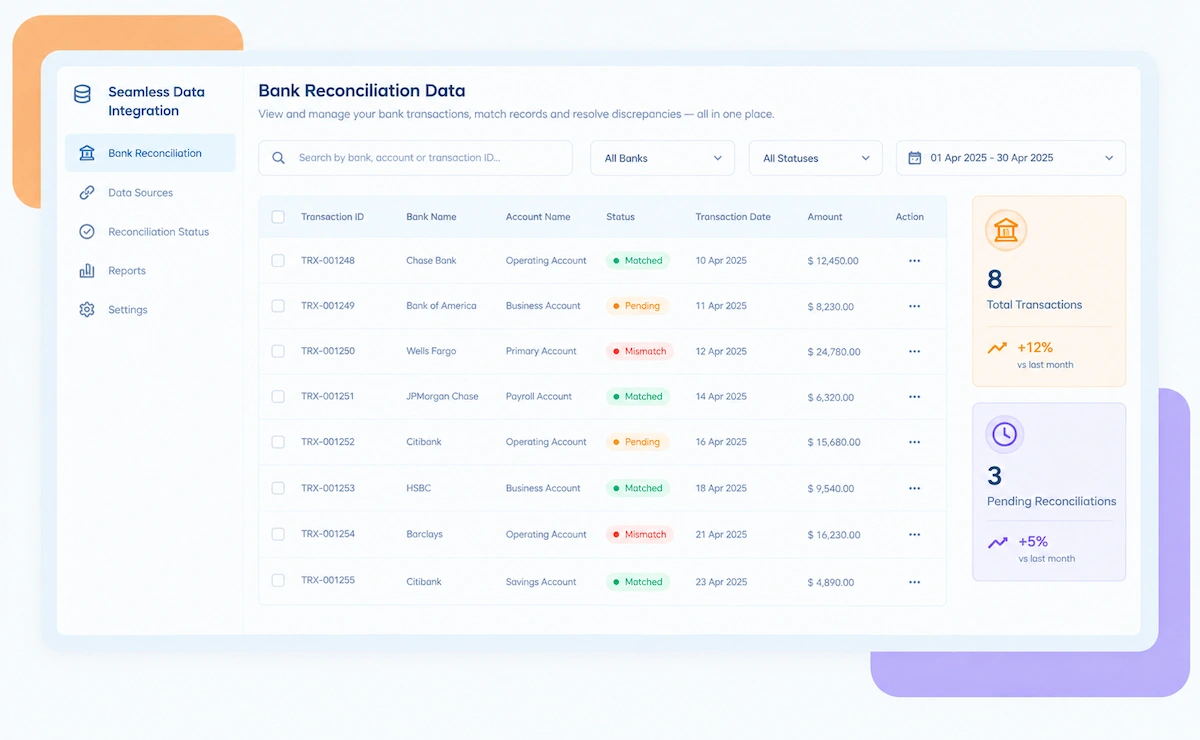
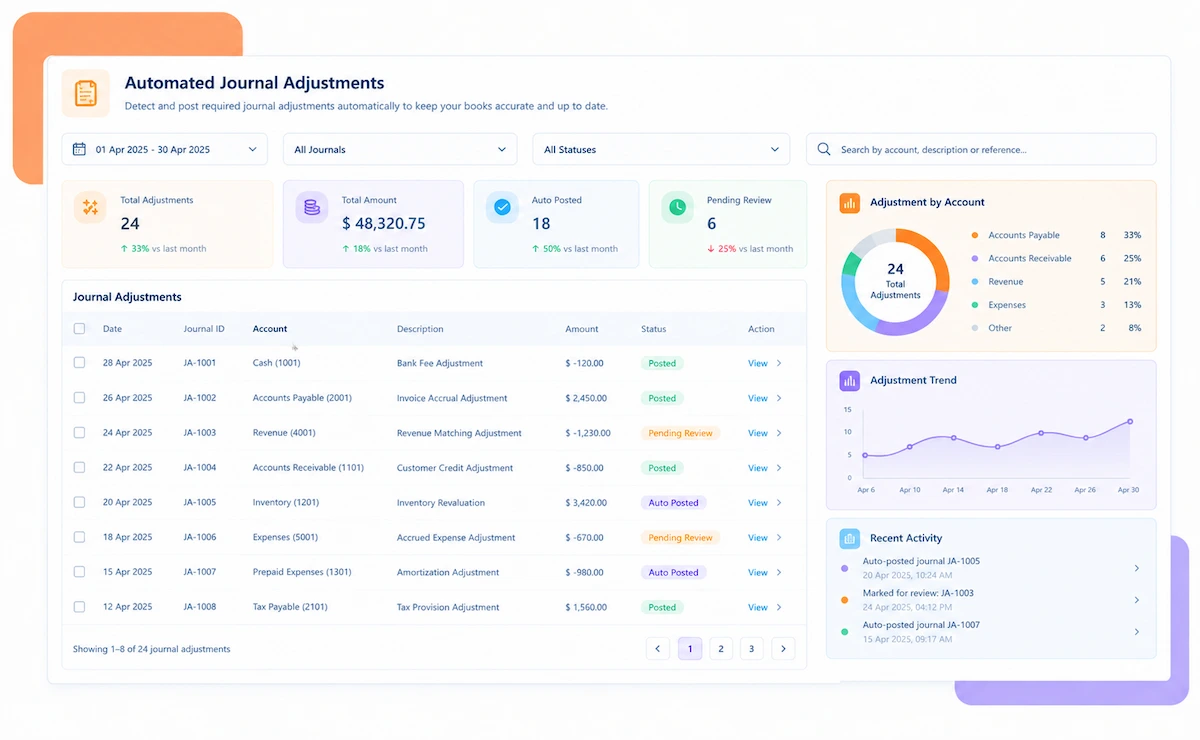
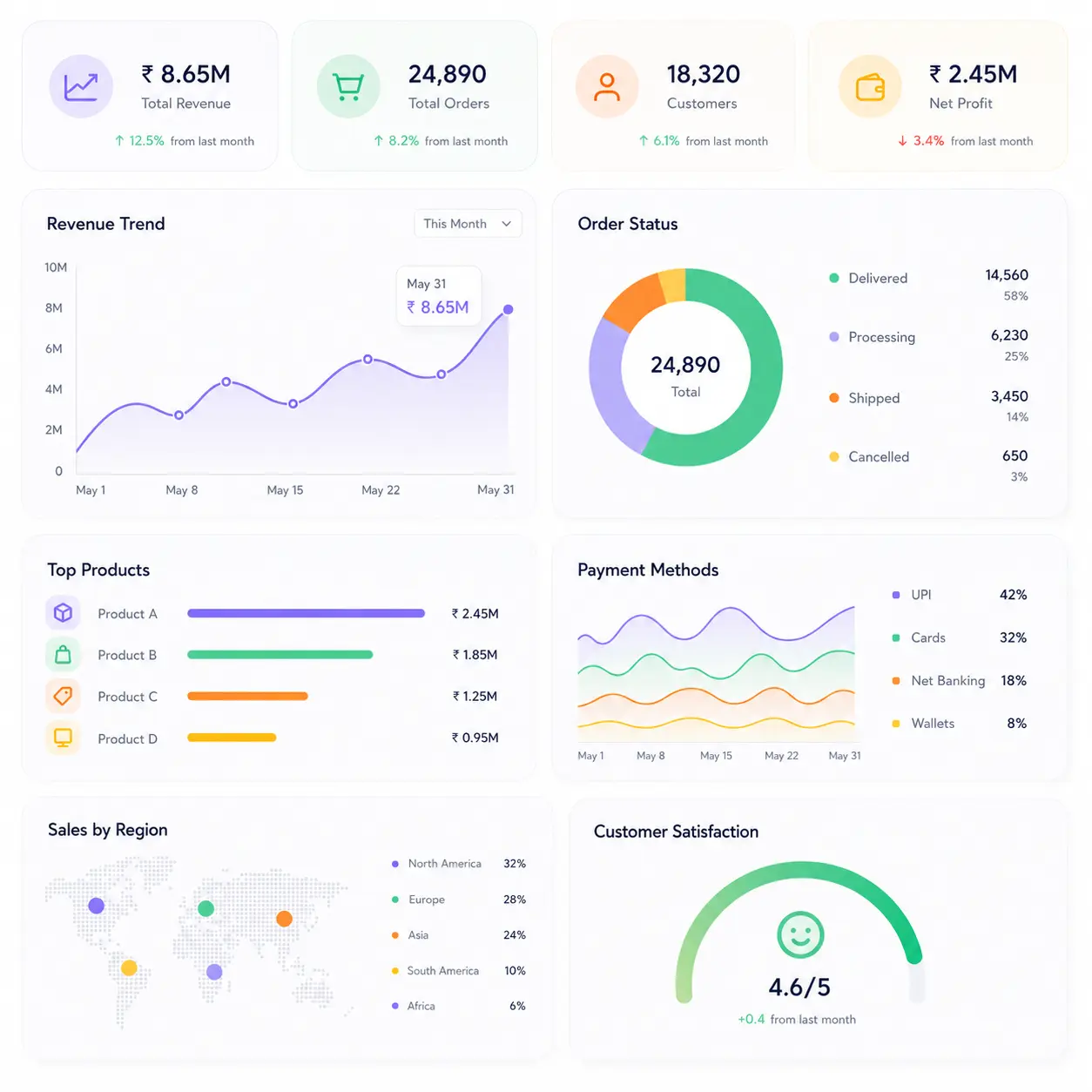
Kosh AI Reconciliation Automation Tool for NBFCs Dashboard

A 2026 Reconciliation Automation Tool for NBFCs

Still Matching NACH Returns Batch by Batch, by Hand?

A bank credit that references a batch ID instead of individual mandates can't tell you which loan actually got paid. Kosh AI reconciles NACH returns, co-lending settlements, and collections down to the loan account automatically, so DPD and NPA classification stay accurate.

What Kosh AI's Reconciliation Automation Tool Automates for NBFCs

Reconciling collections for an NBFC means tracing a bank-level credit all the way down to a single loan account and instalment, across every channel it could have arrived through.

How Kosh AI's Reconciliation Automation Tool Works for NBFCs

Four steps that take a day's collections from raw bank files to a loan-level reconciled position.

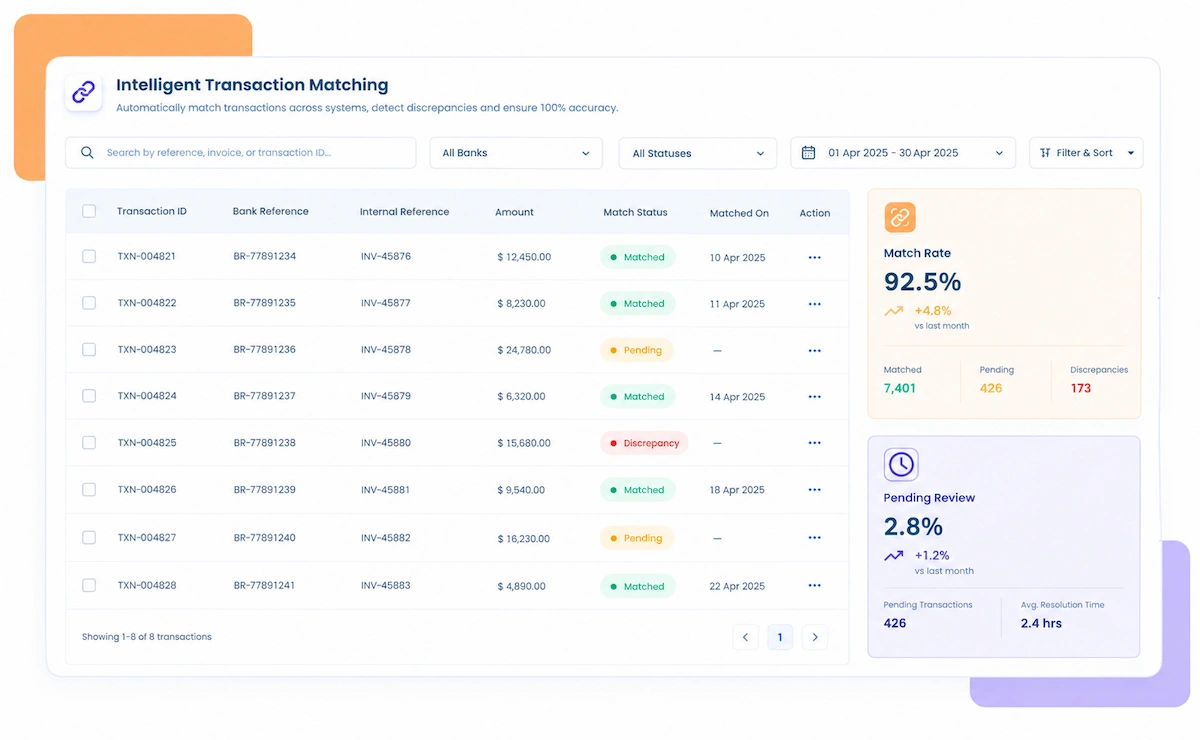
  • NACH batch files, bank credits, and settlement files pulled in automatically: Every source that can carry a collection, including NACH, UPI, RTGS, cash, and cheque, is read as it arrives.
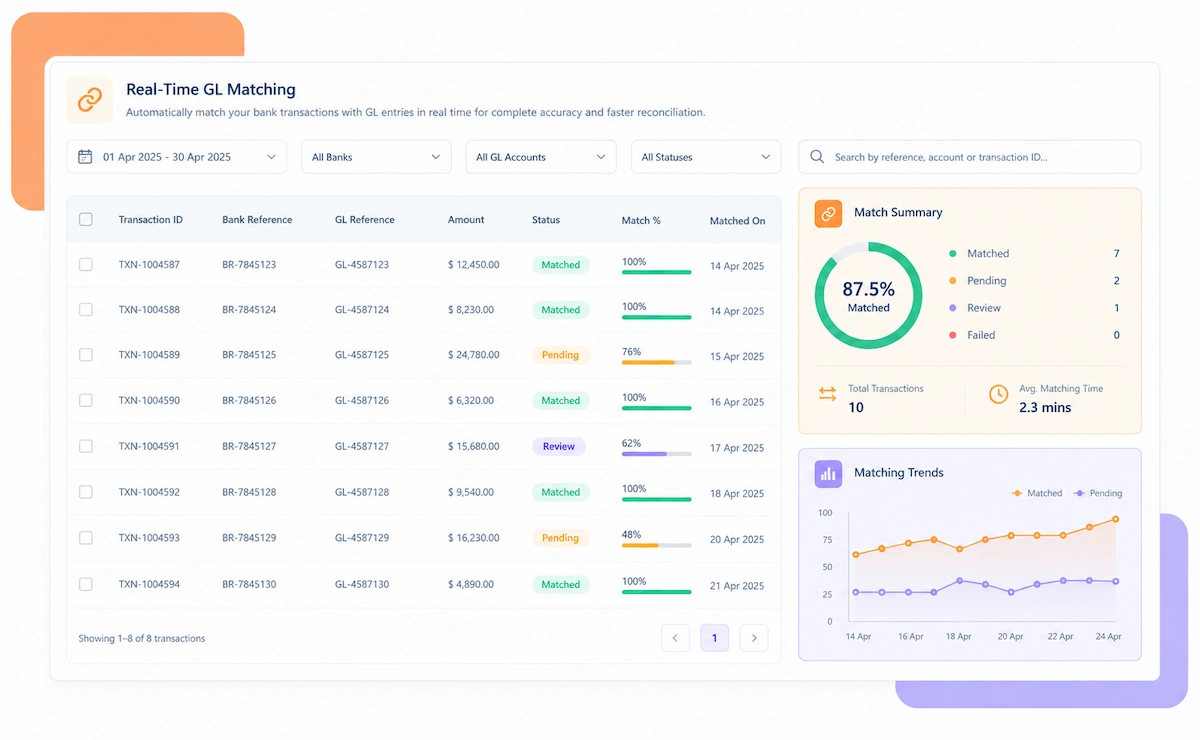
  • Loan-level data connected from the LMS: Each incoming record is matched against the right loan account and outstanding instalment.
  • NACH returns classified by UMRN and reason code: Retriable and non-retriable returns are routed to the correct next step automatically.
  • Co-lending collections split by component: Principal, interest, penal interest, and bounce charges are separated before any sweep calculation runs.
  • DPD posted from the original due date: A late-arriving return never understates how overdue an instalment actually is.
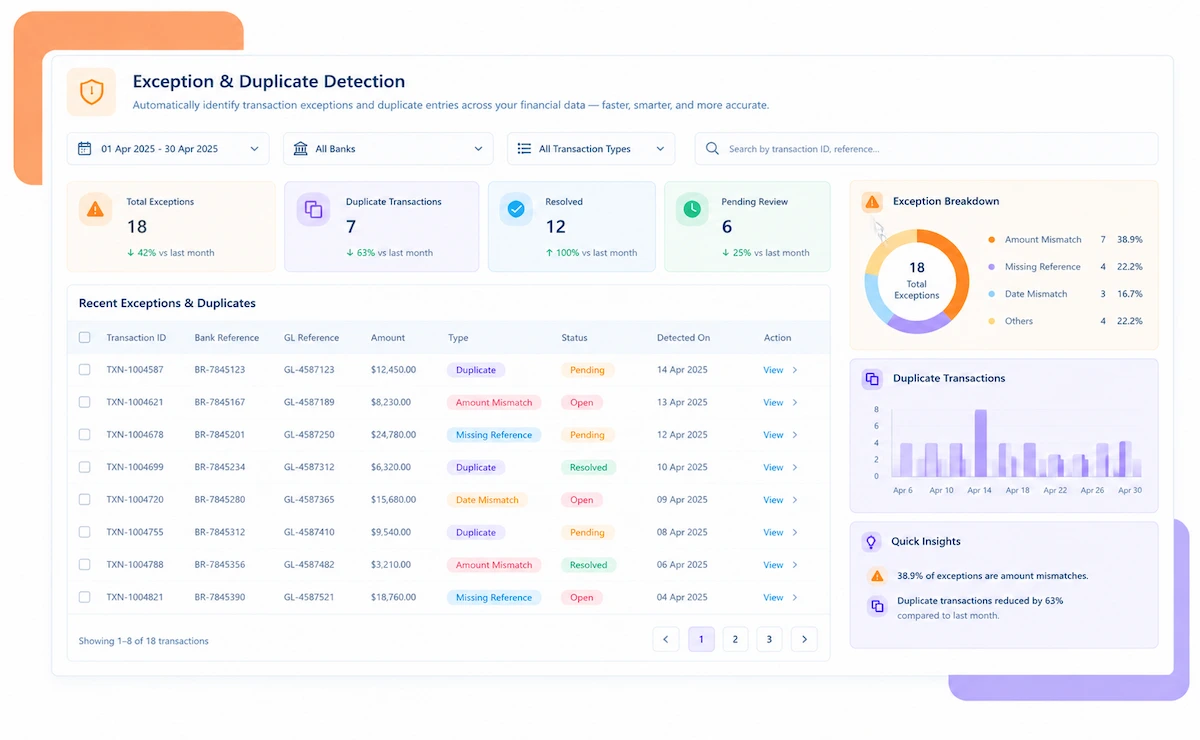
  • Settlement breaks aged against the acknowledgement file: Unresolved breaks are surfaced well before they become a reportable variance.
  • Servicing fees matched against GST and TDS records: Figures are checked across both counterparties, not assumed to match.
  • Quarter-end evidence pack assembled continuously: The variance log, DPD register, and NPA register are ready without a manual pull.
Reconciliation Automation Use Cases Across NBFC Lending

What a reconciliation process needs to catch changes with how an NBFC lends and collects.

Direct Lending NBFCs

Matching NACH and multi-channel collections straight to the loan account without a partner bank in the loop.
Co-Lending Partnerships

Splitting and reconciling collections against a partner bank's master agreement and settlement file.

Gold Loan and Secured NBFCs

Reconciling collections and part-payments against collateral-linked loan terms.

Collections & Operations Teams

Tracing a bank-level credit down to the exact loan and instalment it belongs to.

Risk & Compliance Teams

Keeping DPD and NPA classification accurate for RBI reporting and audits.

Finance Teams

Reconciling servicing fees, GST, and TDS across co-lending partners every cycle.

Single-Partner NBFCs

NBFCs with one co-lending relationship, still needing accurate split and settlement tracking.

Multi-Partner NBFCs

NBFCs juggling several banks, each with its own cut-off, split, and file format.

Scaling Loan Books

NBFCs where manual batch-level reconciliation stopped keeping pace with disbursement volume.

Why NBFCs Choose Kosh AI's Reconciliation Automation Tool

1

Loan-Level Accuracy

Every collection is traced to the exact loan account and instalment it belongs to, not just a batch total.

2

Accurate DPD Tracking

DPD is posted from the original due date, so provisioning and NPA classification stay reliable.

3

Faster Settlement Breaks

Co-lending breaks are aged and flagged well within the master agreement's cut-off window.

4

Clean Fee Reconciliation

Servicing fees, GST, and TDS are matched across counterparties without a manual cross-check.

5

Audit-Ready Registers

The variance log, DPD register, and NPA register are maintained continuously, not assembled at quarter end.

6

Less Manual Aggregation

Collections across every channel land on the right loan automatically, freeing operations teams for exceptions.

With Kosh AI's Reconciliation Automation Tool, NBFCs Can Achieve

90%Of Collections Matched to Loan Accounts Automatically
60%Faster Settlement Break Resolution
0DPD Buckets Distorted by Unmatched Collections

Integrate Seamlessly with Your Existing ERP Systems

Kosh AI connects directly with all major banks and ERPs, enabling real-time data sync for faster, more accurate reconciliations—no manual uploads, no delays.

What Is a Reconciliation Automation Tool for NBFCs?

A reconciliation automation tool for NBFCs matches every collection, whether it arrives through NACH, UPI, RTGS, cash, or cheque, against the right loan account and instalment, then keeps DPD and NPA classification accurate as those collections post. In a co-lending arrangement, it also splits each collection into principal, interest, penal interest, and bounce charges before calculating the bank's and NBFC's share.

Done manually, this means an operations team working from a bank statement that shows a batch-level credit instead of individual mandate outcomes, then trying to work backward to figure out which loans were actually paid. A missed partial collection or a double-counted reversal doesn't just create a reconciliation gap, it distorts the DPD bucket, which can misclassify an account's asset category and skew provisioning.

Kosh AI's reconciliation automation tool parses NACH return files by UMRN, splits co-lending collections against the master agreement, and keeps a loan-level DPD and NPA register accurate without a manual aggregation step at quarter end.

What is a reconciliation automation tool for NBFCs

Manual vs. Automated Reconciliation for NBFCs – Why Make the Switch?

Matching collections to loan accounts by hand can work at low volume. See what changes as the loan book grows.

Feature Automated NBFC Reconciliation Manual NBFC Reconciliation
NACH Return HandlingClassified by UMRN and reason code automatically.Worked out from a batch-level bank credit.
Co-Lending SplitsCalculated per component, matched to the master agreement.Often applied as a flat split regardless of composition.
DPD PostingPosted from the original due date, every time.Can understate DPD when returns post late.
Settlement BreaksAged and flagged within the cut-off window.Found during a periodic manual review.
Servicing Fee ReconciliationMatched against GST and TDS records directly.Cross-checked by hand across multiple registers.
Audit ReadinessVariance log and registers built continuously.Assembled manually before each quarter-end review.

Why NBFCs Are Automating Collection Reconciliation

A bank credit that references a batch ID rather than individual mandates can't tell an operations team which loans were actually paid that day. Working that out by hand means cross-referencing the batch file, the return file, and the loan management system line by line, and even then, a partial collection or a late-posting return is easy to apply to the wrong instalment.

The real cost shows up downstream. A missed partial collection or a double-counted reversal distorts the DPD bucket, and an account can end up misclassified for provisioning before anyone notices the root cause. In a co-lending arrangement, the stakes are higher still: a flat split applied to a collection that actually includes penal interest or a bounce charge produces a sweep that doesn't match what the master agreement says either party is owed.

Kosh AI reconciles collections down to the loan account automatically, splits co-lending settlements by component, and keeps DPD tied to the original due date, so the numbers feeding provisioning and regulatory reporting are the actual numbers, not an approximation.

Why NBFCs automate collection reconciliation

What Your Reconciliation Process Needs to Handle

Reconciliation gets harder for an NBFC in a few predictable situations.

High collection volume icon

High Collection Volume

Past a certain volume, tracing every NACH return and bank credit back to a loan account by hand stops being realistic.

Co-lending partner icon

Co-Lending Partnerships

Each partner bank brings its own split rules, cut-offs, and file formats to reconcile against.

Multi-channel collection icon

Multi-Channel Collections

Collections arriving through NACH, UPI, RTGS, cash, and cheque all need to land on the right instalment.

Regulatory reporting icon

RBI Reporting Obligations

DPD and NPA figures feeding regulatory returns need to be accurate without a manual reconciliation sweep.

AI Built for How NBFCs Reconcile Collections

Spotting a real settlement break takes more than matching totals. Kosh AI understands which variances are routine and which ones need escalation.

Return classification icon

Return Code Classification

Learns which NPCI return codes are retriable and routes each one to the right next step automatically.

Split calculation icon

Component-Level Split Calculation

Separates principal, interest, penal interest, and bounce charges before any co-lending sweep is calculated.

Break aging icon

Settlement Break Aging

Flags a break before it ages into a reportable variance under the master agreement.

DPD accuracy icon

DPD Accuracy Enforcement

Keeps DPD tied to the original due date, even when a return or partial collection posts late.

FAQs: Reconciliation Automation Tool for NBFCs

What is a reconciliation automation tool for NBFCs?

It's software that matches NACH returns, co-lending settlements, and multi-channel collections to the correct loan account and instalment, while keeping DPD and NPA classification accurate.

How does it handle NACH returns?

Return files are parsed by UMRN and classified by NPCI reason code, so retriable and non-retriable returns are routed to the right next step without manual sorting.

Can it handle co-lending splits?

Yes. Collections are split into principal, interest, penal interest, and bounce charges before the bank's and NBFC's share is calculated against the master agreement.

Does it support multiple collection channels?

Yes. NACH, UPI, RTGS, cash, and cheque collections are all tagged to the correct loan account and instalment.

How does it keep DPD accurate?

DPD is posted from the original contractual due date, not the date a return or late collection arrives, so the bucket never understates how overdue an account is.

Can it reconcile servicing fees?

Yes. Servicing fee invoices are matched against GST figures in GSTR-1 and GSTR-2B and TDS credits in Form 26AS.

Does it help with RBI audits?

Yes. A variance log, DPD register, and NPA register are maintained continuously, so the evidence pack an audit needs is already assembled.

How long does setup take?

Most NBFCs see their first collection batches reconciling automatically within a few weeks of connecting LMS and bank data.

Ready to Try Kosh AI's Reconciliation Automation Tool for NBFCs?

Bring a recent NACH return file or co-lending settlement to the call. We'll show you how Kosh AI would have reconciled it down to the loan account.

Book a Demo