See How Kosh AI Compares to Oracle's Account Reconciliation Cloud Service on Setup Time, Flexibility & Cost
ARCS does its job well inside Oracle's own ecosystem. Here's where Kosh AI takes a different path for teams who aren't already there. Teams evaluating a similar move away from a legacy close platform often also look at Kosh AI's comparison with Adra by Trintech.
Four steps that get a team reconciling without first standing up a broader EPM environment. Running this alongside financial close software is common for teams that also need to shorten the overall month-end close timeline.
Teams considering a move away from Oracle ARCS tend to fall into a few common situations. If your stack also needs this, enterprise reconciliation software runs on the same matching engine for reconciliation at scale across business units.
Teams who want reconciliation without committing to planning, consolidation, and tax modules alongside it.
Teams who can't justify a structured, multi-phase EPM implementation before seeing any benefit.
Teams whose budget doesn't stretch to a bundled enterprise suite license.
Finance teams on SAP, NetSuite, QuickBooks, or Xero who want reconciliation that fits their existing stack.
Organizations whose reconciliation needs have outgrown spreadsheets but not their appetite for an enterprise suite.
Teams without a dedicated Oracle administrator to maintain an EPM environment.
Ongoing matching across banks, gateways, and ledgers, not just scheduled account certification.
Reconciliation that feeds directly into a faster, better-documented close.
A clear, exportable audit trail without building it on top of a separate EPM reporting layer.
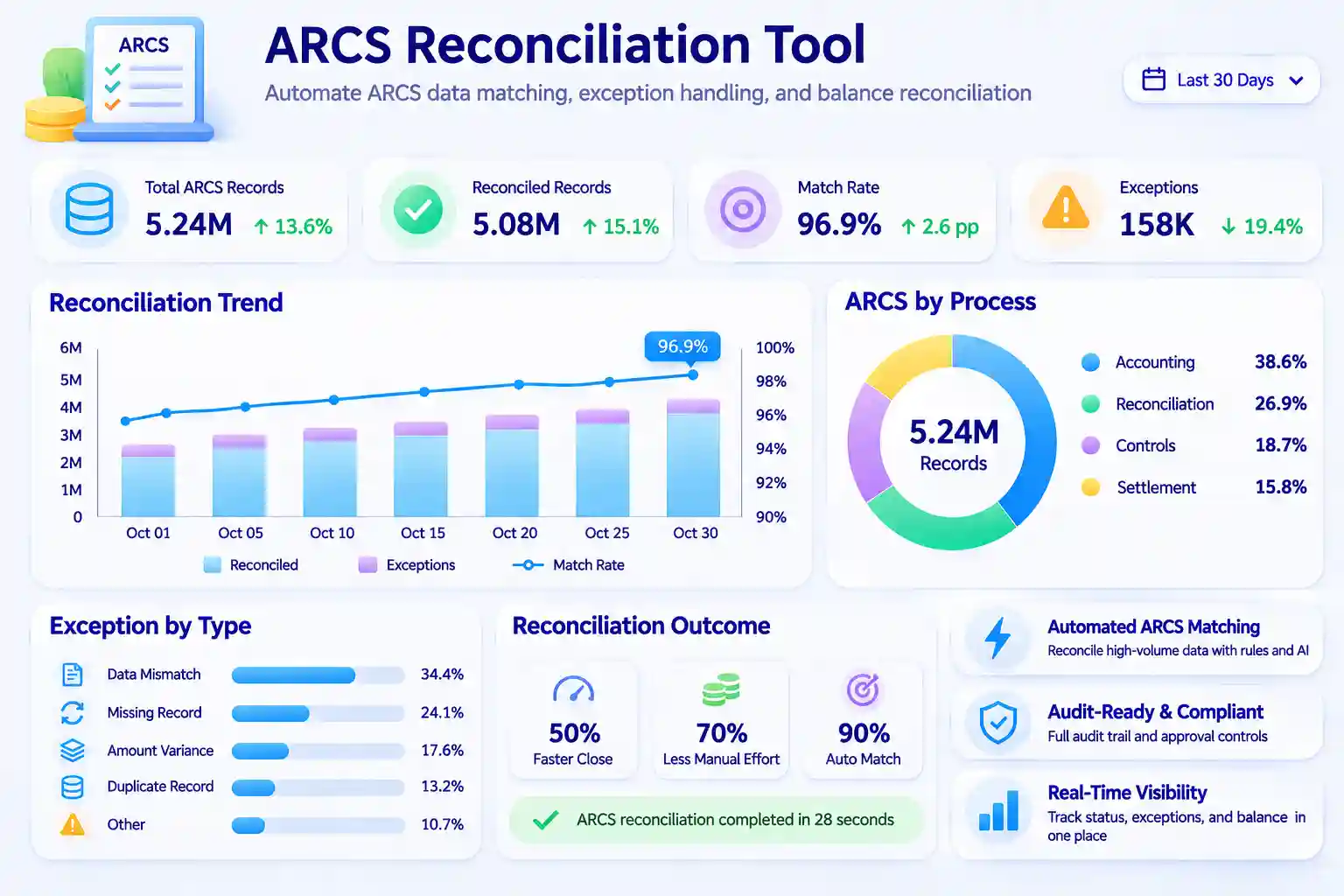
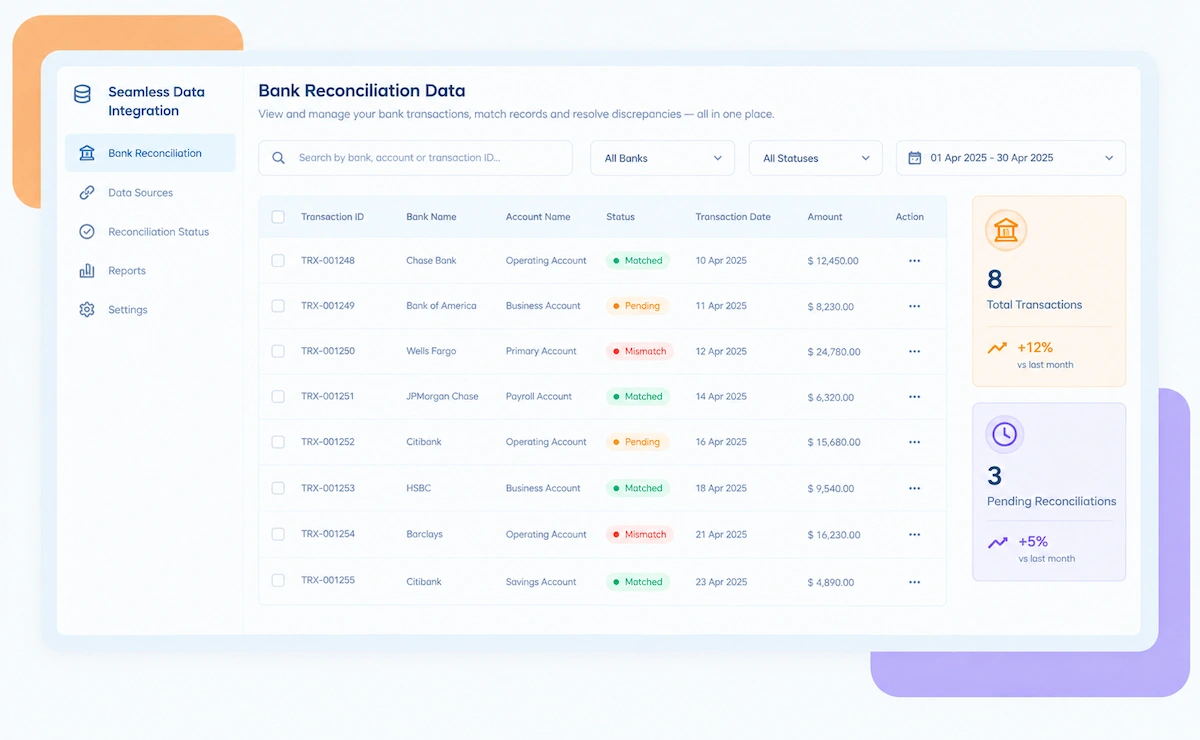
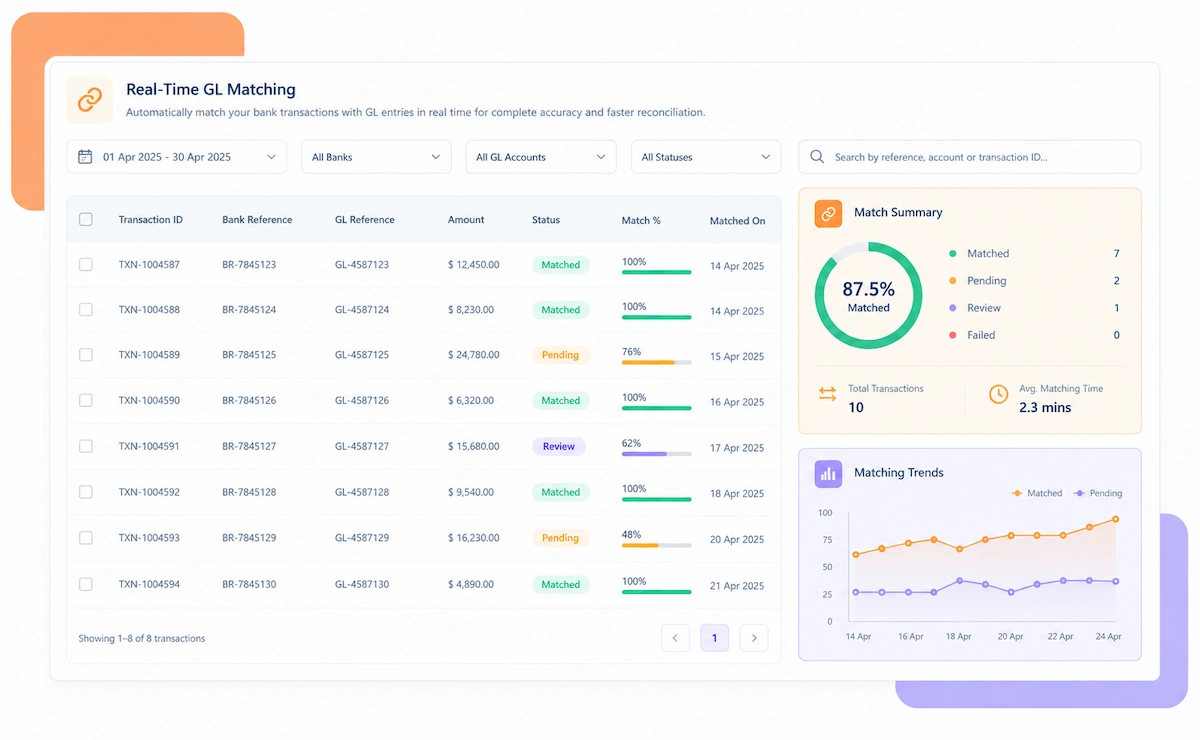
Kosh AI connects directly with all major banks and ERPs, enabling real-time data sync for faster, more accurate reconciliations—no manual uploads, no delays.


A suite module does what the suite was designed to do. A purpose-built platform does the one thing it's designed for, without the surrounding commitment.
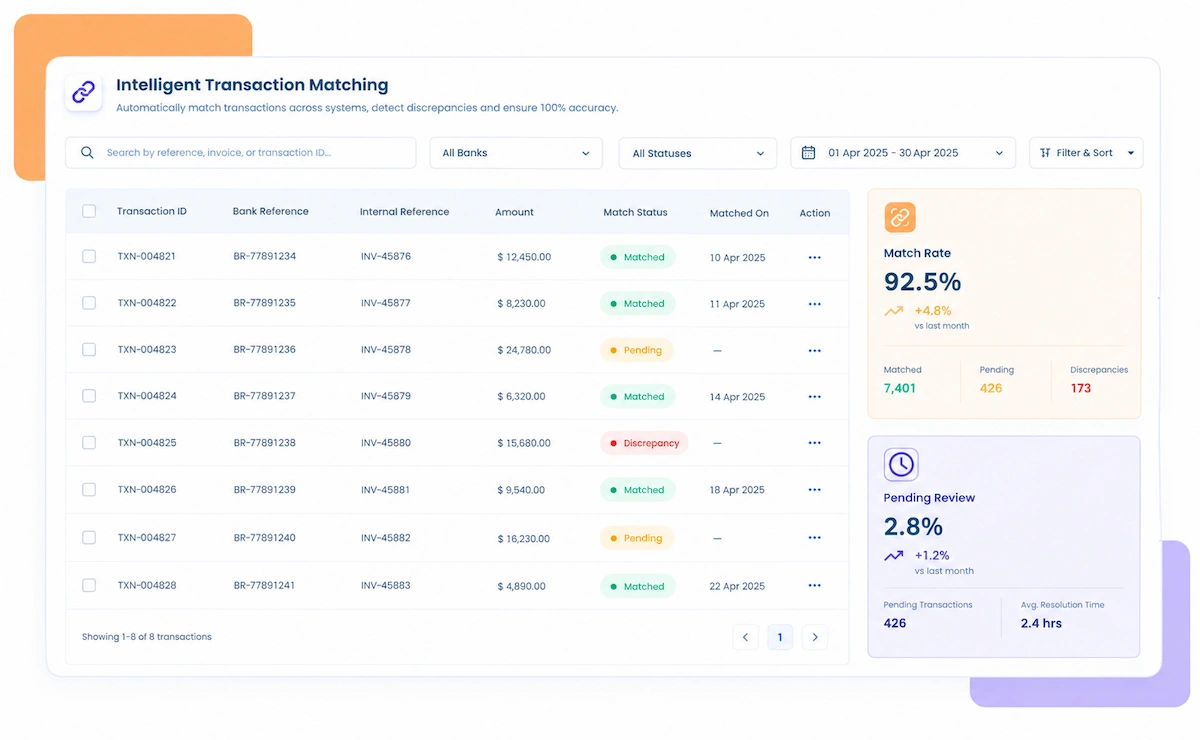
Recognizes recurring transaction patterns and applies that learning to new items automatically.
Runs independently of any particular ERP vendor's broader platform commitment.
Extracts usable data from PDF and inconsistently formatted statements without a manual templating project.
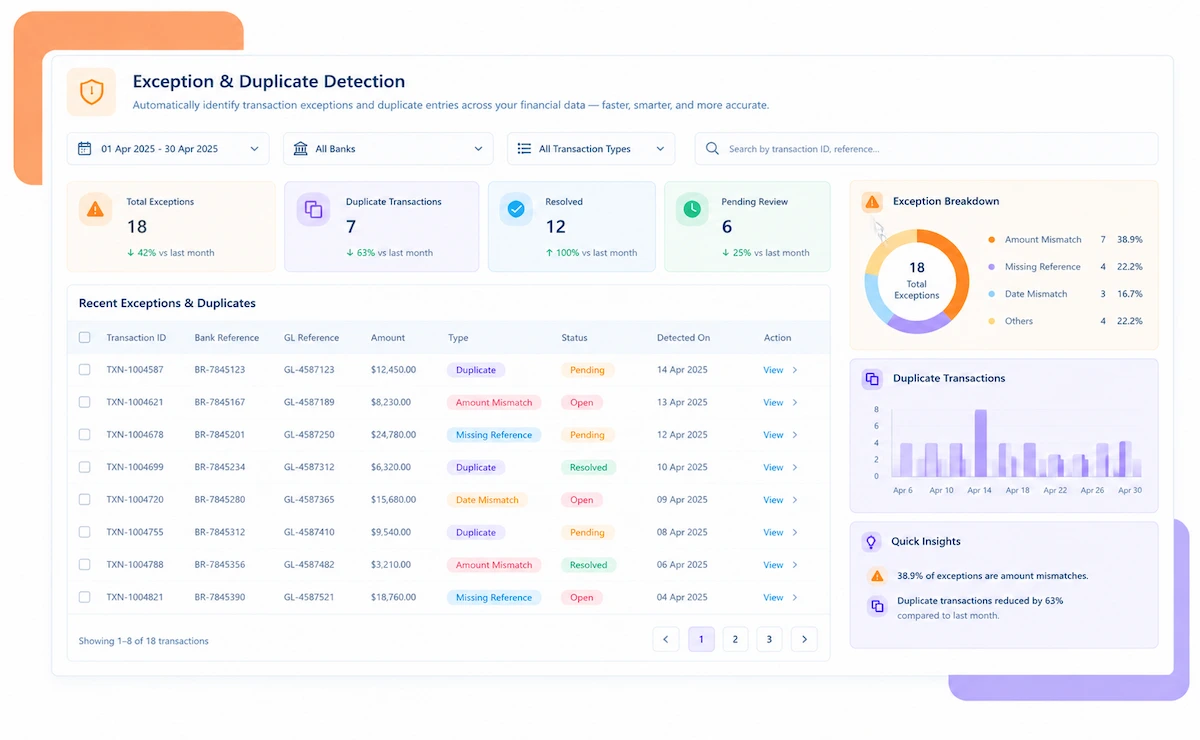
Reconciliation analytics are part of the core platform, not a layer bolted on from a larger EPM system.
Oracle's Account Reconciliation Cloud Service, now part of Oracle Fusion Cloud EPM, is a genuinely capable account reconciliation and certification tool. It assigns reconciliation tasks by risk profile and policy threshold, supports continuous reconciliation with anomaly detection, and fits naturally for organizations already standardized on Oracle's EPM and ERP ecosystem. For a finance team deep in Oracle Fusion or Hyperion, that integration is a real advantage.
The trade-off shows up for everyone else. ARCS is sold and implemented as part of a broader EPM Cloud commitment, which usually means a structured, multi-phase rollout alongside planning, consolidation, or tax modules the team may not need yet. Cost and timeline scale with that larger suite, not with reconciliation alone.
Kosh AI takes the opposite starting point: a standalone reconciliation platform that connects to whatever ERP you already run, whether that's SAP, NetSuite, QuickBooks, Xero, or Oracle itself. Implementation is measured in weeks, pricing is tied to reconciliation volume rather than a bundled suite, and AI-driven matching does the heavy lifting instead of configured rules alone.

Both handle account reconciliation. Here's where they genuinely differ for a team outside the Oracle ecosystem. Looking for something similar for clearing intercompany balances between entities? intercompany reconciliation software is built for exactly that.
| Feature | Kosh AI | Oracle ARCS |
|---|---|---|
| Deployment | Standalone, works with any ERP. | Part of the broader Oracle EPM Cloud suite. |
| Implementation Time | Typically weeks, using pre-built connectors. | Often a structured, multi-phase EPM rollout. |
| ERP Dependency | No dependency on a specific ERP vendor. | Built around Oracle Fusion and Hyperion data models. |
| Matching Approach | AI-driven, learns from transaction patterns. | Risk-based task assignment with configured certification rules. |

| Pricing Structure | Scales with reconciliation volume. | Typically tied to the broader EPM suite license. |

| Best Fit | Teams on any ERP wanting fast, standalone reconciliation. | Organizations already standardized on Oracle EPM and ERP. |
A few honest questions worth answering before picking a platform, regardless of which name is more familiar.

If your ERP is SAP, NetSuite, QuickBooks, or Xero, a standalone platform avoids forcing a vendor switch just for reconciliation.
If a multi-phase EPM implementation doesn't fit your timeline, a connector-based rollout gets you reconciling sooner.
If you don't need planning, consolidation, or tax modules yet, paying for them alongside reconciliation is an avoidable cost.
If exceptions keep piling up despite configured rules, matching that actually learns can reduce the backlog over time.
A few things worth checking carefully before committing either way.
A demo with clean sample statements looks good everywhere. Ask to see matching on your actual, messy data.
Push past a vague 'it depends' answer for a specific, week-by-week plan to go live.
Separate the reconciliation cost from any modules you're being asked to license alongside it.
The people reconciling accounts every cycle will notice workflow friction a leadership-level demo won't surface.
Bring a recent reconciliation batch. We'll show you how Kosh AI's matching and reporting handle it, without requiring the surrounding Oracle suite.
Book a Demo