Payroll Reconciliation Software That Checks Every Pay Run Against the GL and the Bank

A Payroll Run Finishing Without Errors Doesn't Mean It Posted Correctly. Kosh AI Checks Both, Every Cycle

  • Matches the Payroll Register Against GL Postings Line by Line
  • Confirms Bank Funding Matches What Payroll Actually Released
  • Reconciles Benefit and Garnishment Deductions Against Carrier Invoices
  • Flags Overpayments, Duplicate Payments, and Stale Variances Early
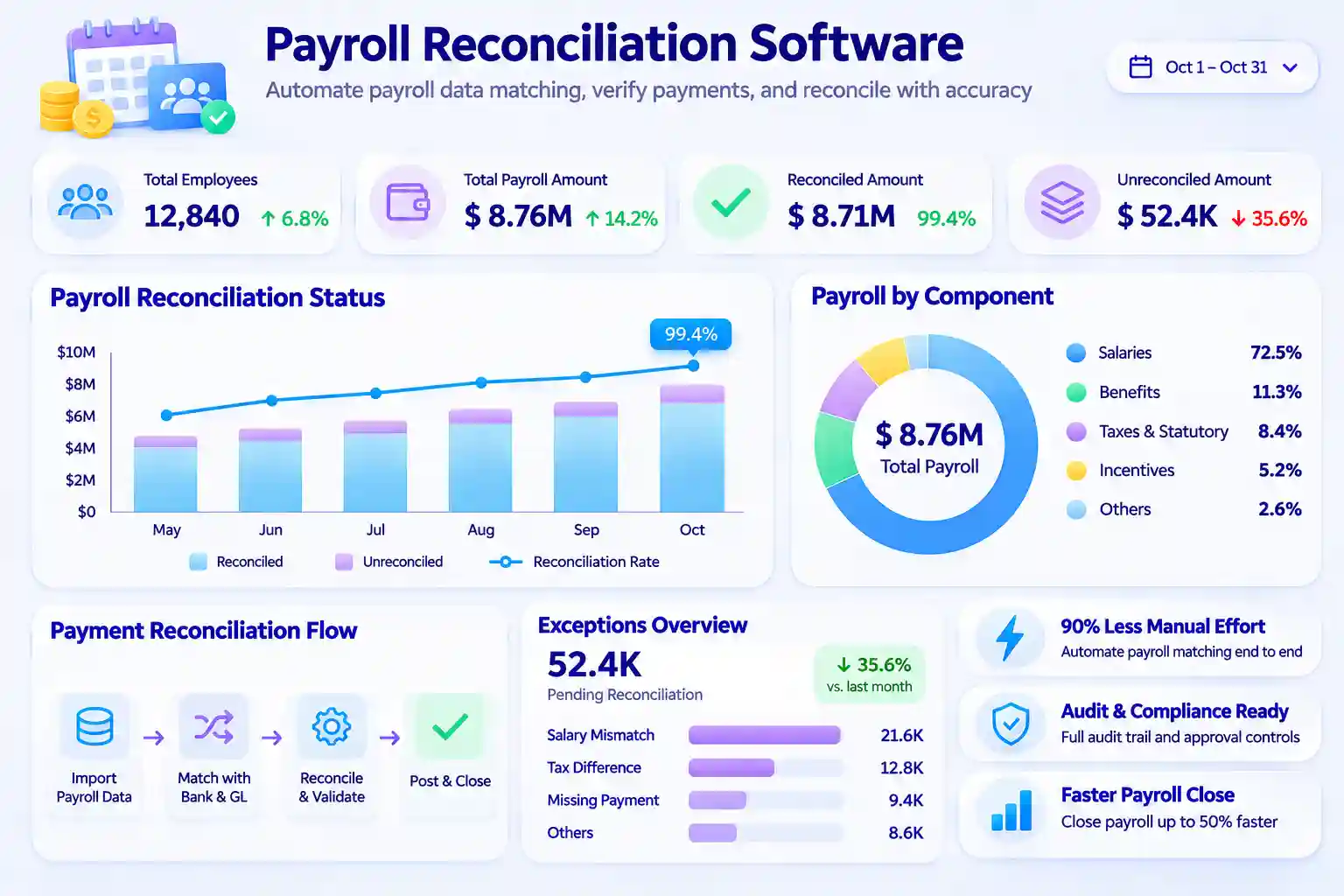
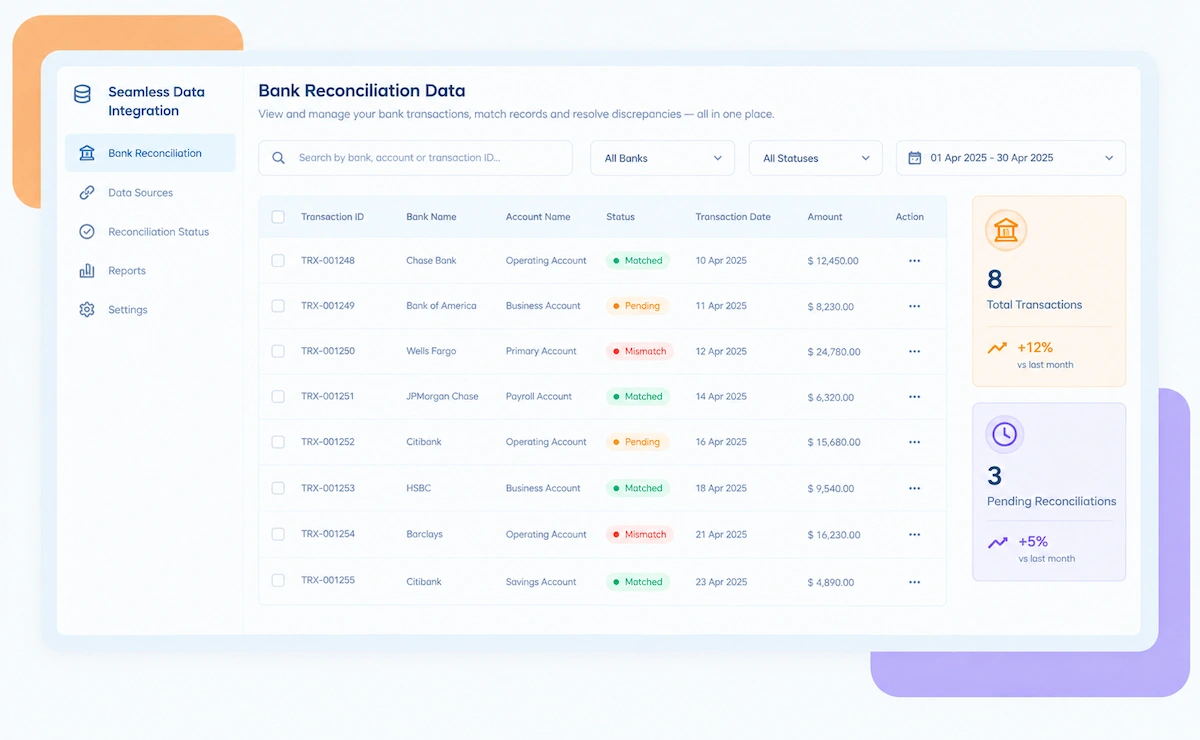
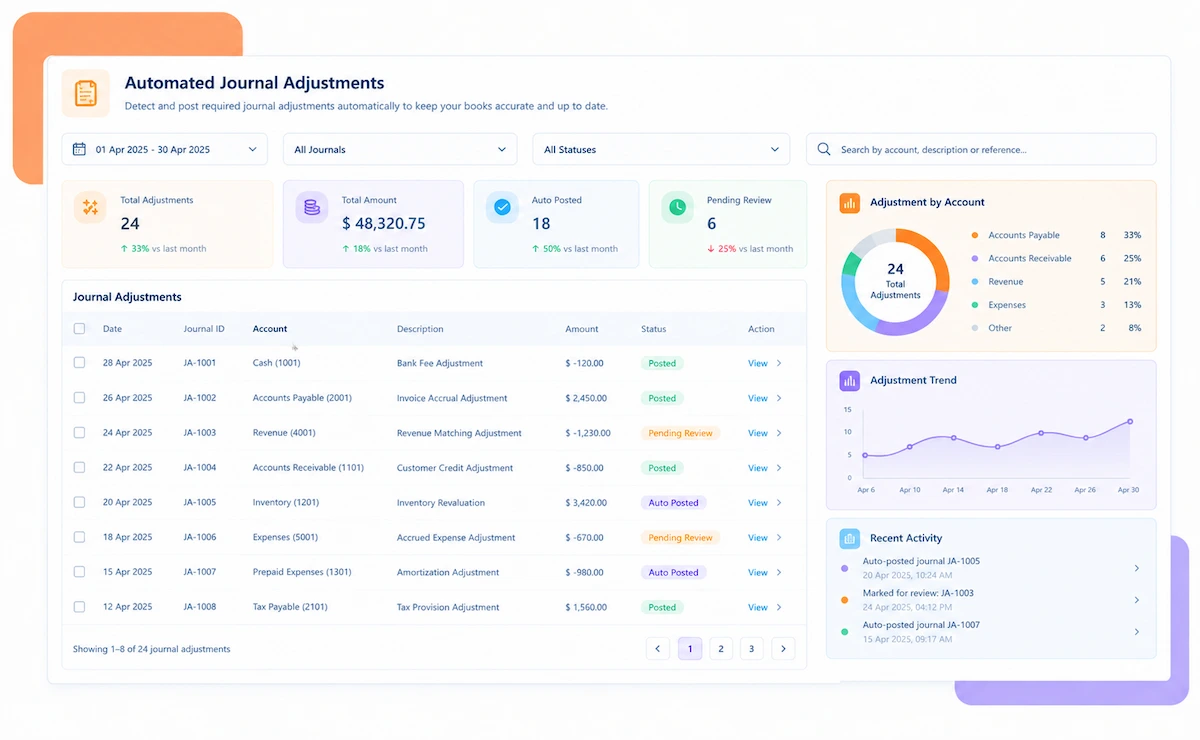
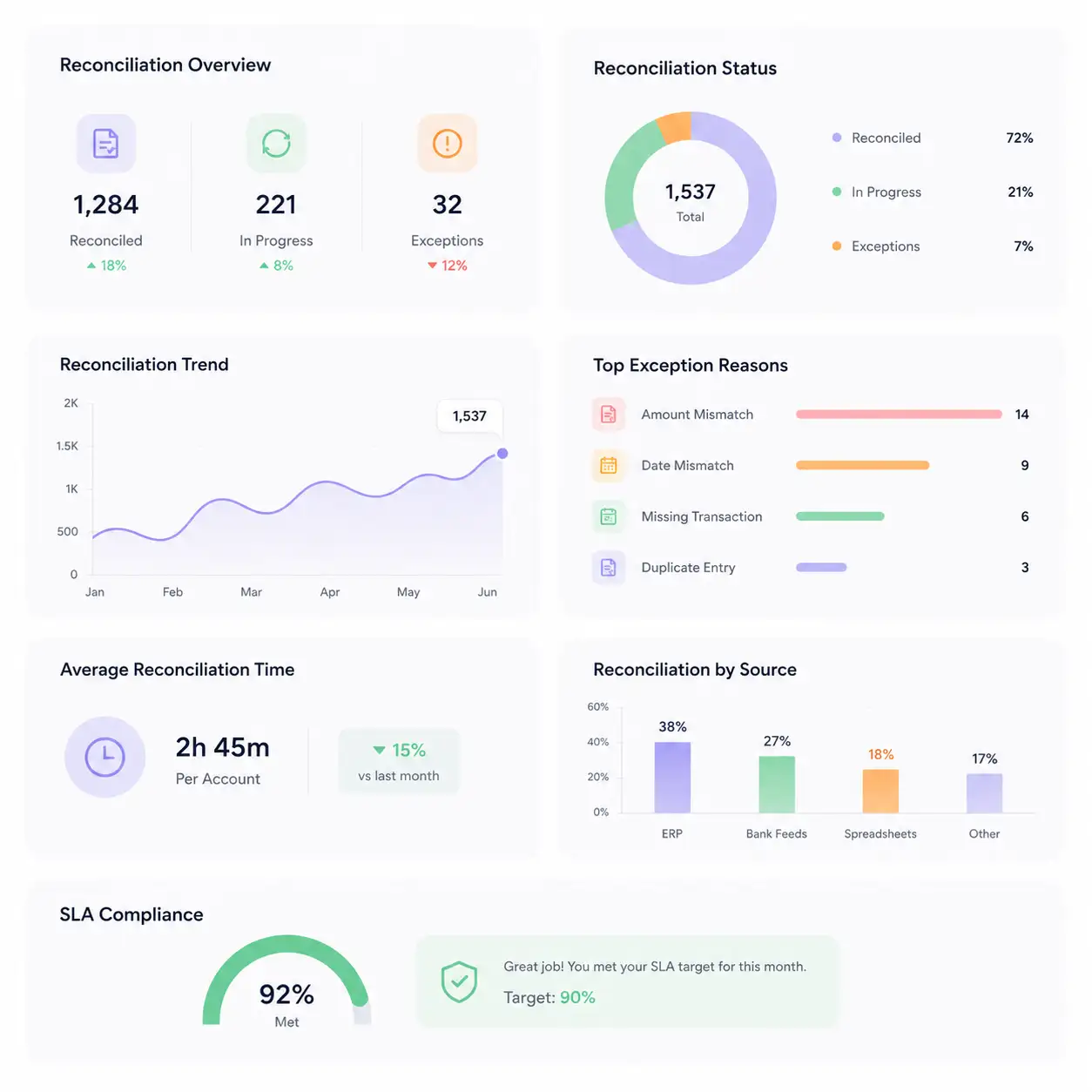
Kosh AI Payroll Reconciliation Software Dashboard

A 2026 Payroll Reconciliation Software

Payroll Ran Clean. Did It Post to the GL the Same Way?

A payroll system that processes without an error message hasn't confirmed the GL entry, the bank funding, and the benefit deductions actually agree with it. Kosh AI checks all three against the payroll register automatically, every pay cycle.

What Payroll Reconciliation Software Automates

A clean payroll run and a reconciled one aren't the same thing. Kosh AI checks the gap between what payroll calculated and what actually landed in the books and the bank. Employers filing across multiple jurisdictions often run payroll tax reconciliation software alongside this for the withholding and remittance side specifically.

How Kosh AI's Payroll Reconciliation Software Works

Four steps turn a processed payroll run into a fully reconciled position against the GL, the bank, and benefit deductions. Teams managing corporate spend on top of payroll often also use corporate card reconciliation software to keep expense postings in the same reconciled state.

  • Payroll register imported automatically: Gross pay, deductions, and net pay come in by employee for every pay cycle.
  • GL and bank data connected alongside it: Postings and funding records are pulled in on the same cadence as the payroll data.
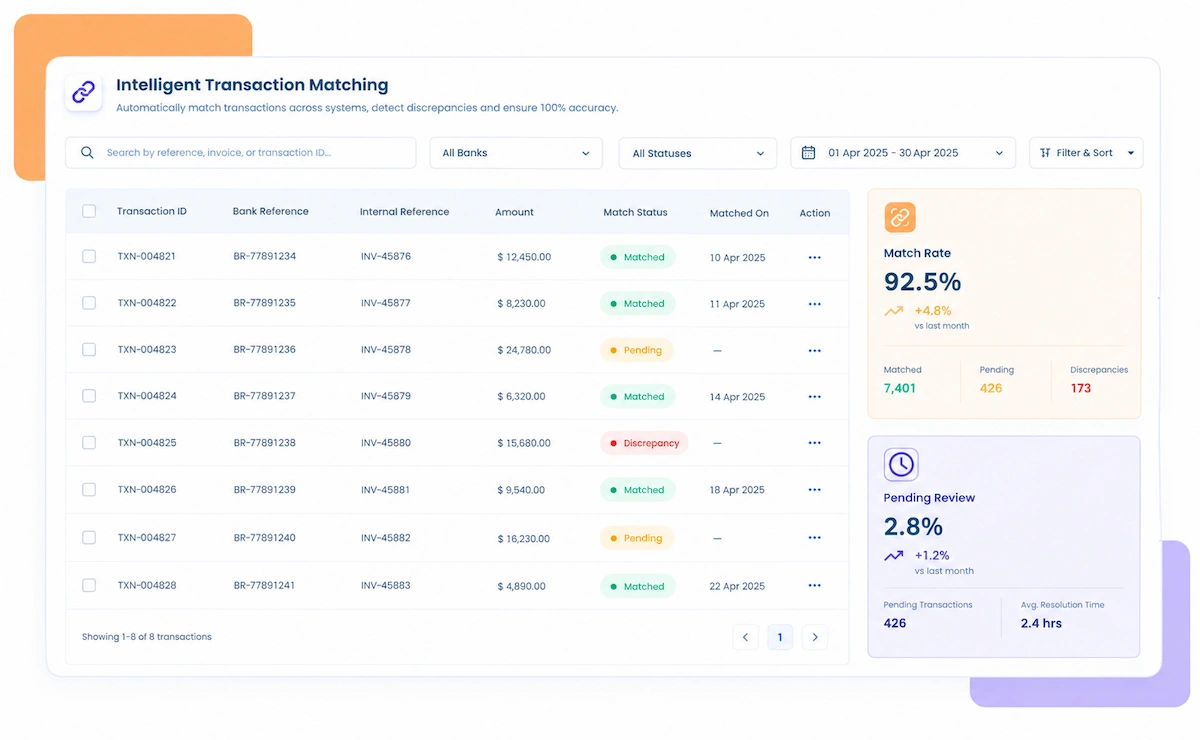
  • Gross-to-net math verified: Earnings, deductions, and net pay are checked for consistency across the run.
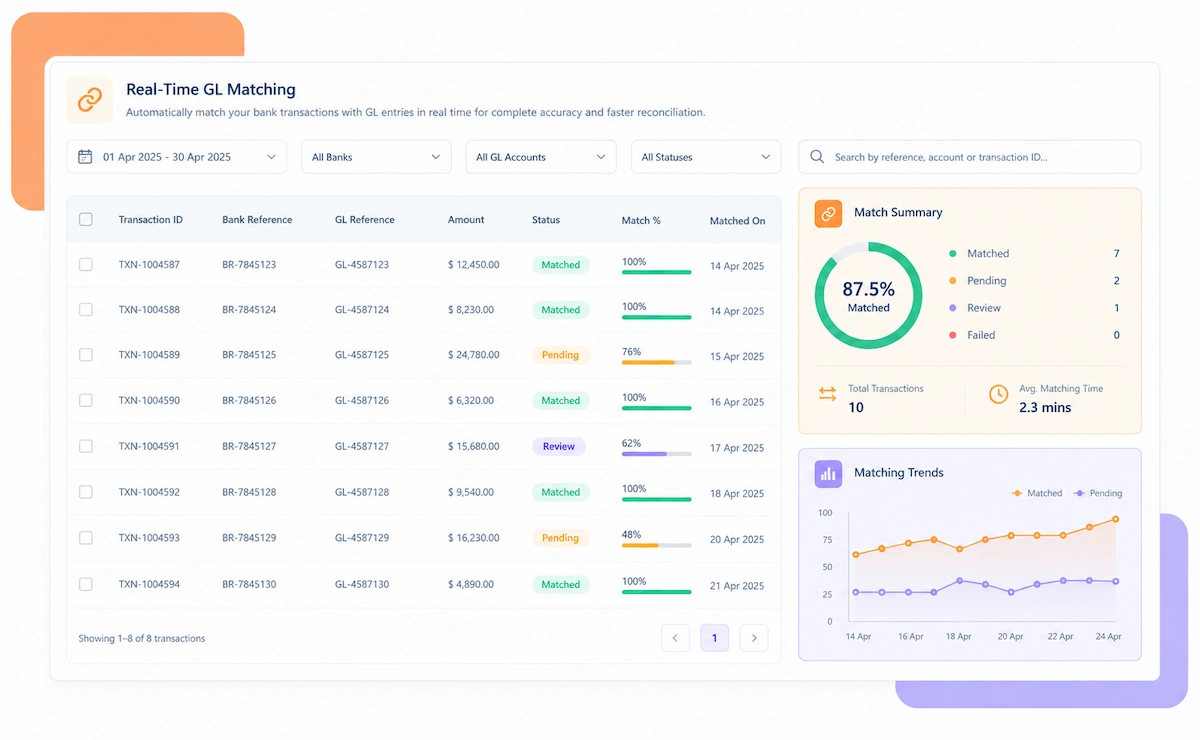
  • GL postings matched to the register: Every debit, credit, and accrual is checked against what the payroll register says it should be.
  • Bank funding checked against the register total: The amount actually released is compared to what payroll says should have gone out.
  • Benefit and garnishment deductions matched: Withheld amounts are checked against carrier invoices and agency records.
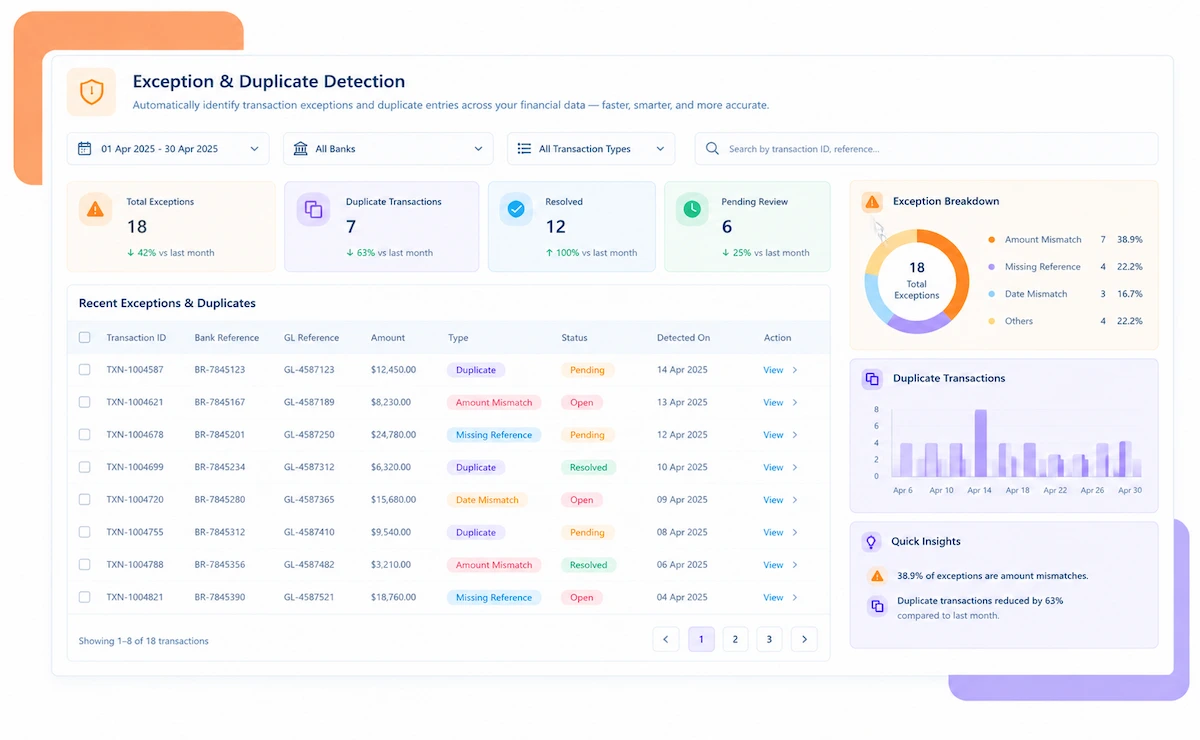
  • Overpayments and duplicates surfaced immediately: A payment that shouldn't have gone out gets flagged the same cycle, not discovered weeks later.
  • Exceptions ranked by financial exposure: The largest and most time-sensitive variances get attention first.

Payroll Reconciliation Across Different Organization Types

What payroll reconciliation needs to cover changes with headcount, entity count, and how complex the benefits structure is. Many payroll teams also run expense reconciliation software for employee reimbursements processed outside the core payroll run.

Small and Mid-Sized Employers

Keeping payroll reconciliation accurate without a dedicated payroll accounting specialist.

Multi-Entity Organizations

Reconciling payroll postings consistently across subsidiaries and departments.

High-Headcount Employers

Checking gross-to-net math and GL postings across a large, frequently changing workforce.

Payroll Accounting Teams

Matching the register against GL postings and bank funding every pay cycle.

Controllers and Finance Leaders

Seeing payroll variances before they carry into a closed set of books.

HR and Benefits Teams

Confirming benefit deductions match what's actually billed by carriers.

Weekly and Biweekly Payrolls

Reconciling high-frequency runs without a manual check every single cycle.

Monthly and Semi-Monthly Payrolls

Fewer cycles, but each one carries more transactions to reconcile at once.

Growing Payroll Operations

Organizations whose headcount and entity count have outgrown a manual payroll reconciliation process.

What Changes When Payroll Reconciles Automatically

A payroll run finishing cleanly is a start, not proof that everything downstream agrees with it.

1

Catch Errors Before They Reach the Books

Gross-to-net, GL postings, and bank funding are checked the same cycle payroll runs, not during close.

2

Recover Overpayments Faster

A terminated employee still on the run or a duplicate payment is flagged while it's still recoverable.

3

Keep Benefit Deductions Accurate

Withheld premiums and garnishments are checked against carrier and agency records every cycle.

4

Close Faster With Reconciled Payroll Data

Payroll accounting starts close with figures that are already tied out, not assembled at the last minute.

5

Scale Without Adding Headcount

A growing employee count or new entity doesn't mean building a new manual reconciliation process.

6

Document Every Pay Cycle

A clear audit trail exists from the payroll register through GL posting and bank funding.

The Results of Automating Payroll Reconciliation

92%Of Pay Runs Reconciled Automatically
75%Faster GL-to-Payroll Matching
0Overpayments Left Unflagged

Integrate Seamlessly with Your Existing ERP Systems

Kosh AI connects directly with all major banks and ERPs, enabling real-time data sync for faster, more accurate reconciliations—no manual uploads, no delays.

Smarter Payroll Reconciliation Starts with AI

A payroll system confirms the run processed. Kosh AI confirms what processed actually agrees with the GL, the bank, and the benefits carrier.

Gross to net icon

Gross-to-Net Verification

Checks earnings, deductions, and net pay for consistency across every employee on the run.

Overpayment detection icon

Overpayment Detection

Flags terminated or duplicate payments while they're still realistically recoverable.

Bank funding icon

Bank Funding Verification

Confirms the amount actually released matches what the payroll register says it should be.

Benefit matching icon

Benefit and Garnishment Matching

Checks withheld deductions against carrier invoices and agency-ordered amounts.

Manual vs. Automated Payroll Reconciliation – Why Make the Switch?

Reconciling payroll by hand can work for a small, stable team. See what changes as headcount and entity count grow. The same matching approach also powers multi-entity reconciliation software, for organizations reconciling payroll and other accounts across several entities at once.

Feature Automated Payroll Reconciliation Manual Payroll Reconciliation
Gross-to-Net VerificationChecked automatically across every employee, every cycle.Spot-checked manually, often only for large variances.
GL Posting MatchEvery debit, credit, and accrual matched to the register.Reviewed at month-end against exported reports.
Bank Funding CheckFunding amount matched to the register automatically.Assumed correct unless a shortfall is noticed separately.
Overpayment DetectionFlagged the same cycle it occurs.Often discovered weeks later, if at all.
Benefit Deduction MatchingChecked against carrier invoices every billing cycle.Reconciled periodically, sometimes only annually.
Close ReadinessPayroll figures already reconciled going into close.Reconciliation work often happens during the close crunch.

Why Finance Teams Are Automating Payroll Reconciliation

A payroll run that processes without an error message has cleared the payroll system's own checks, not confirmed that everything downstream actually agrees with it. The GL entry, the bank funding, and the benefit deductions tied to that run are each their own point of potential disagreement, and a payroll system generally isn't built to catch a mismatch in any of them.

The problems that slip through tend to be specific and recoverable, if caught quickly. A terminated employee left on the run. A GL posting that used the wrong account code. A benefit deduction that no longer matches the carrier's updated rate. Individually small, but each one compounds the longer it goes unnoticed, and most of them are far easier to fix the same pay cycle than three months later during an audit.

Kosh AI treats payroll reconciliation as a standing check rather than a month-end scramble. The payroll register, GL postings, bank funding, and benefit deductions are compared automatically every cycle, with variances surfaced while they're still small and still fixable.

Why finance teams automate payroll reconciliation

Who Actually Needs Payroll Reconciliation Software

1

Multi-Entity Organizations

Each additional entity adds its own set of GL postings and bank funding records to keep consistent.

2

High-Headcount Employers

Past a certain employee count, checking gross-to-net math by hand stops being a realistic routine.

3

Teams With Complex Benefits Structures

More carriers and deduction types mean more places for a withholding error to hide.

4

Finance Teams Working Toward Faster Close

Payroll reconciliation finishing before close starts, instead of during it, shortens the whole cycle.

Payroll Reconciliation Software: An Honest Assessment

What follows isn't a pitch for a fully hands-off payroll process. It's what actually changes, and what still depends on clean payroll data going in.

Early detection icon

Catches Errors the Same Cycle

No more discovering an overpayment or posting error weeks after the pay run has closed.

Recovery icon

Improves Overpayment Recovery Odds

An overpayment flagged the same cycle is far easier to recover than one noticed months later.

Setup icon

Account Mapping Takes Setup Time

GL account codes and entity structures need to be mapped accurately before matching runs smoothly.
Data quality icon

Payroll Data Quality Still Matters

Matching works best when employee and deduction data stay consistent in the payroll system itself.

Payroll Reconciliation Software FAQs

What is payroll reconciliation software?

Payroll reconciliation software checks a processed pay run against the GL, bank funding, and benefit deductions to confirm everything downstream actually agrees with the payroll register.

How is this different from payroll tax reconciliation?

Payroll tax reconciliation focuses specifically on matching withheld tax to remittances and filings. Payroll reconciliation covers the broader picture, including GL postings, bank funding, and benefit deductions.

Can it catch overpayments?

Yes. Terminated or on-leave employees still appearing on a run, and duplicate payments across cycles, are flagged automatically.

Does it check GL postings?

Yes. Payroll debits, credits, and accruals are matched against the payroll register, with mismatched account codes or missing postings flagged before close.

How does it verify bank funding?

The amount actually released for payroll is compared against the register total, so a shortfall or duplicate transfer doesn't go unnoticed.

Can it reconcile benefit deductions?

Yes. Withheld benefit premiums and garnishments are matched against carrier invoices and agency-ordered amounts each billing cycle.

Does this work for multi-entity organizations?

Yes. Payroll postings across subsidiaries and departments reconcile consistently within one view.

How soon does this go live?

Most employers have their payroll register, GL, and bank data reconciling automatically within a few weeks of connecting their systems.

Check Your Own Payroll Numbers Live

Bring a recent pay run to the call, and we'll walk through how it stacks up against your GL postings and bank funding.

Book a Demo