Let Generative AI Read Any Invoice Format, Write the Exception Explanation, and Answer Your Team's Questions in Plain English
Matching line items is only part of reconciling an invoice. Reading it in the first place and explaining the result afterward usually take just as long. For matching invoices against payments at the line-item level once they're read in, see how invoice reconciliation software handles it end to end.

Four steps that take an invoice in any format to a matched, explained, and documented record.
Generative AI earns its keep wherever invoice data arrives unstructured or the follow-up work is repetitive. Teams whose invoice data is already clean and structured often find machine learning invoice reconciliation software is the better fit for PO and goods-receipt matching that improves over time.
Reading vendor invoices that arrive in dozens of different layouts without building a template for each one.

Drafting the short-pay query email the moment a deduction posts, instead of writing it from scratch.
Getting a plain-language summary of the week's reconciliation activity without opening every record.
Businesses receiving invoices from hundreds of vendors, each with its own layout and conventions.
Teams spending real time each week writing emails to resolve the same handful of exception types.
Teams fielding frequent one-off questions about specific invoices from across the business.

Businesses where invoice volume has outgrown what a small team can read and explain manually.
Organizations consolidating invoices across business units, each historically using its own format.

Teams that need the explanation and the follow-up handled automatically, not just the matching.
AP teams reading invoices in dozens of layouts often run this alongside accounts payable reconciliation software, which focuses on matching AP ledger entries against vendor statements and payments.


A new invoice layout is read correctly from the first one, without a setup project behind it.
Analysts see why an invoice didn't match instead of starting an investigation from a blank flag.
Dispute and query emails are drafted automatically, ready for a quick review before sending.
A plain-English question about invoice status gets a direct answer, not a request to the analytics team.
A finance lead gets the week's highlights in plain language, with detail one click away.
Adding a new vendor or business unit doesn't mean adding a new manual extraction process.
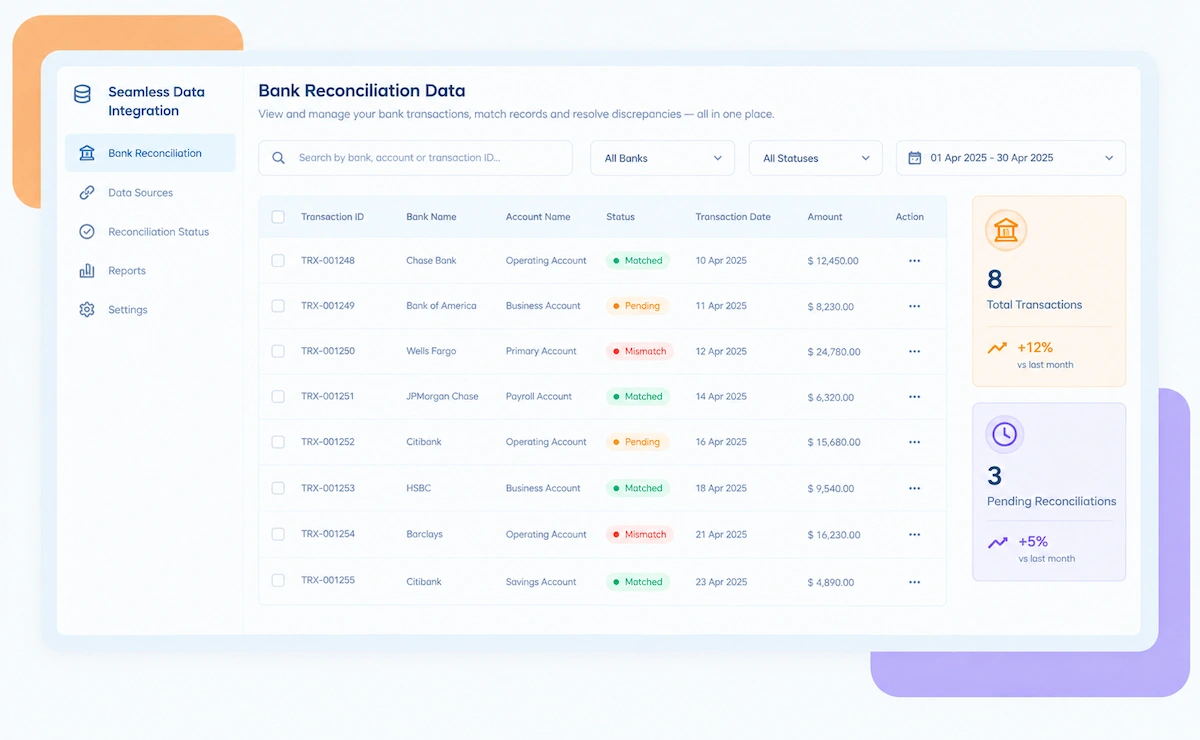
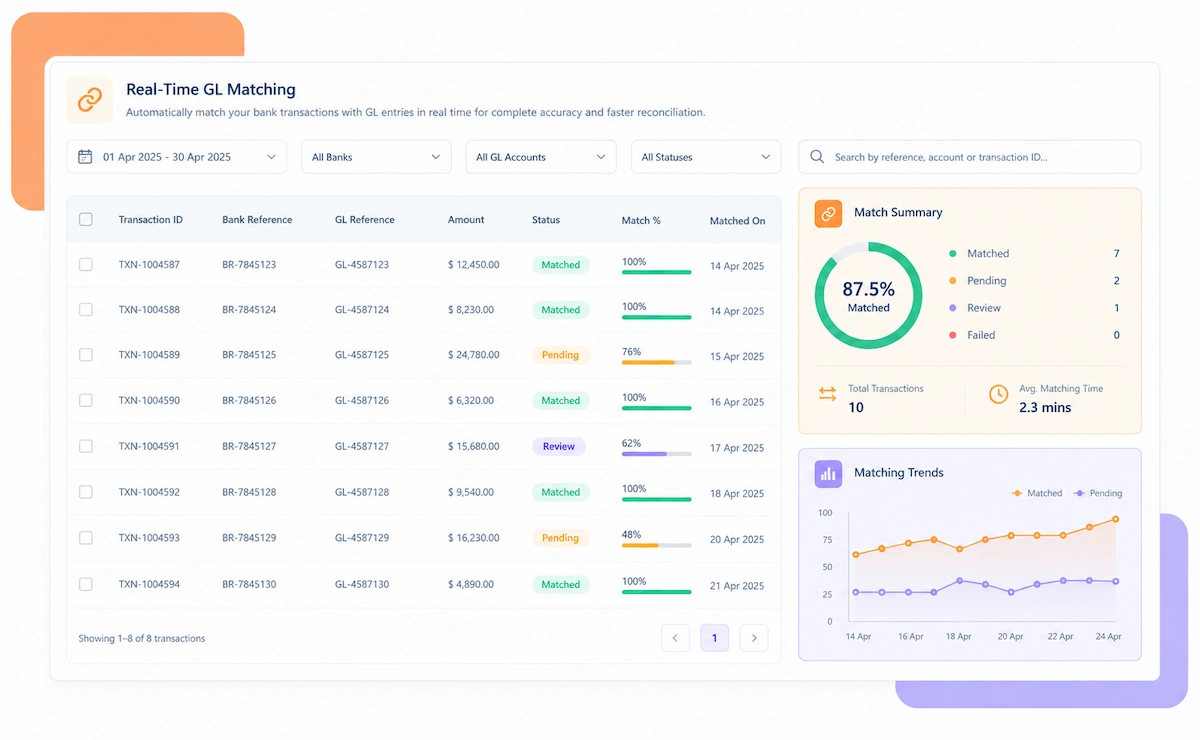
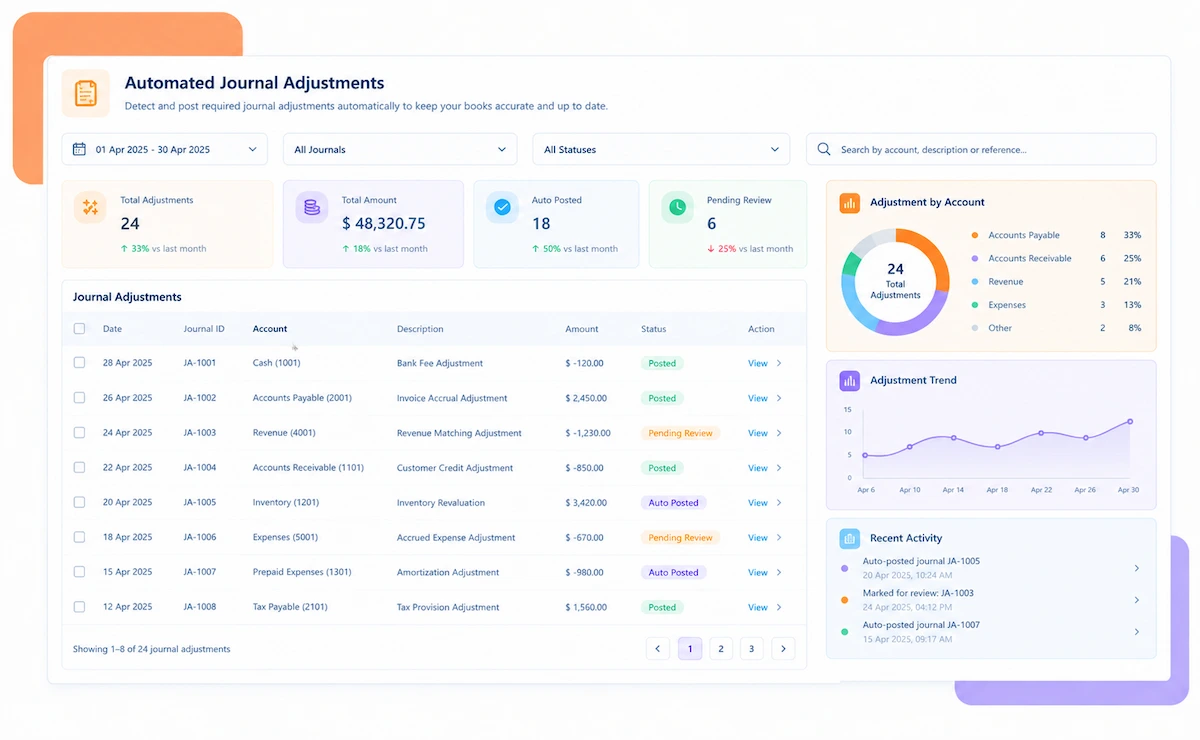
Kosh AI connects directly with all major banks and ERPs, enabling real-time data sync for faster, more accurate reconciliations—no manual uploads, no delays.


Matching clean, structured invoice data is a solved problem. Reading messy data and explaining the result in plain language is where generative AI changes what's possible. For matching remittances against the claims and deductions behind them, see how automated remittance reconciliation software handles it end to end.
Understands invoice content regardless of layout, so a new vendor never means a new extraction rule.
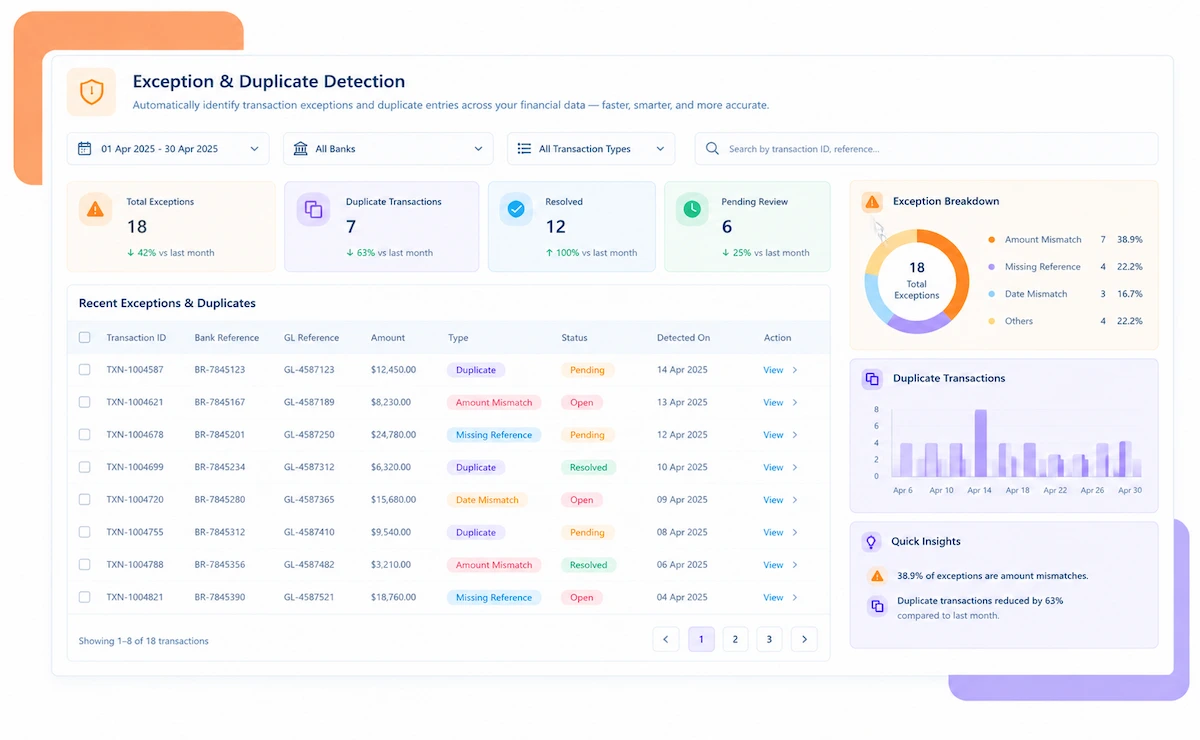
Generates a plain-English reason behind every mismatch instead of leaving an analyst to work it out.
Answers direct questions about invoice status in plain English, with follow-ups understood in context.
Drafts the vendor or customer email for a dispute automatically, matched to the account's tone.
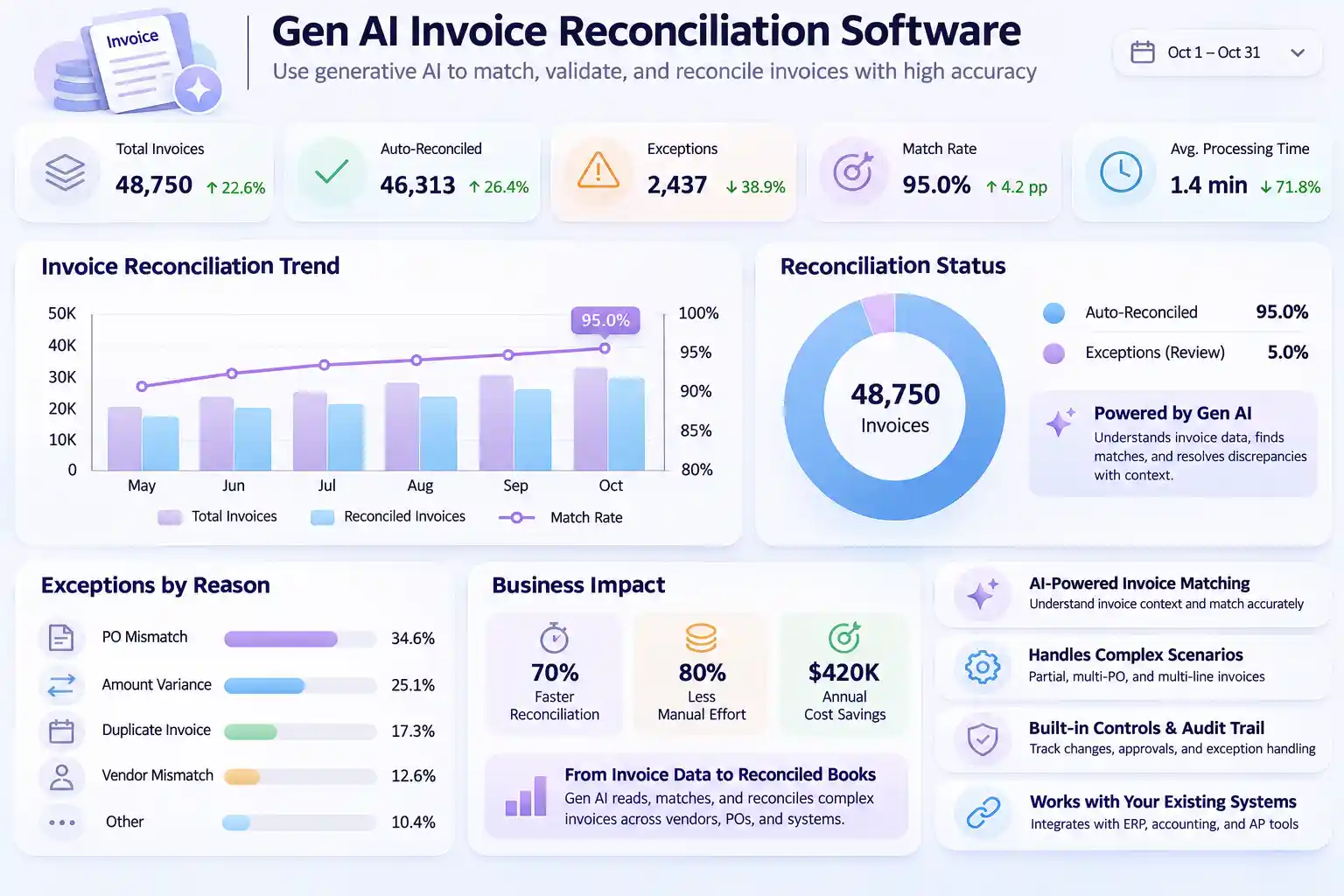
Gen AI invoice reconciliation software uses generative AI, not just pattern matching, to handle the parts of invoice reconciliation that involve reading, explaining, and communicating rather than just comparing numbers. It reads an invoice regardless of its layout, writes a plain-English explanation for any exception, and can draft the follow-up email a discrepancy usually requires.
Traditional invoice matching tools are built to compare structured data: an invoice total against a payment, a PO quantity against a goods receipt. That works well once the data is clean and consistently formatted. The time finance teams actually lose is everywhere around that: reading an invoice that doesn't fit the usual template, figuring out why something didn't match, and writing the same kind of email to the same kind of vendor, over and over.
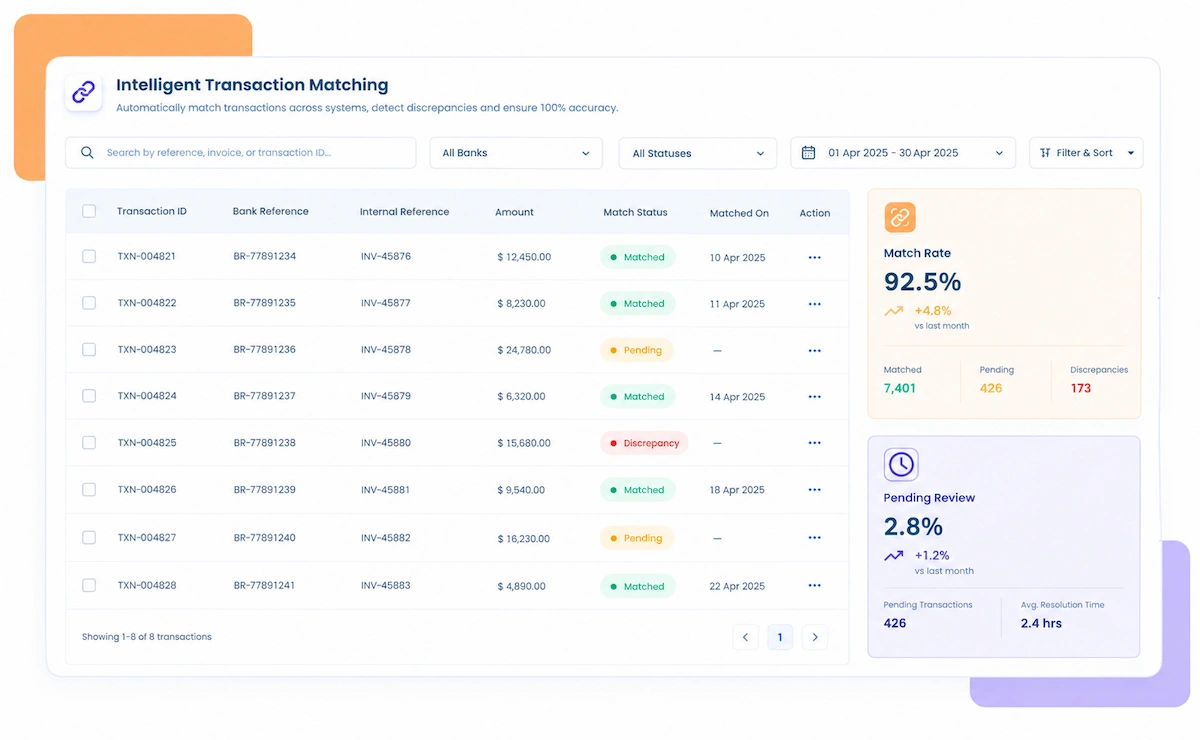
Kosh AI's gen AI invoice reconciliation software reads invoices in any format, matches them, explains every exception in plain language, answers status questions directly, and drafts the communications a discrepancy calls for, so an analyst reviews and sends rather than starting from a blank page.

Structured-data matching handles the clean cases well. See what changes once generative AI reads, explains, and drafts as part of the process. For the broader problem of matching any two sets of financial records against each other, see how data reconciliation software approaches it.
| Feature | Gen AI Invoice Reconciliation | Traditional Invoice Reconciliation |
|---|---|---|
| Reading New Invoice Formats | Understood without a manually built template. | Requires a new extraction rule or template per format. |
| Exception Explanations | Written in plain language automatically. | Left for an analyst to work out case by case. |
| Status Questions | Answered directly in natural language. | Requires building or running a report. |
| Dispute Communications | Drafted automatically from the discrepancy. | Written manually, often repeating the same phrasing. |
| Activity Summaries | Generated in plain language for quick review. | Compiled manually from underlying records. |
| Scaling to New Vendors | No added setup work per new format. | Each new format adds to the manual workload. |
Matching an invoice to a payment or a purchase order is a well-understood problem once the data is structured. The harder, more time-consuming part is everything that happens around that match: reading an invoice that arrived as a scanned PDF with no consistent layout, working out why a specific line didn't tie out, and then writing the email that explains it to a vendor or customer.
That work doesn't show up as a matching-rate statistic, but it's where analyst time actually goes. A team handling invoices from hundreds of vendors ends up maintaining a small library of extraction templates, writing variations of the same three or four emails, and answering the same kinds of ad hoc questions from other departments, week after week.
Kosh AI's generative AI layer takes on that surrounding work directly. It reads invoices without a fixed template, writes the explanation behind every exception, answers plain-English questions about invoice status, and drafts the communications a discrepancy requires, leaving the matching logic underneath free to focus on getting the numbers right.

Businesses receiving invoices in dozens of different layouts that would otherwise need their own templates.
AP and AR teams spending real hours each week writing the same handful of dispute emails.
Teams regularly asked about specific invoice statuses by other parts of the business.
Organizations whose invoice volume has outgrown what a small team can read and explain by hand.
Not every tool that mentions AI reads, explains, and drafts the way a genuinely generative layer does. These are worth confirming before you commit.
A new vendor's invoice format should work from the first one, not after a setup project.
A written reason behind a mismatch saves real investigation time over a bare red flag.
A tool worth having should answer a direct question without a report-building detour.
A usable draft that needs a quick look beats a blank page every time an exception needs a follow-up.
Bring an invoice your team had to read, explain, and chase up by hand recently. We'll show you how Kosh AI would have handled all three automatically.
Book a Demo